News related to
wants

Taiwan is moving to anchor its alliance with Paraguay through a data-centre project expected to require at least $200 million in its first phase, tying diplomatic survival to artificial intelligence, clean energy and strategic infrastructure.

The plan, centred on a sovereign AI computing facility in Paraguay, gives Taipei a rare large-scale investment platform in South America as Beijing intensifies pressure on Asunción to cut formal ties. Paraguay remains Taiwan’s only diplomatic partner on the continent and one of just 12 governments worldwide that maintain official relations with Taipei.

The project emerged from a memorandum signed in Taipei during President Santiago Peña’s visit to Taiwan, where he met President Lai Ching-te and senior technology officials. The proposed centre is intended to combine Taiwan’s computing and semiconductor expertise with Paraguay’s abundant hydroelectric power, a resource the Peña administration wants to convert into higher-value digital services.

Paraguay’s authorities have described the first stage as a 10-megawatt data centre focused largely on state use, including secure processing of public records, health data, tax systems and other sensitive government information. Investment for that phase has been estimated at between $200 million and $300 million. Officials have also outlined broader ambitions for later stages that could lift power demand to 100 megawatts and eventually 1,000 megawatts, though those targets remain politically and commercially demanding.

The initiative is being framed by both governments as a sovereign AI project rather than a conventional colocation facility. That distinction is important for Asunción, which wants to avoid being seen merely as a low-cost power host for foreign cloud companies. The official pitch is that Paraguay would retain strategic use of the computing capacity while Taiwan helps provide technology, financing channels and international credibility.

For Taiwan, the political stakes are clear. Paraguay established diplomatic relations with Taipei in 1957 and has resisted repeated calls to recognise Beijing. China claims Taiwan as part of its territory and rejects any formal state-to-state relationship with the island. Taipei rejects Beijing’s sovereignty claim and has sought to hold its remaining partners by shifting assistance from grants and symbolic diplomacy towards trade, investment, technology and education.

Peña has defended the relationship as one based on democracy, freedom and institutions, saying the partnership must produce tangible opportunities for Paraguayans. During the Taipei visit, he also reiterated support for Taiwan’s participation in international organisations and criticised pressure directed at the island. Beijing responded sharply, urging Paraguay to “stand on the right side of history” and sever ties with Taipei.

The diplomatic contest has domestic resonance in Paraguay. Agribusiness exporters and some opposition figures have long argued that formal ties with Taiwan limit access to China’s vast market, particularly for soybeans and beef. Peña’s government is trying to counter that argument by showing that the Taiwan relationship can deliver higher-value investment, technology transfer and market access, including Taiwan’s decision to open its market to Paraguayan poultry.

The data-centre proposal fits into a wider push to position Paraguay as a digital infrastructure hub. The country draws most of its electricity from major hydroelectric assets, including Itaipú and Yacyretá, giving it one of the cleanest power profiles in the region. That advantage is attracting interest from data-centre developers, crypto-mining firms and AI infrastructure companies seeking cheap, low-carbon electricity at a time when demand for computing power is rising worldwide.

Yet the plan faces serious tests. Data centres require not only electricity, but firm grid delivery, fibre connectivity, cooling systems, specialised construction, cybersecurity rules and skilled engineers. Paraguay’s digital workforce remains limited, and critics have questioned whether the country can support an AI facility on the scale described by officials. Energy planners also face pressure to balance industrial demand against future domestic consumption and export commitments.

Regional experience offers both encouragement and caution. Latin America is drawing heavier investment from cloud and AI companies because of renewable energy, growing digital markets and geopolitical diversification. Brazil, Chile, Mexico and Uruguay have advanced faster because they combine power access with deeper telecoms networks, larger technology labour pools and clearer regulatory pathways. Paraguay’s advantage lies in energy supply, but its success will depend on whether infrastructure, governance and talent can catch up.

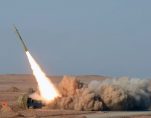
Arabian Post Staff -Dubai US forces struck military targets across Iran overnight, widening an air campaign that has pushed Washington and Tehran closer to open conflict as President Donald Trump warned that further attacks would follow unless a peace deal is secured. Central Command said the operation was completed about four hours after it began, shortly after midnight in Tehran, with strikes aimed at military surveillance assets, […]

ADNOC is exploring investment opportunities in Canada’s upstream oil and liquefied natural gas sectors through XRG, its international energy investment arm, as Abu Dhabi intensifies its search for overseas assets aligned with long-term energy security and gas demand. Musabbeh Al Kaabi, ADNOC’s chief executive for upstream, said at the Global Energy Show in Calgary on Tuesday that the company was encouraged by Canada’s renewed emphasis on energy […]

By K Raveendran Prime Minister Narendra Modi’s government may have done itself a favour by allowing the Cockroach Janta Party protest led by Abhijit Dipke to proceed without turning it into another confrontation between the state and restless young citizens. For a government that has often preferred firmness over accommodation, the decision to let anger […]

The article Cockroach Protest Exposes A Youth Challenge Modi Cannot Brush Away appeared first on Latest India news, analysis and reports on Newspack by India Press Agency).

Elon Musk will probably get the $86 billion he wants from the SpaceX IPO. The harder question is whether investors will still be as enthusiastic about the company a year from now. Seeking a valuation of $1.78 trillion, SpaceX is attempting something unprecedented. If successful, the offering will become the largest IPO in history and instantly rank among the biggest corporate fundraising events ever seen. Many investors […]

Meta Platforms is preparing an AI-powered pendant and a broader line-up of smart glasses as it tries to turn wearable hardware from a costly experiment into a larger business focused on consumers and corporate users. The plan, outlined in internal discussions reported by technology industry outlets, centres on a small AI pendant that could be tested within the next year, alongside new smart glasses and a business […]

Johannesburg has become the opening stage for a European Union push to turn a pledged €12 billion investment package for South Africa into bankable projects, with about 200 companies joining the bloc’s first investment roadshow in the country as competition intensifies over critical minerals. The event, hosted at the Johannesburg Stock Exchange on Monday, marked the first major effort to mobilise private capital under the EU-South Africa […]

Advertisements

Arabian Post Staff -Dubai Iran’s Revolutionary Guards said they targeted a US-linked airbase after American strikes hit military sites on Iran’s Gulf coast, adding fresh pressure to a fragile ceasefire that has failed to stop intermittent exchanges between Washington and Tehran. The latest confrontation followed US military strikes on radar, drone control and launch facilities near Qeshm Island and Goruk after the downing of an American MQ-1 […]

Arabian Post Staff -Dubai Tehran has warned it will reject any settlement with Washington unless the agreement delivers verifiable protection for the rights and interests of its people, sharpening the terms around negotiations aimed at ending the conflict with the United States. Mohammad Bagher Ghalibaf, Iran’s Parliament speaker and a central figure in talks with Washington, said no agreement would be approved without certainty that Iran had […]

Malaysia has sharpened its criticism of Norway’s cancellation of export licences for Naval Strike Missiles, casting the dispute as a test of whether international contracts and security partnerships still carry weight when smaller states deal with stronger powers.

Defence Minister Mohamed Khaled Nordin said Oslo’s decision had moved beyond a procurement setback and raised wider questions about trust in global relations. He argued that rules and agreements lose credibility when advanced economies can withdraw from signed deals after payments, integration work and delivery schedules have already been set.

Kuala Lumpur is seeking more than RM1 billion in compensation after Norway revoked approvals linked to the Kongsberg Defence & Aerospace missile system intended for Royal Malaysian Navy littoral combat ships. Malaysia says it had paid about 95 per cent of the contract value before the reversal, which disrupted plans for weapons installation on ships already designed around the Norwegian system.

The dispute centres on the Naval Strike Missile, an anti-ship weapon produced by Kongsberg and selected under Malaysia’s long-delayed littoral combat ship programme. The original 2018 contract was valued at about €124 million and covered missiles for six vessels, while Malaysia has also referred to a second arrangement involving two additional naval platforms.

Norway has defended the decision as part of tightened export controls over sensitive defence technology. Its foreign ministry has said exports of some Norwegian-developed systems will be limited to allies and closest partners because of changes in the European and global security environment. Oslo has also said it values relations with Malaysia and wants continued dialogue, while Kongsberg has maintained that licensing decisions rest with Norwegian authorities.

Kuala Lumpur’s anger has deepened because the decision came after years of planning around the missile system. Officials say the financial claim includes direct payments and indirect costs, including work needed to remove or modify equipment already fitted to accommodate the system, integration of replacement weapons and retraining of personnel.

Prime Minister Anwar Ibrahim has called Norway’s action unilateral and unacceptable, warning that signed contracts cannot be treated as disposable commitments. He has said the move could damage confidence in European defence suppliers if commercial and strategic agreements can be reversed without adequate safeguards for the buyer.

Khaled’s remarks have widened the argument from a bilateral dispute to a broader critique of defence procurement norms. He said smaller countries must ask whether powerful states can invoke shifting policy considerations after contracts have been finalised, leaving customers to absorb operational, financial and strategic consequences.

Malaysia’s immediate concern is the impact on the littoral combat ship programme, one of the country’s most politically sensitive defence projects. The programme began in 2011 with an initial plan for six vessels at RM6 billion but became mired in delays, cost escalation and allegations of mismanagement. The government later revived the project after a review, reducing the number of vessels to five.

The first ship, originally expected earlier, is now due for delivery in December 2026. The absence of the missile system adds another layer of difficulty to a programme already under scrutiny, though the defence ministry has said construction will continue while alternative missile options are assessed.

Replacing the Naval Strike Missile is not a simple procurement switch. Any substitute must be compatible with the combat management system, launch architecture, ship design, maintenance regime and training pipeline. Defence analysts have warned that retrofitting could raise costs and extend integration timelines, especially when warship systems have been configured around a specific weapon package.

Malaysia is also weighing the diplomatic cost of the dispute. Norway is not among Malaysia’s largest defence partners, but the controversy could influence how Kuala Lumpur assesses future purchases from Europe and NATO-aligned suppliers. Khaled has indicated that trust, technology transfer and support for Malaysia’s self-reliance goals will carry greater weight in future procurement decisions.

The episode comes as Southeast Asian states are modernising naval capabilities amid busier sea lanes, contested maritime zones and growing demand for precision strike systems. Malaysia has sought to strengthen its maritime posture while avoiding alignment with any major bloc, making reliability of suppliers a central issue in long-term planning.

Seoul’s push to turn humanoid robots into mainstream entertainers moved onto the fashion runway as Galaxy Corporation paired human models with Unitree G1 machines in a staged show of cowboy hats, silk dresses, metallic jackets and 1970s-inspired trousers.

The Mach33: Physical AI Fashion Show, held on 28 May at Galaxy Robot Park in Gangdong District, was presented as more than a novelty catwalk. Galaxy Corporation framed the event as an experiment in coexistence, asking how people and robots might share cultural spaces rather than treating humanoids only as factory tools, laboratory platforms or service machines.

Each model appeared with a shorter humanoid counterpart, often wearing matching or complementary outfits. A tasselled blue Texan-style look, complete with a robot-sized cowboy hat, stood alongside retro silver outerwear, silky dresses fitted to rigid frames and space-age black trousers reminiscent of David Bowie’s 1970s stage style. The styling made the mechanical bodies appear less like exposed prototypes and more like performers entering a commercial entertainment format.

Galaxy Corporation founder and chief executive Choi Yong-ho said the company had realised that robots “need to wear clothes” and argued that robots, like people, should have distinct identities. The company designed the outfits and intends to launch them under the MACH 33 name by the end of the year, positioning robot fashion as a potential extension of its entertainment-technology business.

The event followed the opening phase of Galaxy Robot Park, a 16,500-square-metre venue in eastern Seoul designed around robot concerts, interactive shows, robotic portrait drawing, boxing-style demonstrations and visitor experiences. The park is part of Galaxy Corporation’s effort to create a new live-entertainment category built around “physical AI”, a term used to describe artificial intelligence moving from screens and software into embodied machines operating in shared human spaces.

Galaxy Corporation, known for managing cultural figures including G-Dragon, Taemin and actor Song Kang-ho, has been seeking to merge K-pop spectacle with robotics. Its robot performances have included choreographed dance routines, synchronised stage movement and plans for several shows a day. The company has said it wants to stage more than 1,000 robot performances annually and ultimately take robot-led shows beyond South Korea.

The robot models appeared to be Unitree G1 humanoids, a relatively low-cost platform made by Hangzhou-based Unitree Robotics. The G1 is widely used in demonstrations because of its compact size, balance control, range of motion and comparatively accessible pricing for developers and institutions. Its ability to walk, turn, gesture and respond to programmed choreography makes it suitable for controlled performances, though it remains far from a fully autonomous general-purpose worker.

The show also highlighted the gap between polished presentation and engineering reality. Humanoid robots are becoming more agile, but smooth movement in a runway setting still requires careful staging, reliable control systems and predictable conditions. Research into whole-body teleoperation, motion retargeting and autonomous loco-manipulation continues to point to unresolved challenges, including latency, balance recovery, hand dexterity, human-robot interaction and safe operation in crowded public spaces.

For South Korea’s entertainment sector, the Galaxy event fits a broader pattern of experimentation with virtual idols, AI-generated content, immersive fan platforms and digitally enhanced performances. K-pop’s visual emphasis makes it a natural testing ground for robotic spectacle, but the commercial test will be whether audiences view robot performers as compelling cultural products or as temporary curiosities.

Fashion offers Galaxy a softer route into that debate. Unlike industrial robotics, a runway show does not require humanoids to prove productivity. It asks whether machines can be styled, branded and given a visible role in popular culture. The clothes also conceal some of the awkwardness of exposed mechanical frames, making the robots appear less clinical and more theatrical.

The commercial stakes are growing. Forecasts for humanoid robotics vary widely, but major financial institutions and technology analysts expect the sector to expand sharply over the next two decades as costs fall and AI systems improve. Optimistic projections point to hundreds of millions, or even more than a billion, humanoids by 2050, though adoption is expected to move gradually as companies work through safety, reliability, regulation and public acceptance.

By Nitya Chakraborty Facing the big possibility of China taking control of the new Junta government in Myanmar which took office last month, Indian policy makers are now very keen to give a big push to the India-Myanmar relations covering both economy and security aspects. Myanmar President U Min Aung Hlaing is in India visit […]

The article Facing Major Challenge From China, India Set To Improve Bilateral Relations With Myanmar appeared first on Latest India news, analysis and reports on Newspack by India Press Agency).

Several Americans were injured and two MQ-9 Reaper drones were badly damaged after an Iranian ballistic missile aimed at Kuwait’s Ali Al Salem Air Base was intercepted by Kuwaiti air defences, sharpening doubts over a fragile US-Iran ceasefire as President Donald Trump weighs whether to extend the truce. The Fateh-110 missile was brought down before reaching its target, but falling debris struck the air base, causing minor […]

Arabian Post Staff -Dubai US President Donald Trump said he would soon decide whether to approve a proposed extension of the ceasefire with Iran, as Washington and Tehran remained divided over nuclear restrictions, sanctions relief and the future of shipping through the Strait of Hormuz. The proposed arrangement would extend the current pause in fighting for 60 days and open a new round of negotiations on Iran’s […]

Brussels faces resistance from Germany and Spain over a proposed EU-wide move to force telecom operators to remove Huawei and ZTE equipment from critical networks, exposing a rift between the European Commission’s security agenda and national concerns over cost, timing and market disruption. Officials in Berlin and Madrid are pushing back against plans that would turn the EU’s existing 5G security guidance into binding law, arguing that […]

Arabian Post Staff -Dubai Washington is pressing ahead with claims of progress toward a peace deal with Tehran, even as fresh US strikes on targets in southern Iran and renewed uncertainty over the Strait of Hormuz exposed the fragility of efforts to end a war approaching its third month. The latest flare-up came after US forces struck what they described as missile launch sites and mine-laying boats, […]

Donald Trump has urged Saudi Arabia and Qatar to move first in a renewed push to expand the Abraham Accords, linking wider recognition of Israel to US efforts to secure a deal with Iran and recast the Middle East diplomatic order. The US president said countries involved in the Iran negotiations should join the normalisation framework, naming Saudi Arabia, Qatar, Pakistan, Egypt, Turkey and Jordan among those […]

Arabian Post Staff -Dubai Etihad Rail has unveiled the official uniforms for its passenger-facing teams, offering the clearest sign yet that preparations for the UAE’s first national passenger rail service are moving into their final operational phase. The new look, built around a contemporary grey palette with bold red accents, will be worn by onboard hosts, station staff and other customer-facing employees across the passenger network. The […]

New Delhi and Washington have signed a framework agreement to secure critical minerals and rare earth supplies, placing mining, processing, recycling and financing at the centre of a strategic push to reduce exposure to China-dominated supply chains.

The agreement was signed on Tuesday during the Quad foreign ministers’ meeting in New Delhi, where External Affairs Minister S Jaishankar and US Secretary of State Marco Rubio held talks covering economic security, energy resilience and Indo-Pacific cooperation. The pact gives both countries a structured route to work together across the full minerals value chain, from exploration and extraction to refining and downstream industrial use.

Critical minerals and rare earth elements have become central to the global contest over clean-energy technologies, semiconductors, electric vehicles, defence systems, communications equipment and advanced manufacturing. For New Delhi, the agreement offers access to US capital, technology partnerships and supply-chain coordination at a time when domestic demand for lithium, cobalt, nickel, graphite, copper and rare earth magnets is expected to rise sharply.

China’s dominance remains the main strategic driver behind the pact. Beijing controls a large share of global rare earth refining and magnet production, giving it leverage over industries that depend on high-performance permanent magnets, battery inputs and specialised industrial materials. Export restrictions and licensing measures imposed by China on select critical minerals have added urgency to efforts by major economies to diversify sourcing and processing.

New Delhi’s gains could come in several layers. The first is supply security. India’s electronics, defence, renewable energy and electric mobility sectors need stable access to minerals that are often mined in one region and processed in another. A bilateral framework with Washington can help identify viable projects, link producers with manufacturers and create longer-term offtake arrangements that reduce price and availability shocks.

The second benefit lies in processing. India has mineral-bearing resources, a large manufacturing base and expanding demand, but it lacks sufficient refining and separation capacity for several high-value critical minerals. Collaboration with US companies and research institutions could support technology transfer, pilot processing facilities, environmental safeguards and recycling systems. That is particularly important because rare earth value chains are not only about mining; separation, purification and magnet-making often determine strategic control.

A third advantage is financing. Critical mineral projects are capital-intensive, slow to develop and vulnerable to volatile prices. The new framework is expected to encourage coordinated investment, risk-sharing and policy support. For India, this could help attract patient capital into mineral exploration, processing parks, recycling ventures and specialised manufacturing units linked to batteries, magnets and electronics.

The agreement also fits into New Delhi’s wider industrial strategy. The government has launched auctions for critical mineral blocks, expanded exploration and moved to build partnerships with resource-rich countries. State-backed and private companies have shown growing interest in lithium, rare earths and battery materials, while domestic manufacturers are seeking greater localisation of supply chains for electric vehicles, solar power, wind equipment and semiconductors.

Washington’s interest is equally clear. The US wants trusted partners that can help build alternatives to China-centred mineral flows. India offers scale, engineering capacity, a large market and geopolitical alignment through the Quad. A stronger minerals partnership can also support US efforts to diversify clean-energy and defence supply chains beyond a narrow group of suppliers.

The pact follows earlier India-US cooperation in technology, defence, semiconductors and clean energy. It also complements Quad-level initiatives designed to strengthen supply chains and energy security across the Indo-Pacific. Australia brings mining strength, Japan brings advanced materials and manufacturing capacity, the US brings capital and technology, and India brings market scale and industrial ambition.

Challenges remain substantial. New mining and processing projects often face long approval timelines, environmental scrutiny, land acquisition issues and high upfront costs. Rare earth separation involves complex chemistry and waste management concerns. Recycling can reduce dependence on fresh extraction, but collection systems and processing capacity remain underdeveloped. India will also need a skilled workforce, stable regulation and clear pricing signals to convert diplomatic agreements into viable industrial projects.

Washington has moved to fold Middle East normalisation into its Iran diplomacy, with President Donald Trump urging key Muslim-majority states to join the Abraham Accords as negotiations with Tehran enter a delicate phase. Trump used a Truth Social post to say talks with the Islamic Republic of Iran were “proceeding nicely”, while warning that failure to reach what he called a “great deal” could send the parties […]

New Delhi will send its largest business delegation to Canada this week, marking a sharp acceleration in efforts to rebuild commercial ties after more than two years of diplomatic strain and stalled trade negotiations.

Commerce and Industry Minister Piyush Goyal is scheduled to visit Canada from May 25 to 27, accompanied by around 150 business leaders for meetings in Ottawa and Toronto. The delegation is expected to include senior representatives from mining, energy, automotive, aerospace, manufacturing, pharmaceuticals, education and technology, with talks centred on investment, market access and the proposed Comprehensive Economic Partnership Agreement.

The visit comes as negotiators from both countries hold another round of discussions in Ottawa from May 25 to 29. Officials are working towards an early conclusion of the trade pact after formally relaunching negotiations this year. The agreement is intended to widen market access, reduce barriers and deepen supply-chain cooperation across sectors where both economies see strategic value.

Bilateral trade stood at nearly $9bn in 2024-25, modest in relation to the size of the two economies. Both governments have set a target of raising trade to $50bn by 2030, a goal that would require faster progress in goods, services, investment and energy cooperation. Canada is seeking stronger commercial links beyond its heavy dependence on the United States, while New Delhi is trying to secure reliable supplies of critical minerals, uranium, clean-energy technology and advanced manufacturing inputs.

Energy and minerals are expected to figure prominently in the discussions. Canada holds significant reserves of uranium, potash, lithium, nickel, cobalt and rare earth elements, all of which are relevant to New Delhi’s nuclear power, fertiliser security, electric mobility and electronics manufacturing plans. Earlier this year, the two sides announced a C$2.6bn uranium supply arrangement involving Cameco, giving fresh weight to talks on long-term clean-energy cooperation.

Market access will be another sensitive area. New Delhi wants wider entry for textiles, leather goods, processed foods, pharmaceuticals and services, while Canada is expected to push for opportunities in agriculture, energy, education, financial services and high-technology sectors. Businesses on both sides have argued that tariffs, standards, certification rules and mobility restrictions have limited the relationship despite strong people-to-people ties and a large diaspora in Canada.

The delegation also carries political significance. Relations deteriorated sharply in 2023 after Ottawa alleged involvement by New Delhi in the killing of Sikh separatist leader Hardeep Singh Nijjar in British Columbia. New Delhi rejected the allegation, and both sides expelled diplomats as the dispute spread into security, visa and intelligence cooperation. The strain interrupted trade talks and pushed commercial engagement into a lower gear.

A gradual reset began after political engagement resumed at senior levels. Canada’s Prime Minister Mark Carney invited Prime Minister Narendra Modi to the G7 summit in Alberta in June 2025, and the two governments subsequently restored channels for trade and strategic dialogue. Carney’s visit to India in March 2026 gave the relationship a clearer economic framework, including the signing of terms of reference for the trade pact and a commitment to expand cooperation in energy, technology, agriculture, education and defence-related sectors.

The May visit is designed to move that process from political signalling to business execution. Meetings with Canadian ministers, industry bodies and corporate leaders are expected to test where near-term agreements are possible, especially in sectors less vulnerable to political friction. Ottawa and New Delhi are also exploring cooperation in shipbuilding, pharmaceuticals, tourism and education, areas identified during earlier ministerial exchanges.

Canada’s interest is shaped by a broader effort to diversify export markets and reduce exposure to shifts in US trade policy. New Delhi, meanwhile, is looking for partners that can support its manufacturing expansion, clean-energy transition and mineral security. The fit is commercially evident, but negotiations are likely to remain complex because both sides have defensive interests in agriculture, labour mobility, procurement and regulatory standards.

For businesses, the scale of the delegation suggests a wider appetite to resume investment conversations that had slowed during the diplomatic dispute. More than 600 Canadian companies have a business presence in India, while firms from India have built interests in information technology, steel, automotive components, hospitality and financial services in Canada. Student mobility and professional services also remain important links, although visa and security concerns have added caution to the relationship.

Adult Swim’s Rick and Morty opened its ninth season with “There’s Something About Morty,” an episode that turns abstract logic into narrative machinery, using mathematical incompleteness, self-reference and paradox as more than decorative references in the show’s familiar multiverse chaos. The season premiered on Sunday, May 24, at 11pm ET in the United States, restoring the animated science-fiction comedy to its weekly Adult Swim slot after a […]

Abu Dhabi has cast its departure from OPEC as a strategic move to protect national revenue before global oil demand enters a long-term decline, marking one of the sharpest shifts in Gulf energy policy in decades. The UAE ended nearly 60 years of membership in the Organization of the Petroleum Exporting Countries on May 1, stepping away from both OPEC and the wider OPEC+ framework after years […]

President Donald Trump has put a planned attack on Iran on hold after Gulf leaders urged Washington to allow negotiations more time, while warning that the US military remains ready for a “full, large scale assault” if no acceptable deal is reached. The decision marks a critical pause in a confrontation that has drawn the US, Iran, Israel and Gulf states into one of the most volatile […]

VISHNU RAJA
RYO YAMADA
HITORI GOTOH
IKUYO KITA