News related to
wants

By Ashok Nilakantan Ayers WASHINGTON: In the volatile intersection of energy economics, electoral politics and international diplomacy, Donald Trump has once again demonstrated his preference for dramatic declarations over painstaking negotiation. His latest initiative—to facilitate Russian diesel supplies, relax sanctions on Russian fuel and announce an immediate energy ceasefire between Russia and Ukraine—may offer a […]

The article Trump-Putin Energy Deal Raises Uncomfortable Questions Before Mid Term Poll appeared first on Latest India news, analysis and reports on Newspack by India Press Agency).

By Arun Srivastava Antonio Gramsci in his Prison Notebooks (written between 1929 and 1935) explains how a ruling class maintains power not through military or physical force (coercion), but through ideology, culture, and consent (hegemony). He argued that the capitalist state is divided into two spheres: political society (which uses force, like the police and […]

The article Full Collaboration Of INDIA Bloc And CJP Needed To Fight Modi Govt appeared first on Latest India news, analysis and reports on Newspack by India Press Agency).

China will introduce a new employment initiative to help workers adapt to artificial intelligence, officials announced on Saturday, as Beijing seeks to create jobs while managing technological changes across its economy.

The Ministry of Human Resources and Social Security outlined the initiative during a State Council Information Office briefing, placing workforce development and emerging employment opportunities at the centre of China’s economic priorities for the next five years.

The programme will focus on aligning workers’ skills with changing industrial requirements as artificial intelligence becomes increasingly integrated into manufacturing, services and other sectors. Officials identified technological transformation as an important consideration for employment policy during the 2026–2030 planning period.

The announcement comes as China reported creating 10.52 million urban jobs during the first nine months of 2026, equivalent to 87.7 per cent of its annual employment target. The ministry described overall employment conditions as generally stable despite continuing pressure on the labour market.

China’s surveyed urban unemployment rate averaged 5.2 per cent during the first eight months of the year. Authorities are seeking to maintain employment in labour-intensive industries while developing opportunities in emerging sectors and strengthening recruitment across services.

The government also plans additional measures to expand service-sector employment, coordinating policies across departments to support businesses and improve access to jobs. Services remain a major source of employment, making their continued expansion important for absorbing workers entering the labour market.

The artificial intelligence initiative forms part of a broader employment strategy that emphasises vocational training, occupational mobility and closer coordination between educational institutions and employers. Beijing has identified mismatches between available skills and business requirements as an obstacle to improving employment quality.

Under the government’s five-year employment framework, vocational training programmes will be expanded to help workers acquire competencies demanded by changing industries. Particular attention will be directed towards graduates, migrant workers and people experiencing difficulties securing employment.

The authorities have also committed to improving systems that match jobseekers with vacancies, including the use of artificial intelligence in recruitment services and occupational guidance. These measures are intended to make employment services more responsive to changing business demand.

Separate guidelines issued by four government agencies in June established a framework for applying artificial intelligence across human resources and social security administration. The agencies included the human resources ministry, the National Development and Reform Commission, the Ministry of Industry and Information Technology and the National Data Administration.

Those guidelines envisage using intelligent recruitment systems to identify employers’ requirements, assess applicants’ capabilities and provide personalised career guidance. They also call for improved monitoring of how artificial intelligence affects employment, including the development of assessment mechanisms to identify potential disruption.

The government wants employment services to connect information about vacancies with vocational training, skills assessment and recruitment assistance. Such integration could help workers identify qualifications required for positions emerging from technological transformation.

The initiative arrives alongside broader efforts to accelerate artificial intelligence deployment across China’s economy. Policy guidelines released this week call for stronger technological research, industrial applications and safeguards against risks associated with rapid investment in advanced technologies.

Beijing’s approach combines support for technological innovation with measures intended to prevent speculative investment and improve oversight. Authorities have called for artificial intelligence applications in established industries alongside development of intelligent products and advanced manufacturing capabilities.

Evidence of changing workplace requirements has emerged from research published by the International Labour Organization in September. Its examination of 21 Chinese enterprises across several industries found that every participating company was either deploying artificial intelligence or preparing to introduce it.

A complementary survey involving 1,591 professionals found that 56 per cent regarded artificial intelligence as an inevitable development, while 47 per cent believed the technology would create more jobs than it displaced. The findings also highlighted uncertainty surrounding employment effects.

The research identified productivity improvements in recruitment, customer services and manufacturing, although it noted limitations in measuring results consistently. These findings underline the importance of distinguishing potential employment opportunities from the displacement of existing tasks.

China’s employment authorities are also pursuing digital improvements to social insurance administration. Official figures showed that basic pension insurance covered more than 1.079 billion people at the end of September, while unemployment insurance covered 251 million.

Work-injury insurance covered 327 million people, according to the ministry. The combined balance of the country’s three principal social insurance funds stood at 11.2 trillion yuan at the end of September, providing a financial measure of the existing social protection system.


By Dr. Nilanjan Banik The public argument over Tata Sons has been told as a story of power: a board and a set of trusts pulling in different directions, a regulator applying pressure from outside. Lost in that framing is the party with the least say and the most at stake, the ordinary investor. This […]

The article appeared first on Latest India news, analysis and reports on Newspack by India Press Agency).

By Rabindra Nath Sinha KOLKATA: What is the Bharatiya Janata Party (BJP) in Meghalaya up to? So long, a rank junior partner with just two MLAs in the Meghalaya Democratic Alliance headed by Chief Minister Conrad Sangma of the National People’s Party, the saffron outfit managed to raise its tally to 10, as eight MLAs […]

The article Meghalaya Desertions Within Coalition Have Critical Implications appeared first on Latest India news, analysis and reports on Newspack by India Press Agency).

US President Donald Trump said on Sunday he expects negotiations with Iran to resume this week, keeping a diplomatic channel open after rejecting Tehran’s proposal for a seven-day process to halt fighting and reopen the Strait of Hormuz. Trump said US negotiators were likely to engage Iran again as Qatari mediators continued efforts to narrow differences between Washington and Tehran. The president said Iran wanted an agreement, […]

Arabian Post Staff -Dubai Iran maintained its conditions for reopening the Strait of Hormuz under a seven-day plan on Sunday, as US President Donald Trump rejected Tehran’s terms but said he expected negotiations to resume this week. Iranian Foreign Minister Abbas Araghchi said Tehran would not dilute demands tied to reopening the strategic waterway, while insisting diplomacy remained possible. Iran is awaiting a definitive US response through […]

Advertisements

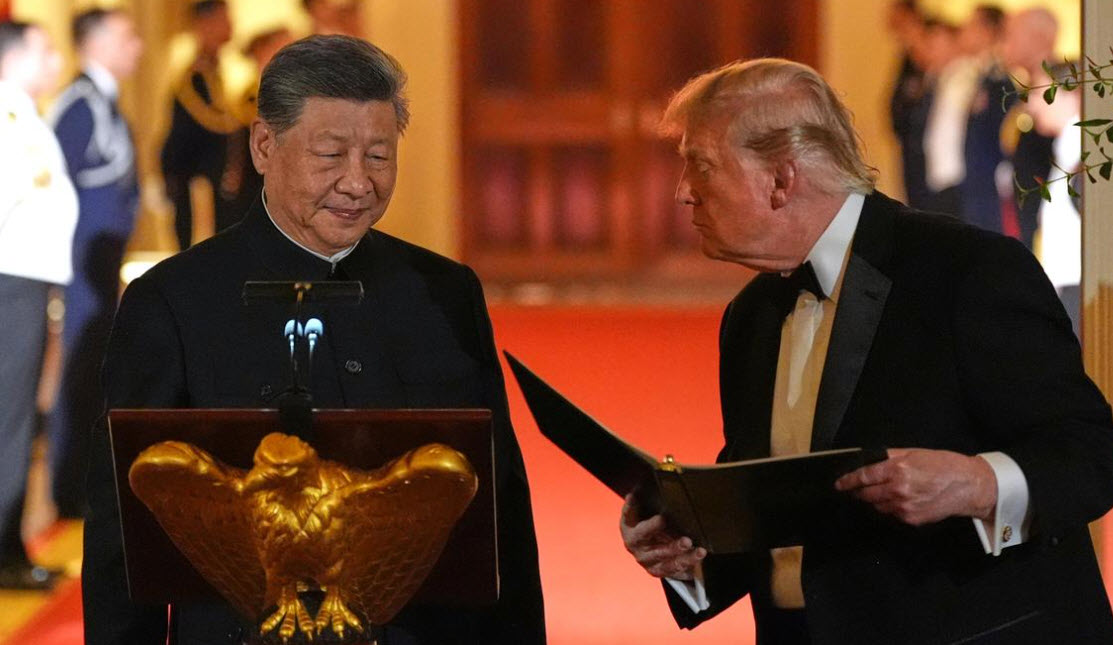
By K Raveendran The meeting between Donald Trump and Xi Jinping carried all the ceremony expected when the leaders of the world’s two most powerful countries sit across the table. On artificial intelligence, however, the encounter produced little that matched either the scale of the technology’s advance or the urgency surrounding its risks. The two […]

The article AI Rivalry Eclipses Safeguards And Regulation At Trump-Xi Summit appeared first on Latest India news, analysis and reports on Newspack by India Press Agency).

By R. Suryamurthy The most consequential question arising from Washington’s latest sanctions legislation is not whether the United States can impose a 100 percent tariff on countries buying Russian oil. It is whether India can continue to conduct an independent energy policy when access to its largest export market is increasingly being linked, directly or […]

The article India’s Russian Oil Dilemma Is Bigger Than Just 100 Percent Tariff appeared first on Latest India news, analysis and reports on Newspack by India Press Agency).

Arabian Post Staff -Dubai Iran has floated a plan to dilute and transfer its stockpile of uranium enriched to 60 per cent to a third country, as Tehran seeks to break a diplomatic deadlock with the United States and secure a phased reopening of the Strait of Hormuz. People familiar with Iran’s position said the proposal would involve first reducing the enrichment level of the material and […]

By Ashok Nilakantan Ayers NEW YORK: The second day of the 81st United Nations General Assembly saw diplomatic spotlight shifting from the opening-day clash of competing worldviews to the harder business of finding common ground — over Gaza, Ukraine, Iran, development, climate, artificial intelligence and the future of multilateral institutions. For India, this was an […]

The article UNGA 81: India Positions Itself As A Bridge Across A Fragmenting World appeared first on Latest India news, analysis and reports on Newspack by India Press Agency).

Global investors go into Thursday’s talks between Donald Trump and Xi Jinping with one overriding demand. They want predictability, and they want it with a long runway attached. Markets have already placed a bet on a calm outcome. Wall Street’s benchmark index climbed 1.5% this week to post its best session since early August, while the main US tech index notched its first record close since June. […]

By Ashok Nilakantan Ayers NEW YORK: External Affairs Minister S Jaishankar arrived at the 81st UN General Assembly with an unusually broad diplomatic canvas before him. In meetings with European, Ukrainian, Arab, Asian and other counterparts, India was simultaneously talking to countries that sit on opposite sides of some of the world’s sharpest geopolitical divides. […]

The article Jaishankar’s Speech At UNGA: Multilateralism, Not ‘Choosing Camps’ appeared first on Latest India news, analysis and reports on Newspack by India Press Agency).

Chinese and US officials concluded a second day of economic talks in New York on Monday, focusing on artificial intelligence, investment and trade ahead of President Xi Jinping’s state visit to the United States this week. China’s Vice Finance Minister Liao Min said the Monday discussions concentrated on implementing understandings reached by the two sides’ lead negotiators. He spoke briefly outside JPMorgan Chase’s headquarters in Manhattan, where […]

US President Donald Trump will expand a planned meeting with Gulf officials in New York this week to include Iraq and Jordan, broadening consultations with Arab governments as Washington weighs its next steps in the conflict with Iran. The meeting is expected on Tuesday on the sidelines of the United Nations General Assembly, where leaders and senior officials from the six Gulf Cooperation Council states are due […]

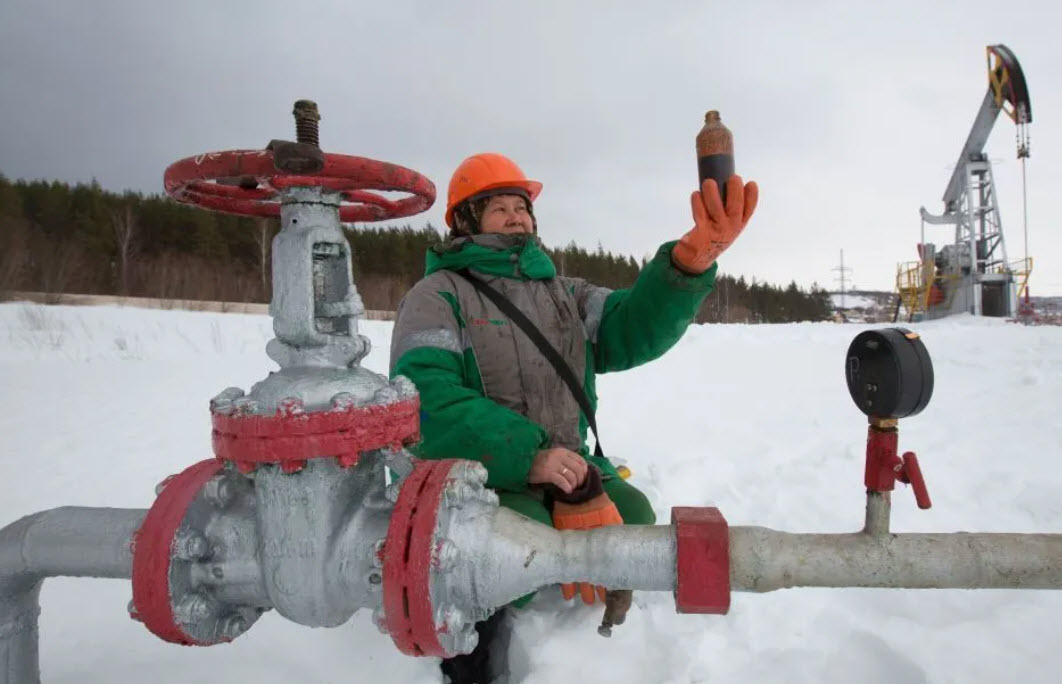
By K Raveendran Donald Trump now possesses one of the most formidable economic weapons available to an American president against countries sustaining Russia’s energy revenues. Yet, the decision on how aggressively to wield it is complicated by a contradiction that Washington cannot easily escape: squeezing Russian oil out of the international market could also push […]

The article Sanctions Against Russian Oil Collide With Economics Of Affordable Oil appeared first on Latest India news, analysis and reports on Newspack by India Press Agency).

Hong Kong has laid out a five-year programme to strengthen its established economic pillars while building new growth engines, with a gold-led commodity trading ecosystem among the centrepieces of its strategy through 2030.

Chief Executive John Lee’s 2026 Policy Address and the city’s first Five-Year Plan for Economic and Social Development set out measures covering finance, trade, shipping, aviation, innovation and technology, alongside efforts to attract capital, companies and skilled workers. The government said the programme is designed to reinforce Hong Kong’s international competitiveness and support longer-term economic development.

Gold will serve as the entry point for a broader commodity trading ecosystem. Hong Kong plans to formally launch its central clearing and settlement system for gold in the first quarter of 2027, following trial operations that began in July. The system is intended to support trading that meets international standards and strengthen links among clearing, settlement, storage and physical delivery.

Hong Kong Exchanges and Clearing will announce details this year of new renminbi-denominated, physically settled gold futures contracts. The government also plans to explore tax concessions for qualifying activities across the gold and commodity trading chain, with proposals expected to be put to the Legislative Council for consultation next year.

The Hong Kong Monetary Authority is studying whether the Exchange Fund should moderately increase its gold holdings and participate in local spot and futures markets. Existing physical gold inventories could gradually be transferred to designated vaults appointed by the Hong Kong Precious Metals Central Clearing Company.

Authorities also plan to expand storage and related infrastructure. Since the London Metal Exchange added Hong Kong to its global warehousing network in 2025, approved storage space has exceeded 60,000 square metres and inventories have risen above 20,000 tonnes of metal. More LME-approved warehouses are planned for the Northern Metropolis.

A half-rate tax concession for physical commodity trading is also being pursued to encourage traders to establish or enlarge operations in the city. A joint working group led by the Secretary for Financial Services and the Treasury will examine market opportunities and possible collaboration between exchanges.

The wider financial strategy seeks to strengthen Hong Kong’s role as an offshore renminbi business hub and an international centre for asset management and risk management. The government plans to deepen green and digital finance, widen financing channels for technology companies and strengthen trade finance, supply-chain finance, clearing, settlement and risk-management services.

A proposed Innovation and Technology Industry-Oriented Fund will receive HK$10 billion in government funding and is expected to reach at least HK$40 billion when market capital is included. Priority areas include life and health technology, artificial intelligence and robotics, semiconductors and smart devices, digitalisation, and sustainable development.

The five-year plan also calls for greater emphasis on high-value maritime services rather than relying mainly on traditional port logistics. Measures include reforms to ship registration, support for ship financing and marine insurance, and further development of maritime arbitration and other professional services.

Hong Kong also intends to build a broader aviation industry ecosystem. Plans include developing aircraft-parts processing and trading, participating in research and certification connected with domestically developed aircraft, and expanding sustainable aviation fuel supply chains across the Greater Bay Area. Authorities aim for sustainable aviation fuel to account for 1% to 3% of fuel used by departing flights at Hong Kong International Airport in 2030.

Trade policy will focus on digitalisation, diversification and higher-value supply-chain services. The government wants more companies to use Hong Kong for international orders, foreign-exchange transactions, treasury operations, trade finance and supply-chain management, while attracting regional and international headquarters.

The plan places innovation alongside the traditional pillars, with support directed towards artificial intelligence, robotics, life sciences, microelectronics and advanced manufacturing. It also identifies aerospace technology, marine technology, quantum technology and embodied intelligence as fields for longer-term development.

By T N Ashok The passage by the US Congress of the Lindsey O. Graham Sanctioning Russia and Iran Act of 2026 has confronted India with a problem that is simultaneously diplomatic, economic and strategic. The immediate headline is stark: the legislation creates a statutory pathway allowing President Donald Trump to impose tariffs of up […]

The article India’s Graham Act Dilemma: Energy Security Meets US Tariff Weapon appeared first on Latest India news, analysis and reports on Newspack by India Press Agency).

Matein Khalid I never thought a routine telegraphed 0.25% a rate hike at a FOMC conclave would make September 16, 2026 one of the scariest days in my investing career, right up there with September 15, 2008 (the Tuesday Lehman died), September 11, 2001 the day the WTC Feng Shui twin sentinels of Manhattan died or Black Wednesday September 15 1992, when my Magyar idol George Soros […]

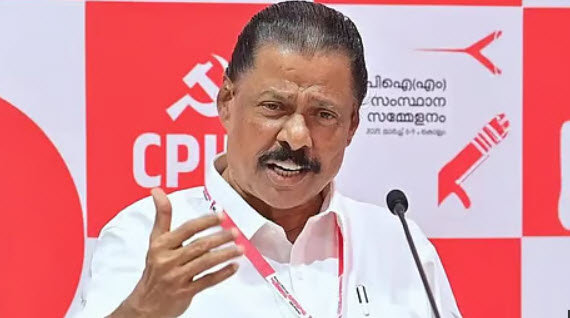
By P. Sreekumaran THIRUVANANTHAPURAM: A big salute to the CPI(M)’s lower-level leaders and the party cadres. For, it was their bold, open and trenchant criticism of the leadership which forced the party to go for a change for the better. The party’s central leadership, ably led by general secretary M. A. Baby, also deserves full […]

The article Kerala CPI-M in self-critical, corrective mode at three-day conclave appeared first on Latest India news, analysis and reports on Newspack by India Press Agency).

Foreign capital has just delivered its verdict on the United States, and the verdict is not what Washington wants to hear. A record $600 billion flowed into US equities over the past year, outpacing foreign purchases of Treasuries for the first time since the 2008 financial crisis. For decades, buying America meant buying its government debt alongside its companies as though they were one investment. This assumption […]

Eight major US banking trade groups have urged Senate leaders to tighten the CLARITY Act’s restrictions on stablecoin rewards, warning that a new regulatory “circuit breaker” would take effect only after damaging deposit outflows had already occurred. The warning came in a joint letter sent on Monday to Senate Majority Leader John Thune and Democratic Leader Chuck Schumer ahead of a procedural vote scheduled for Tuesday, September […]

By R Suryamurthy The 2026 New Delhi Declaration arrives at a revealing moment for BRICS: two decades after the grouping emerged as a shorthand for the rising economic weight of the Global South, it is no longer merely demanding a larger seat at the table of global governance, but is beginning to construct the institutional […]

The article BRICS is not building a new order, but a hedge against the old one appeared first on Latest India news, analysis and reports on Newspack by India Press Agency).

Egypt and India have agreed to pursue concrete steps towards lifting bilateral trade to $12 billion, with President Abdel Fattah El-Sisi and Prime Minister Narendra Modi also discussing ways to expand investment ties during talks on the sidelines of the 18th BRICS Summit in New Delhi.

The leaders met on Sunday as Egypt pressed for faster progress on a trade goal first set during El-Sisi’s state visit to New Delhi in January 2023. Egypt’s presidency said the discussions covered measures to strengthen the strategic partnership, increase commerce and encourage more investment from India in sectors including manufacturing, technology, clean energy and the automotive industry.

El-Sisi stressed the importance of translating the economic relationship into projects and commercial flows capable of taking trade to the $12 billion target. The two sides also reviewed opportunities for companies from India to expand their presence in Egypt, which Cairo has promoted as a production and export base serving markets in Africa, the Middle East and Europe.

Bilateral merchandise trade stood at about $6.5 billion in the 2025-26 financial year, according to figures cited by India’s embassy in Cairo. That leaves the two countries seeking almost to double the current level if they are to reach the objective discussed by their leaders.

Investment formed a central part of the meeting. Egypt highlighted manufacturing, information technology, renewable and clean energy, and vehicle production as areas where it wants to attract additional capital. Cairo has also sought greater participation by overseas companies in the Suez Canal Economic Zone and other industrial centres as it works to raise exports and secure more foreign currency.

Modi and El-Sisi reviewed the broader strategic partnership and discussed cooperation in economic and commercial fields, along with regional and international developments. Their meeting came as New Delhi hosted the September 12-13 BRICS summit under the theme of resilience, innovation, cooperation and sustainability.

Egypt joined BRICS at the start of 2024 and has since used the grouping to widen economic links with major emerging economies. The New Delhi summit brought together an expanded bloc whose agenda included trade, finance, technology, energy, climate issues and greater use of national currencies in cross-border transactions.

The trade push also builds on institutional contacts between Cairo and New Delhi. Egypt’s Foreign Minister Badr Abdelatty said during BRICS ministerial meetings in May that the two countries wanted to raise bilateral trade to $12 billion over five years and strengthen cooperation in investment, technology and other economic sectors.

El-Sisi and Modi upgraded relations to a strategic partnership in 2023, creating a framework for closer coordination across trade, investment, defence, energy and political consultation. The latest talks focused more narrowly on turning the economic component of that partnership into measurable gains, particularly through private-sector investment and expanded market access.

Egypt has been courting manufacturers as it seeks to increase domestic production and exports, while companies from India already operate in industries including chemicals, textiles, food processing and manufacturing. Cairo’s investment campaign has emphasised projects that can supply the domestic market while using Egypt’s trade agreements and transport links to reach neighbouring regions.

The two leaders also discussed international and regional issues, according to Egypt’s presidency, without announcing a separate bilateral agreement during the meeting. Their talks were among a series of leader-level engagements held around the BRICS gathering as member states sought to advance economic cooperation alongside the summit’s wider diplomatic agenda.

For Egypt, the $12 billion goal provides a benchmark for a relationship that has expanded beyond traditional merchandise trade into investment-led cooperation. For India, stronger commercial ties with Egypt offer access to a major Arab and African market and to production locations close to the Suez Canal, one of the world’s principal shipping routes.

VISHNU RAJA
RYO YAMADA
HITORI GOTOH
IKUYO KITA