

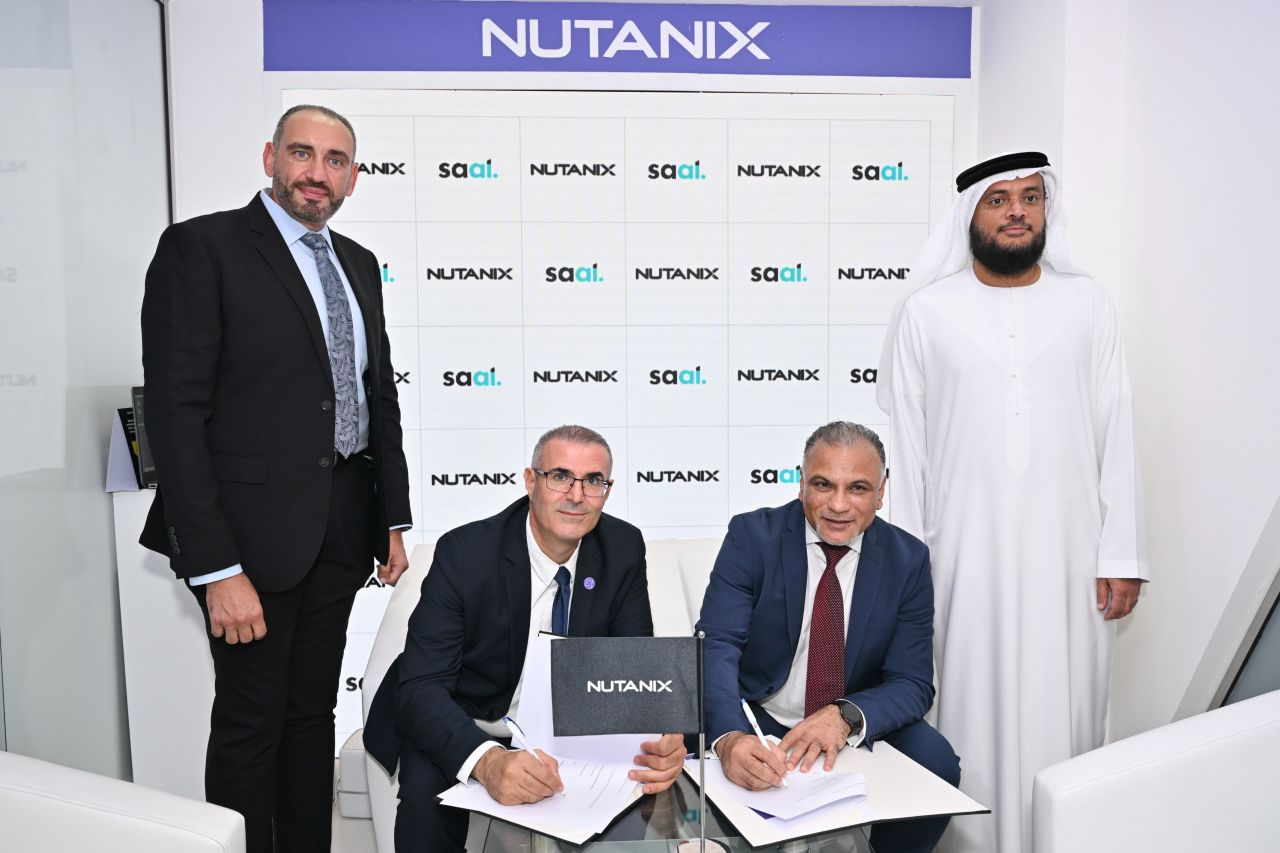
Saal. ai and Nutanix have unveiled SovereignGPT at a launch event in Abu Dhabi, positioning the platform as a government-grade artificial intelligence system designed to meet stringent data sovereignty and security demands while retaining the performance expected of mission-critical deployments. The announcement places Abu Dhabi at the centre of a growing push by governments and regulated industries to localise advanced AI capabilities without ceding control over sensitive data.
The system is built on the Nutanix Cloud Infrastructure platform, combining virtualised compute, storage and networking with an architecture designed for resilience and high availability. According to the companies, SovereignGPT is engineered to operate within national borders, enabling public-sector agencies and strategic industries to deploy large language models while complying with sovereign data mandates, classified-workload requirements and sector-specific regulations.
At the core of the launch is the argument that mainstream generative AI services, often hosted in global hyperscale environments, are ill-suited for jurisdictions that require full control over data residency, access policies and model governance. SovereignGPT is pitched as an alternative that allows institutions to run and fine-tune models on infrastructure that they own or fully control, whether on-premises or within a national cloud.
Executives involved in the launch described the platform as a response to increasing concerns among governments over data exposure, cross-border data flows and dependency on external providers. They emphasised that the system is designed not only to isolate data physically but also to embed security controls across the AI lifecycle, from training and inference to logging and auditing. This approach aims to address risks associated with model leakage, unauthorised access and opaque decision-making.
The Abu Dhabi unveiling reflects a broader regional strategy to build trusted AI ecosystems aligned with national security and economic diversification goals. Authorities across the Gulf have been investing heavily in digital infrastructure, cloud platforms and AI research, with a growing emphasis on systems that can be deployed at scale without compromising sovereignty. By anchoring SovereignGPT in this context, the companies are signalling alignment with policy frameworks that prioritise control, transparency and resilience.
From a technical standpoint, the use of Nutanix Cloud Infrastructure is intended to simplify deployment and operations. Nutanix’s platform is known for its hyperconverged architecture, which integrates compute and storage resources into a single system managed through a unified interface. For AI workloads, this is positioned as a way to reduce complexity while ensuring predictable performance and uptime, both of which are critical for public-sector services and national-scale applications.
Saal. ai’s contribution centres on AI model development, orchestration and application-layer integration. The company has been active in building AI solutions tailored to regulated environments, and SovereignGPT extends that focus by offering pre-configured capabilities that can be adapted to specific use cases such as public administration, defence-adjacent analytics, healthcare systems and critical infrastructure management. The emphasis is on customisation within a controlled environment rather than one-size-fits-all models.
Industry analysts note that the timing of the launch coincides with intensifying global debate over AI governance. Governments are grappling with how to harness generative AI while mitigating risks related to privacy, bias and security. SovereignGPT enters a market segment that is expanding as states seek alternatives to externally hosted AI services, particularly for sensitive workloads. This trend is visible not only in the Middle East but also in Europe and parts of Asia, where data protection regimes and strategic autonomy considerations are shaping procurement decisions.
The companies argue that performance has not been sacrificed in the pursuit of security. They say the platform is designed to scale horizontally, allowing institutions to expand capacity as demand grows, and to maintain high availability through redundancy and automated failover. Such features are framed as essential for applications where downtime or data compromise could have national-level consequences.
Commercially, the launch also reflects intensifying competition among infrastructure and AI providers to capture the sovereign and regulated-enterprise segment. While hyperscalers continue to dominate consumer and enterprise AI services, specialised offerings such as SovereignGPT aim to carve out a niche by addressing requirements that global platforms struggle to meet without extensive localisation.
Follow Arabian Post
Select Arabian Post as your preferred source on Google and MSN News for trusted business news and Arab politics and updates.



