Arabian Post Staff -Dubai
Washington carried out defensive strikes against Iranian drone operations near the Strait of Hormuz after what it described as imminent threats to American forces and commercial shipping, deepening strain around one of the world’s most important oil transit routes while both sides claim they remain committed to a ceasefire.
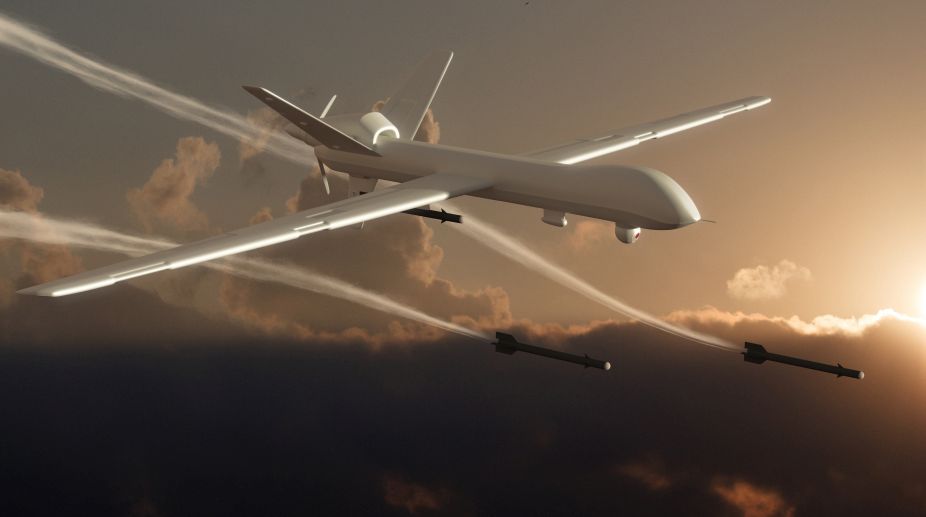
US forces shot down four one-way attack drones and struck a ground control station near Bandar Abbas, the major port city on Iran’s southern coast, where a fifth drone was said to be preparing for launch. The operation followed an alleged attempt by Iranian forces to impede tanker traffic through the strait, a narrow waterway linking the Gulf with the Arabian Sea and carrying roughly a fifth of global oil flows.
Washington framed the strikes as limited and defensive, saying they were intended to protect personnel, vessels and commercial navigation rather than widen the conflict. Tehran condemned the action as a violation of Iranian sovereignty and a breach of the truce, while insisting that its forces had acted in response to unauthorised movements by a tanker and hostile US activity near its territorial waters.
The exchange has exposed the fragility of the ceasefire that took effect in April after weeks of US and Israeli strikes on Iran and retaliatory attacks by Tehran on regional targets. Although the truce reduced the scale of direct confrontation, the maritime theatre has remained volatile, with rival claims over tanker movements, drone launches, mines, missile sites and the legal status of passage through the Strait of Hormuz.
Bandar Abbas is central to Iran’s maritime posture. The city hosts naval, logistics and military facilities and sits close to the entrance of the strait, giving it strategic value in any confrontation involving shipping lanes. A strike on a control station there signals Washington’s willingness to hit command infrastructure when it believes threats are forming, even as diplomats continue efforts to prevent the conflict from spreading.
Iran has rejected US assertions that its drone activity posed an imminent danger to international shipping. Officials and state-aligned outlets have portrayed the confrontation as part of a broader US campaign to maintain military dominance over the Gulf while applying economic pressure on Tehran. The Islamic Revolutionary Guard Corps has warned that further attacks would draw a stronger response, raising concerns that tit-for-tat moves could undermine the ceasefire mechanism.
President Donald Trump has said the Strait of Hormuz must remain open to all international shipping and ruled out any arrangement that would give Iran or any other country unilateral control over the passage. His comments came as reports circulated about a possible framework involving Iran and Oman in managing traffic through the waterway, a claim rejected by Washington as inaccurate.
Oman has traditionally played a mediation role between the United States and Iran, including in past nuclear diplomacy. Its position has become more delicate as maritime security, sanctions and ceasefire monitoring converge around the strait. Any arrangement involving Muscat would need to balance its role as a regional mediator with the concerns of shipping nations, Gulf states and Washington’s military posture.
The United States has also increased economic pressure on Iran’s maritime apparatus by targeting entities linked to the management of passage through the strait. Washington says Tehran has sought to extract payments and sensitive shipping information from vessels seeking safe passage. Iran argues that it is asserting lawful oversight of waters close to its coastline, while critics say the move amounts to coercion against commercial shipping.
Energy markets remain sensitive to each development around Hormuz. Even limited clashes can raise insurance costs, alter shipping schedules and push operators to reassess risk. Tankers carrying crude, condensates and liquefied natural gas from Gulf producers depend on the route, making the waterway a persistent flashpoint during periods of military tension.
The latest episode also complicates wider negotiations over the future of Iran’s nuclear programme, sanctions relief and regional security guarantees. Washington has said it is not satisfied with the current state of talks and remains opposed to any arrangement that would leave Tehran with unrestricted enrichment capacity. Iran continues to demand sanctions relief and recognition of what it calls its sovereign nuclear rights.
Military planners on both sides appear to be testing the limits of the ceasefire while avoiding a full-scale rupture. US officials say intercepting drones and striking launch infrastructure are consistent with defensive rules of engagement. Iran says such operations prove Washington is using the ceasefire as cover for continued attacks.
Also published on Medium.
Follow Arabian Post
Select Arabian Post as your preferred source on Google and MSN News for trusted business news and Arab politics and updates.