BYD has unveiled a high-power “Flash Charging” system that it says can add up to 400 kilometres of driving range in around five minutes, a claim that—if replicated at scale—would narrow one of the biggest gaps between electric vehicles and petrol cars and intensify pressure on rivals led by Tesla. The announcement underscores how the Chinese manufacturer has moved from being a price-competitive disruptor to a technology pace-setter in the world’s largest electric vehicle market.
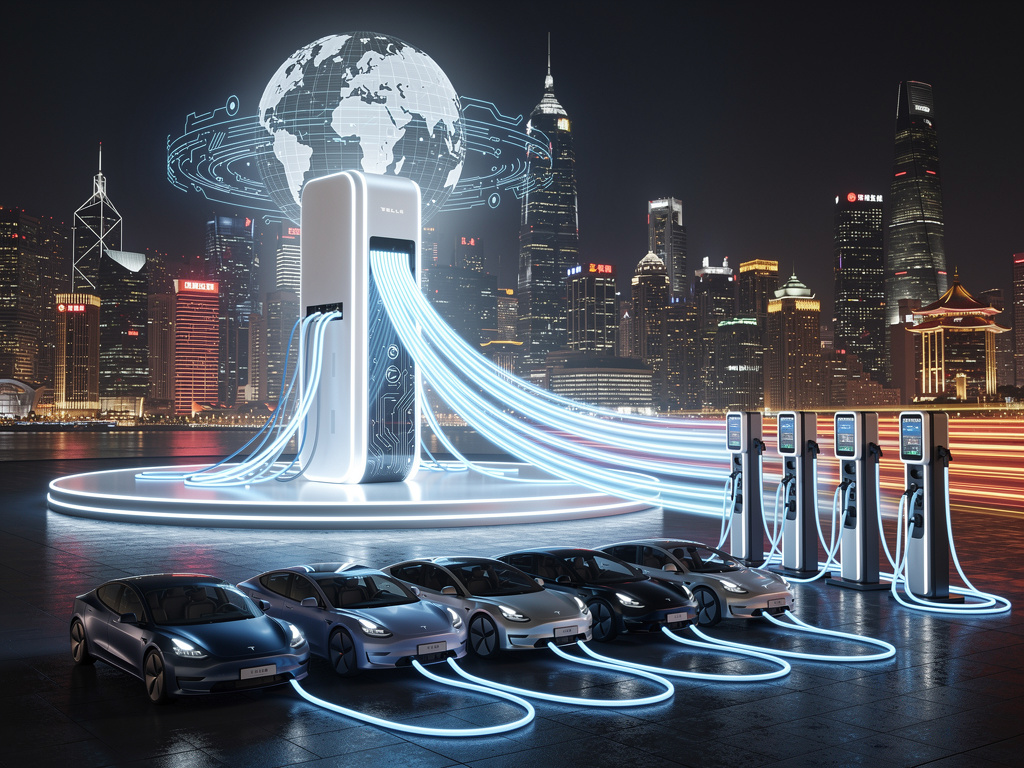
The company said the breakthrough rests on a megawatt-class charging architecture designed to push far higher current safely into a compatible battery pack without accelerating degradation. Demonstrations showed sustained ultra-high charging rates that compress the refuelling experience to roughly the time drivers spend at a fuel pump, addressing range anxiety and queueing concerns that have slowed EV adoption in parts of Europe and North America.
BYD executives framed the advance as the product of vertical integration across batteries, power electronics and vehicle platforms. The group designs and manufactures its own lithium iron phosphate cells, power semiconductors and vehicle software, allowing engineers to tune thermal management and charging curves as a single system. Analysts say this integrated approach has enabled faster iteration than competitors that rely on multiple suppliers.
A five-minute refill claim resets expectations appears inside BYD’s marketing material as a clear signal of ambition, and it lands amid a period of intense rivalry. Tesla’s leadership has repeatedly cautioned that megawatt-level charging for passenger cars raises safety, grid and battery-life challenges. BYD’s counter is that its chemistry and cooling solutions mitigate those risks, with laboratory and road testing pointing to acceptable longevity. Independent verification and long-term data will be crucial, but the claim alone has reset expectations.
China’s charging ecosystem is central to the calculus. The country has rolled out dense urban charging networks and is piloting ultra-high-power corridors along major highways. Grid operators have invested in buffering, on-site storage and demand-response systems to manage spikes. BYD said its flash chargers are designed to work with such infrastructure, though broad deployment would still require coordination with utilities and regulators.
The competitive impact could be significant. Tesla’s Supercharger network remains a benchmark for reliability, but its passenger-car charging rates are lower than the figures BYD is now advertising. European automakers, many of which are transitioning to 800-volt architectures, have promised faster charging yet remain constrained by battery chemistry and cost. A credible five-minute top-up would tilt purchasing decisions, particularly for fleet buyers and long-distance drivers.
Market data already show BYD’s momentum. The company has overtaken Tesla in quarterly global battery-electric sales at times and leads by a wide margin in China when plug-in hybrids are included. Its export push into Europe, Southeast Asia and Latin America has accelerated, aided by a broad model range and aggressive pricing. Technology that compresses charging time could strengthen its hand as trade scrutiny rises and consumers weigh practical ownership costs.
There are hurdles. Ultra-fast charging demands robust connectors, thicker cables and stringent safety protocols. Stations capable of delivering megawatt power are expensive, and their economics depend on utilisation rates that may be uneven outside dense urban areas. Battery health under repeated extreme charging cycles remains a concern for used-car values and warranties, even if early results are promising.
Policy and standards will matter. Harmonising connectors, payment systems and safety rules across regions could slow roll-outs. In Europe, grid upgrades and permitting timelines are bottlenecks; in North America, interconnection queues and peak-demand charges weigh on station economics. BYD’s strategy appears to prioritise China first, with selective overseas pilots where infrastructure readiness is higher.
Follow Arabian Post
Select Arabian Post as your preferred source on Google and MSN News for trusted business news and Arab politics and updates.