

Arabian Post Staff -Dubai
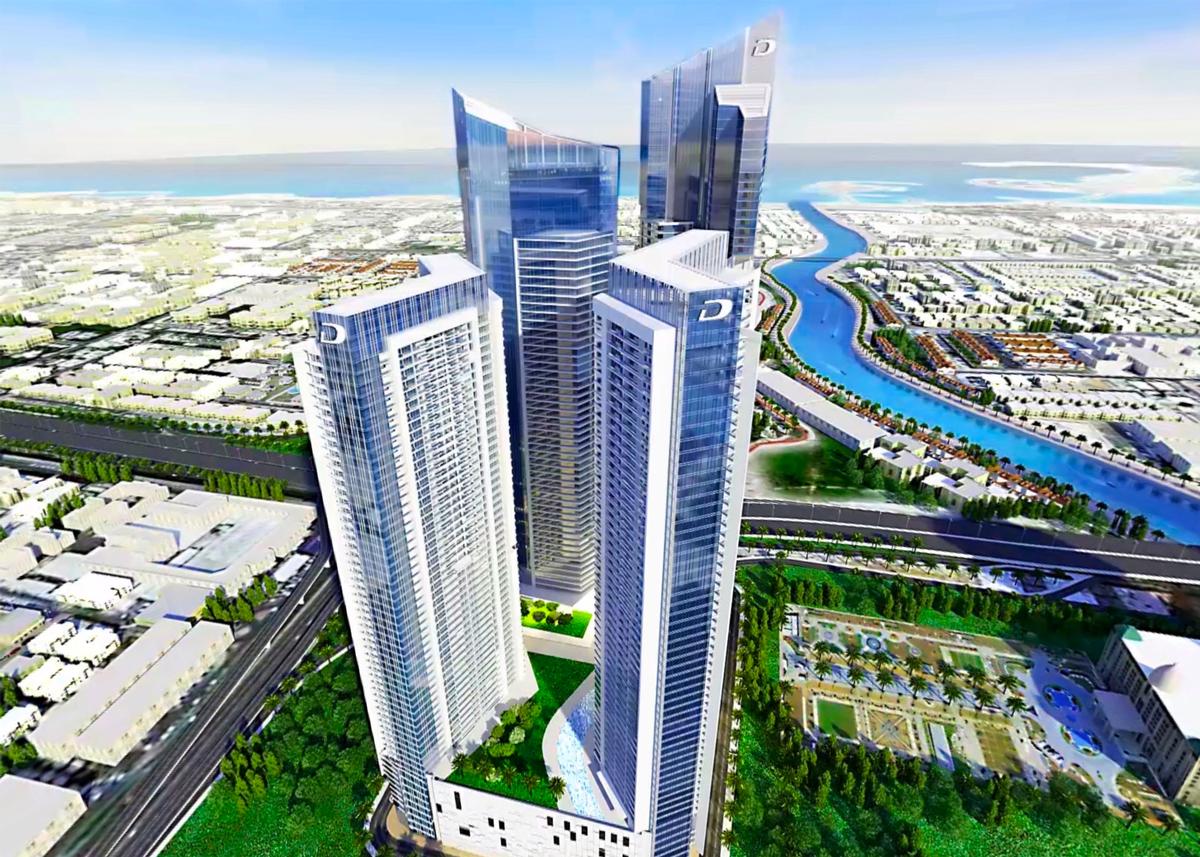
Damac International has launched Harir Residences inside its Damac Hills Baghdad master community, adding twin premium residential towers to a capital city property market increasingly shaped by private developers, affluent buyers and demand for planned urban living.
The project comprises two 12-storey towers with 210 apartments, offering one-, two- and three-bedroom units. The towers are positioned within a larger community near Baghdad International Airport, an area that has become a focal point for large residential schemes, commercial expansion and investor interest as Baghdad’s built environment undergoes a visible shift.
Harir Residences is designed around the model of an integrated residential address rather than a stand-alone apartment block. The units will feature balconies overlooking landscaped areas, lakes and greenery, while the amenities package includes indoor and outdoor fitness facilities, flexible workspaces and a children’s water play area. Residents will also have access to facilities across the wider Damac Hills Baghdad community, including family parks, sports courts, retail space, a clubhouse and Malibu Bay, a wave beach concept adapted from Damac’s Dubai communities.
The launch marks another step in Damac’s Iraq expansion after the developer introduced the first phase of Damac Hills Baghdad in 2025. That phase was built around villa clusters named Misk, Fayrouz and Lamar, with four- and five-bedroom homes aimed at upper-income buyers seeking gated community living. The broader project has been presented as a luxury master-planned development drawing on the company’s experience in Dubai, where Damac Hills became one of its flagship residential districts.
Amira Sajwani, managing director of Damac, said Harir Residences was intended to combine “global luxury” with local character while adding value to Iraq’s property landscape. The company is seeking to position the Baghdad project not merely as a real estate sale but as part of a wider shift towards lifestyle-led development in a market long constrained by infrastructure gaps, limited mortgage depth and uneven urban planning.
Baghdad’s luxury property segment has expanded sharply over the past few years, driven by stronger oil revenues, returning private capital, restrictions on some overseas transfers and a growing appetite among wealthy families for secure, serviced communities. High-end compounds, riverfront projects, malls and hospitality-led developments have become more visible in the capital, even as large parts of the city continue to face strained public services, congestion and environmental pressures.
The demand backdrop is significant. Iraq faces a housing shortage widely estimated at more than 2.5 million units, with pressure concentrated in Baghdad and other major urban centres. Population growth, rural-to-urban migration and years of underinvestment have kept formal housing supply well below demand. The government has sought to reduce the deficit through new city projects, public-private partnerships and wider regulatory reforms, but delivery remains uneven and affordability remains a central concern.
Damac’s latest launch sits at the premium end of that market rather than the affordable housing segment. Its importance lies in the confidence it signals among Gulf-based developers and regional investors who see Baghdad as a high-potential city despite political, regulatory and infrastructure risks. The arrival of branded residential communities also reflects a broader regional trend in which developers package housing with security, leisure, retail and managed amenities to appeal to upper-middle and wealthy buyers.
The project’s location near the airport gives it commercial advantages, particularly for business families, frequent travellers and buyers seeking access to major transport routes. The area around Abbas Ibn Firnas Square and the airport corridor has drawn heightened real estate attention because of its connectivity and available land, although large-scale development in such zones also raises questions over traffic management, utilities, water use and long-term municipal capacity.
Follow Arabian Post
Select Arabian Post as your preferred source on Google and MSN News for trusted business news and Arab politics and updates.




