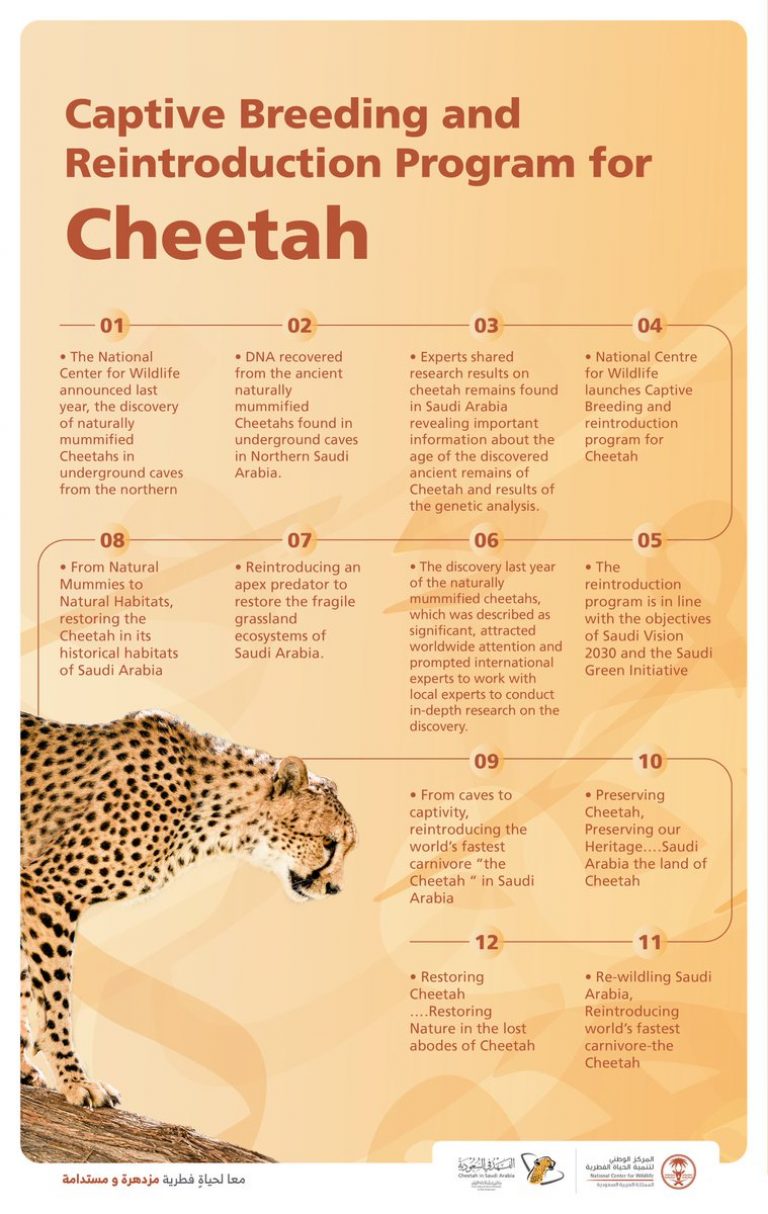
Saudi Arabia’s efforts in cheetah conservation are setting a global benchmark, demonstrating how a nation can integrate scientific research, innovative strategies, and collaborative partnerships to reintroduce this iconic species into its historical habitat. The kingdom has emerged as a leader in this field, effectively combining modern conservation techniques with a deep-rooted commitment to preserving its natural heritage.
The cheetah, renowned for being the fastest land animal, has faced significant threats from habitat loss, human-wildlife conflict, and illegal wildlife trade. Saudi Arabia’s approach to reversing the decline of this species involves a multi-faceted strategy aimed at addressing these challenges comprehensively. Central to this effort is the application of cutting-edge scientific research, which informs the methods used to enhance the cheetah’s chances of survival and successful reintroduction.
Scientific research in Saudi Arabia focuses on understanding the cheetah’s ecological needs and behavioral patterns. This knowledge is crucial for creating environments that meet the species’ requirements and ensuring their adaptation to new areas. Researchers in the kingdom are employing advanced tracking technologies and ecological modeling to monitor cheetah movements and health, providing valuable data that guides conservation strategies.
One of the key components of Saudi Arabia’s conservation strategy is habitat restoration. The kingdom has embarked on ambitious projects to rehabilitate and expand natural landscapes that are crucial for cheetah survival. These efforts involve not only reforestation but also the creation of wildlife corridors that facilitate safe movement between different areas. By restoring and connecting habitats, Saudi Arabia aims to support a stable and sustainable cheetah population.
Additionally, Saudi Arabia’s conservation strategy emphasizes the importance of innovative approaches. The kingdom has pioneered the use of technology in monitoring and protecting cheetahs. For example, remote camera systems and GPS collars are utilized to gather real-time data on cheetah behavior and interactions. This technology allows for more precise management of cheetah populations and helps in mitigating risks such as poaching or habitat encroachment.
Collaboration is another cornerstone of Saudi Arabia’s cheetah conservation efforts. The kingdom has partnered with international conservation organizations, wildlife experts, and local communities to enhance the effectiveness of its initiatives. These partnerships facilitate the exchange of knowledge and resources, allowing Saudi Arabia to benefit from global expertise while contributing its own insights and advancements.
Local communities play a crucial role in the success of conservation programs. In Saudi Arabia, there is a concerted effort to engage local populations in conservation activities and raise awareness about the importance of protecting cheetahs. Educational programs and community involvement initiatives are designed to foster a sense of stewardship and encourage sustainable practices that benefit both wildlife and people.
The reintroduction of cheetahs into their historical habitats is a key goal of Saudi Arabia’s conservation efforts. By carefully selecting suitable release sites and ensuring that these areas are adequately prepared, the kingdom aims to provide cheetahs with the best possible chance of thriving in the wild. This process involves extensive planning and monitoring to ensure that the reintroduced cheetahs can establish stable populations and contribute to the ecological balance of their new environments.
Saudi Arabia’s commitment to cheetah conservation reflects a broader trend in the region towards embracing environmental stewardship and wildlife protection. The kingdom’s approach serves as a model for other nations grappling with similar conservation challenges, demonstrating that with the right combination of science, innovation, and collaboration, significant progress can be made in preserving endangered species.
In addition to its conservation efforts, Saudi Arabia is also focused on enhancing its research capabilities and expanding its partnerships. The kingdom continues to invest in scientific research and technology to improve its conservation practices and achieve better outcomes for cheetahs and other wildlife species. By staying at the forefront of conservation science and maintaining strong collaborative networks, Saudi Arabia aims to ensure the long-term success of its cheetah conservation initiatives.
The success of Saudi Arabia’s cheetah conservation programs has implications beyond the immediate goal of protecting this species. It highlights the potential for nations to play a leading role in global conservation efforts by leveraging their unique resources, expertise, and partnerships. Saudi Arabia’s approach exemplifies how targeted strategies and collaborative efforts can lead to meaningful conservation outcomes, offering valuable lessons for other regions and countries engaged in similar endeavors.
As Saudi Arabia continues to advance its cheetah conservation programs, the kingdom’s experience underscores the importance of a holistic approach to wildlife preservation. By integrating scientific research, innovative technologies, and strong partnerships, Saudi Arabia is not only working to secure the future of the cheetah but also contributing to the broader goals of global biodiversity conservation. The kingdom’s achievements in this field stand as a testament to its dedication to preserving the natural world and protecting endangered species for generations to come.
Follow Arabian Post
Select Arabian Post as your preferred source on Google and MSN News for trusted business news and Arab politics and updates.