News related to
Arabia

India has cut special excise duties on petrol and diesel after a sharp rise in global crude prices, seeking to shield consumers from a broader inflation shock as the Iran war and disruption around the Strait of Hormuz continue to unsettle energy markets. A government order issued late on Thursday reduced the special excise duty on petrol to Rs 3 a litre from Rs 13, while the levy on diesel was removed entirely from Rs 10 a litre. At the same time, New Delhi imposed fresh windfall taxes on diesel and aviation turbine fuel exports to recover part of the revenue loss and manage the fiscal hit.

The move underlines the pressure facing policymakers as oil prices remain volatile and the rupee weakens, raising the cost of imports for one of the world’s biggest crude buyers. Brent crude climbed above $112 a barrel on Friday, extending a rally driven by doubts over any near-term ceasefire and persistent fears that supply disruptions in the Gulf could deepen. Traders and analysts have said the risk premium now reflects not only lost barrels but also the strategic importance of Hormuz, through which a large share of global oil and liquefied natural gas flows.

For India, the tax cut is as much about inflation management as political optics. Retail prices at state-run fuel retailers have been largely held steady even as global crude costs have climbed, forcing public-sector oil marketing companies to absorb losses on every litre sold. Reuters reported that those losses were running at about Rs 24 a litre on petrol and Rs 30 on diesel at the time of the duty cut, a burden that had begun to raise concerns about the financial strain on the country’s dominant fuel retailers. By lowering excise duties, the government creates room for those companies to keep pump prices stable without taking the full blow on their balance sheets.

That relief, however, comes with a cost. The excise reduction is expected to trim government revenue by roughly Rs 70 billion every fortnight, with the net impact estimated at about Rs 55 billion after accounting for the new export levies on diesel and jet fuel. Those numbers matter because New Delhi is already balancing slower growth risks, higher import costs and sensitivity in bond markets. India’s 10-year government bond yield rose as investors weighed the inflationary impact of oil and the possibility that fiscal targets may come under pressure if energy turbulence persists.

Currency markets have been sending a similar warning. The rupee slipped beyond 94 to the US dollar, marking a record low and capping its weakest fiscal-year performance in more than a decade. Higher oil prices have compounded external pressures by widening import costs and fuelling worries over inflation, while signs of reduced support from the Reserve Bank of India have added to volatility in both the currency and government debt markets. The combination of a softer rupee and expensive crude intensifies the urgency for measures that can prevent fuel inflation from feeding into transport, food and manufacturing costs.

The government has paired the tax changes with broader supply assurances. Officials have said retail fuel prices will remain stable and that supplies of fuel, fertiliser and coal are adequate. India has also increased the availability of liquefied petroleum gas for industrial use, an indication that authorities are trying to prevent energy stress from spilling into factories and power demand. That broader messaging is aimed at containing panic in a market already on edge over whether the Middle East conflict could trigger a more prolonged energy shock.

The burden of holding down prices has not been distributed evenly across the sector. State-run retailers, which control more than 90 per cent of the country’s fuel stations, have largely refrained from raising pump prices, while private players have begun adjusting. Nayara Energy, for example, increased gasoline and gasoil prices this week, citing the combined impact of a weaker rupee and surging global crude prices. The divergence highlights the structural challenge for the government: keeping inflation contained without unduly damaging the finances of state-backed refiners and marketers.


Arabian Post Staff -Dubai   Motorists in the UAE are likely to pay more for petrol and diesel in April after the Iran war sent crude prices sharply higher and intensified disruption across the Gulf’s main energy and shipping routes, raising the cost base that feeds into the country’s monthly fuel-price adjustment. April rates were due to be announced on March 31, and local pricing remains tied […]

Digital Realty has begun providing colocation infrastructure to Samsung Electronics at its ICN10 facility in Seoul, a deal that highlights how large corporate users in South Korea are seeking more resilient, high-density digital infrastructure as artificial intelligence, cloud services and mission-critical enterprise workloads put heavier demands on power, cooling and connectivity. The announcement was made on March 25 by Digital Realty, which said the arrangement would support Samsung Electronics’ enterprise IT operations from its Seoul site.

The ICN10 facility, located in Sangam-dong in Mapo-gu, has been operating since 2022 and is described by the company as South Korea’s first carrier-neutral data centre. Digital Realty says the building has a maximum IT load of 12 megawatts and around 132,000 square feet of space, with high-density power architecture, network connectivity and the resilience needed for large-scale computing environments. Those specifications matter because enterprise clients are no longer looking only for secure rack space; they increasingly want facilities that can handle denser compute loads without compromising uptime.

For Samsung Electronics, the move points to a practical shift in how even large technology groups manage parts of their own internal infrastructure. Rather than relying exclusively on self-operated facilities, major companies are turning to specialist operators for colocation capacity that can be scaled more quickly and managed to global standards. Digital Realty framed the arrangement as support for a large-scale customer environment in Korea, while emphasising stable, high-performance infrastructure for global enterprises. That wording suggests the deal is less about consumer-facing products and more about the backbone systems that keep a multinational company running across data-intensive operations.

The timing is notable because Seoul’s data-centre market is expanding while facing mounting strain over where future capacity can be built and how it will be powered. Cushman & Wakefield said the Greater Seoul Area reached 533 megawatts of capacity in the first half of 2025, with a further 715 megawatts in the development pipeline, alongside land secured for another 250 megawatts. Its later market update said the second half of 2025 saw double-digit year-on-year growth, while AI demand and tighter power-related rules were reshaping development patterns. That combination of growth and constraint is pushing operators and customers alike to value operational certainty.

South Korea’s broader technology push adds another layer to that demand story. Reuters reported this week that Seoul approved a 250 billion won investment in AI chip startup Rebellions, part of a wider effort to strengthen domestic semiconductor and advanced computing capabilities. Reuters also reported that SK Hynix is pursuing a US listing partly to fund major chipmaking investments tied to rising AI demand. Those moves sit outside the colocation market itself, but they reinforce the same structural point: processing power, data movement and digital infrastructure are becoming more strategically important across the economy.

Digital Realty’s position in Seoul also reflects a larger contest among global and regional operators seeking to capture Asia’s enterprise and cloud demand. Market research and adviser reports point to South Korea as one of the faster-growing data-centre markets in the region, driven by digital-first consumers, cloud adoption and increased enterprise modernisation. JLL’s 2026 outlook said the global data-centre sector could nearly double between 2025 and 2030, while other market estimates show South Korea’s colocation and broader data-centre segments expanding strongly through the decade. Forecasts from commercial research firms should be treated cautiously, but taken together with operator activity and land acquisition trends, they show why Seoul has become a closely watched infrastructure market.

The Samsung agreement may not be transformative in size on its own, yet it carries signalling value. When one of the country’s largest technology groups places enterprise workloads with an external colocation provider, it gives weight to the argument that carrier-neutral, high-density facilities are becoming integral to mainstream corporate IT strategy rather than serving only cloud giants and telecom operators. It also strengthens Digital Realty’s credentials in a market where network diversity, reliability and location all matter.

Questions remain over how quickly South Korea can add capacity in and around Seoul without worsening power bottlenecks or pushing new builds further from the capital’s main concentration of corporate demand. Legal and advisory analyses have pointed to the mismatch between the location of generation capacity and the heavy concentration of data centres around metropolitan Seoul. That tension is likely to shape the next phase of expansion, forcing operators to balance geography, power access and customer proximity more carefully than before.

Arabian Post Staff -Dubai Telda has moved beyond payments and cards to add stock and fund investing to its app, opening a new front in Egypt’s fast-growing race to attract first-time retail investors. The Cairo-based fintech said on Sunday that users can now buy and sell shares on the Egyptian Exchange and subscribe to investment funds from within the same platform, without relying on a traditional broker […]

Arabian Post Staff -Dubai Gold prices climbed sharply on Friday, reversing part of this week’s slide as investors stepped back into the market after bullion fell to a four-month low, while traders also watched for any sign that tensions in the Middle East might ease. Spot gold rose more than 3% at its intraday peak before trading about 2.6% higher at $4,491.78 an ounce by afternoon dealings […]

Erythritol, a low-calorie sweetener widely used in sugar-free drinks, protein bars, keto snacks and diabetic-friendly foods, is facing renewed scrutiny after new research found it can harm cells lining tiny blood vessels in the brain in ways that may favour clotting and reduce normal vessel relaxation. The study adds to a growing body of evidence that has raised questions over whether one of the food industry’s most […]

Disneyland Paris has formally opened a new phase of its long-running expansion, using the March 29 debut of World of Frozen to relaunch its second gate as Disney Adventure World, a move the company says marks the biggest transformation in that park’s history. Official announcements from Disneyland Paris, backed by Reuters and Associated Press reporting, show the renamed park now centres on a large new Frozen-themed land, […]

Advertisements

Anger over the war with Iran has widened the scope of the anti-Trump “No Kings” protests across the United States, turning what began as a broad movement against executive overreach into a sharper rebuke of the White House’s foreign and domestic agenda. Demonstrations on Saturday spread through more than 3,100 locations across all 50 states, with organisers and news reports describing one of the largest coordinated days […]

Blippo+ has arrived as one of the stranger releases to gain traction across independent gaming, presenting itself not as a conventional narrative title but as a faux television service from an alien world. Built around channel surfing, short-form live-action broadcasts and a deliberately warped retro aesthetic, the project has drawn attention for turning the language of late-20th-century television into an interactive spectacle that feels equal parts parody, […]

U. S. spot Bitcoin exchange-traded funds recorded their heaviest one-day net withdrawals in three weeks on Thursday, with investors pulling about $171.2 million as Bitcoin slid below the $70,000 mark and broader market nerves rose over the risk of a fresh flare-up in the conflict involving the United States, Israel and Iran. The outflow, based on market data compiled by SoSoValue and widely tracked across the crypto […]

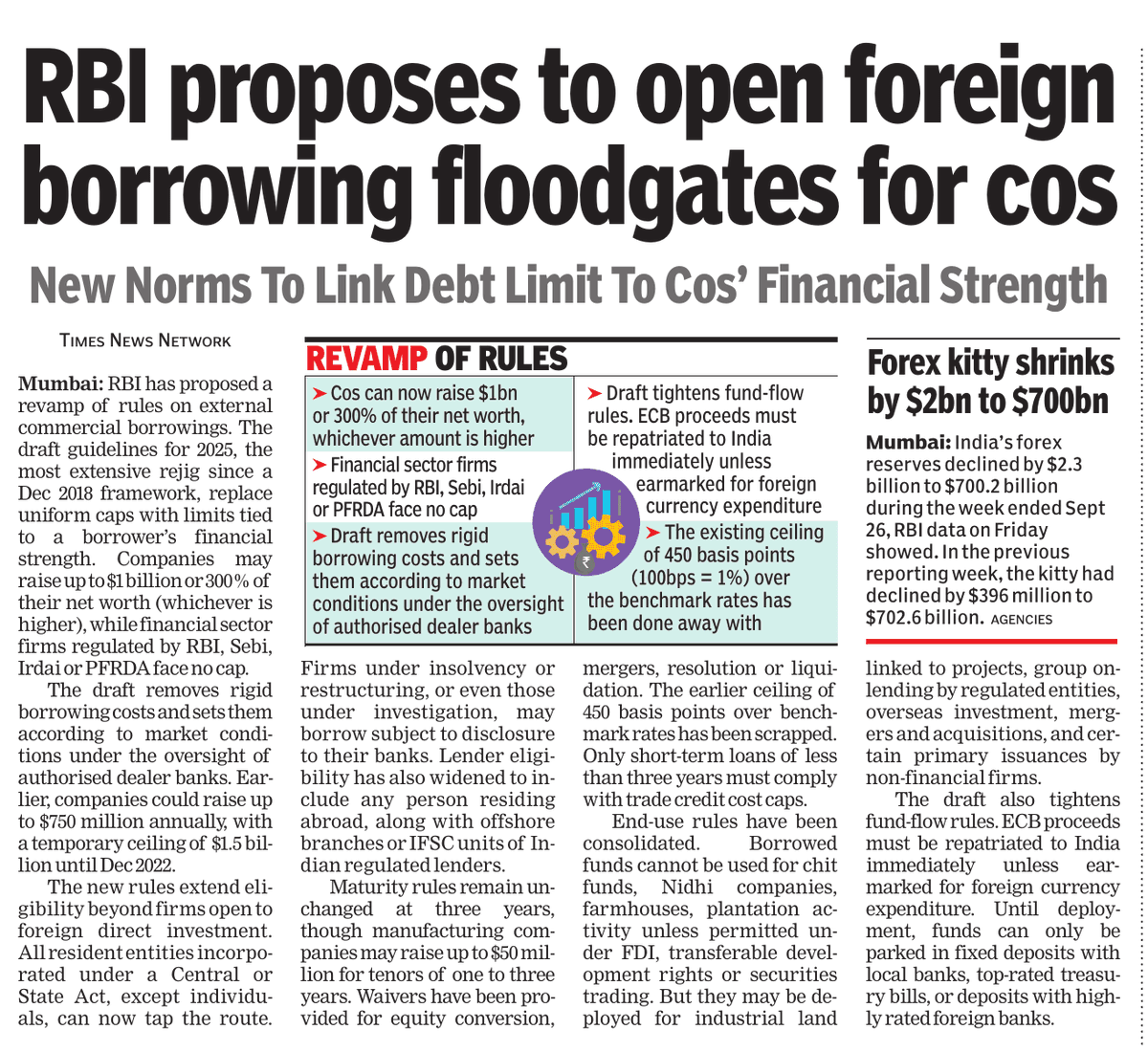
Banks are pressing the Reserve Bank of India to soften a new foreign-exchange rule that dealers say could force the unwinding of large arbitrage positions, deepen trading losses and add fresh strain to the rupee at a fragile moment for the currency market. The central bank has told lenders to keep their net open rupee positions in the onshore deliverable market within $100 million by the end of each business day from April 10, replacing a far more flexible regime under which banks’ boards could set limits linked to capital.

The pushback from lenders has grown because the rule change lands after weeks of pressure on the rupee from higher oil prices, foreign portfolio outflows and war-driven risk aversion across global markets. The rupee touched a record low of 94.84 against the US dollar after a sharp slide this week, underscoring the urgency with which the central bank is trying to contain volatility and regain influence over price formation in the domestic market.

At the heart of the dispute is a trading structure that banks have used to profit from differences between the onshore market and the offshore non-deliverable forward, or NDF, market. Under the earlier framework, dealers could offset positions across the two venues without breaching broader exposure limits. The new rule narrows that room sharply by capping end-of-day net open rupee exposure in the onshore deliverable market, regardless of how positions are balanced elsewhere. Traders told Reuters that arbitrage books likely to be affected are worth about $10 billion to $18 billion, while Bloomberg reported that banks see total unwinding pressure building toward roughly $30 billion.

That distinction matters because the RBI appears to be targeting a channel through which offshore pricing has increasingly spilled back into the domestic market. By tightening end-of-day exposure, the central bank is seeking to reduce the ability of banks to transmit volatility from the NDF market into onshore rupee trading, while making its own intervention in the domestic market more effective. That objective fits with a broader pattern this month, as the RBI has been active in spot, futures and non-deliverable forward markets to steady the currency.

Banks, however, argue that the speed of implementation could be costly. Treasury officials have warned that compressing positions before the April 10 deadline may force disorderly exits, widen onshore-offshore spreads and crystallise mark-to-market losses on trades that had previously been profitable. The immediate complaint is not only about tighter oversight but also about the lack of transition time for legacy positions built under the old regime. Reports from the domestic financial press say lenders have asked the central bank to reconsider or provide relief, reflecting concern that a hard cap applied uniformly across banks does not distinguish between speculative bets and market-making activity.

The central bank’s tougher line comes as India’s external buffers, while still substantial, have been tested by intervention. RBI data cited in a Reuters report showed foreign-exchange reserves at $709.76 billion as of March 13, enough to cover 11.2 months of imports and about 95 per cent of outstanding external debt. Even so, reserves had fallen notably over the month as the central bank sold dollars to smooth rupee moves. That means policymakers are trying to balance two goals at once: preserving confidence in India’s macro-financial resilience while discouraging trading structures that may amplify pressure during periods of external shock.

Another layer of complexity is that the RBI had, only weeks earlier, proposed broader reforms that would ease some foreign-exchange transaction norms for authorised dealers and give market participants greater flexibility in hedging and balance-sheet management. That makes the present clampdown look less like a reversal of liberalisation and more like a targeted response to extraordinary market conditions. For banks, though, the contrast has sharpened frustration: one arm of the regulatory agenda promises flexibility, while another has suddenly imposed a hard operational ceiling on rupee positions.

Ethereum has drawn renewed market attention after a sharp jump in large-holder transactions coincided with a formal push by developers to harden the network against future quantum-computing risks. Data circulated by analyst Ali Martinez showed whale transactions rising from 123 on 21 March to 2,055 on 24 March, a move that put the token back at the centre of debate over whether big holders are accumulating, rotating […]

Arabian Post Staff -Dubai US Vice President JD Vance has sought to reassure voters and markets that Washington does not intend to become locked into a prolonged military commitment in Iran, arguing that higher fuel costs are a temporary consequence of a campaign the administration expects to wrap up rather than harden into another open-ended Middle East war. His remarks come as the Trump administration faces a […]

Arabian Post Staff -Dubai Exeed has opened a new showroom in Jeddah through Arabian Heritage Motors, part of Al Ghurair Mobility, extending the premium vehicle brand’s physical presence in Saudi Arabia as competition intensifies among Chinese carmakers across the Gulf. The Jeddah launch was disclosed by Al Ghurair in a corporate post and comes after Exeed appointed Al Ghurair as its exclusive distributor in the Kingdom in […]

Anthropic’s accidental exposure of internal material about an unreleased AI system dubbed Claude Mythos has jolted investors, sending cybersecurity shares sharply lower and adding to pressure across risk assets, while reviving a deeper debate over whether frontier AI is moving faster than the safeguards meant to contain it. The leaked material, first reported by Fortune on March 26 and 27, described Mythos as Anthropic’s most powerful model […]

Intercontinental Exchange, the parent of the New York Stock Exchange, has expanded its push into prediction markets with a fresh $600 million investment in Polymarket, tightening a partnership that could take its total commitment to almost $2 billion and further pull event-based trading into the financial mainstream. ICE said the new cash injection forms part of a previously announced arrangement and does not expect to materially affect […]

Google has set 2029 as the target date to migrate its authentication systems to post-quantum cryptography, sharpening the timetable for a technology shift that security agencies and standards bodies had already said could take years. The move gives fresh weight to a deadline that parts of the Ethereum ecosystem have been preparing for since 2022, while Bitcoin still lacks a settled network-wide plan despite a growing body […]

Morgan Stanley has moved to shake up the crowded US spot bitcoin exchange-traded fund market by proposing a fee of 14 basis points for its planned Morgan Stanley Bitcoin Trust, a level that would make it the cheapest fund in the segment if regulators clear the product for launch. The filing marks a sharper price challenge than many on Wall Street expected from a late entrant and […]

Foreign visitors to India will have to complete a digital e-Arrival Card before landing from April 1, 2026, marking the end of the paper disembarkation card that travellers had long filled out on board or at immigration counters. The move is part of a wider technology-led overhaul of border processing that authorities say is aimed at cutting queues, improving data accuracy and giving immigration officers faster access to passenger information.

The e-Arrival Card is submitted online through the official Indian Visa Online portal, the Bureau of Immigration platform or the government’s Indian Visa Su-Swagatam mobile app. The current official guidance says the form must be completed within 72 hours before arrival and is for arrival information only, not a visa. Travellers are asked to provide passport details, travel information, contact particulars, purpose of visit and their address in India, after which a digital confirmation is generated for presentation on arrival.

The April 1 deadline is not the start of the digital system itself but the point at which the physical card is being withdrawn after a transition period. Government-linked notices issued through overseas missions said the digital disembarkation process had already come into force on October 1, 2025, while paper cards would continue temporarily for as long as six months or until further notice. An immigration advisory published this week by Fragomen, citing a government announcement, said physical cards would be permanently discontinued from April 1, 2026.

That chronology matters because it shows India is not unveiling a wholly new border form overnight, but completing a staged shift towards paperless arrival processing. The official visa portal now prominently carries a notice that foreigners and OCI card holders can complete and submit the e-Arrival Card online within 72 hours before arrival through approved government channels. That wording suggests authorities are folding the form more tightly into the wider immigration and visa network rather than treating it as a stand-alone travel add-on.

The policy aligns with a broader expansion of the Immigration, Visa, Foreigners Registration and Tracking scheme, or IVF-RT, which the Union Cabinet has approved for another five years through March 2031 with an outlay of Rs 1,800 crore. Officials have described the plan as a way to link visa issuance, immigration records, travel history and foreigner registration databases so that decisions at entry and exit points rely less on fragmented manual checks and more on integrated digital records.

For travellers, the most immediate consequence is procedural rather than legal. The e-Arrival Card does not replace a visa, e-Visa or other entry authorisation. It supplements them. A visitor who already holds valid travel permission for India will still need to file the digital arrival declaration in the permitted time window. That means airlines, travel agents, business mobility firms and universities handling international arrivals are likely to spend the next few days reminding passengers that a boarding document and an arrival declaration are now separate steps in the journey.

The government’s pitch is built around speed and visibility. Digital pre-submission allows immigration systems to receive data before a flight lands, which can reduce form-filling bottlenecks at the airport and improve risk screening. Industry specialists tracking mobility rules say the change also gives authorities stronger data control and supports more real-time monitoring of foreign arrivals. That mirrors a global pattern in which governments are replacing handwritten landing cards with app-based or portal-based pre-arrival disclosures.

There are, however, operational questions that matter for passengers. Official pages make clear that the form should be completed within 72 hours of arrival, yet some secondary reports have described slightly different timelines or suggested varying treatment of QR code presentation depending on when the form is filed. The most reliable course for travellers is therefore to follow the instructions displayed on the official government portal or app at the time of submission, rather than relying on social media summaries or copied advisories.

Another area requiring care is who exactly falls under the rule. The current official portal text explicitly refers to foreigners and OCI card holders being able to submit the e-Arrival Card, while some earlier mission notices had described OCI holders as exempt before later updates changed that position. For foreign visitors travelling on tourist, business, student or other visas, the direction is straightforward: the digital arrival filing now sits at the centre of entry processing.

Bitcoin slid to a two-week low on Friday, dropping below $67,000 as a wave of forced liquidations swept through crypto derivatives markets and a broader retreat from risk assets gathered pace. Ether also moved down towards the $2,000 mark, underscoring how quickly sentiment has turned as traders confront weaker equities, elevated oil prices and fading conviction in leveraged bets. The pullback reflected more than a routine bout […]

Arabian Post Staff -Dubai Banishing delivered a polished front-end result for the United States and Saudi Arabia at Meydan on Saturday, winning the $1 million Group 2 Godolphin Mile and handing a notable success to trainer David Jacobson, jockey Silvestre de Sousa and owners Sharaf Mohammed Al Hariri, David Jacobson and Lawrence Roman. The Godolphin-bred six-year-old beat Commissioner King by 2¼ lengths over the mile on dirt, […]

Oracle WebLogic operators are under pressure to close a critical security gap after attackers began probing and exploiting a newly disclosed flaw on the same day public exploit code appeared, according to a honeypot study that tracked activity against a vulnerable WebLogic environment over 12 days. The vulnerability, tracked as CVE-2026-21962, carries a CVSS severity score of 10.0 and affects Oracle HTTP Server and the WebLogic Server […]

A critical weakness in Open VSX’s new pre-publication scanning system allowed malicious extensions to pass security checks and become publicly available, raising fresh concerns over the safety of a software marketplace relied on by Cursor, Windsurf and other tools built on the VS Code extension ecosystem. The flaw, dubbed “Open Sesame” by Koi Security, has been patched, with Open VSX maintainers fixing it in version 0.32.0 after […]

Arabian Post Staff -Dubai Mezza, a new hospitality platform in the UAE, has launched with a model aimed at giving restaurants upfront capital in exchange for future food and beverage credit, offering operators an alternative to bank debt or equity fundraising while also promising a pipeline of diners over time. The company says partner venues can access between AED 20,000 and AED 10 million, with the credit […]

VISHNU RAJA
RYO YAMADA
HITORI GOTOH
IKUYO KITA