Just in:
CR Longdation Aethereal Cybersecurity × Global Cybersecurity Alliance (GCSA) Join Hands to Establish the “AI and Cybersecurity Research Centre” // Fast Just Got Fastest: STING Energy Boost™ Celebrates Kimi Antonelli’s Formula 1® World Championship and the Fan Energy Behind It // Asia Left Behind: Ten international companies have yet to report delivering on their cage-free egg pledges across the region // Cloudflare unveils Zero Wire vulnerability intelligence service // Emirates Group records AED 4.1 billion half-year profit // Kochi police detain two actors over bid to honey trap doctor // Oil and chip shares retreat after Democratic victories // Vance attributes Republican midterm defeats to Iran conflict // ADIA and partners establish $1.4 billion aviation venture // Millions Of Indians May Soon Be Deprived Of Government Assistance // Dubai boat show confirms international shipyard line-up for November // Trump’s Iran War Has A Share Of Contribution To His Midterm Debacle // Xi Jinping Preparing For A Trilateral Summit With Trump And Putin At APEC Summit On Nov 18-19 // APT29-linked campaign exploits outdated Apple and Android software // UK air traffic outage inflicted £33m financial losses // Cyberport Venture & Capital Forum 2026 Grand Opening // Hong Kong mandates crypto transaction disclosures to tax authorities // OpenAI identifies 948 Linux privilege escalation flaws using AI // SC to examine students’ exam plea today // Private varsities bill all set to face the axe //

News related to
Arabia

  Electronic Arts and the creative leadership behind The Sims franchise moved to steady community concerns after confirmation that the US games publisher is in talks over a potential $55 billion transaction involving Saudi Arabia’s Public Investment Fund, Jared Kushner’s Affinity Partners and private equity firm Silver Lake. While the proposed deal remains subject to regulatory approval and has not been finalised, unease has spread among players […]

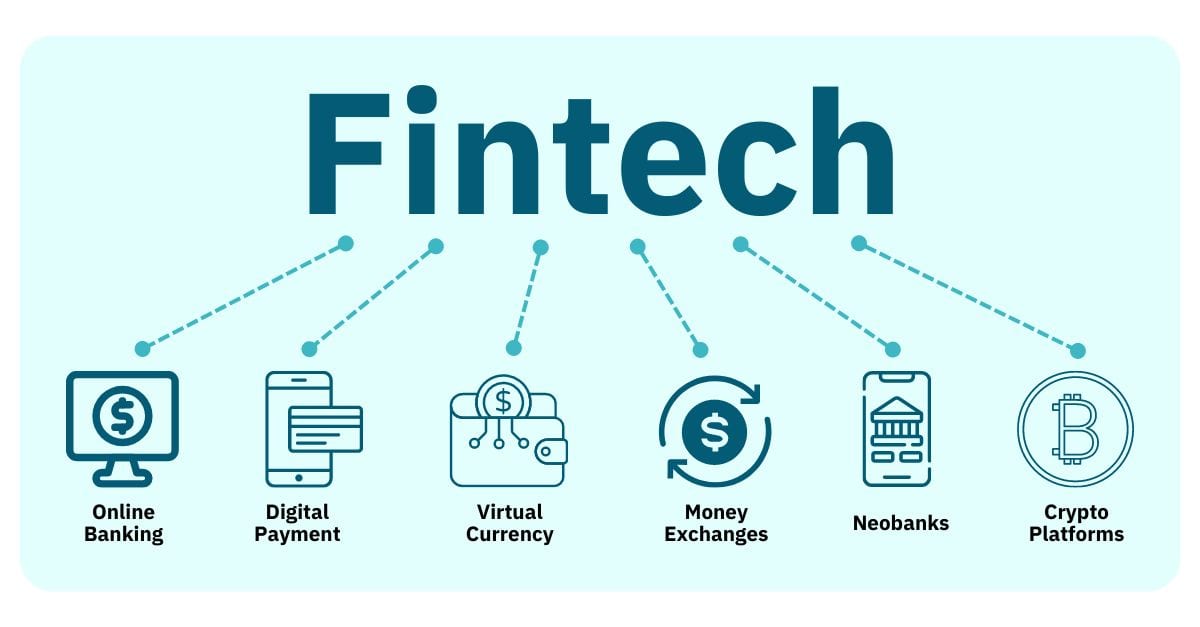
Bengaluru | Banking-as-a-Platform is moving from concept to commercial backbone across the country’s financial system, as lenders open their digital rails to fintech partners and reposition themselves as infrastructure providers rather than closed institutions. The model allows banks to expose core capabilities—accounts, payments, lending, compliance and data—through secure application programming interfaces, enabling third parties to build, distribute and monetise financial products at speed.

This shift has gathered momentum as regulatory digital public infrastructure, rising smartphone penetration and instant payments have converged. Unified Payments Interface volumes continue to expand across peer-to-peer and merchant transactions, while account aggregation frameworks allow consent-based data sharing that reduces onboarding friction and credit assessment time. Against this backdrop, platform-led banking is emerging as a scalable engine for fintech growth, changing how products are designed, priced and distributed.

Large lenders and new-age banks have invested heavily in API layers that sit atop legacy cores, separating product logic from distribution. This architectural change allows fintechs to “plug” into regulated balance sheets without becoming banks themselves, “play” by composing features such as KYC, payments or credit scoring, and “scale” nationally without building costly compliance stacks. For banks, the appeal lies in fee income, wider distribution and better utilisation of capital through co-lending and embedded finance.

Executives across the sector say the platform approach has shortened product launch cycles from months to weeks. Consumer lending, merchant credit, wealth distribution and cross-border remittances have been early beneficiaries, with embedded finance extending to ride-hailing, e-commerce, logistics and software-as-a-service platforms. Small enterprises, long constrained by paperwork and collateral requirements, are gaining access to working capital through cash-flow based underwriting that draws on real-time transaction data.

The commercial logic is reinforced by economics. API monetisation—charging per call, per transaction or via revenue sharing—creates annuity-like income streams for banks. Fintechs gain variable cost structures that align expenses with growth. Analysts note that platforms with high uptime, predictable latency and robust documentation are attracting repeat developers, creating network effects similar to cloud marketplaces.

Regulatory guardrails remain central to the model’s credibility. Data localisation rules, customer consent standards and outsourcing guidelines shape how banks expose systems and how partners handle information. Supervisors have emphasised accountability, making licensed entities responsible for customer outcomes even when services are delivered through partners. This has pushed banks to strengthen vendor risk management, audit trails and incident response, while fintechs have had to mature governance and security practices.

Competition among banks has intensified around developer experience. Dedicated sandbox environments, self-serve onboarding and standardised APIs are becoming differentiators. Some lenders have carved out platform subsidiaries to attract talent and ring-fence technology risk, while others have partnered with specialist middleware firms to accelerate rollout. Public sector banks, once seen as slow movers, are also modernising stacks to participate in ecosystem distribution rather than cede ground.

The platformisation trend is reshaping balance-sheet strategies. Co-lending arrangements allow banks and non-bank financiers to share risk, with fintechs originating and servicing loans using data-driven models. In payments, banks are focusing on high-volume, low-cost rails while fintechs compete on user experience and value-added services. Wealth platforms are distributing mutual funds, bonds and insurance through APIs that streamline compliance and reporting.

Challenges persist. Legacy core systems can constrain throughput, requiring phased migrations that test execution discipline. Cybersecurity threats rise with greater connectivity, demanding continuous monitoring and zero-trust architectures. Pricing APIs too aggressively risks discouraging innovation, while underpricing leaves money on the table. There is also the question of differentiation: as APIs commoditise, banks must decide where to invest for unique value, whether in data analytics, sector-specific products or risk pricing.

Talent remains a pressure point. Demand for engineers fluent in financial protocols, security and scalable systems outstrips supply, pushing up costs. Cultural change inside banks—shifting from project delivery to product thinking—has proven as important as technology. Successful platforms tend to empower cross-functional teams, publish clear roadmaps and treat external developers as customers.


Arabian Post Staff -Dubai Price cuts on a Donkey Kong-themed wireless controller are drawing attention across the Nintendo accessories market, as retailers deepen discounts on officially licensed hardware designed for both current and next-generation consoles. The promotion centres on the Turtle Beach Rematch Wireless Controller: Donkey Kong Edition, now selling for $41.61, down from $60, with select shoppers able to apply an additional coupon that lowers the […]

Publisher Hooded Horse has imposed a blanket ban on the use of AI-generated assets across all games it releases, marking one of the clearest industry rejections of generative art tools at a time when many studios are experimenting with them. The policy applies to every stage of development and is written directly into publishing contracts, making compliance a legal as well as creative requirement. The stance was […]

Asset manager VanEck has outlined a long-range capital market assumptions model that positions bitcoin as a potential multi-million-dollar asset by 2050, citing structural adoption as a settlement currency and reserve asset as key drivers of value. Under the firm’s base-case scenario, which assumes a compound annual growth rate of around 15 per cent through to mid-century, one bitcoin could be worth approximately $2.9 million, a dramatic elevation […]

Government authorities are moving to compel smartphone manufacturers to submit portions of their operating system source code for mandatory security audits, escalating a standoff with global technology companies that warn such a requirement could undermine intellectual property protections and user privacy. The proposal, under discussion within policy circles in New Delhi, reflects mounting concern about cyber intrusions, supply-chain vulnerabilities and the growing role of mobile devices in payments, governance and national security.

Officials familiar with the matter say the plan would require vendors selling smartphones in the country to make critical software components available for inspection by government-approved laboratories. The focus would be on core operating system layers, firmware and security modules rather than consumer-facing applications. Proponents argue that access to code is essential to verify whether hidden vulnerabilities, backdoors or insecure update mechanisms could be exploited by hostile actors.

The push has brought the government into direct tension with companies such as Apple and Samsung, whose devices dominate the premium and mass-market segments. Executives and industry representatives have privately conveyed resistance, arguing that exposing proprietary code, even to auditors bound by confidentiality, creates unacceptable risks of leaks and reverse engineering. They also contend that global platforms already undergo extensive third-party security testing and comply with international standards.

At the heart of the debate is whether national security imperatives justify a departure from prevailing global norms. Countries including China and Russia operate regimes that allow state scrutiny of technology products, though often under opaque processes that foreign firms say are difficult to reconcile with commercial safeguards. Western regulators have largely relied on certification frameworks, vulnerability disclosure programmes and cooperation with vendors rather than direct access to source code. India’s approach, if formalised, would place it closer to the former camp, potentially setting a precedent for other large emerging markets.

Government officials counter that smartphones have become gateways to sensitive data far beyond personal communications. Devices are routinely used for digital identity verification, financial transactions and access to public services. Any systemic weakness could have cascading effects. They also point to a rise in sophisticated cyber operations attributed by security researchers to state-linked groups, arguing that reliance on vendor assurances is no longer sufficient.

The proposal is understood to be steered by the Ministry of Electronics and Information Technology, which has expanded its remit in cybersecurity and digital governance. Policy discussions have examined models ranging from escrow-based code access, where source material is held by a trusted intermediary, to controlled on-site inspections without code being copied. Each option presents trade-offs between assurance and exposure.

Industry bodies warn that mandatory disclosure could chill investment and complicate product launches. Smartphone operating systems are developed on global codebases, updated frequently and protected by layers of licensing agreements with component suppliers. Altering that structure for a single market risks fragmenting development and delaying security patches. There are also concerns about reciprocity: once one jurisdiction demands code access, others may follow, multiplying compliance burdens.

Privacy advocates occupy an ambivalent position. Some support deeper scrutiny to ensure devices do not surreptitiously collect or transmit data. Others caution that state access to low-level software could itself become a vector for abuse if oversight is weak. They stress the need for transparent audit criteria, independent supervision and clear limits on how findings are used.

The commercial stakes are significant. India is one of the world’s largest smartphone markets by volume and a critical manufacturing hub under production-linked incentive schemes. Companies have invested heavily in assembly plants and local supply chains, betting on policy stability. A protracted dispute over code access could influence decisions on future capacity and research investment, even if an outright exit is unlikely.

Dell has acknowledged that withdrawing its XPS laptop range damaged customer trust and weakened its premium credentials, prompting the company to restore the line with new models unveiled at CES 2026. The admission marks a rare public reversal by a major technology manufacturer and signals a recalibration of Dell’s strategy in the high-end personal computer market. Speaking during product briefings in Las Vegas, Dell executives conceded that […]

Advertisements

Arabian Post Staff -Dubai Saudi Arabia has moved to open its real estate market to foreign ownership, marking one of the most consequential shifts in the Kingdom’s investment policy as it seeks to diversify its economy and deepen capital inflows beyond hydrocarbons. The reform allows non-Saudis to buy a broad range of properties, including residential, commercial, agricultural and industrial assets, with the option to purchase land for […]

Photon HQ has released an open-source iMessage Kit that allows developers to automate Apple’s messaging system on macOS, a move that broadens access to a platform long guarded by Apple’s tightly controlled ecosystem. The toolkit enables programmatic interaction with iMessage through local databases and system scripting, opening the door to AI-driven assistants, workflow automation and experimental messaging tools that previously sat beyond the reach of independent developers. […]

China’s commerce authorities have set out plans to reinforce the country’s legal and regulatory architecture governing trade, placing export controls and supply-chain risk management at the centre of economic policy for the year ahead. The agenda, outlined by the Ministry of Commerce of the People’s Republic of China, reflects Beijing’s determination to shield domestic industries from external shocks while maintaining its position as a pivotal node in global manufacturing and logistics networks.

Officials said the push will focus on tightening the legal framework that underpins foreign trade, improving the design and enforcement of export control mechanisms, and strengthening early-warning systems to guard against disruptions. The ministry described supply-chain resilience as a strategic priority, arguing that legal certainty and predictable controls are essential to sustaining economic stability amid persistent geopolitical tensions and shifting global demand.

Export controls have become a particularly sensitive policy lever for China as advanced technologies, critical minerals and dual-use goods face growing scrutiny worldwide. Over the past two years, Beijing has expanded the scope of its export control regime, introducing licensing requirements and compliance obligations that mirror, in some respects, measures imposed by other major economies. Officials now say further refinement is needed to close loopholes, clarify enforcement standards and ensure that rules are aligned with broader industrial and security objectives.

The commerce ministry’s policy outline also emphasises the need to improve coordination among regulators, customs authorities and law-enforcement agencies. By streamlining oversight and information-sharing, Beijing aims to reduce regulatory fragmentation that businesses have long complained adds cost and uncertainty to cross-border operations. Officials argue that a more coherent system will help enterprises navigate compliance requirements while allowing the state to respond more swiftly to emerging risks.

Legal experts in China note that the emphasis on statutory clarity signals a shift away from ad hoc administrative guidance towards more formalised rules. This approach, they say, could provide companies with clearer expectations, particularly foreign-invested firms that often struggle to interpret policy signals. At the same time, stronger legal backing for export controls may give regulators broader discretion to act when national security concerns are invoked.

The policy direction comes as global supply chains continue to recalibrate. Trade frictions, sanctions regimes and technology restrictions have prompted multinational companies to reassess sourcing strategies, diversify production bases and build redundancy into logistics networks. China, while seeking to retain its manufacturing dominance, has also encouraged domestic firms to reduce exposure to external vulnerabilities by investing in upstream capabilities and alternative markets.

Officials have framed the new priorities as part of a broader effort to balance openness with security. While reaffirming commitments to trade facilitation and market access, the commerce ministry stressed that safeguarding key sectors and technologies remains non-negotiable. This dual emphasis reflects guidance from top leadership that economic policy must serve both development and security goals, a theme repeatedly highlighted in speeches by Xi Jinping.

Industry analysts say the strengthened export control regime is likely to have uneven effects across sectors. Producers of high-tech components, rare earths and advanced materials may face tighter scrutiny, while exporters of consumer goods could see limited direct impact. However, the broader compliance environment may become more demanding, requiring companies to invest in legal expertise, internal controls and supply-chain mapping.

Foreign chambers of commerce in China have previously urged authorities to ensure transparency and proportionality in export control enforcement. Businesses worry that ambiguous rules or retroactive application could disrupt contracts and undermine confidence. The commerce ministry has sought to address these concerns by signalling that legal reforms will be accompanied by clearer guidance and procedural safeguards, though details on implementation timelines remain limited.

Beyond export controls, the policy outline highlights risk prevention across trade finance, logistics and overseas investment. Officials pointed to the need for monitoring mechanisms that can detect stress points early, whether arising from financial volatility, shipping bottlenecks or regulatory changes abroad. Strengthening such systems, they argue, will help Chinese firms adapt more quickly and reduce the likelihood of cascading disruptions.

BYD has begun integrating advanced LiDAR sensing into some of its lowest-priced electric vehicles, a move that signals a sharp escalation in the race to make assisted and autonomous driving features available to mass-market buyers. The Chinese automaker has confirmed that models including the Seagull and Dolphin will carry LiDAR-based perception as part of its proprietary “God’s Eye” driver-assistance system, despite starting prices that hover around the […]

Amazon has marked down a high-profile Lord of the Rings Lego collectible for the first time, offering a modest but notable price reduction on a set that has so far resisted discounting in a tightly controlled licensed market. The Lego Icons Lord of the Rings Balrog Book Nook, a 1,201-piece display model inspired by the Mines of Moria sequence from The Fellowship of the Ring, is listed […]

Google has unveiled a Universal Commerce Protocol designed to allow artificial intelligence agents to search, recommend and complete purchases across multiple retail platforms, marking a strategic push to standardise how online shopping works in an era of increasingly autonomous digital assistants. The announcement was made at the 2026 National Retail Federation conference, where technology providers and merchants gathered to outline priorities for the year ahead. The protocol […]

A prediction market investor banked more than $400,000 by wagering on the ousting of Venezuelan President Nicolás Maduro shortly before U. S. forces captured him, thrusting opaque online betting platforms into the spotlight and renewing debate over insider trading and regulatory oversight. The anonymous trader placed significant bets on Polymarket, a crypto-based prediction market, in the days leading up to the dramatic U. S. intervention in Venezuela’s […]

Walmart plans to scale its drone delivery programme with Alphabet-owned Wing, aiming to serve about 40 million people across the United States by 2027 as it pushes automated logistics deeper into everyday retail. The expansion is designed to shorten delivery times for small items to under 30 minutes and sharpen competition with Amazon in fast fulfilment. The retailer intends to add drone operations to roughly 150 additional […]

JPMorgan Chase has played down claims that stablecoins pose a systemic threat to the banking sector, diverging from warnings issued by banking trade groups that argue the growth of yield-bearing digital tokens could drain deposits and undermine credit creation across the United States. The debate intensified after the American Bankers Association sent a letter to the U. S. Senate cautioning that certain stablecoins, particularly those offering interest […]

Ethereum co-founder Vitalik Buterin has warned that decentralised stablecoins, long promoted as a trust-minimised alternative to fiat-backed tokens, continue to suffer from deep structural weaknesses that have yet to be resolved. His assessment underscores persistent concerns around price benchmarks, oracle security and incentive design, at a time when stablecoins are becoming more central to crypto markets and policy debates. Buterin’s comments centre on the challenge of maintaining […]

Senate Republicans are accelerating plans to bring a sweeping cryptocurrency bill to a vote, betting that momentum and industry pressure can overcome lingering Democratic reservations even as bipartisan talks remain unsettled. The move was confirmed late on Friday by the chair of the Senate Banking Committee, who said the panel would press ahead with scheduling despite parallel efforts by the Senate Agriculture Committee to refine a cross-party […]

Arabian Post Staff -Dubai Nintendo has opened preorders for a new Light Purple and Light Green Joy-Con 2 controller set priced at $100, expanding the accessory line-up for the forthcoming Switch 2 ahead of a February 12 release. The controllers are listed across major retailers including Amazon, Best Buy, Target and GameStop, signalling a coordinated retail push as Nintendo prepares the next phase of its hardware cycle. […]

Robinhood Markets has set out plans to build an Ethereum layer-2 network as part of a broader push to deepen its role in crypto trading, tokenised equities and on-chain yield products, arguing that anchoring the project to Ethereum’s security is central to winning user trust and regulatory confidence. The brokerage, best known for commission-free equity trading, says the layer-2 is designed to handle higher transaction volumes at […]

Federal regulators have approved a major expansion of SpaceX’s Starlink satellite network, clearing the company to deploy up to 7,500 additional second-generation spacecraft and lifting the authorised constellation to about 15,000 satellites, a decision that deepens the company’s lead in the fast-growing satellite broadband market while tightening safeguards around orbital congestion and interference. The Federal Communications Commission’s order allows SpaceX to activate the first tranche of its […]

Indonesia has moved to block access to Grok, the artificial intelligence chatbot developed by xAI, marking one of the first national-level actions taken specifically against a generative AI system over deepfake and synthetic sexual content risks. The decision places Southeast Asia’s largest economy at the centre of a growing global debate over how far governments should go in regulating AI tools that blur the line between expression […]

A large cache of personal information linked to 17.5 million Instagram accounts is being traded on dark web marketplaces, triggering renewed scrutiny of data protection practices at one of the world’s most widely used social media platforms. Cybersecurity researchers say the dataset, advertised by criminal brokers, contains usernames, email addresses, phone numbers and partial location details, information that could be exploited for identity theft, fraud and targeted […]

Arabian Post Staff -Dubai Dubai is positioning itself as a magnet for global content creators, with the Dubai Chamber of Digital Economy setting out the emirate’s pitch as a base where talent, technology and market access converge. The chamber says Dubai’s ability to attract specialised creative professionals, alongside its digital infrastructure and business-friendly regulation, has become a decisive advantage for creators who depend on high-end production teams […]

VISHNU RAJA
RYO YAMADA
HITORI GOTOH
IKUYO KITA
Just in:
Middle East governments assess Iran war after US vote // TVM –Mangaluru Vande Bharat claims top spot // The “1st Greater Bay Area Health and Longevity Summit & Awards Ceremony” concludes successfully in Macao // Cloudflare unveils Zero Wire vulnerability intelligence service // Vance attributes Republican midterm defeats to Iran conflict // e-Crime Bureau Signs Cybersecurity Partnership With Smart Africa, Reinforcing Its Global Expansion // After Reaching 7 Million Users in the Philippines, Skyro Launches Transparent Cash Loans in Malaysia // Oil and chip shares retreat after Democratic victories // Emirates Group records AED 4.1 billion half-year profit // Ousted top Kochi cop gets IG post // OpenAI identifies 948 Linux privilege escalation flaws using AI // Millions Of Indians May Soon Be Deprived Of Government Assistance // CR Longdation Aethereal Cybersecurity × Global Cybersecurity Alliance (GCSA) Join Hands to Establish the “AI and Cybersecurity Research Centre” // Private varsities bill all set to face the axe // Ta’ziz finalises $1.39bn funding for Ruwais industrial facilities // Trump’s Iran War Has A Share Of Contribution To His Midterm Debacle // Kochi police detain two actors over bid to honey trap doctor // UK air traffic outage inflicted £33m financial losses // Asia Left Behind: Ten international companies have yet to report delivering on their cage-free egg pledges across the region // Miss Universe Hong Kong Jen Zhou Departs for Puerto Rico to Compete in the 75th Miss Universe World Final //