Just in:
Geely’s i-HEV Intelligent Hybrid Technology Offers a New Direction Vision for Gasoline-Powered Vehicles // OpenAI identifies 948 Linux privilege escalation flaws using AI // Dubai details five-year visa benefits for returning visitors // Ousted top Kochi cop gets IG post // Trump’s Iran War Has A Share Of Contribution To His Midterm Debacle // Dubai boat show confirms international shipyard line-up for November // Oil and chip shares retreat after Democratic victories // e-Crime Bureau Signs Cybersecurity Partnership With Smart Africa, Reinforcing Its Global Expansion // Geely’s i-HEV Intelligent Hybrid Technology Offers a New Direction for Gasoline-Powered Vehicles // The “1st Greater Bay Area Health and Longevity Summit & Awards Ceremony” concludes successfully in Macao // Cloudflare unveils Zero Wire vulnerability intelligence service // Asia Left Behind: Ten international companies have yet to report delivering on their cage-free egg pledges across the region // Miss Universe Hong Kong Jen Zhou Departs for Puerto Rico to Compete in the 75th Miss Universe World Final // UK air traffic outage inflicted £33m financial losses // Meraas showcases five residential zones at Dubai Design Week // Xi Jinping Preparing For A Trilateral Summit With Trump And Putin At APEC Summit On Nov 18-19 // Kochi police detain two actors over bid to honey trap doctor // Hong Kong mandates crypto transaction disclosures to tax authorities // Private varsities bill all set to face the axe // CR Longdation Aethereal Cybersecurity × Global Cybersecurity Alliance (GCSA) Join Hands to Establish the “AI and Cybersecurity Research Centre” //

News related to
Arabia

Arabian Post Staff -Dubai   Mounting economic damage from the Middle East war is set to push inflation higher and global growth lower, IMF managing director Kristalina Georgieva has warned, as the fund prepares to cut its growth outlook and raise its inflation projections in its World Economic Outlook due on April 14. The warning comes as the conflict has triggered what the International Energy Agency has […]

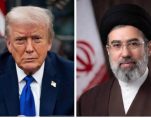
Arabian Post Staff -Dubai Iran said on Monday it wanted a durable end to the war with the United States and Israel rather than a temporary truce, rejecting pressure to reopen the Strait of Hormuz on Washington’s timetable as President Donald Trump warned the country could be “taken out” if it failed to meet his Tuesday night deadline for a deal. Tehran’s stance underscored how far apart […]

Arabian Post Staff -Dubai Jazeera Airways has postponed a decision on its cash dividend for 2025, saying the move reflects caution rather than financial weakness as the Kuwait-based low-cost carrier responds to mounting regional disruption. In a board decision disclosed on 6 April, the airline said it had amended its recommendation to shareholders and would instead revisit the payout after first-quarter 2026 results, with the annual general […]

Arabian Post Staff -Dubai Dubai Precast has secured a contract to deliver a full precast building system for a residential scheme in Meydan, adding another marker to the steady use of factory-made concrete components in Dubai’s fast-moving housing market. The award covers the design, supply, delivery and installation of 93 G+2 townhouses and two villas, with completion of installation targeted for the fourth quarter of 2026. The […]

Khalifa Economic Zones Abu Dhabi has secured five new industrial and logistics projects worth AED147 million across Al Ain and Abu Dhabi, adding more than 84,000 square metres of development space and an estimated 500 jobs as the emirate presses ahead with its manufacturing and supply-chain expansion plans. Four of the projects are earmarked for KEZAD Al Ain, where they account for just over 37,400 square metres, […]

Dubai, UAE — At the forefront of Middle East’ innovative medical community is the name of talented surgeon Dr. Vardan Khachatrian, a visionary specialist and celebrity doctor, whose methods are increasingly shaping expectations across high-end patient segments not only in MENA region, but globally. Industry observers note a growing demand for natural, long-lasting results with minimal visible intervention, particularly among international patients travelling to Dubai for advanced […]

  Bitcoin pushed back above the $70,000 mark on Monday, offering a measure of relief to a market that has been battered by volatility, geopolitical tension and doubts over whether institutional buying is strong enough to absorb selling by large holders. The move was modest rather than decisive, with live pricing showing bitcoin at about $69,728 on Tuesday in Asia after an intraday high of $70,240, underscoring […]

Advertisements

Tokenisation of financial assets could pull some of the crypto market’s most destabilising traits into mainstream finance, the International Monetary Fund has warned, saying the same technology that promises faster settlement and lower costs may also magnify volatility, fragment liquidity and leave regulators with less time to respond in a crisis. The IMF set out the warning in an April note by Tobias Adrian, its financial counsellor, […]

Polymarket has unveiled what it calls a full exchange upgrade, setting out plans to rebuild the core plumbing of its prediction market, launch a native collateral token and strengthen the systems it uses to turn disputed outcomes into settled trades. The move comes as the company, widely discussed at a roughly $20 billion valuation, positions itself for a broader push into the United States and for a […]

Arabian Post Staff -Dubai Donald Trump has said a Tuesday deadline for Iran to accept a deal remains final, sharpening a crisis that has already pushed energy markets higher, intensified diplomatic pressure and raised fresh concern over the risk of a broader Middle East conflict. Speaking on April 6 at the White House, the US president said Tehran had made what he described as a significant move […]

Dubai’s Roads and Transport Authority has opened a new Al Mutakamela vehicle testing and registration centre in Al Qusais, adding fresh capacity to a part of the city with heavy residential and commercial traffic and extending access to licensing services for motorists in the eastern districts. The facility began operations on 6 April and is intended to ease processing for both private vehicle owners and business customers. […]

Singapore’s parliament is set to turn its attention on Tuesday to the economic and security consequences of the war involving Iran, with lawmakers filing 62 questions and three ministers due to deliver statements on how the conflict could affect energy supplies, inflation, transport costs and broader national resilience. The questions, lodged by 32 members from both the ruling People’s Action Party and the opposition, underline growing concern in the trade-dependent city-state over the fallout from turmoil in the Middle East.

The scale of parliamentary scrutiny is notable even by Singapore’s standards. According to the order paper for the 7 April sitting, Deputy Prime Minister and Minister for Trade and Industry Gan Kim Yong, Coordinating Minister for National Security K. Shanmugam, and Acting Transport Minister and Senior Minister of State for Finance Jeffrey Siow are scheduled to address the chamber. The questions range from the immediate effect of higher oil and gas prices to the security of liquefied natural gas supplies and the government’s plans to shield households and businesses from a prolonged external shock.

At the centre of concern is Singapore’s dependence on imported energy and its exposure to global shipping routes. The order paper shows MPs asking whether damage to Qatar’s Ras Laffan LNG facilities could materially affect short- and medium-term supply, whether alternative procurement arrangements would be enough to offset any shortfall, and whether disruption in the Middle East might accelerate efforts to diversify the energy mix, including greater investment in alternatives such as nuclear power. That line of questioning reflects a deeper vulnerability: Singapore generates most of its electricity from natural gas and has little room to escape sudden swings in international fuel markets.

Cost pressures are another major theme. Lawmakers have asked how rising fuel and electricity prices may feed through to household expenditure, transport operators and the wider cost of living. For a government already balancing inflation management with fiscal prudence, the debate offers an opportunity to show whether existing buffers are sufficient or whether targeted support may be needed if the conflict persists. Prime Minister Lawrence Wong, in a video message on 2 April, had already warned Singaporeans that instability in the Middle East could affect the economy through higher energy prices, supply chain disruption and weaker global confidence, signalling that the government was preparing the public for a potentially difficult external environment.

Singapore’s predicament is shaped by geography as much as policy. The republic sits far from the conflict zone, yet its economy is tied tightly to global trade, imported food and imported fuel. Any threat to Gulf energy production or maritime passage through strategic chokepoints can ripple quickly into Asian benchmark prices, freight costs and business sentiment. Questions filed for parliament suggest MPs are not only concerned about immediate supply disruption, but also about second-round effects on manufacturers, logistics firms, electricity generation and consumers already sensitive to living costs.

The breadth of the questions also points to a broader political calculation. Singapore’s leaders have long framed resilience as a whole-of-government and whole-of-society effort, particularly when external shocks threaten domestic stability. The debate now unfolding in parliament is likely to test how far that framework can stretch in the face of a conflict whose trajectory remains uncertain. Opposition members, including Workers’ Party figures, have pressed for details on fuel reserves, assistance for workers dependent on transport and the likely effect on household budgets, while ruling-party MPs have focused heavily on energy security, diversification and inflation spillovers.

Beyond energy, the parliamentary discussion may widen into questions of diplomacy, national security and public confidence. K. Shanmugam’s planned statement suggests the government sees the crisis as more than a commodity shock. Singapore has consistently sought to position itself as stable, rules-based and open to commerce, which means geopolitical conflict in a key producing region carries implications not only for prices but also for investor confidence and regional security calculations. Ministers will face pressure to reassure the public that contingency planning is in place, even as they acknowledge that a small open economy cannot fully insulate itself from a major war-driven disruption.


Arabian Post Staff -Dubai AirAsia X has raised ticket prices by between 31% and 40% and lifted fuel surcharges by as much as 20% after jet fuel costs surged following the Iran war, according to Group Chief Executive Officer Bo Lingam, underscoring how quickly conflict in the Middle East is feeding into Asian aviation costs and passenger fares. The Malaysia-based low-cost carrier said average jet fuel prices […]

A Python package presented as a privacy-first shortcut to AI models has been unmasked as a supply-chain threat that quietly captures user prompts, leans on a private university service without authorisation and repurposes proprietary Claude material to make the deception look convincing. Security researchers said the package, hermes-px, was uploaded to PyPI as a supposed “Secure AI Inference Proxy” offering OpenAI-compatible access over Tor and claiming users […]

India has moved to secure 2.5 million tonnes of imported urea ahead of the kharif sowing season, opening one of its largest buying exercises in months as the West Asia war squeezes gas availability, disrupts shipping routes and cuts domestic fertiliser output. State-run Indian Potash Ltd has invited bids for 1.5 million tonnes for west coast ports and 1 million tonnes for east coast ports, with vessels required to sail by 14 June and bids due on 15 April.

The timing reflects pressure building across the farm supply chain just before planting for rice, maize and soybean gathers pace in June. India is the world’s biggest urea importer and remains exposed not only to overseas fertiliser shipments but also to liquefied natural gas supplies from the Gulf, a key feedstock for domestic urea plants. Market disruption linked to the conflict has forced policymakers and import agencies to act earlier and at larger scale than usual to avoid a supply gap during the monsoon cropping cycle.

The tender itself underlines the urgency. Indian Potash’s notice, dated 4 April, shows the company is seeking granular or prilled urea in bulk for agriculture use, with separate pricing required for FOBT and C&FFO terms. The notice also sets the bid opening for 15 April and says offers must remain valid until 23 April. Those details matter because India’s tenders often serve as a benchmark for global trade, influencing price expectations far beyond its own market.

Supply stress has emerged on two fronts. First, disruption around the Gulf has affected fertiliser cargo movements through the Strait of Hormuz, one of the most sensitive trade chokepoints for both natural gas and finished fertiliser. Second, tighter LNG availability has curtailed feedstock for urea manufacturing at home. Reuters reported that the conflict had cut domestic output by about 600,000 to 700,000 tonnes a month, while other reports in the domestic press said production in one month had slipped to about 18 lakh tonnes from around 24 lakh tonnes.

That drop is striking because domestic capacity had been strengthened over the past decade. Official figures released last month said urea production in 2024-25 stood at 306.67 lakh metric tonnes, after touching a record 314.07 lakh metric tonnes in 2023-24. The broader policy effort has been to reduce import dependence through revived plants and brownfield additions, yet the present disruption shows that energy exposure still leaves the sector vulnerable when conflict hits upstream supply and freight corridors.

Trade data had already pointed to a more import-dependent year even before the latest escalation. Fertiliser Association of India data reported in January showed urea imports jumped 120.3 per cent year on year to 7.17 million tonnes in April-November 2024-25. That surge suggested domestic output and demand were already misaligned, leaving little buffer when the external shock arrived. The latest tender therefore looks less like a one-off emergency purchase and more like an attempt to rebuild a thinning pipeline before farm demand accelerates.

The price implications are equally important. Reuters said India’s previous tender had cleared at $418.40 a tonne, and traders now expect the new purchase to test higher levels because global availability has tightened. Argus reported that the war had effectively cut off exports from major Gulf producers including Qatar, Saudi Arabia, the UAE and Bahrain, which together usually account for roughly 1 million tonnes a month, or about a fifth of global urea trade. It also cited Kpler data showing more than 900,000 tonnes on stranded vessels beyond Hormuz.

Officials have also been working on contingency planning outside the tender route. Domestic reports said a task group had been formed to assess global urea sources and prepare import options, while gas supply to fertiliser units has been partially restored through spot purchases and reallocation. That may soften the production hit, but it does not fully remove the risk because any prolonged interruption in Gulf shipping or LNG flows would keep pressure on both landed prices and physical availability.

  Saudi Arabia’s non-oil private sector slipped into contraction in March, with business conditions deteriorating for the first time since August 2020 as conflict across the Middle East disrupted supply chains, delayed exports and hit customer demand. The Riyad Bank Saudi Arabia Purchasing Managers’ Index fell to 48.8 in March from 56.1 in February, dropping below the 50-point threshold that separates growth from contraction. Data for the […]

Paramount Skydance is moving to shore up financing for its planned takeover of Warner Bros Discovery with nearly $24 billion in equity commitments from three Gulf sovereign wealth funds, a step that would strengthen funding for one of the biggest media deals ever attempted and deepen Middle East capital’s role in reshaping Hollywood. The Wall Street Journal reported on Sunday that Saudi Arabia’s Public Investment Fund is […]

VAT filing errors are surprisingly common. Most aren’t intentional—they’re honest mistakes that happen because the rules are easy to misunderstand or because records are disorganized. The problem is that the tax authority doesn’t distinguish between careless errors and intentional fraud. Getting proper VAT return filing in the UAE done right the first time saves money and stress. Missing or misfiled invoices The most frequent error is missing […]

Arabian Post Staff -Dubai ADNOC Gas said its domestic supply chain remains intact after damage at part of the Habshan complex on April 3, with gas demand inside the UAE being met through other facilities and no disruption to customer supply. The company told the Abu Dhabi Securities Exchange that the affected area had been isolated and that a full assessment of damage to the Habshan train […]

Arabian Post Staff -Dubai   Alramz Real Estate has moved to deepen its presence in Saudi Arabia’s housing market after signing an agreement with Oud Capital to establish a Shariah-compliant real estate investment fund worth about SAR650 million to develop a 900-unit residential community in Jeddah, in a deal that underlines how listed developers are using capital-market structures to expand amid sustained demand for urban housing. The […]

Scientists in Poland have built an ultrathin optical structure that traps infrared light inside a layer about 40 nanometres thick, a result that pushes light confinement far below the scale long regarded as practical for conventional photonic components. The work, led by researchers at the University of Warsaw with partners at Łódź University of Technology, Warsaw University of Technology and the Polish Academy of Sciences, uses patterned […]

Greenlogue/AP Solar power capacity across the Gulf Cooperation Council has expanded at an exceptional rate, with a new GCC-Stat report showing average annual growth of 88.1 per cent between 2013 and 2024, underscoring how one of the world’s leading hydrocarbon-producing regions is accelerating investment in cleaner energy while also strengthening climate resilience measures. The same report said electricity generated from solar energy climbed from 0.13 thousand gigawatt-hours […]

Beijing HyperStrong Technology, one of the country’s biggest battery energy-storage system suppliers, expects shipments to more than double in 2026 as utilities, renewable developers and industrial customers accelerate orders at home and overseas. The company is projecting deliveries of about 70 gigawatt-hours this year, up from 26 gigawatt-hours in 2025, according to comments published on April 6, a jump that underscores how quickly large-scale storage is moving from a supporting technology to a central piece of power infrastructure.

The forecast places HyperStrong among the more aggressive corporate voices in a market that has expanded far beyond its earlier role of smoothing short bursts of solar and wind volatility. Storage is now being bought to stabilise grids, capture cheap midday renewable power, support evening peaks and back up electricity-hungry data centres. Global spending on batteries for power-sector storage is set to reach about $66 billion in 2025, reflecting the scale of investment now flowing into the sector.

HyperStrong’s position helps explain why its target is drawing attention. The company says it has been ranked among the top three global battery energy-storage system integrators and has held a Tier 1 standing with BloombergNEF since 2024. It also says it is the top integrator in China’s mainland market by cumulative installed and contracted project capacity. On its own figures, it has deployed more than 50GWh across more than 400 projects after being founded in 2011.

Demand inside China remains the first pillar of that growth story. The country’s clean-power build-out has been so rapid that storage is becoming essential to absorb output and protect grid reliability. Government data showed wind and solar capacity reached 1.84 billion kilowatts in 2025, accounting for 47.3% of total installed power capacity and overtaking thermal power for the first time. Separate official data showed installed new-type energy storage reached 136 million kilowatts in 2025, after already topping 70 million kilowatts in 2024.

Policy has also shifted in ways that improve the commercial case for storage. Earlier concerns that many projects were being built faster than they could be profitably used have given way to a more market-based system in which capacity payments, peak pricing and wider power-sector reforms are strengthening returns. Analysts have said those changes, combined with subsidies in some provinces, helped turn storage into a far more investable business. That domestic backdrop matters because it gives manufacturers and integrators a large home market from which to scale.

Overseas demand forms the second pillar. Chinese storage suppliers have benefited from orders tied to renewable expansion, ageing grids and the electricity needs of AI-linked data centres in North America, Europe and the Middle East. HyperStrong has been widening its footprint in Europe and said in March that it had projects across 15 countries there. The company has also been visibly pushing its international profile through industry events in Europe and the Americas, a sign that it sees export growth as more than a side business.

Competition, however, is unlikely to ease. China’s battery and clean-tech industries have shown how quickly rapid capacity growth can feed price wars and margin pressure. Rival suppliers ranging from CATL and BYD to other storage specialists are expanding at speed, while trade frictions and policy shifts abroad could complicate the export story. At the same time, technology is moving on: lithium-ion remains dominant for daily cycling, but sodium-ion and longer-duration storage systems are being pushed for specific use cases, especially where mineral costs, safety or duration become bigger factors.

Arabian Post Staff -Dubai Huawei has raised its research spending to one of the heaviest levels in the global technology industry, saying it invested CNY192.3 billion in 2025, or roughly $27.8 billion, equal to 21.8% of annual revenue. The figure came with group revenue of CNY880.9 billion and net profit of CNY68 billion, underlining how the Shenzhen-based company is continuing to prioritise long-term technology development even as […]

VISHNU RAJA
RYO YAMADA
HITORI GOTOH
IKUYO KITA
Just in:
Hong Kong mandates crypto transaction disclosures to tax authorities // OpenAI identifies 948 Linux privilege escalation flaws using AI // After Reaching 7 Million Users in the Philippines, Skyro Launches Transparent Cash Loans in Malaysia // Technology shares plunge as Nasdaq enters correction // Meraas showcases five residential zones at Dubai Design Week // Emirates Group records AED 4.1 billion half-year profit // UK air traffic outage inflicted £33m financial losses // CR Longdation Aethereal Cybersecurity × Global Cybersecurity Alliance (GCSA) Join Hands to Establish the “AI and Cybersecurity Research Centre” // Cloudflare unveils Zero Wire vulnerability intelligence service // Millions Of Indians May Soon Be Deprived Of Government Assistance // TVM –Mangaluru Vande Bharat claims top spot // Oil and chip shares retreat after Democratic victories // Geely’s i-HEV Intelligent Hybrid Technology Offers a New Direction Vision for Gasoline-Powered Vehicles // Asia Left Behind: Ten international companies have yet to report delivering on their cage-free egg pledges across the region // Private varsities bill all set to face the axe // The “1st Greater Bay Area Health and Longevity Summit & Awards Ceremony” concludes successfully in Macao // Dubai boat show confirms international shipyard line-up for November // Emaar approves Development buyout ahead of planned delisting // e-Crime Bureau Signs Cybersecurity Partnership With Smart Africa, Reinforcing Its Global Expansion // Dubai details five-year visa benefits for returning visitors //