Home Minister Ramesh Chennithala admitted in the Legislative Assembly on Monday that police mishandled the initial investigation into the Cheranalloor road accident that killed a scooter rider, and promised action against officers responsible for the lapses. Responding to Opposition Leader Pinarayi Vijayan, Chennithal…
The Mosprom Export Support Center arranged a series of meetings between Moscow industrial companies and potential clients in Manama. The parties to the talks discussed joint projects in construction, IT and telecoms, as well as supplies of sweet goods to the local market. This was reported by Maksim Liksutov, Deputy Mayor of Moscow for Transport and Industry. “The capital is a confident leader among Russian regions in […]
New Merck Hong Kong Centre to Connect Global Expertise with Local Innovators and Accelerate R&D Commercialisation
HONG KONG SAR – Media OutReach Newswire – 26 October 2026 – Hong Kong Science and Technology Parks Corporation (HKSTP) and Merck, a leading science and technology company in life science, healthcare and electronics, signed a collaboration agreement today to establish their strategic partnership. Under the agreement, Merck will establish the “Merck Hong Kong Centre” at Hong Kong Science Park, dedicated to bringing in advanced scientific products, showcasing live technological demonstrations, and providing expert consultation services. Through technical training and clinical advisory sessions, an innovation scouting programme, and the co-hosting of an annual flagship event, the partnership will connect HKSTP’s I&T ecosystem with Merck’s domain expertise and global networks, supporting local startups and I&T talent, accelerating the translation of R&D outcomes into real-world applications, and jointly capturing opportunities across the Guangdong-Hong Kong-Macao Greater Bay Area (GBA) and international markets.
Witnessed by Dr Annika Bolten-Drutschmann, Consul General of Germany (Second row middle), Ms Cordelia Chung, Chairman of HKSTP (Second row first from left), and Mr Peter Yan, Director-General of the OASES (Second row first from right), Mr Terry Wong, Chief Executive Officer of HKSTP (Front row first from left), and Mr Rogier Janssens, President of Merck China (Front row first from right), signed the partnership agreement to establish their strategic partnership.
The HKSAR Government’s recently announced First Five-Year Plan places a strong focus on strategic industries, including life and health technology, artificial intelligence (AI), and new industrialisation, while the latest Policy Address sets out Hong Kong’s ambition to accelerate its development into an international health and medical innovation hub, progressively expanding access to the GBA, international markets, and capital markets. Arriving at a pivotal moment as Hong Kong I&T development enters a new phase, the partnership will bring together top-tier global scientific resources and inject fresh momentum into the city’s I&T sector.
Witnessed by Dr. Annika Bolten-Drutschmann, Consul General of Germany, Ms Cordelia Chung, Chairman of HKSTPand Mr. Peter Yan, Director-General of the Office for Attracting Strategic Enterprises (OASES), Mr. Terry Wong, Chief Executive Officer of HKSTP, and Mr. Rogier Janssens, President of Merck China, signed the partnership agreement. The signing was followed by the “Merck x HKSTP Groundbreaking Ceremony”, marking the official commencement of the Merck Hong Kong Centre and turning the partnership to a new chapter.
Mr. Terry Wong, Chief Executive Officer of HKSTP, said, “We are delighted to welcome Merck, a leading science and technology company, in establishing a strategic partnership with HKSTP and Hong Kong’s I&T ecosystem. As Hong Kong enters an exciting new phase of I&T development, collaboration with global leaders like Merck is crucial to foster the growth of the life and health tech sector. Our shared vision goes beyond offering physical space: we are bringing Merck’s advanced technologies, scientific expertise and global networks closer to our startups and researchers, helping them turn discoveries into practical solutions and explore opportunities for pilot projects, commercial partnerships and investment. Powered by the city’s unique positioning as the super connector between the Chinese Mainland and global markets, this partnership will catalyse collaboration between Merck’s global excellence in life sciences and HKSTP’s thriving ecosystem — taking the discovery and commercialisation of R&D results in the life and health sector to the next level, creating global impact and benefiting humankind.”
Mr. Rogier Janssens, President of Merck China, said, “Hong Kong’s first Five-Year Plan places innovation and technology at the heart of the city’s future, giving science and technology companies like Merck a clear direction for lasting engagement. For 358 years, Merck has advanced science and technology with a patient, generational outlook, and we are now deepening our presence in the Greater Bay Area’s innovation landscape. Merck Hong Kong Centre is the first step of that commitment in Hong Kong. Located next to HKSTP’s shared biomedical laboratory, it places our products and experts alongside the scientists and startups driving the research. We can help them build reliable, reproducible workflows from early experimentation to scale-up, and we can understand earlier what their science needs. Together with HKSTP, we aim to prove this approach in Hong Kong and replicate it elsewhere in China and beyond.”
Under the agreement, the collaboration will focus on four key initiatives:
Merck Hong Kong Centre: The dedicated physical facility at Hong Kong Science Park will provide Park startups and researchers with advanced scientific product supply, live demonstrations of cutting-edge technologies and expert consultation services. The Centre will serve as a physical hub connecting local innovators with Merck’s technology resources.
Training and Consultation Initiative: Connecting Merck’s industry experts with HKSTP’s startups and researchers through technical training, clinical advisory and professional consultation services to promote knowledge exchange and strengthen research and application capabilities.
Innovation Scouting Program: Establishing a structured mechanism to identify, evaluate and connect high-potential startups directly with Merck’s global innovation network, exploring collaboration opportunities including commercial partnerships, proof-of-concept pilot projects and strategic venture investment opportunities.
Merck Innovation Day: An annual flagship event held at Hong Kong Science Park focusing on life science, healthcare and electronics, bringing together startups, academia and industry leaders to showcase innovations and foster cross-sector exchange and co-development.
HKSTP is committed to building a vibrant I&T ecosystem and is currently home to around 400 life and health technology companies, supported by comprehensive R&D infrastructure and one-stop support services that help turn ideas into real-world applications. The partnership will further connect Park companies with Merck’s global resources, while providing Merck with a platform to access emerging technologies, research talent and high-potential companies in Hong Kong and the GBA, fostering two-way innovation exchange and opening up long-term collaboration opportunities.
Hashtag: #HKSTP
The issuer is solely responsible for the content of this announcement.
HKSTP
More information about HKSTP is available at www.hkstp.org.
The Assembly witnessed sharp exchanges on Monday after Speaker Thiruvanchoor Radhakrishnan refused Opposition Leader Pinarayi Vijayan permission to raise constitutional objections to former Governor Rajendra Vishwanath Arlekar’s recommendation seeking the removal of Public Service Commission chairman M. R. Baiju. Chie…
Six people were taken into custody after two groups suspected of drug trafficking drove into Kuttiady police station in Kozhikode district and clashed early on Monday. The confrontation occurred at approximately 2 am on October 26, when the groups arrived in separate cars and began fighting within the police station p…
Lower primary school teacher rank-list candidates escalated their protest outside the Kerala Secretariat in Thiruvananthapuram on Monday, with agitation leader S Valarmathi shaving her head and announcing an indefinite hunger strike as the demonstration entered its 113th day. The candidates, selected for inclusion in…
Kerala’s new Vistadome service on the Kollam–Sengottai railway route faces an immediate capacity constraint, with short platforms at several stations preventing the addition of tourist coaches without reducing accommodation for ordinary passengers. The problem has emerged just days after the panoramic coach began oper…
The Assembly witnessed sharp exchanges on Monday after Speaker Thiruvanchoor Radhakrishnan refused Opposition Leader Pinarayi Vijayan permission to raise constitutional objections to former Governor Rajendra Vishwanath Arlekar’s recommendation seeking the removal of Public Service Commission chairman M. R. Baiju. Chie…
The Keralam government will introduce legislation in the next Assembly session to regulate treatment costs in private hospitals, Health Minister K. Muraleedharan announced on Monday, October 26. Responding to Communist Party of India (Marxist) MLA K. N. Balagopal during Question Hour, the minister acknowledged growing…
The Congress-led United Democratic Front government on Monday defended its decision to provide a cheaper generic medicine for spinal muscular atrophy (SMA), promising efforts to reduce the treatment cost further amid Opposition allegations about patient safety. Chief Minister V D Satheesan told the Assembly that Natco…
300+ AI Applications Delivering Surges in Core Metrics and Annual Cost Reduction of Over CNY100 Million (Approx. US$15 Million)
NANJING, CHINA – Media OutReach Newswire – 26 October 2026 – Nanjing Iron & Steel Co., Ltd. (NISCO) has worked with Huawei and ecosystem partners to commercially deploy the world’s first steel model powered by swarm intelligence—the YuanYe Steel Large Model (YuanYe)—across multiple scenarios at scale. This helps NISCO transition its core operations from relying on experience to being powered by data and intelligence collaboration.
NISCO’s intelligent operations center that covers the widest business range in the industry and uses 5-dimensional digital twins to deliver integrated production and operations management across spaces, boundaries, organizations, and equipment
As a traditional manufacturer navigating the challenges of transformation and cost efficiency, NISCO has built a robust digital and intelligent foundation by adopting industry-leading products including Ascend, Kunpeng, Huawei Cloud Stack, and Pangu models. By embedding AI into every core stage of production—ironmaking, steelmaking, rolling, and quality inspection—NISCO is forging green and high-end AI-powered super steel plants.
Unlike general-purpose monolithic models, YuanYe innovatively fuses multiple AI models with the steel industry’s metallurgical mechanism models to create a dual-drive, multi-model cluster architecture. This architecture features a “right brain” for probabilistic computing and a “left brain” for precise and scientific decision-making. Powered by massive amounts of sensing data aggregated from millions of operational technology (OT) data points across 26 business domains, NISCO has achieved real-time digital twin mapping within its intelligent operations center, laying solid data and scenario foundations for YuanYe. This enables the entire steelmaking process to become not only visible, but also capable of precise control and intelligent assessment. Now 100% of NISCO’s key equipment is connected and digitally controlled and its new product R&D cycles have been shortened by 50%, reducing annual costs by over CNY100 million (approx. US$15 million).
As the model continues to iterate, NISCO had launched 25 business agents by October 2026. These agents cover a wide range of scenarios, from visual quality inspection and process optimization to production scheduling and operations management, setting a new benchmark for digital and intelligent steel transformation.
NISCO’s hot-rolling production line in its heavy plate plant
Breakthroughs in four core scenarios: YuanYe redefines traditional operations for significant safety, efficiency, and quality gains
In the ironmaking stage, AI makes traditionally invisible blast furnaces transparent. YuanYe leverages blast furnaces’ internal sensor data and metallurgical mechanism analysis to perform real-time dynamic simulations of the ironmaking process. Assisted by furnace temperature prediction and health diagnosis models, furnace operators can predict temperatures and identify issues two hours in advance, with over 90% accuracy. This shifts furnace operations from reactive post-event remediation to proactive pre-control, increasing prime-grade molten iron yield by over 10% while significantly cutting unit energy consumption.
In the rolling stage, AI drives precise predictions and codifies expert experience to enhance the operational stability of steel rolling and secure leadership in product quality. To tackle the highly dynamic and complex operating conditions during the rolling process, YuanYe’s rolling-force prediction model achieves millisecond-level response, narrowing the thickness tolerance to ±0.2 mm and reducing the steel thickness deviation to 1.9% to reach a world-leading standard. The rolling-force hit rate has jumped from 88% to 98%, supporting a steady annual output of over 2.5 million tons of steel plates and increasing the overall yield rate by 0.5%. Enhanced dimensional precision and physical-chemical stability allow NISCO’s products to meet demanding steel specifications across diverse applications, ranging from mega stadiums and oil pipelines to 10,000-ton cruise ships and LNG storage tanks.
In quality inspection, the synergy between robots and AI models serves as a discerning “eagle eye”, doubling metallographic inspection efficiency. During metallographic inspection for finished steel, the integrated smart metallographic inspection system built on YuanYe has achieved full-process automation, covering sample grinding and polishing, image acquisition, and smart grading. Inspection accuracy has risen to over 95%, while per-sample inspection time has been shortened from 10 minutes down to 3–5 minutes. This 80% increase in overall inspection efficiency frees human operators to focus on anomaly analysis and high-level decision-making.
In the energy and environmental control stage, NISCO leverages the YuanYe architecture to develop the S-Link Intelligent Agent for Gas and Flue Gas Sulfur Control. Integrating 602 process parameters alongside multi-modal image and knowledge capabilities, the agent achieves a smart closed loop across source prediction, process optimization, and end-of-pipe compliance. By combining mechanism inversion with time-series forecasting, it issues precise sulfur-risk warnings one hour in advance, achieving a sulfur prediction accuracy of over 95%. Operational optimization algorithms then calculate the optimal gas blending scheme within seconds. Finally, game-theoretic models dynamically allocate emission quotas, slashing natural gas co-firing consumption by nearly 50%. This has reduced downtime caused by emission exceedance by over 25%, and delivered more than CNY600,000 (approx. US$90,000) in annual economic benefits—securing both environmental compliance and drastic cost reduction.
From automating labor to empowering people: Defining a new paradigm of inclusive AI
Li Jinyan, General Manager of the Digital and Intelligent Integrated Development Department and Director of the AI Research Institute at NISCO, said: “Digital and intelligent transformation is inherently human-centric. Its purpose is not to replace people, but to unleash human potential. Our goal is to lift employees out of the endless sea of data, empowering them to direct their creative energy toward work of higher value.” To date, NISCO has deployed over 300 AI models across its plants, alongside more than 1,000 low-code agents and lightweight applications built independently by frontline employees.
As Cheng Yongfu, Senior Industrial Solution Expert at Huawei’s Steel & Non-ferrous BU, noted: “The real value of industrial AI can only be realized when it expands from single-point applications to comprehensive integration with production, operations, and management, which can unlock sustained, scalable empowerment.”
Looking ahead, as model deployment expands and computing demands continue to grow, NISCO will team up with Huawei and other partners to explore the construction of dedicated data centers for smart steel plants. Centered on the AI-native three-tier architecture (AI-native OS, AI-native factory, and AI-native enterprise) and powered by the YuanYe model, NISCO is accelerating high-quality steel development, aiming to provide a replicable and scalable benchmark for the digital and intelligent transformation of the global steel and manufacturing industries.
Hashtag: #Huawei #NISCO
The issuer is solely responsible for the content of this announcement.
Six people were taken into custody after two groups suspected of drug trafficking drove into Kuttiady police station in Kozhikode district and clashed early on Monday. The confrontation occurred at approximately 2 am on October 26, when the groups arrived in separate cars and began fighting within the police station p…
Kerala’s new Vistadome service on the Kollam–Sengottai railway route faces an immediate capacity constraint, with short platforms at several stations preventing the addition of tourist coaches without reducing accommodation for ordinary passengers. The problem has emerged just days after the panoramic coach began oper…
Lower primary school teacher rank-list candidates escalated their protest outside the Kerala Secretariat in Thiruvananthapuram on Monday, with agitation leader S Valarmathi shaving her head and announcing an indefinite hunger strike as the demonstration entered its 113th day. The candidates, selected for inclusion in…
Joint study shows emerging markets will generate 60% of new online spending over the next decade — most of it from consumers without a credit card
SINGAPORE – Media OutReach Newswire – 21 October 2026 – Asia is projected to add 702 million middle-class adults between 2026 and 2036, three-quarters of all middle-class growth in emerging markets, according to a new study from World Data Lab (WDL) and EBANX, a global technology company specializing in payment services for emerging markets.
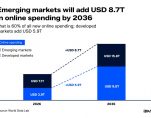
Emerging markets will add USD 8.7T in online spending by 2036
But this new consumer class will not shop the same way developed-market consumers do: by 2036, only 20% of adults in emerging markets will hold a credit card, against 66% in developed markets.
Global online spending is projected to grow from USD 11 trillion in 2026 to USD 25.6 trillion in 2036. Emerging markets add USD 8.7 trillion of that increase (60% of all new online spending), with China (USD +4.7 trillion) and India (USD +1.3 trillion) leading this growth. Indonesia (USD +243 billion), Brazil (USD +249 billion) and Mexico (USD +191 billion) form the next tier.
The categories matter as much as the markets. Online gaming spending in emerging markets grows 14% a year over the decade, the fastest of any category, and SaaS nearly 10%. Emerging markets will generate 76% of global growth in social media spending and 64% in SaaS.
The demographic picture challenges a common assumption. Consumers aged 45 and over account for 51% of emerging markets’ online spending growth through 2036, and spending by those aged 65 and over grows 12% a year, faster than any other age group.
The outlook was discussed during “Navigating Payments: How innovation and fragmentation are changing the game for e-commerce,” a webinar co-hosted by World Data Lab (WDL) and EBANX.
“Over the next ten years, people aged 45 and over will add USD 4.4 trillion in online spending in emerging markets, half of all the growth. Some of them already shop on their phones and will keep doing so as they get older. Others will buy online for the first time in their fifties or sixties. Merchants who build their checkout only for a 25-year-old will miss both groups,” explained Wolfgang Fengler, CEO of WDL.
The study models consumer spending, demographics, and financial access across 184 countries to 2036, drawing on the World Bank’s Global Findex and WDL’s consumer models, combined with EBANX’s experience processing payments for global merchants in emerging markets since 2012.
“If your checkout only takes credit cards, you are competing for one in five adults in emerging markets and conceding the other four”, said Marie-Elise Droga, Chief Revenue Officer of EBANX. “The merchants growing fastest with us didn’t wait for cards to arrive: they added the payment rails their customers already use, and they’re taking new buyers, bigger baskets and recurring revenue that card-only competitors can’t even see.”
834 million new online buyers, 281 million new credit cards
Between 2026 and 2036, the global economy will add 834 million online buyers but only 281 million credit card holders—a ratio of nearly three to one. In emerging markets, two in three new online buyers (67%) will arrive without a credit card. Adults without it already account for 55% of online spending in emerging markets, a share that rises to 90% in India and 93% in Sub-Saharan Africa. Credit cardless adults also represent 52% to 59% of spending in every digital category, from gaming and SaaS to streaming and travel.
Digital payment use is also running ahead of online shopping. Of the 2.6 billion emerging-market adults spending between USD 6 and USD 25 a day, 70% already pay merchants digitally while only 33% buy online, leaving at least 957 million digitally active consumers who are not yet online buyers. Many hold a bank account or mobile wallet but no card that works at an international checkout.
“This is closely tied to the innovation that came out of the financial industry in emerging markets, which developed solutions for an increasingly mobile economy and for the habits of local consumers. Today, we call them local payment methods, or LPMs, and they allowed e-commerce growth to decouple from the credit card, which still has very low penetration in these countries,” said Estelita Hass, head of Market Intelligence at EBANX.
Subscriptions are the next frontier — and India shows why
Recurring categories such as streaming, SaaS and online education will reach USD 2.1 trillion a year in emerging markets by 2036, with USD 1.1 trillion coming from adults without a credit card. In India, 82% of recurring online spending will be cardless. Account-based recurring rails are beginning to close that gap: a global SaaS company saw a 20% uplift in new subscribers after adding UPI at checkout in India, and cybersecurity company Nord Security now generates 28% of its revenue in Brazil through Pix Automático, Brazil’s recurring instant payment, six months after launching it with EBANX.
The issuer is solely responsible for the content of this announcement.
ABOUT EBANX
EBANX is the leading technology platform connecting global businesses to the world’s fastest-growing digital markets. Founded in 2012 in Brazil, EBANX was built with a mission to expand access to international digital commerce. Leveraging proprietary technology, deep market expertise, and robust infrastructure, the platform enables global businesses to offer hundreds of local payment methods and streamline cross-border payments across Latin America, Africa, and Asia. With a global footprint, it established a technology and regulatory headquarters in Singapore in 2026. More than just payments, EBANX drives growth, enhances sales, and delivers seamless purchase experiences for businesses and end users alike.
By Nitya Chakraborty Incumbent President of Brazil Luiz Inacio Lula da Silva, better known globally as Lula made a dramatic comeback in October 25 run off Presidential elections by comfortably defeating the far right candidate Flavio Bolsonaro who was the frontrunner after the first round of elections on October 4. After 100 per cent counting […]
By Nantoo Banerjee The long-drawn Ukraine-Russia war seems to be turning out to become the world’s largest and most expensive proxy war in the modern era, in which the European Union and the United Kingdom have so far spent nearly $300 billion on Ukraine to tame Russia. The Syrian civil war since 2011 may be […]
By Kalyani Shankar In India, festivals are more than just celebrations; they are significant traditions. Families often spend a considerable amount on new clothes, sweets, decorations, and gifts during these times. However, rising prices and inflation are forcing consumers to adjust their budgets and shopping habits. Many families are choosing to celebrate on a smaller […]
Arabian Post Staff -Dubai Alpha Dhabi Holding has agreed to commit $1 billion (Dh3.67 billion) to Alpha Wave III, extending the Abu Dhabi-listed investment group’s exposure to artificial intelligence and high-growth technology businesses worldwide. The agreement, announced on Monday, covers a global investment fund managed by Alpha Wave Global and remains subject to applicable approvals. Alpha Dhabi said the commitment would support diversification of its investment portfolio, […]
Brazilian President Luiz Inácio Lula da Silva has secured an unprecedented fourth term after defeating right-wing challenger Flávio Bolsonaro in a closely contested presidential runoff, although his opponent has refused to accept the result. Brazil’s Superior Electoral Court confirmed that Lula, representing the Workers’ Party, received 51.79 per cent of valid votes against 48.21 per cent for Bolsonaro, a senator from the Liberal Party. The final tally […]
China’s state-linked equity funds attracted their largest weekly inflows since the April 2025 trade-war sell-off, signalling intensified efforts to support a stock market battered by persistent selling.
Nine exchange-traded funds widely associated with the country’s so-called national team recorded combined net inflows of 128.7 billion yuan ($19 billion) during the week ending 23 October. The total was the highest since nearly 140 billion yuan entered the same closely watched group during the tariff-driven market turmoil 18 months earlier.
The surge followed a punishing decline in mainland shares that pushed the CSI 300 benchmark into bear-market territory, conventionally defined as a fall of at least 20% from a previous peak. Investors have been monitoring large purchases of index-tracking funds for indications that state-backed institutions are seeking to contain further losses.
The figures measure money entering funds favoured by official investors rather than confirmed purchases by government-controlled entities. No public announcement has established how much of last week’s inflows came directly from the state, making the scale of official intervention difficult to determine precisely.
Central Huijin Investment, a unit of sovereign wealth fund China Investment Corporation, is among the principal institutions associated with market stabilisation. Its investment activity has become an important signal for traders attempting to assess Beijing’s willingness to support share prices during periods of intense volatility.
The latest inflows were concentrated in exchange-traded products offering exposure to broad mainland equity benchmarks. Such vehicles enable institutions to acquire diversified holdings quickly, directing demand towards major listed companies without having to purchase individual shares separately.
Thursday’s trading illustrated the pressure facing authorities. The CSI 300 fell into a bear market as persistent selling overwhelmed earlier signs of institutional support. Funds favoured by state investors attracted approximately 46 billion yuan that day, highlighting the contrast between substantial new subscriptions and continuing weakness in underlying shares.
Friday brought a partial reversal. The CSI 300 finished 1.7% higher at 4,105.33 after falling by as much as 2% during the session. The recovery coincided with unusually active trading in several large index funds, although trading patterns alone cannot identify the buyers responsible.
One CSI 300 exchange-traded fund managed by E Fund Management registered turnover of about 19.5 billion yuan on Friday, its busiest session since October 2024. Heavy turnover can reflect purchases and sales by multiple participants and does not, by itself, establish the size of net state investment.
The rebound provided relief after a prolonged retreat that had already tested confidence in official market-support measures. The benchmark had endured a record sequence of weekly declines, leaving investors focused on whether additional institutional demand could interrupt the selling pressure.
Analysts at China Securities, including Yao Ziwei, had previously identified large subscriptions to leading broad-market funds and heavier activity towards the close of trading as characteristics consistent with institutional buying against the prevailing market trend. Their observations did not amount to confirmation of individual investors’ identities.
The scale of potential support has also attracted attention. Analysts including Rebecca Sin estimated that Central Huijin raised approximately $231 billion through exchange-traded fund sales during the first half of 2026 and redeployed about $43 billion after purchases resumed in July. Their calculations suggested considerable remaining capacity, although available resources do not guarantee further buying.
Those estimates underscore the distinction between market intervention and a sustained recovery. Purchases can provide immediate demand for shares, but their effect depends partly on whether other investors become willing to hold equities without continued institutional assistance.
The comparison with April 2025 is significant because that episode followed sweeping American tariff announcements that triggered sharp market losses. Authorities subsequently introduced measures intended to stabilise trading and confidence. Last week’s inflows approached the scale seen during that earlier emergency, despite the different circumstances surrounding the latest decline.
The nine-fund basket represents only part of China’s exchange-traded fund market. Subscription figures can vary depending on the funds selected, the valuation method and the period measured, while changes in units outstanding cannot establish the identity of the ultimate purchaser.
Mainland exchange-traded funds are listed securities whose prices fluctuate throughout the trading day. Their creation and redemption mechanisms allow authorised institutions to adjust the number of units outstanding as investor demand changes. These mechanisms can produce substantial changes in reported fund flows even when trading activity involves different categories of institutional and individual market participants.
Overnight AI challenge saw 60 participants tackle a series of challenges using OpenAI Codex, with Kay Hng Quek taking the top prize
SINGAPORE – Media OutReach Newswire – 26 October 2026 – Coupang, a Seattle-based technology company that serves customers in 190 countries and territories, co-hosted an overnight AI hackathon, AI Grand Prix Singapore 2026 (“AI Grand Prix“) with OpenAI. It was presented by Elev8, with Carousell Group as venue partner.
Held from 24 to 25 October 2026 at Carousell Campus, the overnight AI Grand Prix brought together 60 participants, selected from a pool of 150 applicants, to tackle a series of challenges that tested their technical skills, creativity and ability to solve problems under pressure. All participants competed in individual challenges and formed 14 teams for the group challenge. Engagement remained strong through the night, with participants continuing to work on their solutions into the early hours.
From Challenge to Working Solution
Unlike a traditional hackathon centred on a single problem statement, the AI Grand Prix was a multi-challenge competition, requiring them to adapt their approach as the competition progressed. Using OpenAI Codex, participants were tasked with three distinct challenges: Game Hack, which focused on developing creative AI-powered games; Spot the Mismatch, a technical challenge to identify discrepancies in AI-generated product descriptions, images and prices; and Group Hack, in which 14 teams developed AI-powered shopping experiences and solutions. Performance across the challenges was assessed collectively to determine the overall rankings.
Taking the top spot was Kay Hng Quek, who demonstrated strong, consistent problem-solving skills across different technical challenges. He received the Champion’s Builder Kit, a special first-place award comprising a Mac mini, DJI Mic 3 and Elgato Stream Deck Plus, designed to support continued experimentation and creation as an AI builder.
A total of US$13,000 in OpenAI API credits was shared among the winners and OpenAI subscription benefits were also provided to all participants, alongside unlimited Codex usage resets during the event to encourage experimentation with different ideas and approaches. The top 10 participants are scheduled to attend an exclusive networking dinner on 26 October with leadership and technical representatives from Coupang and OpenAI, offering an opportunity to exchange ideas and experiences in building with AI.
Xin Fu, VP of Engineering at Coupang (left), and winner Kay Hng Quek (right)
“AI Grand Prix was an incredible opportunity to push myself beyond my comfort zone and explore what’s possible with AI. The variety of challenges encouraged us to think creatively, adapt quickly and approach problems from different perspectives. What made the experience even more rewarding was being surrounded by talented, passionate builders who shared ideas and inspired one another. I’m grateful to have been part of such an exciting community, and especially for Jerel, my cofounder, who brings out the best in me,” said Kay Hng Quek, overall champion of AI Grand Prix Singapore 2026.
“Technology and innovation are at the heart of how we create better experiences for our customers, and we see tremendous potential for AI to further transform the future of commerce. Singapore is home to an exciting community of engineers and researchers, and we are thrilled to co-host this event with OpenAI to provide a platform for them to come together, experiment and innovate with AI,” said Xin Fu, VP of Engineering at Coupang.
Derrick Choi, Head of Applied AI, Codex (APAC) at OpenAI, said, “AI is changing how software is built, giving developers new ways to accelerate the journey from concept to product. The AI Grand Prix highlighted the breadth of Singapore’s developer community. It was a great opportunity to give builders a chance to try different approaches with Codex and explore how they could use it to tackle real-world problems.”
The AI Grand Prix marks Coupang’s first event with OpenAI and underscores its continued investment in building the future of commerce with AI, while leveraging Singapore’s position at the heart of Southeast Asia’s technology ecosystem.
Hashtag: #Coupang
The issuer is solely responsible for the content of this announcement.
About Coupang
Coupang is a technology and Fortune 150 company listed on the New York Stock Exchange (NYSE: CPNG) that provides retail, restaurant delivery, video streaming and fintech services to customers around the world under brands that include Coupang, Eats, Play, Rocket Now and Farfetch. It operates in over 190 countries and territories around the world.
CoinDCX has confirmed a cryptocurrency loss of nearly $16 million after an internal transfer system failed, reversing its initial dismissal of suspicious withdrawals from wallets previously compromised in a security breach. The Mumbai-based exchange said on Sunday that it had absorbed the loss of 15.99 million USDT, a dollar-linked cryptocurrency issued by Tether, and that customer balances and active trading systems remained unaffected. Its disclosure followed questions […]
Electrum has patched a security flaw that allowed malicious servers to divert bitcoin payments when wallet users attempted to increase transaction fees, after developers confirmed at least one theft. The developers released version 4.8.3 on 24 October and urged users of earlier versions to upgrade. Their security advisory classified the vulnerability as high severity and said some servers had exploited it against customers. Two users reported suspicious […]





 www.hkstp.org





 https://www.linkedin.com/company/ebanx/