By K Raveendran The greatest mistake Narendra Modi and his Bharatiya Janata Party can make is to mistake the silence of the streets for the consent of the people. The government may have succeeded in shrinking the space for organised resistance, intimidating critics and making dissent increasingly costly. But political resentment does not disappear simply […]
The article Modi Govt’s Undeclared Emergency Will Have Its Inevitable Outcome appeared first on Latest India news, analysis and reports on Newspack by India Press Agency).
By Dr. Gyan Pathak Once upon a time people in India exercised their “right to protest” in front of the ruling establishment in New Delhi free of cost, though they still needed government permissions for assembly of people for protest. However, under PM Narendra Modi, it has been abolished altogether with denotification of designated protest […]
The article India’s National Capital Being Turned Into No Protest Zone appeared first on Latest India news, analysis and reports on Newspack by India Press Agency).
Arabian Post Staff -Dubai Nothing’s CMF Watch 3 Pro smartwatch is being offered for $59 in the United States, a $20 reduction from its $79 selling price, as retailers extend discounts across the device’s four colour options. The offer, equivalent to approximately 25% off the $79 reference price, has appeared on Amazon, with listings also identifying discounted units at Walmart and Nothing’s own store. Availability and delivery […]
By Ashok Nilakantan Ayers NEW YORK: India’s digital media industry has taken an unusually significant step in challenging Prime Minister Narendra Modi’s government. Twenty-one major news publishers, including media organisations owned by Mukesh Ambani and Gautam Adani, have approached the Supreme Court, arguing that India’s digital privacy legislation could undermine investigative journalism, compromise confidential sources […]
The article Indian Digital Media Challenging Modi Govt’s Privacy Law In Supreme Court Is A Major Step appeared first on Latest India news, analysis and reports on Newspack by India Press Agency).
The memorandums of understanding, signed in Tokyo on Wednesday during German Chancellor Friedrich Merz’s visit to Japan, cover superconducting materials and equipment for heating and fuelling plasma. Proxima will collaborate with Fujikura on high-temperature superconducting tape and with Kyoto Fusioneering on specialised reactor systems.
The agreements are preliminary arrangements rather than binding purchase orders or commitments to construct manufacturing facilities. Financial terms and delivery schedules have not been disclosed, leaving the scale of any eventual procurement dependent on further negotiations and technical work.
Under the Fujikura agreement, the companies will examine the feasibility of establishing a factory in the German state of Lower Saxony to manufacture high-temperature superconducting tape, known as HTS tape. The material is used to make powerful magnets that confine extremely hot plasma inside fusion machines.
Proxima estimates that its Alpha demonstration stellarator will require approximately 20,000 kilometres of tape. Each subsequent Stellaris commercial power plant would need around 40,000 kilometres, making dependable manufacturing capacity central to its development plans.
The collaboration follows Proxima’s September memorandum of understanding with Lower Saxony concerning a large-scale European production facility. The proposed project’s first two phases envisage investment of approximately €140 million through 2029, with public and private financing expected to contribute equally. The state has identified €21 million as its intended contribution.
The latest Fujikura arrangement concerns feasibility work and does not establish that the proposed factory has secured final financing, regulatory approvals or a construction timetable. Fujikura already manufactures superconducting tape and supplies other fusion developers, giving it industrial experience in a material whose production requires demanding quality controls.
Fujikura announced in September a separate long-term agreement to supply more than 10,000 kilometres of superconducting tape to US-based Commonwealth Fusion Systems for its planned ARC power plants. That contract also involves expansion of the Japanese manufacturer’s production capacity.
Proxima’s second agreement brings Kyoto Fusioneering into work on gyrotrons, devices that generate high-power microwaves to heat plasma, and fuel-cycle technology used to manage the hydrogen isotopes required for fusion reactions. Both systems are essential to operating a reactor beyond the magnetic confinement stage.
Kyoto Fusioneering is also expected to contribute technology to Germany’s national Fusion Hubs programme, which was launched with an initial €125 million in research funding. The collaboration connects a Japanese supplier specialising in fusion engineering with Proxima’s reactor development and Germany’s broader industrial research effort.
The company has experience developing plasma-heating equipment and integrated fuel-handling technologies. Its engineering activities include work on gyrotrons and experimental systems designed to test processes needed for future fusion plants. The agreement with Proxima does not itself constitute a confirmed equipment delivery.
Proxima develops stellarators, a type of fusion device that uses carefully shaped magnetic fields to hold plasma in place. Its approach differs from the tokamak configuration pursued by several other fusion developers, although both depend on advanced magnets and systems capable of sustaining demanding operating conditions.
The company’s Alpha demonstrator is intended to operate in the early 2030s and test whether its stellarator design can achieve net energy gain from fusion. Its Stellaris concept is intended as a subsequent electricity-producing plant at Gundremmingen, the site of a former nuclear power station in Bavaria.
Proxima raised €411 million in July to support its development programme. The company emerged from the Max Planck Institute for Plasma Physics in 2023 and has assembled partnerships with engineering and manufacturing businesses as it moves towards constructing its first major machine.
Neither the Alpha timetable nor the commercial ambitions establish that fusion electricity production has been demonstrated at an economically viable scale. Substantial engineering, testing and regulatory work remains before a commercial plant can supply electricity to the grid.
The company’s manufacturing strategy also reflects the substantial quantities of specialised materials required for stellarator construction. Superconducting tape must meet stringent performance specifications, including its ability to carry large electrical currents while exposed to strong magnetic fields and extremely low temperatures.
Fujikura and Kyoto Fusioneering were already listed among participants in Proxima’s Alpha Alliance, an industrial network bringing together companies with expertise in materials, components and reactor engineering. The new memorandums identify more specific areas for cooperation within that wider group.

Winning recognition in the global premium market ultimately relies on what the product itself says. GREE’s reputation for quality among global consumers stems from sustained investments in core technologies, superior user experiences, and user value over many years.
To address the harsh challenges posed by diverse global climates, GREE independently developed a matrix of core compressor technologies covering all climatic zones. The Timo series, equipped with G-Boost single-stage enthalpy-adding compressors, was specifically developed for extremely hot regions like the Middle East. It remains reliable operation even at ambient temperature of 68℃, achieving non-declining cooling performance at 54℃. The Airy series pioneered the commercialization of ultra-wide frequency rotary compressors, capable of continuous heating for 10 hours without defrosting, improving the seasonal energy efficiency ratio (SEER) by 9.5% to 16.7%. The S-cool series, equipped with G-Hyper dual-cylinder two-stage compressors, was crafted for extremely cold regions such as Northern Europe and North America. It operates stably within an ultra-wide temperature range of -40℃ to 54℃, achieving industry breakthroughs of “non-declining heating at -25℃ and non-declining cooling at 46℃”. These three compressor technologies provide “all-climate comfort” solutions for users in different climate belts through their respective differentiated technical paths.

In key dimensions of user experience, GREE also addresses consumer pain points with hardcore technology. The newly launched 2026 “Ai Silent King” features GREE’s self-developed AI energy-saving chip. Paired with artificial intelligence algorithms, it saves energy from the moment it is turned on, improving annual energy efficiency by 23%. Meanwhile, GREE’s SilenzX series air conditioners achieve ultra-low sound pressure levels of just 29 dB(A) for the outdoor unit and 15 dB(A) for the indoor unit—far below the industry average. This achievement earned the Gold Medal at the 51st International Exhibition of Inventions of Geneva, marking GREE’s leadership in the field of noise reduction technology globally.
From compressors to whole unit systems, from AI energy saving to quiet technology, GREE has built the core competitiveness of Premium products through solid technological accumulation and continuous innovation breakthroughs, creating truly high-quality air experiences for global users.
As of July, GREE holds 50 “world-leading” technologies. From residential air conditioners to central air conditioning systems, from single-refrigerant systems to solutions covering all climatic zones, GREE has constructed a complete, autonomous, and controllable technology matrix. It is this systemic innovative capability that allows GREE to maintain rapid response and technical adaptation capabilities in the face of differentiated needs across global markets.
Currently, GREE products serve more than 190 countries and regions worldwide. By adhering to serving users with core technologies and high-quality service, GREE continues to meet people’s pursuit of a better life. Honors are witnesses to the past, and innovation is the eternal coordinate. Standing at a new starting point, GREE Electric Appliances will continue to drive high-quality development through independent innovation, moving from “scale leadership” to “value guidance,” and from “Chinese Manufacturing” to “Global Brand”, thus achieving “Made in China, Loved by the World”.
Hashtag: #GREE
The issuer is solely responsible for the content of this announcement.
Datavault AI shares lost almost half their value after the Nasdaq-listed company disclosed that it could not withdraw bitcoin held through Biconomy and would revise financial statements covering several reporting periods. The stock closed Tuesday at $0.067, down 49.55%, with approximately 244 million shares changing hands. The sell-off followed an October 26 regulatory filing detailing accounting errors linked to a $150 million share purchase agreement with Scilex […]
The forecast identifies large language models, which underpin generative AI applications, as an area where China is particularly well positioned to establish leadership. It also anticipates that Chinese companies and research institutions will become at least competitive across other critical technology sectors, potentially reshaping the balance of technological capabilities between Beijing and Washington.
The assessment comes as Chinese AI developers narrow the performance gap with American competitors despite restrictions on access to advanced semiconductors. Improvements in model efficiency, expanding domestic computing infrastructure and competitive pricing have strengthened China’s position in the global market.
Bloomberg Intelligence senior analyst Robert Lea identified a sharp improvement in Chinese model performance earlier this month. Leading Chinese systems trailed their American counterparts by approximately 3% on benchmark scores, compared with around 9% in May and 15% earlier this year.
That narrowing gap followed the September introduction of DeepSeek’s V4.1 Flash model, which demonstrated further advances in reasoning and computational efficiency. The findings suggest that restrictions on sophisticated American chips have not prevented Chinese developers from improving their systems.
The projections nevertheless remain conditional on technological progress, investment and commercial adoption over the next four years. Competitive performance in individual benchmarks does not necessarily establish overall leadership, particularly when computing capacity, profitability and enterprise deployment are considered.
China’s expanding capabilities are already influencing international adoption patterns. Models developed by DeepSeek, Alibaba and Moonshot AI have attracted developers seeking alternatives to comparatively expensive proprietary systems offered by American technology companies.
Data from OpenRouter, a platform providing access to multiple AI models, showed Chinese systems gaining substantial shares of usage during 2026. However, the figures represent activity through that platform rather than the entire global market, where direct subscriptions and enterprise contracts remain significant.
Chinese developers have also benefited from distributing models with openly available weights, allowing businesses and programmers to customise systems without depending entirely on proprietary services. This approach has encouraged international experimentation and strengthened adoption among cost-conscious users.
American companies retain important advantages, particularly in advanced semiconductor access, large-scale computing infrastructure and commercial relationships with enterprise customers. OpenAI, Anthropic and Google continue investing heavily in frontier models and the infrastructure required to train increasingly sophisticated systems.
Financial performance illustrates the distinction between technological competitiveness and commercial success. Anthropic disclosed revenue of $16.3 billion for the first half of 2026, compared with $1.2 billion during the corresponding period a year earlier, reflecting strong demand for its enterprise services.
Chinese developers face greater pressure on pricing, with intense domestic competition limiting opportunities to convert growing usage into sustainable earnings. Lower-cost models can accelerate adoption while simultaneously reducing margins available to finance future development.
Semiconductor manufacturing remains another constraint. Washington’s export controls restrict Chinese access to certain advanced processors and manufacturing equipment, although domestic suppliers including Huawei are developing alternatives intended to support national computing requirements.
China’s response increasingly combines domestic chip development with software optimisation. Researchers have demonstrated that improvements in training methods, architecture and inference efficiency can reduce dependence on the most powerful available hardware.
Beijing is also pursuing greater integration between artificial intelligence and telecommunications infrastructure. A three-year programme issued by the Ministry of Industry and Information Technology in June established targets for autonomous networks, computing access and specialised AI applications through 2028.
The programme envisages significant breakthroughs in core technologies by 2030, alongside improved coordination between communications networks, computing resources and intelligent services. Its objectives complement broader efforts to establish domestic technological capabilities.
Regulatory developments could influence the international availability of Chinese technology. Authorities proposed export restrictions this month covering 23 categories of AI technology, including language models, autonomous agents, chip designs and computing clusters.
The draft measures would potentially subject transfers of certain model weights, source code and advanced technologies to government approval. Their final scope and implementation remain undetermined.
China’s Ministry of Commerce has presented the proposals as part of a wider effort to regulate strategically sensitive technology transfers. The consultation also covers technologies beyond artificial intelligence, reflecting the government’s expanding attention to intellectual property and national security.
For overseas developers using Chinese models, the eventual rules could affect access to advanced systems and associated technical resources, depending on the restrictions adopted and the thresholds applied to particular technologies.

Peru’s exports are projected to reach $110.794 billion by the end of 2026, an increase of 21.16% over the previous year, as higher mineral prices and strong international demand lift the country’s overseas sales. The Lima Chamber of Commerce released the forecast based on estimates prepared by its Institute for Foreign Trade Research and Development (Idexcam), identifying mining as the principal contributor to the anticipated expansion. The […]
Dubai has approved a development programme exceeding Dh2 billion alongside new population planning and digital government policies, as authorities seek to align economic expansion with infrastructure capacity and residents’ needs. Sheikh Hamdan bin Mohammed bin Rashid Al Maktoum, Crown Prince of Dubai, Deputy Prime Minister and Minister of Defence of the UAE, chaired Tuesday’s Executive Council meeting at Emirates Towers, where the three initiatives were endorsed. The […]
General Motors will transfer its stock market listing from the New York Stock Exchange to Nasdaq on November 17, aligning its market identity with an expanding emphasis on artificial intelligence, autonomous driving and software-driven vehicles. The Detroit-based automaker announced the decision on Tuesday, confirming that its shares will continue trading on the NYSE until November 16 before moving to the Nasdaq Global Select Market. The company will […]
Arabian Post Staff -Dubai Dubai-based ENOC Group has extended its aviation technical services agreement with Indonesia’s PT Pertamina Patra Niaga for another three years, maintaining cooperation on aircraft refuelling safety, fuel quality and operational standards at Indonesian aviation facilities. The renewed agreement, announced on Tuesday, covers annual inspections, technical guidance, operational assistance and specialised training. It builds on a three-year arrangement established in 2023 and a commercial […]
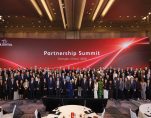
The Summit explored the trends reshaping customer expectations and the future of financial services. Discussions focused on rising wealth, increasing cross-border mobility, and the growing convergence of data, artificial intelligence and human expertise. Participants exchanged perspectives on how deeper partnerships can enhance customer outcomes and unlock new opportunities for the next phase of growth.
Chengdu’s history provided a fitting backdrop for the Summit. More than a thousand years ago, the city pioneered “jiaozi”, widely regarded as the world’s first paper money. Its success depended on trust in the promise behind it, a principle that remains equally important in successful partnerships today.
Dennis Tan, Regional CEO, Thailand, Vietnam, Cambodia, Myanmar; Group Partnership Distribution, Prudential plc, said: “Keeping promises sits at the heart of every partnership for Prudential. Founded on trust and strengthened through collaboration, these relationships help us meet customers’ increasingly interconnected health, protection and wealth needs.
“The Summit demonstrated the strength of Prudential’s partnership ecosystem and the opportunities ahead. By bringing together distribution expertise, digital capabilities and market insights, we are working to create better customer experiences and drive long-term, sustainable growth with our partners.”
The programme also featured guest speaker Pierluigi Collina, FIFA’s Chief Refereeing Officer and referee of the 2002 FIFA World Cup Final. Drawing on his experience at the highest level of international football, he shared perspectives on leadership, accountability and sound decision-making in complex and rapidly changing environments.
Partnership distribution at Prudential
Prudential harnesses the strength of its partnership ecosystem to translate shared priorities into action, helping more customers achieve greater financial security and confidence for the future.
Partnership distribution has long been central to Prudential’s growth strategy. Since establishing its first strategic bancassurance partnership in 1998, Prudential has built one of Asia’s largest bancassurance franchises, comprising more than 180 banking partnerships across markets. In the first half of 2026, the bancassurance channel delivered US$586 million in new business profit, up 13 per cent on a constant exchange rate basis from US$505 million in the same period last year.
Hashtag: #Prudentialplc
The issuer is solely responsible for the content of this announcement.
Prudential provides life and health insurance and asset management in Greater China, ASEAN, India and Africa. Prudential’s mission is to be the most trusted partner and protector for this generation and generations to come, by providing simple and accessible financial and health solutions. The business has dual primary listings on the Stock Exchange of Hong Kong (HKEX: 2378) and the London Stock Exchange (LSE: PRU). It also has a secondary listing on the Singapore Stock Exchange (SGX: K6S) and a listing on the New York Stock Exchange (NYSE: PUK) in the form of American Depositary Receipts. It is a constituent of the Hang Seng Composite Index and is also included for trading in the Shenzhen-Hong Kong Stock Connect programme and the Shanghai-Hong Kong Stock Connect programme.
Prudential is not affiliated in any manner with Prudential Financial, Inc. a company whose principal place of business is in the United States of America, nor with The Prudential Assurance Company Limited, a subsidiary of M&G plc, a company incorporated in the United Kingdom.
Defence technology company Anduril Industries and chipmaker Qualcomm have unveiled plans for a laptop designed and assembled in the United States, with orders expected to open in 2027 as the partners seek to establish a domestic computer manufacturing network. The initiative, called BlueChip, will initially target government agencies, military organisations, emergency responders and public safety customers. Anduril has produced working prototypes, but neither company has disclosed production […]
ISC2 plans to convene its new Cyber-AI Workforce Coalition in November, with initial employment toolkits targeted for spring 2027 as artificial intelligence reshapes cybersecurity jobs and recruitment. Chief executive Scott Beale outlined the timetable during the organisation’s Security Congress in Denver on 26 October, saying the coalition would bring employers, technology companies and workforce specialists together to establish clearer descriptions of emerging security roles. Some companies could […]

Deepening Localization: Manufacturing Strength in Focus
Localization remains central to BAIC FOTON’s global development. As a key manufacturing base in Africa, the BAIC South Africa Plant strengthens regional production capabilities and market responsiveness.
During the conference, guests will tour the plant to gain firsthand insights into localized manufacturing and operational achievements. The BAIC FOTON Africa Regional Training Center will also be officially unveiled, supporting product technology training, talent development and service capabilities to further strengthen regional operations.
Product Innovation: New Launches and Dynamic Experiences
Addressing Africa’s diverse transportation needs, BAIC FOTON will introduce its latest commercial vehicle lineup. The GALAXUS R5 and C5 heavy trucks will officially launch in Africa, while the TUNLAND PHEV pickup will make its South African debut, offering more choices for different transport scenarios.
Beyond product launches, the conference will feature static displays of medium- and heavy-duty trucks, light commercial vehicles, pickups and vans. Drift performances and test drives will provide immersive opportunities to experience vehicle power, comfort and handling, bringing product innovation to life.
Strengthening Partnerships: Advancing Together in Africa
The conference will facilitate discussions on regional development strategies, market expansion and partner collaboration. Strategic cooperation initiatives and customer vehicle deliveries will further reinforce relationships with African partners.
With growing localized manufacturing capabilities, an expanding product portfolio and stronger service support, BAIC FOTON continues to build a foundation for sustainable development in Africa while exploring new opportunities alongside its partners.
On October 29, the BAIC FOTON Africa Partners Conference will open in South Africa. Stay tuned for more highlights.
Hashtag: #BAICFOTON
The issuer is solely responsible for the content of this announcement.