Just in:
Microsoft restores services gradually but gives no recovery deadline // Inpex reaffirms Gulf oil strategy despite shipping constraints // L’OCCITANE Celebrates 50 Years Of Provençal Craftsmanship With Holiday 2026 Collection // Sun World Ba Den Mountain marks Vietnam Culture Day, welcoming Cambodian visitors over Bon Om Touk // Woman found dead as bank moves to repossess home // China’s Taiwan warning tests Washington’s defence commitments // US authorities dismantle North Korean cryptocurrency deception infrastructure // October Food Price Shock Has Far Reaching Consequences // Saudi fund assets forecast to cross $400 billion // China Reconciled To U.S. Curbs On Chips Exports, Woos South Korea For Supply // Fujairah highway pile-up leaves 14 dead and 30 injured // TORRAS Launches Two New iPhone Duo Cases from Its Popular Ostand Series, Addressing Foldable Phone Users’ Concerns About Difficult Stand Positioning and Scratches // Crescent Enterprises venture arm funds Oyster Therapeutics development // From Dubai to the EU: how UAE-based crypto firms can expand under MiCA // Yicura BioMed Advances Dual Capital and Industrial Strategy: Completes First Closing of Series B Financing Led by Gobi Partners // Salik posts Dhs1.045bn profit despite lower toll traffic // Microsoft outage leaves Outlook and Teams users disconnected // Microsoft apologises as Outlook services recover after outage // US resumes flights after nationwide air traffic shutdown // Nvidia appoints Colette Kress interim chief after Huang departure //

News related to
Part

Dubai-based Emirates NBD has executed a finance-lease facility supporting the acquisition of two Airbus A321neo aircraft for India’s largest carrier IndiGo, marking the lender’s entry into aviation asset financing and underlining its commitment to the aviation sector. The transaction adds to IndiGo’s sizable fleet growth ambitions and aligns with the UAE bank’s strategy to deepen its aviation-finance capabilities.

Under the deal, Emirates NBD will supply the structured leasing facility enabling IndiGo to secure two A321neo jets, which the airline intends to deploy as it strengthens its domestic network and expands international reach. The airline currently holds an order-book of nearly 900 aircraft across the A320neo, A321neo and A321XLR families.

IndiGo’s Chief Aircraft Acquisition and Financing Officer Riyaz Peermohamed commented: “We are pleased to partner with Emirates NBD on this financing transaction and look forward to building on the success of this transaction and further strengthen our relationship in the future.” Emirates NBD’s Group Head of Wholesale Banking Ahmed Al Qassim said that the deal “demonstrates our ability to provide bespoke financing structures to support the aviation industry’s growth”, and confirmed this marks the bank’s first aircraft finance lease.

The transaction comes amid a broader context of rapid fleet expansion in India’s aviation market. Airbus has indicated that IndiGo and another Indian carrier together are due to receive some 1,260 aircraft, of which around 916 are earmarked for IndiGo alone, making it one of the largest airline backlog commitments globally. On the wide-body front, IndiGo recently converted 30 of its purchase rights into firm orders for 30 additional Airbus A350‑900 aircraft, raising its wide-body order to 60 units and signalling its desire to build a global network reach beyond its low-cost domestic model.

From the lender’s perspective, Emirates NBD is positioning itself as an aviation-finance partner of choice in the Middle East and internationally. The bank’s move into aircraft leasing coincides with a rising investor and lender interest in aviation assets, as carriers renew fleets to improve fuel efficiency and meet higher demand. For IndiGo, this lease transaction adds financing flexibility, diversifies its funding sources and supports the airline’s aircraft-asset strategy at a time when supply-chain headwinds and delivery schedules remain tight in the global aerospace market.

Hundreds of thousands of deals from top local and international brands including Dyson, LEGO, Sennheiser and Beauty of Joseon, across Amazon.sg – the perfect way to start the holidays early. From deal optimizers to heartfelt gifters, new research reveals how Singaporeans are shopping smarter and more intentionally this holiday season. One in four savvy Singaporeans shop sales to save on holiday gifting, with men almost twice as […]

A high-level delegation from China plans to meet officials in Brussels this month to discuss tightening restrictions on rare earths and other critical minerals after the bloc flagged the controls as a threat to its key industrial sectors. The European Union has increased pressure on Beijing to restore stable access to materials essential for electric vehicles, semiconductors and defence capabilities while also advancing its own diversification plan […]

Data-resilience specialist Veeam Software has struck a definitive agreement to acquire Securiti AI for approximately US$1.725 billion in cash and stock, marking a significant expansion of its capabilities into data security posture management, privacy, governance and AI-trust technologies. The transaction is expected to close in the fourth quarter of 2025, pending regulatory and customary approvals. Veeam’s move aims to fuse its established strength in backup, recovery and […]

China’s securities regulator has rolled out a sweeping reform package designed to simplify access for overseas institutional investors and bolster long-term capital flows into its stock and bond markets. The China Securities Regulatory Commission announced that it will streamline the existing regime for the so-called qualified foreign investor framework, including loosening qualification thresholds, expanding investment scope and reducing administrative friction.

At a policy forum in Beijing, CSRC Chairman Wu Qing stated that the reforms aim to make China’s capital markets “more inclusive, adaptable and globally competitive”. He said the regulator plans to introduce a shelf-based refinancing mechanism and simplify filing procedures for overseas listings, aligning with the broader effort to diversify asset allocations amid global uncertainty.

The reforms are anchored on three pillars: easing eligibility for overseas institutional investors, enhancing operational flexibility for capital flows and broadening the range of permissible investments. Legal-and-regulatory briefings indicate that registration channels will be modernised; for example, in the revised framework for the earlier QFII/RQFII regime, a single renminbi account may now serve both securities and derivatives trading and repatriation of returns is simplified.

The timing of the reforms signals China’s intent to rebuild investor confidence amid a decelerating economy and mounting international competition for capital. Analysts note that the removal of quotas in earlier iterations of the programme set the stage for this deeper opening. Foreign asset-managers are expected to interpret this as a signal that Beijing is actively courting long-term commitments, rather than purely speculative flows.

From the perspective of global investors, these changes may unlock previously inaccessible segments of China’s markets. The A-share universe on the Shanghai Stock Exchange and Shenzhen Stock Exchange has grown substantially, and the relaxations open the door to a wider number of institutions, countries and asset classes than in the past. Strategically, this aligns with China’s dual-track agenda of promoting internal consumption while also continuing to integrate with global finance.

Nevertheless, the loosening of rules carries risks and constraints. Although administrative barriers are being reduced, foreign institutions must still satisfy substantive criteria—including governance standards, compliance records and suitability for RMB-denominated investment. The commercial and geopolitical environment remains complex, and international concerns around transparency, data security and regulatory predictability persist. Moreover, while quotas may be reduced or removed, factors such as currency volatility, capital controls and domestic market sentiment will continue to influence investor decisions.

Market participants appear cautiously optimistic. A number of global asset-managers have publicly stated that they will monitor how implementation unfolds and whether domestic on-shore brokers and custodians adapt swiftly to the new rules. Some expect the real test to come when overseas institutions begin deploying larger mandates into the Chinese on-shore market and engaging in longer-term allocations rather than short-term trading.

From the government’s perspective, the drive to attract long-term capital is part of a broader reform push. China is not only seeking external capital but also attempting to deepen its domestic investor base, scale up passive and index-based investment, and reduce reliance on short-term speculative flows. The regulatory strategy suggests that policymakers believe structural openness will enhance market resilience and support sustainable growth.

A leading enterprise-artificial-intelligence firm, Fractal Analytics, is preparing to launch a public share sale of around ₹4,900 crore and is targeting a market valuation near US $3 billion. The move comes as the company positions itself at the forefront of the AI-analytics sector and seeks to capitalise on growing investor demand for technology listings. The proposed offering would comprise fresh shares worth about ₹1,280 crore and an offer-for-sale by existing investors totalling approximately ₹3,620 crore as part of its entry into public markets.

Fractal Analytics was founded in 2000 by five graduates of the Indian Institute of Management Ahmedabad. Today only two of the original founders remain with the company: Group Chief Executive Officer Srikanth Velamakanni and Chief Executive Officer Pranay Agrawal, each holding roughly 10 per cent of the company’s equity and not looking to sell in the upcoming offering. The firm achieved unicorn status in 2022 and generates more than 90 per cent of its revenues outside its home market, meaning its exposure to global enterprise clients is strong.

Advising banks on the share sale include major names such as Axis Bank, Goldman Sachs, Kotak Mahindra Capital and Morgan Stanley, signalling the IPO is being positioned among marquee listings. Industry data show that new-listing proceeds in the Indian market have already approached US $16 billion in 2025, with expectations that this year could surpass the US $21 billion record set in the prior year.

In financial terms, Fractal has posted a turnaround in performance. According to regulatory disclosures, its revenue rose from about ₹2,043.7 crore in FY23 to approximately ₹2,816.2 crore in FY25, reflecting a compound annual growth rate of around 17.4 per cent. Meanwhile, profitability returned in FY25 with a net profit of ₹220.6 crore after a loss of ₹54.7 crore in the previous year. The firm’s adjusted EBITDA margin improved from 6.8 per cent in FY23 to 17.4 per cent in FY25, and operating cash-flow rose substantially to ₹397 crore in FY25 from the previous year.

Fractal’s service model is built around large global enterprises, which in FY25 included 113 “must-win clients”—companies with annual revenues in excess of US $10 billion or customer bases over 30 million. About 65 per cent of the firm’s FY25 revenues were derived from the United States, underlining its dependence on Western markets. To maintain growth momentum the company intends to channel IPO proceeds into further research and development, strategic acquisitions, expansion of its R&D centres in locations such as Bengaluru, Gurugram, Pune and Noida, and boosting its sales-and-marketing capabilities.

Despite the strong metrics the IPO plan carries risks. The business remains heavily concentrated: its top ten clients contributed 53.8 per cent of revenue in the Fractal. ai segment in FY25. Losing a major client could have a disproportionate impact on its results. The firm is also operating in a rapidly evolving global AI landscape dominated by large diversified IT-service providers as well as specialist startups. Its heavy reliance on the U. S. market exposes it to foreign-exchange volatility and regulatory shifts abroad. Analysts comment that an IPO valuation near US $3 billion may leave little margin for error if market sentiment weakens or growth decelerates.

Citigroup Inc. and Coinbase Global Inc. have announced a collaboration to expand digital-asset payment services for the bank’s corporate clients, signalling a deeper institutional embrace of blockchain-based money transfers. The partnership will first focus on facilitating conversions between fiat currencies and digital assets, including stablecoins, and improving access to on- and off-ramps for firms that move large volumes of funds.

The deal between Citi and Coinbase addresses a prominent pain point in global payments: the cost, time and complexity of moving funds across borders or between fiat and crypto systems. Under the agreement, the participants will work on streamlining pay-ins and pay-outs for institutional clients, simplifying the flow between traditional bank accounts and Coinbase’s digital-asset platform.

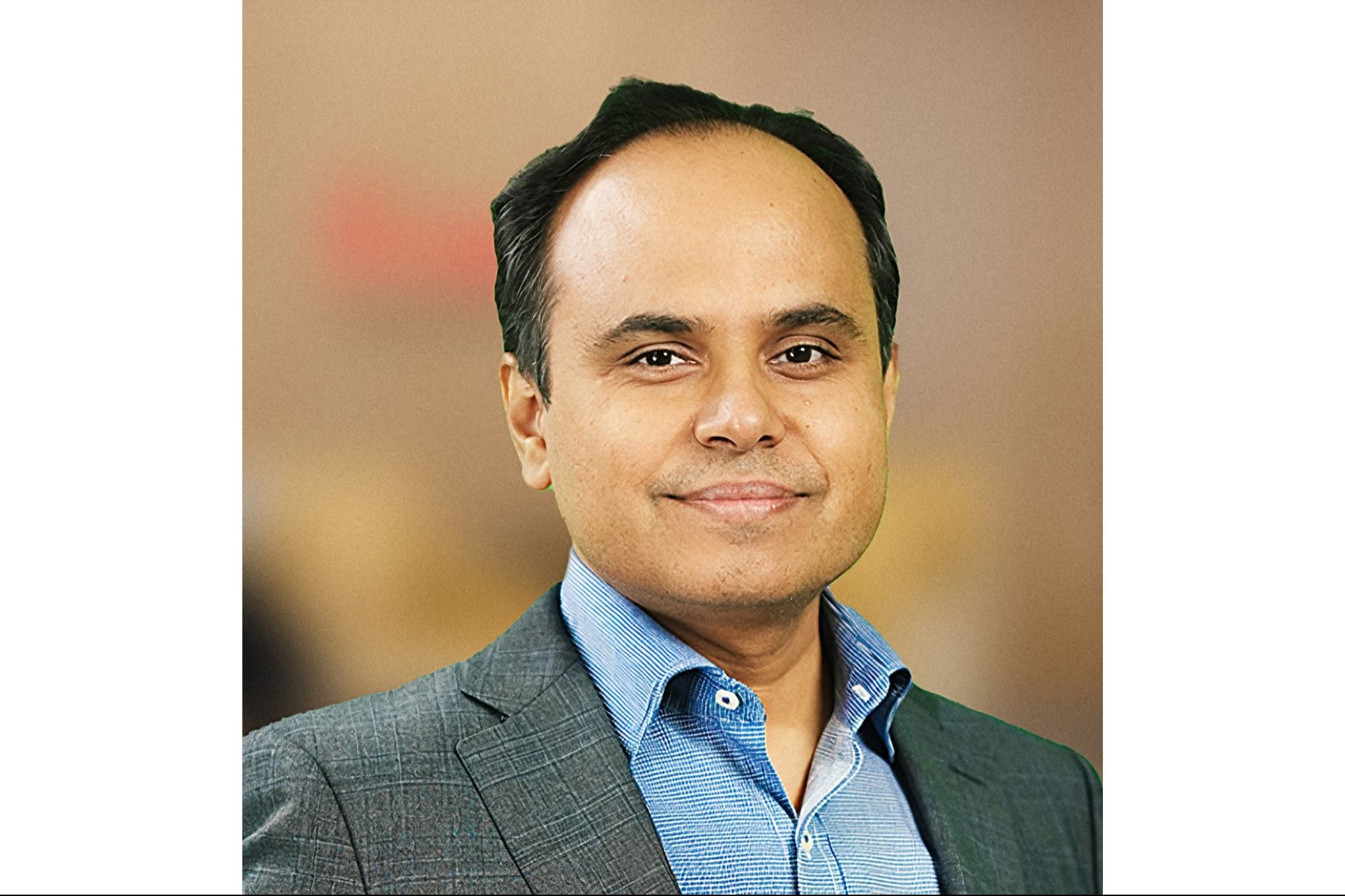
“With more than 300 payment-clearing networks across 94 markets globally, we see collaborating with Coinbase as a natural extension of our ‘network of networks’ approach,” said Debopama Sen, Citi’s head of payments and services. Brian Foster, global head of crypto-as-a-service at Coinbase, added that the collaboration “reflects our commitment to building the infrastructure needed for the next generation of financial services.”

Analysts view the move as part of a broader trend in which leading financial institutions are shifting from cautious observation of digital assets to actively integrating crypto and stable-coin infrastructure. Citi had already signalled interest earlier this year in issuing its own stablecoin and providing custody services for crypto assets backing investment funds.

Stablecoins—cryptocurrencies pegged to fiat currencies—currently serve mostly trading and settlement within crypto markets. The new collaboration suggests an ambition to extend their use into cross-border payments, treasury operations and institutional settlements. In this case, the plan explicitly includes exploring mechanisms to directly link fiat balances to on-chain stable-coin payouts for corporate clients.

While the partnership presents opportunity, it also raises regulatory and operational challenges. Financial regulators have increased scrutiny of stable-coin issuance, backing reserves and the potential risks to payments stability. Traditional banks entering the crypto space must manage compliance, money-laundering controls and cyber security in new systems. For instance, a consortium of ten major banks—including Citi—are together exploring stable-coin issuance tied to G7 currencies, with regulatory oversight a key consideration.

From an operational standpoint, integrating digital-asset infrastructure into a global bank’s existing payments network is complex. Citi’s model involves multiple clearing networks and real-time settlement expectations; adding 24/7 on-chain rails demands robust coordination, governance and risk management frameworks. The collaboration acknowledges this by focusing first on institutional clients and later expanding to broader corporate use.

For Coinbase, this partnership enhances its positioning as a trusted infrastructure provider for institutions. The firm has made several moves to support institutional adoption, including acquiring technology to expand capital markets presence and forming strategies around tokenised credit products. By joining forces with a major bank like Citi, Coinbase gains access to a wide international payments network and the bridge between traditional finance and digital assets.

Market reaction has been positive; following the announcement, Coinbase’s shares rose, reflecting investor appetite for digital-asset infrastructure deals with legacy banks. For corporate clients of Citi, the collaboration means access to a potentially faster, lower-cost payment model that combines fiat and crypto rails and the possibility of 24/7 global transfers.

In examining trends, the deal fits into a pattern where banks are no longer sidelined observers of cryptocurrency innovation but active participants. As one executive at Citi observed, the financial-services landscape is changing fast, and institutional demand for real-time, border-less payments is driving innovation. That said, the extent and pace of adoption will depend on regulatory clarity, technological readiness and client acceptance.

Advertisements

The trail blazed by Hamza, founder of Hexona Systems and the architect of one of the world’s largest AI automation communities, is leading him back to the Middle East, a region that played a significant role in his past. Hamza’s journey is that of a visionary who travelled across the globe to gain wisdom and novel experiences but eventually came back to his homeland with a more […]

HANOI, VIETNAM – Media OutReach Newswire – 27 October 2025 – Professor Sir Richard Henry Friend, Chair of the VinFuture Prize Council, shared that what began as a bold idea five years ago has grown into a symbol of confidence in the power of science to serve humanity. For him, being part of VinFuture is not merely a mission, but a deeply inspiring journey—one that brings together […]

The latest breakthrough in smart home automation promises to revolutionise the way we interact with our living spaces. Carpet sensing technology, which adapts to individual routines and enhances automation, is becoming a significant focus for tech companies looking to improve home interactivity. This innovation is set to transform residential spaces into responsive environments that learn user behaviours, creating a level of convenience previously unseen. At its core, […]

By Nantoo Banerjee If global oil giant BP plc’s ‘Energy Outlook 2025’ proves to be true, India will be a global leader in energy consumption, outpacing all other countries by 2050. The country will account for 12 percent of the global demand, up from seven percent from 2023, according to BP’s chief economist Spencer Dale. […]


The article India Is At The Heart Of Driving The Global Energy Process appeared first on Latest India news, analysis and reports on Newspack by India Press Agency).

HONG KONG SAR – Media OutReach Newswire – 27 October 2025 – CTF Life today announced the signing of a Memorandum of Understanding with Gleneagles Hospital Hong Kong (“Gleneagles”), CUHK Medical Centre (“CUHKMC”), and Hong Kong Baptist Hospital (“HKBH”) to establish strategic partnerships. In a pioneering move, CTF Life has also become the first insurance company to collaborate with Gleneagles MediCentre in Admiralty to launch an exclusive […]

Mlak Finance has completed the sale of its subsidiary in Egypt to Al Baraka Bank Egypt for EGP 400 million, marking its full exit from the Egyptian market. This strategic divestment aligns with the company’s broader objectives of streamlining operations and refocusing on other regions. The sale, as disclosed by Mlak Finance, will have a significant impact on its financial position, particularly affecting its retained earnings by […]

HONG KONG SAR – Media OutReach Newswire – 27 October 2025 – The China Tennis Tour CCB (Asia) Hong Kong Open 2025 (hereafter “CTA1000 CCB (Asia) Hong Kong Open”) will return to Victoria Park Tennis Court from 23rd to 30th November 2025. The eight-day tournament will gather more than 150 of the China’s top players, competing across Men’s Singles, Women’s Singles, Men’s Doubles, and Women’s Doubles for […]

The groundbreaking ceremony of the world’s first gigascale round-the-clock renewable energy project took place in Abu Dhabi, marking a significant milestone in the global transition to sustainable energy. Sheikh Theyab bin Mohamed bin Zayed Al Nahyan, deputy chairman of the Presidential Court for Development and Fallen Heroes’ Affairs, was present at the event, which will see the integration of solar power and cutting-edge battery storage technologies capable […]

Saudi Arabia’s flagship New Murabba project is poised to become a major investment hub, with plans to attract capital in technology, real estate, and construction sectors. Michael Dyke, the CEO of New Murabba, announced the initiative at the Fortune Global Forum in Riyadh, marking a significant step forward in the kingdom’s diversification strategy.

Launched in 2023 by Crown Prince Mohammed bin Salman, the New Murabba project is part of Saudi Arabia’s broader Vision 2030, aimed at reducing the nation’s reliance on oil revenues by fostering new industries and boosting economic growth. The initiative aims to transform the heart of Riyadh into a sprawling mixed-use urban area, poised to redefine the cityscape with a mix of residential, commercial, and entertainment offerings.

The project will cover an area of 19 square kilometres, positioning it as one of the largest urban developments globally. Its scale is unprecedented, making it one of the most ambitious projects in Saudi Arabia’s recent history. The new district is expected to accommodate over 100,000 residents and create hundreds of thousands of jobs in various sectors, significantly contributing to Riyadh’s economic development.

One of the key areas that Dyke highlighted during his speech at the forum is the focus on technology. The New Murabba project aims to integrate cutting-edge technological innovations into its design and infrastructure. The development will feature smart city technologies, including AI-driven systems for traffic management, energy conservation, and public services. Moreover, the project is expected to foster a thriving ecosystem for tech startups and established companies, making it an attractive destination for both domestic and international tech investors.

The project’s real estate and construction sectors will also play a pivotal role. With residential spaces, luxury hotels, office towers, and retail outlets planned, the project is designed to meet the needs of a diverse range of residents, businesses, and tourists. This focus on mixed-use developments aims to create a self-sustaining urban area, with a heavy emphasis on sustainability and green architecture. Additionally, the construction phase alone is expected to generate significant economic activity, providing a substantial number of jobs in the kingdom’s building sector.

New Murabba’s strategic location within Riyadh further boosts its potential as a central business and cultural district. It will be positioned in close proximity to key landmarks, including the King Abdulaziz Historical Centre and the King Saud University, enhancing its accessibility and making it a focal point for both locals and visitors. The project’s proximity to the King Khalid International Airport is also expected to make it a prime location for international businesses, especially in the tech and tourism industries.

The Saudi government’s backing of the New Murabba initiative signals a strong commitment to its diversification efforts. As part of the Vision 2030 programme, the kingdom is looking to foster a more sustainable and diversified economy, moving away from its dependence on oil exports. This development aligns with broader trends in urbanisation across the Middle East, where large-scale projects are shaping the future of cities and driving economic change.

The investment opportunities presented by New Murabba are expected to attract a wide range of investors from various sectors. For real estate developers, the sheer scale of the project represents an unparalleled opportunity. For technology firms, the integration of smart city technologies offers a unique environment in which to develop and test innovative solutions. Meanwhile, the construction sector stands to benefit greatly from the demand for infrastructure and buildings, with the long-term potential for growth in both residential and commercial spaces.

With the Saudi government’s push for private sector involvement, the New Murabba project is expected to be a catalyst for further investments in the kingdom. The involvement of international investors and companies will be crucial to its success, with the project acting as a gateway to other opportunities within Saudi Arabia’s growing economy.

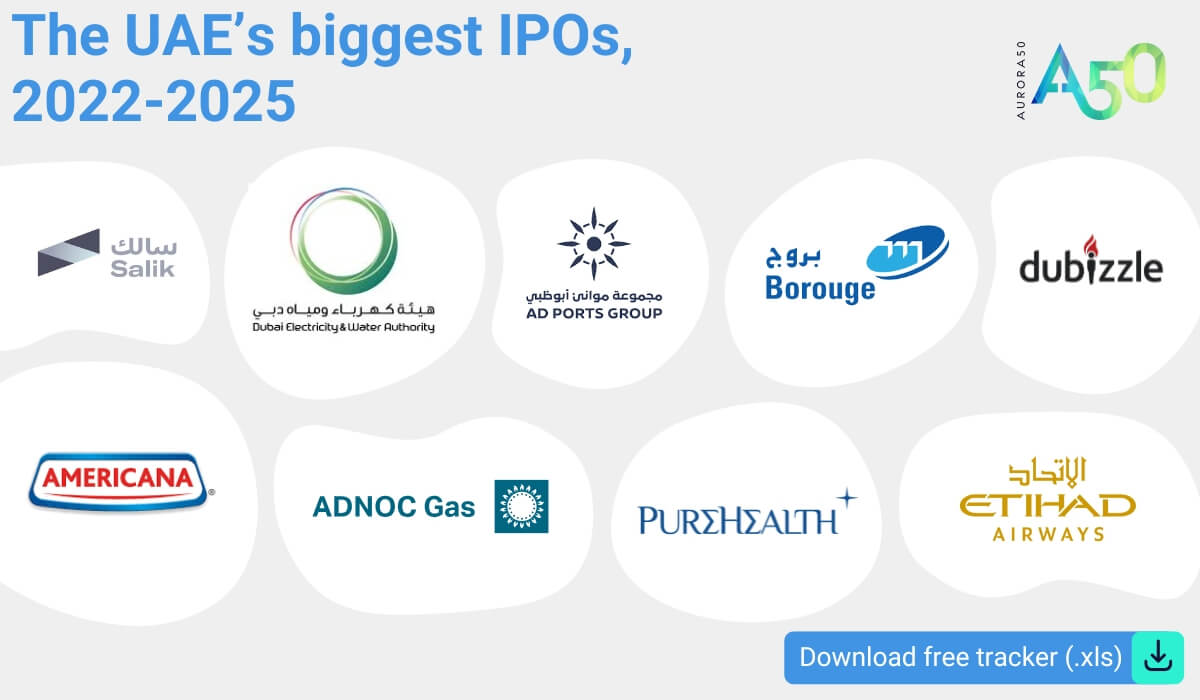
The cancellation of the highly anticipated initial public offering by UAE-based classifieds giant Dubizzle has raised serious concerns about the current state of the Middle East’s equity capital markets. Once viewed as a promising player in the region’s IPO landscape, Dubizzle’s decision to abandon its listing highlights the significant challenges the Middle East faces in generating investor confidence after a year of lacklustre aftermarket performance.

Dubizzle’s IPO was set to value the company at approximately US$2 billion, a deal that was initially expected to attract substantial interest from both regional and international investors. However, a series of setbacks, including a sharp downturn in market conditions, led to its eventual abandonment. “It’s a complete disaster for the region,” remarked a UAE-based investor, underscoring the gravity of the situation. This sentiment is echoed by many analysts who point to the stark contrast between the current climate and the boom years that saw the Middle East emerge as a dominant force in EMEA ECM.

The UAE’s IPO market has long been a significant player in the regional capital markets. Over the last few years, the area had enjoyed strong performances from listings such as the floatation of ADNOC Drilling and Dubai’s top retail operator, EMIRATES NBD. These successes painted a rosy picture of the region as a flourishing hub for high-profile public offerings. However, 2024’s market performance has been far from reflective of that growth. The Dubizzle setback is just the latest in a series of underwhelming IPO results, a trend that analysts attribute to a combination of factors, including investor caution, regional political instability, and global market headwinds.

Investor sentiment had already been fragile due to the underperformance of several high-profile companies post-IPO. Notably, Talabat, the online delivery service, saw its stock plunge nearly 40% from its initial issue price, while construction giant Alec Holdings also experienced significant losses. Both companies, initially thought to be solid IPO candidates, have fallen victim to what some analysts are calling an “overheated market” in 2023, where optimism led to inflated valuations. These negative outcomes have made investors more reluctant to engage in new listings, further dampening the appeal of subsequent IPOs, including Dubizzle.

Market observers point out that the combination of volatile regional economic conditions, which include oil price fluctuations and rising inflation, has contributed to a cautious outlook. The global economic environment, particularly in Europe and the United States, also has ripple effects in emerging markets like the UAE, with rising interest rates and a slowing global economy compounding investor fears of weak returns. These external pressures have combined with a tightening regulatory environment in the region, adding to the difficulties of orchestrating a successful IPO.

As the region grapples with these challenges, many are questioning whether the Middle East’s ECM sector can regain its former momentum. The last few years witnessed an influx of private equity and venture capital investments into the region’s tech startups, which fueled expectations that these companies would eventually go public and bolster the stock market. However, the persistent volatility and failure of IPOs to deliver on their promise have now raised doubts over whether such investments will yield the expected returns.

HONG KONG SAR – Media OutReach Newswire – 27 October 2025 – AIA Hong Kong (AIA) has once again led across key market metrics in the latest provisional statistics on Hong Kong’s long-term insurance business for the first half of 2025*. Notably, AIA has retained its No.1 position in number of new business policies for 11 consecutive years**— a clear reflection of customers’ enduring trust. AIA Hong […]

Western Union has unveiled a pilot program aimed at enhancing cross-border payments through the use of stablecoins. This initiative, which targets 150 million individuals globally, seeks to reduce dependency on traditional banking infrastructure, shorten transaction times, and lower the associated costs. The pilot will integrate stablecoin technology for on-chain settlements, marking a significant shift from the conventional banking systems that have long dominated the money transfer industry.

The move comes after a period of hesitancy in adopting cryptocurrency for mainstream financial services, primarily due to concerns surrounding volatility and regulatory challenges. However, Western Union’s shift in direction follows the passage of the GENIUS Act, which aims to provide clearer regulatory frameworks for digital currencies. This act has alleviated some of the uncertainty that had previously hindered the industry’s expansion, prompting Western Union to take the first step toward the adoption of blockchain-based payment systems.

Stablecoins, which are digital currencies pegged to a stable asset such as the US dollar, offer a solution to the volatility issues that often plague cryptocurrencies like Bitcoin or Ethereum. By using stablecoins, Western Union intends to offer a more predictable and stable payment option for its vast customer base. The pilot program is expected to leverage these stablecoins for transactions between participating financial institutions, ensuring the transaction flow remains smooth and cost-effective.

One of the key benefits of this pilot is the potential to drastically shorten settlement times. Traditional international money transfers can take several days to clear, especially when multiple intermediaries are involved. With blockchain technology, which underpins stablecoins, the transfer process can be streamlined, allowing for near-instantaneous transactions. This reduction in settlement time is expected to have a major impact on individuals who rely on remittances for financial support, particularly those in underserved or underbanked regions.

The cost-saving potential is another compelling reason behind Western Union’s decision to explore stablecoin technology. Money transfers via traditional banking systems often incur significant fees due to the involvement of various intermediaries, currency conversion charges, and administrative overheads. With stablecoins, these costs can be slashed, offering consumers a more affordable alternative for sending money across borders.

Despite the promising outlook, there are still challenges to overcome before the program can be rolled out on a global scale. Regulatory uncertainty remains a key obstacle, particularly in markets with stringent financial laws. Stablecoin adoption is subject to different regulatory environments depending on the jurisdiction, and Western Union must navigate these complexities to ensure compliance with local laws. Furthermore, there are concerns about the security and integrity of blockchain networks, as well as the need for robust anti-money laundering and know-your-customer protocols.

KUALA LUMPUR, MALAYSIA – Media OutReach Newswire – 27 October 2025 – JFOODO (Japan Food Product Overseas Promotion Center) proudly announces its annual sake pairing campaign in Malaysia, returning under the theme “Discover New Harmonies with Japanese Sake.“ Launching on 1 November 2025, this year’s edition expands its reach and repertoire, inviting diners to explore the remarkable versatility of Japanese sake across 15 celebrated restaurants in Kuala […]

Greenlogue/AP Schneider Electric is charting a new course in the realm of energy and automation by positioning artificial intelligence -integrated data centres as central to the sustainability of digital infrastructures. The company unveiled its latest vision for these AI-driven hubs at its Global Innovation Summit in Copenhagen, marking a pivotal moment in its commitment to driving the global digital energy transition. During the summit, CEO Olivier Blum […]

Crusoe, a company renowned for its vertically integrated AI factories, has secured $1.375 billion in its Series E funding round. This infusion of capital values the Denver-based firm at over $10 billion, marking a significant milestone in its growth trajectory. The funding is expected to fuel the company’s ambitious expansion plans, particularly in its AI-driven infrastructure and computing services. The latest funding round, which saw participation from […]

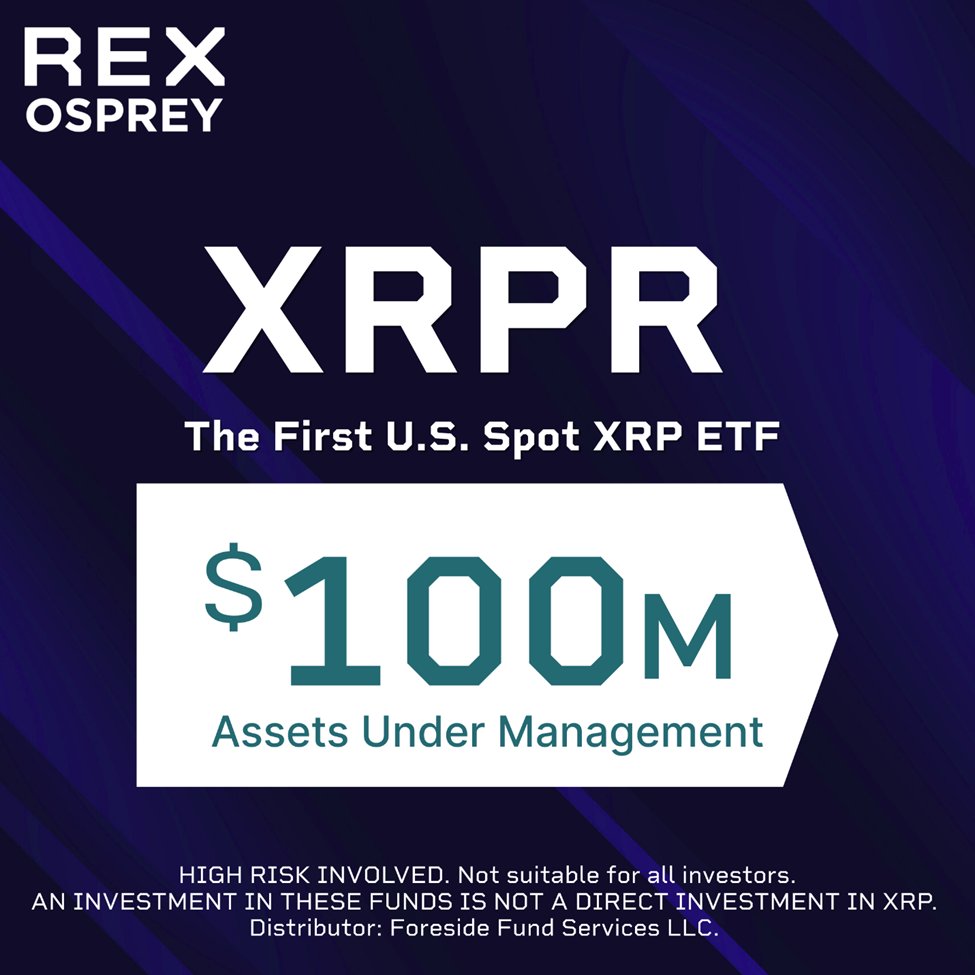
The REX-Osprey XRP ETF, the first U. S. exchange-traded fund offering direct exposure to XRP, has surpassed $100 million in assets under management within a month of its launch. Launched on September 18, the fund provides investors with a unique opportunity to gain direct exposure to XRP, the fourth-largest cryptocurrency by market capitalization, without the complexities of purchasing the digital asset itself.

According to REX Osprey, the firm behind the launch of the ETF, the rapid growth in AUM highlights the increasing interest in digital assets and their integration into mainstream investment products. The ETF, which trades on the Cboe BZX Exchange, allows investors to gain exposure to XRP through a traditional brokerage account, making it more accessible than purchasing the cryptocurrency directly on exchanges.

XRP has long been one of the most controversial and volatile cryptocurrencies, primarily due to its ongoing legal battle with the U. S. Securities and Exchange Commission. The SEC initially filed a lawsuit against Ripple Labs, the company behind XRP, alleging that the cryptocurrency is an unregistered security. However, recent developments in the case, including partial victories for Ripple, have given a boost to investor sentiment, contributing to XRP’s price increase and the subsequent success of the ETF.

Since its launch, the XRP ETF has attracted both institutional and retail investors seeking exposure to the cryptocurrency market in a more regulated, liquid form. The growth in AUM also underscores the growing demand for innovative financial products that allow mainstream investors to participate in the digital asset space without directly owning the underlying cryptocurrencies.

The popularity of cryptocurrency ETFs has been rising globally, and the launch of XRPR marks a significant milestone in the U. S. market, which has been cautious in approving crypto-based exchange-traded products. The approval of the XRP ETF comes at a time when other digital asset ETFs, such as those based on Bitcoin and Ethereum, have seen significant traction. The success of these products has raised expectations for further expansion of the cryptocurrency ETF market, especially as regulatory clarity surrounding digital assets continues to improve.

The launch of the REX-Osprey XRP ETF also reflects broader trends in the financial markets, with traditional financial institutions increasingly integrating cryptocurrencies into their offerings. Institutional investors, who have historically been wary of the volatility and regulatory uncertainty surrounding digital assets, are now more open to exploring the potential of blockchain technology and digital currencies as part of a diversified investment portfolio.

XRP, which has faced significant volatility over the years, has experienced a surge in value following key legal victories in its ongoing battle with the SEC. Ripple’s partial legal wins have boosted investor confidence, and many view the outcome of the case as a critical factor in the future of XRP’s market position. The cryptocurrency’s price has seen a sharp upward movement in response to the more positive outlook surrounding the lawsuit.

The success of the XRP ETF reflects growing confidence in XRP as an investment vehicle, despite the regulatory uncertainties that continue to surround it. While there are still ongoing legal challenges, the launch of this ETF signals a shift in how the cryptocurrency market is viewed by investors and regulators alike. The ability to trade XRP through an exchange-traded fund allows for more streamlined access to the asset, eliminating some of the complexities involved in handling digital currencies directly.

HONG KONG SAR – Media OutReach Newswire – 26 October 2025 – The metabolic “Three Highs” – hyperglycemia, hypertension, and hyperlipidemia – demonstrate a strong collective impact on cardiovascular diseases. An interim report from the HEARTWISE study, led by the School of Nursing, LKS Faculty of Medicine at The University of Hong Kong (HKUMed), reveals that patients presenting with this metabolic triad face up to 70% risk […]

VISHNU RAJA
RYO YAMADA
HITORI GOTOH
IKUYO KITA
Just in: