News related to
Part

Apple is addressing one of the most prominent criticisms of its previous iPhone Air models by introducing a powerful camera upgrade in the upcoming iPhone Air 2. According to a top industry leaker, the iPhone Air 2 will feature a dual-camera system with two 48MP sensors, marking a significant leap in photography capabilities for the device. For years, iPhone Air users have complained about the device’s camera, […]

A forecast from global property and advisory firm BlackBrick indicates that villa communities in Dubai are entering a phase of measured growth, as end-users and investors increasingly favour data-driven decisions over speculative leaps. The firm highlights key drivers behind villa demand in Q4 2025, underlining Dubai’s resilience in luxury real-estate.

According to founder and CEO Matthew Bate, the villa segment is evolving into “an era of intelligent luxury” where lifestyle and long-term value count more than sheer size or opulence. He states that buyers are now prioritising spaces with breathing room, community connection and ownership of land rather than just lavish finishes.

BlackBrick’s outlook identifies several communities expected to outperform over the next 12 months. Among them are Al Barari and Arabian Ranches where projected gains of 15-20 per cent are indicated, while Jumeirah Islands and Jumeirah Golf Estates are assigned more modest growth expectations of 7-12 per cent.

The underlying dynamics reflect broader trends in Dubai’s residential market. Analyst estimates show that prime villa prices increased by 94 per cent between Q1 2020 and Q4 2024, signalling sustained appetite for villa ownership in the emirate. Supply remains tight in several key enclaves, underpinning market strength. According to market commentary, villas continue to command a premium due to their scarcity and appeal to families, expatriates and high-net-worth individuals seeking long-term domiciliation.

BlackBrick’s forecast emphasises five main demand drivers. These include the appeal of open layouts and natural light; ownership of land; upgrade potential in older stock; community-focused living in gated compounds; and timeless design replacing overt extravagance. Bate argues that sustainable growth founded on genuine demand and limited supply reinforces market quality.

From a broader perspective, villa markets in Dubai are benefiting from macro-drivers such as population growth, global mobility and favourable tax frameworks. Consultant data suggests villa and townhouse sales accounted for 20 per cent of transactions but 42 per cent of total sales value in one recent quarter-year period — pointing to concentrated value capture in this segment. Meanwhile rental yields for villas and townhouses continue to remain attractive, further bolstering investor interest.

However, the market is not without caveats. The high entry cost for villas means that affordability remains a barrier to broader participation. While growth has been strong, analysts caution that the pace of appreciation may moderate as the market enters its maturity phase. One consultancy anticipates single-digit annual growth in prime villas going forward. Additionally, investors and buyers are advised to carefully consider developer track-records and listings pipelines, given limited resale inventory in select luxury enclaves.

Data-led brokers like BlackBrick suggest that the path ahead is less about aggressive expansion and more about sustained value capture. End-users, long-term residents and seasoned investors are shaping the villa market’s next chapter — one anchored in lifestyle, location and land ownership, rather than speculative upside alone. The hallmark now is thoughtful investment in vetted communities with established infrastructure, strong connectivity and recognized quality.

Greenlogue/AP A partnership between clean-energy pioneer Masdar and integrated fuels and chemicals company OMV will create a 140 megawatt green-hydrogen electrolyser plant in Bruck an der Leitha, Austria, with operations targeted for 2027. The binding agreement grants Masdar a 49 per cent stake while OMV retains 51 per cent and oversees day-to-day operations. The venture is projected to produce up to 23,000 tonnes of green hydrogen annually, […]

A consortium led by the Abu Dhabi-supported investment firm Aquarian has agreed to acquire the U. S. life insurance and annuity provider Brighthouse Financial in an all-cash deal valued at approximately $4.1 billion. Aquarian will pay $70 per share, representing a premium of about 37 per cent over the company’s closing price on 27 January, the day before media reports of a potential sale surfaced. Shares in Brighthouse rose sharply following the announcement.

Brighthouse Financial, which spun off from MetLife in 2017, manages well over $100 billion in assets, giving the purchaser access to substantial investment capital and forming part of a growing surge of private-capital firms acquiring U. S. insurers to fuel credit platforms. Aquarian, a specialist in insurance and asset management backed by investors including RedBird Capital and Mubadala Capital, sees the acquisition as a strategic entry into the U. S. retirement-income market.

Negotiations faced multiple bidders, with TPG identified as the other final contender before Aquarian secured the deal. Sources say that other major players such as Apollo and Carlyle withdrew during due-diligence, citing Brighthouse’s legacy exposures—particularly its heavy footprint in variable annuities, which carry high hedging costs and capital charges for the company.

Brighthouse’s management will remain in place, with CEO Eric Steigerwalt set to continue leading the business after the transaction closes—expected in 2026. Aquarian has indicated no immediate plans to break up Brighthouse, instead intending to focus on its fixed indexed annuities and registered index-linked annuities lines, while winding down or re-insuring portions of the higher-risk variable annuity and life-insurance businesses.

Industry analysts say the deal underscores a broader trend: private investment firms are increasingly acquiring insurers not only for distribution or underwriting advantages but primarily for their long-dated liabilities and the investment income they generate, which can be deployed into higher-return credit strategies. The structural economics of insurers—steady premium inflows, long durations and regulated capital-intensive businesses—make them attractive targets for asset managers seeking stable funding sources and yield.

For Brighthouse, the acquisition offers a way out of its status as a publicly-listed firm weighed down by volatile earnings and investor skepticism about its variable-annuity portfolio. Despite its size and franchise, Brighthouse’s share price has lagged its book value, driven in part by hedge-related losses and regulatory capital burdens. By moving private, it may gain flexibility in capital management and strategic repositioning.

From Aquarian’s perspective, the deal leverages its insurance platform, which already manages about $25 billion in assets, and positions it to escalate into a major player in insurance-for-capital business globally. The backing of large Middle Eastern investment pools gives Aquarian the muscle to undertake such a large transaction and signals the continuing export of Gulf-region investment capital into U. S. financial-services infrastructure.

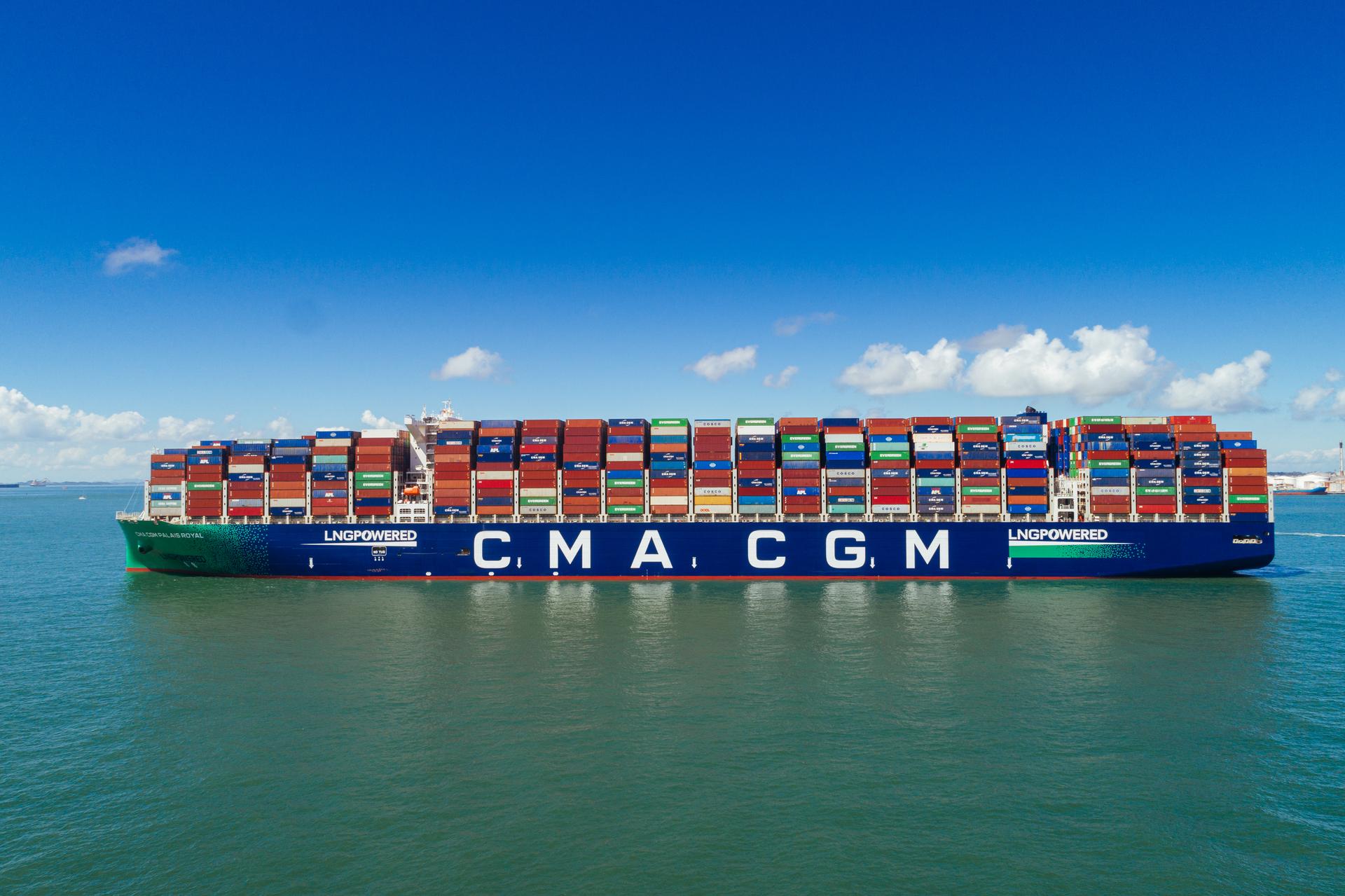
Abu Dhabi-headquartered AD Ports Group has reached a joint venture agreement with France’s CMA CGM Group to acquire a 20 per cent stake in the Latakia International Container Terminal in Syria for USD 22 million. The deal followed the ratification of a shareholders’ agreement signed in Abu Dhabi by Captain Mohamed Juma Al Shamisi, Managing Director & Group CEO of the AD Ports Group, and Rodolphe Saadé, Chairman & Chief Executive Officer of CMA CGM. The terminal handles over 95 per cent of Syria’s container traffic and is vital for the country’s agricultural export flows and industrial imports.

The new partnership builds on an existing franchise: CMA CGM has operated LICT since 2009 and in May this year signed a 30-year concession with Syrian authorities to expand and modernise the facility with a €230 million investment. Under this expansion plan the terminal’s capacity will scale from around 250,000 twenty-foot equivalent units to approximately 625,000 TEUs by the end of 2026. The AD Ports stake brings fresh funding, regional logistics know-how and establishes a feeder-service linkage via GFS expected to call Latakia in its emerging network.

Analysts note combining AD Ports’ digital-and-logistics platforms with CMA CGM’s terminal-operations experience offers a synergetic boost. Captain Al Shamisi described the deal as reinforcing AD Ports’ role as a “global enabler of trade, logistics and industry” and strengthening its international footprint; Saadé said it underscores CMA CGM’s commitment to the Eastern Mediterranean corridor. Yet risks remain: Syria’s infrastructure base was severely weakened by years of conflict, sanctions regimes remain in flux, and the geopolitical security climate in the Eastern Mediterranean remains volatile. In particular the coastal region around Latakia must contend with residual logistical bottlenecks and war-damaged hinterland links.

From a strategic viewpoint, the deal gives AD Ports exposure to an under-served Mediterranean gateway that has long been overshadowed by Cyprus, Turkey and Egypt. For CMA CGM it provides a partner that can bring capital, Gulf-region networks and feeder-service integration. It also aligns with Syria’s aim to attract foreign investment into its trade infrastructure under recent reforms, aiming to rehabilitate its war-impacted logistics chains and boost maritime connectivity. Governance observers point out that this investment marks one of the first substantial Gulf-region port-logistics ventures in Syria since the cessation of major international sanctions, signalling a potentially broader shift in regional trade flows.

Operationally, the agreement will focus on upgrading terminal infrastructure, digitising cargo-handling and container-tracking systems, enabling larger vessels by deepening docks and extending quays, and integrating feeder-shipping links. LICT’s current capacity constraints mean that the joint venture must invest quickly to meet anticipated growth in Syrian cargo volumes, especially agricultural exports and industrial imports. The container terminal’s status as the main node for land-locked regions within Syria gives it strategic significance beyond the coast: improved throughput at Latakia could ease pressure on border crossings and reduce logistics delays for inland cargo flows.

CEOs across Africa are signalling substantial confidence in their firms’ growth prospects, driven by plans for increased hiring and investment in artificial intelligence, according to a newly published survey by KPMG. The study shows that 79 % of surveyed executives believe their own organisations will grow, while 88 % plan staff increases within the next year. The survey, covering more than 130 executives across the continent, reveals […]

Saudi Arabia’s two leading technology infrastructure firms, HUMAIN and DataVolt, have entered a strategic partnership aimed at creating a multi-gigawatt-scale data-centre pipeline designed to support high-intensity artificial-intelligence workloads within the Kingdom. The alliance seeks to mobilise capacity on a scale rarely seen in the Middle East and forms a significant step in the country’s broader ambition to become a global AI hub. HUMAIN, a state-backed AI company […]

Advertisements

Storm-hit regions across the Philippines are grappling with immense destruction after Typhoon Kalmaegi claimed at least 114 lives and left 127 people missing, as the system gains strength while crossing into the South China Sea en route to Vietnam. The tragedy marks one of the deadliest disasters of the year in the archipelago, with authorities in the central province of Cebu reporting the vast majority of casualties. […]

The group led by Air France‑KLM has announced that its Dutch subsidiary KLM Royal Dutch Airlines is under significant pressure as rising charges at Amsterdam’s Schiphol Airport and broad inflation in the Netherlands compel a strategic review of the carrier’s business model. Chief Executive Officer Ben Smith confirmed that “all options are on the table,” noting that the carrier needs to adjust aircraft numbers, fleet types, destinations and staffing to protect profitability.

Group results for the third quarter of 2025 showed an operating profit of €1.203 billion, with an operating margin of 13.1 per cent on revenues of €9.2 billion. While passenger numbers rose 4.7 per cent year-on-year to 29.2 million, unit revenue fell slightly by 0.5 per cent, driven by weaker cargo yields and low-cost operations. The results underscore the contrast between growth in traffic and growing cost headwinds.

KLM, based in the Netherlands and anchored at Schiphol, is especially impacted by local cost escalation. Airport fees at Schiphol jumped by 41 per cent in 2025, the sharpest increase among major European hubs, with KLM publicly calling the rise “unreasonable and unwise”. The carrier is also dealing with inflation-related wage and maintenance cost growth, and declining demand on trans-Atlantic routes.

Smith emphasised that despite the encouraging group-level numbers, KLM’s cost base demands structural adjustment. The carrier must better align capacity with demand, rationalise fleet composition and improve productivity in order to align with the group’s broader “premiumisation” strategy that emphasises long-haul and premium-cabin growth.

Analysts observe that KLM’s challenges reflect a wider trend in the European airline industry, where legacy carriers are grappling with elevated airport charges, staffing pressures and higher regulatory burdens. In KLM’s case, this has triggered management to explore “all levers” including fleet contraction, network rebalancing and even staff reductions. Union leaders and employee groups will be closely monitoring any announcements on workforce adjustments.

From the group’s vantage point, the operational resilience of Air France and its low-cost subsidiary Transavia provide some buffer. For example, the premium cabins at both carriers continue to outperform, supporting higher yields. But the cost pressures at KLM threaten to dilute this upside. With unit costs increasing and revenue growth modest, the margin dynamics at KLM are now a key risk factor for the entire group’s profitability outlook.

Regulatory and competitive contexts complicate the path ahead. Schiphol’s high fees make it less attractive compared with other European hubs and could drive traffic to rivals. That undermines KLM’s hub-based model. At the same time, global demand uncertainties—particularly for business travel to the United States—add another layer of complexity to the group’s planning.

KLM is now said to be accelerating its reviews of aircraft utilisation, evaluating whether older, less efficient models should be retired sooner and whether some routes should be scaled back or handed to Transavia or other affiliates. Management expects that such changes will take time to yield full benefits, while the cost drag remains in place in the interim.

Researchers at Weill Cornell Medicine have identified a previously unrecognised source of oxidative stress in the brain that appears to drive neurodegeneration in disorders such as Alzheimer’s disease and Frontotemporal dementia. Their study highlights the role of support cells known as astrocytes in generating excessive mitochondrial reactive oxygen species at a specific site — mitochondrial Complex III — and suggests that targeting this mechanism may open new […]

Cyberport Welcomed 10 Listed Companies and 2 Unicorns over the past year Cyberport Investors Network (CIN) Celebrates 8th Anniversary with a Yearly Threefold Growth Cumulative Funds Surpassed HK$4.2 Billion HONG KONG SAR – Media OutReach Newswire – 6 November 2025 – The annual flagship event Cyberport Venture Capital Forum 2025 (CVCF) officially opened today at Hong Kong Cyberport. The two-day forum, themed “The Innovation-Venture Nexus: Igniting Transformative […]

Turkish Airlines has finalised a landmark agreement with GE Aerospace to supply engines, spare engines and maintenance services for 75 Boeing 787-9 and -10 wide-body jets that the carrier has committed to acquiring. The deal covers the fleet due for delivery between 2029 and 2034 and marks a major step in the airline’s long-haul modernisation strategy.

The engine deal follows Turkish Airlines’ earlier announcement that it will purchase 75 Boeing long-haul aircraft as part of its fleet expansion. The airline stated that a full tender process for the engine, spare engine and maintenance package has been completed, culminating in the selection of GE Aerospace. The aircraft order is scheduled for delivery in the late-2020s and early 2030s.

Industry analysts note that the package offers Turkish Airlines integrated engine support over the lifecycle of the jets, aligning maintenance and spare-parts provisioning with its growth plans. The choice of GE Aerospace underscores the airline’s preference for a single-vendor solution, reducing complexity and potentially lowering long-term operating costs. Turkish Airlines’ chairman, Ahmet Bolat, stated that the airline expects to meet with Boeing and engine-supplier partners in the coming weeks to finalise its broader narrow-body fleet deals.

The wider fleet strategy to which this engines deal belongs involves Turkish Airlines’ intent to order up to 225 Boeing aircraft, including 75 wide-bodies and 150 narrow-body Boeing 737 MAX jets. That larger order remains subject to engine and maintenance negotiations for the 737 MAX fleet, in particular involving the joint-venture supplier CFM International. The engagement with GE Aerospace for the 787 bundle signals progress in the long-haul component of the airline’s transformation.

From a broader perspective, the engine deal comes at a time when global airlines are aggressively renewing fleets to improve fuel efficiency, reduce emissions and capture growth in international travel. The 787-9 and 787-10 variants are among Boeing’s most modern long-haul offerings, featuring advanced engines, aerodynamic enhancements and lower fuel burn. For GE Aerospace, securing the Turkish Airlines contract strengthens its market position in the wide-body market, where engine aftermarket services and spare-parts businesses constitute major revenue streams.

However, challenges lie ahead for Turkish Airlines. Deliveries of the 75 aircraft are spread out across 2029 to 2034, which means that the full benefits of the programme will not be realised for several years. Additionally, the narrow-body fleet deal remains unresolved, and any delay or change in that part could impact the airline’s overall fleet plan. The engine market itself is under pressure: supply-chain constraints, rising maintenance costs and global competition among engine makers could affect delivery schedules and pricing. For GE Aerospace, while the contract is valuable, it also carries long-term service-commitment risks, especially given the complexity of wide-body fleet operations.

Financial market observers say the announcement may provide a boost to Boeing’s orderbook visibility and reassure suppliers about long-term demand. Boeing will need to coordinate closely with GE Aerospace to support Turkish Airlines’ maintenance-and-spares demands, and the success of this deal may influence competitive dynamics for future orders from other carriers. For Turkish Airlines, the ability to ramp up long-haul services with modern aircraft may enhance its hub connectivity, strengthen its international reach and improve cost-competitiveness versus rivals.

A fresh platform launched by the startup SolarLedger is aiming to reshape how clean-energy data is processed and verified by introducing what it describes as a “green energy operating system” that embeds robust security features and market interfaces. At the heart of the offering are distributed-ledger and Internet-of-Things tools designed to automate the generation, trading and auditing of solar and other renewable-energy flows. According to the company’s statements, the system incorporates cryptographic tools such as zero-knowledge proofs and multi-signature verification to bolster data authenticity and traceability.

SolarLedger’s solution addresses growing concerns in green-finance and energy markets about the reliability of datasets underpinning asset-backed claims, such as renewable-energy certificates or carbon credits. By running real-time tracking of generation, storage, trading and settlement, the platform aims to reduce friction in peer-to-peer energy transactions and enhance transparency for smaller producers who have lacked access to institutional channels. This comes at a moment when distributed energy generation is expanding rapidly but remains under-represented in traditional electricity markets.

From a market-participant perspective, SolarLedger’s architecture is being pitched as transformative. It enables solar modules and storage systems not only to supply power but also to act as tradeable units with embedded provenance metadata. Smart-contract modules match producers and consumers, while traceable certificates of origin claim to be issued as each kilowatt-hour is generated. The firm states that its system eliminates much of the manual reconciliation and trust-layer overhead that currently slows clean-energy transactions, thereby unlocking new income streams for distributed generators.

On the technical side, the platform’s use of zero-knowledge proofs is particularly noteworthy. ZKPs allow one party to prove a fact is true without revealing the underlying data. This is increasingly recognised in academic literature as a potent tool for privacy-preserving validation in decentralized systems. In SolarLedger’s case, the firm says it uses ZKPs to validate meter-data reports and audit logs without exposing granular user or asset-level details. Complementing this, the system applies multi-signature verification — requiring multiple authorised parties to validate transactions — to further enhance trust in each asset’s lifecycle.

Emerging trends in the broader energy-tech space amplify SolarLedger’s relevance. Analysts observe that decentralised energy systems—particularly rooftop solar, microgrids and battery storage—are growing faster than transmission-interconnection frameworks in many regions. Traditional centralised electricity markets were built at a time when generation was large-scale and top-down. By contrast, distributed-generation assets today face barriers to participation in wholesale or retail markets, often due to information asymmetry, latency in settlement, and limited trust among counterparties. SolarLedger aims to bridge that gap by enabling smaller producers to join trading ecosystems on more flexible and transparent terms.

However, important challenges remain across regulation, interoperability and scalability. While SolarLedger cites pilot testing and proof-of-concept deployments, wide-scale adoption will require alignment with local grid-code legislation, energy-market rules, and national certification schemes. Integration with existing utilities and regulatory frameworks may prove complex, particularly in jurisdictions where grid operations and energy trading are tightly regulated. Furthermore, the academic literature on ZKP implementation cautions that although ZKP offers strong privacy and integrity gains, the complexity and computational overhead can be non-trivial — especially when applied to high-frequency data environments.

Another key player to watch in this space is Powerledger, an Australian blockchain-energy-software company which has built peer-to-peer energy-trading platforms and environmental-commodity tracking solutions. Its experiences highlight the twin challenges of scaling and commercialising such platforms in multiple jurisdictions. SolarLedger will need to demonstrate not just technical readiness but also market-acceptance, cost-competitiveness and regulatory compliance if it is to capture a meaningful share of the decentralised-energy-market value chain.

By Nitya Chakraborty The historic victory of the Democratic socialist candidate Zohran Mamdani in New York mayoral elections on November 4 night is acting as a big booster, not only to the left wingers in the Democratic Party belonging to the Bernie Sanders group, but also to the left parties in Europe and Latin America. […]

The article Zohran Mamdani’s Victory As New York Mayor Has Given A Big Boost To Global Left appeared first on Latest India news, analysis and reports on Newspack by India Press Agency).

Re-engineering towards a Resilient, Adaptive and Sustainable Supply Chain SINGAPORE – Media OutReach Newswire – 6 November 2025 – The 2nd edition of the Asia-Pacific Textile and Apparel Supply Chain Expo & Summit (APTEXPO 2025) returns to Singapore from 19–21 November 2025, reaffirming its role as the region’s premier platform for the textile and apparel industry. Bringing together global leaders, decision-makers, and innovators, the event will drive […]

The island administration of Tenerife has begun negotiations to sell 97 units of Bitcoin originally acquired by the research institute Institute of Technology and Renewable Energies in 2012 for €10,000. The potential sale—valued at around US$10 million—would represent a gain of nearly 1,000-times the procurement cost.

Under the oversight of councillor Juan José Martínez, ITER had purchased the bitcoins as part of an exploratory project to understand blockchain system dynamics rather than as a speculative investment. He emphasised that the holding “was one of the many investigations carried out … to experiment with different technological systems”.

Despite the modest initial outlay, the Council’s ability to monetise the asset has been complicated by regulatory and logistical hurdles. Martínez confirmed that discussions are ongoing with a Spanish financial institution authorised by the Bank of Spain and the National Securities Market Commission to ensure the sale meets regulatory compliance.

The delay in disposal stems in part from the nature of cryptocurrencies in public-sector portfolios. The Council attempted earlier sales but encountered banks unwilling to engage due to volatility risk and regulatory uncertainty. ITER officials were also unable to access the wallet for eight years owing to administrative inertia.

Market estimates suggest the 97 bitcoins are valued at approximately €10–11 million based on current trading prices, implying a gain of around 99,900 per cent relative to the original investment.

The Council plans to reinvest any proceeds into its research and innovation agenda, aligning with ITER’s evolving focus on quantum technologies and other advanced systems. Martínez said the logical next step is to channel the enhanced value into the institute’s core mission.

Observers note that while the transaction is small in global cryptocurrency terms, it signals growing institutionalisation of digital-asset holdings outside the private sector. Analyst Fernando Molina of Blockworks remarked that the sale could draw attention to the potential for public-administration bitcoin portfolios and the regulatory barriers they face.

The operational path to execution remains complex. The buyer remains undisclosed and must satisfy both Spanish financial-sector licensing and anti-money-laundering requirements. Because banks in Spain rarely accept bitcoin deposits, entities that facilitate the transaction must possess the requisite licences. The Council is navigating Spanish administrative processes that govern public-sector asset sales and digital-asset compliance.

Sector experts caution that while the gain is remarkable, cryptocurrencies held by public institutions carry unique risks. Price volatility, custody challenges, and regulatory oversight create additional burdens for an asset class still considered nascent. The Council’s case offers a rare example of such holdings being monetised by a sub-national government.

The Public Investment Fund and Jones Lang LaSalle Saudi Arabia Company Limited announced a memorandum of understanding to deepen collaboration in Saudi Arabia’s real-estate sector. The agreement, inked during the Future Investment Initiative in Riyadh, lays out a strategic partnership aimed at leveraging PIF’s infrastructure ambitions and JLL’s global real-estate expertise.

Under the MoU, PIF and JLL intend to focus on critical areas such as market-insight generation, valuation services, project-management frameworks and talent development within the real-estate industry. The goal is to increase private-sector participation, accelerate technology adoption in property development and support the transformation of Saudi Arabia’s built environment.

PIF’s local real-estate strategy positions the fund as a driver of urban innovation, economic diversification and quality-of-life enhancements in line with Vision 2030. As head of PIF’s Local Real Estate Investment Division, Saad Alkroud signed the agreement alongside Sue Aspre y Price, EMEA CEO and global head of Portfolio Services, Work Dynamics at JLL.

Real-estate activity in Saudi Arabia has come under the spotlight as the economy looks beyond oil and prioritises new sectors such as urban development, tourism and infrastructure. Data from real-estate-consultant estimates show that rents and purchase-prices have surged in major urban areas, prompting policymakers to explore responsive measures. Once largely dominated by public-sector investment, the market is shifting toward private-sector engagement — a key objective in the MoU. The agreement signals JLL’s commitment to the Kingdom, where the firm already has operations and plans to expand offerings in valuations, asset management and advisory services.

Execution will be critical. While the MoU is non-binding, it lays the foundation for joint initiatives to build local capacity, deploy digital and prop-tech solutions and drive more efficient project delivery. For JLL the partnership offers a fast-growing real-estate market with the backing of a sovereign investor. For PIF it opens global know-how and operational discipline in property-sector value chains. Analysts observe that the real-estate sector must contend with affordability pressures, consumer-demand dynamics and a need for asset-liability management frameworks in a transitional economy.

The collaboration also supports the broader push for sustainability in built-environment projects. As PIF steers giga-projects and landmark initiatives, JLL’s experience in global sustainability standards and ESG frameworks may be applied to help the Kingdom meet international benchmarks and investor expectations. According to the official statement, acceleration of new-technology adoption and fostering of local talent were emphasised as pillars of growth.

Industry watchers point out that the significance lies not just in the signing but in implementation. The proof will be in how swiftly joint programmes roll out, how private-sector engagement increases and how efficiently project pipelines convert into deliverables. The agreement comes at a time when Saudi policymakers are intensifying efforts to unlock private capital for real-estate, logistic and urban-development assets, with PIF central to that agenda.

With Saudi Arabia targeting a home-ownership rate of 70 per cent and major urban developments underway, the PIF-JLL alliance could become a cornerstone of the real-estate-ecosystem overhaul. Effective governance, transparency and strong monitoring mechanisms will be needed to ensure the partnership delivers the intended economic and social outcomes.

A new community-centric retail development by KeyMavens Group is under construction in Wadi Al Safa 5 and is scheduled to open in the third quarter of 2026. The project, named The Villa Square, spans more than 124,000 square feet and positions itself as a boutique shopping and lifestyle hub with a focus on sustainability and wellness. Located at the heart of one of Dubai’s fast-growing residential zones, […]

A groundbreaking partnership has emerged between Ripple Labs, Mastercard Incorporated, WebBank and Gemini Trust Company to pilot the use of Ripple’s U. S. dollar-backed stablecoin, RLUSD, for credit-card settlement on the XRP Ledger network. The announcement, made at Ripple’s annual Swell 2025 event, signals a key move by a mainstream payments network to integrate blockchain-based tools into legacy infrastructure.

Under the terms of the pilot, Card issuer WebBank—partnering via Gemini’s credit-card programme—will explore settling Mastercard-network transactions using RLUSD on the XRPL. The goal is to streamline settlement flows between merchants and issuers, compressing what now often takes days into near-real-time settlement through blockchain rails, while preserving regulatory compliance and consumer protection.

Ripple noted that RLUSD has already surpassed a circulation threshold of $1 billion, and is issued under the oversight of the New York Department of Financial Services with reserves held in cash and short-term U. S. Treasuries. Mastercard described the collaboration as part of its broader strategy to integrate regulated digital assets. “Through our partnerships with Ripple, Gemini and WebBank, we’re using our global payments network to bring regulated, open-loop stablecoin payments into the financial mainstream,” said Sherri Haymond, Mastercard’s Global Head of Digital Commercialisation.

The partnership unfolds amid growing attention on stablecoins as institutional settlement tools rather than niche digital-asset instruments. Mastercard’s previous statements reflect cautious optimism: its Chief Product Officer, Jorn Lambert, has said that despite the potential of stablecoin technology, adoption demands “a seamless and predictable user experience, reach and wide distribution” beyond the technological narrative alone.

Industry analysts note that if scaled, this model could challenge entrenched settlement processes such as those using ACH and SWIFT and cut both transactional cost and latency—especially for cross-border commerce. Ripple executives suggest that the pilot is a demonstration of how stablecoins can function within regulated frameworks rather than as adversarial alternatives.

Nonetheless, key caveats remain. The pilot requires regulatory clearance before full onboarding begins, and adoption by issuers and merchants at scale remains to be proven. Some banks and payment networks continue to view stablecoins with caution, given ongoing questions about trust, custody, interoperability and how legacy infrastructure will migrate. As an example, Mastercard has publicly noted stablecoins still have “a long way to go” before becoming everyday payment tools.

This initiative builds on Ripple’s broader institutional push, which included a reported $500 million funding round at a $40 billion valuation, intended to fuel growth in custody, stablecoins and institutional payments infrastructure. The XRPL platform, which underpins XRP and is designed for low-cost, high-speed settlement and tokenisation, is central to the experiment.

For cardholders, the consumer experience may remain unchanged—swipe a card—but behind the scenes, settlement flows could shift dramatically. For merchants and issuers, the promise lies in reduced settlement risk, faster liquidity and improved traceability. For regulators and infrastructure providers, the test will show whether a hybrid bridge between legacy finance and blockchain can scale without undermining compliance or stability.


GYEONGJU, SOUTH KOREA – Media OutReach Newswire – 5 November 2025 – On October 31, 2025, the “One Step One Realm” international integrated cultural tourism brand IP attended the APEC CEO SUMMIT. “One Step One Realm” is an international integrated cultural tourism IP. Through a form of cultural tourism that integrates cultural and international political exchanges, it enhances the international image for partners from various fields in […]

By TN Ashok NEW  YORK:When the polls closed at 9 p.m. on Tuesday, November 4, 2025, it took less than 40 minutes for the Associated Press to call the race. Zohran Mamdani, a 34-year-old democratic socialist and state assemblyman from Queens, had accomplished what many considered impossible just a year earlier: he defeated Andrew Cuomo—twice—to […]

The article The Mamdani Moment: A Political Earthquake In America’s Largest City appeared first on Latest India news, analysis and reports on Newspack by India Press Agency).

HO CHI MINH CITY, VIETNAM – Media OutReach Newswire – 5 November 2025 – Many countries in Asia are reporting a sharp rise in flu cases. The intensified rainy season is fueling transmission and creating ideal conditions for rapid spread. In a single week, Thailand recorded more than 30,000 new cases.1 Meanwhile, Japan declared a nationwide flu epidemic on 3 October after confirming more than 6,000 patients […]

Business conditions across the United Arab Emirates’ non-oil private sector eased with the headline S&P Global UAE Purchasing Managers’ Index slipping from 54.2 in September to 53.8 in October. Growth remained above the mid-year trend but the moderation highlights emerging caution amid new challenges. The decline in the PMI reflects a tempering of momentum, notably in hiring and new business orders. While the headline index still signals […]

Abu Dhabi-listed investment firm Waha Capital has confirmed that its subsidiary, Waha VAS Limited, has completed its divestment from the AI-fintech group Optasia following the latter’s listing on the Johannesburg Stock Exchange. The firm reported proceeds of US$119 million, an internal rate of return of 25 per cent, and a multiple on invested capital of four times. Waha VAS initially acquired a 20 per cent stake in […]

VISHNU RAJA
RYO YAMADA
HITORI GOTOH
IKUYO KITA