News related to
Part

Dubai Duty Free registered its highest-ever monthly sales with AED 876.56 million in November, marking a major breakthrough in the retailer’s 42-year history. By mid-November the operation had already surpassed the US$2 billion threshold for the year, underscoring a powerful run of commercial momentum across its global travel-retail network.

Sales surged by 16.8 per cent compared with the same month last year, pushing average daily revenue to ~AED 29.21 million, compared with AED 26.51 million in December 2024. High-value purchases — defined as transactions above AED 500 — have accelerated, growing 15.2 per cent in count and 20.5 per cent in value over prior-year levels, forming roughly three-quarters of total spend.

Luxury and lifestyle categories remain the backbone of this growth. Perfumes again led the charts with AED 160.6 million in sales, followed by liquor at AED 103.6 million. Gold sales rose sharply to AED 87.7 million, reflecting strong demand for jewellery and precious metals among departing travellers. Confectionery recorded a striking 42.9 per cent increase, with the retailer’s “Dubai Chocolate” brand alone contributing AED 35.7 million — equivalent to over 80 tonnes of product across multiple luxury brands.

Electronics posted robust gains as well, with AED 67.2 million in sales, fuelled by a standout performance for new smartphone launches. The luxury fashion segment saw its strongest month of the year: brands such as Louis Vuitton, Dior, Chanel, Gucci and Cartier — along with the pre-owned luxury concept store REKLAIM — witnessed a 40 per cent plus rise in sales. Notable transactions included a high-end watch priced over AED 200,000 and multiple Hermès handbags.

The growth was broad-based across concourses and markets. Concourse A led with a 38 per cent jump in sales, while arrivals stores rose 14 per cent despite intensified competition from other retail outlets. Regional spending grew across the board, with Europe up 23.6 per cent, Russia 27.6 per cent, and Africa 16.5 per cent. The Indian subcontinent contributed modestly with a 6.3 per cent uptick.

Tracking year-to-date performance, Dubai Duty Free’s cumulative sales reached AED 7.75 billion, up nearly 9.6 per cent compared with the same period last year. Management credits this growth to strategic expansion of luxury offerings, optimized retail footprint at Dubai International Airport and Al Maktoum International Airport, and enhanced engagement with travellers from emerging and traditional markets.

DALI, CHINA – Media OutReach Newswire – 1 December 2025 – At the 2025 Intangible Cultural Heritage(ICH) brand promotion week held from Sunday to Friday in Dali, which was organized by the Ministry of Culture and Tourism, over 120 heritage brands demonstrated how traditional craftsmanship can be integrated with contemporary design. Caption: A woman experiences the tie-dye technique of Bai ethnic groupin a dyehouse in Zhoucheng Village […]

By Nantoo Banerjee It is encouraging to note that the government has decided to invest large sums of money in support of rare earth magnet manufacturing and substantially improve the country’s rare earth-based metals production to escape China’s global chokehold in this strategic sector. Presently, there are a few small Indian companies engaged in manufacturing […]

The article India’s Push For Self-Reliance In Rare Earth Magnet Making Is Laudable appeared first on Latest India news, analysis and reports on Newspack by India Press Agency).

Japan’s 10-year government bond yield jumped to 1.84 percent, marking its highest level since 2008, sending ripples across global financial markets. Equities and risk assets came under pressure while investors reassessed portfolios built on cheap Japanese funding.

The surge reflects an abrupt shift away from decades of near-zero rates in Japan, transforming the dynamics of global capital flows. Long considered a foundation of stability, Japanese government bonds are now drawing fresh interest, prompting capital repatriation as investors seek higher yields at home. This shift threatens to unwind the entrenched “yen carry trade,” where investors borrowed yen cheaply to pour money into higher-yielding markets abroad — including equities and cryptocurrencies. With yen-denominated debt now offering compelling returns, such cross-border funding strategies are losing appeal.

As liquidity conditions tighten, markets for risk assets are being reshaped. Cryptocurrencies and tech stocks, once buoyed by easy global credit, have borne the brunt of investor risk aversion. Traders point out that this yield shock was partly triggered by a shift in market expectations around the Bank of Japan, which has signalled the possibility of further rate increases in its upcoming policy review. That, combined with concerns over Japan’s sizeable fiscal obligations and growing government borrowing, is pushing bond yields across the maturity curve higher — including 20-, 30- and 40-year maturities that recently recorded historic highs.

For global investors, the implications are stark. Funds and hedge-fund managers that relied on yen-funded carry trades now face rising funding costs and diminishing returns. Emerging markets and growth-oriented sectors that thrived on abundant liquidity may see capital outflows as investors retreat to safer, yield-bearing bonds. Currency markets have already reacted: the yen has strengthened sharply, adding pressure on exporters and raising the cost of dollar-denominated investments for Japan-based holders.

Analysts note that this yield shock does not necessarily spell widespread collapse — but signals a structural recalibration. Portfolios will need to adapt to a world where Japanese bonds are no longer a funding tool, but a competing asset class in their own right. For risk assets to recover, markets will need fresh capital inflows rather than the easy money of the past.

Technology brand CUKTECH brings two innovative products to Filipino consumers: its first car charger and a dual-cable power bank, designed to meet diverse local charging needs through advanced technology and user-focused design. MANILA, PHILIPPINES – Media OutReach Newswire – 1 December 2025 – CUKTECH recently launched two products in the Philippine market: the 10 Car Charger with retractable cable and the CP24 Power Bank with built-in cables. […]

China’s central bank has reaffirmed its prohibition on cryptocurrency use and announced a renewed enforcement drive targeting stablecoins and underground trading networks. At a high-level interagency meeting convened in Beijing by the People’s Bank of China, officials declared that all virtual currencies remain outside the legal tender framework and insisted that any related business activity constitutes illicit financial conduct.

The PBOC underscored heightened concerns over what it described as a resurgence in speculative trading and misuse of stablecoins. According to the statement delivered at the meeting, stablecoins fail to meet mandatory requirements for identity verification and anti-money-laundering safeguards — deficiencies that increase their vulnerability to use in fraud, money laundering and unauthorised cross-border transfers.

China outlawed trading and mining of cryptocurrencies in 2021, with regulators barring financial institutions and intermediaries from facilitating such activity. The current announcement makes explicit that the ban also extends to stablecoins — digital assets whose value is typically pegged to fiat currencies or other claims — signalling a shift from broad prohibition to more specific targeting.

Officials from thirteen government agencies, including judicial and cyberspace regulatory bodies, participated in the enforcement meeting, indicating that anti-crypto efforts are being treated as a coordinated, cross-sector priority. The agencies pledged to intensify monitoring, crack down on underground trading platforms, clamp down on illicit payment flows and coordinate information sharing across law enforcement and regulatory bodies.

The renewed clampdown comes even as some on-the-ground activity suggests partial revival of mining in certain energy-rich provinces, driven by low electricity costs and data-centre growth. Reports indicate that a segment of cryptocurrency miners have quietly restarted operations despite the 2021 ban, suggesting enforcement may be uneven across China’s vast terrain.

Regulators framed the move as necessary to safeguard financial and economic stability, citing recent upticks in speculation, fraud and illegal cross-border capital flows linked to virtual currencies. The articulation of fresh enforcement measures and explicit inclusion of stablecoins reflects a shift in China’s regulatory approach — from discouragement to active suppression.

Given the global ripple effects of China’s policy, observers expect tightening enforcement to influence not only domestic underground markets but also international crypto platforms, stablecoin issuers and cross-border payment flows that might involve Chinese users or capital.

Oil prices climbed as OPEC+ upheld a halt on output increases through the first quarter of 2026, prompting traders to weigh the repercussions of escalating geopolitical tensions around Venezuela. Brent crude futures hovered close to $63 a barrel while U. S. West Texas Intermediate rose above $59, reflecting tentative optimism in energy markets. The group’s decision to maintain the pause—originally declared at the start of November—was confirmed […]

Advertisements

Abu Dhabi is on track to deliver roughly 8,000 new residential units by the end of 2025, driven by a wave of strong demand and buoyant off-plan sales across the city’s housing market. Real-estate consultancy Cavendish Maxwell reports that developers completed around 2,700 apartments, villas and townhouses during the first nine months of the year, and have lined up an additional 12,800 units for handover in 2026. […]

BALI, INDONESIA – Media OutReach Newswire – 1 December 2025 – In a year defined by rising environmental pressures and rapid shifts in global markets, the ACES Awards 2025 recognised a leader whose work continues to shape the future of responsible business across Asia. Dr. Jay receives her prestigious ESG Pioneer Award at the ACES Awards 2025, presented by the distinguished Deputy Minister of Tourism, Ni Luh […]

UAE and Saudi Arabia are embarking on sweeping reforms to reshape their healthcare and life-sciences sectors, opening the door to expanded private-sector participation, foreign investment and rapid technological adoption across the region.

Legal changes in the UAE have restructured the regulatory framework for medical products, pharmacies and pharmaceutical establishments under updated laws that strengthen protections and streamline compliance. These alterations aim to catalyse domestic pharmaceutical manufacturing and support a growing life-sciences ecosystem, signalling government intent to shift from reliance on imports to building a robust local industry. The reforms dovetail with a broader healthcare strategy that encourages research, innovation and long-term capacity building in biotechnology and medical technology.

Parallel reforms in Saudi Arabia have dramatically altered the investment climate. Regulatory adjustments now allow 100 per cent foreign ownership of healthcare facilities including hospitals, polyclinics and telehealth centres. This change aligns with government objectives under its economic diversification plan, which seeks to raise private-sector involvement from roughly 40 per cent today to nearly 65 per cent by 2030. Licensing procedures for new medical facilities and services are being streamlined and digitised to offer greater transparency and efficiency, thereby lowering entry barriers for both domestic and international investors.

Market data underscore the scale of transformation. Industry forecasts suggest that overall healthcare and life-sciences investment across Gulf countries could rise sharply, supported by demographic changes, growing demand for chronic-care and geriatric services, and increased appetite for digital health and preventive medicine. In the UAE, life-sciences clusters are being developed to host pharmaceutical and medical-device companies, while production of biosimilars and expansion of research facilities indicate a strategic push to localise supply chains.

Digital health and health-tech are playing a central role in this transformation. Both nations are investing in national platforms for unified electronic health records, AI-powered diagnostics, and telemedicine services designed to expand access to care and improve efficiency. These efforts are complemented by regulatory frameworks that encourage medical innovation and private–public partnerships, creating environments where start-ups and established firms alike can experiment with new models of care delivery.

Despite broad optimism, some challenges remain. Large-scale hospital projects still face regulatory and approval delays, even as efforts are underway to simplify licensing and reduce bureaucratic hurdles. In Saudi Arabia, private investors must navigate evolving cultural and regulatory norms, especially around areas such as reproductive medicine and biotechnology. Recruiting and retaining specialised medical professionals remains difficult, given relatively limited existing local expertise in certain advanced fields.

Although regulatory reforms lay the groundwork for growth, translating legal change into improved patient outcomes and equitable access will demand careful oversight. Ensuring quality across a rapidly expanding private healthcare market and balancing profitability with affordability will require rigorous standards, transparent governance and robust public-health planning.

Arabian Post Staff -Dubai Leaders of the oil-exporting alliance OPEC+ confirmed they will maintain their pause on increasing crude output through the first quarter of 2026. The group’s decision, reconfirmed after a weekend of virtual meetings, reflects growing evidence of oversupply in global oil markets and subdued demand prospects for early 2026. The eight member countries involved in output adjustment — among them Saudi Arabia, Russia, UAE, […]

New facility is set to be South Korea’s most advanced automated hub for clinical logistics and sourcing, reinforcing the nation’s position as a leader in clinical research innovation GYEONGGI-DO, SOUTH KOREA – Media OutReach Newswire – 1 December 2025 – Zuellig Pharma, a leading healthcare solutions company in Asia, today announced the grand opening of its new state-of-the-art Clinical Trial Support (CTS) Innovation Center in South Korea. […]

Abu Dhabi is preparing to host what organisers describe as the world’s largest debut media and entertainment gathering, with the BRIDGE Summit 2025 scheduled to run from 8–10 December at the Abu Dhabi National Exhibition Centre. The summit is expected to draw more than 60,000 participants from around the globe and bring together over 400 speakers and 300 exhibitors under a single roof.

Organisers envisage BRIDGE as an immersive platform that merges content, technology, culture, and commerce, structured across seven thematic tracks: Media; Creator Economy; Music; Gaming; Tech & AI; Marketing; and Picture — the latter covering film, streaming, and visual storytelling. The schedule includes more than 300 activities: roughly 200 panels, 50 workshops and interactive showcases, masterclasses and matchmaking zones designed to connect creators, investors, policymakers and media platforms.

Participation confirmed by high-profile figures signals the summit’s global ambition. International actor, filmmaker and DJ Idris Elba will join the line-up, bringing his cross-sector experience in entertainment and advocacy to the Summit’s discussions. Alongside traditional media heavyweights and cultural leaders, the Summit aims to spotlight emerging voices in the digital creator economy. The Creator Economy track alone is slated to feature more than 80 global contributors across 50 sessions investigating how influence, ownership and monetisation are reshaping creative industries worldwide.

Central to the Summit’s narrative is the challenge facing modern media: trust, credibility and sustainability. As traditional broadcast gives way to streaming and social platforms, and as generative AI reshapes production, issues of editorial independence, content verification, audience dynamics and revenue stability are moving to the forefront. The Media track is expected to convene over 100 global editors, founders, policymakers and investors to discuss funding models, algorithmic distribution, content integrity and the very ethics of influence in media today. The Summit’s ambition is to provoke debate and propose frameworks that can guide media’s future in an era of rapid technological disruption.

Beyond content and discussion, BRIDGE is designed as a marketplace for partnerships — blending culture, commerce and policy. Conversations already under way include cross-sector collaborations between media companies, tech firms, venture capital, and energy and infrastructure players. For example, recent talks involving global tech leadership have highlighted an alignment of media innovation with digital infrastructure capacity and clean energy, reflecting how foundational resources are becoming integral to media’s next frontier.

For countries and organisations navigating the tension between creative independence, monetisation and regulatory frameworks, the Summit offers a testbed. Delegates include creators seeking sustainable revenue, investors eyeing cultural-sector returns, technology firms exploring policy-driven AI integration, and governments looking to harness media’s influence in soft power projection. That diversity suggests the Summit could influence not just entertainment and content markets, but regulatory norms, global standards, and potentially the geopolitics of information dissemination.

Attendance projections and speaker rosters aside, the Summit’s scale poses logistical and structural challenges. Managing 60,000 attendees across multiple tracks, workshops and networking zones demands rigorous coordination. Questions around equitable representation — of global South artists, independent creators and regional media voices versus established global brands — remain. Observers are watching whether BRIDGE can balance commercial ambition with inclusivity and whether media integrity and creative freedom will be genuine priorities.

If execution aligns with vision, BRIDGE Summit 2025 could mark a turning point for the media and entertainment industry — reimagining how content, community, technology and commerce converge in the coming decade.

The 2025 “FOMO at Work” survey by cybersecurity firm Acronis reveals that female technology professionals continue to perceive far fewer paths to leadership than their male peers, flagging persistent barriers despite widespread talk of inclusion and equality. The survey of more than 650 IT professionals across eight countries shows that only 60 per cent of women believe men and women enjoy equal access to career development opportunities […]

Arabian Post Staff -Dubai Airlines worldwide mobilised to install a mandatory software update on jets in the Airbus A320 family after a software flaw linked to intense solar radiation threatened critical flight-control systems. The issue came to light after an aircraft operated by JetBlue experienced a sudden, uncommanded drop in altitude while cruising in October, prompting a global safety alert issued by the manufacturer Airbus SE and […]

By K Raveendran An evolving convergence of political intent and economic pragmatism is giving fresh momentum to the India–Russia relationship, placing the forthcoming summit in New Delhi as a significant moment in a partnership that has already weathered decades of geopolitical shifts. The visit of President Vladimir Putin, framed within the terminology of a ‘Special […]

The article Delhi Summit To See A New Strategic Reset In India-Russia Partnership appeared first on Latest India news, analysis and reports on Newspack by India Press Agency).

The Ministry of Finance, acting as issuer alongside Central Bank of the UAE as the issuing and payment agent, has completed the November 2025 auction of dirham-denominated Islamic Treasury Sukuk with a total issuance of AED 1.1 billion. This marks the final scheduled T-Sukuk auction under the 2025 issuance programme. Demand outpaced supply sharply: bids submitted for the auction totalled AED 5.48 billion, implying an oversubscription of […]

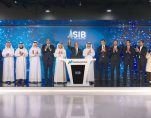
Arabian Post Staff -Dubai A US$500 million Sukuk issued by Sharjah Islamic Bank has begun trading on Nasdaq Dubai, strengthening the exchange’s position as a leading hub for Sharia-compliant debt instruments and marking another step in Sharjah’s broader capital-raising strategy. The exchange confirmed that the five-year issuance, structured under the lender’s US$3 billion Trust Certificate Issuance Programme, enhances the visibility of Gulf-based issuers seeking to tap international […]

HONG KONG SAR – Media OutReach Newswire – 28 November 2025 – Lens Technology (Hong Kong) Co., Ltd. has pledged an immediate donation of HK$13.1 million to support relief and recovery efforts after a catastrophic Level 5 fire struck Wang Fuk Court in Tai Po, New Territories, on November 26. The blaze caused substantial loss of life and extensive property damage, profoundly affecting the Lens Technology family […]

HONG KONG SAR – Media OutReach Newswire – 28 November 2025 – HONMA Golf Limited (“HONMA”; together with its subsidiaries, the “Group”; HKEx stock code: 6858), one of the world’s most prestigious golf brands, announces its consolidated interim results for the six months ended 30 September 2025 (the “Period”). Financial Highlights In the face of a slowing global economy, heightened policy uncertainty and intensified competition across the […]

By Ashok Nilakantan Ayers SILICON VALLEY / SAN FRANSISCO / CALIFORNIA: The numbers are staggering. Microsoft has spent over $20 billion building data centres stuffed with the most powerful computer chips ever made. Meta is burning through billions more, weaving artificial intelligence into Instagram, WhatsApp, and Facebook. Google and Amazon are locked in a cloud-computing […]

The article The Great AI Gold Rush By US Big Tech Companies Through Huge Investment appeared first on Latest India news, analysis and reports on Newspack by India Press Agency).

Walmart will open its second South African store at Fourways Mall in Johannesburg on Friday, 28 November 2025, just days after launching its first outlet at Clearwater Mall in Roodepoort. The Fourways store is scheduled to open at 08:00, with a ribbon-cutting ceremony led by store manager Lunghani Lincoln Mathebula and the creation of 80 permanent jobs. The arrival of the Fourways outlet underscores Walmart’s drive to […]

OpenAI disclosed a data breach involving its analytics provider Mixpanel, confirming that a security lapse allowed unauthorised access to certain API user details but did not compromise ChatGPT message data or model-generated content. The company informed affected developers that the incident, traced to November 2025, exposed names, email addresses and limited account-related metadata, prompting a broader review of third-party integrations across its platform. OpenAI stated that the […]

Stock market information for Bitcoin
Bitcoin is a crypto in the CRYPTO market.
The price is 91117.0 USD currently with a change of -180.00 USD from the previous close.
The intraday high is 91871.0 USD and the intraday low is 90476.0 USD.

Stock market information for Ethereum
Ethereum is a crypto in the CRYPTO market.
The price is 3017.08 USD currently with a change of -6.16 USD from the previous close.
The intraday high is 3042.57 USD and the intraday low is 2986.89 USD.

A substantial volume of cryptocurrency derivatives — exceeding $15.4 billion in notional value of Bitcoin and Ethereum options — are due to expire today, marking one of the largest monthly expiries of the year. This event may influence market dynamics as traders on major platforms close or roll over positions, potentially triggering volatility in spot prices.

Options from the leading derivatives exchange Deribit are included in today’s expiry, with roughly $13.4 billion in Bitcoin-denominated contracts and an additional $1.7 billion in Ethereum options scheduled to contract. The put/call ratio for BTC sits at approximately 0.58, signalling that calls outnumber puts — a structure often interpreted as mildly bullish when prevailing price levels are below key strike thresholds. For Ethereum, the put/call ratio is at 0.50, indicating an even balance between put and call positioning.

Max pain points — the strike prices at which the greatest number of options expire worthless — are calculated at about $100,000 for Bitcoin and near $3,400 for Ethereum. Both levels lie above the current trading prices, suggesting that many options might expire out-of-the-money unless the underlying assets rally.

Market observers note that this expiry arrives after a turbulent period of price slides. Bitcoin has shed more than 20 percent over the month, reflecting pressure from liquidity outflows, shrinking stable-coin pools, and forced deleveraging across derivatives platforms. Ethereum has struggled to regain momentum, and broader crypto sentiment has been cautious.

Some analysts say the large open-interest unwind could act as a cleansing event, reducing overhang and setting the stage for potential accumulation. Others caution that if a large number of holders close call positions without rolling them over, downward pressure on spot markets could deepen — particularly if liquidity remains muted around the expiry window.

Derivative-market data indicates that open interest has contracted sharply in the days leading up to expiry, signalling a wave of liquidations. That said, clustering of residual open interest at strike ranges between $80,000 and $100,000 for Bitcoin suggests that some investors are hedging or anticipating a rebound, possibly anchoring expectations for volatility post-expiry.

VISHNU RAJA
RYO YAMADA
HITORI GOTOH
IKUYO KITA