News related to
Part

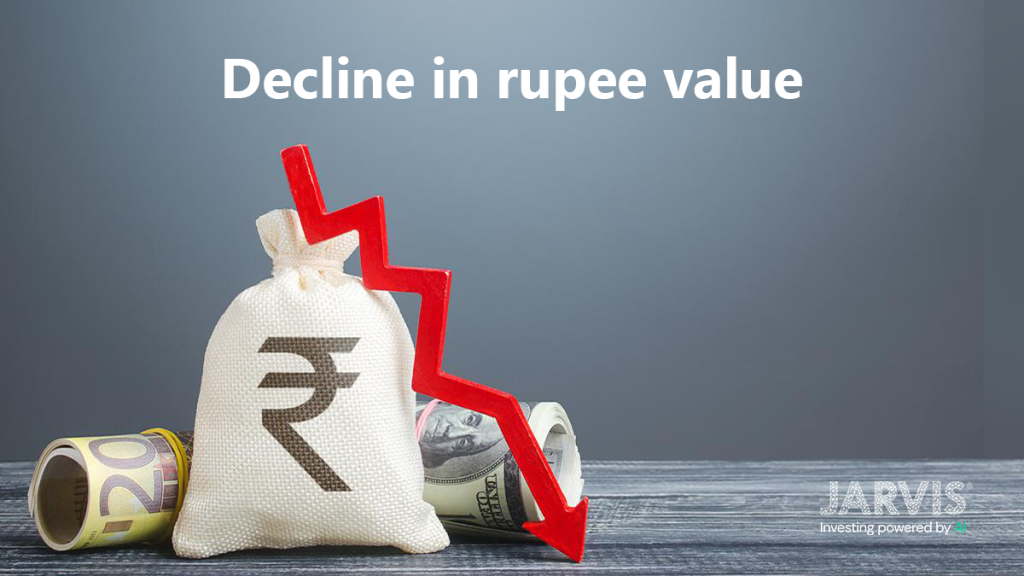
By Nantoo Banerjee It does not make sense for India to deplete its hard-earned foreign currency reserves to temporarily protect the Rupee’s exchange value. In fact, Indian Rupee’s downturn vis-à-vis other major currencies has not adversely impacted the country’s impressive economic growth, at least for the present. On the contrary, it has made exports cheaper […]

The article Rupee Decline May Not Be Bad For Economy Now appeared first on Latest India news, analysis and reports on Newspack by India Press Agency).

An SUV that delivers both sophistication and an industry-leading peace-of-mind ownership experience.

DUBAI, UAE – Media OutReach Newswire – 29 December 2025 – Middle Eastern buyers have long gravitated toward vehicles that project elegance, presence, and purpose. As electric mobility accelerates across the region, design continues to be a major factor in purchase decisions. VinFast responds to this expectation with the VF 8, an electric SUV whose aesthetic is rooted in European sophistication yet thoughtfully shaped to resonate with Middle Eastern roads, lifestyles, and sensibilities.

VF 8 photo

The VF 8’s exterior was developed around a design philosophy VinFast calls “Dynamic Balance”. Rather than relying on overt aggressiveness, the VF 8 uses tension between smooth surfaces and crisp lines, balancing gentle curves with sharper transitions to create a silhouette that feels modern without chasing trends, a consideration particularly relevant in the Middle East.

Its LED lighting signature, highlighted by a full-width tail lamp and the recognizable V-shaped graphic, establishes a strong visual identity from a distance. Confident proportions and a purposeful stance allow the vehicle to project stability on wide highways and in dense city environments.

Inside the VF 8, VinFast has created a cabin that blends practicality with an understated, premium feel. A panoramic sunroof brightens the interior and creates a sense of openness that local buyers often value. Premium vegan leather, color-selectable ambient lighting, and a streamlined dashboard contribute to a cabin that feels calm and contemporary. At the center of this environment is a 15.6-inch floating infotainment display that anchors the cockpit while reducing physical clutter. The seats, spacious in both rows, are designed with long-distance comfort in mind, and ventilation and heating functions in the Plus variant provide flexibility across seasonal shifts in the region.

Design and engineering intersect to elevate everyday usability. The VF 8’s aerodynamic profile supports range efficiency and improves ride stability. Wide outward visibility, paired with intelligent LED lighting, enhances confidence during night driving and intercity travel. The vehicle’s smart functionalities, including update capability and advanced driver-support technologies, are built into the design in a way that maintains the cabin’s clean, minimal aesthetic without overwhelming the driver.

The VF 8’s design narrative is strengthened by an ownership experience that has become one of VinFast’s defining attributes. Its long-term warranty coverage extends for ten years or 200,000 km on the vehicle, alongside a ten-year battery warranty with unlimited mileage, delivering assurance that resonates strongly with Middle Eastern buyers who prioritize durability and long-term value. This is reinforced by a comprehensive aftersales framework that includes five years of free scheduled service up to 100,000 km, 24/7 roadside assistance with mobile service support, guaranteed access to replacement parts around the clock, and the inclusion of home charging solutions with access to DC fast-charging networks. Together, these policies align with the SUV’s design intention: a vehicle created not only to be admired, but to be lived with confidently for years.

This positioning comes as VinFast closes out one of the most consequential years in its history. The company has inaugurated its Subang manufacturing plant in Indonesia, marking a major expansion of its global production footprint, while momentum in Vietnam continues to accelerate. With record monthly deliveries and multiple models leading their respective segments, VinFast is on track to finish the year as the best-selling automotive brand in its domestic market, underscoring the speed and scale of its transition from an emerging EV player to an established market leader.

Hashtag: #VF8 #VinFast

The issuer is solely responsible for the content of this announcement.

About VinFast

VinFast (NASDAQ: VFS), a subsidiary of Vingroup JSC, one of Vietnam’s largest conglomerates, is a pure-play electric vehicle (“EV”) manufacturer with the mission of making EVs accessible to everyone.

VinFast’s product lineup today includes a wide range of electric SUVs, e-scooters, and e-buses. VinFast is currently embarking on its next growth phase through rapid expansion of its distribution and dealership network globally and increasing its manufacturing capacities with a focus on key markets across North America, Europe and Asia.

Learn more at:

The recognition of MIR Holding subsidiaries at FO.GE.CA illustrates the potential of African companies to establish themselves beyond their domestic markets

DAKAR, SENEGAL – EQS Newswire – 29 December 2025 – In the margins of the 18th edition of the Forum of Operators for the Guarantee of Economic Emergence in Africa (FOGECA), held from 18 to 20 December 2025 in Dubai, several subsidiaries of MIR Holding SAS (https://MIRHolding.Odoo.com) were recognized for the quality of their achievements, their operational structuring, and their ability to operate sustainably in demanding international economic environments.

FOGECA has established itself as a high-level economic forum bringing together each year business leaders, investors, financial institutions and public decision- makers from Africa, the Middle East, Europe and Asia. The distinctions awarded during the forum aim to recognize companies that demonstrate, beyond discourse, a genuine capacity for execution, strong governance, and measurable, long-term value creation.

Three companies recognized across strategic sectors

Among the MIR Holding group entities recognized this year are three companies operating in key strategic sectors:

JC Maclean International, specializing in high-end fit-out and interior design for residential, commercial and corporate projects. Based in Dubai, the company has distinguished itself through its technical rigor, its ability to manage complex projects, and its strict adherence to international standards in quality, timelines and safety.

Moustev Limousine Dubai, a premium VTC and chauffeur-driven transport company, recognized for its integrated approach and its capacity to support corporate clients in managing their mobility needs, particularly in multicultural and multi-country contexts. Its model is built on service reliability, operational responsiveness and adaptability to both local and international environments.

Majestic Living Properties, a real estate platform focused on development, marketing and investment advisory for residential and commercial assets. The company was recognized for its vision of real estate investment, combining transparency, asset quality and customer experience, particularly across Africa–Middle East investment flows.

A recognition rooted in long-term structuring

For MIR Holding SAS, these distinctions are not an end in themselves but rather the outcome of a long-term structuring process. They reflect the ability of companies originating from an African group to grow, attract talent and operate successfully within major global economic hubs, while maintaining a pragmatic and disciplined understanding of markets.

Present in Dubai during the forum, Mouhamad Dieng, Founder and CEO of MIR Holding and President of the Mouhamad Rassoul Dieng Foundation, emphasized that this trajectory is above all the result of entrepreneurial discipline, method and long- term vision.

“These distinctions primarily recognize the work of committed teams and the strength of business models built to last. They demonstrate that starting from local realities, and remaining demanding in terms of structuring and governance, it is possible to build companies capable of operating at the highest international level,” he stated.

Originally from Senegal, Mouhamad Dieng highlighted that this international recognition also carries a message of inspiration for young Senegalese and African entrepreneurs, illustrating a path to success grounded in hard work, rigor and the ability to think globally without renouncing one’s roots.

A strong signal for Senegal’s economic ecosystem

At a time when Senegal is seeking to strengthen the role of its private sector within regional and international value chains, the recognition of MIR Holding subsidiaries at FOGECA illustrates the potential of African companies to establish themselves beyond their domestic markets.

Through its various entities, MIR Holding SAS continues to pursue a development strategy based on the structuring of robust companies, the upgrading of service offerings, and expansion into high-value markets, particularly between Africa and the Middle East.

The distinctions awarded in Dubai are part of a broader dynamic in which credibility is built through results, consistency and the ability to generate tangible economic impact.

Distributed by APO Group on behalf of MIR Holding.

Hashtag: #MIRHolding

The issuer is solely responsible for the content of this announcement.

Mirae Asset is holding advanced discussions to acquire Korbit, one of South Korea’s earliest cryptocurrency exchanges, in a transaction valued between 100 billion and 140 billion won, according to people familiar with the matter. The talks underline a renewed push by established financial groups to position themselves for a potential rebound in digital asset trading and related services after a prolonged market downturn. The negotiations, which remain […]

The United Arab Emirates is on course to generate more than one million additional jobs by 2030, placing it among the world’s fastest-expanding labour markets as economic diversification, technology adoption and population growth intensify demand for skilled workers, according to a workforce outlook released by ServiceNow.

The projection underscores the scale of change under way in the UAE’s employment landscape, where public and private sector investment is being channelled into advanced industries, digital services, clean energy, logistics and financial technology. Policymakers have positioned job creation as a central pillar of national economic strategy, linking employment growth to productivity gains, innovation and long-term competitiveness.

ServiceNow’s analysis indicates that the strongest employment momentum is emerging in technology-led roles, particularly in cloud computing, artificial intelligence operations, cybersecurity, data analytics and enterprise software services. Demand is also rising for professionals who can combine technical skills with business process expertise, reflecting the increasing automation of workflows across government entities, banks, energy companies and logistics firms.

This expansion is unfolding alongside steady population growth driven by immigration, as professionals from Asia, Europe and Africa relocate to the UAE for work opportunities. Labour market specialists say the inflow of skilled workers has become an economic asset, helping employers fill gaps in high-value roles while supporting consumption and domestic demand.

Beyond technology, job creation is expected to be broad-based. Construction and real estate continue to absorb labour as infrastructure spending remains strong, while tourism, hospitality and aviation are benefitting from sustained visitor growth and expanding airline capacity. Healthcare and education are also projected to add sizeable numbers of jobs as authorities invest in social infrastructure to support a larger and more diverse population.

The digital transformation of government services has emerged as a significant employment driver. Federal and emirate-level entities are accelerating the shift towards paperless operations, data-driven decision-making and AI-enabled public services. This has increased demand for systems architects, digital policy specialists and programme managers who can oversee complex technology deployments while ensuring regulatory compliance and data security.

Employers are also rethinking workforce structures as automation changes how tasks are performed. Routine administrative roles are increasingly being replaced or augmented by software platforms, while new positions are emerging in system oversight, process design and user experience management. Analysts say this transition is not eliminating jobs at scale but reshaping them, with a premium placed on adaptability and continuous learning.

Education and training institutions are responding by expanding programmes focused on digital skills, coding, data science and cyber resilience. Partnerships between universities, vocational institutes and multinational firms are becoming more common, aimed at aligning curricula with labour market needs. Corporate upskilling initiatives are also gaining traction as employers seek to retrain existing staff rather than rely solely on external hiring.

Wage dynamics are expected to reflect these shifts. Salaries in high-demand technology and specialist roles have been rising faster than the broader market, while competition for experienced professionals has intensified. Human resources consultants note that non-salary benefits, including flexible working arrangements, career progression pathways and residency incentives, are increasingly important in attracting and retaining talent.

The ServiceNow report places the UAE’s projected job growth ahead of many mature economies, where ageing populations and slower productivity gains are constraining employment expansion. By contrast, the UAE’s relatively young workforce, openness to foreign talent and willingness to adopt new technologies are seen as structural advantages.

Challenges remain, particularly around ensuring that job creation keeps pace with population growth and that skills mismatches do not widen. Economists warn that without sustained investment in education and training, shortages could emerge in critical areas, potentially pushing up labour costs and slowing project delivery. There is also a need to integrate more nationals into private-sector roles, a long-standing policy objective supported by wage subsidies, training schemes and regulatory measures.

SINGAPORE – Media OutReach Newswire – 29 December 2025 – Tanoto Foundation convened government leaders, international organisations, researchers, and civil society at the 2025 International Symposium on Early Childhood Education and Development (ECED), in Jakarta under the theme “ECED Ecosystem Synergy in Promoting the Best Start in Life.”

The symposium comes at a critical moment, as shared challenges across health, nutrition, education, and caregiving continue to shape early childhood development outcomes in Indonesia and globally, where many young children continue to face barriers to healthy development, from gaps in nutrition and care to limited access to quality early learning.

These challenges highlight the need for closer coordination across health, education, parenting, and social protection to ensure children receive holistic and equitable support from the earliest years.

Without strong cross-sector collaboration, Indonesia risks losing momentum in building its human capital and realising its demographic dividend towards Indonesia Emas 2045.

In partnership with key government ministries and cross-sector organisations, Tanoto Foundation convened the symposium as a platform to align policy, practice, and evidence across sectors, bringing together representatives from central and local government, international organisations, academia, civil society, and philanthropy.

The symposium featured two main discussion tracks focused on health and education, and parenting in early childhood.

The morning segment, “Synergising Health and Education for ECED”, focused on integrating health, nutrition, and early learning services, highlighting innovations in growth and development monitoring, nutrition interventions, and early stimulation within primary service systems.

The afternoon session, “Parenting and Early Learning”, placed families and caregivers at the centre of the ECED ecosystem, exploring responsive caregiving, interaction-based learning, and policy support to strengthen parents’ capacity to nurture children’s development.

Indonesian Minister of Health Budi Gunadi Sadikin officially opened the symposium, emphasising the decisive importance of early childhood for national development.

“The age of 0 to 5 years is a highly decisive phase in determining whether a person will grow into a healthy, intelligent adult who can contribute to the nation, including to increase per capita income,” the Minister said.

“If we do not act quickly, we risk missing Indonesia’s demographic dividend. This is our responsibility to our children.”

The Government of Indonesia has reaffirmed early childhood development as a national priority through the Long-Term National Development Plan 2025 to 2045 and the Medium-Term National Development Plan 2025 to 2029, with Holistic and Integrated Early Childhood Development (PAUD-HI) designated as a key performance indicator.

Opening the afternoon session, Indonesian Minister of Women Empowerment and Child Protection, Arifatul Choiri Fauzi, highlighted the symposium’s contribution to policy strengthening.

“This forum brings together strategic cross sector perspectives. We encourage the resulting recommendations to be used to strengthen policies, regulations, and service innovations for early childhood development,” she said.

Indonesian Deputy Minister of Higher Education, Science, and Technology, Prof. Stella Christie, underscored the importance of science-based parenting and high-quality interaction.

“Caregiving with optimal interaction between children and caregivers has the greatest potential to maximise child development,” she said. “No technology, including artificial intelligence, can replace the power of human interaction.”

She added that children learn through curiosity, imitation, and everyday experiences, making responsive and evidence-based parenting critical for brain development and lifelong learning.

CEO of Tanoto Foundation Benny Lee reaffirmed the Foundation’s long-term commitment to early childhood development as a cornerstone of human potential.

“The early years are when the foundations of brain development, health, and character are formed,” Benny said.

“This is not the work of one institution. It requires a truly supportive ecosystem built through collaboration among government, civil society, academia, and philanthropy.”

He emphasised that Tanoto Foundation, founded by Sukanto Tanoto, Founder and Chairman of Royal Golden Eagle (RGE), views early childhood development as a primary investment, where collective action can deliver lasting and sustainable impact. “This symposium is about ensuring that every child receives the strongest possible start in life, every parent receives the support they need, and every sector moves forward together,” he said.

The symposium brought together up to 200 participants, with speakers from government, development organisations, academia, research institutions, and philanthropy.
Hashtag: #RGE #TanotoFoundation #Philanthropy #Indonesia #ECED #EarlyChildhood #Healthcare

The issuer is solely responsible for the content of this announcement.

About Tanoto Foundation

At Tanoto Foundation, we unlock human potential, help communities thrive, and create lasting impact. Founded in 1981 by Sukanto Tanoto and Tinah Bingei Tanoto, we are an independent family foundation that believes in providing every person with the opportunity to realise his or her full potential. To do so, we catalyse systems change in education and healthcare. Our approach is impact-first, collaborative, and evidence-based. We invest for the long term and strive to develop leaders who can drive sustained, positive outcomes.


Federal vehicle safety regulators have opened a probe into the emergency door release mechanism on the Tesla Model 3 following complaints that occupants may struggle to exit the vehicle during power failures or after crashes, raising concerns about passenger safety in critical moments. The National Highway Traffic Safety Administration said its Office of Defects Investigation has begun a preliminary evaluation after receiving reports that the manual door […]

Advertisements

Stanford researchers have identified a biological pathway that helps explain why mRNA COVID-19 vaccines can, in very rare cases, trigger short-lived heart inflammation in younger males, while also pointing to possible ways the risk could be reduced without undermining vaccine protection. The findings add clarity to a safety signal that has been closely monitored by regulators and clinicians since mass immunisation campaigns began. Scientists at Stanford University […]

Dubai’s metro and tram network will operate around the clock over the New Year period as authorities move to manage heavy holiday demand and ensure safe, continuous mobility across the city during one of its busiest travel windows. Services on the Red and Green Metro lines will begin at 5.00 a. m. on December 31 and continue without interruption until 11.59 p. m. on Thursday, January 1, […]

Price action across the two largest dog-themed memecoins has remained subdued as the market navigates a seasonal lull in participation, with traders pointing to thin liquidity and a largely technical backdrop rather than any shift in fundamentals. Dogecoin and Shiba Inu have moved within narrow ranges, reflecting a broader pause in risk-taking across crypto assets during the holiday period. Trading data from major exchanges show reduced volumes […]

A wave of AI-generated videos circulating on social platforms has drawn regulatory and public attention after Meta removed a cluster of manipulated clips tied to public discourse in India, underscoring the accelerating threat posed by deepfakes and the strain on existing cybersecurity defences. The action has reignited debate over platform accountability, election integrity, and the pace at which safeguards are keeping up with generative tools.

Meta said the videos breached its policies on manipulated media and deceptive practices, adding that enforcement teams had detected coordinated behaviour designed to amplify misleading narratives. The company did not detail the creators or precise reach, but independent analysts tracking social traffic reported that some clips had amassed hundreds of thousands of views before moderation. The removals came amid heightened scrutiny of AI-driven misinformation as synthetic video and audio tools become cheaper, faster and harder to spot.

Security specialists warn that the technical leap in realism has lowered the barrier for malicious actors. Diffusion models and voice-cloning systems can now produce convincing footage with minimal training data, enabling impersonation, fabricated statements and false evidence. The risk profile extends beyond politics to financial fraud, reputational attacks and social engineering. Banks and insurers have flagged a rise in scams that combine deepfake video calls with stolen personal data to bypass verification checks.

India’s digital ecosystem amplifies the challenge. With one of the world’s largest online populations and intense engagement on short-video platforms, manipulated content can travel rapidly across languages and regions. Fact-checking groups say the velocity of sharing often outpaces verification, while takedowns, even when swift, can struggle to contain copies and re-uploads. Researchers at leading institutes have documented how watermark removal, compression artefacts and cross-platform reposting degrade detection signals.

Government authorities have been pressing technology companies to strengthen guardrails. Draft rules under the Information Technology framework emphasise due diligence for intermediaries, traceability of originators in defined cases, and clearer disclosures for synthetic media. Officials have also signalled expectations for labelling AI-generated content and responding promptly to lawful takedown requests, while balancing free expression and privacy. Industry groups argue that clarity on standards and timelines is essential to avoid uneven enforcement.

Meta has highlighted investments in detection and transparency, including classifiers trained to identify AI artefacts, partnerships with academic labs, and labels applied when confidence thresholds are met. The company also points to cross-platform threat sharing through industry forums to flag emerging manipulation techniques. Critics counter that adversarial innovation is moving faster than defensive models and that labels can be stripped or ignored, especially when content is shared outside original platforms.

Election experts say the stakes are rising as campaigns increasingly rely on video to reach voters. Even short-lived false clips can shape perceptions, sow doubt or distract from substantive debate. Studies of prior electoral cycles show that corrections often fail to reach the same audiences as the initial misinformation, leaving residual effects. Civil society organisations have urged a layered response that combines platform enforcement, rapid response hotlines, and public education on media literacy.

Cybersecurity firms are adapting with multi-signal approaches that fuse video forensics, network analysis and behavioural cues. Techniques include analysing eye-blink patterns, head-pose consistency, acoustic fingerprints and temporal anomalies, alongside monitoring coordinated posting patterns. Yet experts caution that no single method is foolproof. As generative systems learn to mimic these signals, defenders must iterate continuously, increasing costs for both sides.

The economic dimension is also coming into focus. Advertising clients are wary of brand adjacency to manipulated content, prompting demands for stronger brand-safety assurances. Meanwhile, startups offering verification, provenance tracking and content authentication are attracting investment. Standards bodies are promoting cryptographic provenance frameworks that embed origin metadata at creation, though adoption remains uneven across devices and platforms.

BYD has unveiled a high-power “Flash Charging” system that it says can add up to 400 kilometres of driving range in around five minutes, a claim that—if replicated at scale—would narrow one of the biggest gaps between electric vehicles and petrol cars and intensify pressure on rivals led by Tesla. The announcement underscores how the Chinese manufacturer has moved from being a price-competitive disruptor to a technology […]

Security researchers have demonstrated how widely deployed service robots can be commandeered without physical contact, raising concerns about safety, surveillance and supply-chain exposure as robots spread across factories, warehouses and public spaces. The findings were showcased at a major hacking conference in Shanghai, where white-hat teams revealed that certain commercial robots could be hijacked through low-cost attacks using voice commands or short-range wireless links. At the event, […]

  Bitcoin could set a fresh all-time high in the first half of 2026, according to forward-looking projections outlined by digital asset manager Grayscale, which argues that a maturing market structure, institutional demand and macroeconomic tailwinds are aligning for another leg higher after the current cycle plays out. The outlook, published as part of Grayscale’s industry expectations for 2026, places Bitcoin’s next peak within the opening six […]

Bitcoin’s upward momentum has softened after a sharp recovery phase, while XRP has slipped to about $1.86, underscoring a pause in risk appetite even as exchange-traded fund assets linked to XRP reach roughly $1.25 billion. The divergence highlights a market grappling with profit-taking, regulatory recalibration and shifting liquidity conditions across major digital assets. Bitcoin’s price action shows signs of consolidation following a rebound that drew fresh inflows […]

Weather conditions across the UAE are set to turn more unsettled on Sunday, with cloud build-up, spells of rain in some areas and dusty winds affecting visibility, according to official forecasts.

The National Centre of Meteorology has said the day is expected to be partly cloudy at times, becoming occasionally overcast as convective clouds develop over eastern and southern parts of the country. These cloud formations may bring rainfall, particularly over mountainous areas, while conditions elsewhere are likely to remain variable through the day.

Forecasters indicated that surface winds will play a key role in shaping conditions. Winds are expected to be light to moderate at times, freshening during the day and occasionally becoming strong, especially in open areas and over the sea. These winds could stir up dust and sand, reducing horizontal visibility and making driving conditions challenging on exposed roads.

Temperatures are forecast to show noticeable contrasts between inland, coastal and mountainous regions. Daytime highs are expected to remain warm across much of the country, though increased cloud cover may moderate peak temperatures in some areas. Cooler conditions are anticipated over higher ground, particularly during the night and early morning, as cloud cover and shifting winds influence local weather patterns.

Humidity levels are also expected to fluctuate, with higher readings forecast overnight and into the morning, especially along coastal and northern areas. Meteorologists have cautioned that this may lead to mist or fog formation in isolated locations, further affecting visibility during early travel hours.

Marine conditions are expected to be unsettled as well. Seas in the Arabian Gulf are forecast to range from moderate to rough at times, particularly as winds strengthen. Conditions in the Sea of Oman are expected to be slight to moderate, though boat operators have been advised to monitor updates as conditions can change quickly with shifting winds and cloud activity.

Aviation authorities and transport officials have urged travellers to stay informed about weather developments, particularly those planning road trips or marine activities. Reduced visibility due to dust and the possibility of rainfall in certain regions may disrupt travel schedules and outdoor plans.

Meteorologists say the developing weather pattern reflects seasonal transitions that often bring increased atmospheric instability. Convective cloud formation typically occurs when surface heating combines with moisture and upper-level disturbances, leading to vertical cloud growth and the possibility of showers. Such systems are often localised, meaning some areas may see rainfall while others remain dry.

Emergency services and municipal authorities have reiterated standard safety advice during periods of unsettled weather. Motorists are urged to slow down during dusty or rainy conditions, maintain safe distances and use headlights when visibility drops. Residents in areas prone to water accumulation are advised to remain cautious if showers develop.

Farmers and outdoor workers have also been advised to plan activities carefully, as sudden changes in wind strength or rainfall could affect working conditions. For coastal communities and fishing operators, sea conditions warrant close attention, particularly during periods when winds strengthen unexpectedly.

The National Centre of Meteorology continues to monitor conditions around the clock using satellite imagery, radar systems and ground-based observations. Officials have emphasised that forecasts are updated regularly as new data becomes available, and residents are encouraged to follow official channels for timely information.

A London-based stablecoin infrastructure startup is seeking to accelerate how banks and regulated fintechs move money across borders after securing $1.45 million in pre-seed funding, underscoring growing institutional interest in blockchain-based settlement that aligns with European compliance rules. Nodu said the round was led by Digital Space Ventures and will be used to expand operations across Europe, hire engineering and compliance specialists, and deepen partnerships with regulated […]

A magnetic levitation test run in China has pushed rail engineering into uncharted territory, with a prototype train reaching 700 kilometres an hour in roughly two seconds during a controlled acceleration trial. The demonstration, carried out on a short test track designed for extreme propulsion experiments, underscores Beijing’s drive to redefine high-speed ground transport and narrow the gap between rail and short-haul aviation. Engineers involved in the […]

A sweeping federal decree-law has set out a unified legal framework aimed at protecting minors from online harm across the UAE’s fast-expanding digital ecosystem, placing clear duties on internet service providers and digital platforms that operate within the country or target users based there. The legislation signals a tougher regulatory posture as children’s screen time rises and online services become more embedded in everyday life. The decree-law […]

BNW Developments has unveiled the Tonino Lamborghini Residences on Al Marjan Island, marking the first time the Italian luxury lifestyle brand has anchored a residential project in Ras Al Khaimah and setting a new benchmark for branded waterfront living in the northern emirate. The launch positions the privately held developer behind what it describes as Ras Al Khaimah’s largest private real estate venture at the centre of a market drawing growing international investor interest.

The project brings together BNW Developments and Tonino Lamborghini, the brand founded by the son of the legendary Italian carmaker, to deliver a design-led residential community that blends Italian heritage with contemporary coastal architecture. Planned as a large-scale, master-planned development, the residences are set on Al Marjan Island, a man-made archipelago that has emerged as the emirate’s most prominent tourism and lifestyle hub.

Executives involved in the announcement said the collaboration reflects a deliberate strategy to move beyond conventional luxury offerings towards globally recognised branded residences that command long-term value. For Ras Al Khaimah, the development underscores a shift towards higher-end projects aligned with the emirate’s tourism and economic diversification agenda, particularly as hospitality, leisure and residential segments converge along the coastline.

The Tonino Lamborghini Residences are being positioned as ultra-luxury waterfront homes, with interiors inspired by Italian craftsmanship and modern European aesthetics. Design elements are expected to reflect the brand’s signature language, incorporating bespoke materials, curated finishes and lifestyle-focused amenities. While detailed specifications and unit pricing have not been formally disclosed, the developer has indicated that the project targets high-net-worth buyers seeking branded homes with strong rental and capital appreciation potential.

BNW Developments has expanded rapidly within Ras Al Khaimah’s real estate sector, capitalising on policy reforms, infrastructure spending and rising tourism flows. Al Marjan Island, in particular, has become a focal point for premium residential and hospitality investments, supported by new resorts, entertainment attractions and improved connectivity. Property consultants tracking the market say branded residences on the island are increasingly appealing to overseas buyers from Europe, Asia and the wider Middle East, drawn by comparatively attractive entry prices and long-term growth prospects.

The arrival of Tonino Lamborghini adds another internationally recognised name to the island’s evolving skyline, reinforcing a trend in which global lifestyle brands are lending their identity to residential projects across the UAE. Analysts note that branded developments typically command a premium over non-branded counterparts, supported by perceived quality assurance, curated services and brand-driven design consistency.

Industry observers also point to Ras Al Khaimah’s regulatory environment and measured approach to development as factors supporting sustained demand. Unlike more saturated markets, the emirate has emphasised phased growth, balancing tourism expansion with residential supply. This has helped maintain pricing discipline while attracting developers focused on differentiated offerings rather than volume-led construction.

For BNW Developments, the Tonino Lamborghini partnership is intended to elevate its profile beyond a regional developer into a player capable of executing globally benchmarked luxury projects. Company officials have described the residences as a long-term investment in brand equity, aligning the developer with an internationally known lifestyle name while contributing to the emirate’s ambition to compete with established luxury destinations.

Tonino Lamborghini’s leadership has framed the project as a natural extension of the brand’s presence in hospitality, accessories and interior design, translating its identity into a residential environment shaped by coastal living. The brand’s involvement is expected to extend beyond naming rights to include design oversight and lifestyle integration, a factor often scrutinised by buyers in the branded residences segment.

Arabian Post Staff -Dubai Gold, silver and platinum prices pushed to record levels at the close of the year, extending a powerful rally driven by geopolitical strains, a softer US dollar and thin trading conditions that magnified price swings across commodities markets. Spot gold climbed as much as 1.6% on Friday to trade above $4,540 an ounce, a level unseen before, while spot silver for immediate delivery […]

After decades of quiet, Can Gio is awakening on Vietnam’s southern coast, as fresh investment and grand designs breathe new life into the once-remote district of Saigon.

HO CHI MINH CITY, VIETNAM – Media OutReach Newswire – 27 December 2024 – Six months after the groundbreaking of a 2,870-hectare coastal urban project backed by Vingroup, Vietnam’s largest private conglomerate, Can Gio, once seen as a forgotten corner of Ho Chi Minh City, is now emerging as a new growth engine for Vietnam’s southern metropolis.

Vinhomes Green Paradise: A Hidden Gem Poised to Shine in Vietnam’s Real Estate Market.

Breaking Isolation

For years, Can Gio was often left out of the city’s rapid development. Surrounded by dense forests and accessible mainly by ferry, it remained a world apart. Now, that is beginning to change.

Six months ago, the large-scale land reclamation project officially started construction. Locals call it a “game changer” that awakened a land long left behind. Along the coast that once lay quiet, a vast construction site has emerged, with heavy machinery working day and night. “I was very surprised by the speed,” said Prof. Pham Van Song, president of the Mien Dong University of Technology, noting that hundreds of hectares have already been filled and stabilized within months.

The project, developed by Vingroup through its real estate arm Vinhomes, represents one of the group’s most ambitious coastal developments, part of a long-term vision to extend Ho Chi Minh City’s urban footprint toward the sea. With billions of U.S. dollars in investment, it combines housing, tourism, and modern infrastructure within a single master plan that anchors Can Gio’s transformation.

Complementing this project, a series of major infrastructure works are also reshaping the district. By the end of 2025, the Phu My Hung–Can Gio high-speed railway, designed to reach 350 kilometers per hour, is expected to begin construction, linking the area to the city’s southern urban core. In 2026, the long-awaited Can Gio Bridge will break ground, cutting the journey to the city center to around 45 to 60 minutes.

At the same time, the Rung Sac interchange, with an investment of 3,000 billion VND (about 120 million U.S. dollars), will connect Can Gio directly with the Ben Luc–Long Thanh Expressway. Expected to be completed in 2028, it will link Can Gio with both the Southwest and Southeast regions, including Long Thanh International Airport.

In addition, a sea-crossing expressway between Can Gio and Vung Tau, 50 meters wide and proposed by Vingroup, would stretch across the sea for more than 10 kilometers. The plan envisions a wide eight-lane road that could reduce travel between Can Gio and Vung Tau to under 15 minutes, creating a strategic connection between the two coastal economies.

These efforts fit within a broader regional plan that combines road, rail, water, and sea transport. Another key project is the Can Gio International Transshipment Port, covering 571 hectares with an investment of 50,000 billion VND. The port is designed to become a new symbol of Vietnam’s maritime economy, with its first phase scheduled to begin operations in 2027 and full completion before 2045.

“A Single Project Ignites the South”

According to Prof. Pham Van Song, the rise of Can Gio is a natural development, especially with the involvement of Vingroup through its Vinhomes Green Paradise project. He believes that Can Gio is moving from an ecological area on the fringe of development to a new center of growth. “All modes of transportation will be available in Can Gio,” he said. “The district’s GRDP will grow rapidly in line with ongoing construction and investment. Both the number of residents and visitors will surge. Local people will be the first to directly benefit from these projects, and their lives will become increasingly prosperous.”

The changes are already drawing attention from investors. Dinh Minh Tuan, southern regional director of Batdongsan.com.vn, said the number of searches related to Can Gio has tripled since the beginning of the year. After the Vinhomes Green Paradise project broke ground, property interest in the district doubled again. “Just one single project has heated up the entire southern market,” he said.

Experts say this follows a familiar pattern. In the 1990s, Nguyen Van Linh Boulevard helped turn southern Ho Chi Minh City into a thriving area and drew nearly two million residents. In the 2010s, the completion of the Thu Thiem Tunnel and Bridge attracted more than one million people to the city’s east. “Investors who followed the infrastructure development wave then saw huge gains,” Tuan noted. “Can Gio now stands at a similar starting point, but with a stronger push.”

With a population of about 80,000, Can Gio has long faced a single challenge: lack of connectivity. But, “with the series of large-scale investments now under way, Can Gio is expected to grow faster than many of the city’s earlier new urban areas,” said Tuan.
Hashtag: #Vinhomes

The issuer is solely responsible for the content of this announcement.

Toyota Motor has begun informing key parts suppliers that it expects global vehicle production to exceed 10 million units in 2026, reflecting confidence that demand for its petrol-electric hybrids will remain strong, particularly in the United States, while battery-electric sales grow at a steadier pace. The guidance, shared during routine planning discussions with suppliers, signals that the world’s largest automaker is preparing for volumes that would place […]

IonQ has confirmed plans to deliver a next-generation 100-qubit quantum computing system to South Korea, reinforcing the company’s push into Asia’s accelerating quantum ecosystem and extending a strategic partnership with the Korea Institute of Science and Technology Information. The deployment is positioned as a milestone for the country’s national research infrastructure, giving scientists and industrial users local access to higher-capacity trapped-ion quantum hardware designed for advanced simulations and algorithm development.

The system is scheduled to be installed at facilities operated by Korea Institute of Science and Technology Information, which manages high-performance computing resources for universities, laboratories and government programmes. IonQ said the platform will integrate with existing supercomputing assets, enabling hybrid classical-quantum workflows that are increasingly seen as the most practical near-term use of quantum machines. Officials involved in the project describe the installation as part of a broader effort to ensure domestic capability in a field viewed as strategically significant for science, security and economic competitiveness.

For IonQ, the agreement deepens a relationship that began with earlier access to its systems through cloud services and collaborative research. The 100-qubit platform represents a step up from earlier machines made available to Asian partners, with IonQ highlighting gains in algorithmic performance driven by longer coherence times and high-fidelity gates inherent to its trapped-ion approach. The company argues that these characteristics allow useful problem sizes to be tackled with fewer physical qubits than some rival architectures.

The project comes as South Korea accelerates state-backed investment in quantum science. Government roadmaps call for expanded talent development, dedicated funding lines for hardware and software, and closer links between public laboratories and industry. KISTI’s role as a national computing hub makes it a focal point for these ambitions, with the new system expected to support work ranging from materials discovery and chemistry to optimisation and machine learning. Researchers anticipate that local access will shorten development cycles compared with reliance on overseas cloud resources.

IonQ executives frame the delivery as part of a long-term regional strategy rather than a one-off sale. Asia has become a key battleground for quantum providers as countries seek sovereign capabilities while remaining connected to global research networks. China, Japan and South Korea are all funding large-scale programmes, and regional universities are increasing output in quantum algorithms and error-mitigation techniques. By embedding hardware within national facilities, vendors aim to secure early loyalty among researchers who may later influence commercial adoption.

Competition in the sector is intensifying. Superconducting-qubit systems from established technology firms and photonic approaches backed by start-ups are all vying for attention, each claiming advantages in scalability or manufacturability. IonQ’s bet on trapped ions prioritises precision and stability, though critics note challenges in scaling to very large numbers of qubits. The company counters that its roadmap focuses on algorithmic qubits and error-corrected performance rather than raw counts, a metric increasingly favoured by parts of the research community.

The South Korean installation also reflects a broader trend toward hybrid computing. Rather than replacing classical supercomputers, quantum systems are being linked to them to tackle specific sub-problems where quantum effects offer potential speed-ups. KISTI engineers are working on software layers to manage job scheduling and data movement between systems, an area seen as critical to extracting value from early quantum machines.

Commercial implications are closely watched. South Korean conglomerates in electronics, chemicals and logistics have signalled interest in quantum applications, and access to domestic hardware could encourage pilot projects. Analysts caution that widespread industrial impact remains some distance away, but note that early experimentation helps firms build expertise ahead of future breakthroughs.

VISHNU RAJA
RYO YAMADA
HITORI GOTOH
IKUYO KITA