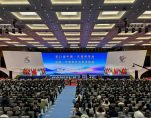
BERLIN, GERMANY – Newsaktuell – 11 October 2026 – The World Health Summit (WHS) 2026, the leading platform for global health, brings together more than 4,000 participants from 130 countries in Berlin and tens of thousands more online from October 11 to 13. Under the theme “From Crisis to Resilience: Innovating for Health,” the Summit convenes leaders from politics, science, civil society, and the private sector. Discussions address Ebola and other infectious diseases, antibiotic resistance, pandemic preparedness, resilient health systems, health care in conflict settings such as Ukraine, and climate-related health threats. The Summit will also address WHO leadership through a conversation with prospective candidates for the next WHO Director-General.
Against this backdrop, WHS President Axel R. Pries emphasized the need for innovation and collaboration: “Past achievements and continued progress in global health are increasingly challenged by multiple and overlapping crises. To build resilient, effective, and equitable health systems, we need innovation across biomedicine and technology, financing, delivery, and political coordination. This requires partnership and trust within and beyond the health sector and is at the heart of the World Health Summit 2026 leitmotif.”
Announcements and new pledges during the official WHS press conference:
Diene Keita, Executive Director of UNFPA, highlighted the Government of Bangladesh’s landmark investment of 250 million euros in women’s health, supported by the European Investment Bank.
John-Arne Røttingen, CEO of Wellcome, launched the Wellcome Global Monitor 2026, which shows trust in science has fallen since the COVID-19 pandemic.
Ilana Ron Levey, Managing Director at Gallup, shared findings from the State of the World’s Emotional Health 2026 Report, examining the relationship between social media use and emotional well-being.
Greenlogue/AP Khalifa University has completed the main conference programme of the Abu Dhabi Climate Solutions Summit 2026, recording more than 1,000 registrations and accepting over 100 research posters focused on practical responses to climate change. The university said the gathering brought together scientists, policymakers, investors, businesses and young innovators to examine how promising technologies could move beyond laboratories into affordable, commercially viable applications. Five dedicated youth sessions […]
US$10 Billion in Venture Capital Convenes to Meet Hong Kong Start-ups; Government, Business and Young Professionals Explore Opportunities in the New Economy
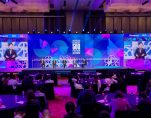
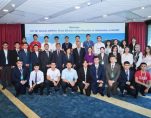
HONG KONG SAR – Media OutReach Newswire – 7 October 2026 – The Global Youth Powerhouse Summit 2026, organised by Hong Kong Youth Professional Global Advocacy, was held on 5 October at the Conrad Hong Kong. Now in its third edition, the Summit coincides with the release of the Hong Kong Special Administrative Region’s First Five-Year Plan for Economic and Social Development (2026–2030) and the latest Policy Address, which together set a clear blueprint for the city’s future. Anchored on these core themes and conducted entirely in English, the full-day programme focused on artificial intelligence, geopolitics, Hong Kong as an education hub, capital markets, life and health technology, and start-up financing. Government and business leaders, corporate representatives and young professionals were invited to examine Hong Kong’s strategic opportunities in the new economic landscape.
The Global Youth Powerhouse Summit 2026 brings together more than 600 young professionals, government and business leaders and corporate representatives
The Summit aims to connect young professionals with international resources, enabling participants to engage directly with industry leaders, grasp developments at the frontier of industry, and look ahead to the opportunities and challenges arising from artificial intelligence and Greater Bay Area integration. Previous editions have drawn a strong response. Across three editions, the Summit has attracted more than thousands of in-person participants and about 17,000 online participants from over 30 countries and regions, with social media reach exceeding 50 million.
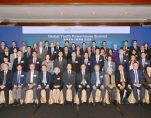
This year’s Summit was the largest yet, bringing together more than 600 young professionals, government and business leaders and corporate representatives. Participants from over 60 countries and regions joined online. More than 30 distinguished speakers and moderators were invited, including officials of the Hong Kong Special Administrative Region Government and representatives of leading local and international organisations such as Huawei, the Alibaba Hong Kong Entrepreneurs Fund, Hong Kong Exchanges and Clearing Limited, Bullish and Endowus. In addition, consular representatives from up to 20 countries attended the Summit.
The Chief Executive of the Hong Kong Special Administrative Region, Mr John Lee, GBM, SBS, PDSM, PMSM, delivered a pre-recorded video speech, encouraging young professionals to seize the opportunities of the times and inject fresh momentum into Hong Kong’s high-quality development. He said: “For our young people, I firmly believe that your opportunities ahead outweigh the difficulties. The HKSAR Government will join hands with all sectors to build platforms for you to thrive in Hong Kong, in our country, and in the global arena.”
The Deputy Secretary for Justice of the Hong Kong Special Administrative Region, Dr Cheung Kwok-kwan, SBS, JP, delivered an opening keynote entitled “Opportunities for the Professional Development of Young People”, and stressed: “As the saying goes, ‘Change is the only constant’—or as our Cantopop classic famously put it, ‘變幻原是永恆’. Today, we no longer measure change in years or decades, but in months and days. For our young professionals, this fast-paced era unlocks unprecedented career horizons. By accelerating Greater Bay Area integration through our new GBA Task Force and empowering you to act as the ultimate ‘super-connectors’ and ‘super value-adders’ helping Mainland enterprises go global, we are turning rapid change into your greatest professional advantage.”
Dr Kevin Lau, MH, Founding Convenor of Hong Kong Youth Professional Global Advocacy, said: “This is more than a high-level forum. It marks a milestone in the maturing of our network of young professionals. This afternoon, venture funds managing an estimated US$10 billion in assets gathered in the room — and what they are looking at is Hong Kong’s next generation. In life and health technology, our core belief is clear: artificial intelligence can assist imaging and diagnosis, but a physician’s care, and the warmth of a human hand, can never be replaced by technology.”
Other distinguished guests included Mr Kevin Choi, JP, Permanent Secretary for Innovation, Technology and Industry; Professor Frederick Ma, GBS, JP, Chairman of the Hong Kong Trade Development Council; Ms Bonnie Y Chan, JP, Chief Executive Officer of Hong Kong Exchanges and Clearing Limited; and Mr James Chau, President of the China-United States Exchange Foundation and World Health Organization Goodwill Ambassador for Sustainable Development Goals. Mr Bryan Che, Chief Strategy Officer of Huawei, and Ms Cindy Chow, Executive Director and Chief Executive Officer of the Alibaba Hong Kong Entrepreneurs Fund, also attended in person to exchange views with young professionals.
Panel discussions
Artificial intelligence: from first-time users to advanced users The opening session began with remarks by Mr Kevin Choi, JP, Permanent Secretary for Innovation, Technology and Industry, and was moderated by Ms Stephaine Chan, Director of the Office of the Vice Chairman of Esquel Group. Panellists included Ms Ilaria Chan, Chair of the Tech For Good Institute; Mr Bryan Che, Chief Strategy Officer of Huawei; and Ms Cindy Chow, Executive Director and Chief Executive Officer of the Alibaba Hong Kong Entrepreneurs Fund. The discussion focused on whether small and medium-sized enterprises, non-governmental organisations and schools can genuinely put artificial intelligence to use, and on the talent, trust and practical-application issues Hong Kong faces in driving “AI for all”.
Mr Kevin Choi, JP mentioned: “Every major technology shift brings uncertainty. Our theme today from entry-level shock to AI-powered users building the next talent leader.”
Ms Stephaine Chan said: “Every AI conversation ends in the same place, right? More investment, better people, better models and stronger policy.”
Ms Ilaria Chan said: “These days, Al is so powerful that they can scan the Internet and social media and find vulnerable young people or old people. They can find it instantly and have a very sophisticated way to trick them and fraud them from scamming.”
Mr Bryan Che: “One of the opportunities of Al is because the interface is much more natural for most people to interact with. On one sense, it’s a lot easier for everyone to get started.”
Ms Cindy Chow said: “So I guess some of the most damaging thing is not allowing people to use or not, you know, really have the attitude to embrace all this new technology, what this new technology has to bring to you.”
Geopolitics: the super-connector This session was moderated by Mr James Chau, President of the China-United States Exchange Foundation and World Health Organization Goodwill Ambassador for Sustainable Development Goals. Speakers included Ms Ilaria Chan, Chair of the Tech For Good Institute; Ms Ellana Lee, Senior Vice President, Managing Editor, Asia Pacific, and Global Head of Productions at CNN; and Professor Frederick Ma, GBS, JP, Chairman of the Hong Kong Trade Development Council.
Mr James Chau said: “Against this backdrop, we often hear Hong Kong described as a super connector, typically framed in terms of trade volumes, capital markets and logistics but I think that these connections that we’re speaking of really only become very valuable and we understand and recognize the human bonds that pin these together.”
Professor Frederick Ma , GBS, JP said: “We are part of China. And yet we are under one country 2 systems connected to the rest of the world. That is the power of Hong Kong.”
Ms Ellana Lee said: “We made a very strategic decision when the times were tough to stay and remain in Hong Kong. I think that has and you know, we make these decisions not just out of a whim, but we are very calculative on why we need to stay. I have 8 cities across Asia Pacific. Hong Kong happens to be the hub for Asia Pacific. And there’s it boils down to four major reasons.”
Ms IIaria Chan: “Simple of how tech is helping people, there is an organization, WHO care for children that was founded 20 years ago that helps orphans in developing China back then Vietnam, Thailand now in Africa, Middle East to find loving permanent homes. But their bottleneck is how they train social workers and governments on how to take care of orphan welfare. Now this year we’ve actually been launching an online product that is able to scale these bottlenecks, especially in areas that are underfunded. This is a great example of Al tech.”
Education: Hong Kong as Asia’s education hub This session was co-moderated by Mrs Jennifer Yu Cheng, JP, Founder of the Future Leaders Foundation, and Ms Jennifer Ma, Founder of JM Edu Consulting. Speakers included Ms Maggie Chau, School Partnership Advisor at the Academy for Educational Development and Innovation of The Education University of Hong Kong; Mr Dion CHEN, MH, Vice-Chairman of the Hong Kong Direct Subsidy Scheme Schools Council; and Professor Charles Ng Wang-Wai, Vice-President for Institutional Advancement of The Hong Kong University of Science and Technology.
Mrs Jennifer Yu Cheng, JP said: “An education hub is more than a place with excellent institutions. It is a place that students and families choose, where young people flourish, and connects education with research, innovation, careers and a wider community.”
Professor Charles Ng said: “With our national policy. And I think we should do better to support this great initiatives and thinking back actually 2023 and home government already in in the government policy in October, if I remember correctly to start to increase the local student quota from 20% to 40%.”
Ms Jennifer Ma said: “As a consultant we need demand to meet supply and we are definitely seeing the demand for Hong Kong education at K12 level…….The advocacy for Hong Kong to be the gateway for China Resources and talents to leave China and go into international arenas. But at the same time, we also see a lot of international people interested in what’s happening in mainland, and therefore Hong Kong is a great gateway. So, with that global education, global education philosophy, that means they really appreciate Hong Kong trilingual education by cultural mindset.”
Mr Dion CHEN, MH mentioned: “In 2026, a lot of DSS schools will work very hard to try to welcome and also promote welcome to Hong Kong and also promote Hong Kong’s education to the students in different countries.”
Ms Maggie Chau said: “Maggie: I can see that all the universities are actually implementing AI in their curriculum. Talking about teacher education, the programs we offer, I mean, not just The Education University of Hong Kong, the programs we offer in all universities implement Al in the curriculum in a way that we draw attention to the use of Al is it has to be ethical.”
Capital markets: AI listings, asset tokenisation and the new economy This session was moderated by Ms Emily CHAN Tan, a former CNBC anchor. Speakers included Ms Bonnie Y Chan, JP; Ms Clara CHAN Ka Chai, Chief Executive Officer of the Hong Kong Investment Corporation Limited; Mr Michael Lau, Senior Vice President and Head of Group Business Development at Bullish and Chairman of Consensus; and Mr Samuel RHEE, Co-founder, Chairman and Group Chief Investment Officer of Endowus.
Ms Clara CHAN Ka Chai said: “We always say that from zero to 1 is the most challenging part. So, the patients in terms of having staying power is the core, but it has to go in hand with other qualities like being proactive, being professional.”
Mr Michael Lau said: “I think it’s an interesting proposition to consider that these types of companies that are so capital. I would start looking beyond the current horizon of where we are to see where it could go next. And so I do think that there is a demand looking to that future where this idea of a tokenized capital market could be quite interesting.”
Mr Samuel RHEE mentioned: “First of all, maybe we just take a step back and just try to understand all of the capital markets, not just equities.”
Ms Bonnie Y Chan, JP said: “I want to point out one thing. I mean, we are operating a stock exchange and I think capital markets at the end of the day, the basic function is to match capital with opportunity. So what I’m very focused on is that I’m not just focused on technology or AI.”
Ms Emily CHAN Tan said: “We are not just witnessing a cyclical recovery, but also some would call this the threshold of a capital markets renaissance.”
Life and health technology: building a health-industry hub This session was moderated by Professor Lo Yuk-lam, BBS, Founding President of the Hong Kong Biotechnology Organisation. Speakers included Professor LI King-Chuen, Founding Dean of the School of Medicine at The Hong Kong University of Science and Technology; Dr Sarah SALVILLA, Director of Health and Strategic Partnerships at FWD Group; and Professor Anthony Wu Ting-yuk, GBS, JP, former Chairman of the Hospital Authority and Non-executive Chairman of Trinity Medical Group. The discussion focused on how AI in healthcare can strengthen the competitiveness of Hong Kong’s health industry.
Professor Lo Yuk-lam, BBS said: “Building HK’s holistic wellness hub, this year marks a defining moment for HK. With the release of our first ever five year plan and their chief executive policy address just a few weeks ago, our city’s road map for healthcare and biotechnology knowledge has never been clearer or more ambitious.”
Professor Anthony Wu Ting-yuk, GBS, JP said: “Every country every city is trying to recruit more talent and I think Hong Kong is an ideal position to attract talents.”
Professor LI King-Chuen said: “Our education system will be individualized. And we will do the factual knowledge transfer through mostly self-directed learning. So we guide them, we build an AI system with prescribed information.”
Dr Sarah SALVILLA said: “Prevention for sure in terms of how do we educate people to be much more proactive in their everyday lives, yes you know, kind of the lifestyle things.”
Start-up pitching: connecting with capital The closing session was moderated by business journalist Ms Elaine Yu, with Mr LU Chin Yung, Senior Vice President (Start-ups) of the Sector Specialist Group at Invest Hong Kong. Representatives of 11 venture funds were present, including the Alibaba Hong Kong Entrepreneurs Fund, Clee Capital, Click Ventures, GT Healthcare Capital Partners, Gobi Partners GBA, HKSTP Ventures, MindWorks Capital, Ryoden Medical Holdings, Seveno Capital, Verge HealthTech Fund and W2 Venture Partners. Together, the funds manage an estimated US$10 billion, have invested in more than 600 start-ups across more than 30 economies, and have backed at least nine unicorns, including Airwallex, Animoca Brands, Prenetics and GoGoX. Start-ups taking part in the pitching session included CELLmeric, Entoptica, PointFit, Syngular, Kodifly, AilsynBio, EveryBaby, A-grade, Orimmune Biotech, Nordia Biotech, Oncolmmu Nostics Limited, The Harbour School (THS), VisionBridge, Eden’s Garden, and CARE CONNECT.
Ms Elaine Yu said: “We have 15 startups and I think a group of students as well, very precocious students WHO are already thinking of ideas, real businesses with commercial viability at the cutting edge of science, research, healthcare and so forth. So, this should be a fun dynamic session.”
Mr LU Chin Yung pointed out: “Hong Kong is great in a lot of rankings in the world and this is not given, this is hard earned by your parents, by some of you sitting here. But as a young founder in Hong Kong, if you come to Hong Kong, you get to enjoy all this very safe environment. You have efficiency and then you also have a very clean government. This one I can say for sure. Yeah. And and all this, it helps the the founders to focus on your business, focus on grow, growing instead of you have to deal with many, many things.”
The Summit closed amid lively exchange. Hong Kong Youth Professional Global Advocacy said it will continue to build the Summit into a platform for dialogue between young professionals and leading figures in government and business, helping Hong Kong’s young talent seize the opportunities of the new economy.
Vice-Chairman, Hong Kong Direct Subsidy Scheme Schools Council
Mrs Carrie Cheng, JP
Founder, Future Leaders Foundation
Dr Cheung Kwok-kwan, SBS, JP
Deputy Secretary for Justice, Hong Kong Special Administrative Region
Mr Kevin Choi, JP
Permanent Secretary for Innovation, Technology and Industry
Ms Cindy Chow
Executive Director and Chief Executive Officer, Alibaba Hong Kong Entrepreneurs Fund
Dr Kevin Lau, MH
Founding Convenor, Hong Kong Youth Professional Global Advocacy
Mr Lau Tak-ho
Senior Vice President and Head of Group Business Development, Bullish, and Chairman, Consensus
Ms Ellana Lee
Senior Vice President, Managing Editor, Asia Pacific, and Global Head of Productions, CNN
Professor King Li
Founding Dean, School of Medicine, The Hong Kong University of Science and Technology
Professor Lo Yuk-lam, BBS
Founding President, Hong Kong Biotechnology Organisation
Mr Raymond Lui
Senior Vice President (Start-ups), Sector Specialist Group, Invest Hong Kong
Ms Michelle Ma
Founder, JM Edu Consulting
Professor Frederick Ma, GBS, JP
Chairman, Hong Kong Trade Development Council
Professor Charles Ng
Vice-President for Institutional Advancement, The Hong Kong University of Science and Technology
Mr Samuel Rhee
Co-founder, Chairman and Group Chief Investment Officer, Endowus
Dr Sit Wai-nga
Director, Health and Strategic Partnerships, FWD Group
Professor Anthony Wu, GBS, JP
Former Chairman, Hospital Authority, and Non-executive Chairman, 全仁醫療集團
Ms Elaine Yu
Business Journalist
Ms Jeanne Cheng, JP
District Officer (Central and Western)
Dr Elsie Leung, GBM, JP
Former Secretary for Justice, Hong Kong Special Administrative Region
Professor Teresa Cheng, GBM, GBS, SC, JP
Secretary-General, International Organization for Mediation, and former Secretary for Justice
The Hon Tommy Cheung, GBM, GBS, JP
Non-official Member, Executive Council
The Hon Dr Lam Ching-choi, GBS, JP
Non-official Member, Executive Council
The Hon Chan Hoi-fung, BBS, MH, JP
Legislative Council Member
The Hon Chan Kin-por, GBM, GBS, JP
Non-official Member, Executive Council
The Hon Nixie Lam
Legislative Council Member
Mr Andrew Yao, SBS, JP
Hong Kong Deputy to the 14th National People’s Congress
Professor Herman Hu, GBS, JP
Hong Kong Deputy to the 14th National People’s Congress
Mr Gordon Lam
Hong Kong Deputy to the 14th National People’s Congress
Mr Chan Chung-ni, SBS, JP
Hong Kong Deputy to the 14th National People’s Congress
Mr Ho Hon-kuen, BBS, MH
Hong Kong Member, 14th National Committee of the Chinese People’s Political Consultative Conference
Mr Tu Haiming, BBS
Hong Kong Member, 14th National Committee of the Chinese People’s Political Consultative Conference
Mr Kung Wing-tak
Hong Kong Member, 14th National Committee of the Chinese People’s Political Consultative Conference
Dr Lo Kam-wing, BBS, JP
Hong Kong Member, 14th National Committee of the Chinese People’s Political Consultative Conference, and President, The Chinese Manufacturers’ Association of Hong Kong
Mr Li Tai-chong, SBS, OM, JP
Member, National Committee of the Chinese People’s Political Consultative Conference
The Hon Lam Wai-chuen
Legislative Council Member
The Hon Lau Man-kwan, JP
Legislative Council Member
The Hon Chong Ho-fung
Legislative Council Member
The Hon Lee Kwong-yu, MH
Legislative Council Member
The Hon Leung Tsz-wing, MH
Legislative Council Member
Mr Ng Yuk-yeung
Hong Kong Member, 14th National Committee of the Chinese People’s Political Consultative Conference
The Hon Fong Kwok-shan
Legislative Council Member
The Hon Lau Ka-keung, BBS, MH, JP
Legislative Council Member
The Hon Revd Canon Peter Koon, SBS, JP
Legislative Council Member
Mr Pablo Macedo Riba
Consul General of Mexico in Hong Kong
Dr Esteban Ramírez González
Consul General of Mexico in Hong Kong
Mr Alberto Martínez
Representative, Consulate General of Spain in Hong Kong
Ms Silvia Civera
Representative, Consulate General of Spain in Hong Kong
Mr Javier Sampedro
Commercial Representative, Consulate General of Spain in Hong Kong
Mr Juha Niemi
Consul General of Finland in Hong Kong and Macao
Mr O’Brien Ernesto Guerra Córdova
Consul General of Venezuela in Hong Kong
Mr Ammala Saenchonghack
Consul General of the Lao People’s Democratic Republic in Hong Kong
Mr Riaz Ahmed Shaikh
Consul General of Pakistan in Hong Kong
Mr Yos Sokhemrin
Consul General of Cambodia in Hong Kong
Mr Maurits Ter Kulve
Consul General of the Netherlands in Hong Kong
Ms Lim Kim Suan
Consul General of Brunei Darussalam in Hong Kong
Mr Hassan Doutaghi
Consul General of Iran in Hong Kong
Mr Ali Abdulla Al-Hitmi
Deputy Consul General of Qatar in Hong Kong
Ms Helen Silvester
British Council
Mr Wilhelm Brauner
Belgium-Luxembourg Chamber of Commerce
Professor Sin Kuen-fung, MH
Co-Executive Director, Academy for Educational Development and Innovation, The Education University of Hong Kong
Mr Lam Siu-hong, JP
Commissioner for Youth, Home and Youth Affairs Bureau
Mr Arnold Lau
Assistant Director-General, Invest Hong Kong
Professor James Dai
Associate Dean of Students, The Hong Kong Polytechnic University
Dr Chan Pui-yin
Vice-President, Hong Kong Medical Association
Ms Cecilia Ho
Chief Executive, Lee Hysan Foundation
Mr Quentin Merour
Consulate General of France in Hong Kong
Ms Christine Ma Lau
Founder and Principal, JEMS Character Academy
Ms Agnes Chan, BBS
Senior Advisor, Office of the Chairman, Greater China, EY
Ms Melissa Pang, BBS, MH, JP
Former President, The Law Society of Hong Kong, and Member, National Committee of the Chinese People’s Political Consultative Conference
Mr Patrick Yeung
Chief Executive Officer, Hong Kong General Chamber of Commerce
Ms Kimberly Kwok
Founder, Mighty Oaks
Mr Larry Chiang
Founder and Chief Executive Officer, International Finance Capital Group Limited
Ms Sophia Kao, GBS, JP
Former Chairperson, Women’s Commission, and founding Chairperson, Financial Reporting Council
Ms Marie Mercy
Consulate General of France in Hong Kong
Mr Peter Shum
Deputy Chairman of Federation of Hong Kong Industries
Mr Daryl Lin
JCI Hong Kong
Mr Jacky Chung
Hong Kong Trade Development Council (represented by Mr Andrew Chui)
Mr Silas Chu
Hong Kong Trade Development Council
Mr Lot Chan
Assistant Director of Health (Preparatory Office for Centre for Medical Products Regulation)
Dr Jeff Lee
Head of the Health Informatics and Technology Office
The issuer is solely responsible for the content of this announcement.
Hong Kong Youth Professional Global Advocacy
Hong Kong Youth Professional Global Advocacy is a community organisation founded in 2023 by young professionals in Hong Kong. It seeks to serve as a bridge between Hong Kong and the world, uniting Hong Kong young people globally through a range of exchange activities and cultivating an overseas youth network that supports “Hong Kong opportunities”. The organisation brings together more than 120 young professionals across finance, real estate, building surveying, manufacturing, environmental protection, healthcare, law, accounting and technology, and works closely with professional bodies, industry associations and the media. Through monthly salons and online exchanges with the Greater Bay Area, Southeast Asia and countries along the Belt and Road, it promotes understanding of the development of the Hong Kong Special Administrative Region and the Chinese Mainland, explores opportunities for collaboration, and ultimately aims to build a stronger network of professional youth and deepen exchange and cooperation with young people around the world.
Limassol, Cyprus, September 29th, 2026.- Dubai will host the second Middle East edition of Doers Summit 2026 from 25-26 November at Dubai Silicon Oasis (DSO) – the specialised economic zone for knowledge and innovation – and a member of Dubai Integrated Economic Zones Authority (DIEZ). The summit aims to bring together founders, scaleups, investors, corporates and ecosystem leaders from around the world to unlock new business connections, […]
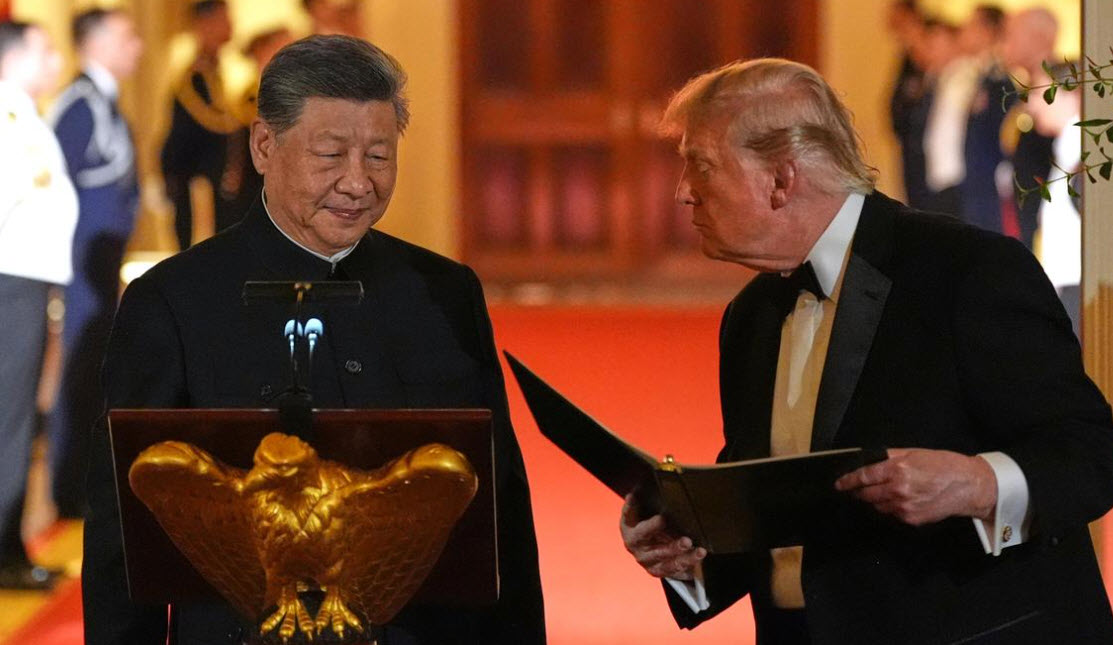
China has agreed to buy at least 10 million metric tonnes of US coal in 2027 and the same amount in 2028, adding a concrete energy commitment to a wider package reached during President Donald Trump’s talks with President Xi Jinping in Washington. The White House disclosed the coal pledge after Xi’s three-day state visit, alongside an agreement to pursue more favourable tariff treatment for $30 billion […]
By K Raveendran The meeting between Donald Trump and Xi Jinping carried all the ceremony expected when the leaders of the world’s two most powerful countries sit across the table. On artificial intelligence, however, the encounter produced little that matched either the scale of the technology’s advance or the urgency surrounding its risks. The two […]
African Union Commission Chairperson Mahmoud Ali Youssouf has urged African and Arab governments to turn longstanding political commitments into practical programmes, calling for a revitalised partnership ahead of its 50th anniversary in 2027. Addressing the 10th Ministerial Meeting of the Coordination Committee of the Africa-Arab Partnership on Friday, Youssouf said the two regions needed to move decisively from declarations to implementation. He identified completion of the Joint […]
Arabian Post Staff -Dubai Microsoft has refreshed its compact Surface Pro 12-inch and Surface Laptop 13-inch with Qualcomm’s Snapdragon X2 Plus processor, raising performance and local artificial-intelligence capacity while keeping the existing lightweight designs. The devices, announced at Qualcomm’s Snapdragon Summit, will go on sale in selected markets on October 13. The Surface Pro 12-inch starts at $1,149.99, while the Surface Laptop 13-inch starts at $1,199, placing […]
By Nitya Chakraborty Donald Trump-Xi Jinping summit on September 24 in Washington has not led to a major breakthrough in resolving the issues of bilateral trade, AI’s future, West Asia wars and Taiwan’s fate, but the visible bonhomie between the two leaders has laid the ground for a firm understanding that the world’s two biggest […]
By Ashok Nilakantan Ayers NEW YORK: September 24, 2026, the third day of the high-level General Debate of the 81st UN General Assembly, turned the UN podium into something of a geopolitical courtroom on Thursday, with Iran’s war with the United States and Israel, Gaza, terrorism, sovereignty and the credibility of the international system crowding […]
By Ashok Nilakantan Ayers NEW YORK: The second day of the 81st United Nations General Assembly saw diplomatic spotlight shifting from the opening-day clash of competing worldviews to the harder business of finding common ground — over Gaza, Ukraine, Iran, development, climate, artificial intelligence and the future of multilateral institutions. For India, this was an […]
Global investors go into Thursday’s talks between Donald Trump and Xi Jinping with one overriding demand. They want predictability, and they want it with a long runway attached. Markets have already placed a bet on a calm outcome. Wall Street’s benchmark index climbed 1.5% this week to post its best session since early August, while the main US tech index notched its first record close since June. […]
Hong Kong is seeking to raise as much as HK$20 billion through a multi-currency digital green bond sale that could become the world’s largest transaction of its kind.
The government is considering an offering of about HK$15 billion to HK$20 billion across US dollar, Hong Kong dollar, euro and offshore renminbi tranches, according to people familiar with the planned transaction. Pricing could take place as early as Monday, after fixed-income investor meetings arranged this week.
The proposed deal would exceed the scale of Hong Kong’s previous digital green bond issues and underline its push to expand tokenised capital markets alongside conventional debt issuance. Digital bonds use distributed-ledger technology to record ownership and support parts of the issuance, settlement and post-trade process.
Hong Kong has steadily increased the size and complexity of its sovereign digital bond programme. Its third digital green bond offering, completed in November 2025, raised about HK$10 billion equivalent across four currencies and attracted subscriptions exceeding HK$130 billion, according to government figures.
That transaction was then the world’s largest digital bond sale. It also incorporated tokenised central bank money, including e-HKD and e-CNY, into the primary settlement process, while using the Hong Kong Monetary Authority’s Central Moneymarkets Unit and a digital assets platform to connect tokenised infrastructure with established settlement channels.
The planned new sale would come after the Hong Kong Mortgage Corporation completed a HK$12 billion public digital bond issuance in June, setting another global size record for a digital bond at the time. The transaction included Hong Kong dollar and offshore renminbi tranches and used the same digital assets platform, demonstrating broader public-sector adoption of tokenised issuance.
Hong Kong authorities have made digital finance a central part of their capital-market strategy. Financial Services and the Treasury Secretary Christopher Hui said last week that digital bonds issued in Hong Kong accounted for about half of the global market between 2025 and the first half of 2026.
The government has also said it intends to make digital bond issuance a regular feature rather than an occasional pilot. Its 2026 policy agenda calls for further use of digital currencies in bond settlement and for tokenised money to be tested across additional stages of the bond lifecycle, including coupon payments and redemption.
Hong Kong Monetary Authority Chief Executive Eddie Yue said at the Treasury Markets Summit on Wednesday that the city was working to encourage more bond issuance, deepen offshore renminbi liquidity and modernise market infrastructure. He called for development of a more diversified, deep and digital-native bond market.
The proposed green bond would also extend Hong Kong’s sustainable-finance programme. Proceeds from government green bonds are allocated to eligible projects under its green bond framework, including areas such as green buildings, waste management, resource recovery, energy efficiency and conservation.
By the end of 2025, around US$32 billion equivalent of green bonds had been issued under the government’s sustainable bond programme in institutional, retail and tokenised formats, according to the monetary authority. The proceeds had been allocated to more than 110 green projects.
Hong Kong’s first tokenised government green bond was issued in February 2023. A second transaction in February 2024 became the world’s first multi-currency digital bond offering, raising about HK$6 billion equivalent in Hong Kong dollars, renminbi, US dollars and euros.
The 2024 transaction also broadened access by linking the Central Moneymarkets Unit with international settlement systems Euroclear and Clearstream, allowing investors to participate through familiar market infrastructure while the bonds themselves were digitally native.
For the proposed new offering, final size, tenor, pricing and tranche allocations will depend on investor demand and market conditions. The government has not yet announced final terms, and the people familiar with the discussions said the structure remained subject to change.
HONG KONG SAR – Media OutReach Newswire – 11 September 2026 – The 11th Belt and Road Summit was successfully held at the Hong Kong Convention & Exhibition Centre (September 9–10), attracting over 6,200 political and business elites from more than 70 countries and regions under the Belt and Road Initiative (BRI) and beyond, exploring co-operation opportunities for mutually beneficial development.
During the two-day event, more than 60 Memoranda of Understanding (MoUs) and bilateral co-operation agreements were witnessed. The total value of these MoUs, together with new projects and deals finalised before and during the Summit, is over US$3.1 billion.
Hosted by the Hong Kong Special Administrative Region (HKSAR) Government since 2016, the summit remains the premier business and investment platform for Hong Kong’s participation in and contribution to the BRI.
Noting that the BRI is a shared blueprint for the future, rooted in a rich history of cross-cultural collaboration, HKSAR Chief Executive John Lee said: “Hong Kong, as a place where East meets West, is where capital, talent, businesses and opportunities converge. In addition to strengthening our relations with traditional partners, Hong Kong continues to expand our network of friends along the Belt and Road.”
Under the theme “Advancing High-quality Development · Embarking on a New Journey”, business and government leaders discussed co-operation across trade and commerce, legal services, green technology, logistics, artificial intelligence and new quality productive forces.
The summit explored new co-operation landscapes and emerging opportunities in trade, investment and development across Belt & Road markets and other regions, with a special focus on ASEAN, Central Asia and the Middle East, underscoring Hong Kong’s unique role as a “super connector” and “super value-adder”.
Mr Lee has led high-level business delegations to explore opportunities in 13 Belt and Road countries across ASEAN, the Middle East and Central Asia, delivering a total of over 250 MoUs and other agreements. These covered policy coordination, trade and investment, expanded connectivity and support for companies, underlining Hong Kong’s focus on opening new markets, forming new partnerships and advancing regional co-operation.
This year’s summit featured three newly-added special chapters – the GoGlobal Chapter, Central Asia Chapter and Middle East Chapter. The GoGlobal Chapter offered a one-stop platform for exchange and matchmaking for Chinese Mainland enterprises looking to tap new markets overseas, while the Central Asia and Middle East chapters invited local officials and business leaders to share investment opportunities.
“In light of the shifting geopolitics, rising trade protectionism and the reshaping of global supply chains, businesses going global is no longer simply an option; it is an increasingly important strategy for Chinese Mainland enterprises to diversify risks, strengthen resilience and pursue new growth opportunities,” said the HKSAR Government’s Secretary for Commerce and Economic Development, Mr Algernon Yau.
A freshly integrated University Zone highlighted Hong Kong universities’ R&D strengths and their capabilities in technology commercialisation across the Belt & Road region, consolidating Hong Kong’s position as an international education hub. The Summit also introduced a debut Dialogue for Future session, promoting think-tank exchanges on “The Belt and Road Initiative and Asia-Pacific Co-operation in a Changing Global Landscape”.
Through the Project Investment Session, Belt and Road Deal-Making, and Exhibition Zones, this year’s event showcased over 300 investment projects, and arranged more than 800 one-on-one deal-making meetings, helping enterprises connect with potential partners.
Arabian Post Staff -Dubai Saudi Arabia is driving a $90 billion hotel and resort development pipeline across the Gulf and North Africa, accounting for about 110,000 of nearly 200,000 rooms planned across the region, new HVS data show. The pipeline would expand the region’s existing hotel room supply by about 27 per cent, underlining the scale of investment continuing across major tourism markets despite a more selective […]
By Ashok Nilakantan Ayers NEW YORK: External Affairs Minister S Jaishankar arrived at the 81st UN General Assembly with an unusually broad diplomatic canvas before him. In meetings with European, Ukrainian, Arab, Asian and other counterparts, India was simultaneously talking to countries that sit on opposite sides of some of the world’s sharpest geopolitical divides. […]
Microsoft has formally launched its India South Central cloud region in Hyderabad, expanding its domestic cloud footprint to four regions and positioning the new facility for large-scale artificial intelligence and mission-critical workloads.
The Hyderabad region operates across three availability zones and is designed to provide resilience for organisations running critical applications. Microsoft said the architecture is aligned with applicable regulatory and seismic requirements in India, while giving customers additional options for data residency, continuity and governance.
The company said the region is now live with a broad set of Azure services, with more cloud and AI capabilities scheduled to be added over the coming months. It is also intended to support Microsoft Foundry and other advanced AI services as capacity expands.
Puneet Chandok, president of Microsoft India and South Asia, said at the Microsoft AI Infrastructure Summit in New Delhi that the Hyderabad facility was built for advanced AI workloads and would serve as a strategic hub for Asia and the Global South. Microsoft also said its data centre regions across the country are now AI-enabled, combining specialised hardware, cooling systems and the platform infrastructure needed to run advanced models.
India South Central joins Microsoft’s Central India region in Pune, South India region in Chennai and West India region in Mumbai. Microsoft’s Azure region list identifies Hyderabad as India South Central and shows Central India as its paired region for disaster-recovery planning.
The Hyderabad expansion forms part of Microsoft’s $20.5 billion investment commitment to India, comprising a $3 billion investment announced in January 2025 and a further $17.5 billion commitment announced in December 2025. The company has linked that spending to cloud capacity, AI infrastructure and skills development.
The launch comes as data-centre investment accelerates across the country alongside demand for computing capacity needed to train and run AI systems. A Boston Consulting Group study cited by Microsoft estimates that India’s data-centre build-out could generate $140 billion to $200 billion in economic output through 2030. Microsoft said its infrastructure is intended to serve enterprises, start-ups and public-sector organisations.
Microsoft said Adani Group, Bajaj Finserv, HDFC Bank and PB Pay have signed up to use the new region. The company said local capacity would allow eligible cloud and AI workloads to be deployed closer to users and operations while supporting security, compliance and sovereignty requirements.
The region expands Microsoft’s Sovereign Public Cloud foundation in India. The company said its cloud regions provide capabilities aligned with Ministry of Electronics and Information Technology guidelines and are designed to help customers address requirements under the Digital Personal Data Protection framework, as well as sector-specific expectations from the Reserve Bank of India and CERT-In. Microsoft stressed that customers remain responsible for determining which rules apply to their workloads.
Capabilities expected to become available as services are rolled out include Azure confidential computing, Customer Lockbox and Azure Key Vault. These are intended to give organisations additional controls over data protection, encryption keys and Microsoft’s operational access, particularly for sensitive workloads.
Microsoft also highlighted the cooling design of the Hyderabad region, saying high-efficiency mechanical systems enable effectively zero water use for cooling. The company has tied the design to its broader 2030 sustainability goals, which include becoming carbon negative, water positive and zero waste.
Alongside the infrastructure launch, Microsoft said its AI-skilling programmes have reached more than 10 million people in India, halfway towards a target of 20 million by 2030. It also operates a 600-hour data centre training programme with Young India Skills University in Telangana aimed at preparing students for infrastructure and operations roles.
Jitin Prasada, Minister of State for Commerce and Industry and Electronics and Information Technology, said the new region would strengthen the digital infrastructure required to support the IndiaAI Mission and expand the capacity available to developers, enterprises and public institutions.
NANNING, CHINA – Media OutReach Newswire – 19 September 2026 – On September 17, the 23rd China-ASEAN Expo and China-ASEAN Business and Investment Summit opened in Nanning, Guangxi. With the theme of “CAFTA 3.0 Opportunities, Better Life”, the 23rd CAEXPO and CABIS was attended by Chinese and foreign leaders and important guests at the opening ceremony.
This year marks the 5th anniversary of the establishment of the China-ASEAN comprehensive strategic partnership, the inaugural year of the “Plan of Action to Implement the ASEAN-China Comprehensive Strategic Partnership (2026-2030)”, and a critical year for accelerating the implementation of the China-ASEAN Free Trade Area (CAFTA) 3.0 Upgrade Protocol following its signing.
The 23rd CAEXPO has a total exhibition area of approximately 170,000 square meters, showcasing the latest achievements of cooperation between China and ASEAN countries, as well as new business opportunities under the Version 3.0 China-ASEAN Free Trade Area (CAFTA). More than 3,400 enterprises from over 70 countries and regions are participating, with the total number of exhibitors increasing by 5.3% compared to the previous session. Timor-Leste made its debut as a formal ASEAN member state and co-organizer of the CAEXPO. This marks the first time that all 11 ASEAN countries have gathered in Nanning, Guangxi, since ASEAN’s expansion, representing a historic moment for the CAEXPO’s circle of friends. In addition to the main exhibition area at the Nanning International Convention and Exhibition Center, two other exhibition areas are set up at CAAIC Community and the Guilin International Conference & Exhibition Center.
For the first time, an ASEAN country demand exhibition is set up during the event, and an ASEAN demand list is released for the first time, focusing on showcasing projects and application needs of ASEAN countries in areas such as transportation, smart logistics, artificial intelligence applications, urban management, and park construction, creating a new one-stop precise matchmaking platform for China and ASEAN.
In addition, more than 50 economic and trade promotion activities will be held during the event, focusing on trade and investment facilitation and regional economic integration, cross-border industrial and supply chain cooperation, “Shop in China”, “Export to China”, “Invest in China”, and other topics.
Hashtag: #CAEXPO#CABIS
The issuer is solely responsible for the content of this announcement.
Dr. Julie Xing, Global Board Chairman and CEO Discusses New Pathways to High-Quality Growth with Global Business Leaders
GUANGZHOU, CHINA – Media OutReach Newswire – 17 September 2026 – Lee Kum Kee Sauce (“Lee Kum Kee”), the century-old sauce brand and the only sauce and condiments brand among this year’s Forum partners, actively participated in the 2026 Fortune Global 500 Forum, held on September 16 in Guangzhou, China. Julie Xing, Ph.D., Global Board Chairman and Chief Executive Officer of Lee Kum Kee Sauce, was invited to speak at a panel discussion and to attend the Most Powerful Women (MPW) Breakfast, joining other leading global business leaders to explore the key pathways for enterprises to achieve sustainable growth.
Dr. Julie Xing, Global Board Chairman and Chief Executive Officer of Lee Kum Kee Sauce, speaks at the panel discussion of the 2026 Fortune Global 500 Forum, exchanging insights with industry leaders.
Under the theme “The New Growth Equation”, this year’s forum brought Dr. Xing and three other industry leaders, including Pingyi Huang, Senior Vice President of Shandong Weiqiao Pioneering Group Co., Ltd.; Weiming Xiang, Vice President, GE Aerospace and President, GE Aerospace Greater China; and John Qu, Senior Partner, McKinsey & Company, for a panel discussion titled “The Invisible Moat: Revaluing Soft Power and Sustainability”. Moderated by Wei Yue, Senior Editor at Fortune China, the discussion explored what truly constitutes long-term advantages that can withstand cycles amid rapid technological iteration and intensifying competition. Topics spanned brand trust and consumer mindshare in consumer goods, data insights and organizational transformation in the AI era, and the pathways and stages of globalization for Chinese enterprises.
During the panel discussion, Dr. Xing points out that a true moat is a 360-degree, multi-dimensional structure built on product quality, consumer experience, emotional value, and innovative scenarios. (Photo credit: Fortune Global 500 Forum)
“In an era where almost everything can be replicated, consumers’ mindshare and trust cannot,” Dr. Xing said during the discussion. “The real moat is not just the product itself — it is a 360-degree, multi-dimensional moat built on product quality, consumer experience, emotional value and innovative scenarios.” She added that AI is bringing disruptive changes from consumer insights to organizational structure, and that future-ready organizations must embrace a flatter structure powered by AI agents, redirecting freed-up resources toward strategic decision-making and long-term value creation.
On the topic of Chinese enterprise globalization, Dr. Xing shared a three-stage pathway from product export to local manufacturing to glocalization, emphasizing that true globalization means deeply understanding local consumers and serving local markets with local insights.
Dr. Julie Xing, named to the 2026 Fortune China MPW list, attends the MPW Breakfast and shares her thoughts on corporate competitiveness in the AI era. (Photo credit: Fortune Global 500 Forum)
During the Forum, Dr. Xing was invited to share her insights at the MPW Breakfast themed “Decision-Making Power in the Age of Efficiency”, where she joined leaders from across industries to discuss opportunities and challenges for businesses in the new era. She highlighted that while AI enhances operational efficiency, human judgment, leadership and long-termism remain more critical competitive advantages.
As a recipient of the 2026 Fortune China’s MPW list, Dr. Xing has earned this recognition for three consecutive years. Launched in 2010, the MPW list is regarded as one of the most representative rankings of women business leaders in China.
The Fortune Global 500 Forum this year brought together representatives from over 350 leading global companies, academic institutions, and business leaders worldwide. Discussions focused on topics including artificial intelligence, global supply chain transformation, sustainable development, and opportunities in emerging markets.
Looking ahead, Lee Kum Kee will continue to uphold its commitment to quality and innovation. Alongside driving business growth, the company will further deepen its sustainability practices, nurture talent, and enhance corporate governance, working with all stakeholders to forge new pathways to high-quality growth. Hashtag: #LeeKumKee #LKK
The issuer is solely responsible for the content of this announcement.
About Lee Kum Kee Sauce
Lee Kum Kee Sauce is the global gateway to Asian culinary culture, dedicated to promoting Chinese culinary culture worldwide. Since 1888, it has brought people together over joyful reunions, shared traditions and memorable meals. Beloved by consumers and chefs alike, Lee Kum Kee Sauce’s range of more than 300 sauces and condiments sparks creativity in kitchens everywhere, inspiring professional and home chefs to experiment, create and delight. Headquartered in Hong Kong, China and serving over 100 countries and regions, Lee Kum Kee Sauce’s rich heritage, unwavering commitment to quality, sustainable practices and “Constant Entrepreneurship” combine to enable superior experiences through Asian cuisine for people worldwide. For more information, please visit www.LKK.com.
About Fortune
Fortune is the premier global media company for global business leaders, built on a 96-year-old legacy of trusted, award-winning journalism. Independently owned, Fortune tells the story of business, spanning legacy companies to the world’s new generation of innovators. Fortune measures corporate performance through rigorous benchmarks, and holds companies accountable, in regions around the world. Its iconic rankings include Fortune 500, Fortune Global 500, Most Powerful Women, and World’s Most Admired Companies. Fortune builds world-class communities by convening industry thought leaders for exclusive summits and conferences, including the Fortune Global Forum, Fortune Brainstorm Tech, and Fortune Most Powerful Women. For more information, visit fortune.com.
China has pushed back against calls from leading US technology figures to slow frontier artificial intelligence development, sharpening differences over safety, access to advanced chips and technological competition before President Donald Trump and President Xi Jinping meet in Washington next week.
Foreign Ministry spokesman Guo Jiakun said on Monday that artificial intelligence was a consequential technology for humanity and should be developed openly and inclusively. Asked about calls from Dario Amodei, Sam Altman and Elon Musk for companies to slow frontier development, Guo warned that “fear-mongering, confrontation and vicious competition” would hinder sound global AI governance.
The response came as Washington’s debate over AI safety widened into a strategic argument about China. Anthropic chief executive Amodei has urged tougher safeguards for advanced systems and has argued that a Chinese lead in frontier AI could create national security risks for the United States. OpenAI chief executive Altman and Musk have also called for stronger precautions as systems become more capable.
Trump, however, has resisted proposals that could materially slow US development. He said this week that America already had tools to police the industry and stressed the importance of maintaining leadership over China. House Speaker Mike Johnson similarly rejected a moratorium, saying any pause could hand Beijing a competitive advantage and create national security risks.
The dispute places AI governance among the issues likely to shadow the Trump-Xi meeting scheduled for September 24 in Washington. The leaders are also expected to confront trade disputes, semiconductor restrictions and China’s controls on rare-earth exports, all of which affect the broader contest over computing capacity and advanced manufacturing.
Treasury Secretary Scott Bessent is due to meet Vice-Premier He Lifeng before the summit.
China has presented a different framework for AI governance, emphasising access, development and multilateral rules while opposing measures it regards as technological containment. At the BRICS summit this month, Xi proposed an open-source and inclusive AI initiative and said China would help establish a BRICS AI open-source community and digital ecosystem platform.
Beijing has nevertheless acknowledged the risks posed by increasingly powerful systems. Chinese officials have called for stronger global governance and risk awareness, while arguing that safety should not become a justification for blocking technological diffusion. The government has also supported the establishment of the World Artificial Intelligence Cooperation Organization, whose founding agreement was signed in Shanghai in July by 29 countries.
The argument over safety is closely linked to semiconductor controls. Washington has maintained restrictions on the export of advanced computing technology to China, although the Commerce Department in January shifted applications for Nvidia H200, AMD MI325X and comparable chips to case-by-case review under specified security conditions. Beijing has repeatedly criticised US technology restrictions as discriminatory and has threatened countermeasures when Chinese companies are targeted.
China’s Commerce Ministry last week also challenged a US cybersecurity advisory accusing China-based AI companies of using distillation campaigns against American models. The ministry said China was prepared for an intergovernmental AI dialogue with the United States but would respond if Washington used such allegations to suppress Chinese firms.
That exchange underscored the difficulty of separating AI safety from the strategic rivalry. US officials and technology executives increasingly frame advanced models as both commercial assets and national security capabilities, while China portrays broad restrictions as attempts to preserve US dominance.
There are areas of overlap. Both governments have said advanced AI presents risks requiring governance, and the two sides have agreed to launch an intergovernmental dialogue on the technology. Informal discussions among researchers and policy specialists have also continued, though official positions remain far apart on access to chips, model controls and the balance between safety and development.
The September 24 summit follows Trump’s May visit to China, when the two leaders agreed to pursue what the White House described as strategic stability and set up new bilateral trade and investment mechanisms. Artificial intelligence was not the centrepiece of those agreements, but it has since moved higher on the bilateral agenda as concerns over model capabilities, export controls and industrial competition have intensified.
By TN Ashok The 18th BRICS Summit, held at Bharat Mandapam in New Delhi on September 12–13, 2026, was never going to escape Washington’s shadow — and it didn’t. Even as Prime Minister Narendra Modi steered eleven member states toward a unanimously adopted New Delhi Declaration that pointedly avoided naming the United States, President Donald […]
HONG KONG SAR – Media OutReach Newswire – 15 September 2026 – The Hong Kong University of Science and Technology (HKUST) welcomed H.E.Mr. Abdulla Nigmatovich ARIPOV,Prime Minister of the Republic of Uzbekistan, for an official campus visit on September 10, 2026, making HKUST the sole university included in his Hong Kong itinerary. The high-level visit underscored the growing partnership between Uzbekistan and HKUST, with a particular focus on advancing collaboration in higher education, research, innovation, and talent development.
H.E. Mr. Abdulla Nigmatovich ARIPOV, Prime Minister of the Republic of Uzbekistan (seventh right, middle row); Dr. CHOI Yuk-Lin, Secretary for Education of the HKSAR Government (seventh left, middle row); Prof. Harry SHUM, Council Chairman of HKUST (sixth left, middle row); and Prof. Nancy IP, President of HKUST (sixth right, middle row), pose for a photo with students from Uzbekistan during the Prime Minister’s official visit to HKUST.
The Uzbek delegation of 24 members was warmly received by Dr. CHOI Yuk-Lin, Secretary for Education of the HKSAR Government; Prof. Harry SHUM, Council Chairman of HKUST; Prof. Nancy IP, President of HKUST, and senior university leaders.
In a high-level meeting with the University’s leadership, Prime Minister Aripov engaged in in-depth discussions on higher education development, artificial intelligence (AI), technological innovation, talent cultivation, research commercialization, and opportunities for closer collaboration between Uzbekistan and HKUST. The exchange also explored pathways for strengthening academic partnerships, expanding student and faculty mobility, and supporting Uzbekistan’s ambitions in developing a knowledge-based economy and emerging technology sectors.
Prime Minister Aripov said, “We are deeply impressed by HKUST’s achievements and its ability to translate cutting-edge research and innovation into practical industrial applications. With over 7,000 Uzbek students pursuing higher education across China, we see tremendous potential to strengthen our academic ties with Hong Kong and prioritize HKUST as a key destination for our students. As both Uzbekistan and HKUST mark their 35th anniversaries, establishing this partnership presents a symbolic and meaningful opportunity to expand educational excellence and global reach together.”
Prof. Shum said, “We are deeply honored to welcome Prime Minister Aripov and the distinguished Uzbek delegation to HKUST during the Belt and Road Summit. As a young, globally minded university celebrating our 35th anniversary, HKUST serves as a vital super-connector—bringing together diverse talent from over 80 nationalities. Building on our foundation with the El-Yurt Umidi Foundation, this visit marks a pivotal step in deepening ties between Hong Kong and Central Asia, opening up new horizons for collaborative growth and youth development along the Belt and Road.”
President Ip added, “We were delighted to engage in a highly productive and forward-looking dialogue with Prime Minister Aripov and his delegation. Uzbekistan’s strategic priorities in AI, robotics, fintech, and cybersecurity align closely with HKUST’s research strengths and advanced facilities. AI and medical science, in particular, offer promising areas for collaboration and could serve as important starting points for future joint initiatives. Beyond educational exchanges, we see tremendous opportunities to deepen cooperation in research, innovation, talent development, and knowledge transfer. We look forward to visiting Uzbekistan and working closely with our partners to co-create impactful solutions, nurture future-ready talent, and contribute to sustainable economic and technological development.”
HKUST also signed a Memorandum of Understanding (MOU) with the Ministry of Higher Education, Science and Innovation of the Republic of Uzbekistan. The agreement establishes a framework for educational collaboration and promotes excellence and innovation in teaching, learning, and research. Witnessed by Prime Minister Aripov, Dr. Choi, and Prof. Shum, the MOU was signed by President Ip and Mr. Salomov Uktam RAHIMOVICH, Deputy Minister of Higher Education, Science and Innovation of the Republic of Uzbekistan.
The Prime Minister and his delegation toured the HKUST Von Neumann Institute, where they learned about the University’s world-leading research and innovation capabilities in AI. The delegation was introduced to HKUST’s latest advancements in next-generation multimodal AI systems, robotic intelligence technologies, AI-driven 3D understanding and generation, and large-scale healthcare models, as well as their potential applications in addressing societal and industrial challenges. During the visit, the delegation met with 31 Uzbek students studying in Hong Kong, including 14 undergraduates currently enrolled at HKUST, to learn about their academic experiences and life in the city.
The issuer is solely responsible for the content of this announcement.
About The Hong Kong University of Science and Technology
The Hong Kong University of Science and Technology (HKUST) (https://hkust.edu.hk/) is a world-class university renowned for its innovative education, research excellence, and impactful knowledge transfer. Adopting a holistic and interdisciplinary approach to education, HKUST was ranked 33rd globally and 6th in Asia in the QS World University Rankings 2027 and QS Asia University Rankings 2026, respectively. It was also ranked 20th worldwide in the Times Higher Education Sustainability Impact Ratings 2026, placing first among universities in Hong Kong and the Chinese Mainland for the third consecutive year. Eleven HKUST subjects were ranked among the world’s top 50 in the QS World University Rankings by Subject 2026. In addition, HKUST’s Computer Science discipline, which encompasses areas such as artificial intelligence and machine learning, was ranked No. 1 in Hong Kong for the tenth consecutive year in the Times Higher Education World University Rankings by Subject 2026. Its graduates are highly competitive, consistently ranking among the world’s top 30 most sought-after employees. In research and entrepreneurship, more than 80% of HKUST’s research was rated “world-leading” or “internationally excellent” in the University Grants Committee’s Research Assessment Exercise 2020. As of July 2026, HKUST members had founded more than 2,000 active start-ups, including 11 unicorns and 22 successful exits through initial public offerings (IPOs) or mergers and acquisitions (M&A).
BRICS leaders have placed development priorities of emerging economies at the centre of their New Delhi agenda, endorsing stronger representation for the Global South while advancing cooperation on trade, technology, finance and sustainable growth.
Chinese President Xi Jinping used the 18th BRICS Summit to argue that countries should pursue development paths suited to their own national conditions, a message that overlapped with the summit’s broader emphasis on policy autonomy, inclusive growth and reform of global institutions.
Addressing the first leaders’ session on September 12, Xi marked 20 years of BRICS cooperation and said members had strengthened themselves through unity while preserving independence in choosing their economic and social models. He described BRICS as an increasingly important platform for emerging markets and developing countries.
The summit’s New Delhi Declaration gave that theme wider institutional form. Leaders called for a more representative international order, greater participation by developing countries in global decision-making and reforms to institutions including the United Nations, World Trade Organization and international financial architecture.
The declaration also reflected the diversity within the expanded grouping. Rather than prescribing a single model of development, BRICS leaders stressed national circumstances, differing capacities and the need for policy space, particularly in areas such as energy transition, industrialisation and climate action. That approach broadly matched Xi’s argument that development strategies should reflect domestic conditions rather than external templates.
Xi sought to extend the idea into technology policy. He proposed an initiative on artificial intelligence-enabled industrialisation, deeper cooperation in research and applications, and stronger industrial and supply-chain links. China also promoted open-source AI collaboration and international platforms intended to improve access to emerging technologies for developing economies.
Other leaders framed similar priorities through their own national perspectives. Prime Minister Narendra Modi emphasised resilience, innovation, cooperation and sustainability, the four themes of India’s 2026 BRICS chairship, and called for solutions developed within the grouping to serve a wider range of developing countries. He also urged members to translate summit commitments into practical programmes.
BRICS members agreed on measures spanning digital cooperation, food and energy security, health, trade facilitation and the use of local currencies in cross-border transactions. The declaration supported stronger payment connectivity while stopping short of endorsing a common BRICS currency.
The economic agenda also underlined the practical test facing the grouping. Members backed use of national currencies in trade and investment, stronger cooperation through the New Development Bank and efforts to improve financial resilience. Such measures are intended to widen financing options for developing economies without committing members to a single monetary framework or common currency.
The expanded bloc now brings together countries with sharply different political systems, strategic alignments and economic structures. That breadth gives BRICS a larger claim to represent developing-country concerns, but it also limits how far members can converge on detailed policy prescriptions. Analysts have noted differences over whether the group should remain primarily an economic and development forum or assume a stronger geopolitical role.
Those tensions were visible alongside the development agenda. Leaders opposed protectionism and unilateral economic measures, supported a stronger multilateral trading system and called for reforms that would increase the voice of developing countries. At the same time, members avoided turning the summit into a unified ideological platform, relying instead on consensus language broad enough to accommodate competing interests.
Xi’s second summit intervention on September 13 placed a “people-centred” development philosophy within a wider call for Global South cooperation. He urged progress on the UN Sustainable Development Goals, improvements to global climate governance and a consensus-based framework for governing artificial intelligence.
China’s approach also carries strategic implications. Beijing has increasingly used BRICS and other multilateral forums to promote its views on development, sovereignty and global governance. Some members share its criticism of unequal representation in international institutions, while others remain cautious about allowing BRICS to become identified with any single country’s geopolitical agenda.
Arabian Post Staff -Dubai Dubai will host the third Quantum Innovation Summit from September 28 to 30, bringing government bodies, researchers, technology companies and investors together as the UAE expands work on quantum computing, secure communications and post-quantum cybersecurity. The event will be held at the Grand Hyatt Dubai Conference & Exhibition Centre and is hosted by the UAE Cyber Security Council for a second consecutive year, […]




 https://hkypga.com/
 https://www.facebook.com/hkyproadvocacy?locale=sk_SK
 https://www.instagram.com/gypowerhouse/




 https://www.linkedin.com/company/brand-hong-kong/
 https://x.com/Brand_HK/