News related to
Summit

China is reportedly on the brink of a significant policy shift that may see the introduction of yuan-backed stablecoins, a move designed to bolster the international standing of its currency. With global financial markets increasingly leaning towards digital currencies, Beijing’s latest plan could mark a pivotal moment in the international adoption of the yuan.

The Chinese government is set to consider a proposal to allow the issuance of stablecoins pegged to the yuan, which would aim to challenge the dominance of the US dollar and its associated stablecoins in global markets. The proposal, expected to be reviewed by the State Council, reflects Beijing’s ongoing strategy to expand the yuan’s reach beyond its traditional borders, positioning it as a competitor to the greenback.

As part of its broader push for digital currency integration, China could allow key financial hubs such as Hong Kong and Shanghai to be the first to implement the new stablecoin systems. These cities are already at the forefront of China’s broader efforts to foster the growth of digital currencies, and the stablecoin initiative could further solidify their roles as global financial centres.

Discussions surrounding the adoption of yuan-backed stablecoins are expected to feature prominently during high-level meetings, including the upcoming Shanghai Cooperation Organisation Summit. This gathering will provide an important platform for Chinese leaders to outline their vision for the future of digital currencies, while signalling their intent to shape international policy on the use of stablecoins.

The planned move is in direct contrast to China’s earlier stance on cryptocurrency regulation. In recent years, the country has imposed strict measures on the use of private cryptocurrencies, citing concerns about financial stability and capital outflows. The proposed policy reversal regarding stablecoins marks a dramatic shift in strategy, moving from a position of stringent control to one of potential global leadership in digital currency innovation.

Stablecoins, which are digital currencies pegged to stable assets like fiat currencies or commodities, have become increasingly popular among investors seeking to minimise volatility. In particular, US dollar-backed stablecoins have grown exponentially, with major players like Tether and USD Coin dominating the market. The success of these assets has prompted China to explore ways in which the yuan can gain a similar foothold in the emerging digital economy.

By introducing a yuan-backed stablecoin, China would not only be promoting its digital currency but also attempting to influence how digital currencies are adopted globally. The move could significantly shift the dynamics of international trade and finance, particularly in Asia. As countries continue to look for alternatives to US dollar-dominated systems, China’s push for a digital yuan is increasingly seen as a strategic move to improve its influence over global financial markets.

Key stakeholders in the financial sector have already begun to take notice of China’s evolving stance on digital currencies. Financial institutions operating in Hong Kong and Shanghai are expected to play an integral role in the rollout of yuan-backed stablecoins, with implications for both domestic and cross-border transactions. Additionally, blockchain technology providers are closely monitoring developments in this space, anticipating a surge in demand for stablecoin-related infrastructure as China accelerates its digital currency ambitions.

The anticipated approval of yuan-backed stablecoins would also contribute to the development of China’s central bank digital currency, the digital yuan. While the digital yuan has already been tested in select regions, the integration of stablecoins would expand the use of digital yuan products, making it more accessible to international markets. This could significantly enhance the usability of China’s digital assets, providing a stable, digital alternative to traditional fiat currencies for global trade and investment.

At the same time, China’s global competitors, particularly the United States and the European Union, are likely to view this move with caution. While the yuan-backed stablecoin could disrupt traditional financial systems, it could also prompt a race to establish new regulatory frameworks and digital currencies to safeguard the dominance of the US dollar and the euro in global markets.

The Kerala Aviation Summit has commenced in Kochi, bringing together industry leaders, policy makers, and investors to discuss the future of the aviation sector in the region. The event, inaugurated by Kerala’s Chief Minister, marks a significant step in the state’s efforts to position itself as a key player in India’s aviation industry.

Held at the state-of-the-art convention centre, the summit aims to attract both domestic and international investments while fostering innovation and sustainable growth in aviation. This year’s theme focuses on investment opportunities, the impact of new technologies on air travel, and the evolving aviation policy landscape. The event is expected to serve as a platform for discussion on the challenges and opportunities faced by the aviation sector, particularly in the context of global economic shifts and environmental concerns.

State authorities are keen to highlight Kerala’s strategic advantages for aviation growth. With its extensive coastline and proximity to international shipping routes, the state has long been an important transit point for both passengers and cargo. In recent years, Kerala’s airports have seen significant upgrades, positioning them to handle increased passenger traffic. The summit’s discussions will likely explore ways to further leverage these infrastructure improvements, including the role of private-public partnerships in expanding airport capacity and enhancing services.

Aviation experts gathered at the summit emphasised the need for a more robust policy framework that supports both air travel expansion and environmental sustainability. Experts have pointed out that despite the growth in air traffic, India’s aviation sector continues to face challenges, including fuel price volatility, regulatory hurdles, and a shortage of skilled workforce. The summit will feature panel discussions on these issues, with a particular focus on how Kerala can address these challenges to remain competitive in the rapidly evolving aviation landscape.

The event is also expected to showcase emerging technologies that are shaping the future of air travel. Innovations in electric and hybrid aircraft, along with developments in drone technology, will be a key talking point. Aviation companies and technology firms are increasingly exploring these new technologies as part of efforts to reduce the carbon footprint of the aviation industry. Kerala’s government is keen on integrating these advancements into its aviation strategy, aiming to create a sustainable aviation ecosystem that can meet the demands of a growing population while minimising environmental impact.

The summit is anticipated to have far-reaching effects on Kerala’s economy, with key players from the aviation industry looking to expand their presence in the state. This could include the establishment of new flight routes, further investment in airport infrastructure, and the growth of aviation-related businesses. Additionally, experts believe that the state’s focus on tourism and infrastructure will serve as a catalyst for more investment in regional airports, providing a vital boost to local economies.

The Kerala Aviation Summit also provides a platform for the state government to promote its aviation policies. In recent years, Kerala has introduced several initiatives aimed at reducing the cost of air travel, such as subsidies for airlines operating in regional airports. The state’s aviation policy is expected to evolve in response to emerging trends and changing market conditions, including growing demand for air travel in smaller cities and towns.

While much of the discussion will centre around investment, infrastructure, and policy, the summit will also highlight the need for enhanced training and education in the aviation sector. As the industry grows, there is a growing demand for a skilled workforce, from pilots and ground staff to engineers and air traffic controllers. The Kerala government is already working to meet this demand, with initiatives to develop training centres and promote aviation-related courses in local educational institutions.

By Nitya Chakraborty India-China political relations have started improving giving all the indications that the leaderships of the two countries with the largest population in the world, are ready for building stable relationship after an uneasy period of five years since the Galwan killings on the border in 2020 in which 20 Indian soldiers lost […]

China has lifted export restrictions on rare earth minerals and fertilisers to India, easing supply pressures across high-tech, agricultural, and infrastructure sectors. The curbs, linked to national security concerns amid lingering border tensions, were rescinded following high-level diplomacy. Indian supplies of essential rare earth magnets—vital for electronics, renewable energy, and defence manufacturing—along with fertilisers and tunnel-boring equipment, are now poised to increase.

Lines of communication between the two capitals have reopened. During the latest India-China border talks, Chinese officials pledged to address New Delhi’s urgent demands, including expedited access to these items. Rare earth exports to India were previously down by 58 per cent compared to January levels, signalling a serious disruption for industries dependent on these critical inputs.

Manufacturing sectors—spanning automobiles, electronics, renewable energy, and defence—stand to benefit directly. These industries were particularly vulnerable due to India’s heavy reliance on Chinese rare earths and fertilisers; the absence of domestic magnet production compounded the supply gap despite India holding the world’s fifth-largest rare earth reserves.

Officials confirmed that China has begun implementing the export changes, with shipments of fertilisers, rare earth magnets, and tunnel-boring machines already underway. The commitments were made by a visiting Chinese Foreign Minister during discussions with Indian counterparts, setting the stage for smoother deliveries ahead of an upcoming high-level summit.

This trade shift follows months of disruption. Earlier in the year, China imposed stringent licensing requirements and delays on rare earth exports—especially seven heavy rare earth elements—affecting global supply chains. That move had compounded export issues affecting not only India but also manufacturers in Europe and the United States, underlining the strategic importance of rare earth materials.

On the fertiliser front, China had halted exports of specialty fertilisers for several months, causing concern across India’s high-value agriculture sector. Indian agribusinesses endured supply constraints as processes such as inspections and inspections delays were used to restrict deliveries. India responded with a resilient mix of domestic ramp-ups, diversification of import sources, and building strategic stockpiles—mitigation that has now yielded tangible benefits.

Diplomatic analysts interpret China’s decision as a calibrated move toward stabilising bilateral trade, particularly ahead of expected discussions at an international summit. While the easing of restrictions is welcomed, longstanding geopolitical mistrust and unresolved border issues suggest that the normalization remains cautious. This trade reprieve signals a pragmatic shift, but not a full thaw in relations.

India, meanwhile, is accelerating its critical minerals strategy. Domestic initiatives—including exploration incentives, production-linked schemes, and global partnerships—are being fast-tracked to reduce strategic dependencies. The National Critical Mineral Mission, launched earlier this year, continues to mobilise efforts across the supply chain, while overseas resource acquisitions and collaborations are gaining momentum.

LUSAKA, Zambia — The largest climate adaptation event of the year wrapped up in Lusaka, where world leaders, policy makers, and experts issued a strong appeal for increased financial commitments to tackle the accelerating impacts of climate change. Hosted in Zambia, the UN Climate Adaptation Expo served as a key platform for discussing strategies to protect vulnerable populations and economies from the worsening climate crisis. The Expo, […]

By Nantoo Banerjee Come August 27, the picture of the Indo-US trade may show a considerable change. India’s merchandise exports to the US will be generally subjected to a 50 percent import tax from that date. A few categories, including drugs and pharmaceuticals, have been exempted. The reason advanced by US President Donald Trump for […]

PUTRAJAYA, MALAYSIA – Media OutReach Newswire – 18 August 2025 – Islamic Tourism Month (ITM) 2025 returns for its fourth and most exciting edition yet, inviting Malaysians and global travelers to embark on a journey of rediscovery through the rich lens of Muslim-Friendly Tourism and Hospitality (MFTH). Organised by the Islamic Tourism Centre (ITC), ITM 2025 takes place from 18 August to 30 September, showcasing the beauty, […]

Advertisements
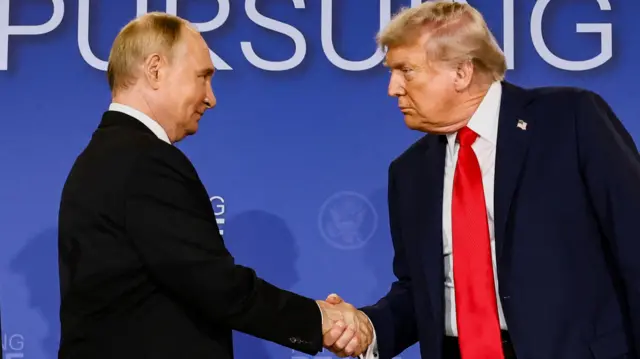
By Ashok Nilakantan Ayer ANCHORAGE, ALASKA: The much-anticipated summit between U.S. President Donald Trump and Russian President Vladimir Putin in Anchorage, Alaska, billed as a potential turning point in the grinding Ukraine war, ended without a ceasefire agreement, and without the celebratory luncheon that White House aides had originally pencilled into the schedule. After the […]

Greenlogue/AP The United Arab Emirates and Senegal have formalised a significant partnership aimed at addressing Africa’s escalating water and sanitation challenges. This collaboration, announced during the 2025 UN Ocean Conference, underscores a shared commitment to sustainable water management and climate resilience across the continent. At the heart of this initiative is the establishment of an integrated water-ocean management framework, designed to harmonise freshwater and marine ecosystems. This […]

Nigeria’s push toward becoming a $1 trillion economy by 2030 is gaining momentum, driven by a growing tech ecosystem supported by both government initiatives and global tech giants. The country’s digital economy is set to play a central role in this ambitious vision, with significant emphasis on talent development and digital infrastructure. The inaugural edition of GITEX NIGERIA, scheduled for 1-4 September 2025 in Abuja and Lagos, […]

Oil prices held steady after a slight decline in thin trading, with market participants awaiting a critical meeting between US and Russian leaders. Global benchmark Brent crude remained above $66 per barrel, while West Texas Intermediate hovered around $63.

The modest drop in prices, which amounted to a 0.8% decrease in the previous session, marked a quiet period in the market as traders refrained from making significant moves. Investors are now looking ahead to upcoming discussions between US Secretary of State Marco Rubio and Russian Foreign Minister Sergey Lavrov. These talks are expected to set the stage for a high-stakes summit between President Joe Biden and Russian President Vladimir Putin, scheduled for later this week.

The ongoing volatility in oil markets, coupled with geopolitical uncertainty, has contributed to the recent fluctuation in prices. Despite this, oil has largely remained above the $60 per barrel mark, as tightening supplies and ongoing tensions in key production regions continue to support price levels.

Analysts are paying close attention to the diplomatic developments between the US and Russia, which could have broader implications for the energy sector. Market sentiment has been influenced by both nations’ roles as major players in global energy production and their influence on decisions within organisations such as OPEC+.

The summit will centre around various issues, including security concerns and energy policies. With both nations holding significant sway in global oil production, the discussions could have far-reaching consequences for the market. A breakthrough or escalated tension could prompt either a surge or a dip in oil prices depending on the outcome of the talks.

Investors are also looking at other global factors that could sway oil prices. In the US, the energy industry is continuing to recover from the impacts of the pandemic, with some analysts forecasting a strong rebound in demand as economies continue to reopen. However, the overall uncertainty surrounding economic recovery, inflation concerns, and ongoing supply chain issues are making the market particularly sensitive to external events.

OPEC+, the alliance of oil-producing nations, has played a significant role in stabilising prices in the past year. Its production cuts, alongside the gradual return of demand, have helped lift oil prices from the lows seen in 2020. As the group navigates production decisions and adapts to the changing landscape, it has become a crucial player in shaping the trajectory of global oil markets.

In addition to geopolitical tensions, the market is also contending with shifting dynamics in energy consumption. The growing push for renewable energy and the evolving role of electric vehicles are reshaping demand forecasts. With governments around the world pledging to reduce carbon emissions and transition towards greener energy sources, there is a growing expectation that long-term demand for fossil fuels may face pressure. This evolving energy landscape will inevitably impact the future of oil markets.

Despite these broader trends, short-term market activity is heavily influenced by supply-demand imbalances, particularly in the wake of global events. As the US and Russia prepare for their talks, traders will continue to watch for any signals of change in the balance of power within the energy sector. A shift in policy or a sudden geopolitical event could have immediate and lasting effects on oil prices.

SINGAPORE – Media OutReach Newswire – 12 August 2025 – As scam networks across Southeast Asia grow more coordinated and transnational, the Global Anti-Scam Alliance (GASA) is responding with counterforce and progress. This year’s Global Anti-Scam Summit (GASS) Asia 2025 will be held on 2-3 September in Singapore and will convene over 1,200 industry leaders, policymakers, and enforcement agencies from over 60 countries (physical and online) to […]

Brand update brings to life its global purpose and positioning as a unified group of brands MANILA, PHILIPPINES – Media OutReach Newswire – 23 July 2025 – The Jollibee Group, one of the world’s fastest-growing restaurant companies, has officially launched its evolved corporate brand, marking a major milestone in aligning the company’s global growth strategy with its long-standing values and vision. Corporate Brand Evolution. Fresh from introducing […]

SINGAPORE – Media OutReach Newswire – 11 August 2025 – Energea has debuted its highly anticipated tech collection, perfect for travel and everyday use, now available in Gunmetal, Cobalt, and Champagne. Leading the charge is the MagDuo Arc, which recently clinched the Best Product award in the Mobile Products category at Channel Summit META. Power meets versatility. The full range of Energea tech gear in Gunmetal, Cobalt […]

By Nitya Chakraborty The stage is finally set. U.S. President Donald Trump will be meeting the Russian President Vladimir Putin in Alaska in USA on August 15 to discuss the Ukraine war issue and bring about a settlement for facilitating a long term solution. If a framework of a solution is reached, President Putin will […]
By Nitya Chakraborty The additional 25 per cent tariff on Indian exports to the USA announced by President Donald Trump to be effective from August 27, has led to an intense ideological and political battle within RSS, the BJP as also among the industrialist friends of Prime Minister Narendra Modi who are active members of […]

The Open Source Summit India 2025 marks a significant milestone for Linux Foundation India, celebrating a year of growth, new partnerships, and a strengthened commitment to the country’s burgeoning open-source ecosystem. With a focus on key sectors such as agriculture, finance, manufacturing, and AI, the foundation is poised to play a pivotal role in advancing digital transformation across multiple industries. The summit, held in Bengaluru, serves as […]

LANKAO, CHINA – Media OutReach Newswire – 5 August 2025 – From July 23 to 27, the Shanghai Cooperation Organization Media and Think Tank Summit took place in Zhengzhou, Henan Province. Themed Upholding the “Shanghai Spirit” to Build a More Beautiful Home, the summit brought together leading media outlets, prominent think tanks, senior government officials and diplomatic envoys from SCO member states, observer states and dialogue partners, […]

By Nitya Chakraborty It is not a cliché to say that our powerful Prime Minister Narendra Modi’s moment truth has arrived after 11 years of ruling the country as the unchallenged leader. The 25 per cent tariff hike on Indian exports announced by the United States President Donald Trump on Wednesday and taking effect from […]

LUOYANG, CHINA – Media OutReach Newswire – 1 August 2025 – From July 23 to 27, the Shanghai Cooperation Organization Media and Think Tank Summit was held in Zhengzhou, Henan Province. On July 26, over 100 guests embarked on a field visit to Luoyang, immersing themselves in the vitality and pulse of this millennium-old ancient capital. Site Museum of Dingding Gate As a pivotal cradle of Chinese […]

KAIFENG, CHINA – Media OutReach Newswire – 31 July 2025 – Recently, the Shanghai Cooperation Organization Media and Think Tank Summit was held in China’s Henan Province, with guests visiting the ancient capital of Kaifeng. They came from over 20 countries and regions, including Russia, Kazakhstan, Pakistan, Egypt, and Nepal. Immersed in the cultural legacy and vibrant development of this city that served as the capital of […]

Concerns over the soaring costs of accommodations for the COP30 climate summit have led the United Nations to call for urgent talks. Held in Brazil later this year, the event’s sky-high prices threaten to exclude delegates from poorer nations, raising alarms within the international community about equity and accessibility at the high-profile climate negotiations. The meeting, convened by the UN’s climate office, was prompted by reports from […]

M. A. Hossain When Dmitry Medvedev, former Russian president and current deputy chair of Russia’s Security Council, addressed the Liberation Movements Summit in South Africa on July 27, his message was as predictable as it was provocative: Russia stands with Africa in the fight against neocolonialism and envisions a multipolar world. Coming from a Kremlin official, this claim may appear noble at first glance—until one examines the underlying logic, […]

OPEC+ is expected to maintain its current strategy on oil production levels when the Joint Ministerial Monitoring Committee convenes on Monday, despite shifting market conditions. Key delegates from the oil-producing coalition indicated that there will be no immediate changes to the group’s decision to increase output in August, which will see a rise of 548,000 barrels per day.

The JMMC, comprising high-ranking officials from the Organization of the Petroleum Exporting Countries and its allies, including Russia, is scheduled to meet at 1200 GMT. The outcome of this meeting has drawn considerable attention as global oil markets adjust to fluctuating demand patterns and supply conditions.

Several OPEC+ delegates, speaking anonymously, stated that the group is unlikely to alter its course, with the decision to gradually increase production still firmly in place. “There is a consensus that the demand recovery during the summer months is adequate to absorb the additional supply,” one source said. “The market dynamics currently seem to support this increase, and we are committed to regaining lost market share.”

Since the production cuts agreed upon in 2020 to counter the downturn caused by the COVID-19 pandemic, OPEC+ has been slowly increasing its oil output in a phased approach. However, with global economies on a recovery path, the group is under increasing pressure to balance its output against rising demand, particularly in regions such as Asia and North America.

While the rise in demand, particularly during the summer driving season, is helping to absorb the additional barrels, concerns have been voiced over the potential for global oil prices to soften. The overall impact of geopolitical tensions, the economic slowdown in key markets, and the risk of higher interest rates remain points of consideration for the group. However, OPEC+ delegates have indicated that their immediate focus will be on ensuring market stability while continuing to rebuild their market share lost during the pandemic.

Experts also pointed out that a significant shift in the global oil market would need to occur before the JMMC meeting in order to warrant a change in strategy. For now, the consensus is that OPEC+ will stick with the current path to bolster its market position. The decision to implement production increases has thus far been perceived as cautious and calibrated, aimed at preventing market volatility while capitalising on seasonal demand.

The continued commitment to raise output reflects OPEC+’s broader goal of restoring pre-pandemic production levels, despite the headwinds faced in navigating complex global markets. With increasing production from non-OPEC countries, including the United States and Brazil, OPEC+ is mindful of its position and market share but seeks to avoid dramatic shifts in strategy that could destabilise oil prices.

The JMMC’s decision will carry significant weight in shaping the oil market’s near-term trajectory. While global oil inventories remain relatively tight, with a demand spike in the Northern Hemisphere, OPEC+ is closely monitoring the response of major economies to any potential macroeconomic uncertainties. The meeting will also likely set the tone for discussions in future OPEC+ summits, where longer-term strategies will be evaluated in light of emerging trends, particularly energy transitions.

VISHNU RAJA
RYO YAMADA
HITORI GOTOH
IKUYO KITA