Just in:
Middle East governments assess Iran war after US vote // Asia Left Behind: Ten international companies have yet to report delivering on their cage-free egg pledges across the region // Ta’ziz finalises $1.39bn funding for Ruwais industrial facilities // Pinarayi faults UDF over mounting road crashes // Meraas showcases five residential zones at Dubai Design Week // Fast Just Got Fastest: STING Energy Boost™ Celebrates Kimi Antonelli’s Formula 1® World Championship and the Fan Energy Behind It // Vance attributes Republican midterm defeats to Iran conflict // Dubai boat show confirms international shipyard line-up for November // Hong Kong mandates crypto transaction disclosures to tax authorities // Oil and chip shares retreat after Democratic victories // Govt opposes Arlekar’s PSC action // OpenAI identifies 948 Linux privilege escalation flaws using AI // BJP’s Aggressive Response Exposes Anxiety Over Opposition Unity // Burying Head In “India Made Poverty Reduction” Data Is Dangerous // Arrow Electronics showcases technologies advancing intelligent robotics, mobility and digital infrastructure // Anthropic to prohibit persistent abuse of Claude chatbot // CR Longdation Aethereal Cybersecurity × Global Cybersecurity Alliance (GCSA) Join Hands to Establish the “AI and Cybersecurity Research Centre” // APT29-linked campaign exploits outdated Apple and Android software // xCube Access Welcomes Entrust Capital Limited  Expanding Access to Professional Portfolio Management // As AI Reshapes Education, Singapore Convenes Global Dialogue on the Future of Early Childhood Education //

News related to
Tech

Saudi Aramco will transfer its equity stakes in Malaysia’s PRefChem refining and petrochemical ventures to Petronas, bringing an eight-year downstream partnership in Southeast Asia to an end and giving the Malaysian state energy group full control of one of the region’s largest integrated energy complexes. Petronas and Aramco said the agreement, announced on Monday, covers Aramco’s holdings in Pengerang Refining Company Sdn Bhd and Pengerang Petrochemical Company […]

Washington has moved to fold Middle East normalisation into its Iran diplomacy, with President Donald Trump urging key Muslim-majority states to join the Abraham Accords as negotiations with Tehran enter a delicate phase. Trump used a Truth Social post to say talks with the Islamic Republic of Iran were “proceeding nicely”, while warning that failure to reach what he called a “great deal” could send the parties […]

As Singapore CBD office rents rise for a fifth consecutive quarter and vacancy hits a record low, CoWorkSpace aims to shield members from rent increases that flex operators typically pass through.

SINGAPORE – Media OutReach Newswire – 26 May 2026 – CoWorkSpace is conveniently located at 6 Raffles Quay #16-01, occupying an entire floor within the office tower and comprising more than 50 private suites designed for startups, SMEs, and established corporations across shipping, financial intermediaries, family offices, professional services, business consultancy, technology, and trade-related industries.

The building is linked to both Raffles Place and Downtown MRT stations via fully sheltered underground walkways, allowing members and their visitors to reach the office without exposure to Singapore’s heat or rain.
Unlike other industry players, CoWorkSpace owns the property it operates from. This owner-operated model provides members with the option of medium to long-term price stability and reduces the risks commonly associated with leased coworking spaces, such as sudden closures, forced relocations, and aggressive rental increases.
The facility is configured mainly as private suites, with no hot-desks and no virtual office members. Members on dedicated-desk arrangements are situated within private suites, providing greater privacy and a more professional working environment.
Each suite is equipped with electronic height-adjustable desks, modern office chairs, and pedestal cabinets according to the suite configuration. Data points are also included within each suite.
Shared facilities include an expansive business lounge, business-grade internet, reception services, meeting rooms and call booths, printing, scanning and shredding facilities, and utilities.
In addition, CoWorkSpace operates an in-house IT team that manages its network and infrastructure directly, enabling faster response and turnaround times for IT-related matters without relying on third-party vendors.

Hashtag: #ServicedOffice #Coworking #CoworkingSpace #RafflesQuay #RafflesPlace #SingaporeCBD #SGCBD #PrivateOffice #PrivateSuites #OwnerOperated #FlexibleWorkspace #BusinessAddress #SMESingapore #SGBusiness #CoWorkSpace


The issuer is solely responsible for the content of this announcement.

About CoWorkSpace

CoWorkSpace is an owner-operated serviced office at 6 Raffles Quay #16-01 in Singapore’s Central Business District. The property offers over 50 private suites, giving startups, SMEs, and established corporations a prestigious address, fully sheltered access to Raffles Place and Downtown MRT stations, privacy, and flexible medium to long-term membership options. Industries served include shipping, financial intermediaries, family offices, professional services, business consultancy, technology, and trade-related industries. More information at .

BINZHOU, CHINA – Media OutReach Newswire – 25 May 2026 – On May 11, experimental samples for the project “Study on the Effect of Rotating Magnetic Field on the Solidification Process of Aluminum-based Lightweight High-entropy Alloys under Space Microgravity Conditions” were officially launched aboard the Tianzhou-10 cargo spacecraft. Co-developed with the Metal Materials Center of Binzhou Weiqiao UCAS Advanced Technology Research Institute, these samples are now en route to China’s Manned Space Station to begin their on-orbit scientific journey in a microgravity environment.

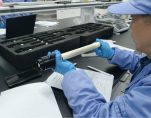
Researchers conducting project experiments

This initiative is a collaborative effort involving the University of Chinese Academy of Sciences (UCAS), the National Space Science Center of the Chinese Academy of Sciences, and the Binzhou Weiqiao UCAS High Technology Research Institute. The successful launch marks a historic “zero-to-one” breakthrough, representing the first time private sci-tech forces from Binzhou and indeed Shandong province have reached space. It also stands as China’s first in-space experiment to study the solidification of lightweight high-entropy alloys under the dual-field coupling of “microgravity and rotating magnetic fields.”

As a national-level “space laboratory,” the manned space station hosts world-class research facilities and serves as a core platform for disruptive innovation in new materials. This successful deployment not only highlights the institute’s cutting-edge research capabilities but also signifies a deep integration between corporate scientific research and national aerospace engineering. Looking ahead, the institute will continue its deep dive into frontier fields such as space materials and lightweight alloys. By strengthening collaborative innovation across industry, academia, and research, they aim to empower the upgrading of the new materials industry with technological innovation, contributing both wisdom and strength to the development of China’s manned space program and the cultivation of new quality productive forces.
Hashtag: #BinzhouInformationOffice

The issuer is solely responsible for the content of this announcement.

Chinese retail investors are scrambling to keep access to overseas equities after Beijing imposed its toughest enforcement action yet against cross-border stock trading channels used to buy shares in Hong Kong, New York and other offshore markets.

Regulators have moved against Futu Securities International, Tiger Brokers and Longbridge Securities, accusing them of operating securities businesses on the mainland without approval, soliciting domestic clients and processing offshore trading orders in breach of securities, fund and futures rules. The action has disrupted a once-popular route for mainland investors seeking exposure to global technology stocks, Hong Kong initial public offerings and US-listed Chinese companies.

The China Securities Regulatory Commission and other agencies have ordered a two-year rectification programme aimed at closing unauthorised cross-border securities, futures and fund businesses. During the wind-down period, affected mainland clients will be allowed to sell existing holdings and withdraw money, but will not be permitted to make new purchases through the targeted channels.

The clampdown marks a sharp escalation from the regulatory warning issued in late 2022, when online brokers were told to stop opening new accounts for mainland investors and remove trading apps from domestic app stores. Existing clients had largely been allowed to continue trading, preserving a grey-zone channel that gave better-off retail investors access to overseas markets despite China’s capital controls.

Futu has disclosed a proposed penalty of about 1.85 billion yuan, while Tiger Brokers’ parent, UP Fintech Holding, faces penalties and confiscation of illegal income totalling more than 400 million yuan. Longbridge has said it will comply with rectification requirements and that client fund safety is not affected. Regulators have also indicated that illegal gains from related onshore and offshore entities will be confiscated, with final administrative decisions subject to formal procedures.

Market reaction was swift. Shares of Futu and UP Fintech fell sharply in US trading after the enforcement announcement, while pressure spread to parts of the Chinese ADR universe as investors assessed whether reduced mainland retail participation could weigh on offshore-listed stocks. Hong Kong market participants also began reassessing the impact on brokerage flows, custody transfers and IPO distribution.

Citic Securities has estimated that as much as HK$250 billion in assets in Hong Kong could be affected by the crackdown, with Futu accounting for a large portion. The figure underlines the scale of wealth that had moved through offshore brokerage platforms even after Beijing tightened scrutiny of capital outflows and online financial services.

Investors are now exploring alternatives, including moving positions by custodian transfer to licensed Hong Kong banking channels, using accounts with international banks, or relying on approved schemes such as Stock Connect, the Qualified Domestic Institutional Investor programme and Wealth Management Connect. Those channels, however, have limits on eligibility, investment scope, quotas and product access, making them less flexible than the digital brokerage platforms that gained popularity during the pandemic-era boom in US and Hong Kong equities.

Beijing’s concern is not only securities law compliance. The wider policy objective is to control capital outflows, strengthen oversight of retail investment activity and prevent unlicensed overseas institutions from marketing financial products inside the mainland. The campaign also aligns with efforts to support domestic capital markets, where authorities have been trying to stabilise sentiment and encourage household savings to flow into regulated local investment products.

For the brokers, the enforcement action threatens an important part of their client base. Futu and Tiger expanded rapidly by offering low-cost, mobile-first access to overseas securities, appealing to younger and wealthier mainland clients who wanted exposure beyond A-shares. Both companies have been diversifying into Hong Kong, Singapore, Japan, Australia and the United States, but mainland-linked business remains material to investor perceptions of their growth prospects.

The crackdown may also reshape Hong Kong’s role as a financial gateway. Licensed institutions could benefit from account transfers and higher compliance-driven demand, but regulators in the city are expected to scrutinise whether account-opening documents, residency claims and fund-transfer routes meet legal requirements. That could raise operational costs and slow onboarding for brokers and banks serving mainland-related clients.

North Korea-linked hackers have upgraded the InvisibleFerret malware to bypass script-based security tools, converting its Python code into compiled modules that are harder for defenders to inspect and block. The campaign is attributed to Void Dokkaebi, also tracked as Famous Chollima, a threat group associated with operations against software developers, cryptocurrency firms and technology workers. The latest version uses Cython-compiled files, appearing as. pyd modules on Windows […]

US federal investigators have warned that a new phishing-as-a-service platform called Kali365 is enabling cybercriminals to steal Microsoft 365 access tokens and bypass multi-factor authentication without capturing victims’ passwords. The platform, first observed in April 2026 and distributed mainly through Telegram, marks a sharper turn in identity-based attacks because it abuses legitimate Microsoft authentication flows rather than relying on fake login pages alone. By capturing OAuth access […]

Advertisements
  • At the launch, KPMG also unveiled its Trusted AI Assurance offering that is aligned with relevant international standards and frameworks to mitigate risk and build trust in AI deployment. This gives businesses a clear, credible pathway to scale AI confidently as Singapore reinforces its position as a trusted node in the global community.

SINGAPORE – Media OutReach Newswire – 25 May 2026 – As Singapore deepens its commitment to becoming a world-leading AI hub, the question of how organisations build AI that is trusted — by customers, regulators and international partners — has become as consequential as how fast they build it. Today, KPMG took a significant step in answering that question with the launch of its Trusted Artificial Intelligence Centre of Excellence (AI CoE). Supported by the Singapore Economic Development Board (EDB), the AI CoE is a dedicated capability hub designed to help organisations move beyond AI experimentation and embed AI as a trusted, enterprise-ready asset.

At the same event, KPMG also unveiled its Trusted AI Assurance — a structured, business-focused, evidence-based approach that gives Singapore businesses a rigorous multi-faceted assessment of their AI deployment and a clear pathway to scale confidently. Today’s launch — bringing together government, enterprise and the professional services sector — signals a pivotal shift in the national AI conversation: from speed to scale of adoption where trust is the foundational bedrock of deploying AI.

The Trusted AI CoE was officially launched by Ms Jasmin Lau, Minister of State, Ministry of Digital Development and Information & Ministry of Education, alongside Mr Jermaine Loy, Managing Director of the Singapore Economic Development Board (EDB), and Ms Lee Sze Yeng, Managing Partner of KPMG in Singapore.

KPMG’s 2025 Global CEO Outlook shows that more than seven in ten CEOs now rank AI as a top investment priority — yet for many, the gap between ambition and sustained enterprise impact remains wide. Governance, data readiness and workforce capability are the defining constraints of this next phase of adoption. Singapore-based businesses face a further dimension: as they expand regionally and globally, they need their AI systems to be trusted not just at home but across multiple jurisdictions — each with its own regulatory expectations and stakeholder standards.

Lee Sze Yeng, Managing Partner at KPMG in Singapore, said: “Across every sector, we are seeing the same pattern: organisations that moved fast on AI are now asking harder questions — where is the real value, are our people genuinely ready to work alongside AI, and can we stand behind the decisions our systems make? These are not technical questions. They are leadership questions. And for Singapore businesses with ambitions beyond our shores, there is an added dimension: the trust that matters to customers and regulators in the markets you are entering may be defined differently from what is required here. Through the KPMG Singapore Trusted AI Centre of Excellence, we are partnering with businesses to rigorously assess where they stand, close the gaps that matter, and build AI that is trusted not just locally but in the markets most critical to their growth. Trusted AI is not a constraint on ambition. Done well, it is the foundation for it.”

Jermaine Loy, Managing Director, EDB, said: “KPMG’s Trusted AI Centre of Excellence here in Singapore will enable businesses across diverse sectors – including financial services, healthcare, logistics and manufacturing – to scale use of AI with confidence, supported by robust governance frameworks and assurance capabilities. At the same time, this strengthens Singapore’s growing AI ecosystem by building enterprise capabilities and workforce readiness for AI adoption. We welcome KPMG Singapore’s efforts to work with EDB and the relevant agencies in advancing Singapore’s position as a globally trusted hub for AI deployment and innovation.”

Trusted AI Assurance — Giving Singapore Businesses a Foundation to Scale AI

For Singapore businesses, the ambition to scale AI is rarely the obstacle. What is harder — and more consequential — is the question of whether the AI they are building and deploying can genuinely be stood behind: by their boards, by their customers, employees and by the regulators and partners they will encounter as they grow beyond Singapore’s shores.

KPMG’s Trusted AI Assurance offering (the “Trusted AI Assurance”) was developed in response to the need to address the trust deficit with AI in the business community to boost adoption. It is not a certification exercise or a compliance checklist. It is a rigorous, evidence-based independent assessment that gives leadership teams an honest picture of where they stand — and a clear, practical path to where they need to be.

What makes it meaningful is its specificity. The Trusted AI Assurance is calibrated to each organisation’s sector, operating context and growth ambitions — because a financial institution navigating cross-border data regulation faces a fundamentally different set of questions from a manufacturer embedding AI into operational workflows, or a healthcare provider deploying AI-assisted diagnostics. Generic benchmarks serve neither well.

The assessment examines two things that are often conflated but must be considered separately: whether an organisation has the governance, culture and leadership practices to deploy AI responsibly; and whether the AI solutions it has built or acquired are themselves trustworthy — documented, risk-assessed, well-integrated and performing as intended. An organisation can have the right intentions and still be running AI that falls short of what its stakeholders — or another country’s regulators — would accept.

Across four domains, the Trusted AI Assurance examines what genuinely matters:

AI Governance — Whether the frameworks, operating models, policies and procedures that govern AI are real and embedded, not aspirational documents that sit untouched between audits.

AI Systems — The AI systems themselves: how they are documented, how risks are inventoried, how models are integrated into business workflows, and whether the data foundations — including Retrieval-Augmented Generation, pipelines and datasets — are robust enough to be relied upon.

AI Regulatory Compliance — How prepared an organisation is for the regulatory environments it currently operates in, and those it intends to enter. For Singapore businesses with expansion ambitions, this is often where the most important gaps surface: the Trusted AI Assurance can identify whether a specific AI system meets the requirements for deployment in a given market — such as the European Union — or what adjustments would make it so.

AI Security — The strategies and processes in place to protect AI systems, manage privacy, and ensure the organisation can detect, respond to and recover from threats as they evolve.

The stakes are sharpest for businesses in highly regulated sectors. Financial institutions, healthcare providers and infrastructure operators have long been accustomed to navigating complex compliance environments — and Singapore’s AI governance frameworks are among the most developed in the region. But as the EU AI Act moves into full enforcement, a new and specific set of expectations is taking effect for any organisation deploying AI within European markets, or handling the data of European citizens. What satisfies regulators here does not automatically satisfy regulators there.

The reality is one of regulatory diversity: different jurisdictions are building their AI governance regimes at different speeds, with different emphases, and with different evidentiary requirements. A Singapore company that has passed relevant local standards may still find that its AI systems require different documentation, greater explainability, or additional human oversight controls to operate with compliance and trust in a European context. Discovering that gap in the middle of a market entry, a cross-border partnership or a regulatory review is a risk that can be avoided.

The Trusted AI Assurance maps these jurisdictional differences, giving organisations a clear read of where they stand against the specific requirements of markets they are entering — before those requirements become obstacles. It is aligned with globally recognised standards including the EU AI Act, the NIST AI Risk Management Framework, ISO 42001 and Singapore’s Model AI Governance Framework, ensuring that what organisations build here is credible and defensible everywhere.

The Trusted AI Assurance is coupled with consultancy guidance — from KPMG or partnered stakeholders — ensuring every assessment leads to a practical path forward. The intent is to give Singapore businesses the clarity and confidence to grow their AI ambitions without having to rebuild trust from scratch in new markets they enter into regionally or globally.

A Framework for Singapore’s AI Ambition: The Four Doors

Beyond the Trusted AI Assurance, organisations can leverage the AI CoE to assess their broader AI strategies through KPMG’s Four Doors framework — four strategic pillars that help Singapore businesses move from isolated pilots to trusted, sustained AI at scale. Together, they address what it takes for Singapore to be not just an AI-capable nation, but a globally trusted one: where the AI solutions developed and deployed here meet the expectations of regulators, partners and customers worldwide.

Value — From Activity to Impact: Establishing the clear metrics and sector-specific solutions needed to distinguish AI activity from measurable business value, across Financial Services, Government, Healthcare, Real Estate, Infrastructure and Manufacturing.

Trust — Trusted-by-Design AI: Built on a human-centric foundation encompassing ten ethical pillars — including Fairness, Transparency, Accountability, Privacy and Sustainability — the Trust pillar puts responsible governance at the centre of AI strategy, rather than treating it as a compliance afterthought.

People — Genuine AI Fluency: Covering sustainable AI workforce strategy, job redesign, leadership development and change management — from executive ignition sessions that build board-level commitment to the behavioural shifts needed to embed AI into everyday working practices.

Data and Technology — Scalable Foundations: Establishing the trusted data and technology infrastructure that enterprise AI requires, supported by KPMG’s proprietary platforms and a market-ready suite of AI tools, with rigorous attention to data quality, system integration, product development and enterprise-wide AI deployment.

For Singapore’s business community, the Four Doors offer a structured path to becoming AI-trusted — not just AI-active. As global regulatory standards tighten and international partners raise governance expectations, that distinction will increasingly determine which Singapore enterprises are positioned to lead in the markets they enter.

Building AI Capability in Singapore

The Trusted AI CoE (the “CoE”) is designed to function as a capability hub to support Singapore’s position as a trusted node in the global community — co-creating knowledge, accelerating innovation and strengthening Singapore’s AI ecosystem across the business community, academia and the public sector.

At its core is a dedicated innovation team of AI/Software Engineers, Solution Architects, Data Analysts, Product Managers, Tech Business Analysts and Designers — 100 per cent Singapore-based and locally hired. This specialist nucleus is complemented by KPMG’s 3,600-strong Singapore workforce and over 275,000 professionals globally, giving the CoE both deep technical capability and multi-disciplinary reach across Audit, Advisory and Tax.

Solutions co-developed through the CoE are pressure-tested with KPMG as default “Client Zero” where appropriate — rigorously iterated across the firm’s own operations before being brought to clients. Initial focus sectors include Financial Services, Infrastructure and Logistics, Manufacturing, Government, Healthcare and Real Estate, alongside functional domains such as Finance, Governance Risk and Compliance, Customer Services and Operations. Strategic partnerships with technology companies, academic institutions and government agencies further support Singapore’s ambition to serve as a trusted and well-governed regional AI hub.

KPMG’s Commitment to Singapore

KPMG is the world’s first professional services firm to attain ISO/IEC 42001 certification for AI Management Systems — the globally recognised standard for responsible AI governance. This underpins every element of today’s launch, reflecting KPMG’s commitment to practising what it advocates: embedding the disciplines of trusted AI governance into its own operations before bringing them to clients.

KPMG continues to invest in Singapore’s AI talent pipeline through international mobility programmes, internal rotations and capability development across data, digital and leadership disciplines — directly aligned with Singapore’s national goal of growing the skilled workforce its AI ambitions require.

ANNEX: Bringing the KPMG Singapore Trusted AI Centre of Excellence to Life

To bring the KPMG Trusted AI Centre of Excellence (AI CoE) to life, guests at the launch were invited to explore four interactive stops (“windows”) showcasing how trusted AI can move from strategy into real-world enterprise and national impact.

Spanning areas including governance, workforce readiness, ecosystem collaboration and SME enablement, the windows offered a practical look at how organisations can scale AI responsibly while building trust, resilience and long-term capability.

FIRST WINDOW – AI Philosophy

The first window introduced guests to KPMG’s Four Doors framework and Trusted AI Assurance – an evidence-based approach designed to help organisations move from AI experimentation to AI that is genuinely trusted by their boards, their customers, and the regulators and partners they encounter as they grow beyond our shores.

Through an interactive scenario set in the financial services sector, the demonstration illustrated how organisations are assessed across four strategic pillars: Value, Trust, People, and Data and Technology. The walkthrough explored whether businesses have the governance structures, workforce readiness, data foundations and operational oversight needed to support trusted, scalable AI deployment.

  1. Value — Whether the organisation has clearly defined what its AI investments are meant to deliver, and whether it has the metrics to distinguish genuine business impact from mere AI activity
  2. Trust — Whether the organisation’s AI is built on a responsible, human-centric foundation — covering governance frameworks, ethical guardrails, risk management, security and accountability for AI-driven decisions
  3. People — Whether the workforce, from board to frontline, has the genuine AI fluency needed to work alongside AI systems, including the leadership commitment, job redesign and capability development required for adoption to take hold
  4. Data and Technology — Whether the data assets, infrastructure and system integration practices are robust enough to support trusted, scalable AI deployment

The experience also demonstrated how AI systems themselves are assessed – including areas such as system documentation, risk inventories, model integration and data platform robustness – highlighting the importance of building AI that is genuinely trusted.

  1. System Card — Whether each AI solution is properly documented, including how it performs and how it is used in practice
  2. Risk Inventory — Whether AI systems across the enterprise have been identified and their risks catalogued
  3. Model Integration — Whether adequate processes and controls govern how AI models are integrated into business workflows
  4. Data Platform — Whether the data foundations underpinning AI outputs — including Retrieval-Augmented Generation (RAG) pipelines and datasets — are fit for purpose

A second stage of the scenario then explored the reality of regulatory diversity across jurisdictions. While an organisation may be assessed as “trusted” in Singapore, areas that require attention may emerge when expanding into international markets such as Europe under the EU AI Act.

The demonstration underscored the growing importance of regulatory readiness for Singapore businesses with international ambitions, and how the AI CoE is designed to help organisations expand with confidence through trusted AI governance.

SECOND WINDOW – AI Journey

The second window focused on KPMG’s “Client Zero” approach, where suitable AI solutions are developed and applied within its own operations under real-world conditions, and in some cases co-developed with clients depending on their specific needs. This model reflects a simple philosophy: credibility in guiding responsible AI adoption must be earned by applying the same discipline internally. This approach is particularly relevant in Singapore’s context, where trust and reliability are central to how AI is being adopted across sectors.

KPMG’s “Client Zero” approach provides a structured pathway for scaling AI responsibly. Solutions are first embedded into live workflows – allowing organisations to address practical considerations such as human oversight, explainability, data handling and accountability – before broader deployment. This mirrors the journey many enterprises in Singapore are now facing, as they transition from pilots to AI that can be relied on consistently in regulated, cross-border environments. This shift is important, as trust at scale is built not through experimentation alone, but through systems that are reliable, auditable, and able to operate consistently across different contexts.

At this window, MOS will see this pathway brought to life with AI applied across real business workflows, through three solutions: KPMG’s Digital Gateway (DG) GenAI, KPMG Clara Intelligence and Kiara. These solutions are already implemented in real-time across KPMG’s various functions.

The first demonstration illustrates how the audit and tax professions are beginning to deploy AI agents within their workflows to enhance how work is performed. Rather than treating AI as standalone tools, these capabilities are being embedded into business processes to support analysis, decision-making and execution in a controlled and accountable manner. DG GenAI, KPMG’s Generative AI capability embedded within our Digital Gateway platform, will be used as a demonstration of how this is operationalised in practice — showing how AI capabilities can be integrated into everyday workflows, with appropriate governance, data security and user controls in place.

The second demonstration presents KPMG Clara Intelligence, an intelligent AI-powered platform which acts as a centralised platform. KPMG Clara Intelligence showcases the future of audit, where AI is used to support data-driven risk assessment, better insights and analysis and decision-making on a single platform. This reduces reliance on manual processes and enables auditors to focus on higher-value judgement, improving both efficiency and audit quality. MOS will see how this reflects a broader shift in the profession — towards AI-assisted workflows that require new skills and deeper analytical capabilities.

This window also highlighted how AI is reshaping the accountancy and professional services sector. As AI becomes embedded into core workflows, roles within the profession are evolving — routine, manual tasks are increasingly automated, allowing professionals to focus on higher‑value judgement, analysis and advisory work. At the same time, this shift requires a broader base of AI fluency across the workforce, not just among specialists, as professionals will need to work alongside AI systems in their day‑to‑day roles.

These changes are driving a wider rethinking of skills development across the sector, including how institutions and employers prepare current and future talent. Efforts are underway to align training and education pathways with these evolving needs, ensuring that individuals entering the profession — and those already in it — are equipped to operate effectively in an AI‑enabled environment. This reflects a broader transition towards a workforce that combines strong domain expertise with AI capabilities, in line with Singapore’s ambition to develop an AI‑bilingual workforce.

The third solution, Kiara, is KPMG’s GenAI recruitment assistant, illustrating how AI can enhance the candidate engagement and streamline scheduling of interviews. This highlights how AI is not only transforming business processes, but also how people work and interact with technology.

Overall, the window demonstrated how these solutions reflect the same principles KPMG advises its clients to adopt: strong data foundations, embedded governance, and human oversight at key decision points – illustrating the practical steps organisations take to deploy AI responsibly at scale, underpinning the rigour required for Singapore to continue its progress as a trusted hub for AI.

THIRD WINDOW – AI Vision

The third window focused on how AI does not merely change the tools organisations use, but changes the nature of work itself – which roles exist, how decisions are made, and what it means to be genuinely capable in a professional environment.

As organisations navigate AI-driven workforce transformation, the showcase highlighted the same set of questions organisations consistently grapple with: which roles are genuinely enhanced by AI, and which risk being hollowed out? Where should organisations invest in reskilling, and on what timeline? How are accountability and professional standards maintained when AI is embedded into decisions that used to rest entirely with a person?

The insight that emerges across sectors is consistent: organisations that treat AI workforce transformation as a technology deployment tend to underinvest in the human dimensions – and that is where adoption stalls, quality erodes or trust breaks down. The organisations that get it right treat it as a leadership and organisational design challenge first, with technology as the enabler.

The window also demonstrated how KPMG Mystro™, an AI-enabled workforce intelligence platform, is used to map how work is done today at the task and decision level, and model where AI can responsibly augment human roles across functions such as finance, audit and operations.

Drawing on examples from finance, audit and operations, the showcase illustrated professionals working alongside AI in ways that redirect their expertise toward work requiring human judgement. More broadly, it reinforced the importance of approaching AI transformation not simply as a technology deployment exercise, but as a broader leadership and organisational design challenge.

Singapore’s commitment to building an AI-bilingual workforce – professionals who are not merely aware of AI but genuinely capable of working alongside it, questioning its outputs and being accountable for the decisions it informs – rests on organisations taking the human dimension of transformation as seriously as the technology itself. The insights at this window speak directly to that agenda: what it takes to build not just AI capability, but the kind of AI-confident workforce that sustains Singapore’s competitiveness over the long term.

FOURTH WINDOW – AI Ecosystem

The fourth window focused on how trusted AI adoption cannot be the preserve of large enterprises alone. Singapore’s economic resilience depends on its SME community — the businesses that form the backbone of the economy and that stand to gain enormously from AI, but that often lack the resources, expertise or confidence to navigate adoption responsibly.

Referencing the DBS Spark GenAI programme and DBS SME AI Playbook – developed through a collaboration between DBS and KPMG, and supported by SkillsFuture Singapore – the showcase highlighted practical pathways designed to help SMEs build awareness and accelerate their AI adoption through tailored pathways depending on their AI maturity.

  1. Start — For businesses at the beginning of their AI journey: practical orientation on what AI can realistically deliver, where to begin, and what foundational steps to take before committing to more significant investment
  2. Accelerate — For businesses that have taken initial steps and are ready to move further: guidance on identifying higher-value use cases, building internal capability and managing the operational changes that come with deeper AI adoption
  3. Scale — For businesses ready to embed AI more systematically: the governance, integration and workforce considerations that responsible scaling requires

The window also highlighted the broader support ecosystem available to SMEs, including a broader ecosystem of over 16,000 solution providers globally via IMDA’s Open Innovation Platform, alongside the SME AI Playbook which offers practical use cases, success stories from real businesses, FAQs and an AI readiness diagnostic tool.

Economy-wide AI adoption – the kind that drives meaningful productivity gains across the full breadth of Singapore’s business community – only happens if SMEs are part of the story. The DBS SME AI Playbook is a direct response to that reality: a practical, accessible entry point into AI adoption calibrated to the real constraints and real ambitions of smaller businesses.

The collaboration between DBS and KPMG reflects how Singapore’s AI ecosystem works at its best: financial institutions, professional services firms, government platforms and businesses working together to make trusted AI adoption accessible to every part of the economy, not just its largest players.

Hashtag: #KPMG

The issuer is solely responsible for the content of this announcement.

About KPMG in Singapore

KPMG in Singapore is part of a global organization of independent professional services firms providing Audit, Tax and Advisory services. We operate in 138 countries and territories with more than 276,000 partners and employees working in member firms around the world. Each KPMG firm is a legally distinct and separate entity and describes itself as such. KPMG International Limited is a private English company limited by guarantee. KPMG International Limited and its related entities do not provide services to clients.

For more details about our structure, please visit .
For more information, visit
LinkedIn:

MTN Uganda is exploring a partnership with Starlink as the arrival of satellite broadband reshapes the country’s data market and pushes established telecom operators to treat the new entrant as a possible infrastructure ally rather than a direct threat. The talks follow Uganda’s decision to clear Starlink Services LLC for operations after a long regulatory process. The Uganda Communications Commission signed a memorandum of understanding and a […]

BlockCon Punta Cana 2026 is positioning itself as a high-end business retreat where Web3 companies, iGaming operators, financiers and policy specialists will meet as digital assets move deeper into mainstream financial infrastructure. Scheduled for 25-28 November 2026 at Barceló Bávaro Beach in Punta Cana, Dominican Republic, the event is being promoted as an all-inclusive gathering designed around executive networking rather than a conventional expo-hall conference. Organisers expect […]

THORChain has halted core network activity after a coordinated exploit drained about $10.7 million from one of its liquidity vaults, putting fresh scrutiny on the security model behind decentralised cross-chain swaps. The incident took place on May 15 and affected a single vault within the protocol’s infrastructure. Early estimates placed the loss lower, but subsequent checks revised the figure to about $10.7 million. The remaining vaults were […]

Quantic Dream has halted development of Spellcasters Chronicles and will close its servers on June 19, ending the studio’s first original multiplayer title less than four months after its early access launch on Steam. The Paris-based developer said the free-to-play action-strategy game had failed to attract the audience needed to support long-term development. Players will be able to access the game until the shutdown date, while all […]

Jensen Huang’s arrival in Taipei ahead of Computex has put Nvidia’s next AI platform at the centre of a widening test for Taiwan’s semiconductor supply chain, as the company seeks more production capacity for Vera Rubin while riding record demand for data-centre chips.

Huang is expected to meet Taiwan Semiconductor Manufacturing Company chairman and chief executive C. C. Wei as Nvidia prepares a second-half production ramp for Vera Rubin, the next-generation platform that combines new Vera CPUs, Rubin GPUs, advanced memory and high-speed networking for rack-scale AI systems. The visit has drawn close attention because Nvidia’s product cycle is now tied more tightly than ever to Taiwan’s foundries, packaging houses, server assemblers and component suppliers.

Nvidia reported revenue of $81.6bn for the quarter ended April 26, up 85 per cent from a year earlier, with data-centre revenue reaching $75.2bn, up 92 per cent. The company also authorised an additional $80bn in share repurchases and raised its quarterly dividend to 25 cents a share from 1 cent, underscoring the scale of cash generation from the AI infrastructure boom.

Demand is being driven by cloud providers, AI model developers, enterprise customers and sovereign AI projects, all seeking clusters capable of training and running larger generative and agentic AI systems. Nvidia has described the buildout of “AI factories” as one of the largest infrastructure expansions in technology history, with its platform spanning chips, networking, systems software and reference designs for data centres.

Vera Rubin is expected to follow the Blackwell and Grace Blackwell generation, which is still being shipped in high volumes. That overlap is creating pressure across Taiwan’s supply chain because new capacity must support existing commitments while preparing for a platform with different requirements in advanced packaging, high-bandwidth memory integration, board assembly, cooling and system validation.

Huang has described Vera Rubin as potentially the biggest product ramp in Nvidia’s history and one of the largest technology manufacturing efforts Taiwan has handled. Industry estimates around the platform point to millions of parts across each system and the involvement of well over 100 Taiwan-based ecosystem partners, from chip fabrication and advanced packaging to printed circuit boards, power systems, connectors, thermal modules and final server integration.

TSMC remains central to the effort because Nvidia depends on its leading-edge process technology and advanced packaging capacity. The challenge is not limited to wafers. CoWoS and other packaging technologies have become strategic bottlenecks as AI accelerators require multiple logic dies, high-bandwidth memory stacks and dense interconnects. Any delay in packaging expansion can ripple through server production schedules, cloud deployment plans and Nvidia’s revenue timing.

Taiwan’s broader technology sector has become a critical artery for the global AI trade. TSMC, Foxconn, Quanta, Wistron, Wiwynn, Inventec and a dense network of specialist suppliers are competing to add capacity while dealing with constraints in land, power, water, skilled labour and equipment availability. The concentration gives Nvidia speed and engineering depth, but also exposes the company to geopolitical and operational risks.

China remains the clearest commercial setback. Huang has said US export controls have pushed Nvidia’s share of China’s advanced AI chip market to zero, a striking reversal for a company that once held a dominant position there. The restrictions have strengthened the opening for Huawei and other domestic suppliers, while leaving Nvidia dependent on whether Washington and Beijing allow compliant chips to be sold without triggering national-security objections.

That loss has not slowed Nvidia’s global momentum, but it has changed the composition of growth. Revenue is now increasingly concentrated in markets where hyperscale cloud companies, enterprise AI developers and governments are building large AI data centres outside China. For investors, the question is whether demand can keep absorbing each successive architecture at the scale implied by Nvidia’s guidance.

Nvidia forecast revenue of about $91bn for the current quarter, above market expectations, signalling that orders for AI infrastructure remain strong despite concerns about overcapacity, power shortages and the pace at which customers can monetise AI services. Operating expenses rose 49 per cent to $7.75bn, reflecting the growing cost of research, supply commitments and ecosystem investments needed to sustain the company’s lead.

US cyber authorities have added a critical Drupal Core SQL injection flaw to their exploited-vulnerabilities list after attacks began targeting unpatched websites using PostgreSQL databases, escalating pressure on government agencies, universities, media groups and enterprises that rely on the open-source content management platform. The vulnerability, tracked as CVE-2026-9082, affects Drupal Core versions from 8.9.0 through several 10. x and 11. x branches before the fixed releases issued […]

Vibe coding has moved from a developer shortcut to a mainstream software-building habit, with non-developers now making up 63 per cent of users creating applications through natural-language prompts rather than conventional programming. The shift is drawing writers, students, founders, investors, teachers and small businesses into a field that had long required technical training. These users are building websites, internal dashboards, classroom tools, workflow apps and lightweight commercial […]

New Delhi will send its largest business delegation to Canada this week, marking a sharp acceleration in efforts to rebuild commercial ties after more than two years of diplomatic strain and stalled trade negotiations.

Commerce and Industry Minister Piyush Goyal is scheduled to visit Canada from May 25 to 27, accompanied by around 150 business leaders for meetings in Ottawa and Toronto. The delegation is expected to include senior representatives from mining, energy, automotive, aerospace, manufacturing, pharmaceuticals, education and technology, with talks centred on investment, market access and the proposed Comprehensive Economic Partnership Agreement.

The visit comes as negotiators from both countries hold another round of discussions in Ottawa from May 25 to 29. Officials are working towards an early conclusion of the trade pact after formally relaunching negotiations this year. The agreement is intended to widen market access, reduce barriers and deepen supply-chain cooperation across sectors where both economies see strategic value.

Bilateral trade stood at nearly $9bn in 2024-25, modest in relation to the size of the two economies. Both governments have set a target of raising trade to $50bn by 2030, a goal that would require faster progress in goods, services, investment and energy cooperation. Canada is seeking stronger commercial links beyond its heavy dependence on the United States, while New Delhi is trying to secure reliable supplies of critical minerals, uranium, clean-energy technology and advanced manufacturing inputs.

Energy and minerals are expected to figure prominently in the discussions. Canada holds significant reserves of uranium, potash, lithium, nickel, cobalt and rare earth elements, all of which are relevant to New Delhi’s nuclear power, fertiliser security, electric mobility and electronics manufacturing plans. Earlier this year, the two sides announced a C$2.6bn uranium supply arrangement involving Cameco, giving fresh weight to talks on long-term clean-energy cooperation.

Market access will be another sensitive area. New Delhi wants wider entry for textiles, leather goods, processed foods, pharmaceuticals and services, while Canada is expected to push for opportunities in agriculture, energy, education, financial services and high-technology sectors. Businesses on both sides have argued that tariffs, standards, certification rules and mobility restrictions have limited the relationship despite strong people-to-people ties and a large diaspora in Canada.

The delegation also carries political significance. Relations deteriorated sharply in 2023 after Ottawa alleged involvement by New Delhi in the killing of Sikh separatist leader Hardeep Singh Nijjar in British Columbia. New Delhi rejected the allegation, and both sides expelled diplomats as the dispute spread into security, visa and intelligence cooperation. The strain interrupted trade talks and pushed commercial engagement into a lower gear.

A gradual reset began after political engagement resumed at senior levels. Canada’s Prime Minister Mark Carney invited Prime Minister Narendra Modi to the G7 summit in Alberta in June 2025, and the two governments subsequently restored channels for trade and strategic dialogue. Carney’s visit to India in March 2026 gave the relationship a clearer economic framework, including the signing of terms of reference for the trade pact and a commitment to expand cooperation in energy, technology, agriculture, education and defence-related sectors.

The May visit is designed to move that process from political signalling to business execution. Meetings with Canadian ministers, industry bodies and corporate leaders are expected to test where near-term agreements are possible, especially in sectors less vulnerable to political friction. Ottawa and New Delhi are also exploring cooperation in shipbuilding, pharmaceuticals, tourism and education, areas identified during earlier ministerial exchanges.

Canada’s interest is shaped by a broader effort to diversify export markets and reduce exposure to shifts in US trade policy. New Delhi, meanwhile, is looking for partners that can support its manufacturing expansion, clean-energy transition and mineral security. The fit is commercially evident, but negotiations are likely to remain complex because both sides have defensive interests in agriculture, labour mobility, procurement and regulatory standards.

For businesses, the scale of the delegation suggests a wider appetite to resume investment conversations that had slowed during the diplomatic dispute. More than 600 Canadian companies have a business presence in India, while firms from India have built interests in information technology, steel, automotive components, hospitality and financial services in Canada. Student mobility and professional services also remain important links, although visa and security concerns have added caution to the relationship.

Tether is preparing to launch GEL₮, a blockchain-based stablecoin tied to the Georgian lari, with backing from Georgia’s government in a move aimed at putting the country’s currency on digital asset rails and strengthening its position as a regional fintech hub. The project, announced on Monday, would make GEL₮ a digital representation of the lari rather than a central bank digital currency. It is being positioned as […]

Chainlink has made its data standard available through AWS Marketplace, giving cloud developers and enterprise technology teams a simpler route to deploy oracle infrastructure for tokenised assets, stablecoins, decentralised finance and on-chain financial applications. The launch brings Chainlink Data Feeds, Data Streams and Proof of Reserve into the AWS procurement environment, reducing the need for institutions to build bespoke systems to connect blockchains with market data, reserve […]

Arabian Post Staff -Dubai Ras Al Khaimah’s push to build a deeper corporate real estate market has gained momentum after major structural works were completed at RAK Central Square, the emirate’s first luxury Grade A office complex, keeping the project on track for a planned opening in the fourth quarter of 2027. The five-building development will provide 2.27 million sq ft of high-quality workspace, with large, efficient […]

SoftBank Group shares rose to a record high as investors priced in the prospect of major gains from potential public listings of OpenAI and SB Energy, reinforcing Masayoshi Son’s return to the centre of the global artificial intelligence trade.

The Tokyo-listed investment group has become one of the most closely watched proxies for AI demand after committing tens of billions of dollars to OpenAI and building exposure across chips, power infrastructure, robotics and data-centre supply chains. The latest rally extended a sharp two-session advance that added tens of billions of dollars to SoftBank’s market value, marking one of its strongest runs since the technology boom that first made the group a symbol of risk-taking capital.

Investor enthusiasm has been driven by two linked expectations. OpenAI is preparing for a confidential US initial public offering filing that could set up a listing as early as September, while SB Energy, a power and data-centre infrastructure company backed by SoftBank and OpenAI, has said it intends to confidentially file for a US IPO. Together, the developments have strengthened the market view that SoftBank’s private holdings may be moving closer to public-market price discovery.

SoftBank’s OpenAI position is the main driver of that reassessment. The group has invested $34.6bn in the ChatGPT maker since September 2024 and has agreed to make a further $30bn investment through SoftBank Vision Fund 2. Completion of those tranches would lift its cumulative investment to $64.6bn for an ownership interest of about 13 per cent. The preferred shares are designed to convert automatically into common shares if OpenAI completes an IPO or related listing transaction.

OpenAI’s valuation has become central to SoftBank’s investment case. The company was valued at $852bn in private markets and preliminary discussions around a listing have included the possibility of a valuation as high as $1tn. The company is also seeking to raise at least $60bn at the lower end of earlier discussions, reflecting the huge capital needs of frontier AI model development, data centres, chips and power supply.

The OpenAI bet has already reshaped SoftBank’s earnings profile. The group reported a sharp profit rebound, helped by valuation gains tied to OpenAI, and said cumulative gains on the investment had reached $45bn. Its annual profit of about ¥5tn was described by the company as the highest recorded by a Japanese company, underscoring how quickly Son’s AI strategy has altered investor perceptions after years of scrutiny over the Vision Fund’s uneven performance.

SB Energy has added another layer to the rally because its business sits at the intersection of AI and power infrastructure. Founded in 2019, the company develops large-scale energy and data-centre projects and has positioned itself to benefit from surging electricity demand linked to AI workloads. It has raised more than $18bn in project capital and has a portfolio of about 5 gigawatts of operating and under-construction energy assets.

The company’s January partnership with OpenAI under the Stargate initiative placed it inside a broader push to build AI and energy infrastructure in the United States. That has made SB Energy more than a conventional renewable power developer in the eyes of investors. Its appeal rests on the argument that AI expansion will require dedicated power generation, grid connections and purpose-built campuses capable of supporting high-density computing.

SoftBank’s rally has also been supported by strength in Arm Holdings, the UK chip designer in which the group holds a large stake. Arm remains a key public asset for SoftBank and is viewed as a beneficiary of AI-related semiconductor demand. Gains in Arm shares have helped reinforce confidence that SoftBank owns multiple assets tied to the same structural theme, rather than a single concentrated wager on OpenAI.

The optimism carries risks. OpenAI faces intensifying competition from Alphabet’s Gemini, Anthropic’s Claude and other model developers, while the cost of training and operating advanced AI systems continues to rise. Credit analysts have raised concerns that the size of SoftBank’s OpenAI commitment may affect liquidity and asset quality, particularly as the group uses loans, asset sales and financing backed by holdings such as Arm and SoftBank Corp. to fund its strategy.

SoftBank arranged a $40bn bridge loan in March and drew $20bn in April, largely for the OpenAI investment, while also repaying part of that borrowing. The group has sold stakes in holdings including Nvidia and T-Mobile, issued bonds and considered other financing options as it reallocates capital towards AI. Chief Financial Officer Yoshimitsu Goto has said the group may also explore ways to use its OpenAI assets for financing if market conditions allow.

Greenlogue/AP UAE officials used the World Hydrogen Summit & Exhibition in Rotterdam to reinforce the country’s ambition to become a global hub for low-emission hydrogen, placing cross-border trade, common standards and industrial decarbonisation at the centre of its energy transition agenda. The Ministry of Energy and Infrastructure represented the UAE at the gathering in the Netherlands, where governments, technology developers, financiers and energy companies examined the commercial […]

Qatar has stepped up its investment campaign in China with high-level business meetings in Shanghai and Hangzhou aimed at turning long-standing trade links into deeper industrial, technology and financial partnerships.

Invest Qatar’s delegation, led by its chief executive Sheikh Ali bin Alwaleed Al-Thani, held executive-level meetings, site visits and closed-door business discussions with Chinese companies across advanced manufacturing, life sciences, industrial technologies and digital platforms. The engagements included WuXi Biologics, Shanghai SUS Environment, Cainiao Group and Ant International, placing the tour at the intersection of Qatar’s diversification agenda and China’s strengths in biotechnology, logistics, environmental services and digital finance.

The visit was designed to present Qatar as a platform for regional expansion, with Invest Qatar highlighting support for market entry, regulatory coordination, site selection, expansion planning and aftercare services. The pitch reflects Doha’s effort to move beyond energy-led ties and attract capital, technology and operational expertise into sectors linked to the Third National Development Strategy and Qatar National Vision 2030.

China already occupies a central place in Qatar’s external economic network. Bilateral cooperation spans energy, logistics, manufacturing, technology and financial services, while Qatar hosts about 520 Chinese companies. Over the 2017-2026 period, China has ranked among Qatar’s top 10 sources of foreign direct investment, with 59 projects generating more than $3bn in capital expenditure and creating more than 3,200 jobs across multiple sectors.

The Shanghai and Hangzhou programme signals a more targeted approach by Qatar’s investment promotion authorities. Rather than broad promotional activity, the delegation focused on companies that fit Qatar’s priority clusters. WuXi Biologics brings relevance to life sciences and contract research, Shanghai SUS Environment operates in waste-to-energy and environmental infrastructure, Cainiao Group is a major logistics and supply-chain player, and Ant International strengthens the digital payments and fintech dimension of the outreach.

Energy remains the anchor of Qatar-China economic relations. China is Qatar’s largest trading partner, with bilateral trade reaching $24.22bn in 2024. China exported goods worth about $4.17bn to Qatar and imported about $20.05bn, led by liquefied natural gas and industrial helium. Qatar is also China’s second-largest source of LNG imports, reinforcing the strategic weight of the relationship at a time when Asian demand remains central to global gas markets.

QatarEnergy’s expansion strategy has further tightened industrial links with China. Long-term LNG supply arrangements linked to the Chinese market, together with major vessel orders placed with Chinese shipbuilders, have created a broader commercial ecosystem around the North Field expansion. Qatar aims to raise LNG production capacity from 77mn tonnes a year to 142mn tonnes by 2030, a target that will require shipping, engineering, financing and downstream partnerships across Asia.

The investment outreach comes as Gulf states increasingly seek to use energy relationships as a foundation for wider economic cooperation with Asia. For Qatar, China offers scale, capital depth and technology capacity. For Chinese groups, Qatar provides political stability, strong transport connectivity, free-zone infrastructure and access to Gulf, African and South Asian markets.

Doha is also seeking to position itself as a business base for companies navigating a more fragmented global trade environment. Regulatory certainty, a relatively high-income market, advanced digital infrastructure and a sovereign investment ecosystem give Qatar tools to compete for regional headquarters, specialised manufacturing and services projects. The challenge will be converting exploratory meetings into project commitments in sectors where regional competition is intense, particularly from Saudi Arabia and the UAE.

Financial services form another important strand of the relationship. Qatar Investment Authority’s moves in China’s asset management sector and broader Gulf interest in Asian financial markets point to a shift from passive portfolio exposure towards more strategic investment channels. That trend could support new capital-market links, fintech partnerships and investment vehicles connecting Doha and Chinese financial centres.

The latest Invest Qatar tour also reflects a diplomatic-economic strategy that has become more visible across Asia. Qatar has sought to deepen ties with major economies while keeping its partnerships diversified across the United States, Europe, China and other Asian markets. This balancing approach allows Doha to pursue commercial opportunities while avoiding excessive dependence on any single investment corridor.

For Chinese companies, Qatar’s offer is strongest where national development goals align with corporate expansion plans. Life sciences companies can tap healthcare investment and research partnerships, logistics operators can link into Hamad Port, Hamad International Airport and regional re-export networks, and digital platforms can benefit from a market that has been investing in cashless payments, cloud services and smart-city infrastructure.

Arabian Post Staff -Dubai Abu Dhabi has gained a new artificial intelligence venture aimed at removing one of the most persistent barriers facing deaf and hard-of-hearing people: the absence of instant, affordable sign-language interpretation in everyday public services. New York University Abu Dhabi has launched ChatSign, a commercial AI spin-out developed from research at its Embodied AI and Robotics Lab. The system translates spoken Arabic and English […]

UAE Minister for Foreign Trade Dr Thani bin Ahmed Al Zeyoudi used a high-level GLOBSEC Forum 2026 panel in Prague to present the country’s trade-continuity strategy as the Iran war continues to disrupt Gulf shipping, energy flows and global supply chains. Speaking during “The Ripple Effect: How the Iran War is Shaping Global Economies and Politics”, Al Zeyoudi told senior policymakers, business executives and international officials that […]

VISHNU RAJA
RYO YAMADA
HITORI GOTOH
IKUYO KITA
Just in:
Utilities pursue ₹1,992 cr in unpaid bills // After Reaching 7 Million Users in the Philippines, Skyro Launches Transparent Cash Loans in Malaysia // OpenAI identifies 948 Linux privilege escalation flaws using AI // Burying Head In “India Made Poverty Reduction” Data Is Dangerous // Hong Kong mandates crypto transaction disclosures to tax authorities // Cloudflare unveils Zero Wire vulnerability intelligence service // Anthropic to prohibit persistent abuse of Claude chatbot // Middle East governments assess Iran war after US vote // CR Longdation Aethereal Cybersecurity × Global Cybersecurity Alliance (GCSA) Join Hands to Establish the “AI and Cybersecurity Research Centre” // ADIA and partners establish $1.4 billion aviation venture // Democrats capture Senate majority with seven Republican seats // As AI Reshapes Education, Singapore Convenes Global Dialogue on the Future of Early Childhood Education // BJP’s Aggressive Response Exposes Anxiety Over Opposition Unity // Ta’ziz finalises $1.39bn funding for Ruwais industrial facilities // SC to examine students’ exam plea today // Dubai boat show confirms international shipyard line-up for November // xCube Access Welcomes Entrust Capital Limited  Expanding Access to Professional Portfolio Management // APT29-linked campaign exploits outdated Apple and Android software // AI trust gap reveals distinct retail priorities: Divergent paths to consumer growth in Hong Kong and the GBA // Meraas showcases five residential zones at Dubai Design Week //