News related to
UAE News

Merchandise exports rose to USD 220.12 billion in the six-month period ending September, an uptick of 3.02 per cent compared with the equivalent span of the prior year, while imports climbed by 4.53 per cent to USD 375.11 billion, resulting in a trade deficit of USD 154.99 billion.

A key facet of this performance is that exports to 24 nations recorded growth, underscoring a push by Indian exporters to diversify markets beyond traditional strongholds. These countries span regions from the Middle East and Southeast Asia to Africa and Latin America, and collectively accounted for USD 129.3 billion, or 59 per cent of the country’s total exports in the period.

Despite this diversification, exports to the United States — one of the largest destination markets — slipped in September as tariffs imposed by Washington weighed on certain sectors. For the month, shipments to the US declined by 11.93 per cent to USD 5.46 billion.

Those opposing movements such as exporters point to the 50 per cent tariff introduced by the US on Indian goods from late August. The exports community says that while growth is evident in alternative geographies including Africa, Latin America and the Middle East, the US tariff climate remains a drag.

Within the group of 24 countries that posted export growth are the UAE, Germany, Vietnam, Mexico, Russia, Kenya, Nigeria, Canada, Poland, Sri Lanka, Oman, Thailand, Bangladesh, Brazil, Belgium, Italy and Tanzania, among others.

At the same time, exports to 16 other countries recorded negative growth, representing roughly USD 60.3 billion or about 27 per cent of total exports in the period. This reveals that while diversification is under way, certain destination markets continue to deliver weak outcomes.

Industry observers suggest that the strategic reorientation of markets has been accelerated by external pressures such as protectionist measures in key markets and supply-chain disruptions across sectors. One exporter noted: “The trend will continue in the coming months as well.”

Meanwhile, the Government of India is engaging on multiple fronts to sustain export momentum. Officials from the commerce ministry signalled that structural steps will be needed to strengthen manufacturing competitiveness and integrate India more deeply into global value chains. They pointed to raw‐material bottlenecks and high logistics costs among the constraints.

In parallel, trade discussions with the US are underway, aimed at reducing friction caused by duties and exploring possibilities for energy-and-goods cooperation. For instance, US officials have raised concerns over Indian imports of Russian oil and bilateral trade.

Another trend shaping export performance is the push into manufacturing sectors aligned with global demand shifts. The electronics and mobile-phone export segment, for example, has delivered strong growth: exports in certain months surged by as much as 39-60 per cent in year-on-year terms, signalling India’s growing role as a manufacturing hub for global brands.

On the import side, the widening of the trade deficit is partly explained by rising inbound shipments of gold, silver and crude oil, ahead of domestic demand spikes and festival season pickup. These pressure points reflect larger global cost dynamics rather than domestic export weakness per se.

Export diversification is also being viewed as a risk-mitigation strategy. The weakening of certain traditional markets combined with tariff exposure in the US has underscored the importance of broadening the destination base. Africa, Latin America and Southeast Asia are emerging as focal regions.

Manufacturers and trade bodies emphasise that sustaining this diversification will require improving logistics efficiency, deepening downstream processing, upgrading product quality and securing better access via trade agreements and export-promotion schemes.

For exporters that achieved growth in the 24-country set, end-markets include consumer goods, engineering exports, pharmaceuticals, agro-products and electronics. Their performance demonstrates the incremental success of strategic investment and policy alignment.

Still, the fact that over a quarter of export value was derived from countries with declining shipments signals a dual challenge. Growth pockets exist, but structural weaknesses and external dependencies remain persistent obstacles.

Salik, Dubai’s primary toll gate operator, has rolled out an upgraded version of its mobile application alongside the introduction of an interactive WhatsApp channel, aiming to strengthen its communication with customers and improve operational efficiency. This strategic move aligns with Salik’s commitment to digital transformation and improving user experience in an increasingly tech-driven environment. The updated mobile app introduces a streamlined user interface designed to simplify the […]

The UAE Ministry of Education has entered a new partnership with Core42, a leading company in advanced technological solutions, aiming to accelerate digital learning across the country. This collaboration marks a significant step in the UAE’s broader strategy to modernise its education system and integrate innovative technologies into classrooms nationwide.

Under the Memorandum of Understanding signed by both parties, the Ministry and Core42 will jointly focus on enhancing the digital infrastructure in schools, universities, and other educational institutions. This partnership is set to foster digital literacy, streamline educational processes, and introduce advanced technological tools that can significantly improve the learning experience. The Ministry’s initiative is aligned with its ongoing efforts to diversify and digitalise the national education landscape.

The UAE has been increasingly prioritising the integration of digital technologies within education as part of its long-term goals. The collaboration with Core42 comes at a crucial time as the nation works towards adapting its education system to meet the challenges and opportunities presented by digitalisation. By tapping into Core42’s expertise, the UAE hopes to provide its educational institutions with cutting-edge tools and systems that will prepare students for the future of work, which will undoubtedly be more technology-driven.

Core42, known for its innovative approach to digital solutions, will bring its wealth of experience in developing and implementing advanced tech-driven educational platforms. This will include custom-built software solutions, interactive tools, and data-driven systems that improve not only learning outcomes but also operational efficiency. The company’s work is expected to play a key role in addressing the increasing demand for online and hybrid learning models in response to evolving global educational trends.

The Ministry’s vision is to ensure that both educators and students have the necessary tools to succeed in an increasingly digital world. This vision includes not just integrating digital tools for learning, but also upskilling educators to effectively use these technologies. The partnership with Core42 will focus on creating tailored professional development programmes for teachers, allowing them to enhance their digital teaching capabilities. This approach seeks to bridge the gap between traditional and modern pedagogies, ensuring that both students and educators can thrive in an ever-changing digital environment.

The collaboration will also focus on leveraging data analytics to monitor progress, tailor curricula to individual student needs, and provide actionable insights into educational outcomes. By incorporating AI and machine learning into the learning process, the Ministry and Core42 aim to create personalised learning experiences that adapt to each student’s pace and learning style. This will be complemented by real-time feedback mechanisms, enabling educators to make informed decisions that foster student success.

The MoU also includes the development of digital platforms that will support a more interactive and engaging educational experience. Core42’s expertise in software development and user experience design will be crucial in creating platforms that are both intuitive and effective for students of all ages. The focus will be on ensuring that these platforms are accessible, user-friendly, and capable of supporting diverse learning needs, from primary schools to higher education institutions.

The UAE’s education system has been undergoing significant reforms in recent years, with a growing emphasis on integrating technology into learning. Initiatives like this partnership with Core42 are a clear indication of the country’s commitment to building a world-class educational infrastructure that can support its ambitious vision for the future.

Gold continues its ascent worldwide as festival-driven demand collides with macroeconomic turbulence. Spot prices have broken past $4,300 an ounce, prompting Indian domestic rates to reach ₹1,31,699 per 10 grams and record premiums in key markets. HSBC, recalibrating its outlook, now forecasts average gold at $3,355 for 2025 and $3,950 for 2026, citing sustained safe-haven interest. Buyers in India are shifting patterns: instead of heavy gold jewellery, […]

ADVERTISEMENT

Space42 has inked a memorandum of understanding with e& UAE to co-develop Vehicle-to-Everything systems that will underpin autonomous mobility and smart city infrastructure across the UAE. The pact seeks to marry Space42’s Sovereign Mobility Cloud and autonomous vehicle expertise with e& UAE’s 5.5G connectivity, edge computing and secure communications, forming a foundation for 6G-era applications. The collaboration will see both firms launch pilot projects, help shape regulatory […]

Abu Dhabi’s Stargate UAE project is advancing swiftly, with G42 and its affiliate Khazna Data Centers confirming that construction has moved past preliminary stages and that the design-to-build effort is now in full execution. The first 200 MW of capacity is slated to go live in 2026, forming part of a 1 GW AI cluster within the broader 5 GW UAE–U. S. AI Campus. Civil, structural and […]

The Ajman Department of Finance unveiled a suite of smart payment services at GITEX Global 2025, signalling its bid to position the emirate at the forefront of digital government finance solutions. The offerings include integration of the UAE’s national payment card “Jaywan”, a buy-now-pay-later option via its AjmanPay portal, and a unified financial management platform dubbed “Estidama system”.

Marwan Ahmed Al Ali, Director General of the Department of Finance in Ajman, said the new services aim to provide “flexible payment options” tailored to “all segments of society” and boost the emirate’s digital transformation agenda. The launch was attended by senior government and private-sector officials during the event.

The Jaywan card—launched by the Central Bank of the UAE to reduce reliance on global card networks—has now been linked with AjmanPay, allowing users to make payments via ATMs, e-commerce platforms and point-of-sale terminals. The Department also launched a zero-interest instalment option to facilitate fee payments and transactions in instalments or deferred payments.

The Estidama system is presented as a next-generation cloud-based platform comprising four interconnected modules that manage budgeting, initiative planning, financial execution and reporting. It promises to unify financial operations across the Ajman government, enhancing transparency and control over public spending.

Officials emphasised that these steps align with broader national efforts to digitise financial infrastructure. By integrating Jaywan into Ajman’s government payments, the emirate is tapping into the UAE’s goal of financial sovereignty and reducing dependence on foreign card networks.

Partnership with First Abu Dhabi Bank underpins the linking of Jaywan with AjmanPay, showcasing public–private collaboration in driving fintech infrastructure. The Department described the move as a qualitative addition to its digital ecosystem, reflecting its commitment to “innovation in government payment systems”.

During GITEX, Ajman’s government platform is also showcasing AI, data analytics, and other advanced technologies in financial resource management. The participation underscores the emirate’s aim to benchmark itself in the regional competition over smart city and digital government credentials.

Advertisements
ADVERTISEMENT

CME Group has launched its first physical base in the Middle East with an office at the Dubai International Financial Centre, to serve as its hub for the region under a licence from the Dubai Financial Services Authority. Sharif Jaghman, relocated from London, will head the new Middle East and Africa operations. The move follows a 16 per cent rise in average daily trading volumes from the […]

Multiply Group, the Abu Dhabi investment holding firm, will acquire 2PointZero and Ghitha Holding via a share-swap deal, creating a combined enterprise with an estimated valuation of AED 120 billion. The transaction involves issuing around 23.36 billion new shares, lifting Multiply’s share capital from AED 2.8 billion to AED 8.64 billion and expanding the total shares to 34.56 billion. Approval from shareholders and regulators is pending.

The decision follows board sanction and aligns with a broader move by IHC to consolidate its leading portfolio companies—Multiply, 2PointZero, and Ghitha—into a unified listed entity under the name 2PointZero Group PJSC. The merger is pitched as an effort to streamline governance, deepen synergies across sectors, and accelerate growth. The transaction is slated for completion by mid-November 2025, contingent on formal clearances.

Under the proposed structure, Multiply will absorb full ownership of 2PointZero and a majority of Ghitha Holding. The merged entity will retain its listing on the Abu Dhabi Securities Exchange. With combined operations across energy, mining, financial services, agrifood, consumer goods, media, logistics, and related verticals, the new 2PointZero Group aims to harness diversification and integrated scale.

2PointZero brings to the table AI, energy transition, mining and financial services capabilities. Its role as a facilitator in cleantech and future resource assets is central to the logic of the merger. Ghitha Holding contributes a robust agriculture, food production, processing and distribution footprint—one of the UAE’s key players in national food security. Multiply already has stakes in sectors including mobility, media & communications, retail/apparel, packaging, and beauty.

Syed Basar Shueb, Chairman of Multiply, called the deal “a natural evolution of our portfolio strategy,” emphasising the aim to “optimise scale and strengthen the platforms we have built.” Samia Bouazza, Group CEO and Managing Director, framed the merger as aligning capital with megatrends, stating the unified entity would “grow bottom line both organically and inorganically, unlock value through AI, and deliver consistent long-term returns.” The new group will operate across more than 85 countries and target service to one billion people globally.

IHC’s own communications parallel Multiply’s narrative. The parent firm describes the merger as a means to craft a “next-generation investment powerhouse” anchored in a dual focus on energy and consumer sectors, intended to enhance operational efficiency and strategic scale. Sheikh Tahnoon bin Zayed Al Nahyan, IHC Chairman, cited the move as reaffirming IHC’s role as a catalyst of transformation, leveraging AI and value networks. Sheikh Zayed bin Hamdan bin Zayed Al Nahyan, Chairman of 2PointZero, said the consolidation would further the mission of driving energy transition, enabling AI, and empowering communities.

Al Mal Capital REIT has sealed its first move into the healthcare sector by acquiring the real estate asset housing NMC Royal Hospital in Dubai Investments Park. The transaction lifts AMCREIT’s portfolio valuation to around AED 1.4 billion across six assets. The facility spans 492,332 square feet and comprises two hospital blocks alongside a fully leased commercial wing. The hospital, which supports nearly 120 inpatient beds, outpatient […]

ADVERTISEMENT

GITEX Global 2025 in Dubai has become a battleground for dominance in nation-scale artificial intelligence, as governments and tech giants compete to control the infrastructure that will underpin the next wave of the digital economy. The event has already featured multiple high-stakes unveilings of sovereign AI platforms, hyperscale data centres, and public-service automation systems illustrating how computing power is being weaponised as strategic capital. The opening day […]

Abu Dhabi — Aldar has sold all units of its Yas Living development in just days after launch, securing more than AED 1.3 billion in sales. The development comprises 678 apartments spread across three buildings, offering configurations from studios to three-bedroom units. Owners will enjoy dedicated amenities in each building — including adult and children’s pools, a cinema, zen gardens, games rooms, children’s play spaces, and a […]

The International Monetary Fund has lifted its projection for the United Arab Emirates’ economic expansion to 4.8 per cent in 2025 and sees 5.0 per cent growth in 2026, citing accelerating non-hydrocarbon activity and a rebound in oil output.

Stronger-than-expected performance in tourism, construction, trade and financial services is underpinning the upward revision. The IMF attributes resilience to the country’s diversified strategy and structural reforms such as enhanced trade agreements and sustained investment in infrastructure.

Analysts say the revision contrasts sharply with broader regional downgrades. The IMF now expects growth across the Middle East and North Africa to expand by only 2.6 per cent in 2025, constrained by policy uncertainty, volatile energy markets and geopolitical tensions.

Within the UAE, central bank data reinforce the narrative of dual expansion. The non-hydrocarbon sector is forecast to grow by around 4.5 per cent annually in both 2025 and 2026, while the hydrocarbon segment is expected to rebound more sharply—by 5.8 per cent in 2025 and 6.5 per cent in 2026—on increased output as OPEC+ quotas are relaxed.

When IMF staff visited the UAE in January 2025, they noted that domestic demand remained robust amid modest oil production, forecasting real GDP growth at about 4 per cent for the year. They projected that fiscal and external surpluses would remain comfortable, helped by elevated non-oil revenues and cautious fiscal management.

Still, risks linger. The UAE’s banking sector, while well capitalised, faces exposure to real estate, and high house prices pose concerns for asset quality. In mid-2025, exposure to property in banks’ portfolios stood at around 18 to 19 per cent of risk-weighted assets. A sudden shift in investor sentiment or capital flows could test the stability of credit markets.

On the external front, the current account surplus is projected at about 7.5 per cent of GDP, supported by stronger non-oil exports and moderating import growth. Liquidity buffers remain healthy, with international reserves covering more than eight months of imports.

Commvault has entered a Memorandum of Understanding with HPE to scale joint cybersecurity, backup and recovery services across the Gulf and wider Middle East, unveiling the pact at GITEX Global in Dubai.

The agreement mandates co-development of integrated solutions and joint market initiatives combining HPE’s infrastructure platforms — such as GreenLake, Alletra Storage MP, Zerto, StoreOnce — with Commvault’s cyber-resilience and data protection capabilities. It aims to drive enterprise adoption of hybrid cloud backup, ransomware mitigation and cross-region redundancy.

HPE previously announced a broader strategic expansion of its alliance with Commvault aimed at neutralising advanced cyberthreats, spotlighting tighter integration across cloud, storage and policy automation. The local MoU is intended to bring those capabilities closer to enterprises operating in the Gulf and MENA markets.

HPE’s Zerto platform will feed into Commvault Cloud offerings to enable near-zero recovery time and point objectives, while snapshot immutability, geographic replication, and anomaly detection powered by AI are planned as central joint features. Running side by side, HPE’s storage and infrastructure fabric supports Commvault’s orchestration layer for unified policy enforcement across hybrid deployments.

Regional leadership within both firms emphasised the growing urgency of resilience as data volumes and threat sophistication rise. Yacob Ahli, HPE’s Commercial Director for UAE, said that the Gulf’s data-centric growth narrative demands infrastructure foundations that safeguard continuity. Havier Haddad, heading Commvault’s EMEA emerging markets distribution, framed the MoU as a strategic move to reinforce customer confidence in mission-critical operations across the region.

Analysts say the new alliance helps bridge a gap many enterprises in the Middle East face: lacking in-region partner support for complex, integrated cyber resilience stacks. By localising go-to-market strategies, certification and training, the partnership may reduce friction in adoption. Still, adoption also depends on regulatory compliance, cross-border data governance, and interoperability with incumbent systems.

Commvault has also introduced new additions to its HyperScale portfolio — HyperScale Edge and HyperScale Flex — designed to support remote and edge data protection workloads, broadening its partner ecosystem to include HPE, Dell, Lenovo and others. These tools complement its flagship HyperScale X offering.

ADVERTISEMENT

Dubai—Dell Technologies asserts it commands more than 24 per cent of the UAE’s data centre server market, signalling a strong foothold in a region where demand for digital infrastructure is surging. Samer Al Jayyusi, Specialty AI & GenAI Regional Lead for Central & Eastern Europe, Middle East and Africa at Dell, made the disclosure at GITEX Global 2025, emphasising that national institutions have shown growing confidence in […]

Dubai’s 45th edition of GITEX GLOBAL opened on 13 October at the Dubai World Trade Centre, attracting what organisers call unprecedented global participation. The event hosts more than 6,800 exhibitors, 2,000 startups and 1,200 investors from over 180 countries. Sheikh Mohammed bin Rashid Al Maktoum inaugurated the event, underscoring the UAE’s ambition to lead in AI-driven economies. Dubai’s leadership has signalled this edition will be the last […]

Mohammed Bin Rashid Housing Establishment is spotlighting a suite of digital housing solutions at GITEX Global 2025, announcing strategic tie-ups aimed at advancing smart infrastructure and inclusive living. The initiative underscores Dubai’s push to fuse technology with urban development amid intensifying global competition in digital transformation.

MBRHE is presenting new digital services engineered to optimise housing operations, energy efficiency and resident experience. At GITEX, the entity finalised a partnership with Emirates Islamic Bank to develop financing and digital payment tools tailored for homeowners, and earlier inked an agreement with AI Smart to retrofit housing units with assistive technologies for People of Determination. The latter includes deploying smart systems in five identified residences to enhance mobility and independence. These deals complement an existing MoU with Emirates Gas to supply next-generation LPG composite cylinders across MBRHE communities, complete with annual maintenance services.

As part of Dubai’s government ecosystem at GITEX, MBRHE is listed among Gold Partners in the Digital Dubai pavilion, joining over 50 public and private entities promoting the emirate’s City-as-a-Service model. This placement gives MBRHE visibility amid hundreds of technology players from more than 180 countries. The pavilion is intended to demonstrate cross-sector digital synergies across health, energy, mobility and governance spheres.

MBRHE officials emphasise a multipronged strategy. The partnership with Emirates Islamic is geared toward embedding embedded financial tools into housing services. The AI Smart alliance is positioned as a step toward inclusive smart homes. Meanwhile, the collaboration with Emirates Gas addresses energy reliability and safety in residential zones under MBRHE’s purview. In announcing the AI Smart engagement, MBRHE described it as aligning with UAE leadership’s agenda to empower all segments of society, especially People of Determination.

The move follows MBRHE’s earlier commitment with GFS Developments to launch the Smart Housing Forum 2025, a platform to convene global experts on sustainable housing innovation. That partnership, formalised in late September, frames GITEX as a conduit for showcasing outcomes and inviting further collaboration.

Industry analysts say MBRHE’s integration of housing, finance, energy and assistive technology is representative of a wider trend in the Gulf: public agencies are no longer viewing infrastructure in isolation but as an integrated service ecosystem. State-linked housing bodies are increasingly collaborating with fintech, cleantech, proptech and social inclusion tech firms to convert static assets into responsive, data-enabled platforms.

Critics caution that the true test lies in execution, particularly in integrating legacy systems, ensuring cybersecurity across interconnected modules, and managing equitable access across lower-income beneficiary groups. For instance, retrofitting older housing stock with IoT or assistive systems often requires structural upgrades, which carry cost and logistical burdens.

At GITEX, MBRHE is expected to demonstrate live pilot models of smart home systems, energy monitoring dashboards, and resident apps that tie into real estate finance. These demos will act as proof points to entice further private sector engagement and scaling. MBRHE’s role as both regulator and operator gives it leverage but also raises accountability for outcomes.

ADVERTISEMENT

Dubai Healthcare City Authority has unveiled a Dhs1.3 billion development programme for Phase 1 of Dubai Healthcare City, marking an aggressive expansion that aims to elevate its global standing in health infrastructure. Construction is set to start in December, with a targeted completion window by November 2027.

At the heart of the initiative lies a triple-pronged buildout: a LEED Platinum-certified office block, a purpose-built medical complex, and supporting infrastructure—each tailored to attract health-related investors and operators. The office building, designed by P&T Architects & Engineers, spans some 13,000 sqm across nine levels and includes flexible workspaces and ground-floor retail zones. The medical complex, by Design & Architecture Bureau, covers 5,800 sqm, with two basements and five floors, and is planned to accommodate surgical units, diagnostics, outpatient services and lab facilities.

Beyond buildings, the infrastructure scope includes multi-storey parking with electric vehicle charging points, integration with Salik for smart parking, and accessibility enhancements. The aim is to strengthen the underlying ecosystem so that the healthcare precinct becomes not just a cluster of clinics, but a fully serviced global health hub.

Issam Galadari, DHCA’s CEO, asserted that these projects reflect the authority’s ambition to combine sustainability, global investment appeal and design excellence, aligned with Dubai’s Economic Agenda and the UAE’s Net Zero Strategy 2050. Allae Almanini, COO, added that the works will “boost confidence for healthcare providers and investors” by improving efficiency, accessibility and sustainability across the community.

Phase 1 of DHCC, located in Oud Metha, currently operates within a 4.1 million sq ft footprint dedicated to medical services and education. Phase 2, by contrast, spans around 19 million sq ft at Al Jaddaf, and is oriented more toward wellness and mixed support services.

This new investment signals a sharpened focus on physical infrastructure as a differentiator. In recent years, DHCC has emphasised partnerships and innovation: its free-zone model already supports over 400 licensing entities and more than 168 clinical facilities. Earlier this year, DHCA collaborated with AI Quantum Intelligence Institute to launch an AI healthcare innovation lab in the free zone, and formed an agreement with AirMed International to deepen medical transport capabilities.

Analysts see the move as a bid to compete not only regionally, but globally. Healthcare infrastructure, especially when linked with sustainability credentials such as LEED Platinum certification, is increasingly a factor in investors’ decisions. The new build will position DHCC among the few healthcare zones worldwide that combine clinical, administrative and research capacity within one contiguous ecosystem.

However, the scale and timeline carry risks. Dubai’s construction sector is already navigating supply-chain pressures, labour constraints, and rising material costs. Ensuring timely delivery and quality control in a high-performance project will demand rigorous project management. Meanwhile, the authority must ensure that demand from healthcare operators, both local and international, matches the expanded real estate supply, lest vacancy rates rise.

More immediately, the December commencement date — just weeks away — will test DHCA’s readiness in securing contractors, tendering work packages and coordinating certifications. Delays in permitting or approvals could cascade into missed target windows. Yet, if executed successfully, the project will enable DHCC to present itself as an integrated health campus offering offices, clinical space, and support services under one sustainable umbrella.

Observers note that medical tourism in Dubai already commands significant weight, drawing patients from the GCC, the broader Arab world, Europe, and Asia. DHCA’s bet is that infrastructure sophistication will amplify that pull, especially for high-end specialty and precision medicine segments.

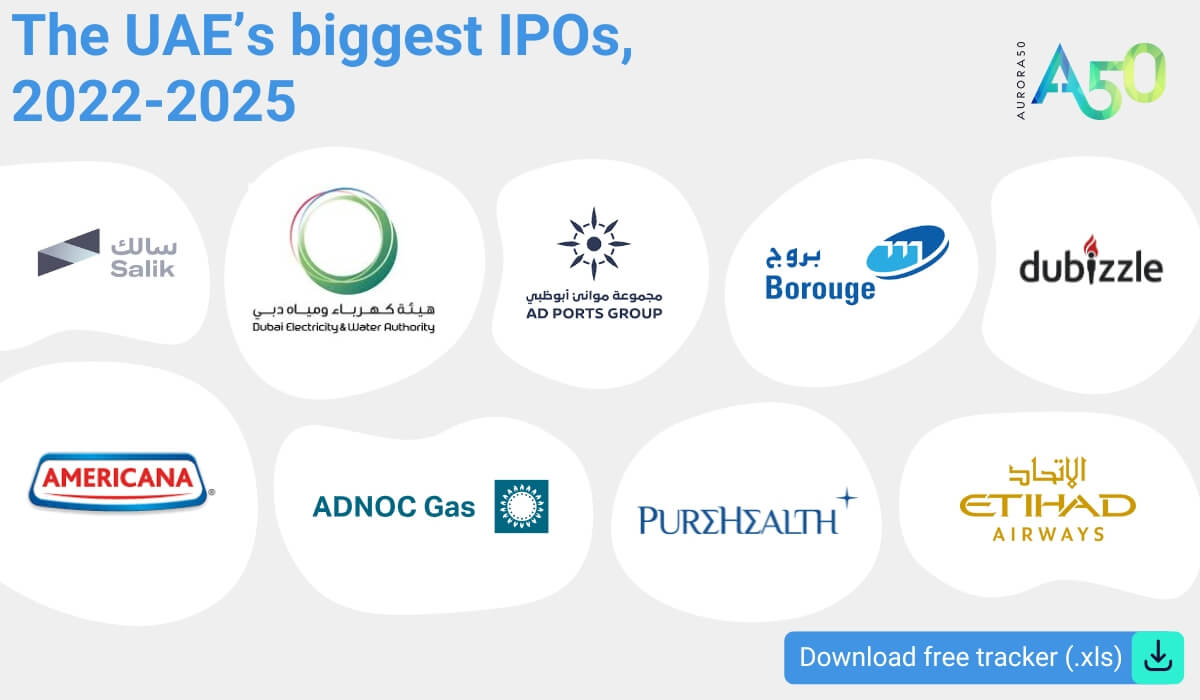
Dubai-based Dubizzle Group Holdings has unveiled plans to float about 30.34 % of its share capital via an initial public offering on the Dubai Financial Market. The offer comprises 1.25 billion ordinary shares, of which 196.1 million are fresh issues from the company and 1.05 billion are existing shares sold by current shareholders. Subscription will be open from 23 to 29 October, the price will be fixed on 30 October, and trading is expected to begin on 6 November 2025.

The firm has appointed Rothschild & Co. as Independent Financial Advisor and Emirates NBD Capital as Listing Advisor. The IPO will be co-managed by banks including Abu Dhabi Commercial Bank, Barclays, EFG-Hermes UAE, Emirates NBD, Goldman Sachs International, HSBC Middle East and Morgan Stanley. Dubizzle’s largest shareholder, Prosus N. V., is committing USD 100 million to the issuance, signaling continued backing after initially investing in 2011.

Dubizzle operates across two main platforms: dubizzle, which handles automotive and general classifieds, and Bayut, focused on real estate. In the 18 months leading up to the IPO, the group pursued strategic acquisitions such as Drive Arabia, Hatla2ee, and most recently Property Monitor, a UAE real estate data and analytics provider. The acquisition of Property Monitor, which delivered a revenue CAGR of 55 % from 2022 to 2024, is expected to deepen Dubizzle’s insight offering in its property vertical.

Financially, the group has improved its performance. In 2024, revenues reached USD 222 million, with the net loss narrowing. For the first half of 2025, revenue rose to USD 133 million, while adjusted profit stood at USD 14 million. The more constrained net loss of USD 8.9 million in H1 2025 marks further progress in reducing deficits.

Market conditions have played in Dubizzle’s favour. Dubai’s real estate market has surged, with prices climbing over 70 % over four years, boosting transaction activity and demand for online classifieds. Analysts view the Dubizzle IPO as one of the largest tech offerings this year in the UAE, designed to attract capital inflows into the growing digital marketplace sector.

Yet challenges lie ahead. Investor scrutiny of valuations and corporate transparency will intensify, and Dubizzle must show sustainable path to profitability beyond growth. Some analysts estimate the IPO value in the USD 500 million to USD 1 billion range, consistent with its fundraising and valuation aspirations. Liquidity and free float requirements—especially for inclusion in indices like MSCI—may pressure the group to deliver consistent operational metrics.

In preparing for the public listing, Dubizzle has restructured its syndicate. It previously engaged banks such as Emirates NBD, Goldman Sachs, HSBC, and now rotated in Morgan Stanley, replacing former links to Citigroup. The reconfiguration suggests an adaptive approach designed to secure stronger placement and institutional interest.

Dubizzle and many other UAE firms are benefiting from momentum in the IPO pipeline. According to regional capital markets observers, between 25 IPOs were recorded in the first half of 2025, generating about USD 4.5 billion. Brokers like Citi assert that the pipeline remains healthy, even amid macro and geopolitical headwinds, and highlight investor demand for exposure to unlisted technology, fintech, and real estate-adjacent sectors.

The United Arab Emirates has asserted that open, rules-based trade is vital to sustainable development, while unveiling strategic moves to strengthen its global trade footprint at the G20 Trade & Investment Ministerial Meeting in Gqeberha, South Africa. At the opening sessions, Dr Thani bin Ahmed Al Zeyoudi, UAE Minister of Foreign Trade, emphasised that trade frameworks anchored in transparency and fairness are the cornerstone for inclusive growth […]

Abu Dhabi hosted the two-day Regional Sports Arbitration Seminar, drawing officials and experts from across Asia to strengthen the legal architecture in sport governance.

The event, organised by the UAE National Olympic Committee and the UAE Jiu-Jitsu Federation in coordination with the Olympic Council of Asia, featured sessions ranging from case management to institutional development in sports law.

One of the spotlight panels, led by the Court of Arbitration for Sport, addressed existential pressures on arbitration mechanisms under the title “Is Sports Arbitration Under Threat?” Participants from Qatar’s Sports Arbitration Foundation presented their evolving model, underscoring capacity building and procedural innovations.

Dr Mohammed bin Nasser Basem, chair of the Saudi Sports Arbitration Center, laid out his country’s journey in building regulatory frameworks, managing caseloads, and engaging media stakeholders. He urged the expansion of arbitration capacity at both continental and national levels. At the same time, Oman’s Salem Al Rawahi pointed to plans to set up an independent sports arbitration body in the Sultanate, and he commented that the diverse mix of Asian contributions enriched the exchange.

On the first day, Dr Abdullah Al-Hayyan of CAS guided attendees through foundational concepts of sports arbitration, and the Saudi experience was cited as a case study in governance and procedural practices. The seminar also explored cooperation between national courts, ministries of justice and sports arbitration bodies, a recurring theme as countries aim to enshrine arbitration decisions in enforceable legal frameworks.

The Olympic Council of Asia judged the programme a success, asserting that it deepened participants’ grasp of emerging trends in sports law and encouraged engagement among Asian legal and sport justice officials.

Across the two days, attendees weighed the tension between evolving global standards and region-specific contexts in structuring fair dispute resolution. Lessons from Qatar and Saudi Arabia were discussed as potential models adaptable to other national settings.

Dubai hosted the first public manned flight of Aridge’s Land Aircraft Carrier over Palm Jumeirah, a demonstration that showcases the vehicle’s dual-mode driving and flying capabilities and signals ambitions for the Gulf as an early adoption market.

The modular vehicle, combining a ground “mothership” with a detachable two-seat aerial unit, lifted off from the grounds near the Waldorf Astoria before reattaching and driving away. Aridge said the flight marks a milestone in its plan to roll out consumer deliveries in the Middle East by 2027.

Company executives reported that 600 units have already been pre-ordered by GCC firms, including UAE’s Ali & Sons Group, Kuwait’s Al-Sayer, and Qatar’s Almana, pushing the global tally past 7,000. The firm expects deliveries to begin in 2026 from a new facility in Guangzhou, capable of producing 10,000 vehicles annually.

Aridge’s modular design addresses a common challenge in flying car development: how to balance driving performance, storage, and aerial capability. The ground vehicle acts as a mobile energy platform and storage base, while the air module docks and undocks autonomously. The air unit’s control system uses a single-stick interface managing ascent, speed, and stability with built-in safety constraints such as geofencing.

This version is the fifth generation of the platform, evolving from earlier prototypes demonstrated in Dubai in 2022. For mass adoption, regulatory certification is pivotal: the UAE granted a special flight permit, allowing the test flights to proceed. Aridge’s air module has already received civil aviation type certification in China.

The startup forecasts a market worth of US $41 billion for China’s eVTOL sector by 2040, while projecting Middle East demand to reach about $11 billion. Executives say technological advances—shortened development cycles and lower costs—are making what once seemed science fiction increasingly viable.

Despite the showpiece flight, challenges remain. Integrating city air traffic management, ensuring safety for public use, and building air-ground infrastructure—such as landing pads, vertiports, and regulatory frameworks—are hurdles in most jurisdictions. Some analysts caution that even with promising prototypes, wide adoption may lag until certification, cost reduction, and public trust converge.

In the Gulf region, regulatory openness is proving advantageous: the UAE’s willingness to issue experimental permits positions it as a testbed, attracting innovators who might struggle to get approval elsewhere. Meanwhile, Aridge is lining up partnerships and agreements across the GCC to support sales, operations, and maintenance in local markets.

Abu Dhabi — EDGE entity FADA has completed a week-long “Space Roadshow” across six Emirati educational institutions, aiming to galvanise youth interest in space sciences and strengthen the UAE’s space ecosystem. The roadshow, conducted in collaboration with the UAE Space Agency and Space42, carried the theme “Living in Space” and comprised workshops, interactive sessions, and networking opportunities touching on Earth observation, satellite communications, CubeSat technologies and astronaut […]

India is dispatching over 450 technology firms and startups to GITEX Global 2025 in Dubai, anchoring the India Pavilion under the aegis of ESC. The pavilion will span multiple halls and spotlight more than 100 Indian enterprises across sectors such as AI, cybersecurity, cloud computing, IoT, smart mobility, fintech and digital infrastructure. Organisations will also engage in high-stakes networking, investor roundtables and B2B matchmaking.

GITEX Global 2025, running from 13 to 17 October at the Dubai World Trade Centre, draws more than 6,800 tech companies and some 2,000 startups from about 180 countries. It is expected to be the largest edition to date, integrating themes such as physical AI, quantum computing, biomedicine and semiconductor innovation. Across the co-located Expand North Star event, over 1,200 investors managing assets exceeding US$1.1 trillion will scout opportunities among scale-ups and unicorns.

The India Pavilion marks a concerted push to convert India–UAE strategic frameworks into tangible tech commerce. With the India–UAE Comprehensive Economic Partnership Agreement and the Local Currency Settlement System operational, cross-border ICT trade has surged. Bilateral trade crossed US$100 billion during fiscal year 2024–25, and electronics exports alone reached US$3.7 billion, positioning the UAE as a key destination for Indian hardware shipments.

At a preparatory briefing, Kamal Vachani, ESC’s regional director for Dubai, described the pavilion as more than a display — “a living showcase of India’s tech prowess and growing synergy with the UAE.” ESC’s CEO, Gurmeet Singh, noted that many participating companies are MSMEs or first-time exporters, and that the pavilion aligns with India’s ambition to emerge as a global electronics hub.

India’s strategy at GITEX goes beyond sheer numbers. Firms are bringing solutions purpose-built for global markets — from smart city platforms to blockchain-enabled supply chains. The pavilion will host curated sessions on cross-border compliance, regulatory alignment, and scalable deployment across Middle Eastern and African markets.

For the UAE, the event reinforces its vision of acting as a global nexus for innovation and capital. Major corporate names such as G42, e&, IBM, AMD, Huawei, Microsoft, Oracle and Amazon Web Services will anchor the exhibitions. New entrants including Cerebras, Tata Electronics, Qualcomm and Tenstorrent will attempt to break in. The show also emphasises future-critical infrastructure: hyperscale data centres, quantum systems, and semiconductor roadmaps are front and centre.

Globally, one of the event’s linchpin themes is the maturation of AI into domain-specific systems. The AI Semicon track will address sovereign technology imperatives in chip design, while the Quantum Expo will present fault-tolerant architectures. At the intersection of AI and healthcare, companies like Mammoth Biosciences and Paradromics will illustrate how gene-editing and neurotech are being reimagined. Robotics firms will showcase humanoid prototypes and autonomous “robocars,” underscoring the pivot to “physical AI.”

Strategic partnerships form a parallel narrative. India and the UAE are finalising memorandum exchanges via the UAE-India Business Council to deepen collaboration across fintech, logistics, digital infrastructure and state-level investment. The CEPA Start-up Series launched earlier this year in New Delhi underscores a joint intent to foster innovation-led cross-border growth.

VISHNU RAJA
RYO YAMADA
HITORI GOTOH
IKUYO KITA
Social Media Auto Publish Powered By : XYZScripts.com