The Embassy of India in Muscat said it is monitoring a maritime incident involving a vessel carrying Indian seafarers off Oman and is coordinating with Omani authorities to secure the safety and rescue of those on board.
The statement followed reports that a fire broke out on the tanker MT Marivex near Omani waters on Monday, with preliminary information indicating that 24 seafarers from India were on board. Early inputs from shipping and seafarer welfare channels said the crew were safe, although officials were still verifying the vessel’s condition, the cause of the fire and the exact location of the ship.
The incident has drawn attention because it occurred close to one of the world’s most sensitive maritime corridors, where tankers moving energy cargoes between the Gulf, Asia, Africa and Europe routinely pass through the Gulf of Oman and the approaches to the Strait of Hormuz. The waterway remains under close watch after months of heightened security alerts affecting commercial shipping and civilian mariners.
MT Marivex is listed in maritime databases as an oil and chemical tanker built in 2009, with the vessel associated with the Palau flag in live tracking records. Its published identification details include IMO number 9464156 and a length of about 135 metres. Tracking data placed the vessel in the Arabian Sea area and showing a voyage linked to Duqm, an Omani port that has become increasingly important for energy, logistics and industrial activity.
Officials in New Delhi and Muscat are understood to be working through diplomatic and maritime channels, including the embassy, shipping authorities, naval contacts and the vessel’s commercial representatives. The immediate priority is confirmation of the crew’s condition, access to emergency support, and coordination with Omani maritime agencies if evacuation, firefighting or medical assistance is required.
Seafarer unions had urged authorities to act swiftly after distress information emerged from the crew. The appeals focused on the need for direct contact with the vessel, clarity on whether the fire had been contained, and assurance that rescue assets were available. Such calls have become more frequent as commercial crews have faced rising exposure to conflict-linked disruption, fires, mechanical failures and security alerts across West Asian waters.
The incident also places renewed scrutiny on safety protocols for crews operating near the Gulf of Oman. Shipping advisories issued over the past months have urged masters and crew to maintain constant watch, report suspicious activity and follow international ship and port security procedures. Risks in the area include fire, collision, drone activity, missile threats, small craft movements and navigational disruption caused by conflict-related alerts.
No official confirmation had established whether the MT Marivex fire was caused by an attack, technical failure or another onboard emergency. Authorities were treating the first stage of the response as a safety and rescue matter while verifying facts. That cautious approach reflects the sensitivity of the region, where inaccurate early claims can complicate maritime operations and diplomatic coordination.
Oman has a record of working with foreign missions during incidents involving seafarers and vessels in its waters. Its maritime agencies have previously coordinated search-and-rescue operations off Duqm and in the Gulf of Oman, including cases involving tankers and mixed-nationality crews. Such operations can be difficult when vessels are adrift, carrying flammable cargo, or operating in rough seas.
The Embassy of India’s response is also shaped by the large number of seafarers from India working on foreign-flagged ships. Many serve on tankers, bulk carriers, container ships and offshore vessels across Gulf routes. Their welfare has become a central concern for diplomatic missions as shipping disruptions in the region have moved beyond cargo delays and insurance costs to direct crew-safety risks.
For shipping companies, the episode underlines the operational pressures affecting tankers and other commercial vessels near Oman. Owners and managers must balance commercial schedules, crew contracts, war-risk insurance, route planning and regulatory compliance. A single onboard fire can trigger port-state coordination, salvage assessment, environmental monitoring and crew repatriation procedures.
Security teams are facing a fresh warning over enterprise use of AI coding agents after researchers identified a man-in-the-middle attack path that can redirect Claude Code traffic, capture OAuth tokens and preserve access to connected software-as-a-service platforms. The technique targets the way Anthropic’s Claude Code interacts with Model Context Protocol servers, a fast-growing mechanism used to connect AI agents with external systems such as Jira, Confluence, GitHub, […]
A 28-year-old man died and a woman was hospitalised after medical emergencies at an overnight music concert in Mumbai’s Worli, prompting police to examine whether alcohol, narcotics, crowd conditions or delayed medical response played any role in the incident.
Vrishabh Mahendra Gangurde, a resident of Mahim, fell ill during the “Klangkuenstler All Night Long” event at the NSCI Dome in the early hours of Sunday. He was taken for medical care after his condition deteriorated, but was declared dead. A female companion who also complained of uneasiness was admitted to hospital, where she remained under observation.
Police have not confirmed drug consumption and are awaiting the post-mortem and forensic findings before drawing a conclusion on the cause of death. Early information available to investigators indicates that the two had consumed alcohol, while the possibility of other substances has not been ruled out. Officers are recording statements of organisers, staff, security personnel, attendees and medical responders to establish the sequence of events inside the venue.
The case has drawn added attention because Mumbai is already dealing with the fallout from another fatal overdose-linked concert case earlier this year. Two management students died after allegedly consuming ecstasy pills at a music event in Goregaon in April, while another woman required hospitalisation. That investigation led to multiple arrests, including alleged suppliers, intermediaries and venue-linked personnel, and pushed police to examine whether large ticketed events were being used by small drug networks to target young attendees.
The Worli incident has now renewed scrutiny of how nightlife events are managed in the city, particularly those running through the night and drawing large crowds. Investigators are expected to check entry controls, availability of medical teams, CCTV coverage, emergency response time, alcohol service protocols and whether organisers had complied with permission conditions. The NSCI Dome, one of Mumbai’s prominent indoor venues, regularly hosts concerts, exhibitions, sports events and corporate gatherings.
Police are also examining whether there was adequate coordination between the organiser, venue management, private security and local authorities. Event permissions for large gatherings generally require compliance with safety norms, crowd-control measures, fire clearances, medical support and restrictions on illegal substances. Any lapse in implementation could invite action under relevant police and municipal provisions.
The performer Klangkuenstler, a German techno artist known for high-energy warehouse-style sets, has a significant following among electronic music audiences. All-night electronic music events have expanded across major cities as promoters tap into demand for global DJs, premium venue experiences and late-night entertainment. The sector has grown quickly, but safety systems have not always kept pace with rising attendance, alcohol access and the risks associated with synthetic drugs.
Medical experts have repeatedly warned that dehydration, heat, alcohol, stimulants and prolonged dancing can combine dangerously in crowded venues. Symptoms such as confusion, collapse, chest pain, overheating, seizures and loss of consciousness require immediate intervention. Synthetic stimulants, including MDMA or ecstasy, can sharply increase body temperature and heart strain, especially when mixed with alcohol or taken in unknown quantities.
For investigators, the immediate challenge is to separate speculation from evidence. A suspected overdose cannot be treated as a confirmed cause until toxicology and post-mortem reports are complete. At the same time, the death of a young attendee at a high-profile venue gives police grounds to examine whether illegal substances circulated inside or around the event and whether organisers had systems to prevent such access.
Mumbai Police have been under pressure to tighten checks after the Goregaon deaths. Measures under discussion after that case included stricter frisking, more accountability for organisers, improved CCTV coverage, better coordination with venue staff and possible deployment of plain-clothes personnel at high-risk events. The Worli death could accelerate those discussions, particularly if forensic findings point to substance use or operational lapses.
Thousands of Central Board of Secondary Education Class 12 students have pressed for grace marks and a waiver of post-result fees after complaints of evaluation errors, portal glitches and delayed access to answer sheets placed their college admissions under fresh strain.
The demand has gathered pace across student networks, parent groups and coaching circles after candidates reported unusually low marks, unchecked answers, blurred scanned copies, payment failures and difficulty accessing the board’s post-result services. Many students say the burden of paying for verification and re-evaluation should not fall on candidates if the discrepancies arose within the evaluation system.
The dispute is centred on the board’s On-Screen Marking system, introduced for Class 12 answer books in the 2026 main examinations. CBSE has described the system as a technology-led reform intended to improve standardisation, accuracy, confidentiality and speed in evaluation. Students and parents, however, argue that the transition has exposed gaps in implementation at a time when even small changes in marks can affect eligibility, merit lists, counselling and scholarship decisions.
By June 5, CBSE had received more than 60,000 applications for verification and re-evaluation from Class 12 students across the country. The volume of requests has underlined the scale of unease after the declaration of results, particularly among students applying for engineering, medicine, commerce programmes and overseas universities, where documentation deadlines can be tight.
CBSE reduced the cost of post-result services after concerns were raised over access and affordability. The fee for obtaining a scanned copy of an evaluated answer book was cut from ₹700 to ₹100. The verification fee was lowered from ₹500 to ₹100, while the re-evaluation charge was reduced from ₹100 to ₹25 per question. The board has also said the fee will be refunded if marks increase after re-evaluation.
Students seeking redress must first obtain their scanned answer sheets before applying for verification or re-evaluation in the relevant subject. Applications are being handled through the official post-result portal, with Aadhaar-based verification added for security. CBSE has said answer sheets are available in candidate accounts and may also be sent to registered email addresses.
The fee reduction has not ended the dispute. Students argue that a refund after marks increase does not address the wider issue of upfront cost, uncertainty and loss of admission time. Families applying in multiple subjects may still have to pay for several stages of the process, while those waiting for revised marks risk missing cut-off dates at universities and professional institutions.
Technical concerns have widened the controversy beyond marks alone. CBSE acknowledged vulnerabilities linked to a portal used for scanned answer sheets after claims that answer booklets and examination papers had been exposed through an unsecured cloud storage route. The board said cybersecurity professionals from government agencies and IITs were being deployed to strengthen digital assets and move systems to a safer infrastructure.
The episode has also triggered questions about the service provider handling the digital evaluation process. Coempt Edutek Private Limited, a Hyderabad-based company associated with the On-Screen Marking framework, has come under scrutiny as students, parents and political figures call for greater transparency in the tendering, scanning, storage and review process. CBSE has maintained that the digital system includes quality checks and is meant to make evaluation more consistent.
Admission-related pressure has sharpened the demand for swift relief. Engineering aspirants are especially concerned because Class 12 marks remain relevant for eligibility in several routes. IIT Roorkee, which is handling JEE Advanced admissions, has allowed candidates below the 75 per cent Class 12 threshold to participate in the seat allocation process, provided they submit a revised qualifying scorecard by July 15 if their marks change after re-evaluation.
Parents’ associations have sought a one-time package covering grace marks for affected students, fee waiver for post-result services and flexibility in admission documentation deadlines. Teachers and education consultants have urged CBSE to publish clearer data on how many answer sheets are revised after verification and re-evaluation, arguing that transparency would help restore confidence in the system.
Hola Browser’s Windows installer was compromised to deliver an undeclared cryptocurrency-mining executable to some users, exposing a supply-chain weakness in a product that had passed application certification checks before the anomaly was detected. The affected version, Hola Browser for Windows 1.251.91.0, wrote an unexpected file named me. exe to C:Program FilesHola on some systems. The executable was not part of the certified software footprint, was not digitally […]
Bitcoin slipped below $60,000, extending a sharp retreat that has weakened confidence among bulls and underscored a broader shift in speculative capital towards artificial intelligence-linked equities, large technology listings and parts of the gold trade. The world’s largest cryptocurrency touched its weakest level since October 2024 after failing to hold support around $65,000, a level traders had treated as critical following last month’s attempted recovery. The latest […]
Scientists have identified a vast fan-shaped geological structure buried beneath East Antarctica, linking several major subglacial basins into one coherent system that may influence how the continent’s ice sheet moves and responds to warming. The structure, named the East Antarctic Fan-shaped Basin Province, lies under ice more than three kilometres thick in places. It brings together features long studied separately, including the Wilkes Basin, Aurora Basin and […]
A China-linked cyber-espionage group tracked as VerdantBamboo has been tied to a BRICKSTORM malware operation targeting Linux-based virtual appliances, firewalls and enterprise infrastructure, sharpening concerns over the security of systems that often sit outside mainstream endpoint monitoring. The activity came to light after suspicious traffic was detected from a Linux-based virtual machine appliance during an incident response investigation. The inquiry found that attackers had used stolen administrative […]
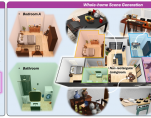
Kairos-HomeWorld is purpose built for embodied intelligence and represents the first unified framework capable of generating a complete, fully interactive home environment from a single text prompt. Extending indoor scene generation beyond individual rooms, it enables whole-home simulation in which every object is fully manipulable within an integrated simulation engine.
Kairos-HomeWorld employs a four-stage hierarchical architecture encompassing floorplan generation, 2D-to-3D lifting, recursive refinement, and manipulable object placement. This approach enables the production of globally coherent, physically accurate, and simulation-ready scenes. Each environment contains more than 15 manipulable objects and achieves a Footprint Object Density of 4.16, the highest among compared methods.
The accompanying open-source dataset is purpose-built for Chinese households, pairing 300,000 real residential floor plans with 5,000 fully furnished, simulation-ready homes and 50,000 physics-enabled interactive object assets. Already deployed in ACE ROBOTICS’ daily robot training, it significantly accelerates the simulation-to-reality transfer cycle.
SHANGHAI, CHINA – Media OutReach Newswire – 5 June 2026 – ACE ROBOTICS, in collaboration with the Multimedia Laboratory at The Chinese University of Hong Kong (CUHK) and Shenzhen Loop Area Institute, today announced the open-source release of Kairos-HomeWorld, the industry’s first unified World Model framework capable of generating full home-scale, object-level interactive 3D environments from a single text prompt. The solution addresses longstanding limitations in indoor scene generation, which has typically been restricted to single-room outputs with weak global consistency and limited interactivity. Kairos-HomeWorld overcomes these constraints by delivering structurally coherent, physically plausible, and functionally complete residential environments. These high-fidelity, large-scale simulations provide a robust foundation for advancing embodied intelligence applications and accelerating real-world robot training.
The long-term vision for embodied intelligence is the home environment. However, residential settings are inherently diverse and highly personalized, requiring robots to be trained across a broad range of realistic and differentiated scenarios before they can reliably operate in even a single household. High-fidelity simulation offers the most practical pathway to achieving this at scale, yet existing approaches typically involve a trade-off: synthetic environments lack realism, while scanned real-world scenes offer limited interactivity. Kairos-HomeWorld, together with its accompanying dataset, is designed to bridge this gap, delivering both realistic and interactive environments within a unified framework.
A four-stage architecture for whole-home, object-level generation Conventional approaches to indoor scene generation remain constrained to single-room outputs, often exhibiting weak global consistency, frequent physical inaccuracies, and limited or no interactivity. Kairos-HomeWorld takes a fundamentally different approach. It decomposes whole-home generation into a structured, four-stage process, redefining the underlying architectural paradigm from the ground up.
Stage 1 — Floor Plan Generation. A K-D tree-based approach translates real-world floor plans into a hierarchical text representation that can be efficiently processed by large language models (LLMs). This method mitigates common issues in conventional layout generation, including room overlaps and fragmented topologies, resulting in more coherent and structurally consistent spatial configurations.
Stage 2 — 2D-to-3D Lifting & Furniture Layout Generation. A “top-down global initialization combined with a first-person detail walkthrough” approach anchors the process to the 3D building shell generated in Stage 1. This methodology mitigates the geometric drift commonly associated with conventional 2D-to-3D lifting techniques, enabling more stable and spatially consistent scene generation.
Stage 3 — Recursive Refinement. A fine-tuned vision-language model performs iterative validation and correction, automatically identifying and resolving physical inconsistencies, such as obstructed doorways or object collisions. This recursive process materially reduces spatial errors, achieving among the lowest reported furniture-collision rates in the industry.
Stage 4 — Manipulable Object Placement. A surface-centric placement algorithm assigns each object detailed physical properties, including material composition, density, friction, and structural support relationships. Each generated scene incorporates an average of more than 15 manipulable objects and achieves a Footprint Object Density (FOD) of 4.16, a metric reflecting the concentration of items across furniture surfaces. All objects are natively compatible with simulation engines, enabling direct interaction for tasks such as grasping, movement, and stacking.
The resulting environments move beyond “viewable but not actionable” outputs. Their coherent spatial structure enables seamless, continuous navigation across multiple rooms, while objects embedded with realistic physical properties allow robots to simulate complex household tasks end-to-end. Taken together, this approach addresses key limitations in existing data pipelines, resolving the scarcity of high-quality 3D simulation data, the lack of realism in synthetic environments, and the limited interactivity of scanned scenes within a single unified framework.
The dataset: 300,000 real floor plans, 5,000 fully interactive homes, built for Chinese households ACE ROBOTICS and CUHK are open-sourcing a dataset of 300,000 structurally annotated residential floor plans, sourced from real-world listings and processed through a multi-stage automated pipeline. The pipeline vectorizes and labels key spatial elements, including door and window positions, room geometry, functional zoning, and connectivity. By comparison, widely used benchmarks such as RPLAN and ResPlan contain approximately 80,000 and 17,000 floor plans, respectively, underscoring the scale and comprehensiveness of the Kairos-HomeWorld dataset.
Building on this foundation, the dataset also includes 5,000 fully furnished residential environments, each featuring a complete furniture layout and an average of more than 15 physics-enabled, manipulable objects, powered by the PhysX-Omni model. All assets are sim-ready and can be directly imported into a simulation engine, enabling immediate use in interactive training scenarios.
Most existing open indoor-scene datasets are centered on North American and European residential formats, typically featuring open-plan kitchens, the absence of service balconies, and layouts and design elements that capture only a narrow segment of global housing. As a result, robots trained on these datasets often exhibit limited transferability when deployed in environments outside their scope. Kairos-HomeWorld ‘s dataset is purpose-built for Chinese households, with deliberate coverage of historically under-represented housing typologies. It spans a wide range of unit sizes, from approximately 30 m² (around 320 sq ft) studio apartments to residences exceeding 200 m² (approximately 2,150 sq ft). The dataset accurately reflects key architectural features common in these settings, including north-south cross-ventilated layouts, enclosed kitchens, dedicated service balconies, wet-and-dry-separated bathrooms, and entryway storage, as well as the irregular room configurations often found in older housing stock.
The dataset is being openly released to both academic and industry communities. Going forward, the team plans to expand its scope to include additional regions, interior styles, and interaction scenarios, further lowering barriers to real-world-ready training for embodied intelligence.
See it in action: one prompt to a fully interactive home Kairos-HomeWorld runs the full end-to-end pipeline, from initial text input to a fully interactive home environment, delivering global spatial consistency, physical realism, and seamless interactivity from a single prompt.
The system begins with a single-line prompt: “Generate a 90 m² (approximately 970 sq ft) two-bedroom apartment in neo-Chinese style.” Leveraging real floor plan data and its K-D tree representation, Kairos-HomeWorld first constructs an empty spatial layout aligned with real-world living patterns, incorporating cross-ventilation and well-defined functional zoning. Building on this foundation, a hierarchical “global layout plus first-person detail” approach furnishes the environment with stylistic coherence, while a PhysX-Omni rendering pass assigns full physical properties to all surfaces and objects, including articulated behavior, ensuring the scene is fully interactive and sim-ready.
A single natural-language instruction, “tidy the whole home”, is decomposed by the robot into a variety of discrete sub-tasks, executed sequentially along a complete navigation path spanning the living room, bedrooms, kitchen, bathroom, and dining area. The robot recognizes objects, plans efficient routes, and performs precise manipulation tasks, including articulated-object interactions for opening refrigerator and cabinet doors, fluid interactions for pouring laundry detergent, soft-body interactions for drawing curtains, irregular-object interactions for grasping apples, and gravity-based physical interactions for placing snacks.
Conventional simulation environments typically support navigation-focused training in isolation. By contrast, Kairos-HomeWorld integrates globally consistent spatial structures with objects that embody realistic physical properties. This enables robots to interact naturally with more than 15 object types, accurately modeling real-world dynamics such as collision, gravity, and friction, and to rehearse the full lifecycle of complex household tasks entirely within a virtual environment.
Across the industry, the same structural bottleneck, the scarcity of home-scale training data, is being addressed through multiple approaches. For example, Figure AI’s collaboration with Brookfield focuses on collecting human activity data across more than 100,000 residential units. Kairos-HomeWorld addresses this challenge through on-demand synthetic generation, delivering scalable training environments enhanced with object-level physical realism, capabilities that real-world data capture alone cannot fully provide.
In contrast, Kairos-HomeWorld delivers significantly lower costs and higher efficiency for household robot training. Powered by its world model, it can programmatically generate diverse Chinese home simulation scenes and physics-enabled interactive objects at scale.
Robots can complete a full range of household tasks training entirely within the virtual environment. New scene generation incurs near-zero marginal cost, eliminating substantial real-world testing expenses such as site operation and maintenance and furniture damage. Meanwhile, unconstrained by the limited stock of physical residential properties, it outperforms real-world data collection approaches in both training efficiency and scalable expansion.
Kairos-HomeWorld is already deployed in ACE ROBOTICS’ embodied intelligence training workflows, enabling full-pipeline simulation of long-horizon household tasks, including cross-room navigation and multi-room tidying. By allowing robots to rehearse complete task sequences in a virtual environment, the platform significantly shortens the simulation-to-reality transfer cycle. This approach lowers barriers to developing embodied intelligence systems and supports the accelerated, large-scale deployment of home robotics, particularly within the Chinese market. Kairos-HomeWorld is now available on GitHub.Hashtag: #ACEROBOTICS
The issuer is solely responsible for the content of this announcement.
About ACE ROBOTICS
Equipping robots with intelligent “brains” and engaging “souls”.
ACE ROBOTICS is a pioneering robotics company dedicated to advancing the field of embodied intelligence. Through breakthrough technological innovations and deep insights into embodied intelligence scenarios, we aim to empower robots with the ability to autonomously understand and explore the physical world, thereby accelerating their commercial implementation.
The company pioneered the ACE R&D paradigm and built a vision-based “environmental data engine, real-world cognition, embodied interaction generalization” technology chain. Using full spatiotemporal and multi-perspective environmental capture as its engine, along with Kairos 3.0 – China’s first open-source and commercially applicable world model – plus the Embodied Foundation Model as its technical backbone, ACE ROBOTICS addresses core industry challenges such as data scarcity, common sense gaps, poor generalization, and limited versatility. Simultaneously, the company unveiled its flagship A1 Embodied Super Brain Module, accelerating the large-scale commercial deployment of embodied intelligence across diverse scenarios.
ACE ROBOTICS is both a technology pioneer and an ecosystem builder. Through strategic cooperation with top hardware manufacturers, cloud service providers, and vertical scenario partners, we have broken through the “model-hardware-scenario” industrial deadlock, providing standardized and customized solutions that are driving the development of China’s embodied intelligence industry.
Arabian Post Staff -Dubai Crude loading at Oman’s Mina al Fahal terminal was suspended on Friday after an explosion near its single-buoy mooring berths, disrupting operations at one of the Sultanate’s most important oil export outlets. Two people familiar with the matter said the blast occurred between SBM 1 and SBM 2 and was believed to have followed a drone attack. The timing of the incident was […]
Goldman Sachs has joined Apex Group and Archax in launching a blockchain-native real estate fund, marking a fresh institutional test of whether tokenised structures can bring greater efficiency, transparency and transferability to a traditionally illiquid asset class without moving outside regulated fund frameworks. The Luxembourg-domiciled fund has been developed with LRC Group and Ownera, combining established alternative investment fund structures with on-chain issuance of fund units. The […]
Romanian President Nicușor Dan is preparing to nominate Eugen Tomac as prime minister, seeking to break a month-long political deadlock and restore fiscal direction in one of the European Union’s most strained economies. Tomac, a member of the European Parliament and leader of the People’s Movement Party, has emerged as the presidency’s preferred option after talks among mainstream parties failed to produce a stable governing formula. His […]
Bitcoin fell four percent on Wednesday to $64,721.39, its weakest level since 28 February, as pressure from fund withdrawals, leveraged liquidations and shifting macroeconomic signals deepened a broad retreat across digital assets. The slide extended a difficult stretch for the world’s largest cryptocurrency, which has moved sharply lower after failing to hold above key support levels near $70,000. Selling accelerated as investors reduced exposure to risk assets, […]
By K Raveendran Public anger has a strange way of finding symbols. Sometimes it gathers around a saintly figure in a white cap, sometimes around an unlikely political label that sounds almost like a joke until it begins to speak for a generation. The overwhelming response from Gen Z to the Cockroach party carries unmistakable […]
Audible has launched a free loyalty programme that gives paying members discounts, credits and anniversary gifts for listening to audiobooks, marking a broader push by Amazon’s audio unit to make subscription use feel more rewarding beyond monthly credits and catalogue access. The programme, called Audible Rewards, is being rolled out first in the United States for members on Standard and Premium plans. It allows users to earn […]
Cyber espionage operators are using a newly documented Windows backdoor called HazyBeacon to target government networks in Southeast Asia, turning legitimate Amazon Web Services infrastructure into a covert command-and-control channel that can blend into ordinary cloud traffic. The activity, tracked as CL-STA-1020, has been linked to intelligence-gathering operations focused on sensitive state information, including material tied to tariffs, trade disputes and government policy discussions. Security researchers have […]
House of Doge has struck a partnership with Paxos to place Dogecoin on regulated brokerage and custody infrastructure used by major financial technology platforms, marking a fresh push to move the meme-origin cryptocurrency deeper into mainstream digital asset services. The agreement, announced on June 1, 2026, will integrate DOGE into Paxos’s enterprise crypto platform, allowing Paxos clients to offer buying, selling, holding and transfer functions for the […]
Gnosis Pay has moved into emergency containment after attackers exploited a vulnerability in the Delay Module used in its smart-contract wallet architecture, forcing an urgent withdrawal warning, a temporary reversal of guidance and a pledge to reimburse affected users in full. The breach, disclosed on 1 June, hit the payment product that connects self-custodial crypto wallets with card spending. The affected component is linked to the Zodiac […]
Scientists have identified a link between biological changes present at birth, the development of gut bacteria during infancy and early signs of autism spectrum disorder and attention-deficit/hyperactivity disorder by age three, raising fresh questions about how brain development may be shaped before and after delivery. A large birth-cohort study led by researchers at The Chinese University of Hong Kong’s Faculty of Medicine found that epigenetic marks in […]
Anthropic is expanding access to Claude Mythos Preview through Project Glasswing, widening a controlled cybersecurity programme at a time when North Korean-linked hackers are sharpening attacks against macOS users in the financial, venture capital, Web3 and cryptocurrency sectors. The San Francisco-based AI company plans to increase the number of Project Glasswing partners from about 50 to roughly 200 organisations across more than 15 countries, broadening access to […]
Moscow’s main security agency said it had uncovered a foreign intelligence operation that placed spyware on mobile phones used by senior officials, intensifying Russia’s long-running confrontation with Western governments over cyber espionage, communications security and control of digital infrastructure. Russia’s Federal Security Service said the operation involved the compromise of thousands of devices, including phones used by officials, diplomats and people linked to government agencies. The agency […]
French police detained 780 people after celebrations over Paris Saint-Germain’s Champions League triumph turned violent across Paris and several other cities, leaving officers injured, shops damaged and vehicles set on fire during a night of disorder that overshadowed the club’s second successive European title. The unrest broke out after PSG defeated Arsenal 4-3 on penalties following a 1-1 draw at the Puskás Aréna in Budapest on Saturday, […]
Arabian Post Staff -Dubai UAE regulators have approved the oral form of Wegovy for weight management and cardiovascular risk reduction, expanding access to one of the world’s most closely watched obesity treatments beyond weekly injections. Emirates Drug Establishment cleared Wegovy, the semaglutide medicine developed by Novo Nordisk, as a once-daily tablet for adults living with obesity or overweight linked to weight-related health conditions. The approval makes the […]
A destructive cyber campaign tied to Iran-linked operators has targeted organisations in the Middle East and abroad, deleting virtual machines, databases, partitions and backup repositories in attacks designed to cripple recovery as well as disrupt daily operations. The activity has been linked by forensic investigators to infrastructure and tactics associated with Black Shadow, a long-running threat group assessed by Israeli authorities and private researchers as operating on […]