Security researchers have uncovered a vulnerability in Amazon Web Services Bedrock’s code interpreter environment, raising concerns over the robustness of isolation safeguards in generative AI systems and prompting renewed scrutiny of cloud-based development tools used by enterprises. The flaw, identified in Bedrock’s sandboxed execution layer, centres on weaknesses in DNS handling that could allow data exfiltration from supposedly isolated environments. Analysts say the issue highlights structural challenges […]
UTI Pension Fund, the country’s third-largest pension manager, is recalibrating its investment strategy by increasing exposure to debt instruments after an extended period of aggressive equity accumulation, a move that market participants say could stabilise segments of the sovereign and corporate bond market under pressure.
Senior executives within the fund have indicated that elevated equity valuations and tightening liquidity conditions have prompted a reassessment of asset allocation, with a renewed emphasis on fixed-income securities offering more predictable returns. The adjustment comes after a sustained phase during which pension funds and institutional investors channelled significant capital into equities, buoyed by strong benchmark indices and robust inflows into retirement savings schemes.
The recalibration is being closely tracked by bond traders and policymakers alike, given the fund’s size and influence. With assets under management running into several lakh crore rupees, its portfolio decisions often ripple across markets. Analysts suggest that a rotation back into government securities and high-grade corporate bonds could provide much-needed support to yields that have remained elevated amid persistent borrowing requirements and global rate uncertainty.
Market data indicates that benchmark 10-year government bond yields have faced upward pressure over the past year, reflecting a combination of domestic fiscal dynamics and global monetary tightening cycles. While inflation has moderated within the central bank’s tolerance band, the trajectory of interest rates has remained cautious, limiting appetite for long-duration debt. Against this backdrop, a large institutional shift towards bonds may ease supply-demand imbalances.
Fund managers argue that equities, after a prolonged rally, are showing signs of valuation stretch in certain sectors. Price-to-earnings multiples in segments such as financials and consumer stocks have expanded significantly, prompting concerns about forward return potential. The pension fund’s move reflects a broader reassessment within long-term capital pools that prioritise capital preservation alongside growth.
Officials familiar with the strategy say the shift does not signal a wholesale retreat from equities but rather a rebalancing to maintain target allocations. Retirement funds, by design, require a calibrated approach that aligns with long-term liabilities, often necessitating periodic adjustments in response to market conditions. The current tilt towards bonds is viewed as part of that disciplined framework rather than a reactionary move.
The development also intersects with policy considerations. Government borrowing programmes remain substantial as authorities continue to fund infrastructure expansion and welfare commitments. Stable demand from domestic institutional investors such as pension funds and insurance companies plays a critical role in ensuring smooth absorption of debt issuances without excessive volatility in yields.
Economists note that domestic factors are increasingly shaping the bond market’s trajectory, even as global influences persist. The interplay between fiscal policy, inflation trends, and monetary stance has created a complex environment where investor positioning becomes a key determinant of market stability. In such a scenario, large pension funds shifting allocations can act as a counterweight to external shocks.
At the same time, some market participants caution that the scale and pace of the shift will determine its actual impact. If the transition is gradual, its effect on yields may be limited, particularly if foreign portfolio flows remain volatile. Conversely, a more pronounced reallocation could compress yields and improve liquidity in secondary markets.
Industry experts highlight that pension funds globally tend to rotate between asset classes based on valuation cycles and macroeconomic signals. The current adjustment by UTI Pension Fund aligns with similar trends observed in other markets, where long-term investors are seeking to lock in yields amid expectations that interest rates may remain higher for longer than previously anticipated.
The move also carries implications for equity markets, which have benefited from sustained domestic institutional inflows. While there is no immediate indication of a sharp withdrawal, a moderation in fresh allocations could influence market momentum, especially in sectors heavily reliant on institutional support. Traders say the impact may be more visible in mid- and small-cap segments, where valuations have risen sharply.
Regulatory frameworks governing pension funds encourage diversification and prudent risk management, limiting excessive concentration in any single asset class. The rebalancing towards bonds is consistent with these guidelines, reinforcing the importance of stability in retirement portfolios. It also underscores the evolving maturity of the pension fund ecosystem, which is becoming a more active participant in capital market dynamics.
Officials associated with the fund emphasise that long-term growth prospects of the economy remain intact, supporting continued engagement with equities over time. However, the current environment calls for a measured approach that balances return expectations with risk mitigation, particularly in the face of global uncertainties and shifting monetary conditions.
Arabian Post Staff -Dubai Aramco Stadium has been named Strategic Partner for the 2026 edition of the Sports Investment Forum, a move that underscores the growing alignment between Saudi Arabia’s large-scale sports infrastructure projects and global investment platforms. The event is scheduled to take place from April 20 to 22 at The Ritz-Carlton in Riyadh, drawing policymakers, investors and industry executives as the Kingdom accelerates its push […]
Adobe has agreed to provide free services worth about $75 million to customers as part of a settlement resolving a United States lawsuit over its subscription cancellation practices, closing a dispute that drew scrutiny from regulators and consumer advocates over how the software giant managed its widely used Creative Cloud plans. The agreement follows allegations that Adobe made it unnecessarily difficult for customers to cancel subscriptions, particularly […]
Department of Culture and Tourism – Abu Dhabi will stage the second edition of the Ghaitah Al Ain Festival from 20 to 27 March 2026, expanding a family-oriented cultural celebration that blends entertainment, heritage and community activities at ADNEC Centre Al Ain. The eight-day event forms part of a broader strategy to strengthen the city’s cultural calendar while reinforcing Al Ain’s position as a leading tourism and […]
China’s industrial sector expanded at a faster pace during the opening months of 2026, offering a lift to the world’s second-largest economy as policymakers balance external uncertainties and fragile domestic demand.
Official data released by the National Bureau of Statistics showed value-added industrial output rose 6.3 per cent year on year during January and February combined. The figure marked an acceleration from the 5.2 per cent growth recorded in December and exceeded forecasts by economists who had anticipated a more modest rise of around five per cent.
Authorities combine the first two months of the year when reporting major economic indicators to smooth distortions created by the Lunar New Year holiday, which shifts between January and February and can disrupt production schedules and consumer spending patterns.
The latest figures indicate that industrial activity remains one of the more resilient pillars of China’s economic performance. Manufacturing, mining and utilities production all contributed to the increase, with higher-value sectors linked to technology and advanced equipment manufacturing continuing to expand.
Stronger factory output came alongside moderate improvement in other key indicators. Retail sales, a broad measure of consumption, climbed 2.8 per cent during the same period, signalling some recovery in household spending after a subdued end to the previous year. Fixed-asset investment, which tracks spending on infrastructure, property and equipment, rose 1.8 per cent after contracting during 2025.
Analysts view the combination of rising industrial production and steady investment as evidence that state-backed infrastructure projects and export-oriented manufacturing are helping stabilise growth, even as other sectors continue to face pressure.
Manufacturing linked to high-technology and green industries has been a central driver of output gains. Production of computers, communications equipment and advanced machinery has expanded more rapidly than traditional heavy industries, reflecting Beijing’s push to upgrade the country’s industrial base and strengthen technological self-reliance. Data on industrial structure show that more than thirty of the country’s forty-one major manufacturing categories recorded growth during the past year, underlining the breadth of activity across sectors.
Exports have also provided support. Overseas shipments from China surged at the start of the year, led by electronics, semiconductors and equipment associated with artificial intelligence infrastructure. Robust global demand for solar panels, electric vehicles and lithium batteries has further reinforced factory activity, with these sectors often described as part of China’s emerging “new three” export engines.
Despite the stronger industrial figures, economists caution that the broader economic outlook remains uneven. Domestic consumption has not fully regained momentum, and households continue to show caution in discretionary spending. Retail sales growth, although improving, still lags behind pre-pandemic levels, highlighting lingering uncertainty among consumers.
A prolonged downturn in the property sector remains one of the most significant drags on economic confidence. Investment in real estate development has declined sharply over the past several years, and housing sales have contracted as developers grapple with high debt levels and weak buyer demand. The downturn has had ripple effects across construction, steel, cement and household goods industries, sectors traditionally linked to housing activity.
Labour market conditions also present a mixed picture. Urban unemployment rates have edged higher, with the jobless rate reaching slightly above five per cent early in the year. Rising employment pressure, particularly among younger workers and graduates, has become a focus of policy discussions as authorities seek to sustain economic stability.
Manufacturing sentiment indicators underscore these challenges. Official purchasing managers’ surveys have slipped below the expansion threshold of 50, suggesting some factories are experiencing slower order growth and cautious business expectations. Analysts note that while export-oriented companies continue to benefit from global demand, firms dependent on domestic consumption face more subdued conditions.
Beijing has set a national economic growth target of around 4.5 to 5 per cent for 2026, the lowest range in decades and a signal that policymakers are preparing for a more moderate expansion phase as structural adjustments reshape the economy. The leadership has repeatedly emphasised the need to strengthen domestic demand while maintaining technological advancement and industrial upgrading.
Infrastructure spending remains a key policy lever. Local governments have accelerated projects in transportation networks, energy systems and digital infrastructure, helping sustain industrial demand for materials and equipment. Investment in strategic industries, including renewable energy and advanced manufacturing, continues to receive policy support.
Global developments also weigh on the outlook. Geopolitical tensions and fluctuations in energy prices could affect trade flows and production costs, while shifting trade policies among major economies present another layer of uncertainty for exporters.
OpenAI is preparing to expand the capabilities of its widely used chatbot by bringing advanced video-generation technology from its Sora model into ChatGPT, a move that could transform how users interact with artificial intelligence and reshape the competition among global AI platforms. Plans under discussion within the company involve integrating Sora’s text-to-video generation system directly into ChatGPT, allowing users to create short videos simply by typing prompts […]
By K Raveendran #Oil markets have entered a phase of acute uncertainty as military escalation involving strikes on Iran and the resulting closure of the Strait of Hormuz begin to reverberate through global energy supply chains. Within just over a week of the disruption, more than 12 million barrels of oil equivalent per day of […]
Clair Obscur: Expedition 33 secured the Game of the Year title at the 26th annual Game Developers Choice Awards, marking one of the most significant recognitions yet for the role-playing game that has dominated industry accolades over the past year. The awards ceremony, held alongside the Game Developers Conference in San Francisco, saw the title collect five trophies in total, reinforcing its reputation as one of the […]
Microscopic plastic particles circulating through food, water and air may be contributing to neurological damage linked with Alzheimer’s and Parkinson’s disease, according to emerging scientific research examining how these pollutants interact with the human brain. Researchers studying the biological effects of microplastics say the tiny fragments can enter the body through ingestion or inhalation and may accumulate in organs, including brain tissue. Laboratory studies and environmental monitoring […]
Government plans to establish an $11 billion fund aimed at accelerating semiconductor development, a move designed to strengthen the country’s position in the global electronics supply chain and reduce dependence on imported chips. The proposed initiative, valued at more than ₹1 trillion, is under active discussion and could be unveiled within months as part of a broader push to expand domestic technology manufacturing.
Semiconductors form the backbone of modern technology, powering devices ranging from smartphones and laptops to vehicles, industrial equipment and artificial intelligence systems. Officials believe the new fund will provide subsidies for chip design, semiconductor manufacturing equipment and the development of supporting supply chains, while encouraging investment from both domestic conglomerates and international technology companies.
Policy planners view the programme as a key step in transforming the country into a major centre for semiconductor manufacturing and design. Industry specialists say the fund would complement earlier government initiatives aimed at building a full semiconductor ecosystem, including design, fabrication, assembly, testing and packaging capabilities.
The proposal builds on earlier efforts launched in 2021 under the semiconductor incentive scheme, which earmarked about $10 billion to attract chip manufacturers and component makers. That programme sought to cover a significant share of the capital costs associated with establishing fabrication and assembly plants, a strategy widely adopted by governments worldwide seeking to secure technology supply chains.
Authorities have framed semiconductor development as a strategic priority amid rising global demand for advanced electronics. The push is also tied to ambitions of expanding the domestic electronics manufacturing sector, which has grown rapidly over the past decade as multinational companies diversify production away from traditional manufacturing hubs.
Major industrial projects linked to this strategy are already underway. A semiconductor assembly and testing facility led by Tata Group in the northeast is expected to become one of the country’s first large-scale chip processing plants, while U. S. firm Micron is developing a packaging facility valued at about $2.7 billion. These projects represent early steps toward creating an integrated semiconductor ecosystem spanning design, fabrication and advanced packaging.
Other proposals include joint ventures between technology firms and global chipmakers. One such project involves a partnership between HCL Group and Taiwan’s Foxconn to establish a semiconductor unit near Jewar airport in Uttar Pradesh. The facility is designed to produce display driver chips used in consumer electronics and could reach an output of tens of millions of units annually once operational.
Government officials have also focused on strengthening the talent pipeline required for the semiconductor industry. A national programme known as “Chips to Startups” aims to train around 85,000 engineers in chip design across more than 300 academic institutions, reflecting recognition that workforce development is critical for sustaining a competitive semiconductor sector.
Industry leaders note that chip manufacturing remains one of the most capital-intensive segments of the technology economy. Fabrication plants require investments that can exceed $10 billion, along with long development timelines and highly specialised expertise. As a result, government subsidies and strategic partnerships are widely seen as essential for building a viable domestic semiconductor base.
Global competition in the semiconductor sector has intensified as governments race to secure supply chains for critical technologies. The United States has enacted multi-billion-dollar incentives through its CHIPS and Science Act, while China continues to channel state funding into chip design and manufacturing. Similar programmes have emerged in Europe, Japan and South Korea, underscoring the geopolitical significance of semiconductor production.
Economic planners argue that strengthening chip capabilities could support broader industrial growth, particularly in sectors such as electric vehicles, telecommunications, defence electronics and artificial intelligence infrastructure. Demand for semiconductors is expected to surge as digitalisation spreads across industries and emerging technologies such as machine learning, cloud computing and smart devices expand globally.
Technology companies have shown growing interest in establishing operations in the country as electronics manufacturing scales up. Smartphone assembly has expanded sharply, with global firms increasing production capacity and boosting exports, reflecting a shift in supply chains that had previously centred heavily on East Asia.
Private investment in semiconductor start-ups has also gained momentum. State-backed funds and regional initiatives have begun supporting chip design ventures working on networking processors and communications hardware, signalling a move toward building indigenous intellectual property alongside manufacturing capacity.
Challenges remain significant. Establishing advanced chip fabrication facilities requires complex infrastructure, steady power supply, large water resources and access to specialised equipment dominated by a small number of global suppliers. Analysts say progress will depend on sustained policy support, long-term financing and collaboration with established semiconductor companies.
Artificial intelligence has moved from experimentation to operational priority across industries, yet many organisations struggle to turn promising pilots into large-scale value. Executives and technology leaders increasingly argue that the barrier is no longer access to powerful models or computing infrastructure but a lack of organisational capability to use them effectively. Analysts and industry researchers say AI literacy — the ability of employees and leaders to understand, […]
Festive celebrations marking Eid Al Fitr are set to draw shoppers and families to Mercato and Town Centre Jumeirah, where a week-long programme of retail incentives, entertainment and cultural activities is scheduled to run from 12 to 18 March 2026. Organisers say the initiative blends seasonal promotions with family-oriented experiences aimed at boosting footfall during one of the region’s most active retail periods. Shoppers visiting either mall […]
Severe infections caused by COVID-19 or influenza may raise the likelihood of developing lung cancer years later, according to new scientific findings that highlight the long-term consequences of major respiratory disease. Researchers report that serious viral illness can leave persistent changes in the lungs, creating conditions that may allow tumours to form long after the original infection has cleared. Scientists studying the biological aftermath of respiratory viruses […]
Nintendo’s newest Pokémon spin-off has delivered a powerful commercial debut, selling more than 2.2 million copies worldwide within its first four days and triggering a sharp rally in the company’s share price as investors respond to renewed momentum for the Switch 2 platform. The title, Pokémon Pokopia, launched globally on 5 March for Nintendo Switch 2 and rapidly climbed digital sales charts while physical editions sold out […]
Bittensor’s native cryptocurrency TAO climbed sharply on March 13, posting gains of about 12 per cent as enthusiasm around decentralised artificial intelligence networks and new training activity on its Templar subnet drew fresh investor attention. Market data showed the token breaking above the $210 resistance level and trading near $230 during the session, outperforming several major digital assets during the same period. The rally was accompanied by […]
Capital from a subsidiary of Abu Dhabi’s sovereign wealth fund has flowed into a Hong Kong-based private credit manager, signalling continued appetite among Gulf investors for property-linked lending opportunities across developed Asia-Pacific markets. Dignari Capital Partners said a wholly owned unit of the Abu Dhabi Investment Authority has committed capital to its Asia Pacific Developed Markets Private Credit Strategy, a fund designed to finance real-estate-related projects and […]
Hosting New Energy Summit to Connect Global Experts Insights on New Energy Landscape
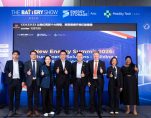
HONG KONG SAR – Media OutReach Newswire – 13 March 2026 – Centre of Advanced Power and Autonomous Systems (APAS), under the Hong Kong Productivity Council (HKPC),made its debut at The Battery Show Asia held from 10 to 12 March. During the exhibition, APAS set up a dedicated showcase area to present eight innovative battery technology solutions featuring high safety standards and intelligent capabilities for the first time. In parallel, APAS hosted the second edition of the New Energy Summit during the exhibition. The summit brought together five industry experts and scholars from Hong Kong, Singapore, Thailand, India and Switzerland to deliver speeches on various topics related to new energy and energy storage. Speakers shared the latest industry developments and application trends, fostering international technology exchange and collaboration.
During the exhibition, APAS hosted the second New Energy Summit, inviting industry experts and scholars from Hong Kong, Singapore, Thailand, India and Switzerland to speak and share the latest technological developments and application trends in the fields of new energy and advanced materials.
Mr Yonghai DU, Chief Innovation Officer of HKPC and General Manager of APAS, said, “In line with the strategic priorities set out in the outline of the 15th Five-Year Plan for emerging and future industries such as new energy, advanced energy storage and hydrogen energy, energy technologies are entering an unprecedented period of growth. The outline also emphasise the pursuit of smart, green, and integrated development of industry, injecting long-term momentum for the new energy development. For many years, HKPC has been committed to market-led technology R&D. APAS focuses on areas including new energy technologies, green transportation, smart mobility, intelligent systems and emerging applications, actively translating research outcomes into market-ready solutions to help industries enhance technological capabilities and industrial value.”
He added, “Through this international platform, we hope to strengthen our collaboration with enterprises and research institutions from around the world. Hong Kong can play a more proactive role as a connector between Chinese Mainland and the global market in the development of innovation, international standards and the practical application of new energy technologies, thereby enhancing the city’s global competitiveness in the new energy industry. Looking ahead, APAS will continue to focus on research and practical applications in new energy and intelligent systems, while advancing technological innovation and cross-regional collaboration to support both the nation and Hong Kong in fostering emerging industries and future industries.”
First Participation in The Battery Show Asia, Highlighting Battery Technology Achievements
The Battery Show Asia brings together more than 20,000 industry representatives from Chinese Mainland, Japan, Korea, Southeast Asia, India, Europe and the United States, including policymakers, technology innovators, engineers, manufacturers and industry experts. Covering battery manufacturing, energy storage solutions and new energy transportation industries, the exhibition serves as an international platform integrating technology showcase, industry exchange and business collaboration.
In its first participation in the exhibition, APAS showcased its research strengths in new energy technologies and emerging applications by presenting a range of innovative battery technology solutions. The showcase aims to contribute to the development of the battery industry while providing an important platform for Hong Kong to connect with global technologies and markets, facilitating cross-regional exchange and collaboration.
APAS set up a dedicated exhibition area to present several research outcomes developed in collaboration with industry partners, including:
Battery Cell Technologies:
High-performance Sodium-ion Battery: Using stable poly-anionic phosphate cathode, the battery enables rapid storage and release of sodium-ions while offering high safety and cost efficiency. It is suitable for applications such as low-speed electric vehicles, power batteries and large-scale energy storage. Looking ahead, APAS will collaborate with industry partners to establish large-scale production capabilities for high-performance sodium-ion battery, further optimising its performance and cost-effectiveness while exploring deployment in low-speed electric vehicles and utility-scale energy storage systems.
Battery Systems and Solutions:
Explosion-Proof High-Energy Battery Systems:This solution features proprietary safety technology that prevents thermal runaway, delivering reliable power in the most challenging environments, engineered for demanding marine and portable power applications. APAS will assist partners in optimising battery module design and thermal management systems to enhance product performance and align R&D processes with industry standards. This will support partners in establishing manufacturing facilities in Hong Kong and expanding into overseas markets.
Yacht Battery System: The system integrates advanced solid-state battery technology with an intelligent Battery Management System (BMS) to eliminate risks associated with traditional liquid electrolytes, including leakage, corrosion and thermal runaway. It is specifically designed to withstand the high-humidity, high-vibration and salt-spray conditions inherent to open-water yacht operations. APAS is currently supporting partners in obtaining international battery standard certifications to facilitate entry into the global market.
These solutions feature high safety standards, intelligent capabilities, and flexible applications. They support a wide range of sectors, including electric transportation and smart mobility, marine and industrial applications, specialised equipment, aerospace and high-end manufacturing, medical devices, consumer electronics, home assistive equipment and portable energy storage for travel.
Hosting New Energy Summit to Jointly Build a Sustainable Future
During the exhibition, APAS also hosted the second New Energy Summit, which brought together industry leaders and academic experts from Hong Kong, Singapore, Thailand, India and Switzerland. The summit focused on key topics related to new energy development and applications, providing a platform for speakers to share insights and engage in discussions with industry professionals in attendance.
The summit focused on two key themes — new energy and advanced materials — bringing together global experts to explore technological development and industrial applications. In the new energy sector, a representative from The Hong Kong and China Gas Company Limited introduced innovative hydrogen energy technologies and their potential applications in promoting clean energy development in Hong Kong. Representatives from energy technology companies and alliances in Switzerland, India and Thailand shared the latest trends and practical applications in energy storage technologies, as well as the integration of renewable energy with smart infrastructure. In the field of advanced materials, a scholar from the Department of Materials Science and Engineering at the National University of Singapore highlighted the critical role of nanotechnology in energy and sustainable development, offering insights into the future landscape of sustainable new energy.
Through this cross-regional and cross-industry platform, APAS aims to promote international technology exchange and collaboration, accelerate the application of new energy technologies and drive industry transformation, contributing to a more resilient and sustainable future energy ecosystem.
Advancing Technologies onto the Global Stage, Reinforcing Hong Kong’s Connectivity Advantages
HKPC actively participates in various international exhibitions and industry exchange activities to showcase innovative solutions co-developed with industry partners. Leveraging Hong Kong as a platform, HKPC supports enterprises in expanding into international markets and advancing cutting-edge technologies and standards worldwide.
Through international exhibitions and collaboration initiatives, HKPC further strengthens Hong Kong’s role as an important connector between Chinese Mainland and the world. In line with the Government’s 2026-27 Budget to attract large-scale international exhibitions to Hong Kong and promote the city’s exhibition brand globally, HKPC will continue to participate in international exhibitions and foster industry exchanges to drive innovation showcase and collaboration.
Hashtag: #APAS
The issuer is solely responsible for the content of this announcement.
About Centre of Advanced Power and Autonomous Systems (APAS)
Centre of Advanced Power and Autonomous Systems (APAS) (formerly Automotive Platforms and Application Systems R&D Centre) was established in 2006 and is fully integrated as a business division under HKPC on 1 April 2025. APAS continues to undertake market-led R&D programmes spanning green transportation, smart mobility, intelligent systems and emerging applications, as well as commercialises R&D results in collaboration with industry, universities and technology institutes to enhance the competitiveness of Hong Kong’s automotive and other transportation sectors in new energy and smart driving.
About Hong Kong Productivity Council
The Hong Kong Productivity Council (HKPC) is a statutory body established in 1967, dedicated to enhancing the productivity and competitiveness of Hong Kong enterprises through world-class applied R&D, innovative technology services, and integrated manufacturing solutions. As a market-oriented, international R&D organisation, HKPC leverages its deep expertise and extensive industry experience in key areas such as AI, advanced manufacturing, life and health technology, green technology and new energy to drive new industrialisation and support the growth of emerging and future industries.
HKPC focuses on addressing businesses challenges and industrial technology needs, promoting the full integration between technological and industrial innovation. Through technology transfer, product innovation, intellectual property protection and commercialisation of R&D outcomes, the Council fosters collaboration with the local business community as well as top global R&D institutions, delivering added value to industries and advancing the development of new productive forces. HKPC’s world-class R&D achievements have been widely recognised over the years, winning an array of local and overseas accolades, reinforcing Hong Kong’s role as an international innovation and technology centre and a smart city.
To help enterprises capitalise on Hong Kong’s strengths in international connectivity to expand into global markets, HKPC offers comprehensive overseas expansion services tailored to critical areas including product development, technology, manufacturing, and management, enabling businesses to successfully go global from Hong Kong.
HKPC is also committed to providing timely and practical support to SMEs and startups with timely and practical, assisting them in accessing Government funding programmes. Through its FutureSkills training initiatives, HKPC helps both industry and academia stay ahead in latest digital and STEM technologies, nurturing a future-ready talent pool for Hong Kong.
For more information, please visit HKPC’s website: www.hkpc.org/en.
Shiba Inu has staged a modest rebound after a prolonged slide, prompting speculation among crypto traders that the meme-inspired token could be approaching a technical breakout. The price movement has revived debate about whether the digital asset can escape months of bearish pressure or whether the uptick represents only a short-lived relief rally. Market data shows the token climbing from levels near $0.0000055 to around $0.0000060 during […]
BlackRock has introduced a new exchange-traded fund offering investors exposure to ethereum alongside staking-based income, marking another step in the expansion of institutional products tied to digital assets. The fund, trading under the ticker ETHB, opened with more than $100 million in assets and generated over $15 million in trading volume during its first day on the market, signalling strong early demand from investors seeking yield in […]
Global medical technology manufacturer Stryker has been hit by a major cyberattack claimed by an Iran-linked hacker collective, triggering widespread disruption to corporate systems and raising fresh concerns about cyber warfare spilling into commercial infrastructure. The group, calling itself Handala, said it carried out a destructive operation that wiped data across more than 200,000 company devices while extracting roughly 50 terabytes of information from internal networks. The […]
Growing scrutiny surrounds a deadly missile strike that destroyed a girls’ school in southern Iran, after a Republican senator said the United States must acknowledge responsibility if investigations confirm that American forces carried out the attack. The remarks followed mounting evidence that a Tomahawk missile used during joint military operations against Iranian targets may have struck the school in the town of Minab, killing scores of civilians, […]
LG Energy Solution is preparing to commercialise an upgraded iron-based battery designed for large-scale energy storage, marking a strategic push by the South Korean manufacturer to capture a larger share of the rapidly expanding global market for grid and renewable-energy storage systems. The company plans to introduce the higher-performance lithium-iron-phosphate battery model next year, seeking to strengthen its position in the energy storage sector at a time […]
Cyber-criminals have compromised hundreds of legitimate WordPress websites in a global operation designed to infect unsuspecting visitors with information-stealing malware, raising fresh concerns about the security of widely used web platforms and the increasing sophistication of social-engineering attacks. Threat researchers at cybersecurity firm Rapid7 say attackers infiltrated more than 250 websites across at least 12 countries, including the United Kingdom, United States, Germany, Canada, Australia, Brazil, Israel […]




 www.hkpc.org/en




