News related to
associated

Fintech firm Afriex has announced a strategic collaboration with payments giant Visa to deliver real-time cross-border transfers to over 160 markets, marking a significant expansion of its global payments network. The platform will integrate with Visa’s “Visa Direct” service through Afriex’s financial institution partner, enabling eligible Visa endpoints to receive funds instantaneously, according to the announcement. Afriex’s chief executive, Tope Alabi, emphasised that “for the millions of […]

The European Central Bank is moving closer to launching a pilot phase for the digital euro, with the prospect of beginning in 2027, contingent upon the agreement of national governments and the European Parliament on a legal framework next year. The digital euro, a form of central bank digital currency, has been under discussion for several years, with the ECB exploring its potential to complement cash in the digital economy.

As Europe grapples with the rise of cryptocurrencies and the growing trend of digital payments, the digital euro could provide an official, secure alternative to private sector digital currencies. The ECB’s President, Christine Lagarde, has emphasised the need for such a digital currency to support the stability and efficiency of the European financial system, ensuring that the euro remains relevant in the digital age.

The digital euro would function as a central bank liability, meaning it would be fully backed by the ECB. It would be designed to facilitate seamless transactions within the European Union, enhancing the speed and security of payments while reducing the costs associated with cash handling. The move aligns with global trends, as several central banks, including those of China and Sweden, have already made significant progress in developing their own digital currencies.

According to the ECB, the pilot phase of the digital euro will test its usability, privacy measures, and integration with existing payment systems. This will provide invaluable insights into its effectiveness and address potential challenges, such as ensuring the currency’s security against cyber threats and the impact on existing banking systems. A key aspect of the digital euro is that it will be designed to coexist with physical cash, offering citizens the flexibility to choose between digital and traditional forms of payment.

Although the digital euro will be built on blockchain technology, it will differ from cryptocurrencies like Bitcoin. While cryptocurrencies operate on decentralised networks, the digital euro will be centralised, controlled by the ECB. This distinction is important for maintaining monetary control and ensuring that the currency does not fall prey to the volatility often associated with digital assets. The goal is to create a stable digital currency that enhances the European Union’s ability to manage monetary policy, while also improving the payments landscape for consumers and businesses.

The upcoming legal framework is crucial in determining how the digital euro will be implemented and regulated. The European Commission is expected to propose legislation that will outline how the digital currency will be integrated into the broader financial system. National governments and the European Parliament will then need to agree on the proposal, a process that is expected to take several months. The legal framework will address issues such as the protection of personal data, the accessibility of the digital euro to all citizens, and how it will interact with existing digital payment systems.

For the ECB, the digital euro represents a forward-thinking solution to challenges posed by the growing use of digital payment methods and the risk of losing control over the money supply. Central banks around the world are racing to develop their own digital currencies in response to the rapid rise of private sector innovations like stablecoins and cryptocurrencies. The digital euro could potentially safeguard the sovereignty of the eurozone’s monetary system while fostering innovation in payments.

The shift towards a digital currency also holds significant implications for the banking sector. By providing a digital alternative to cash, the ECB could help reduce the reliance on commercial banks for certain types of payments. This could reshape the banking sector, influencing the role of traditional banks and their relationship with consumers. At the same time, the introduction of the digital euro could offer new opportunities for businesses, especially in the area of cross-border payments, where speed and efficiency are essential.

However, the introduction of a central bank digital currency is not without its challenges. Privacy concerns are a major issue, as the digital euro would need to balance transparency with the protection of personal data. The ECB has stated that it will ensure robust privacy protections, but questions remain about the extent to which transactions will be monitored and tracked. Additionally, the potential for disruption to the existing banking and payment systems must be carefully managed to ensure a smooth transition.

The blockchain platform admittedly known as Qtum has rolled out a new desktop artificial-intelligence agent called “Ally”, aiming to shift the landscape of AI productivity from cloud-only assistants to desktop-native, multi-model orchestration. The launch positions Qtum as a player in both blockchain and artificial-intelligence domains as users increasingly demand local control, privacy and advanced automation beyond chat-based tools. Ally can run on both Windows and macOS platforms […]

A memecoin tied to a golden statue of Changpeng Zhao, founder of Binance, erected near the U. S. Capitol, plunged roughly 99 per cent after he publicly disowned it. The token, dubbed “CZStatue”, surged by more than 27,000 per cent in a single day before crashing from around 17.5 cents to near zero. It recorded approximately $1.2 billion in trading volume during its brief high—raising red flags around market manipulation and the underlying token contract.

Zhao labelled the project a “quick-buck” scheme and urged his followers not to buy the token, writing: “While I want to appreciate the gesture, the fact that there is a meme coin associated with this means the creator probably just wanted to make a quick buck off an interaction from me. This is something I don’t appreciate. Don’t buy the meme.” Analysts say this public warning triggered a swift loss of confidence among retail investors.

Blockchain data reveals the token contract restricted selling only to the creator, effectively creating a honeypot scenario in which buyers were unable to exit their positions. More than 1,100 wallets remain stuck holding near-worthless tokens, prompting concerns of investor harm and potential regulatory scrutiny. One observer remarked that the episode bore the hallmarks of a “pump and dump” disguised as a fan-driven initiative.

The statue, reportedly a four-metre high golden representation of Zhao making his signature “ignore FUD” gesture, was commissioned by his fan community with plans to gift it to Zhao or auction it for his charity project. The token’s launch capitalised on the statue event, tying the hype to Zhao’s personal brand and the physical monument’s publicity. Zhao issued a social-media statement clarifying he had neither authorised the token nor requested the statue, and reaffirmed his disapproval of profit-driven uses of his likeness.

Cryptocurrency analysts warn that this incident spotlights broader vulnerabilities in the memecoin ecosystem: a blend of social-media hype, celebrity association and unregulated token mechanics. One metrics firm noted that more than 80 per cent of new memecoins in 2025 displayed non-standard contract features that favour insiders and restrict liquidity for retail investors. Regulators in several jurisdictions are stepping up monitoring of such tokens, given concerns around investor protection and potential financial losses.

Tech giant Google has announced a $2.85 million funding package to support artificial-intelligence skills development, education, online safety and cybersecurity in South Africa. The funding was disclosed at the AI Expo Africa event in Johannesburg and forms part of Google’s broader continental strategy to cultivate an AI-ready workforce and digital ecosystem. The funding will be channelled through Google. org, the company’s philanthropic arm, and it builds upon […]

The African Development Bank has approved a US$75 million financing package for Nyanza Light Metals Pty Ltd of South Africa to construct an 80 000-tonne-per-year titanium dioxide pigment production facility at the Richards Bay Industrial Development Zone. The plant will process locally and regionally sourced ilmenite ore into high-value pigment used in paints, coatings, cosmetics, food processing and medical applications. The financing deal includes US$50 million drawn […]

Western Union has unveiled a pilot program aimed at enhancing cross-border payments through the use of stablecoins. This initiative, which targets 150 million individuals globally, seeks to reduce dependency on traditional banking infrastructure, shorten transaction times, and lower the associated costs. The pilot will integrate stablecoin technology for on-chain settlements, marking a significant shift from the conventional banking systems that have long dominated the money transfer industry.

The move comes after a period of hesitancy in adopting cryptocurrency for mainstream financial services, primarily due to concerns surrounding volatility and regulatory challenges. However, Western Union’s shift in direction follows the passage of the GENIUS Act, which aims to provide clearer regulatory frameworks for digital currencies. This act has alleviated some of the uncertainty that had previously hindered the industry’s expansion, prompting Western Union to take the first step toward the adoption of blockchain-based payment systems.

Stablecoins, which are digital currencies pegged to a stable asset such as the US dollar, offer a solution to the volatility issues that often plague cryptocurrencies like Bitcoin or Ethereum. By using stablecoins, Western Union intends to offer a more predictable and stable payment option for its vast customer base. The pilot program is expected to leverage these stablecoins for transactions between participating financial institutions, ensuring the transaction flow remains smooth and cost-effective.

One of the key benefits of this pilot is the potential to drastically shorten settlement times. Traditional international money transfers can take several days to clear, especially when multiple intermediaries are involved. With blockchain technology, which underpins stablecoins, the transfer process can be streamlined, allowing for near-instantaneous transactions. This reduction in settlement time is expected to have a major impact on individuals who rely on remittances for financial support, particularly those in underserved or underbanked regions.

The cost-saving potential is another compelling reason behind Western Union’s decision to explore stablecoin technology. Money transfers via traditional banking systems often incur significant fees due to the involvement of various intermediaries, currency conversion charges, and administrative overheads. With stablecoins, these costs can be slashed, offering consumers a more affordable alternative for sending money across borders.

Despite the promising outlook, there are still challenges to overcome before the program can be rolled out on a global scale. Regulatory uncertainty remains a key obstacle, particularly in markets with stringent financial laws. Stablecoin adoption is subject to different regulatory environments depending on the jurisdiction, and Western Union must navigate these complexities to ensure compliance with local laws. Furthermore, there are concerns about the security and integrity of blockchain networks, as well as the need for robust anti-money laundering and know-your-customer protocols.

Advertisements

A flurry of strategic manoeuvres has placed Warner Bros. Discovery at the heart of one of the media industry’s most consequential displacement moves, as multiple major technology and entertainment companies evaluate possible acquisition bids. The company said it has opened a formal review of strategic alternatives after receiving unsolicited interest for its full or partial business, setting the stage for what may become a landmark consolidation. Executives […]

Global investment bank Goldman Sachs has secured the richest place in regional mergers and acquisitions activity in the Middle East and North Africa market, advising on 24 deals worth a combined US$104 billion in the first nine months of 2025, according to data from LSEG Deals Intelligence. The firm’s Co-head of Investment Banking for the Middle East & North Africa, Jassim AlSane, said the growth was driven by “national champions … with significant growth objectives” and government-backed strategies.

M&A volumes across the region have picked up substantially, supported by sovereign backing and major consolidation efforts. According to LSEG’s broader MENA investment banking review, M&A activity hit US$66.4 billion in the first quarter alone, illustrating a robust trajectory for the region. The strong performance underscores an increasingly active market for deals even amid global macro-economic headwinds.

Goldman’s dominance emerged as national-champion companies in the Gulf co-led big transactions. These firms often benefit from state support and predefined strategic mandates that accelerate investment decisions. AlSane highlighted that the top-10 deals for the firm in the region were “underpinned by an approved strategy” and “government-backed,” signalling a close alignment between private investment banks and states seeking large-scale diversification.

Key sectors powering the deal flow include energy-transition assets, infrastructure, and digital platforms. Observers note that the MENA region is embracing its role as a growth frontier for capital deployment, leveraging both private and sovereign funds to consolidate industries and build scale quickly. In particular, Saudi Arabia and the United Arab Emirates continue to push forward national frameworks that incentivise large transactions.

Despite the gains, the environment is not without uncertainty. Globally, deal volume has not uniformly increased — while deal value is up, the overall number of transactions in certain markets remains flat or declining. In the MENA context, some deals have faced delays or regulatory hurdles associated with cross‐border scrutiny and the need for state coordination. Critics argue that heavy reliance on government-backed mandates may reduce private-sector initiative and create hurdles in negotiation and valuation.

Goldman’s rise in the region also reflects wider trends in global investment banking. The firm posted a 42 per cent jump in investment-banking fees in the third quarter of 2025, citing advisory revenue jolts of 60 per cent year-on-year. While that data is global rather than specifically MENA-focused, it indicates that investment banking hunger for strategic transactions is rising and Goldman is benefiting. These elevated fee levels are the highest the firm has seen in years and point to a structural shift in deal-making dynamics.

A significant outage at Amazon Web Services rippled through the digital economy on 20 October 2025, cutting off access to dozens of major websites and applications. The disruption emerged from AWS’s US-EAST-1 data-centre region in Northern Virginia — a hub that hosts some of the world’s most critical cloud infrastructure. The fault, described by AWS as a failure in network-load-balancer health monitoring and associated DNS resolution problems, […]

CHAOZHOU, CHINA – Media OutReach Newswire – 21 October 2025 – From November 28th to 30th, the city will host the 23rd Teochew International Convention, welcoming Teochew people from around the world and sharing the city’s cultural story on a global stage. Leveraging this opportunity, Chaozhou has prioritized engagement with the global Teochew diaspora, mobilizing the strength of overseas communities and entrepreneurs to enhance development capacity and […]

Multiple posts flooding social media demand accountability—users call for a regulator-led probe, the CEO’s arrest, and deep scrutiny of Binance’s internal systems. The outcry follows recent chaos around synthetic tokens USDe, BNSOL, and wBETH, which lost their pegs on Binance amid massive liquidations. Compensation is flowing, but the narrative now centers on whether the crash was a desperate scramble or a deeply orchestrated exploit.

When Binance announced it would pay $283 million to users affected by depegging and associated liquidations, it framed the move as a goodwill gesture to restore stability. The payout applies to users whose positions used USDe, BNSOL, or wBETH as collateral between 21:36 UTC and 22:16 UTC on October 10. The exchange said compensation covers the difference between liquidation price and market price at 00:00 UTC on October 11, plus fees. It also promised to improve its risk-control systems and change how its indices weigh collateral assets..

These remedial steps, however, have not assuaged skeptics. Analysts at Uphold argued the event was no accident: they see the crash as a coordinated exploit of a vulnerability in Binance’s unified margin system, in which USDe, BNSOL, and wBETH were accepted as collateral. Because the exchange valued collateral based on internal order-book data instead of aggregated external prices, they say the system could be manipulated from within the venue itself. That, they believe, allowed an attacker to locally crash prices and trigger a cascade of liquidations.

One widely cited theory points to timing. Binance announced on October 6 it would update its pricing mechanisms to rely more on external oracles, with the changes scheduled for October 14. The incident happened on October 10—right in the middle of that eight-day window. In effect, critics argue, the exchange had acknowledged the flaw but had not yet implemented the fix, leaving a vulnerability no one should have touched. On-chain data shows USDe dropped to as low as $0.65 on Binance while remaining near parity across other markets, and wBETH and BNSOL showed similar divergence. The fact that only these three tokens—and only on Binance—were massively disrupted raises the specter that this was a targeted strike, not a systemic weak spot.

The theory gains further support from social media researchers. A thread by a user called “ElonTrades” describes how roughly $60–90 million of USDe was dumped on Binance to manipulate its order book, triggering forced liquidations in unified-account positions. That thread also links to outsized short positions opened elsewhere in anticipation of a broad market drop. Combined, the strategy would allow the attacker to profit while setting off mayhem across crypto markets.

Binance has rejected claims of an external exploit. In its public statement, the company argues that extreme market volatility predated the depegs, and that local platform issues amplified rather than initiated the crash. It also suggests some of the price distortions stemmed from interface display glitches—tokens with very small values were rendered as zero on users’ screens—while others reflect execution of long-dormant limit orders. The company contends liquidation volume occurring on its platform was only a fraction of broader market activity.

Even some industry voices have pushed back against blanket condemnation of Binance. One analyst told reporters that attributing the crash entirely to internal failure is premature, and that extreme leverage and macro market turmoil may have interacted with, not originated from, the exchange’s anomalies.

Yet the optics are harsh and the damage is real. The crypto community remains intensely uneasy. Many traders point to how precisely the exploit—or crash—focused on three collateral tokens, how it preceded a planned patch, and how quickly the stains were cleaned up by compensation. To many, the $283 million seems less like accountability than a strategic PR move to calm markets and buy time.

BNB, the exchange’s native token, soared after the compensation announcement, reaching a high near $1,370. That rally suggests some market participants interpreted the payout as a signal that Binance could backstop risks if needed. But it has not quelled deeper anxieties: users are now demanding full transparency about trades, collateral decisions, and the CEO’s role in risk oversight.

Amanda, a margin trader who lost funds in the incident, told crypto forums: “This wasn’t a market tantrum. The order flow was too precise, too surgical. It felt like someone pulled the plug on us.” Other users posted examples of margin calls executed within fractions of seconds after the depeg, with little time or warning to react.

The sequence of events presents too many coincidences: a pricing flaw known and scheduled for repair, large collateral-related token dumps executed mid-window, massive liquidations cascading in an insular system, and a rapid compensation move. Taken together, the evidence aligns with a narrative of design-level risk exploited rather than location-level chaos.

If the worst scenario proves true—that Binance’s unified margin design was manipulable from inside its own infrastructure—the implications ripple far beyond a single crash. Centralized exchanges, hailed for their convenience and liquidity, might now be exposed as fragile ecosystems. Traders could demand stricter oversight, regulators more frequent audits, and entire collateral frameworks could be reassessed.


A new wave of supply-chain assaults has seen North Korean hackers publish more than 300 malicious npm packages, infecting developer systems with sophisticated malware that steals credentials and crypto assets. The campaign, known as “Contagious Interview,” exploits the trust developers place in open-source tools by cloaking malware inside packages mimicking legitimate ones.

The Socket Threat Research Team disclosed that attackers uploaded 338 malicious npm modules, collectively downloaded over 50,000 times, many featuring a newly observed loader named XORIndex. About 27 of them remain active in the npm registry. Within those packages, XORIndex collects host metadata and downloads a second-stage payload, BeaverTail, which in turn leverages a backdoor called InvisibleFerret to maintain persistence and exfiltrate data. This expansion follows a preceding June surge of 35 malicious modules using a HexEval loader.

Researchers emphasise that Contagious Interview is not a static campaign but a dynamic interplay between defenders and adversaries. As packages are taken down, attackers quickly reissue variants under fresh aliases or change loader techniques. The latest 67-package load pushed last month illustrates this cat-and-mouse escalation: the new modules alone exceeded 17,000 downloads. Attackers have mixed XORIndex and HexEval in parallel deployments, suggesting modular development and adaptability.

The campaign’s social engineering backbone remains key. Actors pose as recruiters or HR contacts on platforms like LinkedIn, targeting software engineers or job-seekers. They offer interview assignments that require cloning a GitHub or Bitbucket repository, with the malicious npm module embedded deep in the project. Because many developers run these projects outside sandboxed environments, the malicious loader quietly executes and bridges the gap to full system compromise.

Analysts attribute Contagious Interview to DPRK-aligned threat groups tracked under names such as CL-STA-0240, DeceptiveDevelopment, Tenacious Pungsan and Void Dokkaebi. The methodology aligns with patterns shown by the Lazarus Group and its affiliates, as attackers continue to weaponise open source ecosystems for espionage and financial theft. XorIndex and HexEval share infrastructure and tactics, including encrypted communication with command-and-control servers. In several cases, submitters of the malicious packages have crafted repository names containing “interview,” reflecting the campaign motif.

Beyond npm, the campaign’s reach extends: some modules reference Bitbucket repositories, and similar tactics have appeared in PyPI package attacks. The broader goal appears dual: accessing developer environments to steal intellectual property or credentials and siphoning cryptocurrencies from wallets detected on compromised machines.

Security firms and registry maintainers have responded with takedown requests and account suspensions. Socket reported removing six live HexEval-based modules earlier this year, and the npm security team has collaborated to suspend associated accounts. But defenders admit the reactive posture is fragile; attack waves resurface within hours.

At least 30 major U. S. news organisations, including The New York Times, The Associated Press, Reuters, and Newsmax, have refused to endorse the Pentagon’s newly imposed rules for press access, positioning themselves for a possible mass withdrawal of reporters from the Pentagon. The Department of Defense’s policy requires journalists covering the Pentagon to sign a document acknowledging restrictions on access, including the possibility of having their […]

Larsen & Toubro’s hydrocarbon onshore unit, in partnership with Greek firm Consolidated Contractors Group, has booked an ultra-mega contract valued at over ₹150 billion to build a natural gas liquids plant and associated processing facilities in the Middle East. The engineering, procurement, construction, installation and commissioning scope will cover the handling of rich associated gas, integration of utilities, and interfacing with existing infrastructure. L&T will lead engineering […]

Deloitte Australia will reimburse part of the A$440,000 it earned from the Department of Employment and Workplace Relations after a commissioned report was found to contain fabricated quotes from a federal court judgment and references to non-existent academic papers. The 237-page document, published in July, initially underwent limited public scrutiny. A revised version released in October removed misattributed quotations and corrected erroneous citations after Sydney University researcher […]

Dubai Investments has revealed that its wholly owned subsidiary, Emirates Float Glass, will expand its float-glass manufacturing capacity by launching a second production line that will raise output from 600 tonnes per day to 1,200 tonnes. The upgrade is slated to introduce Ultra Clear low-iron glass—marketed as a first in the MENA region—with advanced automation and energy-efficient systems, and is scheduled for commissioning between late 2027 and early 2028.

Under the plan, the second line will incorporate next-generation process control technology to ensure consistent product quality while curbing energy consumption and lowering the environmental footprint. Dubai Investments emphasises that this aligns with its broader industrial growth strategy and the UAE’s ambitions in high-value manufacturing.

Abdulaziz Bin Yakub Al Serkal, CEO of Dubai Investments’ Industrial Platform, described the move as crucial for strengthening regional competitiveness. He said the introduction of Ultra Clear glass will allow EFG to penetrate premium markets, give clarity advantages over conventional float glass, and support growing demand from architectural, infrastructure and design sectors. The project involves a collaboration with Germany’s HORN Glass Industries, which will supply glass-melting furnaces and associated systems, while local civil-works contractors and international project teams will oversee implementation.

EFG currently operates out of its float plant in the Industrial City of Abu Dhabi, where its capacity now stands at 600 tonnes per day. The expansion marks the second phase of investment in the plant. Dubai Investments’ announcement underlines its commitment to scaling up industrial assets and achieving technological differentiation in its manufacturing portfolio.

The expanded capacity is seen as a response to rising demand across the Gulf and broader regional markets, where premium architectural glass is gaining traction, driven by growth in high-rise construction, sustainability mandates and demand for energy-efficient façades. Analysts note that the move helps EFG hedge against rising competition from international glass producers by offering higher-clarity, value-added products.

Primark will launch three flagship stores in Dubai in early 2026, marking its first retail foray in the UAE under a franchise partnership with Alshaya Group. The outlets are slated for Dubai Mall, Mall of the Emirates and City Centre Mirdif. Under the alliance, the company is also targeting the GCC market more broadly, beginning with a store in Kuwait later this year at The Avenues. The […]

Unlocking Africa’s Growing Payment Corridors for UAE Enterprises UAE now has a payment partner that unlocks Africa’s growing economic opportunity Verto today announced its official launch in the UAE. With over $25 billion processed annually for clients such as Unilever, and Maersk, the company’s platform is designed to address the unique challenges of cross-border payments between UAE and emerging market currency corridors (particularly in Africa), offering businesses […]

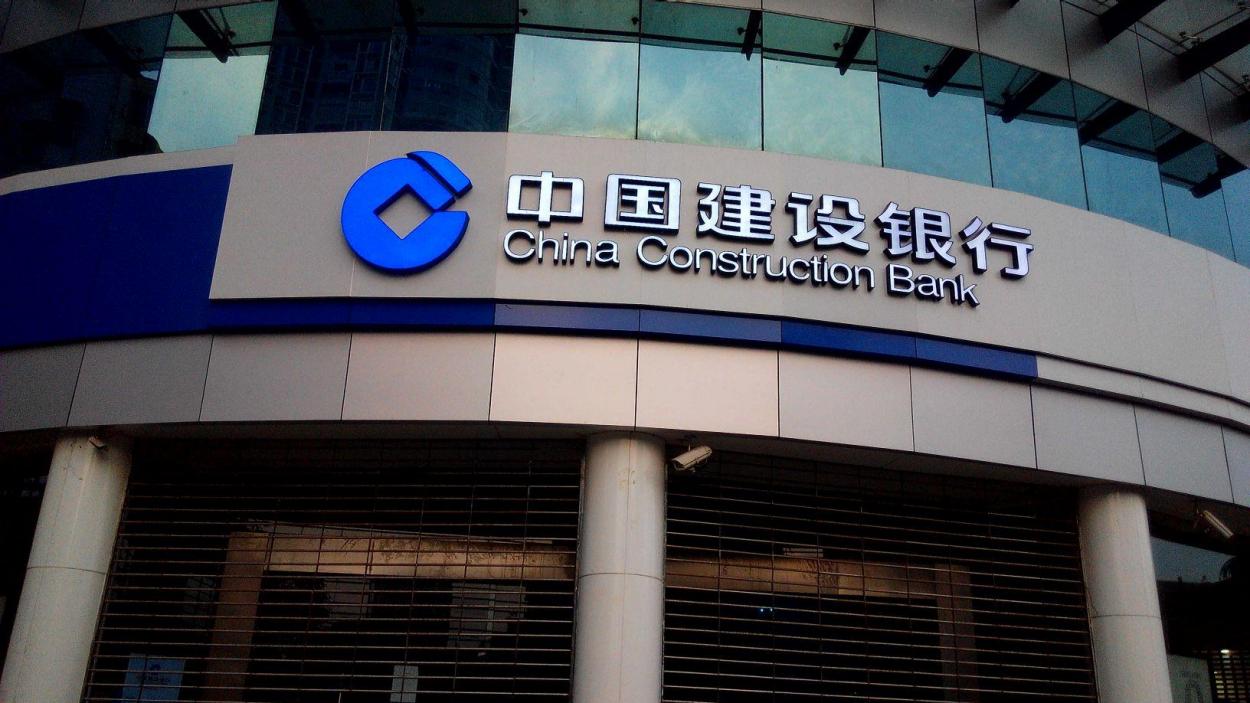
China’s largest state banks have committed over $3.75 billion in debt financing to Saudi Aramco’s Jafurah gas project, while Chinese investment funds have declined to take equity stakes in the venture, sources told Reuters.

The bulk of this funding comes from Bank of China, ICBC and China Construction Bank, each contributing around $1 billion, and Agricultural Bank of China adding roughly $750 million. This debt financing accounts for more than one-third of the total capital sought for what is expected to be the largest shale gas development outside the United States.

Aramco’s deal involves an $11 billion lease-and-leaseback agreement signed in August with a consortium led by Global Infrastructure Partners, an arm of BlackRock. Under the arrangement, a new entity called Jafurah Midstream Gas Company will lease processing assets to Aramco for 20 years. Aramco retains a 51 per cent stake, while the consortium holds the remaining 49 per cent.

Despite the opportunity to join the equity syndicate, several Chinese state-linked funds declined to participate, a move that sources attribute to heightened U. S.–China tensions. Beijing is said to have discouraged fund-level engagement with U. S.-affiliated private capital firms, even when such firms do not have overt U. S. exposure.

The Chinese banks’ decision to provide senior debt but avoid equity signals a calibrated strategic posture: backing the project financially without direct governance alignment with U. S.-linked investors.

Aramco’s broader ambition is to expand its gas production capacity by 60 per cent over 2021 levels by 2030. The Jafurah basin is estimated to contain 229 trillion standard cubic feet of raw gas and 75 billion stock tank barrels of condensate.

The BlackRock-led consortium is also negotiating additional capital of around $10.3 billion with a mix of debt instruments; participants in those talks include JPMorgan and Sumitomo Mitsui Banking Corporation. Those financial structures are intended to support the lease-and-leaseback model without ceding control of core infrastructure assets to external parties.

Within the Gulf, Chinese lenders’ prominent involvement in Jafurah’s financing echoes a broader trend. Analysts note that China is repositioning its role in Gulf energy infrastructure by leveraging its strengths in project debt and export credit rather than co-investment in U. S.-sponsored equity schemes.

Saudi Arabia is concurrently expanding its gas network. It has signed over $25 billion in contracts for the second phase of Jafurah development and further gas-network enhancements, including pipeline extensions of 4,000 km to increase capacity by 3.2 billion standard cubic feet per day. Chinese firms, such as Sinopec, are among the contractors participating in these projects.

For Aramco, the dual approach of securing large-scale debt from Chinese banks while partnering with international investors via the leaseback model helps it mobilise capital without relinquishing decisive control. The arrangement offers investors predictable tariff-based returns.

Chinese banks’ exposure gives them influence over covenant terms, loan pricing and repayment schedules. That leverage, without the burdens or political friction associated with equity, aligns with Beijing’s financial diplomacy toward strategic energy corridors.

The full constellation of debt and equity deals around Jafurah—and the dynamics among Gulf producers, Chinese state capital, and U. S.-linked private investors—will be among the key nodes shaping the next wave of energy infrastructure financing.

OpenAI has surged past its prior valuation to reach an estimated $500 billion after current and former employees sold approximately $6.6 billion worth of shares to a consortium of investors. The deal, structured as a secondary share transaction, elevates OpenAI to the top of private tech valuations globally. Buyers in the transaction include Thrive Capital, SoftBank, Dragoneer Investment Group, Abu Dhabi’s MGX and T. Rowe Price. Although […]

Broadcom has issued patches for a VMware vulnerability—CVE-2025-41244—that was already under exploitation by a China-linked hacking group, but failed to disclose that fact in its public advisory. The flaw allows a non-administrative user in a virtual machine to escalate privileges to root, provided VMware Tools is installed and Aria Operations is managing the VM with the Service Discovery Management Pack enabled. Broadcom’s advisory, published on 29 September, […]

Why Flowers Are Central to Anniversary Traditions Anniversaries are more than calendar reminders—they are emotional milestones that mark the journey of two people growing together through time. Over the years, couples find ways to celebrate these occasions, whether with gifts, trips, or intimate moments. Among all possible gestures, flowers have remained the most enduring. The tradition of associating flowers with anniversaries goes back centuries. Each bloom has […]

By Anjan Roy Donald Trump’s high fees for H1B visas are a serious headache for India, not just for the sake of its impact on India’s IT sector and services exports to USA. This is a huge worry for the overall security environment and strategic- diplomatic scenario for India. Among others, if China is able […]


The article China Is Making Every Effort To Attract Talent Thrown Out By America appeared first on Latest India news, analysis and reports on Newspack by India Press Agency).

VISHNU RAJA
RYO YAMADA
HITORI GOTOH
IKUYO KITA