News related to
associated

African countries face growing challenges in accessing international finance as global economic uncertainty and tightening monetary policies restrict foreign capital flows. Moody’s Investors Service has highlighted the urgent need for these nations to develop robust local debt markets denominated in their own currencies to mitigate risks associated with reliance on external funding. As global financial conditions tighten, foreign investors have become more cautious about exposure to emerging […]

KUALA LUMPUR, MALAYSIA – Media OutReach Newswire – 4 June 2025 – Octa, a global regulated broker since 2011, conducted a survey to learn more about Malaysian traders’ security habits and behaviours, both in everyday life and in trading. Below are some insightful takeaways on how traders approach one of the most crucial aspects of their craft. There is an old saying, ‘How you do anything is […]

The International Air Transport Association has confirmed that its 82nd Annual General Meeting will convene in Rio de Janeiro, Brazil, in June 2026, with LATAM Airlines Group serving as the host. This marks the first time in over two decades that the global aviation summit returns to South America, highlighting the region’s growing prominence in the industry. Willie Walsh, IATA’s Director General, expressed enthusiasm about the event’s […]

A significant portion of employee interactions with generative AI tools is inadvertently leaking sensitive corporate data, posing serious security and compliance risks for organisations worldwide. A comprehensive analysis by Harmonic Security, involving tens of thousands of prompts submitted to platforms such as ChatGPT, Copilot, Claude, Gemini, and Perplexity, revealed that 8.5% of these interactions contained sensitive information. Notably, 45.77% of the compromised data pertained to customer information, […]

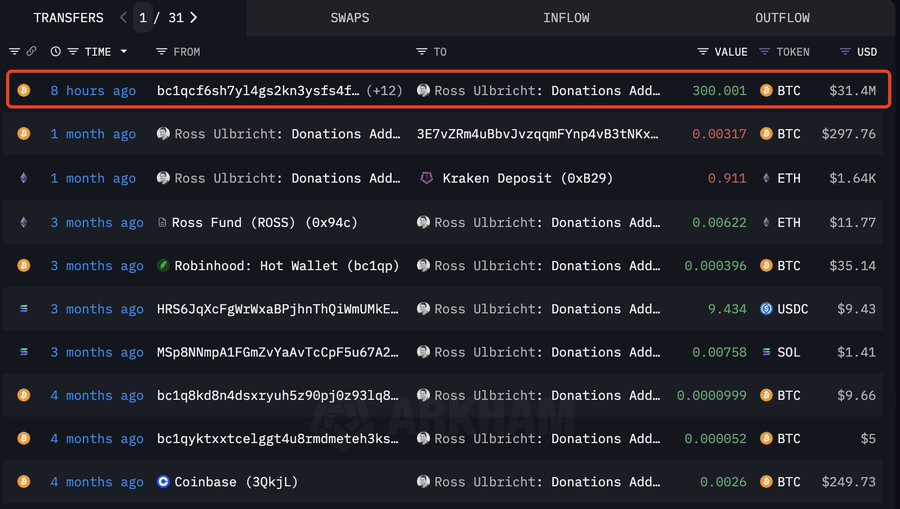
Ross Ulbricht, the founder of the Silk Road darknet marketplace, has received an anonymous donation of 300 Bitcoin, valued at approximately $31.4 million, sent to his official Bitcoin address. This substantial contribution follows his release from prison after a full pardon by former U.S. President Donald Trump in January 2025.

The donation was made to the Bitcoin address listed on freeross.org, a website dedicated to supporting Ulbricht. The identity of the donor remains unknown, and there has been no public acknowledgment from Ulbricht or his representatives regarding the transaction.

In addition to this significant donation, an auction of Ulbricht’s personal belongings has reportedly raised nearly $1.3 million in Bitcoin. The auction, organized to support Ulbricht’s reintegration into society, featured items such as personal writings, artwork, and other memorabilia.

Ulbricht’s financial situation has been a topic of interest since his release. Coinbase executive Conor Grogan identified approximately 430 BTC, worth around $47 million, in wallets associated with Ulbricht that had remained untouched for over 13 years. However, it remains unclear whether Ulbricht has access to the private keys required to control these funds.

The cryptocurrency community has shown considerable support for Ulbricht since his release. Crypto exchange Kraken donated $111,111 in Bitcoin to assist with his transition back into society. Additionally, various fundraising efforts, including merchandise sales, have contributed to a growing fund aimed at supporting Ulbricht’s post-incarceration life.

Ulbricht was arrested in 2013 and later sentenced to double life imprisonment plus 40 years without the possibility of parole for his role in operating the Silk Road marketplace. The platform facilitated the trade of illegal goods and services, primarily using Bitcoin for transactions. His sentence was commuted by President Trump, who cited support from the Libertarian movement and concerns over the severity of the punishment.

South Korea’s cryptocurrency industry appears poised for continued expansion despite uncertainties surrounding the upcoming presidential election. Analysts and market insiders suggest that while the election outcome may influence regulatory approaches, the overall trajectory for crypto adoption and innovation in the country remains largely positive. The nation, known for its advanced digital infrastructure and high rate of technology adoption, continues to be a key global hub for cryptocurrency trading and blockchain development.

Voters are set to choose their next president amid growing public interest in digital assets, a sector that has become deeply embedded in South Korea’s financial landscape. The outgoing administration has maintained a cautious but constructive stance on crypto, emphasising investor protection and regulation to curb speculative risks. However, there is widespread anticipation that the new leadership, regardless of political affiliation, will aim to strike a balance between fostering innovation and ensuring financial stability.

The South Korean crypto market ranks among the world’s largest, with retail investors accounting for a significant share of trading volumes. According to market data, the country’s exchanges handle billions of dollars in daily transactions, reflecting robust participation despite bouts of global market volatility. Industry experts highlight that the presence of a tech-savvy population and extensive mobile connectivity continues to drive demand for cryptocurrencies and related services such as decentralized finance and non-fungible tokens .

Recent policy discussions have centred on enhancing regulatory clarity without stifling growth. Authorities have been moving toward implementing stricter anti-money laundering measures and introducing licensing regimes for crypto exchanges. These steps are designed to increase transparency and build trust among investors, especially after high-profile hacks and fraud cases shook confidence in past years. Nonetheless, crypto entrepreneurs argue that overly rigid rules could hinder South Korea’s competitive edge in the fast-evolving digital economy.

The election campaign itself has seen varying perspectives on how best to approach the burgeoning crypto sector. Some candidates advocate for a more innovation-friendly environment, proposing incentives for blockchain startups and easing certain regulatory burdens. Others emphasise the need for rigorous oversight, citing concerns about market manipulation and consumer protection. This diversity of viewpoints underscores the complexity of integrating crypto assets into mainstream financial systems while safeguarding public interests.

South Korea’s financial regulators are also coordinating with international bodies to align standards and promote cross-border cooperation. This global approach aims to mitigate risks associated with illicit finance and to support legitimate crypto ventures. Moreover, collaboration with major markets like the United States and European Union seeks to harmonise regulatory frameworks, which could facilitate smoother operations for South Korean crypto firms on the world stage.

Despite occasional regulatory headwinds, venture capital funding in South Korea’s blockchain and crypto technology startups has surged. Investments are being channelled into innovative projects that range from smart contract platforms to digital identity solutions and tokenisation of real-world assets. This capital influx is driving research and development, helping local firms compete with international giants in areas such as security, scalability, and user experience.

Market participants also point to South Korea’s well-established IT infrastructure and educational emphasis on STEM disciplines as critical factors supporting the crypto ecosystem’s growth. The country’s universities and research institutions are actively engaging in blockchain research, producing talent that feeds into both the private sector and regulatory agencies. This synergy between academia, government, and industry forms a backbone for sustainable technological advancement.

Consumer attitudes toward cryptocurrencies have evolved significantly, with increasing acceptance among younger demographics. Surveys indicate that digital assets are now viewed not only as speculative tools but also as legitimate instruments for payments, savings, and investment diversification. This cultural shift has encouraged mainstream financial institutions to explore crypto-related products, including custody services, exchange-traded funds , and blockchain-based payment networks.

However, risks remain inherent in the sector, with price volatility, regulatory uncertainty, and cybersecurity threats continuing to challenge market stability. Industry leaders have called for ongoing dialogue with policymakers to ensure that emerging regulations are well-informed and adaptable. Transparency and investor education are emphasised as vital to fostering a resilient market capable of weathering shocks and sustaining public confidence.

The intersection of cryptocurrency and South Korea’s broader economic policy objectives is also under scrutiny. The government aims to position the country as a global innovation hub, leveraging digital technologies to boost productivity and competitiveness. Cryptocurrency and blockchain are seen as integral components of this strategy, with potential to revolutionise areas such as supply chain management, finance, healthcare, and public administration.

Global geopolitical tensions and financial market fluctuations have added layers of complexity to South Korea’s crypto landscape. Supply chain disruptions and inflation concerns worldwide have driven some investors toward digital assets as alternative stores of value. Yet, the international nature of cryptocurrencies requires regulatory frameworks that can keep pace with rapid technological changes and evolving market dynamics.

Dubai’s Roads and Transport Authority has initiated a comprehensive upgrade of Umm Suqeim Street, aiming to significantly enhance traffic flow and urban connectivity across the city. The project, stretching from the intersection with Jumeirah Street to Al Khail Road, is a pivotal component of a broader strategy to modernise the city’s infrastructure and accommodate its rapid urban expansion.

The upgrade is designed to increase the road’s capacity to 16,000 vehicles per hour in both directions, effectively reducing travel time between Jumeirah Street and Al Khail Road from 20 minutes to just six. This enhancement is expected to alleviate congestion and improve accessibility for key residential and commercial areas, including Jumeirah, Umm Suqeim, Al Manara, Al Sufouh, Umm Al Sheif, Al Barsha, and Al Quoz.

Integral to the project are the redevelopment of six major intersections along Umm Suqeim Street. These include the construction of four bridges and three tunnels, collectively spanning 4.1 kilometres. Notably, a two-lane tunnel in each direction will be constructed at the intersection with Jumeirah Street, complemented by a signalised surface-level junction. Another two-lane tunnel is planned at the intersection with Al Wasl Street to facilitate traffic flow from Sheikh Zayed Road towards Jumeirah Street, while maintaining uninterrupted surface traffic in the direction of Sheikh Zayed Road.

At the intersection with Sheikh Zayed Road, two bridges will be constructed to eliminate traffic overlap and enhance movement efficiency. Additionally, a tunnel will be developed at the intersection with First Al Khail Street to accommodate traffic from Al Barsha towards Sheikh Zayed Road, along with associated surface-level improvements. The stretch between First Al Khail Street and Al Asayel Street will be widened by adding one lane in each direction, increasing capacity to four lanes per direction. At Al Khail Road, the works involve the construction and widening of two flyovers—one connecting Al Khail Road with Al Quoz Industrial Area, and the other facilitating traffic from Umm Suqeim Street to Al Khail Road heading towards Deira.

Beyond vehicular traffic improvements, the project places a strong emphasis on enhancing pedestrian and cyclist infrastructure. Upgrades include the development of pedestrian walkways, dedicated cycling tracks, landscaped boulevards, and vibrant public spaces designed to foster community interaction and promote sustainable urban living. A direct link will also be established between the Mall of the Emirates Metro Station and nearby residential communities, enhancing last-mile connectivity and encouraging the use of public transportation.

This initiative is part of RTA’s master plan to overhaul the surrounding road network, which includes planned upgrades to Jumeirah Street, Al Wasl Street, and Al Safa Street. The overarching goal is to enable uninterrupted traffic flow from Jumeirah to Al Qudra Road over a distance of 20 kilometres, thereby improving connectivity across four major transport corridors: Sheikh Zayed Road, Al Khail Road, Sheikh Mohammed bin Zayed Road, and Emirates Road.

Mattar Al Tayer, Director General and Chairman of the Board of Executive Directors at RTA, stated that the upgraded corridor will directly serve vital residential and development areas with a combined population exceeding two million. He emphasised that the project is designed to accommodate Dubai’s rapid population growth and urban expansion while improving the overall quality of life for residents and visitors.

Construction is already 70% complete on a 4.6-kilometre segment of Umm Suqeim Street from Al Khail Road to Sheikh Mohammed bin Zayed Road. This phase includes an 800-metre tunnel near Kings’ School in Al Barsha South and a surface-level junction, scheduled to open in the third quarter of the year. The completion of this segment is expected to reduce travel time between Sheikh Mohammed bin Zayed Road and Al Khail Road by 61%, from 9.7 minutes to just 3.8 minutes.

The RTA is also leveraging advanced technologies to monitor and manage the project’s progress. Drones are being utilised to capture and analyse project data, while artificial intelligence is employed to track construction milestones and performance indicators. This integrated approach has enhanced operational efficiency on-site, accelerated decision-making processes, and enabled the provision of real-time, high-precision data. The adoption of these technologies has resulted in a 100% increase in field presence and a 60% reduction in the time required for site surveys. Time-lapse imaging systems are also being used to continuously monitor construction activities, contributing to a 40% improvement in overall project monitoring efficiency.

Advertisements

Emaar Development has secured a significant land acquisition in Ras Al Khor, marking a strategic expansion amid Dubai’s robust property market. The construction subsidiary of Emaar Properties, the emirate’s largest publicly listed real estate firm, completed the purchase of the plot from Amlak Property Investment for 2.9 billion dirhams , alongside associated transaction costs. This move enhances Emaar Development’s land portfolio, positioning the company to capitalise on […]

The U.S. Securities and Exchange Commission has expressed reservations regarding two proposed exchange-traded funds that seek to provide investors with exposure to staked Ethereum and Solana . The ETFs, introduced by REX Financial and Osprey Funds, are under scrutiny for potentially not meeting the legal definition of investment companies as stipulated by the Investment Company Act of 1940.

The SEC’s concerns center on the structure of these ETFs, which aim to offer returns derived from staking rewards—a process where cryptocurrency holders participate in network operations in exchange for additional tokens. The regulatory body has questioned whether the funds are primarily structured to invest in securities, a requirement under federal law.

Despite the initial registration of these funds becoming effective on May 30, the SEC has indicated that this does not equate to an endorsement or approval of the funds’ compliance with legal standards. The agency has highlighted that the disclosures in the registration statements may be potentially misleading regarding the funds’ status as investment companies.

REX Financial has responded by stating that it will not proceed with the launch of these ETFs until the compliance issues raised by the SEC are resolved. Greg Collett, general counsel at REX, acknowledged the SEC’s concerns and emphasized the company’s commitment to addressing them.

The introduction of staking-based ETFs represents a novel approach in the financial markets, aiming to bridge traditional investment vehicles with the decentralized finance sector. However, the SEC’s apprehension underscores the complexities and regulatory challenges associated with integrating such innovative financial products into the existing legal framework.

KUALA LUMPUR, MALAYSIA – Media OutReach Newswire – 2 June 2025 – June 2025 is shaping up to be one of the most eventful months of the year for global markets. For traders, this means opportunity—but also volatility. The economic calendar is packed with macroeconomic data releases and central bank meetings, while geopolitical risks remain close to the surface. Beyond the usual inflation prints and interest rate […]

The World Bank has launched its first open-source software tool, the Metadata Editor, marking a significant step in its commitment to data transparency and open science. This web-based application is designed to assist data curators in documenting various types of data, including statistical indicators, survey microdata, geographic datasets, documents, images, videos, and scripts, in compliance with international metadata standards. By releasing this tool under the MIT License, […]

KUALA LUMPUR, MALAYSIA – Media OutReach Newswire – 30 May 2025 – Traders and investors alike are unnerved by the recent turbulence in the bond markets. After Moody’s—a major rating agency—downgraded U.S. government debt on 16 May, and Japanese long-term bond yields soared to multi-decade highs, some market participants started to fear that the world may be on the verge of a major debt crisis. Meanwhile, the […]

Sberbank, Russia’s largest lender, has introduced structured bonds tied to Bitcoin’s performance, offering investors exposure to cryptocurrency price movements without direct ownership. These bonds, denominated in rubles and compliant with Russian law, are currently available to qualified investors through over-the-counter markets, with plans for future listings on the Moscow Exchange.

The initiative follows the Bank of Russia’s recent decision to permit financial institutions to offer crypto-linked financial instruments to accredited investors. Under the new guidelines, banks can provide derivatives, securities, and digital financial assets whose returns are linked to cryptocurrency prices, provided there is no actual delivery of the underlying crypto assets. This move aims to offer regulated exposure to digital assets while mitigating associated risks.

Sberbank’s Deputy Chairman of the Executive Board, Anatoly Popov, stated that the bank’s new product provides a convenient and secure way for investors to gain exposure to cryptocurrency assets without direct ownership, ensuring full compliance with regulatory requirements on Russian infrastructure. The structured bonds are designed to cater to investors seeking returns linked to cryptocurrency dynamics within a regulated framework.

In addition to Sberbank’s offerings, the Moscow Exchange has announced plans to launch a cash-settled Bitcoin futures contract on its derivatives market in June. The SPB Exchange has also outlined intentions to introduce cryptocurrency-linked futures trading, signaling a broader acceptance of crypto-related financial products within Russia’s regulated financial markets.

The Bank of Russia’s decision to allow crypto-linked financial instruments comes amid increasing interest in digital assets among Russian investors. The central bank reported a 51% increase in crypto asset inflows by Russian residents in the first quarter of 2025, totaling 7.3 trillion rubles . To manage potential risks, the central bank has mandated that banks and credit institutions fully back these products with capital, apply conservative risk assessments, and set individual exposure limits.

Sberbank’s move to offer structured bonds tied to cryptocurrency price movements represents a significant step in bridging traditional finance with digital assets in Russia. By providing regulated investment products linked to cryptocurrencies, the bank aims to meet growing investor demand while adhering to the country’s cautious regulatory stance on digital assets.

James Wynn, a prominent figure in the cryptocurrency trading community, has suffered a staggering loss of approximately $99.3 million following the liquidation of his leveraged Bitcoin positions on the Hyperliquid platform. The liquidation was triggered as Bitcoin’s price fell below the critical $105,000 threshold, leading to the forced closure of Wynn’s positions totaling 949 BTC.

The sequence of events unfolded rapidly. On May 29, Wynn’s position of 94 BTC, valued at around $10 million, was liquidated when Bitcoin’s price dipped to $106,330. The following day, two larger positions were closed: one comprising 527.29 BTC at $104,950, and another of 421.8 BTC at $104,150, amounting to losses of $55.3 million and $43.9 million respectively. These liquidations collectively accounted for the 949 BTC loss, as confirmed by on-chain analytics platforms.

Wynn’s aggressive trading strategy involved a 40x leveraged long position, a high-risk approach that amplifies both potential gains and losses. He had reportedly increased his leveraged position to $1.25 billion on May 24, banking on a bullish trajectory for Bitcoin. However, the market’s downturn, influenced by macroeconomic factors including discussions on tariffs by the US administration, led to a sharp decline in Bitcoin’s value, undermining Wynn’s position.

Despite the significant losses, Wynn continues to hold a substantial position in the market. He currently maintains a 40x leveraged long position in a perpetual contract, which was initiated when Bitcoin was priced at $107,993. This position is presently at an unrealized loss of approximately $3.4 million, with the liquidation price hovering around $104,607. Wynn’s margin usage is nearing 100%, indicating a precarious situation where any further decline in Bitcoin’s price could trigger additional liquidations.

The incident has sparked discussions within the trading community about the risks associated with high-leverage trading strategies. While such approaches can yield substantial profits, they also expose traders to significant losses, particularly in volatile markets. Wynn’s experience serves as a cautionary tale, highlighting the importance of risk management and the potential consequences of aggressive trading tactics.

In a related development, another trader reportedly capitalized on Wynn’s misfortune by adopting a contrarian strategy—shorting when Wynn went long and vice versa—resulting in a profit of $17 million. This underscores the zero-sum nature of leveraged trading, where one trader’s loss can translate into another’s gain.

The broader cryptocurrency market has also felt the impact of the downturn. Within an hour of Bitcoin’s price dropping below $105,000, approximately $345 million was liquidated from the market, reflecting the high volatility and the cascading effect of large-scale liquidations. Analysts note that such events can lead to heightened caution among traders, elevated funding rates, and potential ripple effects on Bitcoin’s price action and overall market sentiment.

Russia’s central bank has authorised financial institutions to offer crypto-linked derivatives and digital financial assets to qualified investors, marking a cautious shift in its approach to digital assets. These instruments must be non-deliverable, ensuring no direct transfer of cryptocurrencies to clients.

The Bank of Russia’s decision allows financial institutions to provide derivative instruments, securities, and digital financial assets referencing cryptocurrency prices. However, these products are restricted to a specific class of investors and must not involve actual delivery of cryptocurrencies. The central bank continues to advise against direct investments in cryptocurrencies, citing associated risks.

Financial institutions are expected to adopt a conservative approach, fully covering these instruments with capital and setting individual exposure limits. The Bank of Russia plans to formalise regulations over the next year to better manage risks associated with cryptocurrency price volatility.

This regulatory shift aligns with broader efforts to integrate digital assets into Russia’s legal framework. In April, the Finance Ministry and central bank initiated plans for a state-run crypto exchange, aiming to legitimise crypto and steer digital transactions into a controlled setting. The proposed platform, operating under Russia’s experimental legal regime for financial innovation, would serve only “super-qualified” investors, excluding retail trading.

The move follows disruptions in March when the freezing of stablecoin wallets tied to Russian users exposed vulnerabilities associated with foreign-issued tokens. In response, officials have proposed developing a national stablecoin to enhance financial independence and ensure continued access to digital payments.

Russia’s central bank has historically maintained a cautious stance on cryptocurrencies, emphasising the risks of direct investment. However, the current policy shift indicates a measured openness to integrating digital assets within a regulated framework, reflecting a nuanced approach to balancing innovation with financial stability.

Revolutionizing Brain Health with CUHK Spin-off’s Cutting-Edge Technology to Enable Early Detection and Prevention HONG KONG SAR- Media OutReach Newswire – 29 May 2025 – Humansa, Asia’s leading health and longevity center, is proud to announce the launch of its ground-breaking BrainSpark Program, a brain health program in collaboration with i-Cognitio Sciences, a spin-off company from the Chinese University of Hong Kong (CUHK) founded by Prof. Vincent […]

GameStop Corp. has acquired 4,710 Bitcoin, marking a significant move into digital assets as part of its evolving corporate strategy. The announcement, made from the company’s headquarters in Grapevine, Texas, reflects a broader shift in its investment approach, aligning with its updated corporate policy to include cryptocurrency holdings.

The acquisition positions GameStop among a growing list of publicly traded companies integrating Bitcoin into their treasury reserves. This strategy mirrors that of firms like MicroStrategy, which have adopted similar approaches in recent years. GameStop’s decision comes amid ongoing challenges in its traditional retail operations, including declining physical game sales and increased competition from digital platforms.

Market reactions to the announcement were immediate, with GameStop’s stock experiencing a 6.5% increase in pre-market trading. This uptick reflects investor optimism about the company’s diversification efforts and its potential to capitalize on the growing interest in digital assets.

The company’s move into Bitcoin follows a broader trend of corporate adoption of cryptocurrencies, as businesses seek alternative assets to hedge against inflation and diversify their portfolios. Analysts have noted that while such strategies carry inherent risks due to the volatility of digital currencies, they also offer opportunities for significant returns.

GameStop’s financial position, with a reported $4.8 billion in cash reserves as of early February, provides the company with the flexibility to explore such investments. The decision to allocate a portion of these reserves to Bitcoin indicates a calculated risk aimed at long-term growth and resilience in a rapidly changing market landscape.

Industry observers have highlighted the potential benefits of this move, suggesting that it could enhance GameStop’s appeal to a broader investor base and align the company with emerging financial trends. However, they also caution that the success of this strategy will depend on the company’s ability to manage the inherent risks associated with cryptocurrency investments.

Dubai’s employment landscape continues to attract job seekers from across Asia, Europe, and Africa, with South Asians among the most visible presence. From tax-free salaries to a safe, cosmopolitan lifestyle and fast-track digital governance, the emirate is steadily reinforcing its image as a global work destination with an accessible entry point for skilled professionals.

Dubai’s appeal is anchored in a combination of economic liberalism and aggressive infrastructure development, which has made the city one of the busiest hubs for aviation, logistics, finance, hospitality, and tech. For those seeking employment from outside the UAE, Dubai offers two main routes: applying for positions remotely, or entering on a short-term tourist visa with the hope of converting that stay into full-time employment. While the latter path involves risk and financial outlay, it remains the most widely taken route for candidates without existing work permits.

The city’s population is made up of nearly 90% expatriates, with professionals from India, Pakistan, the Philippines, Bangladesh, and the UK dominating several industries. Recruiters in Dubai confirm that demand remains steady for roles in sales, marketing, IT, logistics, real estate, engineering, healthcare, and hospitality. According to hiring trends tracked by regional recruitment firms, companies in free zone jurisdictions are particularly active, often targeting foreign candidates who bring sector-specific experience.

Dubai’s tax structure is a major driver of migration. With no personal income tax and a salary-based remuneration system, employees receive their full contracted pay without statutory deductions. This setup increases the net earnings of professionals, particularly those coming from high-tax jurisdictions. However, the city’s high cost of living — with real estate, private schooling, and transport costs — offsets some of the financial advantage, making proper salary negotiations crucial before signing contracts.

For prospective applicants based outside the UAE, the digital ecosystem built around Dubai’s employment market is an essential resource. Company career pages, job portals such as Dubizzle and Bayt, and professional networks like LinkedIn are widely used by HR departments and hiring managers. LinkedIn in particular has emerged as a preferred screening tool, where recruiters assess candidates’ professional branding even before calling for interviews. A well-structured profile featuring quantifiable achievements, skills endorsements, and updated CV attachments is now considered essential.

Recruitment agencies based in Dubai and in neighbouring countries also play an intermediary role. Many global firms with a presence in the UAE outsource their talent acquisition to specialist agencies. These agencies have formal tie-ups with employers to fill positions across levels, from blue-collar to senior management. In India, for instance, manpower firms with UAE licenses are regularly approached for hospitality, construction, medical, and logistics roles. Candidates approaching these agencies are advised to verify accreditation details and ensure the agency operates under UAE labour ministry guidelines.

A significant portion of those who eventually land jobs in Dubai do so by entering on a 60-day or 90-day visit visa. This visa allows job seekers to attend interviews, network with prospective employers, and explore options in person. While this method can be effective for confident candidates with solid credentials, the costs — including visa fees, accommodation, and living expenses — must be budgeted in advance. Moreover, there is no guarantee of securing employment during this window, making it a calculated gamble for many families.

An alternative is to enter Dubai on a student visa. Universities and training institutions in Dubai offer various professional development courses, and part-time work is permitted in certain free zone jurisdictions. While this route also involves significant upfront costs, it has become popular among young graduates aiming to break into the UAE market through education-led migration. However, strict visa compliance rules and limited working hours under student permits make it less appealing for mid-career professionals.

Once an individual secures a job offer, the employer typically initiates the work visa and residency sponsorship process. This includes submission of documents such as educational certificates, previous employment references, and medical fitness results. Once approved, a UAE resident permit is issued, which then allows the individual to bring in dependents under family sponsorship. The entire onboarding and visa stamping process usually takes two to four weeks, depending on the company’s internal HR process and jurisdiction.

Dubai’s strategic geographical position — within a 4-hour flight radius from major South Asian cities — adds another layer of practicality for job seekers. With only a two-hour time difference from India and Sri Lanka, many multinational firms operate regional back-offices or satellite centres in Dubai, recruiting bilingual and culturally adaptive professionals who can bridge operations between West Asia and South Asia.

Climate compatibility is another subtle advantage for those relocating from tropical or semi-arid regions. Temperatures and humidity levels, while extreme during peak summer months, mirror weather conditions in parts of South Asia and the Gulf, reducing the cultural adjustment curve for new migrants.

Safety and rule of law remain among the top reasons cited by working professionals and families relocating to Dubai. The UAE consistently ranks among the world’s safest countries, with low crime rates and a strong police presence. For women professionals and young students, this perception of security plays a pivotal role in relocation decisions.

Another factor contributing to Dubai’s growing job market is its economic diversification programme. With Vision 2030 and associated sectoral strategies, the city is investing in AI, clean energy, space technology, and digital banking. These emerging sectors have triggered a wave of high-skilled job openings, especially for engineers, data analysts, fintech specialists, and regulatory professionals. Start-up hubs like Dubai Internet City and Dubai Silicon Oasis are witnessing increased hiring, backed by funding incentives and incubator schemes.

However, competition remains high, with thousands of applications flooding each job posting. Recruiters advise applicants to focus on niche skills, international certifications, and sector-specific experience. A generic application or a poorly crafted CV has minimal chance of clearing the initial screening stage. Instead, candidates are urged to tailor their applications to each role, use keywords matching the job description, and attach short, results-oriented cover letters.


Sber, Russia’s largest lender, is poised to become a market maker and liquidity provider on the country’s forthcoming regulated cryptocurrency platforms, marking a significant shift in Moscow’s approach to digital assets. This development aligns with the Central Bank of Russia’s experimental legal regime , designed to permit cryptocurrency trading among a select group of high-net-worth individuals and institutions.

Under the ELR, only “super-qualified” investors—those with over 100 million rubles in securities and deposits or an annual income exceeding 50 million rubles —will be authorized to participate in crypto trading. The initiative, set to span three years, aims to enhance market transparency and establish regulatory standards for digital asset transactions.

Sber’s involvement is a strategic move, leveraging its existing license from the CBR to issue and exchange digital financial assets. This license, obtained in 2022, allows Sber to facilitate transactions involving tokenized assets backed by traditional financial instruments. By acting as a market maker, Sber will provide liquidity to the nascent crypto platforms, ensuring smoother trading experiences for participants.

The ELR represents a cautious yet progressive step by Russian authorities to integrate digital assets into the financial system without fully lifting the domestic ban on cryptocurrency payments. While the use of cryptocurrencies for payments remains prohibited, the ELR provides a controlled environment for investment activities, mitigating risks associated with volatility and illicit transactions.

The CBR and the Finance Ministry are collaborating to finalize the framework for the ELR, including the precise criteria for investor qualification and the operational guidelines for participating institutions. The initiative reflects a broader trend of regulatory experimentation in the face of evolving financial technologies and international sanctions.

Russia’s approach mirrors similar sandbox models adopted by other jurisdictions, aiming to balance innovation with financial stability. By restricting participation to super-qualified investors, the ELR seeks to limit systemic risks while gathering data to inform future regulatory decisions.

The establishment of regulated crypto trading platforms also addresses the current reliance on foreign exchanges by Russian investors, which poses challenges for oversight and compliance. A domestic infrastructure would enable authorities to monitor transactions more effectively and enforce anti-money laundering measures.

Sber’s role is pivotal in this context, given its technological capabilities and extensive client base. The bank’s digital asset platform, which supports the issuance of tokenized financial instruments, is expected to serve as a foundation for the new crypto trading environment. This infrastructure will facilitate the development of a regulated market, offering investors access to digital assets within a legal framework.

The ELR is anticipated to commence in the latter half of 2025, following the completion of regulatory preparations and the establishment of necessary technological systems. During the pilot phase, authorities will assess the effectiveness of the regulatory measures and the performance of market participants, including Sber’s role in maintaining liquidity and market stability.

This initiative is part of Russia’s broader strategy to modernize its financial sector and reduce dependence on Western financial systems, especially in light of ongoing international sanctions. By fostering a regulated digital asset market, Russia aims to attract investment, stimulate innovation, and enhance the resilience of its financial infrastructure.

The success of the ELR could pave the way for more comprehensive integration of digital assets into Russia’s financial ecosystem, potentially leading to the development of new financial products and services. However, the authorities remain vigilant about the risks associated with cryptocurrencies, emphasizing the importance of robust regulatory oversight and investor protection.

Allianz Safety and Shipping Review 2025: Trade conflict between the US and China and growing shadow fleet add to substantial challenges for the shipping industry. Despite geopolitical headwinds: only 27 large ships lost worldwide in 2024, down by more than 20%, the industry’s lowest-ever total. Progress made on traditional risks such as fires, collisions, and groundings, which are the main causes of losses, but potential for large […]

All 133 units of the Waldorf Astoria Residences Yas were sold out on launch day, generating AED 850 million in sales. This marks the first branded residential development on Yas Island, reflecting a significant demand for luxury living in Abu Dhabi.

Aldar Properties, the developer behind the project, reported that the swift sell-out underscores Yas Island’s growing appeal as a premier destination for both investors and residents seeking upscale living experiences. The development’s success is attributed to its prime location, waterfront views, and association with the Waldorf Astoria brand, known for its luxury and service excellence.

The residences, part of a broader strategy by Aldar to introduce iconic hospitality brands to Abu Dhabi, are situated near key leisure and entertainment attractions on Yas Island. This aligns with Aldar’s AED 1.5 billion investment programme aimed at transforming its hospitality portfolio to cater to the growing demand for premium experiences in the emirate.

The rapid sell-out of the Waldorf Astoria Residences Yas follows similar successes by Aldar, including the complete sale of Yas Riva, a luxury canal-front community, within 24 hours, generating over AED 1.4 billion in sales. These developments highlight the robust demand for high-end residential properties in Abu Dhabi, particularly among younger buyers and international investors.

The trend indicates a shift towards branded residences that offer not only luxurious accommodations but also a lifestyle associated with renowned hospitality brands. Aldar’s strategic partnerships with global brands like Waldorf Astoria and IHG’s Vignette Collection are central to this approach, aiming to enhance Abu Dhabi’s position in the global luxury real estate market.

KUALA LUMPUR, MALAYSIA – Media OutReach Newswire – 26 May 2025 – As global crypto markets show increased volatility, traders rethink their risk exposure. One vivid option is contracts for difference (CFDs). Kar Yong Ang, a financial market analyst at Octa broker, shares three reasons crypto traders should adopt CFDs and migrate from traditional exchanges. This year began with a harsh reminder that even the biggest crypto […]

A striking new technological marvel took centre stage at Beitou Shilin Technology Park in Taipei, where Nvidia revealed its latest innovation, the Constellation. The Constellation is an extraordinary modular structure, designed to resemble a spaceship that can transform into a fully operational factory. This development represents a bold step forward in integrating advanced manufacturing with futuristic design.

During the demonstration, the Constellation made a dramatic entrance, appearing as a sleek, spaceship-like vessel. As the event progressed, the structure descended gracefully and unfolded into an expansive, functional manufacturing facility. This transformation highlights Nvidia’s vision of combining mobility and rapid deployment with cutting-edge industrial capabilities.

The concept behind the Constellation aligns with the growing trend of adaptable infrastructure in the technology and manufacturing sectors. Traditional factories are often fixed in place, requiring extensive setup and significant lead time before production begins. Nvidia’s design challenges this by offering a mobile, transformable manufacturing hub that can be deployed wherever it is needed, potentially revolutionising how production lines are established and operated.

Experts point out that such flexibility is crucial for industries facing supply chain uncertainties, fluctuating demand, and the need for rapid response to market changes. The ability to deploy a factory-like unit that arrives as a compact structure and expands on-site offers strategic advantages, including reduced construction costs, faster operational readiness, and increased scalability.

Nvidia’s Constellation project reflects broader ambitions beyond graphics processing units and AI chips, tapping into the realm of smart manufacturing and Industry 4.0. The company has increasingly focused on leveraging its technological prowess to enable more efficient and intelligent production methods. Integrating AI, robotics, and modular hardware within a transformable space embodies this approach.

While the demonstration attracted attention for its visual spectacle, the underlying technology is equally compelling. The transformation mechanism relies on advanced engineering to ensure structural integrity and operational functionality once expanded. Nvidia has incorporated automated systems that manage the unfolding process and ensure the workspace is ready for immediate use. This level of automation underscores the company’s commitment to seamless user experience and operational efficiency.

Taipei’s Beitou Shilin Technology Park, known for fostering innovation and supporting high-tech ventures, provides an ideal setting for such a launch. The park hosts numerous tech companies and research institutions, creating a fertile environment for collaborative development and commercialisation of futuristic projects like the Constellation.

Industry observers note that Nvidia’s entry into mobile and modular factory design could spur competition and innovation in the manufacturing landscape. Competitors and collaborators alike are likely to explore similar concepts as the demand for agile manufacturing solutions increases globally. Companies in sectors such as automotive, electronics, and aerospace are already exploring mobile production units to address regional production needs and mitigate risks associated with global supply chains.

The Constellation’s ability to function as a compact transport vessel and a fully equipped factory could also have implications for disaster response and remote area manufacturing. Rapidly deployable factories can aid in recovery efforts by producing essential goods and equipment close to affected zones, thereby shortening supply lines and enhancing resilience.

Nvidia’s demonstration included a detailed explanation of the Constellation’s design philosophy. The modular units are constructed using lightweight but durable materials to withstand transport stresses and ensure longevity in operational environments. The internal layout is configurable, allowing for customised setups tailored to different manufacturing processes and industry requirements.

This flexibility extends to the technological ecosystem within the factory space. Nvidia envisions integrating AI-powered control systems to optimise production workflows, predictive maintenance, and resource management. The system’s connectivity supports real-time monitoring and remote management, enabling companies to maintain high efficiency and adapt quickly to changing production demands.

Although Nvidia has not disclosed specific plans for commercial rollout or pricing, the unveiling of the Constellation signals a clear intent to expand its footprint in manufacturing technology. The project dovetails with global shifts toward decentralised and digitised production models, which prioritise speed, adaptability, and intelligent automation.

As governments and corporations invest heavily in reshaping supply chains and boosting domestic manufacturing capabilities, innovations like the Constellation may play a pivotal role. The ability to deploy advanced manufacturing capabilities rapidly and in a self-contained format aligns with strategic priorities in multiple countries seeking greater industrial autonomy and technological leadership.

Critics caution that the real-world viability of such a mobile factory concept will depend on practical factors such as regulatory approvals, logistical considerations, and the ability to maintain consistent quality standards across deployments. Ensuring seamless integration with existing supply chains and labour forces will also be a challenge.

Red Hat Enterprise Linux and Rocky Linux are accelerating efforts to support the RISC-V architecture, signalling a significant shift in the enterprise Linux landscape. This development reflects the growing momentum behind RISC-V, an open-source instruction set architecture that is reshaping hardware innovation amid challenges in traditional chip supply chains and rising demand for customisable, energy-efficient computing. Red Hat, a subsidiary of IBM and a dominant force in […]

VISHNU RAJA
RYO YAMADA
HITORI GOTOH
IKUYO KITA