News related to
cloud

Proton’s new Lumo AI tool is setting a bold example for privacy-conscious users seeking an alternative to mainstream AI services like ChatGPT. The tool promises to offer the powerful capabilities of conversational AI without compromising user data security, a key differentiator in a crowded market. Lumo AI, developed by Proton, a company known for its privacy-first approach with services like Proton Mail, integrates advanced natural language processing […]

A hacker has uncovered a significant security flaw within Amazon’s Q platform, potentially endangering millions of users. The breach, which came to light after the hacker injected covert code into the system, highlighted vulnerabilities in the platform’s security measures. The hacker’s actions, intended as a warning, may have had far worse consequences had they been exploited for malicious purposes. Amazon Q, a widely-used service that integrates AI […]

FluidCloud, a startup dedicated to addressing one of the most pressing challenges in enterprise cloud computing, has announced its emergence from stealth mode with a seed funding round of $8.1 million. The funding will allow the company to expand its efforts in solving the longstanding issue of cloud vendor lock-in, which has long hindered businesses from achieving flexibility and efficiency in their digital infrastructure. The funding round, […]

Scala Data Centers has secured $328 million in international financing to fund the construction of three new hyperscale data centres and a critical power substation in Chile. This significant investment underscores the growing demand for high-capacity, scalable infrastructure to support the rapid expansion of digital services across Latin America.

The financing deal marks a pivotal moment for Scala as it continues to strengthen its position as a leader in the Latin American data centre sector. The new development in Chile forms part of the company’s broader strategy to expand its footprint in key markets across the region, which are increasingly becoming hubs for global data traffic and cloud services.

With digital transformation accelerating in multiple industries, Latin America has seen a surge in demand for high-performance data infrastructure. The planned facilities will cater to the needs of global cloud providers, hyperscale customers, and enterprises, allowing them to store, process, and manage vast amounts of data. The new data centres will also help reduce latency and improve connectivity for companies operating in the region.

The investment comes at a time when Latin America is experiencing a surge in the adoption of cloud computing, artificial intelligence, and big data analytics. With more companies moving their operations to the cloud, the need for secure, reliable, and energy-efficient data centres has never been more pressing. Scala’s expansion will enable it to meet these demands, providing businesses with the infrastructure necessary to drive innovation and growth.

Scala’s expansion in Chile also reflects the increasing importance of sustainable infrastructure. The new data centres will be designed with energy efficiency in mind, incorporating cutting-edge technologies to reduce energy consumption and carbon emissions. The company has also committed to using renewable energy sources to power its facilities, aligning with the growing trend of sustainability in the data centre industry.

Chile’s favourable business environment, combined with its advanced telecommunications infrastructure and strategic location, has made it an attractive destination for data centre investments. The country has been positioning itself as a key player in the global digital economy, offering tax incentives and other benefits to companies investing in technology and infrastructure. The addition of Scala’s new facilities further strengthens Chile’s standing as a leading hub for digital infrastructure in the region.

Alongside the construction of the data centres, the financing will also support the development of a major power substation, ensuring that the facilities have a stable and reliable energy supply. The substation will play a crucial role in supporting the growing demand for electricity, which is essential for the operation of the new data centres. With a growing number of digital services being powered by cloud platforms, the need for reliable and scalable energy solutions is increasingly important.

Scala’s investment comes amid a wave of expansion in the Latin American data centre market. The region has witnessed significant growth in the last few years, driven by increased cloud adoption, demand for edge computing, and the expansion of global tech giants in the area. The financing will allow Scala to build upon its already strong presence in the region and continue supporting the evolving needs of the digital economy.

Microsoft has officially launched the Windows 11 24H2 update, which the company claims to be the most reliable version of its operating system to date. The release comes with various new features and improvements, aiming to provide a more seamless and efficient experience for both casual users and businesses. One of the most notable changes is the focus on enhancing system stability and performance. Microsoft has been […]

A widespread outage at Linode’s Newark, New Jersey data centre has led to significant disruptions for users across multiple regions globally. The issue began at approximately 10:00 UTC on July 27, 2025, and has affected the functionality of several key services across Linode’s network. The Newark facility, one of Linode’s primary data centres in the United States, is at the centre of a cascading failure that has […]

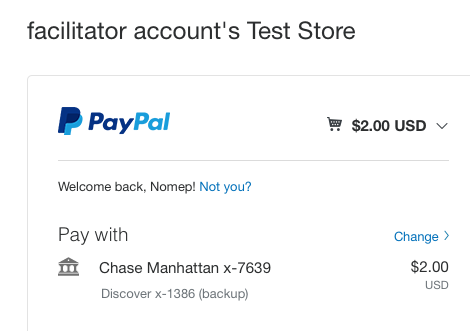
PayPal has unveiled PayPal World, a global payments network that links PayPal and Venmo with prominent domestic digital wallets—India’s Unified Payments Interface, China’s Tenpay Global, and Latin America’s Mercado Pago—with the aim of serving nearly 2 billion users by late 2025.

The announcement, made on 23 July 2025, positions PayPal World as the first truly interoperable cross-border payments ecosystem. Users will be able to send money and shop overseas using their familiar wallets, while merchants can receive payments from these networks without further integration. This ecosystem begins with the interoperability of PayPal and Venmo, progressing to UPI, Tenpay, and Mercado Pago.

Alex Chriss, PayPal’s president and CEO, described PayPal World as a “first‑of‑its‑kind payments ecosystem” capable of simplifying intricate cross‑border transactions for “nearly two billion consumers and businesses”. Ritesh Shukla, CEO of NPCI International Payments Ltd, affirmed that UPI’s integration will expand its global reach and benefit Indian users by offering secure and seamless international payments. Wenhui Yang, Tenpay Global’s CEO, added that the partnership would enable PayPal and Venmo customers to use Weixin Pay QR codes in China, while enabling deeper remittance collaboration.

The platform is technologically built for scale, using open‑commerce APIs and cloud‑native architecture to ensure low latency and reliability across global regions. It promises “device and technology‑agnostic” compatibility and is designed to embrace emerging commerce formats—including AI‑agent payments, dynamic payment buttons, and stablecoins over time.

Competitors and analysts note that PayPal World addresses a longstanding fragmentation in international payments. By reducing dependency on credit cards, currency conversion, and complex onboarding, it offers a streamlined experience for consumers and merchants alike. However, successful execution will depend on regulatory compliance across jurisdictions and the ability to integrate smaller wallets and merchants beyond launch partners.

Operationally, PayPal World will go live in autumn 2025 with PayPal and Venmo already interoperable. In 2026, Venmo users will be able to make purchases at millions of global merchants within the PayPal network—both online and in physical stores.

For Indian users, the move is particularly significant. UPI, which represents around 85% of digital retail payments domestically, gains a pathway to the global market, including e‑commerce platforms abroad and in‑store payments when travelling internationally. The integration could substantially reduce costs tied to credit card surcharges and foreign exchange fees.

Latin America’s Mercado Pago, though not yet fully finalised, joins under a memorandum of understanding, reinforcing PayPal’s focus on emerging-market inclusion.

If implementation proceeds as outlined, PayPal World could reshape cross‑border commerce by integrating regional payment infrastructures into a unified global network. Its potential success will hinge on seamless interoperability, robust regulatory alignment, and continued onboarding of diverse payment ecosystems.

Advertisements

We’re at an all-time high for the S&P 500 right at the beginning of earnings season. If we can get through this earnings season with not too many major failures, this upward current momentum that we have in the market, is likely to continue. It’s tempting to call this a pause for breath—but make no mistake, what follows could determine whether bulls stay in control. With 59 S&P 500 […]

AWS has rolled out Kiro, an AI‑powered integrated development environment currently in preview, with features aimed at surpassing “vibe coding” tools like Cursor. The platform shifts the coding paradigm by structuring prompts into full project specifications, design blueprints, task lists and tests, helping developers move from prototype to production with consistency and speed. At the heart of Kiro is its spec‑driven development approach: when developers initiate a […]

Saudi Aramco is in advanced discussions with a consortium spearheaded by BlackRock to secure approximately $10 billion for infrastructure linked to its expansive Jafurah gas initiative. The financing structure echoes prior deals, with investors purchasing usage rights while Aramco retains operational control and ownership.

The proposed transaction centres on critical assets—specifically pipelines and a processing facility—essential to the $100 billion Jafurah project, the world’s largest shale gas development outside the United States. Aramco aims to lift gas output by 60 per cent by 2030 from 2021 levels.

This initiative represents another strategic approach by Gulf oil majors to diversify their revenue models amid volatile crude prices. The deal allows Aramco to tap private capital while offering investors stable tariff income backed by long‑term usage commitments.

In 2021, BlackRock and EIG invested in Aramco’s gas and oil pipeline subsidiaries through similar lease‑back transactions, collectively raising nearly $28 billion. Under those agreements, Aramco retained a 51 per cent stake in each entity and paid tariffs to investors for pipeline usage, a structure described by consultancy Qamar Energy as more akin to borrowing than a sale.

With this new deal, Aramco continues its disciplined approach to infrastructure financing. The Jafurah project itself is a linchpin of Saudi Arabia’s energy transition agenda, aligning with national objectives to bolster gas production and reduce reliance on oil exports.

While those familiar with the talks confirm the structure mirrors the 2021 transactions, the group declined to specify a timeline for finalisation. Both Aramco and BlackRock declined to comment.

Experts note that such arrangements enable Aramco to free up capital for diversification ventures while retaining strategic infrastructure oversight. “The pipeline deals were basically a securitisation,” said Robin Mills, chief executive of Qamar Energy, referencing the 2021 transactions.

Market analysts believe this deal could serve as a template for financing future segments of Jafurah, which is expected to reach production of 2 billion cubic feet per day by 2030.

Taken together with Aramco’s earlier asset sales—such as its consideration of offloading gas-fired power plants and port infrastructure—these moves reflect mounting government pressure to boost proceeds amid a fiscal deficit and fluctuating oil revenues.

Saudi Arabia’s reliance on oil revenues—which accounted for around 62 percent of state income in 2024—has prompted a series of asset realisations, bond issuances and structured financing to support large-scale domestic projects and broaden the economic base.

The Jafurah deal also highlights growing investor appetite for stable, long‑dated infrastructure revenue streams in the Gulf. With institutional players like BlackRock involved, these deals are gaining traction as a viable alternative to traditional equity or debt-financing routes. Analysts suggest more such partnerships could emerge as the kingdom scales up energy-reform initiatives, including clean energy and non-oil sectors.

As the deal progresses, stakeholders will monitor its structure, particularly in comparison with the 2021 models, and assess implications for Aramco’s capital allocation strategy. The outcome could influence both market perception of the firm and broader investment flows into Middle East energy infrastructure.

HONG KONG SAR – Media OutReach Newswire – 17 July 2025 – Cyberport successfully hosted the “AI x Data Forum” today. Centered on the theme “AI in Action, Data at the Core: Unlocking Infinite Potential”, the forum brought together over 450 participants from government, finance, innovation and technology, cybersecurity sector, and academia to explore innovative artificial intelligence and data-driven strategies and practical experiences. Cyberport, Canton Data Exchange, […]

Building a successful food delivery app requires more than a great idea—it needs the expertise of a reliable mobile app development company in Dubai and the right framework to ensure performance, scalability, and a smooth user experience. In this blog, we’ll explore: Why framework choice matters in app development Best frameworks to build food delivery app in Dubai How to choose the right framework for food startup […]

The National Centre of Meteorology issued an advisory este morn for southeasterly winds gusting up to 40 km/h across the UAE, leading to heavy dust and sand lifting in internal and coastal areas. The conditions are expected to significantly reduce horizontal visibility—at times below 2,000 metres—between roughly 08:45 and 17:00. Abu Dhabi Police cautioned motorists to drive with care, maintain low speeds, and avoid distractions like using phones or filming while on the move.

Winds forecast for the day have already led to hazy skies over urban centres, with dust clouds drifting across highways and neighbourhoods. Officials warn that compromised visibility on roads will heighten accident risks, prompting emergency services to remain on alert.

Abu Dhabi Police reinforced the message, urging:

“Drivers to remain alert and reduce speed … For your safety and the safety of others on the road, please avoid using mobile phones or taking videos while driving.”

The statement formed part of a broader appeal urging residents to secure outdoor items and stay informed via official channels.

High winds sweeping the region echo seasonal patterns observed in previous years. The meteorological phenomenon known as “Shamal” brings northwesterly gusts that whip up desert dust, especially during summer’s peak between April and October. These episodes often downgrade visibility to well under 2 km. In fact, storms recorded in 2008, 2009 and 2010 show how recurrent and sudden these events can be.

An Abu Dhabi dust storm struck last Thursday, when winds triggered restricted visibility and led authorities to issue similar warnings earlier in July. The NCM had foreseen rough sea conditions in the Arabian Gulf, cautioning mariners of choppy waters and advising against unnecessary travel offshore.

Studies by geophysics experts at Khalifa University and warnings from the World Meteorological Organization indicate that shifting climate patterns may be contributing to increased dust frequency in the Gulf, with “early summer and late winter” transitions becoming more pronounced.

Commuters in Abu Dhabi, Dubai, Al Ain and Sharjah were met with drifting dust obscuring visibility, particularly on highways and arterial routes. Between 1 pm and 3 pm yesterday, multiple reports noted local visibility dropping below 1 500 metres near Dubai International Airport and adjacent roadways.

Transport authorities are urging drivers to obey reduced speed limits displayed on overhead electronic boards, as fine particles may settle on windshields, diminishing visibility further. School bus operators, logistics firms, and delivery services have been advised to take precautions or suspend outdoor activities until conditions improve.

Indoor spaces and construction sites are under advisory to ensure dust mitigation measures are in place, including sealing entrances and using air filtration systems. Medical professionals have also warned individuals with respiratory concerns to limit outdoor exposure and keep medications close at hand.

The repeated advisories align with broader international efforts to establish regional early-warning systems. During last spring, the World Meteorological Organization highlighted Saudi Arabia’s leadership in a Gulf-wide sand and dust storm monitoring initiative.

Given the projected continuation of these conditions into the evening, motorists and residents are advised to remain alert. The police statement urged community action:

“For your safety and the safety of others … please avoid using mobile phones or taking videos while driving.”

The pattern of such weather events reflects the UAE’s climate trends, where extreme heat, strong winds, and suspended dust become frequent during the summer months. These conditions contribute to regional cautionary measures and highlight the interplay between natural climate cycles and growing urban risk exposure.


Shapoorji Pallonji has inaugurated its maiden international residential project, Imperial Avenue, in Downtown Dubai, solidifying its presence in the competitive global luxury real estate market. The completion of the 45-storey tower, a prominent addition to Dubai’s skyline, signals the formal entry of the 158-year-old construction conglomerate into the high-end overseas property development sector. With the Building Completion Certificate granted by Dubai’s Real Estate Regulatory Authority, the company […]

Meta Platforms’ chief executive, Mark Zuckerberg, has announced a staggering commitment: the firm will dedicate hundreds of billions of dollars to construct multiple gigawatt‑scale data centres aimed at advancing superintelligent AI. The first of these massive hubs, named Prometheus, is slated to become operational in 2026, followed by Hyperion, which is expected to scale up to 5 GW in power consumption in the years ahead. These clusters are […]

Globally recognized UI/UX and growth marketing agency Tenet (We Are Tenet) selected to spearhead digital growth initiatives for Yomly, two-time ‘HR Software of the Year’ winner at the Entrepreneur Middle East Tech Innovation Awards, as the company accelerates international expansion & enterprise market penetration. Dubai, UAE — July 14, 2025 — Tenet, an award-winning global growth marketing and UI/UX design agency, today announced its selection as the […]

A tide of tariffs is sweeping across Europe, and the damage is becoming visible just as earnings reports begin to drop. President Trump’s trade decisions are no longer a future threat; they’re now a present force reshaping European corporate performance. The timing is brutal. What was expected to be a modestly positive second quarter for European earnings has shifted into decline, with weakness now concentrated in a […]

Rumble has unveiled its new “Rumble Wallet” in collaboration with crypto‑payments specialist MoonPay, designed to empower content creators by enabling them to monetise and manage earnings with Bitcoin and other digital assets directly on the platform. The wallet, slated for launch in the third quarter of 2025, will feature seamless on‑ and off‑ramps for buying, selling and swapping cryptocurrency—a move aimed at reducing dependence on traditional banking […]

Tokyo-listed Metaplanet has bolstered its treasury by buying 797 additional bitcoins, worth approximately $96 million, raising its total holdings to 16,352 BTC—valued near $2 billion—as Bitcoin surged past $120,000. The move mirrors the blueprint of US-based Strategy: leverage equity and debt issuance to accumulate crypto assets, which can then be used as collateral for broader expansion.

CEO Simon Gerovich reiterated that Metaplanet intends to use its growing Bitcoin reserves not for trading or liquidation, but to underpin financing for acquisitions in cash-generating sectors—particularly digital banking and financial services. The company plans to tap into traditional financing channels, including zero-interest bonds and preferred-share issuance, while steering clear of convertible debt. This purchase follows a series of substantial bond financings: earlier this month, Metaplanet issued 30 billion yen in zero‑coupon bonds to acquire an additional 1,005 BTC, bringing total holdings to around 13,350 BTC.

Industry analysts say Metaplanet now ranks as Asia’s largest and the world’s fifth-largest corporate Bitcoin holder, outranking companies such as Tesla, Coinbase, and Block Inc.. The firm has set ambitious targets: 100,000 BTC by end‑2026 and 210,000 BTC by end‑2027—accounting for nearly 1% of the global Bitcoin supply.

Boosted by these strategic shifts, the company’s market capitalisation surpassed ¥1 trillion, and its stock has climbed more than 345% this year. The pivot, originally a hotel chain, to a Bitcoin treasury vehicle began in 2024 and has drawn parallels to MicroStrategy’s transformation into a crypto-centric enterprise.

While bitcoin-backed financing is still in its infancy among mainstream banks, select institutions—such as Standard Chartered and OKX—have begun piloting crypto as collateral. Gerovich emphasised that once accumulation reaches “escape velocity,” Metaplanet’s holdings could be leveraged similarly to traditional assets to secure financing for acquisitions.

Sceptics voice concerns around volatility and the sustainability of the “bitcoin yield” model. Veteran short-seller Jim Chanos dismissed these valuations as “financial gibberish,” yet Gerovich welcomes critics, stating he invites them to short the stock if they are not convinced of the strategy.

Metaplanet is exploring acquisitions of digital banks and financial services companies that align with its strategy. The company is also aiming to strengthen its treasury infrastructure through asset-backed financing, including bond issuances, preferred equity deals and a planned $5 billion capital raise targeting expansion into its Florida subsidiary.

Cybersecurity firm Darktrace has revealed a sophisticated social engineering campaign targeting cryptocurrency users on Windows and macOS. The scheme employs fake start‑up companies themed around AI, gaming, Web3, video conferencing, and social media to trick individuals into downloading malware disguised as legitimate software. Darktrace’s analysis shows threat actors are establishing plausible digital identities using compromised or spoofed X accounts—sometimes verified—for both companies and employees, hosted on platforms […]

Oil traded in a narrow range as tariffs and sanctions threats unsettled global markets, weighing heavily on the outlook for energy demand. Brent hovered just above $70 a barrel, while West Texas Intermediate stayed above $68. Futures markets weakened as U. S. equity-index futures dropped following fresh trade tensions between Washington and key global partners.

U. S. President Donald Trump escalated tariff threats, targeting both the European Union and Mexico with 30 per cent duties and flagging potential levies against Brazil, the Philippines, Japan, South Korea and others. Markets interpreted this as a risk to economic momentum, especially in energy‑sensitive regions of Asia, denting crude demand expectations. At the same time, Asian buyers adopted a cautious stance, amplifying downward pressure on oil.

Against this backdrop, investors are eyeing a scheduled “major statement” from President Trump concerning Russia. Anticipation of new sanctions against the country, a major oil producer, lent modest support to prices that might otherwise have fallen further. Still, this support was checked by rising output from OPEC+ and a pause in geopolitical flare-ups in the Middle East.

Data from the International Energy Agency signals that global oil markets remain relatively tight. Summer driving seasons and increased refinery activity have buoyed demand, although analysts note that elevated output from Saudi Arabia—above its OPEC+ quota—puts a dent in any sustained rally. The kingdom disputes claims of non‑compliance, stating marketed crude remains within agreed limits.

Market watchers also flag OPEC+ plans to hike production by approximately 548,000 barrels per day in August, potentially followed by another boost in September. ING warns these moves could put the market into surplus in the final quarter of 2025. Additionally, the group revised its global demand forecasts downward for 2026–29, citing weakening growth in China.

Further clouding the outlook, heightened tariff uncertainty is exerting macroeconomic drag. The IEA forecasts a meaningful drop in global oil consumption growth for 2025, down a third from earlier projections, due in part to Trump’s tariff measures. Analysts stress that inflationary pressures and slower global trade would dampen energy demand.

From a logistical standpoint, renewed Houthi tensions in the Red Sea have introduced another variable, interrupting shipping and supporting prices marginally. Still, Middle East volatility has largely receded compared with levels seen earlier this year.

Looking ahead, market players are set to digest a blend of geopolitical and macroeconomic signals. Key Chinese trade figures due soon may reveal shifts in demand. OPEC+ decisions on output will be scrutinised closely, as will the next moves in Washington’s trade and sanctions policy. Meanwhile, U. S. gasoline consumption remains robust, with the Energy Information Administration reporting a 6 per cent increase to 9.2 million barrels per day—signalling that underlying demand has not yet faltered.

Oil markets are caught between supportive fundamentals—such as strong summer demand, supply constraints from Russia and geopolitical flare‑ups—and sobering headwinds from proposed tariffs, elevated output and macroeconomic uncertainty. Traders remain cautious, awaiting concrete policy developments from Washington, data releases from China, and steps by OPEC+ to navigate a market landscape that is anything but stable.

China’s BYD has pledged to assume full legal and financial responsibility for any accidents involving its new Level‑4 autonomous parking system, marking a decisive shift in automaker liability practices. The commitment, limited to parking scenarios using its “God’s Eye” system, allows drivers to bypass insurance claims entirely: damages will be handled directly through BYD after-sales services. BYD’s announcement follows confirmation that its God’s Eye system has reached […]

Greenlogue/AP Morocco is embarking on an ambitious project to construct a 500 megawatt data centre powered entirely by renewable energy in Dakhla, Western Sahara, according to digital transition minister Amal El Fallah Seghrouchni. The facility aims to bolster the protection and localisation of sensitive data infrastructure, reinforcing the kingdom’s drive to establish itself as a key digital hub for Africa. The announcement positions the Dakhla centre as a state-owned flagship in […]

Matein Khalid I had flagged Nvidia in this platform as a must own chip stock on the eve of the AI revolution just before its historic Q2 earnings call in May 2023. Fast forward two years and Nvidia earnings are up 10X while its share price is up 8X since my post as it flirts with a $4 trillion market cap that awaits if the shares trade at […]

VISHNU RAJA
RYO YAMADA
HITORI GOTOH
IKUYO KITA