News related to
cloud

Kaspersky reports a dramatic escalation in cyber‑attacks across Sub‑Saharan Africa during the first half of 2025 as the company prepares to lead discussions in Lagos on strengthening regional defences. Data shows that web‑based threats soared to 42.4 million incidents, while on‑device attacks—including malware delivered via USB drives and hidden installers—reached 95.6 million, both representing sharp increases from a year earlier. Spyware attacks more than doubled, password‑stealer incidents rose by […]

Google Cloud has introduced the Google Cloud Universal Ledger, a Layer-1 blockchain platform tailored for financial institutions, now operating in a private testnet. Developed with Python-based smart contracts and designed for 24/7 capital markets operations, the platform aims to support tokenisation, payments, settlements and asset management at scale. It follows a pilot with the Chicago Mercantile Exchange, which completed integration testing in March, and signals broader plans […]

SHENZHEN, CHINA – Media OutReach Neswire – 26 August 2025 – On August 26, 2025, Linklogis Inc. (09959.HK, “Linklogis”) released its interim results. In the first half of 2025, the total transaction volume processed by its technology solutions reached RMB 203.6 billion. The total revenue and income amounted to RMB 374.5 million. The number of anchor enterprise and financial institution customers for its supply chain finance technology […]

DMCC and Vermiculus have formalised a strategic partnership through a Memorandum of Understanding, aimed at advancing financial market infrastructure with cutting-edge technological capabilities. The agreement positions DMCC to enhance its support for nearly 26,000 member companies across its business ecosystems through AI-powered, cloud-native fintech solutions.

The MoU will explore collaborative development of technology solutions tailored to exchanges, clearing houses and central securities depositories—including joint projects and knowledge-transfer initiatives. This aligns with DMCC’s broader objective to incorporate AI across its infrastructure and strengthen Dubai’s standing as a global trade and technology centre.

Ahmed Bin Sulayem, Executive Chairman and Chief Executive Officer of DMCC, emphasised the vital role of technology and knowledge exchange in shaping the future of trade and finance. He noted that the partnership lays the groundwork for innovation and business growth, reaffirming DMCC’s commitment to deliver global businesses the environment to thrive from Dubai.

Vermiculus, founded in 2019 in Stockholm, brings expertise in developing state-of-the-art, cloud-native systems with AI integration for mission-critical financial market infrastructure. With experience spanning over 25 years and more than 75 projects for global exchanges, clearing houses and central securities depositories, the firm is well-placed to support DMCC’s ambitious technology strategy.

Taraneh Derayati, CEO of Vermiculus, highlighted the alignment between both organisations’ pursuit of high-quality AI-focused fintech solutions. She cited their successful history of collaboration with DGCX as a natural foundation for this broader partnership.

Nils-Robert Persson, Founder and Chairman of Vermiculus, underlined that working with a dynamic business district such as DMCC presents valuable avenues for mutual growth. He reiterated Vermiculus’s commitment to delivering reliable, innovative solutions to exchanges and financial institutions globally.

The timing of the agreement coincides with deepening economic and technological ties between the UAE and Sweden, reflecting a shared drive toward innovation-led growth. The venture reinforces Dubai’s commitment to attracting impactful partnerships and bolstering its position as an international nexus for commerce and technological advancement.

By facilitating the deployment of AI-driven infrastructure solutions, the collaboration aims to increase resilience, scalability and efficiency in DMCC’s financial market operations. The initiative also signals an increasing convergence between trade hubs and fintech innovators—underscoring Dubai’s strategic pivot toward technology-powered trade ecosystems.

The nature and timeline of specific projects under the MoU have not been detailed publicly, but both parties appear intent on leveraging their capabilities swiftly to deliver tangible benefits across DMCC’s diverse business ecosystem.

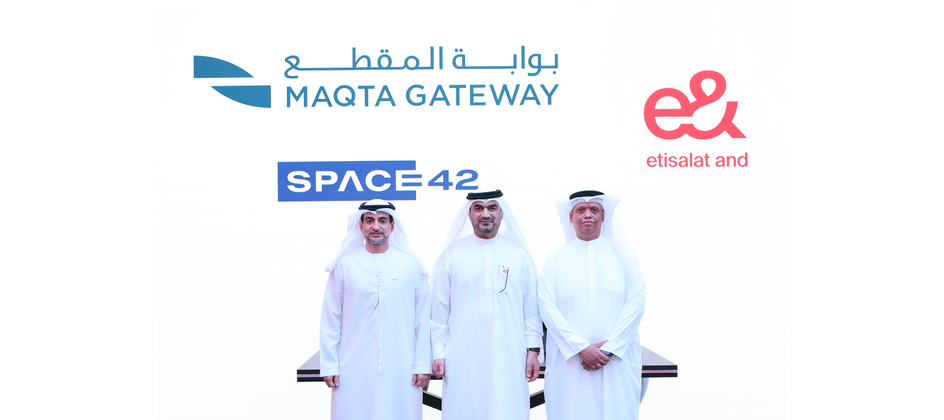
UAE-based Space42 has entered into a five-year memorandum of understanding with Microsoft and Esri to create the most comprehensive digital base map across Africa, aiming to serve more than 1.4 billion people and catalyse economic and infrastructural development. The “Map Africa Initiative” seeks to transform fragmented and outdated geospatial data into timely, accurate intelligence for governments, businesses and communities.

Under the agreement, Space42 will coordinate fundraising and project management, supply satellite data via its sovereign and commercial networks, devise AI-driven digital-twin models, and lead research and automation of map-production processes. Esri will handle the creation of the base maps using GeoAI and remote-sensing technologies while training regional teams to ensure long-term sustainability. Microsoft will provide Azure cloud infrastructure and AI capabilities to enable large-scale processing and secure data sharing.

Africa faces persistent challenges of unreliable and inaccessible mapping information, constraining infrastructure planning, investment decisions and service delivery. The Map Africa Initiative aims to address these by offering a uniform, high-resolution mapping platform, licensed to governments and updated locally by national mapping agencies. This platform is expected to foster a new commercial ecosystem, with African startups benefiting from access to essential geospatial intelligence. Data will be hosted in data centres managed by G42 and Microsoft across the continent.

The mapped data promises significant impact across multiple sectors. In logistics and ports, enhanced terrain mapping can facilitate route optimisation and reduce bottlenecks. Energy developers will gain more precise site-selection tools for solar and wind infrastructure. Governments will benefit from improved border monitoring, disaster preparedness and resource management. Urban planners and smart-city developers will gain foundational geospatial data critical for designing efficient public services and digital economies.

For Space42, the agreement deepens strategic partnerships with Microsoft and Esri, enlarges its African footprint, and opens pathways in analytics, licensing, and infrastructure. It positions Space42 as a trusted partner to governments in delivering scalable geospatial solutions. Peng Xiao, Chief Executive Officer of G42, stressed the broader goal: to close the “intelligence gap” by delivering AI-powered insights that enable smarter planning, sustainable development and inclusive innovation across the Global South.

Hasan Al Hosani, CEO of Smart Solutions at Space42, stated that partnership is integral to the UAE’s approach; this collaboration signals a strategic, not merely technical, advance. Jack Dangermond, President of Esri, emphasised the technical rigour required to convert satellite imagery into detailed, accurate base maps—a capability Esri brings to the initiative.

The initiative aligns closely with the broader UAE strategy. In 2024, the UAE was Africa’s largest investor, deploying around US $44 billion, nearly matching investment levels from the UK and China combined. Space42, as the UAE’s national space entity, serves as both a conduit for exporting data-driven development solutions and a facilitator of knowledge transfer between the UAE and Africa.

Gaining Unparalleled Industry Insights to Shape the Future of Wealth Management HONG KONG SAR – Media OutReach Newswire – 26 August 2025 – Citi Hong Kong recently partnered with the FinTech Association of Hong Kong (FTAHK) and Shenzhen FinTech Association (SZFTA) to organize a specialized field trip to Shenzhen for its talented Wealth Summer Interns, providing participants with exposure to the dynamic and rapidly evolving fintech landscape […]

Snowflake, the leading cloud data platform, has inaugurated a new office at The Square, Vittal Mallya Road in Bengaluru, further solidifying its presence in one of India’s largest technology hubs. The move follows the company’s expansion into Mumbai earlier, reflecting its commitment to establishing a robust footprint in the country.

The new Bengaluru office aims to be a hub for innovation, with a focus on data and artificial intelligence. Snowflake intends to foster collaboration between local and global teams to leverage the rapidly growing talent pool in the region. The company is not only seeking to tap into India’s burgeoning tech ecosystem but also to cultivate a work environment where data professionals and engineers can develop solutions that drive both local and global customer impact.

Bengaluru, known as India’s Silicon Valley, is home to a vast number of technology firms, startups, and innovation centres. As one of the leading tech cities globally, it offers an abundance of skilled professionals and a vibrant startup ecosystem. Snowflake’s decision to expand in Bengaluru underscores its confidence in the Indian market and the country’s crucial role in its global growth strategy.

The new office will serve as a centre of excellence, enabling Snowflake to provide tailored data solutions to clients across various sectors, including finance, retail, healthcare, and technology. It will also act as a research and development hub, working closely with Snowflake’s global teams to accelerate the delivery of cutting-edge products and services. This move aligns with Snowflake’s broader strategy of capitalising on AI, machine learning, and advanced data analytics to deliver transformative results for businesses around the world.

Snowflake’s expansion is a part of a broader trend where global tech giants are increasingly looking towards India as a critical location for their growth and innovation. India’s talent pool, particularly in software development, data science, and AI, continues to be one of the main driving forces for international firms seeking to innovate and build scalable solutions. The Bengaluru office will further enhance Snowflake’s ability to tap into this wealth of expertise and cater to the growing demand for advanced data solutions in the region.

The company’s expansion is also expected to create significant job opportunities, not just in data engineering and analytics but across various domains, from sales and marketing to customer support. By strengthening its local presence, Snowflake plans to build stronger relationships with its clients and partners in the region, which will be essential as it looks to further integrate itself into the local tech ecosystem.

In addition to providing innovative solutions for businesses, Snowflake’s new office will serve as a training ground for local talent. With a strong focus on learning and development, the company intends to upskill its employees and equip them with the necessary skills to tackle emerging data challenges. The office will also act as a key centre for Snowflake’s efforts in advancing data security and privacy, two areas that are increasingly top-of-mind for organisations operating in the cloud.

Advertisements

Dubai has witnessed the debut of COLABB, a groundbreaking real estate platform that combines investment, interior design, and digital strategy. The integrated platform, launched with the aim to reshape the regional real estate sector, seeks to streamline processes for developers, investors, and consumers alike.

COLABB promises to offer a comprehensive, multi-disciplinary approach to property development, management, and design. By bridging traditionally separate fields, it hopes to create a unified platform that delivers a seamless, end-to-end real estate experience. The project’s focus on integrating digital tools into real estate development is a key element in positioning COLABB as a forward-thinking force within Dubai’s competitive property market.

The platform’s three-pronged approach combines investment management, design services, and cutting-edge digital strategies. Investors will have access to a range of property development opportunities, including high-end residential and commercial projects, while interior designers will benefit from an intuitive design tool that aligns with industry trends and client preferences. Additionally, COLABB’s digital strategy will include data-driven insights, virtual tours, and market predictions, making it easier for all stakeholders to make informed decisions.

With the UAE’s rapidly growing real estate market, COLABB aims to capitalize on the increasing demand for smarter, more efficient ways to manage, invest, and design properties. Dubai, being a regional real estate hub, provides a perfect testing ground for this integrated platform. The city’s thriving construction and property development sectors are increasingly focused on embracing technological advancements, which COLABB is well-positioned to address.

The real estate landscape in Dubai has undergone significant transformation in the past few years. COLABB enters at a time when the city is seeing rising interest from international investors and homebuyers, with many new developments aimed at addressing the needs of the global market. The platform’s innovative approach to property development and management could offer a competitive edge in this dynamic environment.

For developers, COLABB promises a seamless experience that incorporates smart design with financial planning. By offering tools that allow for the early-stage integration of interior design concepts and investment strategies, COLABB hopes to simplify the development lifecycle. This integrated approach aims to enhance the quality of buildings and offer more lucrative investment returns.

The platform’s commitment to digitalization could also provide a crucial edge, as it leverages data analytics and artificial intelligence to offer predictive insights into market trends, property valuations, and customer behaviour. By understanding these trends, COLABB can offer tailor-made solutions that address specific market needs, making it easier for investors and developers to navigate an increasingly complex industry.

Further boosting its appeal is COLABB’s strong emphasis on collaboration between stakeholders in the real estate sector. The platform fosters a community-like environment where architects, designers, contractors, and property owners can collaborate freely. The aim is to streamline communication, reduce overheads, and increase the overall efficiency of the development process.

As the Dubai property market continues to attract global attention, COLABB’s entry is expected to draw interest from major international real estate players. Its combination of investment management, design services, and digital solutions sets it apart from more traditional platforms, potentially ushering in a new era of property development in the region.


Greenlogue/AP Abu Dhabi National Energy Company has secured a deal to acquire GS Inima, a major player in water treatment and desalination services, from GS Engineering & Construction. The agreement, valued at US$1.2 billion, will grant TAQA full ownership of GS Inima and propel the company’s international water growth ambitions. Headquartered in Madrid, GS Inima has long been a key figure in the global water industry, with […]

HONG KONG SAR – Media OutReach Newswire – 25 August 2025 – Never worry about leaving your pet at home again. The Arlo Essential Indoor 2K Security Camera empowers pet owners to stay connected anytime, anywhere, with crystal-clear video, a wide field of view, night vision, and noise-canceling two-way audio. Whether you’re at work or across the globe, you can see, talk to, and comfort your furry […]

Asia-Pacific public cloud expenditure is set to more than double, expanding from approximately $53 billion in 2024 to reach an estimated $131 billion by 2029. That projection reflects a compound annual growth rate of about 19.8 per cent from 2025 to 2029, driven by surging demand for IaaS, PaaS and SaaS across key sectors such as finance, retail and telecommunications.

Cloud adoption is gaining speed as organisations across the region prioritise digital modernisation. Financial services, retailing and telecoms industries are leading investments, while government, e-commerce and public service sectors follow closely behind. E-governance programmes and the need for operational efficiency are central to this surge.

Artificial intelligence integration is playing a significant role in this expansion. Organisations are increasingly embedding AI and machine learning capabilities into cloud platforms, intensifying demand for managed and industry-specific cloud services.

Nevertheless, the transition is not without its obstacles. Legacy infrastructure and a shortage of skilled cloud professionals remain persistent hurdles. As a result, hybrid and multi-cloud approaches are becoming more common, enabling flexibility, improved interoperability and alignment with sovereign data regulations in markets like India, Singapore and Australia.

Global hyperscale providers are doubling down on infrastructure growth across the region. Amazon Web Services has unveiled multi-billion-dollar expansions in Australia and Taiwan, supplementing earlier investments in Singapore, Malaysia and Japan. AWS projects Asia-Pacific cloud spending at about $250 billion in 2025, largely fuelled by AI uptake and infrastructure renewal.

Microsoft Azure and Google Cloud continue their expansion as major contenders. Alibaba Cloud maintains leadership in China and across Asia-Pacific, operating terrain-wide with numerous regions and availability zones. Alibaba is forging ahead with new data centre investments in Malaysia, the Philippines and plans in Vietnam.

Regional cloud players such as Tencent Cloud and Huawei Cloud are also making notable strides. Tencent is reinforcing operations in Indonesia, Malaysia, Singapore and Thailand, investing heavily in AI-enabled services like digital IDs and secure payment systems— notably a $500 million commitment in Indonesia alongside GoTo and Alibaba. Huawei Cloud is growing its presence in Singapore, Bangkok and Jakarta. Local integrators and managed service providers— including Singtel’s services and Singapore’s ST Telemedia—are strengthening adoption by offering hybrid and tailored industry solutions.

A newly identified cyberattack technique, HTTP request smuggling, has raised alarms in the cybersecurity community for its ability to circumvent traditional security mechanisms. The attack exploits discrepancies between how front-end proxy servers and back-end application servers handle HTTP requests, enabling hackers to inject malicious requests into web applications. This sophisticated method is considered a significant leap in HTTP smuggling tactics, a technique that has evolved from simpler […]

OpenAI has announced plans to establish its first office in New Delhi, marking a significant step in the company’s expanding global footprint. The move underscores the growing importance of India to the AI research and development community. It follows a recent surge in OpenAI’s user base in the country, where its language model, ChatGPT, has gained significant traction among businesses, developers, and students.

India’s burgeoning tech ecosystem, combined with its large, diverse user base, makes it an ideal location for OpenAI’s expansion efforts. As the company seeks to strengthen its presence in Asia, New Delhi was chosen due to its strategic positioning within the country’s technology and policy landscape. The office will serve as a key hub for local operations, focusing on developing partnerships with Indian firms and educational institutions, while also engaging with policymakers around AI regulation.

One of the driving factors behind OpenAI’s decision is India’s rapidly growing demand for advanced AI solutions. Indian businesses, particularly in sectors like healthcare, finance, and e-commerce, have increasingly turned to AI tools to enhance productivity and deliver personalised services. OpenAI’s language models, including ChatGPT, are already being integrated into a variety of applications across these industries, signalling a shift towards AI-driven business solutions.

The launch of a new, affordable subscription plan for ChatGPT earlier this week is also indicative of OpenAI’s commitment to making its technology more accessible. At just $4.60 per month, the plan is the most affordable option offered by the company thus far and is expected to further drive the adoption of its models in India. By reducing the cost barrier, OpenAI hopes to democratise access to its technology, allowing a wider range of users to benefit from its capabilities.

OpenAI’s arrival in India also comes at a time when the country is increasingly positioning itself as a leader in AI innovation. The Indian government has been exploring various initiatives to foster the development and responsible deployment of artificial intelligence, aiming to tap into its potential to fuel economic growth and tackle societal challenges. India’s National Strategy for Artificial Intelligence, announced in 2018, has laid out a roadmap for harnessing AI for public good, and OpenAI’s presence is expected to complement these efforts.

However, OpenAI’s expansion into the Indian market is not without its challenges. India’s regulatory environment surrounding AI is still evolving, with concerns around data privacy, ethics, and the potential for job displacement. OpenAI will likely have to navigate these regulatory hurdles as it looks to deepen its engagement with the country. While the Indian government has expressed support for AI innovation, it has also emphasised the need for safeguards to ensure that AI technologies are used responsibly and ethically.

The North American data centre market is grappling with an unprecedented surge in demand, causing vacancy rates to plummet to their lowest levels in history. As organisations push for more robust digital infrastructure to support the rapid growth in cloud computing, artificial intelligence, and data-intensive applications, the industry’s response is struggling to keep up with the escalating requirements. Recent reports highlight a significant tightening of the market. […]

The U. S. Department of State’s 2024 report on Zimbabwe paints a grim picture of human rights conditions under President Emmerson Mnangagwa’s government. It highlights a consistent pattern of violations, ranging from repression of political opposition to systemic abuses of freedom of expression. Despite mounting international scrutiny, authorities in Zimbabwe remain largely unaccountable for these actions, allowing abuses to persist unchecked. According to the U. S. report, […]

The United States has emerged as the dominant force in greenfield foreign direct investment in Saudi Arabia for the first half of 2025. Accounting for 61 projects with a combined value of $2.7 billion, American investments represented nearly a third of the total project count and capital investment during the period, according to a report by Emirates NBD. Saudi Arabia continues to be an attractive destination for […]

The combined platform supports agribusinesses in meeting EU Deforestation Regulation (EUDR) and ESG requirements with end-to-end transparency across key commodities. SINGAPORE – Media OutReach Newswire – 19 August 2025 – Agridence Grp Holdings Pte. Ltd. (“Agridence”), a Singapore-based leader in digital agri-commodity supply chain solutions, announced its acquisition of farmer connect, a European compliance and traceability platform. This acquisition comes alongside Agridence’s newly secured investment, enabling the […]

The United Arab Emirates registered some US$25.4 billion in mergers and acquisitions through the first six months of 2025, making up approximately 43 per cent of all M&A transactions across the Middle East and North Africa—which totalled US$58.7 billion during the period, according to data from EY’s latest MENA M&A Insights report.

MENA deal-making demonstrated robust momentum in the first half of 2025, with 425 transactions reflecting a 31 per cent increase in volume and a 19 per cent rise in overall value compared with the same period in 2024, as EY’s analysis shows.

Cross-border activity surged, accounting for 55 per cent of all deals by number and 78 per cent by value—marking the highest cross-border level in the past five years. Key sectors driving these overseas transactions included chemicals and technology, which together represented two-thirds of cross-border deal value. Among the most significant was the US$16.5 billion deal in which Borealis AG and OMV AG acquired a 64 per cent stake in Borouge plc.

Domestic deal-making remained energetic too. Homegrown transactions constituted 45 per cent of all deals by volume and 22 per cent of the total value, amounting to 192 deals worth US$12.8 billion—an impressive 94 per cent year-on-year rise in value. The technology and diversified industrial products sectors were prominent in this category. A standout deal was AI and cloud services firm Group 42’s acquisition of a 40 per cent stake in Khazna Data Centres for US$2.2 billion.

EY’s MENA EY-Parthenon Leader, Brad Watson, emphasised that the mid-year results underline how resilient and dynamic the region’s M&A market is. He pointed to sustained appeal for investors, underpinned by stable oil prices, infrastructure expansion and a strategic emphasis on growth industries such as technology, chemicals, and industry. I n particular, he noted that the UAE continues to attract significant global capital, thanks to its strong regulatory environment and push for economic diversification, alongside growing collaborative ties with Europe, Asia, and North America.

When compared with mid-2024 performance, the jump is clear. In the first half of last year, the MENA region recorded 321 deals valued at US$49.2 billion. That represented only a modest 1 per cent increase in volume and 12 per cent growth in value over the prior year. Deal values in the UAE and the Kingdom of Saudi Arabia accounted for US$9.8 billion out of that total.

Looking at the broader picture, 2024 closed with 701 MENA M&A deals worth US$92.3 billion, reflecting a 3 per cent rise in deal volume and 7 per cent gain in value compared with 2023. Cross-border transactions were the primary engine, making up 52 per cent of deal volume and 74 per cent of value.

The UAE’s growing prominence in M&A stems from both deliberate policy reforms and strategic positioning. Domestic investors, notably sovereign wealth funds and government-related entities such as ADIA and Mubadala, have been highly active across both home-market and international transactions. At the same time, global investors have responded favourably to the region’s economic diversification efforts, regulatory clarity, and infrastructural thrust.

  LibreOffice now supports AI-driven image generation via a new extension that bridges the office suite with the Stable Diffusion system, enabling users to create visuals directly from textual descriptions without leaving the application. A compact, purpose-built introduction prompts users to describe a scene, then uses Stable Horde, a collaborative network of volunteer-run Stable Diffusion servers, to generate an image. This functionality allows immediate integration of visuals […]

West African businesses and digital service providers are reaping the benefits of remote peering, which is rapidly transforming the region’s internet connectivity landscape. As the continent’s digital economy expands, the demand for fast, reliable, and affordable access to online services is driving the adoption of innovative solutions. At the heart of this transformation is TelCables Nigeria, a key player in West Africa’s digital infrastructure. A subsidiary of […]

Data released by the Statistical Centre for the Cooperation Council for the Arab Countries of the Gulf reveals a notable decline in the Gulf Cooperation Council’s national income for 2023. The value of gross national income for the GCC region stood at US$2.143 trillion, down 2.7% from the previous year’s figure of US$2.202 trillion. This reduction marks a significant shift in the economic landscape of the Gulf nations.

In 2023, the disposable national income, which measures the income available for consumption and savings after taxes and transfers, also saw a downturn, reaching US$1.989 trillion, compared to US$2.515 trillion in 2022. This represents a 3% decrease in the financial resources available for the region’s residents and businesses.

The GCC’s national income data reflects broader economic trends and shifts in the region’s economic structure, with particular attention given to the changes in the oil and non-oil sectors. While the non-oil sector has grown in importance, the oil sector remains a substantial contributor to the region’s total income. By the close of 2023, the non-oil sector’s value added to the economy amounted to US$513 billion, while the oil sector still held a dominant position with a contribution of US$603.5 billion. Despite the oil sector’s continued strength, the overall decline in GNI suggests that broader economic challenges are at play.

The sharp contrast in performance between the oil and non-oil sectors could be attributed to various factors, including fluctuations in global oil prices and shifting demand for the region’s primary energy exports. While the oil industry continues to be a critical economic driver, the Gulf countries have increasingly turned to diversification efforts, investing heavily in areas such as finance, technology, and tourism to reduce reliance on oil.

The results also reflect global economic pressures, particularly the ongoing impacts of inflation, geopolitical instability, and supply chain disruptions. These external factors have influenced both domestic consumption patterns and investment flows within the region. The 2023 decline in disposable national income indicates that households and businesses in the GCC are experiencing reduced financial flexibility, possibly affecting consumption and investment decisions moving forward.

Despite these challenges, the GCC economies have shown resilience in their attempts to navigate shifting global economic conditions. Several countries within the group, notably Saudi Arabia and the United Arab Emirates, have implemented ambitious plans for economic diversification under initiatives like Vision 2030. These efforts aim to transform their economies by reducing dependency on oil, focusing instead on sectors such as renewable energy, digital innovation, and high-tech industries.

The non-oil sector’s performance is a critical metric of success for these diversification strategies. In 2023, the growth of this sector, while still overshadowed by oil, highlights the ongoing transformation of the region’s economic framework. The expansion of industries such as construction, manufacturing, and services contributes to this shift, providing the region with a more balanced economic profile, though the full impact of these changes will take time to fully materialise.

Samsung has commenced local production of laptops in India, marking a significant shift in its manufacturing strategy. The move follows growing trends in the global tech industry, where companies are increasingly decentralising their manufacturing to cater to regional markets and mitigate supply chain risks. The tech giant’s decision to set up its laptop assembly line in India comes as part of a broader push to diversify its production capabilities and tap into the country’s emerging manufacturing ecosystem.

The new facility, which is located in Noida, is expected to meet rising demand for Samsung laptops in India and other parts of Asia. The plant will focus on assembling a range of models, from entry-level to premium devices, with an emphasis on enhancing the supply of high-performance laptops. By doing so, Samsung aims to capitalise on the Indian government’s incentive schemes aimed at boosting local manufacturing and creating jobs in the sector.

India has become an increasingly attractive destination for global manufacturers due to its robust infrastructure, competitive labour costs, and a growing pool of skilled engineers and technicians. Samsung’s decision to invest in local laptop production highlights the country’s status as a strategic hub for tech companies looking to scale operations. The move also aligns with the Indian government’s vision of becoming a global manufacturing leader under the “Make in India” initiative, which encourages foreign companies to establish production bases in the country.

The South Korean company has been investing heavily in India over the past few years, with a significant focus on expanding its footprint in consumer electronics, particularly smartphones. The expansion of laptop production further strengthens its position in the Indian market, where the demand for personal computing devices has been steadily increasing. India, with its young population and rapid digitalisation, presents a lucrative market for tech companies. By establishing local manufacturing units, Samsung can not only meet this demand more effectively but also potentially lower the cost of its devices by reducing import duties and other logistical expenses.

Samsung’s Noida plant will be equipped with advanced manufacturing technology, allowing the company to ensure that its laptops meet international quality standards. The facility is expected to produce several million units annually, with an eye on both the domestic and export markets. This localisation strategy is expected to significantly cut down on shipping costs and delivery times, giving Samsung a competitive edge over other international brands that continue to import their devices into the country.

The move comes at a time when India is becoming increasingly attractive to global technology firms. Companies like Apple, Dell, and HP have already ramped up their manufacturing presence in India in recent years. India’s well-established electronics sector, supported by the government’s push to improve infrastructure and streamline regulatory processes, has led to a surge in foreign direct investment in the country’s tech manufacturing ecosystem.

Samsung’s expansion into laptop production also reflects the growing importance of India in the global supply chain. The country’s status as a low-cost production base, combined with its large consumer market, makes it an attractive location for companies looking to avoid the risks associated with heavy dependence on single countries, such as China. By shifting some of its manufacturing operations to India, Samsung can reduce its exposure to potential disruptions in China, which has long been the dominant player in global electronics manufacturing.

This shift is also likely to have broader implications for the Indian tech industry. With global giants like Samsung setting up local production lines, it is expected that the country will see an increase in the number of skilled jobs in the tech sector. Additionally, the growing demand for locally manufactured devices may spur innovation in the country’s tech ecosystem, encouraging the development of homegrown talent and technologies. This would not only strengthen India’s position as a manufacturing hub but also lay the foundation for the growth of its own tech startups.

Greenlogue/AP Oman Data Park has formed a strategic alliance with Solar Wadi to establish the Sultanate’s inaugural green energy data centre, powered by solar generation. The collaboration marks a significant step in aligning ODP’s technological infrastructure with Oman’s net-zero ambitions, as the data centre is set to harness sustainable energy to lower operational emissions and improve grid resilience. ODP, long regarded as the nation’s leading provider of […]

The United Arab Emirates’s cloud-seeding programme continues to play a pivotal role in enhancing water resources, generating between 168 million and 838 million cubic metres of extra rainfall annually, of which 84 million to 419 million cubic metres is usable water—significant volumes in a country where the total annual rainfall stands at approximately 6.7 billion cubic metres.

Efforts are particularly intensive in 2025, with 185 cloud-seeding missions already carried out to date, including 39 operations in July alone. These missions, executed using advanced tools such as hygroscopic flares, nanomaterials and electric-charge emitters, aim to raise rainfall by 10 to 25 per cent under favourable conditions.

The programme is backed by a technologically advanced infrastructure. The UAE employs a fleet of four dedicated aircraft, 12 trained pilots, and utilises more than 60 weather stations, an integrated radar network, and the Emirates Weather Enhancement Factory, which produces high-quality seeding flares. With over 900 flight hours each year, the initiative represents a significant operational commitment.

New investments have further enhanced the programme’s precision and effectiveness. The integration of artificial intelligence and machine-learning tools enables real-time analysis of meteorological data, optimising cloud-seeding timing and target areas. Additionally, nano-enhanced flares, with superior rain-inducing capabilities, are being developed and deployed.

Scientific assessment supports the programme’s efficacy. A statistical study comparing historical rainfall data found that cloud seeding has contributed to a 22.8 per cent average increase in annual surface rainfall over seeded zones between 2010 and 2019. Other estimates suggest enhancements of up to 30–35 per cent in clear atmospheres and 10–15 per cent in more humid environments.

On the cost front, cloud seeding remains economical. Harvestable water produced through cloud seeding costs just $0.01 to $0.04 per cubic metre, compared with approximately $0.31 per cubic metre from advanced desalination plants. This makes rain enhancement a compelling supplementary strategy in the face of rising demand and declining groundwater levels.

While cloud seeding bolsters water availability, it does not function in isolation. Broad concerns remain regarding drainage infrastructure, which has demonstrated limitations during extreme rainfall events. For instance, heavy storms in April 2024 overwhelmed urban systems—while some speculated about cloud-seeding’s role, authorities and experts concluded that infrastructure constraints and climate-change-driven weather intensity were the primary causes.

Nevertheless, those involved in the research highlight the programme’s strategic importance. Alya Al Mazroui, Director of the UAEREP, emphasises its growing global recognition and potential applicability in other water-scarce regions. The programme—which is administered under the Ministry of Presidential Affairs and backed by the National Centre of Meteorology—continues to drive innovation in rain enhancement science.

VISHNU RAJA
RYO YAMADA
HITORI GOTOH
IKUYO KITA