News related to
cloud

Matein Khalid I had flagged Nvidia in this platform as a must own chip stock on the eve of the AI revolution just before its historic Q2 earnings call in May 2023. Fast forward two years and Nvidia earnings are up 10X while its share price is up 8X since my post as it flirts with a $4 trillion market cap that awaits if the shares trade at […]

Samsung has launched a new generation of Galaxy AI features embedded directly on its smartphones, combining cutting‑edge intelligence with enhanced privacy safeguards. Designed to rival Apple Intelligence and Google Gemini, Galaxy AI now performs tasks such as voice‑to‑text, photo editing, call transcription and real‑time translation entirely on device—only resorting to anonymised cloud support for complex jobs, thus protecting personal data. At the heart of this shift is […]

Suhail bin Mohammed Al Mazrouei, Minister of Energy and Infrastructure, reaffirmed the UAE’s full backing for OPEC+ mechanisms, underlining the nation’s commitment to sustaining equilibrium in global oil markets through capacity expansion and coordinated policy.

At the 9th OPEC International Seminar in Vienna on 9 July, Al Mazrouei praised OPEC+ for its collective decision‑making model, which he said ensures production responds to actual market demand rather than price speculation. He noted that the UAE’s strategic investments in expanding production capacity reflect a readiness to release additional oil when consumption trends warrant, providing a stabilising buffer to global supply. The minister highlighted that this expansion aligns with prudent leadership foresight aimed at reinforcing market resilience.

He emphasised that there has been no substantial rise in inventories despite several months of gradual production increases. “Even with the increases…we haven’t seen a major buildup in inventories, which means the market needed those barrels,” he stated. This observation supports broader OPEC+ data showing that successive monthly output increments have been absorbed by demand, a trend that the UAE believes underlines the rationality behind its expanded quota.

Since April, OPEC+ has reversed approximately 2.17 million barrels per day of voluntary output cuts via a phased rollout: 138,000 bpd in April, then 411,000 bpd in each of May, June and July, followed by a proposed 548,000 bpd increase for August – a move reflecting growing market confidence. Notably, the UAE is set to complete a 300,000 bpd quota increase by September, a benchmark reached ahead of the original 2026 timeline as OPEC+ expedited its capacity hike schedule.

Analysts suggest that such robust production gains could recover roughly 2.5 per cent of global demand by September. Al Mazrouei remarked that the UAE’s investments will strengthen its role within OPEC+ and that once additional capacity comes online, it will serve as a crucial stabilising factor during demand shifts.

He further argued that focusing solely on oil price levels is insufficient. Rather, OPEC+ aims to strike a sustainable balance that encourages long‑term investment. “We need the price to be right for investments to happen,” he said, warning of the consequences of underinvestment across producers.

Current market dynamics appear to confirm this approach: data from mid‑June and early July indicate that inventories across OECD nations remained stable despite the production uptick, confirming demand absorption remains robust. That observation, Al Mazrouei suggested, validates the pace of OPEC+ supply restoration and diminishes concern about a looming oversupply.

While output is increasing, policy is cautious. The Group of Eight core OPEC+ members—Saudi Arabia, Russia, UAE, Kuwait, Oman, Iraq, Kazakhstan and Algeria—are proceeding in measured increments. Al Mazrouei underscored that OPEC+ continues to meet monthly via ministerial and committee reviews, carefully calibrating production relative to shifting market fundamentals.

Beyond ensuring balance, the UAE’s production capacity expansion also carries strategic benefits. Having secured a higher individual quota, the country aims to restore and extend its market share. This reinforcement was acknowledged by external observers, including Richard Bronze of Energy Aspects, who noted “the UAE is benefiting from this speeding up of the quota increases” within a context of broader OPEC+ output acceleration.

Despite concerns about slowing economies in key importers, including China, and rising US trade tensions, OPEC+ retains a cautiously optimistic outlook. Prices in July experienced modest one‑per‑cent gains near $69 per barrel following the announcement of the August supply increase—an indicator that demand continues to absorb the additional volumes.

Nevertheless, OPEC+ remains vigilant about macroeconomic risks. Commentators have warned that demand softness later this year, driven by uncertainties in global growth and trade policies, could pressurise prices. Al Mazrouei echoed that view, stressing that short‑term supply increases must be accompanied by stable investment in oil infrastructure to prevent future shortages.

Persistent coordinated production strategy is a central theme from the Vienna seminar. Ministers emphasised OPEC+’s response to shifting fundamentals rather than geopolitical or speculative impulses. With the group moving to complete the unwind of emergency cuts, markets will closely monitor whether global demand continues to match supply advances.

Stringent new visa rules now govern travel from Nigeria to the United Arab Emirates, marking a sharp increase in restrictions. Transit visas have been fully suspended, while tourist visas for solo applicants aged 18 to 45 are no longer allowed. Those aged 45 and above must now demonstrate a six-month bank balance of at least USD 10,000 to qualify. A directive communicated to travel agents in Dubai on Tuesday […]

SUSE has unveiled its Sovereign Premium Support, a support service designed to meet stringent demands for digital sovereignty across the European Union. Named as such to reflect both its locality and commitment, the service offers EU-based support engineers and service managers, along with data storage confined to networks within the EU, guaranteeing compliance with regional regulations and data privacy expectations. Geopolitical shifts, evolving regulations and rising concerns […]

Asia‑Pacific digital‑native firms attracted USD 15.4 billion in artificial intelligence investment in 2024, a figure reported by IDC that underscores a shift towards deeper commitments and strategic growth, even as the volume of deals declined.

Capital concentration has intensified as larger funding rounds become the norm. IDC analysts found that while the number of funded AI startups has dropped, the average investment per deal has risen markedly—reflecting investors’ preference for enterprises closer to market maturity rather than early-stage ventures.

China, South Korea, Japan and India remain at the forefront of investment flows. These major markets, with their diverse tech ecosystems and supportive policies, continue to lead, though Southeast Asian nations are gaining traction as both AI adopters and innovators.

Generative AI, a wave propelled by breakthrough models in natural-language processing and image creation, is swiftly ascending as the dominant investment theme across Asia‑Pacific. IDC forecasts that GenAI allocations will more than double by 2028, reaching USD 54.5 billion and forging a new frontier for enterprise transformation.

There is mounting evidence that corporations are pivoting from rhetoric to implementation. Only 29 percent of digital‑native businesses have scaled AI organisation‑wide, yet more than 42 percent now actively pursue co‑innovation partnerships with technology vendors to integrate AI across operations. These collaborative efforts are reshaping collaboration models between AI startups and incumbents.

Costs associated with infrastructure and data security continue to shape investment flows. Enterprise-grade AI demands not only computational muscle but also robust governance frameworks to mitigate risks such as bias, intellectual property leakage and regulatory non‑compliance. Data from the region show that 34 percent of organisations have embedded governance within generative AI software development, an advanced step beyond policy‑level oversight.

Cloud infrastructure providers are doubling down on AI support across Asia‑Pacific. Amazon Web Services announced a USD 13 billion expansion in Australia and over USD 5 billion for a Taiwan region, alongside large‑scale investments in Singapore, Malaysia and Japan. AWS claims the region’s cloud spending will reach USD 250 billion in 2025, largely driven by AI demands.

This inflow of cloud capital is critical in overcoming entry barriers. Local language support, data sovereignty and integration capabilities have become competitive differentiators for these platforms—Microsoft Azure, Google Cloud and Alibaba Cloud are aggressively pursuing similar capacity expansion. Southeast Asia, in particular, is emerging as the fastest–growing regional cloud market globally.

Startups are adapting to investors’ sharper focus on maturity and scalability. Fewer low‑valuation seed rounds are appearing; instead, late‑stage funding for companies with clear product‑market fit, real revenue streams and enterprise traction is dominating. This trend reflects an increasingly risk‑averse capital environment that emphasises depth over breadth.

The build‑up of AI infrastructure is dovetailing with rising regulatory attention. With supervision frameworks being rolled out around sensitive sectors such as finance and healthcare, investors are seeking startups equipped with compliance capabilities. For instance, financial‑services firms are prioritising traceability and governance as mission‑critical components for future‑ready AI deployment.

In geographical terms, growth hotspots vary by stage of AI ecosystem development. China leads in institutional funding and government-backed initiatives. Japan and South Korea benefit from combined strengths in industrial automation, robotics and semiconductor production. India’s vibrant startup landscape is gaining attention, particularly in generative AI and enterprise software. Meanwhile, nations such as Indonesia and Malaysia are attracting more attention as AI adoption becomes a priority for government digitalisation agendas.

Challenges persist. High‑cost infrastructure, skilled‑talent shortages and fragmented regulatory regimes pose constraints. Yet the rise of public‑private coalitions and university‑industry alliances is beginning to address these gaps—skills acceleration programmes are proliferating, and data‑sharing frameworks are gaining traction.

Investors are now looking past headline metrics to evaluate alignment with national AI strategies, such as Japan’s AI strategy and India’s push for indigenous innovation. Locally relevant models—capable of understanding linguistic diversity, cultural contexts, and industry‑specific workflows—are increasingly being favoured over globalised, one‑size‑fits‑all solutions.

This funding environment has spurred momentum in adjacent areas. Edge computing, AI‑enabled cybersecurity, AI‑driven supply‑chain optimisation and health‑tech verticals are emerging as new battlegrounds for both startups and incumbents. These sub‑domains are drawing fresh rounds of investment and pilot partnerships.

Policy trends are also influential. Governments across Asia‑Pacific are advancing data protection frameworks, AI ethics norms and public‑sector adoption plans—all contributing to clearer roadmaps for private‑sector engagement. The interlinking of regulatory reform and capital deployment is strengthening ecosystem resilience.

Investor sentiment remains cautiously optimistic. Surveys suggest that, despite macroeconomic headwinds and geopolitical risk, most executives view cloud and AI as avenues to cost reduction, efficiency gains and differentiation. As AWS’s APAC vice‑president remarked, “AI is the biggest market opportunity since cloud in 2006,” signalling sustained confidence in long‑term upside.

Australian super fund CareSuper has chosen Macquarie Cloud Services to migrate its entire VMware Cloud on AWS infrastructure—including hundreds of applications and petabytes of member data—to Microsoft Azure. The fund, which manages over AUD 57 billion for more than 573,000 members, has engaged Macquarie to modernise its databases, implement platform‑as‑a‑service solutions and consolidate workloads into a new Azure landing zone. This high‑stakes move follows a wave of “repatriation from […]

Advertisements

Privacy-conscious map users now have an innovative choice with CoMaps, a newly launched open‑source navigation app that operates fully offline and doesn’t track users. Forked from Organic Maps just last month on 1 June 2025, CoMaps is designed for hikers, cyclists, drivers and public‑transport commuters worldwide. CoMaps distinguishes itself with a firm stance on data sovereignty. Under an Apache 2 licence, the community‑developed app ensures no personal location […]

Lyon’s municipal government has begun phasing out Microsoft Office, Windows and SQL in favour of open-source alternatives, marking one of Europe’s most significant moves away from US proprietary software. The third‑largest city in France, which employs around 10,000 public servants and serves over a million residents, will adopt OnlyOffice for productivity tasks, Linux as the operating system and PostgreSQL for database management. City officials emphasised that this […]

Court filings in the Chapter 11 case for collapsed exchange FTX suggest that users in 49 jurisdictions may see their claims disputed or denied over local crypto restrictions. A filing submitted on 2 July to the Delaware bankruptcy court outlines a new “hold‑and‑review” process, halting distributions to users in areas with bans on crypto trading or restrictions on offshore platforms.

FTX’s trustee, along with legal counsel, will evaluate whether paying out creditors in these jurisdictions violates local laws. Notices will then be issued to affected users, granting them at least 45 days to challenge their classification. Absent a timely response, claims and any accrued interest will be forfeited to the estate.

Although users in these 49 jurisdictions represent just 5% of approved claims, the financial exposure is heavily weighted. Over 82% of that total value originates from mainland China. China accounts for the vast majority of claims in what FTX labels “potentially restricted jurisdictions”. Advocates warn that most Chinese claimants may not recover any funds.

FTX’s court motion says it will seek legal opinions for each jurisdiction before approving any payout. If counsel concludes local law prohibits the disbursement, those claims will be formally challenged. The legal framework treats such claims as “disputed,” pending approval or denial of their status. Distributions will be suspended until those claims are resolved.

Affected users must submit sworn statements confirming acceptance of US court jurisdiction to pursue objections. Upon objection, the trustee will petition the court to determine if exclusion is justified. Lack of objection will result in automatic forfeiture.

The list of 49 jurisdictions includes not only China, but also countries such as Nigeria, Russia, Egypt, Saudi Arabia, Andorra, Fiji and Zimbabwe. That breadth reflects the wide global footprint of FTX prior to its collapse.

Chinese users have responded with alarm, exploring legal avenues in the US. One affected claimant, identified as “Will,” told media that though the crypto ban in mainland China prevents trading, holdings remain legal and ownership rights should entitle them to fiat reimbursement in US dollars. He has engaged a New York attorney to counter FTX’s position on wire transfers and jurisdictional exclusion.

Some creditors are studying whether to transfer or sell their claims through entities in compliant jurisdictions, though it remains unclear whether such mechanisms will resolve legal barriers.

FTX Recovery Trust reported an overall decline in disputed claims—from US $6.5 billion to US $4.6 billion—after approving $1.8 billion in claims and expecting another $2.7 billion to be cleared. Approved claim distributions have reached approximately $8.3 billion. This new policy specifically targets the subset linked to restricted jurs, leaving billions in limbo.

Legal experts suggest the court’s decision could set precedent for how bankruptcy courts manage cross‑border crypto claims when local compliance is at risk. FTX is therefore seeking judicial approval to formalise this tailored procedure.

Critics argue the move undermines proportional equity. Victims from major markets like China, Nigeria and Egypt, who collectively hold substantial unrationalised stakes, now face potential complete exclusion. These developments raise concerns about transparency and fairness in the global recovery process.

FTX’s reorganisation plan approved in October 2024 allows repayment of up to US $16.5 billion to customers. It prioritises accounts holding US $50,000 or less under the terms of the Chapter 11 order, but regional legal hurdles may override the general scheme.

Trustee Sunil Kavuri summarised that each claim will proceed only with a supportive local legal opinion. If the opinion concludes a payout contravenes domestic laws, the claim will be formally disputed and may be permanently disallowed.

OpenAI will lease approximately 4.5 gigawatts of data centre power from Oracle under a $30 billion‑per‑year agreement set to begin delivering revenue in Oracle’s fiscal year 2028. This significant capacity boost forms part of the expansive “Stargate” initiative—an AI infrastructure venture launched in January aiming to deploy up to $500 billion globally. Oracle plans to construct and expand multiple U. S. data centres to support this deal, including enhancements to its […]

Alibaba Cloud has unveiled its third data centre in Malaysia and confirmed plans for a second facility in the Philippines, deepening its infrastructure presence in Southeast Asia. The Malaysian centre became operational on 1 July 2025, while the Philippine hub is scheduled to launch by October 2025. These moves are part of Alibaba’s broader efforts to bolster cloud and AI services across the region.

Growth in cloud demand and the strategic importance of Southeast Asia underpin this expansion. Alibaba Group’s cloud division has embarked on a $52 billion investment over the next three years to build a unified global cloud network, spanning Asia, the Middle East, Europe and the Americas. Southeast Asia has emerged as a pivotal battleground as enterprises accelerate AI adoption and seek resilient digital infrastructure.

At a summit in Singapore marking Alibaba Cloud’s tenth anniversary in the city-state, Eddie Wu, CEO of Alibaba Cloud, highlighted the company’s strategy: “Globalisation is Alibaba Cloud’s long‑term strategy,” he said, adding that the company would “accelerate the development of its global cloud computing network”. These statements reinforce Alibaba’s ambition to deliver end‑to‑end cloud services, spanning compute, storage, networking and AI capabilities.

This announcement follows earlier infrastructure roll‑outs across Asia. The company deployed a second data centre in South Korea in June 2025 and launched new regions in Thailand and Mexico in the first half of the year. Strategic market withdrawals from Australia and India in 2024 appear to be counterbalanced by intensified investment in high‑potential markets.

Southeast Asia’s accelerating digital transformation is creating rising demand for secure, scalable cloud services. Malaysia, with its growing ecosystem of startups and tech‑savvy enterprises, will now benefit from three Alibaba Cloud zones, an improvement in redundancy and local connectivity. The Philippine expansion addresses growing demand in Manila and surrounding urban centres, where cloud adoption is being propelled by fintech, e‑commerce, and the BPO sector.

At the Singapore summit, Alibaba also launched its AI Global Competency Centre, designed to support over 5,000 businesses and 100,000 developers. The centre offers access to advanced AI models, labs and infrastructure support. These investments aim to accelerate enterprise AI adoption by providing both tools and training through partnerships with more than 120 universities, aiming to train 100,000 AI professionals annually.

In addition to infrastructure, Alibaba Cloud is upgrading its cloud offerings. The ninth‑generation intel‑based Enterprise Elastic Compute Service will roll out across Malaysia, the Philippines, Japan, South Korea, Thailand, UAE, Germany and the UK from July. Enhancements to its Data Transmission Service and Platform for AI demonstrate a push to simplify deployment of large language models and accelerate inference capabilities.

Competitive pressure in Southeast Asia is intensifying, with other hyperscalers—AWS, Microsoft Azure, Google Cloud—announcing new regions and services. Alibaba’s bets on localised data centres, AI‑centric products and talent development programmes are its response to positioning itself as a regionally integrated cloud‑AI partner.

Regulatory headwinds and trade tensions, particularly restrictions on Chinese cloud firms, lend further urgency to Alibaba’s diversification strategy. By embedding infrastructure in Southeast Asia, the company aims to mitigate geopolitical risk, offer compliant local services and deliver low‑latency performance.

Corporate results reflect this momentum: Alibaba Cloud has reported double‑digit year‑on‑year growth in AI‑related product revenues for six consecutive quarters, with Q4 cloud revenue hitting CNY 31.7 billion and quarterly growth of 13%. These figures position the unit as the fastest‑growing segment within the broader Alibaba Group.

Tech analysts and regional partners have praised the expansion as timely. “These deployments will significantly improve resilience, latency and service coverage across key markets,” remarked a Southeast Asia‑based CIO. A telco executive added that local data centres are crucial to scaling AI‑powered services like real‑time analytics, IoT and smart city infrastructure.

Channel partners in Malaysia and the Philippines, including telcos and systems integrators, anticipate accelerated digital transformations. Industry groups reported a surge in enquiries following the Malaysian centre’s opening, particularly from manufacturing and education sectors. Cloud‑native startups welcomed the news, viewing the increased compute availability as essential to scaling AI‑driven products.

Optimising energy use and sustainability is also part of the plan. Alibaba’s “Energy Expert” ESG‑focused reporting tool integrates AI into energy management. This aligns with industry benchmarks that 84% of leaders see green AI as important, although 69% are still at early adoption stages. Emerging green data centre practices—including renewable power sourcing and efficient cooling—are expected to feature prominently in the Southeast Asian roll‑outs.

The Malaysian data centre opens amid strong macro trends: Malaysia’s digital economy was projected to grow at over 10% annually through the next five years, while Philippine cloud adoption is forecast to grow at a similar rate, driven by government digitalisation policies and enterprise cloudisation. As Alibaba deploys this enhanced infrastructure, both nations are expected to see AI‑centred cloud services gain momentum in verticals ranging from finance to manufacturing.


PoliCloud has closed a €7.5 million seed funding round led by Global Ventures, with participation from MI8, OneRagtime, Inria and others, to accelerate its expansion of sovereign, decentralised cloud infrastructure aimed at European governments, enterprises and SMEs.

The Cannes‑based firm will deploy the capital to bolster its operational team, scale micro‑data centre deployment across Europe and target public sector clients that need secure, locally governed cloud services.

Founded in February 2025 by serial fintech entrepreneur David Gurlé, PoliCloud delivers containerised micro‑data centres housing proprietary hardware integrated with Hivenet’s distributed storage and computing software. Early traction includes four sold units and projected revenues in excess of €6 million by the end of 2025.

The firm’s micro‑data centres—equipped with up to 104 GPUs per unit and expected to scale beyond 1,000 GPUs by year‑end—are designed for high‑performance computing, AI processing and encrypted data storage, offering reduced dependency on US‑based cloud giants and enhanced compliance with European data sovereignty standards.

“PoliCloud is meeting a critical market demand for sovereign cloud infrastructure that is not only secure and abundant but also eco‑responsible,” Gurlé stated, underscoring an ambition to deliver affordable, decentralised compute infrastructure across the continent.

Global Ventures Senior Partner Simon Sharp explained the investment thesis, emphasising a need for visionary entrepreneurs offering solutions with clear market demand and global potential. The firm previously backed Hivenet in 2022 and views PoliCloud as a strategic addition to its portfolio.

OneRagtime CEO Stéphanie Hospital and Mi8 Managing Director Guillaume Dhamelincourt echoed the sentiment, citing the increasing demand for affordable, secure and sustainable computing power in Europe. Inria’s participation aligned with its strategic mission to support decentralised computing as a way to bolster France’s digital autonomy.

Industry analysts note that the cloud infrastructure sector in Europe has drawn significant venture investment, particularly in sovereign and AI-ready platforms. PoliCloud stands out for combining hardware innovation, distributed software architecture and environmental responsibility—promising 75% lower CO₂ emissions and zero‑water waste per unit.

PoliCloud’s edge compute strategy is being viewed as a potential game‑changer in the context of accelerating AI adoption. It offers municipalities, research institutions and regulated industries the flexibility to deploy GPU‑rich, GDPR‑compliant infrastructure locally, rather than relying on centralised hyperscalers.

Operating from Cannes, the company has so far sold four units within three months of its February launch at the World AI Cannes Festival. Hardware specifics remain under wraps, though insiders suggest each container may host more than 100 GPUs, with a roadmap targeting up to 10,000 GPUs by the end of 2026.

The €7.5 million lifeline will be used to recruit additional talent, fund technical development, scale production of micro‑data centres and initiate roll‑out across multiple European markets.

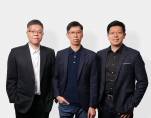
TAIPEI, TAIWAN – Media OutReach Newswire – 1 July 2025 – CyCraft, a leading AI cybersecurity firm, today announced the global launch of XecGuard, the industry’s first plug-and-play LoRA security module purpose-built to defend Large Language Models (LLMs). XecGuard’s introduction marks a pivotal moment for secure, trustworthy AI, addressing the critical security challenges posed by the rapid adoption of LLMs. CyCraft Co-Founders (from left to right): Benson […]

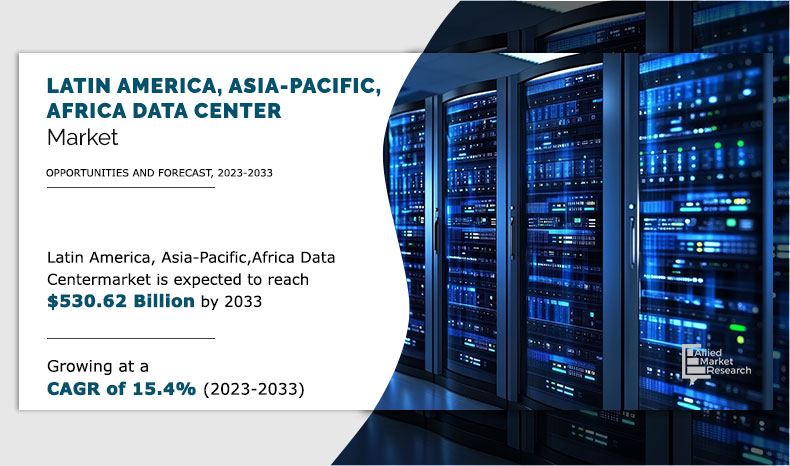
Abu Dhabi has claimed the top spot, with Dubai close behind, in a ranking of 97 global markets compiled by Cushman & Wakefield in its 2025 Global Data Center Market Comparison. The analysis, which evaluated 20 critical factors—from power availability and fibre connectivity to development pipelines and land pricing—places Abu Dhabi first and Dubai second among emerging data centre markets.

The report highlights a surge in demand for digital infrastructure, driven primarily by hyperscalers, cloud providers and burgeoning AI workloads. Abu Dhabi stands out with exceptional scores for power delivery timelines and cost-effective land, placing it at the very top of the emerging markets category. Dubai, closely following, benefits from robust fibre connectivity and an accelerating development pipeline.

Power availability remains the most pivotal concern across the industry. The study indicates that markets with secure, rapid power delivery attract developer attention, particularly where leading markets are experiencing delays in grid expansion. Abu Dhabi’s superior performance in this metric has become a magnet for hyperscale players and colocation operators alike, while Dubai earns marks for its strategic integration of infrastructure and favourable regulatory policy.

Pre-leasing rates further support the UAE’s ascendancy. Both Abu Dhabi and Riyadh report pre-commitments exceeding 70% on under-construction capacity, a figure surpassing most emerging markets and rivalled only by select Western hubs. This signals strong occupier confidence, as large tenants lock in space well ahead of completion.

Regional momentum is reinforced by Research and Markets, which notes that Abu Dhabi currently accounts for nearly 40% of the UAE’s upcoming data centre power capacity, with an additional 60 MW projected by the end of 2025. Sector observers estimate cumulative investment in UAE-based facilities will approach US $2.5 billion by 2026.

Global trends underscore the link between power constraints and shifting demand. While longstanding markets such as Northern Virginia and Chicago continue to dominate in operational capacity, power scarcity is pushing hyperscalers into newer regions. In Europe and APAC, markets with strong power fundamentals—particularly those offering renewable options—have seen elevated pre-leasing and accelerated construction.

In EMEA, nine of the 97 markets reviewed boast pre-lease ratios above 50%, with Milan and Berlin achieving full commitments on live builds. However, Abu Dhabi’s combination of policy support, infrastructure coordination, and land pricing renders it the leading emerging centre. Dubai’s consistent performance spots it firmly in second place.

Local dynamics also support the UAE’s climb. Emerging Middle Eastern hubs benefit from coordinated government strategies: jurisdictions like Abu Dhabi and Dubai leverage economic zones, expedited permitting, and public-private partnerships to secure both digital and energy infrastructure. These are precisely the variables weighed in the 20-factor comparison.

UAE operators are actively building modern facilities to meet new IT standards and power densities. Major entities—including government-backed developers and international names—are focused on deploying Tier III and IV facilities equipped for high-power AI use‑cases. Expectations of sovereign AI zones are further heightening the appeal of these markets among institutional and hyperscale tenants.

Regional competitors, notably Riyadh, also demonstrate strong demand fundamentals. Yet Abu Dhabi and Dubai maintain a lead in deliverability: Abu Dhabi tops the emerging list overall, with superior scores in pre-leasing, fibre availability, and land affordability. Dubai’s edge lies in its connectivity, depth of occupier demand, and policy predictability.

The broader global picture reveals a shift from established hubs to power-rich emerging sites. Worldwide operational IT load now exceeds 40 GW across the tracked markets, yet established centres still dominate capacity. Emerging markets, particularly in the Middle East, have closed ground fast, thanks to streamlined supply chains, liberal regulatory environments, and readiness for power-intensive workloads.

Cloud accounting is software for managing financial records that operates online. Unlike traditional on-premise solutions, you don’t need to install programs on your computer — just a browser and internet access. All data is stored on secure servers, allowing you to access your accounting anytime, from any device. In the UAE, the digital economy is rapidly growing, and the government supports businesses adopting modern technologies. Cloud accounting […]

Easou Technology Holdings Ltd surged as much as 69 per cent to HK$7 before settling at HK$5.88, responding to a strategic 10‑year agreement with a Hong Kong tech firm to co‑develop real‑world‑asset tokenisation and digital asset products. The agreement, coupled with a letter of intent to invest up to HK$3 billion in data centre acquisitions, signals a significant pivot for the Shenzhen‑headquartered digital technology group.

The 10‑year development pact positions Easou at the forefront of a booming tokenisation trend. With the global RWA tokenisation market now valued at US$24 billion — private credit representing over half that sum — the timing gives Easou a chance to capitalise on institutional and retail appetite for immutable, on‑chain asset exposure.

Under the agreement, Easou’s partner in Hong Kong will provide technological infrastructure and regulatory insight. Together they will craft tokenised products spanning private credit, real estate and commodities, tapping into growing investor demand for fractionalised, programmable yield instruments. Analysts expect such collaboration to drive Easou’s AI‑powered content, recommendation engine, and blockchain capabilities to new heights.

Market watchers also note that Ethereum remains dominant in tokenisation — hosting about US$7.5 billion of RWA tokens — but newer blockchains such as Solana, Aptos and Avalanche are gaining ground in niche sectors. Easou’s decade‑long commitment may allow it to adapt across multiple ledger protocols and regulatory frameworks.

The announcement arrived amid a flurry of capital‑raising activity for Easou: on 20 June it placed 57.33 million shares at HK$3.20 each for gross proceeds of around HK$183.5 million, primarily earmarked for deepening its AI‑driven content ecosystem — including short drama, online gaming, content ad tech, and overseas expansion. Chairman Wang Xi also agreed to a 75‑day lock‑up on his shareholding, a gesture insurers interpret as a show of confidence.

Wang Xi described the tokenisation initiative as “a pivotal step” in building an AI‑and‑content synergy, while the capital placement strengthens Easou’s balance sheet, allowing it to invest across new domains without diluting core content investments.

Turning attention to its second headline move, Easou signed a letter of intent to deploy up to HK$3 billion towards acquiring data centres in key Asian markets, including Hong Kong, Japan or Southeast Asia. Industry sources suggest the facilities will support the computing demands of tokenisation platforms and AI workloads — marrying robust infrastructure with financial innovation.

Easou’s stock performance reflects the market’s enthusiasm. The share price rose over 8 per cent earlier in the week to HK$3.51 following the share placement announcement. The near‑tripling to HK$7 on tokenisation news demonstrates confidence in the long‑term vision and revenue potential of its dual strategy.

Still, investors caution about execution risks. Developing tokenised products requires navigating evolving global regulations, particularly in Asia. Hong Kong’s Securities and Futures Commission has signalled willingness to regulate stablecoins, custodians and tokenised offerings as part of its digital‑asset hub initiative, which includes new licensing regimes and frameworks for RWAs. Easou and its partner will need consistent compliance and adaptive governance structures over the decade‑long horizon.

Capital deployment into data infrastructure is capital intensive and faces competitive pressures from established cloud providers. Achieving scale and operational efficiency will be crucial if Easou’s data‑centre investments are to complement its tokenisation ambitions rather than become a costly diversion.

Easou’s strategy illustrates several emerging trends: the convergence of AI‑content and blockchain infrastructure; the pivot to tokenised finance underpinned by robust tech stacks; and Asia‑based companies aligning with local regulatory expansions. By investing in both digital asset innovation and foundational infrastructure, Easou aims to move beyond its role as an AI recommendation engine provider into a multi‑vector technology aggregator.

Google has transferred ownership of its Agent2Agent protocol—including its specification, developer SDKs and tooling—to the Linux Foundation, ushering in a new era of open, vendor-neutral collaboration on AI agent interoperability. Announced on 23 June at the Open Source Summit North America, the move positions more than 100 organisations, including AWS, Cisco, Microsoft, Salesforce, SAP and ServiceNow, to jointly steward and evolve the protocol under a neutral governance […]

Claudia, a newly released open‑source graphical user interface for Anthropic’s Claude Code, brings a visually intuitive layer to the traditionally command‑line driven tool. Developed by YC‑backed Asterisk, this desktop application enables developers to manage projects, run interactive AI agents, and track progress—all through a local, privacy‑focused interface. The interface addresses growing frustrations among developers using Claude Code’s text‑only environment. Asterisk’s design employs Tauri for cross‑platform deployment, along […]

OVHcloud posted €271.9 million in revenue for its third quarter of fiscal 2025, representing organic growth of 9.3%, and confirmed its projection to exceed €1 billion in annual revenue. The Paris‑listed cloud provider attributed the Q3 gains to sustained demand for its Public Cloud arm, which grew 17.2% year‑on‑year to €53.6 million, and a revival in Private Cloud, with new customer intake climbing over 25% in its bare‑metal offering. Web […]

Dubai has been chosen to host SIBOS in 2029, affirming its standing as a global nexus in financial services. The selection reflects growing confidence in its role as a strategic bridge in international banking, marking the beginning of SWIFT’s new hosting rotation featuring emerging financial hubs.

SWIFT—holder of SIBOS, an annual forum for payments, securities, cash management and trade—has scheduled the conference in Frankfurt, Miami, Singapore, and Paris, with Dubai confirmed for 2029. This shift inaugurates a four-year rotation that now includes key regions such as the Middle East, Africa, Latin America and Asia, signalling intent to broaden engagement beyond traditional centres.

This move underscores Dubai’s appeal, anchored in the growth of DIFC, which now hosts nearly 7,000 firms, including the region’s fintech core. SWIFT’s Rosemary Stone emphasised that expanding SIBOS to diverse locations will lend fresh perspectives vital amid accelerating technological shifts and growing fragmentation risks. SWIFT saw record traffic last year, and the conference consistently draws over 10,000 delegates.

UAE Banks Federation and supporting bodies—including DIFC, DWTC, DET and CBUAE—have been credited for bringing SIBOS back to the UAE after its inaugural MENA appearance in 2013. UBF chairman Abdulaziz Al‑Ghurair highlighted that hosting SIBOS 2029 recognises the UAE’s leadership in digital payments innovation and its dedication to payment security and efficiency under CBUAE guidance.

UBF director‑general Jamal Saleh noted that the federation’s National SWIFT User Group, launched in 2021, along with the region’s first SWIFT training centre, have built a strong skill base in payments protocols. He said the bid award demonstrates “global recognition of the UAE’s achievements in payments using advanced technologies under CBUAE’s guidance”.

DIFC’s rapid development since 2004 has turned Dubai into SWIFT’s “Gateway to Africa”, strategically connecting Europe, Asia and Africa. This position enhances Dubai’s role within SWIFT’s network of over 11,500 institutions across more than 200 countries.

Planners are expected to leverage SIBOS’s platform to demonstrate regional innovations, including national payment system strategies, fintech growth, and cyber‑security frameworks. The event offers a showcase for the UAE’s ambitions to expand financial inclusion, digital infrastructure, and regulatory maturity.

The SIBOS win also supports the federal strategy unveiled by the Central Bank in 2019 to enhance customer experience through secure, innovative payment mechanisms. Observers suggest the conference will spotlight initiatives such as real‑time payment, cross‑border settlement solutions, and cloud‑based financial services.

By setting 2029 in Dubai, SWIFT signals that emerging financial ecosystems are not only capable but essential hosts. The planned rotation to include regions beyond the traditional triad marks a pivot in SWIFT’s approach, prioritising breadth of perspective as the global banking system navigates fragmentation.

UBF and its partners have committed to delivering a polished event, guided by rising standards in event production and stakeholder integration. With backing from SWIFT, CBUAE and government tourism authorities, organisers expect delegates to gain both technical insights and policy‑driven dialogue on future‑proofing global finance.

Cloudflare and OpenAI have unveiled a powerful integration enabling developers to build intelligent, stateful AI agents that combine OpenAI’s reasoning with Cloudflare’s scalable execution infrastructure. By pairing the OpenAI Agents SDK with Cloudflare’s new Agents SDK and foundational technologies like Durable Objects and Workers, the collaboration delivers global reach, persistent memory, and human‑in‑the‑loop interaction, all within a serverless framework. The synergy addresses a key shortcoming of stateless […]

Denmark’s Ministry for Digital Affairs has begun replacing Microsoft Office 365 with LibreOffice and is exploring wider adoption of Linux, citing a strategic imperative to reduce dependency on foreign software providers. Caroline Stage Olsen, Minister for Digital Affairs, stated that nearly half the ministry’s staff will complete the switch this summer, with full implementation scheduled by autumn. While Windows remains in use, Office products are being phased […]

Poland has become the first European country to pilot palm vein–based biometric payments, while Tencent is advancing similar technology in Thailand, setting the stage for a wider rollout across Southeast Asia. Autopay’s HandGo system and Tencent’s palm biometrics reflect a growing global interest in contactless and secure transaction methods.

Autopay has initiated a pilot of HandGo by allowing customers at select venues—such as the Limitless sauna complex in Sopot—to make purchases by placing their palm on a scanner. Once a user links a payment card in the Autopay app, they register their palm vein pattern via QR-triggered enrolment. A digital hand token is then stored securely, enabling future transactions without a card, smartphone, or smartwatch. Autopay emphasises that no actual image of the hand is stored—only encrypted vein pattern data and a payment token meeting PCI‑DSS standards. Company executives describe the offering as a potential game‑changer for wellness and sports facilities, emphasising convenience and hygiene.

Globally, competitors already include Amazon’s Amazon One and Alipay’s PL1 device. Autopay distinguishes itself in Poland by being the nation’s first palm-auth payment provider, placing it alongside early vein‑scanning efforts by BPH bank and fintech Payvein. Another biometric contender, PayEye, combines iris and facial recognition for payment authorisation. Despite its versatility, PayEye requires merchants to deploy specialised terminals that support both biometric and traditional card payments, boosting acceptance rates.

Meanwhile, Tencent Cloud is intensifying its push into palm biometrics in Thailand. Vice‑president Jimmy Chen told the Bangkok Post that the country, backed by its “Cloud First” policy and digital transformation initiatives, makes an ideal launchpad. Tencent is collaborating with local technology firms such as MFEC and True IDC to test the system across multiple sectors, including convenience stores, retail, entertainment, education and finance. Early trials in venues like 7‑Eleven, Siam Commercial Bank, and The Mall Group underscore a focus on Thailand’s tourism-driven retail sector, where international visitors may welcome a card- or cash-free experience.

Tencent Cloud’s palm recognition has already been implemented in China at Beijing Airport Express, Shenzhen University, and numerous 7‑Eleven outlets. The system uses infrared imaging to analyse both surface palm lines and the vein network beneath the skin. Data is encrypted and stored with irreversible transformation to safeguard privacy. The architecture integrates local data centres—in Thailand’s case—with no cross-border transfers, aligning with regulatory frameworks. Analysts from GlobalData suggest that if the trials succeed, Thailand could become the gateway for adoption across Indonesia and Malaysia, offering scalability and enhanced security compared with fingerprint or facial recognition.

The initiative follows earlier pilot projects: Tencent partnered with Visa in Singapore in November 2024 during the Fintech Festival, allowing DBS, OCBC and UOB cardholders to enrol palm biometrics at café POS terminals and make payments thereafter through voice‑free palm scans. Tencent’s palm system, recognised with a Fintech Excellence Award in Singapore, reportedly supports transaction speeds within a second, even under poor lighting or wet conditions.

In Southeast Asia, Alipay’s PL1 palm scanner is already deployed across several markets. PL1 requires users to enrol their palm lines and vein data, then allows tap‑free transactions at metro gates, buses and retail outlets. The competitive landscape also includes Amazon’s Whole Foods adoption of palm scan technology in the US and pilot programmes by J.P. Morgan and Mastercard for palm‑based checkout systems.

VISHNU RAJA
RYO YAMADA
HITORI GOTOH
IKUYO KITA