News related to
cloud

HONG KONG SAR – Media OutReach Newswire – 21 September 2026 – Phancy Group Co., Ltd. (“Phancy” or “the Group”, stock code: 6682.HK), a leading full-stack enterprise-AI cloud services platform, ranked first overall in the latest 2026 China AI Computing Resource Management Platform Technology Capability Assessment, published by International Data Corporation (“IDC”), a global technology intelligence firm.

The assessment evaluated multiple leading AI computing resource management platform providers in China and noted Phancy’s industry-leading technological maturity across heterogeneous accelerator compatibility and adaptation, large-scale cluster operations, and delivery in hybrid cloud environments. Drawing on its accumulated capabilities in heterogeneous computing resource management, fine-grained GPU virtualization and agent-oriented computing services, Phancy received full scores and outperformed the industry benchmark in four out of six evaluated dimensions[1].

According to the IDC report, as AI moves into large-scale deployment, the growing adoption of AI agents is reshaping cloud infrastructure. In the meantime, AI infrastructure is evolving beyond basic computing capacity to become a core part of the enterprise technology stack, supporting digital and intelligent transformation.

Dr. Dai Wenyuan, Founder and Chief Executive Officer of Phancy, said: “The AI industry is moving beyond the ‘model race’ and entering a new phase of large-scale deployment. For enterprises, the real challenge is no longer whether they can access large language models, but about how to translate agentic AI capabilities into sustained productivity while keeping costs under control and operations stable. IDC’s assessment reflects the growing importance of unified management, flexible scheduling and fine-grained operations for heterogeneous computing resources. Phancy will continue to advance its capabilities in heterogeneous computing resource scheduling and agent infrastructure, helping more enterprises unlock the value of AI with greater efficiency, cost-effectiveness and reliability.”

Five Core Capabilities Behind Phancy’s Vendor-Neutral Unified Management Platform

At the core of Phancy’s offering is vendor-neutral unified management software that supports large-scale training and high-concurrency inference for mainstream models across chips from over ten leading vendors[2]. Its core technological capabilities include:

  • Code-compatible multi-chip virtualization: Phancy supports the partitioning of a single AI accelerator across multiple workloads, enabling mainstream frameworks and inference engines, including PyTorch, TensorFlow, vLLM and SGLang, to run without changes to application code. Resource quotas help maintain stability when multiple workloads run concurrently.
  • Three-tier resource pools and intelligent workload scheduling: Phancy’s platform provides three types of resource pools: dedicated, shared and overcommitted pool. Resources can be intelligently scheduled based on four dimensions (workload priority, hardware topology, real-time load and resource requirements), enabling large-scale training and high-concurrency inference workloads to run on the same infrastructure.
  • AI gateway and dual-track metering: The AI gateway provides unified management of model routing, API calls and audit activities. Usage is measured through both accelerator hours and token consumption, helping enterprises track costs and resource utilization from the perspectives of both resource consumption and model usage.
  • Agent-oriented computing services: Phancy’s platform turns heterogeneous computing resources into standardized services that AI agents can call on demand. These services support partitioning, reuse and elastic scaling. Combined with intelligent routing through the AI gateway, this accommodates the frequent calls and fluctuating workloads associated with AI agents, while token quotas and circuit-breaking mechanisms also help enterprises manage usage risks and costs when predefined limits are exceeded.
  • Operations and maintenance for heterogeneous computing resources: Phancy’s platform provides end-to-end observability spanning nodes, accelerators, workloads and model services. It supports fault isolation, workload rescheduling and private deployment in environments without public internet access, helping enterprises improve operational efficiency across complex heterogeneous computing environments.

The report highlighted a use case in which a Chinese policy bank significant improved resource utilization by using Phancy’s three-tier resource pool architecture to manage computing resources across three data centers in two locations, while also enabling a smooth business migration.

Looking ahead, Phancy will continue to advance its AI computing resource management platform as AI infrastructure shifts from traditional “cloud + AI” architectures toward greater cloud-native, agent-oriented integration. The Group will continue to help enterprises manage computing resources more efficiently, deploy AI across a wider range of production environments, and turn AI into sustainable business productivity at scale.


[1] The assessment evaluated platforms across six dimensions: computing resource management, computing service management, compute operations, Technical architecture, business scenario support, and delivery services. According to the IDC report, the findings are intended to help enterprises evaluate and select the platforms best suited to their needs.

[2] Phancy’s platform now supports accelerators from more than ten vendors, including Ascend, Hygon DCU, Cambricon, Iluvatar CoreX, MetaX, Moore Threads, Kunlunxin, Enflame, T-Head and Biren Technology.

Hashtag: #Phancy

The issuer is solely responsible for the content of this announcement.

About Phancy Group

Phancy Group (6682.HK) is a leading full-stack AI cloud services platform, providing comprehensive solutions for the AI 2.0 era. Our offerings include SageAIOS, HAMi vGPU and ModelHub XC, delivering efficient and scalable AI infrastructure with end-to-end capabilities. We provide a complete solution from heterogeneous compute resource management and optimization to the deployment of intelligent agent models. These solutions empower digital transformation across a wide range of industries, supporting our vision of building a large-scale and efficient “Token Factory.”

Guided by the mission of “AI for Everyone” and positioned as the “Navigator of AI,” Phancy Group is committed to becoming a global leader in Artificial General Intelligence.

North Korean cyber operators posing as recruiters have compromised at least 30,000 devices in more than 100 countries, using fraudulent job interviews to infect technology professionals and steal cryptocurrency, authorities from four countries have disclosed. The campaign, attributed to a group tracked as WaterPlum and widely known as Contagious Interview, targeted web designers, software engineers, freelancers and specialists in cryptocurrency, blockchain and Web3 technologies between about December […]

CrowdSec has said a supply-chain attack involving compromised TanStack npm packages led to the unauthorised copying of about 170 private GitHub repositories after credentials linked to a departing employee were exposed. The cybersecurity company said its investigation, completed with assistance from GitHub, traced the breach to an OAuth token obtained after the employee’s account was compromised in the May TanStack attack. The repositories were downloaded on May […]

Hackers who physically removed a Flock Safety roadside camera were able to copy much of its internal storage, uncover an encryption key and access tens of thousands of video clips and data linked to about 1.6 million images generated over 21 days. The compromise involved a single camera taken from above a roadway and did not amount to a remote breach of Flock Safety’s cloud network. The […]

Software stocks are staging a sharp recovery as stronger-than-expected earnings and fresh calls for restraint in advanced artificial intelligence development ease fears that AI will quickly undermine the sector’s business models. The iShares Expanded Tech-Software Sector ETF has climbed about 17 per cent since the end of the first half, reversing part of a 14 per cent decline during the opening six months of 2026, when investors […]

Software teams building cloud-native, edge and AI-driven systems are increasingly evaluating NATS as an alternative to RabbitMQ, drawn by lower-latency messaging, simpler deployment and a communication model designed around distributed services rather than conventional broker-centric queues. The shift has gained fresh attention with NATS Server 2.15, released on September 17, which concentrates on reliability and operations. Its maintainers reworked stream and consumer scaling, movement and peer changes, […]

The UAE Cyber Security Council and Fortinet have launched a cybersecurity internship programme aimed at developing Emirati talent through structured training, practical experience and industry mentorship. The programme is the first project of its kind under the council’s Cyberani Practical Training Initiative, which was created with the Ministry of Higher Education and Scientific Research to prepare university students for cybersecurity careers. Fortinet is participating as a technology […]

Advertisements
MUNICH, GERMANY – Media OutReach Newswire – 17 September 2026 – Recently, BDStar successfully hosted its 2026 Ecosystem Partner Conference in Munich, Germany. The event aimed to strengthen communication and collaboration and build a more robust industry ecosystem. Customers, distributors, and partners from multiple countries attended the conference.

Under the theme “Ecosystem Synergy for Intelligent Evolution,” the event introduced BDStar’s iLDB® strategy and shared the applications and development roadmap of GNSS Services. Training sessions were also organized for distributors. BDStar and attendees engaged in in-depth discussions on strengthening cooperation and fostering ecosystem synergy.

BDStar Founder and Chairman Zhou Ruxin stated that internationalization is a key strategy currently being implemented by BDStar. The company will continue to increase investment in global markets and build localized teams to provide customers worldwide with not only better products, but also enhanced services and support.

Meanwhile, BDStar also participated in INTERGEO 2026 in Munich, showcasing its GNSS chips, modules, antennas, services, and Chip-Cloud GNSS Solutions for a wide range of applications.

Hashtag: #BDStar

The issuer is solely responsible for the content of this announcement.

A newly identified phishing kit called GhostCode is exploiting Microsoft Entra device-code authentication to register attacker-controlled devices, allowing access to persist even after stolen tokens are revoked, security researchers have found. eSentire’s Threat Response Unit said it detected the active campaign in late August, with operators using business-email social engineering rather than conventional fake login pages. Attackers posed as procurement staff from legitimate organisations, including BJ’s Wholesale […]

Salesforce has launched AIforce, a new interface layer designed to let workers and artificial intelligence agents use live customer relationship management data, workflows and permissions from tools including Claude, Slack and Amazon Quick without opening the Salesforce application. Unveiled at Dreamforce 2026, AIforce exposes Salesforce data, business logic, semantic context, actions and governance through open interfaces while retaining the access controls already configured by customers. Salesforce said […]

HONG KONG SAR – Media OutReach Newswire – 16 September 2026 –

Response by KK Chiu, International Director, Chief Executive, Greater China, Cushman & Wakefield:

Optimising the Housing Ladder and Improving Living Conditions

We welcome the Government’s commitment to increase housing supply, shorten the Composite Waiting Time for public rental housing and further strengthen the housing ladder. The adoption of a long-term housing supply framework comprising 40% public rental housing, 30% subsidised sale housing and 30% private housing, together with the delivery of approximately 196,000 public housing units over the next five years, will provide a clearer housing and homeownership pathway for different income groups.

We believe that increasing the supply of subsidised sale housing and enhancing the housing ladder will help more public housing tenants progress towards homeownership, accelerate housing mobility and enable families with genuine housing needs to gain access to public housing more quickly.

We support the Government’s efforts to increase public housing supply, continue the Light Public Housing programme and implement the Basic Housing Units regime in an orderly manner to phase out substandard subdivided units. This approach is consistent with our long-held view that increasing housing supply is the fundamental solution to improving inadequate housing conditions. With the Government targeting the resolution of substandard subdivided units in domestic buildings by 2030, we expect living conditions for grassroots households to improve progressively.

Urban Renewal Incentives

We support the Government’s more flexible approach to urban renewal, including transferable plot ratio arrangements and measures to unlock redevelopment potential. These initiatives will help enhance market participation, accelerate renewal in areas with pressing redevelopment needs and contribute to overall housing supply growth. We recommend the Government provide clearer guidance on application requirements and further streamline cross-departmental approval procedures to facilitate implementation.

Advancing the Yacht Economy

We welcome the Government’s continued efforts to promote the yacht economy. Beyond increasing marina berth supply and enhancing supporting infrastructure, we believe it is equally important to further facilitate cross-boundary initiatives, allowing greater mobility of yachts within the Greater Bay Area and fostering regional collaboration.

As more superyachts and high-net-worth visitors arrive in Hong Kong, demand is expected to rise across luxury tourism, hospitality, food and beverage, retail, marine services and waterfront commercial facilities, helping unlock the economic potential of Hong Kong’s coastline and island resources. At the same time, Hong Kong has the potential to develop a more comprehensive marine industry ecosystem encompassing yacht repair and maintenance, refitting services and specialised professional services. The development of a holistic marine services value chain will further strengthen Hong Kong’s competitiveness as a regional and international yachting hub.

Response by John Siu, Managing Director, Hong Kong, Cushman & Wakefield:

Planning Ahead for AI and Data Centre Infrastructure

We welcome the Government’s commitment to accelerate the development of the Sandy Ridge Data Facility Cluster, which is expected to provide computing power equivalent to 36 times Hong Kong’s current capacity by 2032, alongside a HK$1 billion injection into the Artificial Intelligence Subsidy Scheme. These initiatives will provide important support for the development of Hong Kong’s artificial intelligence and data centre sectors, further strengthening the city’s position as a regional digital and innovation hub.

However, with rapid advancements in artificial intelligence, large language models and cloud computing, demand for computing power is expected to grow significantly in the coming years. We believe that, in addition to planning data centre sites, the Government should proactively review long-term requirements for power supply, electricity grid capacity and related infrastructure. As AI adoption becomes more widespread, access to reliable power and supporting infrastructure will be a key factor in maintaining Hong Kong’s competitiveness as a technology and data centre hub.

We support the Government’s stated direction of pursuing “high-efficiency computing power, stable electricity supply and low-carbon transition”. Looking ahead, we recommend that the Government regularly review future demand for land, power supply and supporting infrastructure arising from the growth of artificial intelligence and data centre activities, particularly within the Northern Metropolis and other strategic development areas. A coordinated approach to computing, energy and digital infrastructure planning will help attract more data centre operators and technology companies to Hong Kong, while supporting the city’s long-term development as a regional hub for data and artificial intelligence.

Response to the Budget 2026/2027 by Rosanna Tang,Deputy Managing Director, Head of Research, Hong Kong, Cushman & Wakefield:

Clear Industry Positioning for the University Towns

We welcome the Government’s efforts under Hong Kong’s First Five-Year Plan to further define the positioning of the three university towns in the Northern Metropolis University Town, and are encouraged by its strategy to promote synergy among the university towns, the San Tin Technopole and surrounding industry parks. As the only city in the world with five universities ranked among the global top 100, Hong Kong possesses a strong foundation in higher education and research. At the same time, the San Tin Technopole is set to become a key innovation and technology hub. The complementary strengths of these two pillars, both geographically and strategically, provide a solid foundation for building a globally competitive innovation ecosystem in Hong Kong.

We are particularly encouraged by the Government’s emphasis on integrated industry-academia-research collaboration. The university towns should not be viewed merely as educational developments, but as strategic platforms for research commercialisation, international talent attraction and the cultivation of emerging industries. Closer collaboration among universities, research institutes, innovation and technology enterprises and industry parks will help establish a complete innovation value chain covering talent development, scientific research, technology transfer and industrial implementation.

In addition, the Plan proposes approximately 300 hectares of educational facilities as the core of the university towns, connected with adjacent strategic industry areas, distinctive conservation areas, sports and cultural facilities, and surrounding communities, bringing the overall development footprint to more than 1,000 hectares. Such a large-scale integrated education and industry development model is rare in Hong Kong’s urban planning history and clearly demonstrates the Government’s long-term vision of creating a knowledge-based city cluster and an international education hub in the Northern Metropolis.

Attracting Signature Industry Projects and Anchor Institutions to Enhance the Northern Metropolis’ Global Appeal

We welcome the Government’s efforts to establish differentiated industry positioning through the three university towns, while integrating key development nodes such as the San Tin Technopole, the Hong Kong Park of the Hetao Shenzhen-Hong Kong Science and Technology Innovation Co-operation Zone, the Hung Shui Kiu Industry Park and Ta Kwu Ling. This provides a clearer direction for industrial development in the Northern Metropolis and helps address long-standing market concerns regarding overlapping functions and unclear district positioning.

As highlighted in our previous research, we believe the next critical stage for the Northern Metropolis will be its ability to attract influential anchor institutions and leading enterprises. By bringing together universities, research institutes and industry leaders, Hong Kong can foster the clustering of businesses, talent and capital, gradually forming industry clusters with scale and international competitiveness. Hong Kong should also capitalise on its common law system, international financial centre status, intellectual property protection framework and global talent network by focusing on high value-added segments such as research and testing, intellectual property management, fundraising and listing activities, and international accreditation services. This will help Hong Kong establish an irreplaceable role within the Greater Bay Area industrial value chain.

Beyond strategic industries, we believe the Northern Metropolis could also explore internationally recognised and iconic industry projects to further enhance its global profile and attractiveness. For example, the Government may consider developing initiatives around new energy vehicles, smart mobility and advanced technologies, while exploring the feasibility of internationally recognised racing events, testing facilities or technology R&D platforms, such as those associated with Formula One. By leveraging motorsport-related economic activities and innovation-led development, Hong Kong could attract international automotive manufacturers, mobility technology companies and research institutions to establish regional headquarters, R&D centres or testing facilities in the city. This would in turn support the growth of engineering, intelligent transport, advanced manufacturing, tourism, hospitality, retail and convention and exhibition industries, further enriching the Northern Metropolis industrial ecosystem.

Accelerating Land Supply While Advancing Industries and Infrastructure in Parallel

We note that Hong Kong’s First Five-Year Plan proposes a significant acceleration in land and housing supply within the Northern Metropolis. Residential completions are expected to increase substantially from approximately 11,000 units during 2021/22 to 2025/26 to around 70,000 units during 2026/27 to 2030/31. Over the same period, the supply of “spade-ready sites” will rise from approximately 120 hectares to around 900 hectares, representing an increase of around 7.5 times. These figures demonstrate that the Northern Metropolis is transitioning from a planning and land formation phase to a new stage characterised by large-scale development, industrial implementation and population intake.

However, we believe the success of the Northern Metropolis should not be measured solely by the volume of land or housing delivered. As substantial residential, innovation and technology, and industrial sites come on stream, the focus should gradually shift from land supply to city-building. The Government should ensure the coordinated delivery of railway and cross-boundary infrastructure networks, industry parks, commercial facilities, public services and community amenities, while accelerating the introduction of leading enterprises and strategic industries to create sufficient, high-quality employment opportunities and achieve a genuine jobs-housing balance.

In particular, we believe the Northern Metropolis should be driven by industry-led development, with the San Tin Technopole, the Hetao Shenzhen-Hong Kong Science and Technology Innovation Co-operation Zone, the university towns and major industry parks serving as key growth engines. This would create a virtuous cycle in which industry attracts population, population supports consumption, and consumption drives urban development. Only through the coordinated growth of industry, talent, infrastructure and communities can the Northern Metropolis evolve from a large-scale land development project into a modern metropolitan district integrating industry, education, living and international exchange.

Response by Tom Ko, Executive Director, Head of Capital Markets, Hong Kong of Cushman & Wakefield:

New Opportunities for Student Accommodation Market

We welcome the Government’s initiatives to deepen Hong Kong’s development as an international hub for post-secondary education through the “Hong Kong: Your World-class Campus” campaign, expanded global student recruitment efforts and the extension of the Immigration Arrangements for Non-local Graduates pilot arrangement to graduates from Greater Bay Area campuses of Hong Kong universities. These initiatives will further enhance Hong Kong’s attractiveness to overseas students and talent while reinforcing the “Study in Hong Kong” brand.

We are encouraged by the continued progress of the Hostels in the City Scheme. The scheme has already received 41 confirmed applications, providing approximately 10,800 bed spaces and demonstrating strong market confidence in the long-term growth of Hong Kong’s education sector.

The scheme has opened up a new supply channel for converting commercial buildings into student accommodation. At a time when hotel conversion opportunities are becoming more limited as tourism continues to recover, it provides an alternative pathway for investors while helping unlock the value of underutilised commercial assets and meet rising demand for student housing. As the Government prepares to tender the first dedicated student hostel site, we believe purpose-built student accommodation will gradually emerge as a distinct and scalable asset class within Hong Kong’s real estate market.

To further increase supply, we recommend that the Government continue reviewing and refining approval procedures for student hostel conversions. Greater flexibility and streamlined processes, while maintaining appropriate safety and operating standards, would encourage wider market participation and support Hong Kong’s ambition to become a leading international education destination.

(Click here for high-res pictures)

Hashtag: #Cushman&Wakefield

The issuer is solely responsible for the content of this announcement.

About Cushman & Wakefield

Cushman & Wakefield (NYSE: CWK) is a leading global commercial real estate services firm for occupiers and investors with approximately 53,000 employees in over 350 offices and nearly 60 countries. In Greater China, a network of 23 offices serves local markets across the region. In 2025, the firm reported revenue of $10.3 billion across its core services of Valuation, Consulting, Project & Development Services, Capital Markets, Project & Occupier Services, Industrial & Logistics, Retail, and others. Built around the belief that Better never settles, the firm receives numerous industry and business accolades for its award-winning culture. For additional information, visit or follow us on LinkedIn ().

US midterm elections are emerging as a fresh policy risk for artificial intelligence-linked stocks as President Donald Trump defends rapid AI development while candidates from both parties respond to widening voter resistance to data centres and calls for tighter safeguards. The political pressure intensified this week after Trump rejected demands for a slowdown in advanced AI development and argued that existing laws and enforcement powers were sufficient […]

Cybersecurity shares surged to the top of the S&P 500 on Monday as investors shifted towards digital-defence companies after fresh warnings about the risks of rapidly advancing artificial intelligence unsettled the broader technology trade. CrowdStrike jumped 13.8 per cent to a record closing high of $235.38, while Palo Alto Networks gained 13.1 per cent and Fortinet rose about 9 per cent. The gains stood out in a […]

The US National Institute of Standards and Technology has finalised new guidance aimed at reducing theft, forgery and misuse of digital tokens that underpin single sign-on, cloud federation and API access. NIST Interagency Report 8587, released on September 15, sets out implementation recommendations for federal agencies and cloud service providers handling identity tokens, access tokens and assertions. The document focuses on how organisations should protect signing keys, […]

  • Launched in H1 2026, Heavy Weight Express service saw a 16% increase in Weight per Day growth for the region (excluding China)
  • High-value, technology-related cargo, engineering & manufacturing, and automotive are the biggest drivers, making up two-thirds of the total weight of heavyweight segment

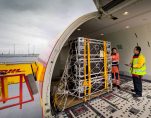
SINGAPORE – Media OutReach Newswire – 16 September 2026 – Following DHL Express’s introduction of Heavy Weight Express (HWX) this year, DHL Express recorded a 16% growth in its Time Definite International Weight per Day in Asia Pacific (excluding China) between January and July2026. This reflects how DHL’s Smart Industrial Growth Strategy is yielding positive outcomes as businesses are moving heavier, critical components, machinery, and industrial equipment across borders.

DHL Express heavy weight cargo

The heavyweight market has been gaining traction in recent years. Industry research shows that an estimated 10.2 million tons of heavyweight shipments¹ are being moved in Asia Pacific (excluding China) each year. Many companies have spent years reducing inventory and improving efficiency across their supply chains. However, companies today operate in a far less predictable environment marked by trade disruptions, manufacturing bottlenecks, and fluctuating demand. The rise in heavyweight shipment volumes mirrors a shift in how businesses are managing supply chain risks, as they increasingly turn to express logistics not only to handle sudden shifts in demand but also to have greater agility, certainty and control over timelines.

“Behind the numbers is a simple reality: Businesses are shipping heavy when timing matters and when it’s critical,” said Ken Lee, CEO for Asia Pacific, DHL Express. “As companies continue to navigate a complex landscape where uncertainty has become the norm, speed and reliability have also become part of the business decision. Customers are making deliberate decisions on what they ship through our network. Our Heavy Weight Express solution helps companies avoid downtime, protect working capital and keep operations moving when supply chains don’t go exactly as planned.”

Technology, Engineering & Manufacturing, and Automotive top Asia Pacific’s heavyweight contributors

Across the region, high-value, technology-related cargo, such as computer chips and semiconductors, accounts for the largest share of DHL Express’s heavyweight segment at over 34%, driven by rapid investment in data centers to support the growing demandfor computing capacity, data storage, cloud services, as well as artificial intelligence. This has fueled demand for technology-related shipments, from semiconductors and servers to cooling systems and electrical infrastructure. However, a data center crunch is creating supply chain bottlenecks as demand for semiconductor manufacturing outpaces infrastructure supply. As a result, express logistics services are urgently activated to move critical components quickly and efficiently, helping to keep projects on schedule.

The other main contributors to the heavyweight segment are businesses in engineering & manufacturing as well as the automotive industry.

Automotive is the fastest growing sector

HWX service is also gaining strong momentum in the automotive sector, with its shipment weight increasing at a rate of nearly 20%. As the leading export region for this sector, Asia Pacific is also seeing a surge in Asian automotive brands, particularly Electric Vehicle (EV) manufacturers from China and Southeast Asia. As these brands expand into new markets, they are also moving vehicle parts sourced from different suppliers and manufacturers across borders. This has created the appetite for expedited shipments to keep production running. In this sector, a single late or failed shipment could instantly cost automotive manufacturers millions of dollars.

Asia affirms role as a vital trading hub

In Asia Pacific (excluding China), the fastest growth in heavyweight shipments for the first seven months of the year came from India, the Philippines, Vietnam, Japan and Hong Kong. These markets reflect two of the region’s strongest trade corridors – Southeast Asia’s firm role as a manufacturing and sourcing base, and North Asia’s strategic position as a hub for high-value technology, industrial and automotive supply chains. Additionally, India, the Philippines, and Vietnam are also recognized as key markets of the geographic tailwinds initiative.

“As companies continue to manufacture out of Asia, balancing project timelines and building more resilient and agile supply chains become a priority. To maintain production continuity and ensure certainty, they are consolidating goods into heavier shipments. These non-negotiable conditions are also “urgency drivers” that put us at an advantage to help deliver our customers’ shipments at a definite time,” said Ken Lee, CEO for Asia Pacific, DHL Express.

In recent years, DHL Express has added several new infrastructures across the region, including an expanded global hub in Hong Kong, facilities near Cebu and Manila airports, gateway at Christchurch airport, Hanoi gateway near Noi Bai airport, as well as Delhi gateway, culminating in approximately 1,000 facilities in the Asia Pacific region. This is further supported by a robust aviation network of around 810 flights per day.

¹McKinsey/IHS Markit (2024)
Hashtag: #DHLExpress #GlobalTrade #HeavyWeightExpress

The issuer is solely responsible for the content of this announcement.

DHL – The logistics company for the world

DHL is the leading global brand in the logistics industry. Our DHL divisions offer an unrivaled portfolio of logistics services ranging from national and international parcel delivery, e-commerce shipping and fulfillment solutions, international express, road, air and ocean transport to industrial supply chain management. With approximately 389,000 employees in more than 220 countries and territories worldwide, DHL connects people and businesses securely and reliably, enabling global sustainable trade flows. With specialized solutions for growth markets and industries including technology, life sciences and healthcare, engineering, manufacturing & energy, auto-mobility and retail, DHL is decisively positioned as “The logistics company for the world”.

DHL is part of DHL Group. The Group generated revenues of approximately 82.9 billion euros in 2025. With sustainable business practices and a commitment to society and the environment, the Group makes a positive contribution to the world. DHL Group aims to achieve net-zero emissions logistics by 2050.

Arabian Post Staff -Dubai New York-based software company Clay has raised $115 million in a Series D funding round led by Wellington Management, lifting its valuation to $7.1 billion as demand grows for artificial intelligence tools used by sales and marketing teams. The financing, announced on September 9, included participation from Sequoia Capital, StepStone Group, Andreessen Horowitz’s Perennial fund, Meritech Capital, DST Global, CapitalG, BoxGroup, Boldstart, Bloomberg […]

Arabian Post Staff -Dubai Dubai will host the third Quantum Innovation Summit from September 28 to 30, bringing government bodies, researchers, technology companies and investors together as the UAE expands work on quantum computing, secure communications and post-quantum cybersecurity. The event will be held at the Grand Hyatt Dubai Conference & Exhibition Centre and is hosted by the UAE Cyber Security Council for a second consecutive year, […]

A skilled human attacker exploited a critical Marimo notebook flaw and moved from an exposed WebSocket session to authenticated access on an SSH bastion host in eight seconds, Sysdig’s Threat Research Team has documented. The operation centred on CVE-2026-39987, a pre-authentication remote code execution vulnerability affecting the Marimo Python notebook platform. Sysdig said the attacker used a hand-built Python toolkit rather than an AI agent, chaining initial […]

Cybersecurity stocks jumped on Wall Street on Monday as warnings over the pace and control of increasingly autonomous artificial intelligence systems drove investors away from semiconductor shares and towards companies expected to benefit from heavier spending on digital defence. CrowdStrike closed about 13.9% higher and Palo Alto Networks gained roughly 13.1%, placing both among the strongest performers in the S&P 500. Intraday gains approached 15% for CrowdStrike […]

Z. AI Co. has raised about $5 billion through a Hong Kong share placement and convertible bond sale, returning to the market within days of a 60-day issuance lock-up ending as heavy spending on artificial intelligence models continues to consume cash. The Beijing-based company, formerly known as Zhipu AI, sold 21.97 million new H shares at HK$714 each, raising roughly HK$15.7 billion, or about $2 billion. It […]

China’s National Data Administration plans to accelerate standards for embodied artificial intelligence and direct local authorities on implementation, targeting one of the biggest bottlenecks in the fast-growing robotics sector: access to high-quality, diverse and large-scale training data.

The regulator said the work will focus on creating clearer rules for datasets used by embodied AI systems, which combine artificial intelligence with physical machines such as humanoid robots. The effort is intended to support more consistent data collection, processing, evaluation and use as companies race to improve machines that must perceive, reason and act in real-world environments.

China has already moved to build a broader standards framework around the sector. National standards published on August 27 cover the quality of real-world embodied-intelligence data and technical requirements for data-generation platforms, while several additional specifications remain under development.

Among projects overseen by the National Data Administration are proposed standards covering the sources and constituent elements of high-quality embodied-intelligence datasets, simulated synthetic-data generation and processing, and specifications for data collection and model training at training bases. The projects are being developed under the National Data Standardisation Technical Committee.

One draft programme, registered in April, sets a 12-month timetable for a standard on data collection and model training at embodied-intelligence training bases. Its drafting group includes the China Electronics Standardization Institute, Beijing Institute of Technology, the Institute of Software at the Chinese Academy of Sciences and robotics companies.

A separate draft addresses synthetic data, which is becoming increasingly important because collecting enough physical-world robot interactions can be expensive, slow and difficult to reproduce. China’s policy framework encourages the use of simulation and synthetic techniques to expand supply where genuine operating data are scarce or costly to obtain.

The National Data Administration has made high-quality datasets a central part of its wider artificial-intelligence strategy. An implementation plan issued in June called for faster construction of datasets in strategic and emerging fields including embodied intelligence, intelligent driving and the low-altitude economy. It also called for data covering physical interaction, environmental perception and motion control in key scenarios.

The plan directs authorities and industry participants to improve data cleaning, enhancement, labelling, alignment and quality inspection, while developing national standards covering formats, categories, annotation and quality assessment. The regulator said such work should produce datasets that are structurally complete, diverse, accurately labelled and suitable for model development.

China’s push reflects the distinct data demands of robots operating in the physical world. Unlike text-based systems trained largely on digital information, embodied AI requires large volumes of multimodal material that can include video, images, sensor readings, point clouds, movement trajectories and feedback from physical interaction.

Data supply has therefore emerged as a competitive constraint for developers seeking to train machines to perform long sequences of actions reliably across changing environments. The National Data Development Research Institute has said embodied intelligence and world models are driving sharply higher demand for three-dimensional, video and other multimodal data, while also raising requirements for collection and annotation quality.

The government has also been expanding the underlying pool of AI-ready datasets. At a national data industry event in Guiyang in August, the National Data Administration said more than 126,000 high-quality datasets had been built across China, with a combined volume exceeding 1,815 petabytes.

Officials described a system combining a national dataset management platform, an open-source community and a data-labelling network with sector-specific pilot programmes. The framework includes 106 leading organisations and 140 pilot tasks, with regional authorities encouraged to develop projects suited to local industrial strengths.

Embodied intelligence has featured in those pilots alongside other emerging fields. The administration has promoted cooperation among robotics companies, universities, research institutes and public bodies to increase the quantity and usefulness of machine-training data while testing standards before wider application.

Cybercriminals abusing Microsoft 365’s Direct Send feature concentrated malicious email activity around US Eastern business hours, according to a new analysis of a large phishing campaign tracked during July and August. KnowBe4 Threat Lab said it identified tens of thousands of confirmed phishing messages sent through Direct Send, a legitimate Exchange Online delivery method intended for devices and applications that need to send mail without a dedicated […]

OpenAI has temporarily stopped new subscriptions and upgrades to its $200-a-month ChatGPT Pro tier as demand for its new GPT-6 Astra model strains computing capacity. The restriction, introduced on September 10, applies to new sign-ups for the Pro $200 plan, also called Pro 20X, and to users seeking to move to it from Free, Go, Plus or the lower-priced Pro $100 tier. Existing Pro $200 subscribers can […]

Adobe posted record third-quarter revenue and crossed one billion monthly active users, but investors remained cautious as its expanding freemium strategy slowed some recurring-revenue indicators and tempered near-term growth expectations. The software group reported revenue of $6.76 billion for the fiscal third quarter ended August 28, up 13% from a year earlier and above market expectations of about $6.7 billion. Adjusted earnings were $6.13 a share, also […]

VISHNU RAJA
RYO YAMADA
HITORI GOTOH
IKUYO KITA