Ripple has joined Mastercard’s Agent Pay for Machines programme, placing its XRP Ledger and RLUSD stablecoin within a new effort to build payment rails for AI agents and other autonomous software systems that can transact without manual intervention. The move links one of the best-known blockchain payments companies with a global card network seeking to define how machine-to-machine commerce should work as artificial intelligence systems begin buying […]
Phishing is entering a leaner but more dangerous phase, as attackers use artificial intelligence, encrypted delivery and session hijacking kits to turn fewer attempts into higher-value intrusions. Zscaler’s ThreatLabz 2026 Phishing and Initial Access Report says overall phishing volume fell by about 20% year on year for a second consecutive year, but the decline masks a shift towards campaigns built for speed, credibility and credential theft. The […]
Taiwan is moving to anchor its alliance with Paraguay through a data-centre project expected to require at least $200 million in its first phase, tying diplomatic survival to artificial intelligence, clean energy and strategic infrastructure.
The plan, centred on a sovereign AI computing facility in Paraguay, gives Taipei a rare large-scale investment platform in South America as Beijing intensifies pressure on Asunción to cut formal ties. Paraguay remains Taiwan’s only diplomatic partner on the continent and one of just 12 governments worldwide that maintain official relations with Taipei.
The project emerged from a memorandum signed in Taipei during President Santiago Peña’s visit to Taiwan, where he met President Lai Ching-te and senior technology officials. The proposed centre is intended to combine Taiwan’s computing and semiconductor expertise with Paraguay’s abundant hydroelectric power, a resource the Peña administration wants to convert into higher-value digital services.
Paraguay’s authorities have described the first stage as a 10-megawatt data centre focused largely on state use, including secure processing of public records, health data, tax systems and other sensitive government information. Investment for that phase has been estimated at between $200 million and $300 million. Officials have also outlined broader ambitions for later stages that could lift power demand to 100 megawatts and eventually 1,000 megawatts, though those targets remain politically and commercially demanding.
The initiative is being framed by both governments as a sovereign AI project rather than a conventional colocation facility. That distinction is important for Asunción, which wants to avoid being seen merely as a low-cost power host for foreign cloud companies. The official pitch is that Paraguay would retain strategic use of the computing capacity while Taiwan helps provide technology, financing channels and international credibility.
For Taiwan, the political stakes are clear. Paraguay established diplomatic relations with Taipei in 1957 and has resisted repeated calls to recognise Beijing. China claims Taiwan as part of its territory and rejects any formal state-to-state relationship with the island. Taipei rejects Beijing’s sovereignty claim and has sought to hold its remaining partners by shifting assistance from grants and symbolic diplomacy towards trade, investment, technology and education.
Peña has defended the relationship as one based on democracy, freedom and institutions, saying the partnership must produce tangible opportunities for Paraguayans. During the Taipei visit, he also reiterated support for Taiwan’s participation in international organisations and criticised pressure directed at the island. Beijing responded sharply, urging Paraguay to “stand on the right side of history” and sever ties with Taipei.
The diplomatic contest has domestic resonance in Paraguay. Agribusiness exporters and some opposition figures have long argued that formal ties with Taiwan limit access to China’s vast market, particularly for soybeans and beef. Peña’s government is trying to counter that argument by showing that the Taiwan relationship can deliver higher-value investment, technology transfer and market access, including Taiwan’s decision to open its market to Paraguayan poultry.
The data-centre proposal fits into a wider push to position Paraguay as a digital infrastructure hub. The country draws most of its electricity from major hydroelectric assets, including Itaipú and Yacyretá, giving it one of the cleanest power profiles in the region. That advantage is attracting interest from data-centre developers, crypto-mining firms and AI infrastructure companies seeking cheap, low-carbon electricity at a time when demand for computing power is rising worldwide.
Yet the plan faces serious tests. Data centres require not only electricity, but firm grid delivery, fibre connectivity, cooling systems, specialised construction, cybersecurity rules and skilled engineers. Paraguay’s digital workforce remains limited, and critics have questioned whether the country can support an AI facility on the scale described by officials. Energy planners also face pressure to balance industrial demand against future domestic consumption and export commitments.
Regional experience offers both encouragement and caution. Latin America is drawing heavier investment from cloud and AI companies because of renewable energy, growing digital markets and geopolitical diversification. Brazil, Chile, Mexico and Uruguay have advanced faster because they combine power access with deeper telecoms networks, larger technology labour pools and clearer regulatory pathways. Paraguay’s advantage lies in energy supply, but its success will depend on whether infrastructure, governance and talent can catch up.
Mistral AI is in talks to raise about €3 billion at a valuation of roughly €20 billion, a potential deal that would sharply lift the Paris-based artificial intelligence company’s standing among Europe’s most valuable private technology groups. The discussions remain fluid and may still change in size, timing or investor composition. If completed near the terms being discussed, the financing would mark another significant jump for a […]
Investors have become so focused on AI software that many are overlooking the industries making the boom possible. I believe this could prove to be an expensive mistake. The dominant investment narrative has revolved around the companies building AI models, designing advanced chips and providing cloud-computing services. Investors have poured huge amounts of capital into firms such as NVIDIA, Microsoft, Amazon, Alphabet and Meta Platforms. Those businesses […]
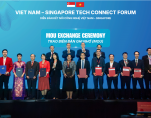
On the afternoon of May 29th, in Singapore, partnership signed at the Vietnam–Singapore Tech Connect Forum, witnessed by the highest-level government delegations from both nations, combining QuantumTX’s breakthrough MitoCharge technology with Kaopiz’s end-to-end software, AI, and IoT engineering capabilities
SINGAPORE – Media OutReach Newswire – 12 June 2026 – Kaopiz Holdings and QuantumTX announced a strategic Memorandum of Understanding (MOU) to co-develop next-generation preventive healthcare solutions powered by Artificial Intelligence, IoT engineering, and advanced health data platforms.
Kaopiz × QuantumTX sign MOU at Vietnam–Singapore Tech Connect Forum to co-develop next-generation healthcare solutions
The agreement was signed at the Vietnam–Singapore Tech Connect Forum held at Raffles City Convention Centre, Singapore, in the presence of Mr. To Lam, General Secretary and President of Vietnam, and Dr. Tan See Leng, Minister for Manpower and Minister-in-Charge of Energy and Science & Technology (MTI), Singapore – underscoring the partnership’s significance at the highest levels of Vietnam-Singapore bilateral cooperation.
Combining Hardware Innovation with Full-Stack Software & AI Engineering
QuantumTX contributes its proprietary MitoCharge technology – a clinically researched muscle-mitochondria activation system that delivers the physiological benefits of exercise without physical stress – purpose-built for the world’s rapidly aging population.
Kaopiz Holdings brings a 1,000-strong team of software engineers and IoT specialists with a proven delivery track record across healthcare, medical technology, and enterprise digital transformation. The combined capability spans:
End-to-end IoT device control software and embedded systems integration
AI-driven health data collection, processing, and analytics platforms
Cross-platform mobile applications for personalized health companion experiences
Cloud-based remote device management and real-time monitoring systems
Healthcare data security compliance aligned with applicable international standards
“Partnering with Kaopiz accelerates our next-generation product development while opening the door for MitoCharge technology to reach users across Vietnam and Southeast Asia.” – Mr. Ivan Goh, CEO, QuantumTX
Three Strategic Pillars of Collaboration
1. IoT Device & Software Development
Kaopiz will research, design, develop, and maintain software solutions deeply integrated with QuantumTX’s IoT medical devices, targeting the healthcare and rehabilitation sector.
2. Technical Support & Information Exchange
Kaopiz will embed advanced AI, Cloud Computing, and Data Analytics capabilities into QuantumTX’s medical device ecosystem, enabling predictive health insights, personalized rehabilitation guidance, and remote patient monitoring at scale.
3. Joint Market Development
Both companies will co-promote combined solutions to partners and customers across Vietnam, Singapore, and international markets, and will co-participate in healthcare technology projects, conferences, and exhibitions in the region.
“Population aging is a shared challenge that both Vietnam and Singapore must solve, and we believe technology is the key. Kaopiz is committed to leveraging our full expertise in software, AI, and IoT to co-develop next-generation healthcare solutions with QuantumTX, serving millions of people worldwide.” – Mr. Le Van Hoang, CEO, Kaopiz Holdings
A Milestone in Vietnam – Singapore Technology Cooperation
The MOU signing took place as part of the State Visit to the Republic of Singapore, at a forum co-organized by Vietnam’s Ministry of Foreign Affairs, Ministry of Science & Technology, Ministry of Finance, VSIP, and Enterprise Singapore. The forum brought together government leaders, research institutions, and enterprises from both nations to advance cooperation in science, technology, innovation, and sustainable development.
This partnership marks a tangible step in translating government-level bilateral commitment into commercial technology co-development, with a direct focus on healthcare innovation that addresses one of the most pressing demographic challenges shared by both Vietnam and Singapore.
The issuer is solely responsible for the content of this announcement.
About QuantumTX Pte. Ltd.
QuantumTX is a Singapore-based health technology company specializing in stress-free muscle activation devices backed by rigorous scientific R&D and clinical research. Its flagship MitoCharge technology activates muscle-mitochondria pathways to deliver physiological benefits equivalent to exercise, without physical exertion – designed specifically for aging populations, rehabilitation patients, and preventive health consumers. QuantumTX is committed to making healthy aging accessible and scalable across global markets.
About Kaopiz Holdings
Kaopiz is a global IT outsourcing and software development company with 12 years of experience and a core development center in Vietnam. With 1,000+ highly skilled engineers across software development, IoT solutions, AI integration, Cloud computing, Data engineering, and digital transformation, Kaopiz serves major enterprises in Japan, Singapore, and international markets across healthcare, finance, education, logistics, and manufacturing sectors, and more.
Kaopiz’s Singapore office is located at 1 Raffles Place, One Raffles Place Tower 2.
Launches VocSageX Agent Development Platform to Accelerate Commercial Adoption of Trustworthy AI
HONG KONG SAR – Media OutReach Newswire – 12 June 2026 – Voicecomm Technology Co., Ltd. (“Voicecomm Technology” or the “Company“, Stock Code: 2495.HK), a core technology provider and ecosystem operator of trustworthy conversational AI in China, announces that it has officially signed an ecosystem cooperation agreement with Huawei Cloud during the 2026 Huawei Cloud INSPIRE. The two parties will engage in in-depth collaboration across trustworthy artificial intelligence, industry AI agents, cloud computing infrastructure, and ecosystem development, with the shared goal of accelerating the large-scale deployment of enterprise AI applications.
At the conference, Voicecomm Technology also officially unveiled its next-generation enterprise AI product, the VocSageX Agent Development Platform, further strengthening the Company’s product portfolio in the trustworthy interactive intelligence sector.
Deepening Collaboration with Huawei Cloud to Build a Trustworthy AI Ecosystem Under the agreement, both parties will leverage their respective strengths in artificial intelligence technologies, industry applications, and cloud infrastructure to jointly drive innovation in enterprise AI solutions. Together, they will explore integrated solutions centered on large language models (LLMs), the VocSageX Agent Platform, and the Company’s proprietary “Intelligent Graph” system across both domestic and international markets.
Going forward, the two companies will continue to deepen cooperation in technology, computing power, market expansion, and ecosystem development. The partnership will accelerate the nationwide rollout and overseas deployment of mature solutions in areas such as smart cities and digital government, while fostering business growth for both organizations.
This collaboration marks a natural progression of an already established relationship built on long-term mutual trust. In January 2026, Voicecomm’s self-developed “Intelligent Graph” system officially passed the technical certification of Huawei’s Ascend AI basic software and hardware platform, completing preliminary validation in platform compatibility and algorithm integration.
Launch of VocSageX: A Trustworthy Foundation for Enterprise AI Speaking at the conference, Mr. Zheng Bo, Vice General Manager of Voicecomm Technology, noted that enterprises commonly face several challenges when deploying AI, including insufficient trustworthiness, high deployment costs, fragmented systems, and hallucination issues associated with large language models.
To address these challenges, Voicecomm launched the VocSageX Agent Development Platform, a comprehensive lifecycle management system covering agent design, training, deployment, orchestration, operations, maintenance, and asset management. The platform is built around five core capabilities: Trustworthy, Dedicated, Controllable, Collaborative, and Evolvable. It enables enterprises to rapidly develop customized industry-specific AI agents and realize multi-agent collaboration at scale.
Mr. Zheng added: “VocSageX is more than a development tool—it is a comprehensive AI agent operations platform designed for medium and large enterprises. Trustworthy AI that everyone can use is the true driver of productivity.”
Demonstrating Industry AI Applications Across Multiple Sectors In addition to the platform launch, Voicecomm showcased a range of industry AI agent applications at the conference, covering smart government services, smart elderly care, intelligent manufacturing, customer service, and enterprise digital transformation.
To date, the Company’s trustworthy AI agents have been widely deployed across sectors including city management and administration, automotive and transportation, telecommunications, finance, healthcare, and energy management.
Dr. Tang Jinghua, Chairman of Voicecomm Technology, said: “The AI industry is transitioning from the era of large language models to the era of AI agents. Enterprise demand for trustworthy, secure, and sustainable AI capabilities will continue to grow. Leveraging our proprietary trustworthy intelligence technology framework and strategic partnerships with leading ecosystem players such as Huawei Cloud, Voicecomm Technology is well positioned to capture the opportunities emerging in the enterprise AI market and accelerate the commercialization and value creation of AI technologies across a broader range of industries.”Hashtag: #VoicecommTechnology
The issuer is solely responsible for the content of this announcement.
About Voicecomm Technology Co., Ltd.
Founded in 2005 and headquartered in Wuhan, Voicecomm Technology is one of the leading core technology providers and ecosystem operators of trustworthy conversational AI listed on the Main Board of the Hong Kong Stock Exchange, and obtained the qualification as National-level SRDI, Technology Little Giant and High-Tech Enterprise. Leveraging its proprietary trustworthy Agent,the Company overcomes pain points in the commercialization of large language models, such as hallucinations and compliance issues, ensuring AI is usable, manageable, and controllable in enterprise environments. For enterprise-level customers, the Company provides AI services covering the entire process of “communication –decision – execution”. Its trustworthy Agent solutions have been widely deployed across multiple scenarios, including City management and administration, Automotive and transportation, Telecommunications, Finance, Healthcare, and Energy management, and it is dedicated to empowering the intelligent transformation of diverse industries.
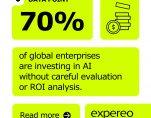
SINGAPORE – Media OutReach Newswire – 12 June 2026 – Enterprise AI spending is climbing rapidly, with boards racing to deploy the technology faster than they can measure whether it works. According to the latest IDC InfoBrief, commissioned by Expereo*, around 70% of organizations are investing in AI, motivated by its potential or by the fear of falling behind the competition, but they lag in disciplined ROI evaluation, and one in five (20%) admit they are investing aggressively in AI with little evaluation, driven by the fear of being left behind.
In Asia Pacific (APAC), that pressure is even more pronounced as 37% of organizations admit investing aggressively with little evaluation – nearly double the global average, and well ahead of the US (10%) and Europe (13%). The pressure is most acute in Australia (45%) and Vietnam (44%), while in Singapore, more than one in three organizations admit the same.
The IDC InfoBrief, based on a survey of 800 technology leaders across APAC, Europe, and the US, found that AI has become one of the most prioritized technology investments globally, with 51% of organizations planning to prioritize AI or machine learning investment over the next 12 months – rising to 61% across APAC. However, returns are failing to keep pace with the hype. Just 19% of global organizations surveyed say their AI implementations have exceeded expectations, and only 5% report they have significantly exceeded them1.
Across APAC, 40% say implementations have exceeded or significantly exceeded expectations – ahead of the global average but still leaving the majority falling short. Globally, the most-cited reasons for underperformance are inadequate or poor-quality training data (51%), higher-than-expected costs or ROI not achieved (47%), and AI not performing as well as expected (46%). For APAC specifically, the picture is broadly similar – though costs bite harder: 49% cite poor-quality training data, 54% cite cost overruns or ROI not achieved (rising to 80% in Malaysia), and 46% say AI has simply not performed as expected.
Where organizations have the right foundations in place, the results speak for themselves. Across APAC, 87% report productivity improvements in the business units most affected by AI, and 82% say quality of work has improved.
Underpinning many of these challenges is also a network and infrastructure readiness gap. Globally, 26% of organizations whose AI implementations have failed to meet expectations cite inadequate network or connectivity performance as a contributing factor. Looking ahead, 54% of organizations say they need more flexible and scalable networks to thrive in an AI-driven environment, and 51% need greater resilience and reliability to maximize uptime2. In APAC, the gap is acute as only 9% of organizations describe their network infrastructure as fully ready to support new AI, cloud, and digital initiatives, and 37% say it will need upgrading or replacing soon. The need is most acute in Thailand (74%) and Singapore (58%), both of which rank above the regional average on demand for flexible, scalable networks. In Indonesia, nearly half of all organizations (48%) say their infrastructure will need upgrading or replacing soon.
Ben Elms, CEO, Expereo, says: “Every enterprise we speak to is investing in AI, yet the data shows a clear gap opening up between AI ambition and AI outcomes. More often than not, that gap comes down to the network underneath. AI only delivers on its promise when the infrastructure carrying it is built to support it.
Without resilient, scalable, cloud-optimized networks, even the most well-funded AI programs will struggle to deliver ROI. Getting the network right is no longer an IT decision; it is one of the most important conversations happening in the boardroom today to help fulfill AI ambition.”
APAC is also leading on adoption, with 35% of organizations reporting extensive AI use across the business, against a global average of 25%3. Yet adoption alone is not enough without the right foundations beneath it.
Eric Wong, President, APAC, Expereo, says: “Asia Pacific is moving aggressively on AI adoption, but many organizations are discovering that scaling AI successfully requires more than just investment in applications and models. The underlying network, cloud connectivity, and operational readiness matter just as much. Across the region, we are seeing enterprises reassess whether their infrastructure is truly ready to support AI at scale, particularly around performance, resilience, governance, and visibility. Organizations that address those foundations early are generally seeing stronger outcomes and faster operational impact from their AI initiatives.”
Boardrooms are also waking up to the longer-term risks of unchecked AI investment. According to the survey, 54% of global tech leaders cite the creation of new security risks as a significant potential future threat for their organization’s use of AI, while 39% globally are concerned about losing track of AI-related costs and ROI once the technology is embedded across the business4. In APAC, that concern is sharper still as 41% of technology leaders in the region are worried about losing oversight of AI-related costs and ROI as adoption deepens – a figure that rises to 54% in Malaysia. Digital sovereignty is also moving up the strategic agenda, with 38% of APAC organizations rating it a high or top priority as they look to retain control over data and navigate an increasingly complex regulatory landscape.
For the full IDC InfoBrief, commissioned by Expereo, “Enterprise Horizons 2026: Where Innovation Meets Reality“ (doc #EUR154457526-IB, May 2026) please visit: [LINK]
The issuer is solely responsible for the content of this announcement.
Expereo
Expereo is a world-leading Managed Network as a Service provider that connects people, places, and things anywhere. Solutions include Global Internet, SD-WAN/SASE, and Enhanced Internet. With an extensive global reach, Expereo is the trusted partner of 60% of Fortune 500 companies. It powers enterprise and government sites in more than 190 countries, with the ability to connect to any location worldwide, working with over 2,300 partners to help customers improve productivity and empowering their networks and cloud services with the agility, flexibility, and value of the Internet, with optimal network performance.
Expereo was acquired in Feb 2021, by Vitruvian Partners which acquired a majority shareholding from Seven2.
Wall Street’s AI trade came under pressure as investors reassessed stretched technology valuations before SpaceX’s planned market debut, with Alphabet, Microsoft, Meta Platforms and Oracle losing more than $200 billion in combined market value during the session. The sell-off hit some of the largest companies tied to artificial intelligence spending, cloud infrastructure and data-centre expansion. Alphabet fell about 2.5 per cent, Microsoft lost nearly 2.7 per cent, […]
Advanced Micro Devices is extending its x86 challenge beyond data centres and personal computers, using its Ryzen AI Embedded processor portfolio to target cars, robots, medical systems and industrial machines as edge devices demand more local artificial intelligence computing. The move puts AMD more directly against Arm-based suppliers that have built strong positions in embedded and automotive systems through power-efficient designs, licensing flexibility and broad developer ecosystems. […]
BEIJING, CHINA – Media OutReach Newswire – 11 June 2026 – AIVA, an AI-native mobility brand, was officially unveiled in Beijing on 9 June 2026.
AIVA will collaborate with Volcano Engine, ByteDance’s cloud and AI platform, to jointly define, design, and develop a new generation of AI vehicles. Volcano Engine will provide AIVA with advanced capabilities, including the Doubao AI Foundation Model and intelligent cockpit, enabling smarter in-vehicle interactions.
At the launch event, AIVA unveiled its brand name and logo, introducing a development philosophy centered on “AI-first vehicle creation”—where AI comes before the car itself. It is believed that AI-native vehicles will fundamentally redefine the relationship between people and automobiles. AIVA also showcased the AIVA Origin Concept, while AIVA ME7, its first mass-production model, is scheduled to debut in 2026. The AIVA lineup will target the mainstream market segment priced above RMB 200,000.
AIVA, short for Artificial Intelligence Voyage Ahead, reflects the brand’s vision of AI accompanying users on every journey toward the future. Built around AI-native mobility, AIVA aims to create embodied AI companions powered by advanced intelligence, transforming vehicles from mere transportation tools into trusted partners that understand, accompany, and serve their users.
When AI is deeply integrated into the vehicle, users no longer need to navigate complex menus. Instead, AI operates around human intent, making the interaction intuitive and direct. By understanding real-time context and user preferences, it can proactively anticipate needs and coordinate vehicle capabilities, delivering a more natural, personalized mobility experience.
As an independently operated company backed by a powerful alliance of strategic shareholders, AIVA will oversee brand development, product strategy, and business operations. SERES Group, as a key shareholder and industrial partner, will provide expertise in vehicle manufacturing and supply chain management. CATL will contribute comprehensive battery solutions. Shaci Zhiyuan, a strategic institutional investor, will provide industrial resource support.
Looking ahead, AIVA will broaden its product lineup through rapid innovation and iteration. By focusing on AI-powered interaction, intelligent experiences, emotional companionship, and safety-centered care, AIVA is committed to creating vehicles that not only move people, but understand them, unlocking a new era of intelligent mobility. Hashtag: #AIVA
The issuer is solely responsible for the content of this announcement.
SpaceX plans to begin testing artificial intelligence data centres in orbit by late 2027, accelerating Elon Musk’s push to turn the company’s satellite and launch network into a new layer of global computing infrastructure. The programme would move part of the AI computing race beyond land-based data centres, where power shortages, grid constraints, cooling costs and local opposition have become major obstacles for technology companies. The first […]
Autonomous email agents are emerging as a fresh enterprise security risk after a laboratory test showed an OpenClaw-based assistant forwarding cloud credentials and business records in response to ordinary phishing-style messages. The controlled exercise centred on an AI agent named Pinchy, configured on the OpenClaw platform to monitor a Gmail inbox, process messages and perform tasks through connected workplace tools. The test environment used synthetic corporate material, […]
Companies are losing visibility over how workers use artificial intelligence, as staff turn to ChatGPT, Microsoft Copilot, Claude and other tools faster than governance teams can approve, monitor or secure them. The spread of so-called shadow AI has exposed a familiar weakness in corporate cybersecurity: organisations that struggled to control unapproved apps, unmanaged cloud storage and personal messaging channels are now facing the same problem with tools […]
Hackers are turning TikTok and Instagram Reels into malware delivery channels, using polished tutorial-style clips that promise free premium software and then steer users towards malicious downloads or command-line instructions that compromise their devices. The campaign marks a shift in social engineering from email inboxes and fake websites to short-form video feeds, where attackers mimic creator culture, use casual language and rely on platform algorithms to amplify […]
Intel has used Computex 2026 to present a broader artificial intelligence strategy built around rack-scale systems, new Xeon data-centre processors and industry partnerships aimed at the fast-expanding market for inference and agentic AI workloads. The announcements in Taipei marked a deliberate shift in emphasis for the company, from selling individual chips to supplying integrated platforms that combine processors, accelerators, networking and software. Intel’s pitch rests on the […]
Anthropic has released Claude Fable 5, its most powerful AI model made broadly available, opening public access to a safeguarded version of the company’s Mythos-class technology after months of controlled testing among selected partners. The launch marks a significant shift for the San Francisco-based AI company, which had previously limited Mythos-class capabilities because of concerns over advanced cybersecurity and biological-risk use cases. Claude Fable 5 is being […]
Nvidia has signed a wide set of artificial intelligence and data centre agreements with major South Korean companies, placing the country at the centre of its next phase of AI infrastructure expansion across Asia.
The agreements involve SK Telecom, SK Hynix, Naver, Doosan Group, LG Group, Hyundai Motor Group and continued discussions with Samsung Electronics, linking Nvidia’s graphics processors, AI factory architecture and robotics platforms with South Korea’s strengths in memory chips, telecoms, manufacturing, cloud services and industrial automation.
The deals were unveiled during Nvidia chief executive Jensen Huang’s Seoul visit, which has underlined how South Korea is moving from being a supplier of critical memory chips to a broader AI infrastructure hub. The push comes as governments and large companies seek sovereign computing capacity, tighter control over data, and dedicated facilities capable of training and running advanced AI models.
SK Telecom plans to build a gigawatt-scale AI cloud in South Korea using Nvidia’s DSX platform, with the first AI factory expected to come online in 2027. The infrastructure is designed to support enterprise AI, robotics, industrial automation and agentic AI services, using SK Telecom’s network, data centre and corporate technology base.
Naver, one of South Korea’s leading internet and cloud companies, is expanding its sovereign AI infrastructure with Nvidia, starting with 55 megawatts of capacity and a plan to move towards gigawatt scale. The collaboration is aimed at serving businesses, public-sector users and industries seeking locally controlled AI platforms.
SK Hynix, already a key supplier of high-bandwidth memory for Nvidia’s AI accelerators, has entered a multi-year technology partnership to develop next-generation memory for global AI data centres. The agreement strengthens the role of high-bandwidth memory as one of the most important bottlenecks in the AI hardware supply chain, with demand rising sharply as large models require faster data movement between processors and memory.
Samsung Electronics remains part of the wider conversation around next-generation foundry and memory cooperation. Its semiconductor leadership held talks with Nvidia on advanced chip manufacturing and future high-bandwidth memory, including technologies beyond the current HBM4 generation. Samsung is also involved in manufacturing AI accelerator chips for other customers, keeping it central to Nvidia’s broader supply chain calculations even as SK Hynix maintains a strong position in premium memory.
Doosan Group’s cooperation with Nvidia extends the agreements beyond data centres into physical AI. Doosan Robotics is working with Nvidia’s simulation, robotics and on-device AI platforms to develop an agentic robot operating system, while Doosan Enerbility is expected to support power infrastructure for AI factories. Doosan Corporation’s electronics materials unit is also positioned to support next-generation data centre hardware through advanced materials used in AI accelerators.
LG Group is working with Nvidia on an AI factory focused on physical AI, mobility and data centre technologies. The partnership is expected to support LG’s work in robotics, autonomous driving, smart manufacturing and GPU cloud services, giving the conglomerate a platform for applying AI across consumer electronics, industrial systems and vehicle technologies.
Hyundai Motor Group’s cooperation with Nvidia is centred on mobility, manufacturing and robotics, including support for Hyundai’s AI Valley project in Saemangeum. The group’s ownership of Boston Dynamics gives it a strong position in humanoid and industrial robotics, while Nvidia’s platforms can support simulation, model training and factory deployment.
South Korea’s national AI strategy gives the corporate agreements wider significance. The country had already announced plans to secure more than 260,000 Nvidia GPUs, with more than 50,000 intended for public AI infrastructure and the rest allocated to major companies including Samsung, SK Group, Hyundai Motor Group and Naver. The latest agreements suggest that those commitments are moving into more defined industrial projects.
The expansion also reflects a shift in Nvidia’s business model. The company is no longer selling chips only as components; it is promoting full-stack AI factories that combine processors, networking, software, reference architecture and operations. That approach gives Nvidia deeper influence over how data centres are designed and operated, while offering partners faster deployment at a time when AI capacity remains constrained.
South Korea’s Science and ICT Ministry is also seeking priority access to Nvidia’s Vera Rubin GPUs, amid expectations that next-generation chip supply could face delays. The effort shows how advanced AI processors have become strategic assets for countries competing in model development, cloud infrastructure and industrial automation.
The agreements carry risks as well as opportunity. AI factories require vast power supplies, expensive cooling systems and long-term commitments from corporate customers. Heavy dependence on one US chip supplier may also raise questions over supply security and bargaining power, even for a country with world-class semiconductor companies.
For Nvidia, the South Korean partnerships strengthen memory access, broaden its AI factory customer base and create new demand in robotics, cloud services and industrial AI. For South Korean companies, the deals offer a faster route into high-value AI infrastructure at a time when global competition is shifting from model development to the computing systems needed to run them at scale.
Michael Saylor’s attempt to frame bitcoin’s sharp fall as a rotation of capital into artificial intelligence has drawn a blunt challenge from Arca, which argues that the more immediate trigger was Strategy’s sale of 32 bitcoin to meet preferred stock dividend obligations. The dispute has turned a small transaction into a larger test of confidence in one of the market’s most influential bitcoin treasury companies. Strategy sold […]
Apple has unveiled a major overhaul of Siri and a broad set of child safety tools at its Worldwide Developers Conference, placing artificial intelligence and family controls at the centre of its next software cycle. The new Siri AI is available immediately for developer testing across iOS 27, iPadOS 27, macOS 27 and visionOS 27, with support for watchOS 27 due in a later developer beta. A […]
Arabian Post Staff -Dubai Orange Jordan and Deutsche Gesellschaft für Internationale Zusammenarbeit have convened private-sector roundtables under the PASS programme, widening efforts to connect startups with established companies as Jordan pushes entrepreneurship-led job creation and digital growth. Three sessions were held in Amman, Irbid and Aqaba under the title Private Sector Roundtable – PASS Project, bringing together startups, corporate representatives and ecosystem partners to examine how young […]
A fast-moving malware campaign tied to Shai-Hulud has expanded its attack on software developers through newly weaponised Python Package Index artefacts, raising concern that poisoned open-source dependencies are being used to steal credentials, compromise build systems and spread across trusted code repositories. The latest wave adds 23 malicious PyPI package-version artefacts to an operation already linked to Mini Shai-Hulud, Miasma and Hades activity. The broader campaign now […]
Xbox Game Pass lost “millions” of subscribers after Microsoft lifted the monthly price of its Ultimate tier from $20 to $30 in October 2025, exposing the limits of consumer tolerance for subscription gaming even at one of the industry’s most heavily promoted services. Matthew Ball, Xbox’s chief strategy officer, said at The Game Business Live that the company “shed millions of subscribers over the span of a […]
Open-source maintainers and software manufacturers are heading towards the European Union’s first Cyber Resilience Act enforcement milestone with deep gaps in awareness, preparedness and legal clarity, after new OpenSSF research found that about two-thirds of practitioners remain unready or unaware of the compliance timetable. The finding has sharpened concern across the software supply chain because the CRA’s vulnerability and incident reporting duties begin on 11 September 2026, […]



 https://kaopiz.com/en/
 https://www.linkedin.com/company/kaopiz/
 https://x.com/KaopizGlobal
 https://www.facebook.com/com.kaopiz