Cloud infrastructure provider Vultr has introduced a production-ready artificial intelligence inference stack built on NVIDIA’s Rubin platform, marking a significant expansion of their collaboration as enterprises accelerate adoption of generative AI workloads. The deployment is designed to provide scalable, cost-efficient inference capabilities across Vultr’s global cloud network, targeting businesses seeking to operationalise AI models without the high capital expenditure typically associated with dedicated infrastructure. The Rubin platform, […]
Take-Two Interactive chief executive Strauss Zelnick has declined to offer advice to Microsoft’s newly appointed gaming leader Asha Sharma, expressing confidence that she will succeed without external guidance and highlighting her record as a seasoned executive. Zelnick’s remarks come as Sharma steps into a prominent leadership role within Microsoft’s gaming division, overseeing strategic direction for Xbox amid intensifying competition in the global video game industry. Addressing questions […]
Joe Kent, director of the National Counterterrorism Center, has resigned, citing opposition to the Trump administration’s military campaign against Iran and warning of strategic and moral consequences for United States security policy. Kent announced his decision in a statement, saying he could not “in good conscience” support the direction of the conflict. His departure marks one of the most senior resignations tied directly to the administration’s handling […]
Rapid deployment of AI-driven surveillance systems across multiple African cities is drawing scrutiny from rights groups and policy analysts, who warn that expanding digital monitoring networks risk eroding civil liberties while outpacing regulatory safeguards. Urban centres from Nairobi to Lagos and Johannesburg are integrating smart city technologies designed to improve traffic management, crime detection and public service delivery. These systems increasingly rely on facial recognition, biometric databases […]
A newly identified Android attack technique that alters the operating environment rather than modifying applications has raised fresh concerns over the resilience of mobile payment systems, with researchers warning that conventional app-level protections may no longer be sufficient. Security analysts at CloudSEK have detailed a method that leverages a framework known as LSPosed to manipulate how Android apps behave at runtime. Instead of injecting malicious code directly […]
KUALA LUMPUR, MALAYSIA – Media OutReach Newswire – 18 March 2026 – Inspired by the values of compassion and the importance of sharing rezeki (blessings) during this blessed month, AEON Bank, Malaysia’s first digital Islamic bank, has brought to life its Ramadan and Syawal campaign themed “Niat di Hati, Budi Terpateri.”
The campaign is anchored on the principle that good intentions (niat yang baik), when demonstrated through kind and thoughtful actions (amal budi yang indah) will lead to meaningful outcomes. This theme is brought to life through a self-produced Ramadan Aidilfitri 2026 brand video, available on the Bank’s official YouTube channel. NIAT TO EMPOWER THE COMMUNITY : SALAM PRIHATIN 4.0
The beneficiaries of Salam Prihatin 4.0, alongside the committee of Pertubuhan Kebajikan Masyarakat Penyayang Lembah Pantai (PERKEMP), senior leadership of AEON Bank and AEON BiG, and AEON Bank’s volunteers
As part of its Shared Value Creation (SVC) commitment, AEON Bank continues to drive its flagship community impact initiative, Salam Prihatin. Targeted Support and Value Added Impact
This year, Salam Prihatin 4.0 engaged 100 households, amounting to more than 400 beneficiaries from the community Perumahan Pantai Permai, Kuala Lumpur. The engagement was held on 3 March 2026, in collaboration with AEON BiG Wangsa Maju and a local NGO, Pertubuhan Kebajikan Masyarakat Penyayang Lembah Pantai (PERKEMP) Lembah Pantai.
Fostering Financial Inclusion and Enabling Budget Savvy Autonomy Among the Beneficiaries
Fostering financial inclusion among the community, the beneficiary families were guided by AEON Bank team to plan for purposeful purchase of grocery and essential items, giving them the autonomy to optimise their budget, based on the needs of their respective families – be it multigenerational households, or families with small children or those caring for persons with disabilities (PWD).
Each beneficiary family received a RM300 grocery budget, which rounded up AEON Bank’s contribution this year to RM30,000 in total. In order to assist the families with their grocery shopping on the event day, more than 50 of AEON Bank employees, including the Bank’s senior leadership, were paired up with the families during the engagement. To date, AEON Bank has engaged almost 2,000 beneficiaries throughout 4 years, under its Salam Prihatin community impact initiative.
Now in its fourth year, AEON Bank has engaged almost 2,000 beneficiaries throughout 4 years, under its Salam Prihatin community impact initiative.
NIAT TO BE MORE RINGGIT SAVVY : SMART SAVINGS AND VALUE ADDED REWARDS
In the effort to help Malaysians manage the rising cost of living, AEON Bank has introduced several financial tools in its digital banking app and meaningful rewards for its customers, including :
(i) Neko Sensei : AEON Bank’s very own in-app financial coach designed to empower customers to track and manage their finances wisely.
(ii) RM30 Raya Cashback : Customers can earn RM30 cashback when paying with their AEON Bank Debit Card-i at stores participating in the MyDebit campaign, valid from 1 February to 15 April 2026.
(iii) Competitive Rate for Savings Pot : Enjoy a high 3.00% p.a. profit rate for the Savings Pot to help keep your financial goals on track, valid until 31 May 2026.
(iv) Personal Financing-i (PF-i) : Financing options from RM1,000 to RM100,000 with a profit rate starting at 3.88% p.a. and flexible tenures from 3 to 84 months. PF-i application process fully takes place online via the app, available to Malaysians with a minimum monthly gross income of RM2,500 including salaried employees, self-employed individuals, freelancers and gig economy workers.
(v) Neko Missions : A gamified digital banking experience that offers RM5 cashback for DuitNow QR transactions via AEON Bank app, valid until 15 May 2026.
(vi) JomPay : Customers can also make their JomPay transactions, including telco and utility bills via the AEON Bank app. providing a centralised platform for all essential online payments.
(vii) Inclusivity and Flexibility : Effective 17 March 2026, AEON Bank has removed the minimum balance requirement, ensuring Shariah-compliant digital banking is more inclusive and accessible for Malaysians.
NIAT TO FULFILL RELIGIOUS OBLIGATIONS : SAH AND SEAMLESS ZAKAT PAYMENT VIA AEON BANK APP
Starting from the month of Ramadan this year, Zakat payment feature has been made available on the AEON Bank app. With just a few easy steps, customers can fulfill the contribution for 11 types of Zakat with a sah Aqad, including Zakat Fitrah, Zakat Pendapatan (Income), Zakat Perniagaan (Business), Zakat Emas (Gold) and more.
Made possible through the strategic partnership with Tulus Digital, the Zakat payment feature currently facilitates payments to Lembaga Zakat Selangor and PPZ-MAIWP, with more states and Zakat authority to be added in the near future.
NIAT TO BRING DIGITAL BANKING TO THE MASSES : O2O WONDERS
Beyond the digital screens, throughout four weeks of Ramadan, AEON Bank brought the O2O (online to offline) wonders to the crowd at the Bazaar Ramadan Seksyen 2 and 23, Shah Alam, in partnership with Persatuan Penjaja & Peniaga Kecil Melayu Negeri Selangor (PPPKMNS). On 16 March 2026, from 4.00 pm onwards, come on over to the Bazaar Ramadan Seksyen 23 and stand a chance to win AEON Bank merchandise and surprise goodies.
Better Banking – The Digital Way, Better Banking – The Shariah Way
As a cloud-native AI-powered digital bank, AEON Bank remains dedicated in its commitment to provide accessible financial solutions for Malaysians, while empowering communities to pursue their financial aspirations and achieve economic independence. Striving to foster a more inclusive financial future for all, AEON Bank will continue to offer a better banking experience for the larger demographic and contribute towards the development of Islamic banking in the region and the nation’s digital economy.
Click HERE to visit AEON Bank’s website and download the AEON Bank app. Don’t forget to view AEON Bank’s Ramadan Aidilfitri 2026 video, available on the Bank’s official YouTube channel.
The issuer is solely responsible for the content of this announcement.
ABOUT AEON BANK (M) BERHAD
AEON Bank (M) Berhad is the first digital Islamic bank in Malaysia, licensed and regulated by Bank Negara Malaysia and the Ministry of Finance. Officially launched on 26 May 2024, we currently offer a suite of Shariah-compliant products and services under the Personal Banking and Business Banking (AEON Bank Biz).
Our Personal Banking offerings are 100% accessible via the AEON Bank app, namely the deposit Savings Account-i, AEON Bank x Visa Debit Card-i, Personal Financing-i, Term Deposit-i, Savings Pots, DuitNow QR, utility bill payments, personal financial management and budgeting tools with Neko Sensei, and a range of digital payment services with strategic partners and merchants, as well as Neko Missions, Malaysia’s first gamified digital banking interactive rewards programme.
On 8 August 2025, AEON Bank (M) Berhad officially launched AEON Bank Biz, anchored by the Current Business Account-i and integrated cash management capabilities, alongside Biz Term Deposit-i. AEON Bank Biz offers streamlined processes for account onboarding, credit assessments and financial services, utilising AI-driven fintech solutions to enable simplified procedures, faster approvals, and an enhanced digital banking experience for SMEs and micro entrepreneurs.
Being part of the AEON Group conglomerate, AEON Bank (M) Berhad is equally held by AEON Financial Service Co. Ltd. (AFS Japan) and AEON Credit Service (M) Berhad (ACSM). AFS Japan is responsible for the AEON Group’s financial services businesses, with strong roots in the retail sector which operates in Japan and 10 countries across Asia. AEON Group is Japan’s largest retail group and it is a pure holding company that comprises eight core businesses.
AEON Group Malaysia consists of several entities, namely, AEON Co. (M) Bhd, AEON Credit Service (M) Berhad, AEON Bank (M) Berhad, AEON BiG (M) Sdn Bhd, AEON Fantasy (M) Sdn Bhd, AEON Delight (M) Sdn Bhd, AEON Global Supply Chain Sdn Bhd and Malaysian AEON Foundation (MAF). AEON Group has been a recognizable household brand with more than 200 years of history and evolution in Japan since the Edo era, along with 4 decades of growth in Malaysia, providing consumers with daily financial solutions and diversified retail convenience.
Our cloud native agility and AI optimisation, combined with the strength of our Shariah DNA, Malaysian roots and Japanese heritage are our distinguishing factors, while the integration with the AEON ecosystem gives us a competitive advantage of being the only bank in Malaysia with its own nationwide retail network. On top of that, AEON Points loyalty programme offers customers value-added benefits and meaningful rewards, as the AEON Points can be redeemed into cash value, deposited directly into customers’ AEON Bank Savings Account-i.
AEON Bank (M) Berhad is committed to provide accessible financial solutions for Malaysians and we aim to empower the community in pursuing their financial aspirations and achieve economic independence, hence fostering a more inclusive financial future for all. We will continue to contribute towards the Islamic banking development in the region and the nation’s digital economy.
Cybersecurity analysts have uncovered a method that enables attackers to bypass behavioural protections in Palo Alto Networks’ Cortex XDR platform, raising fresh concerns over the resilience of endpoint detection systems widely used by enterprises. The findings centre on the platform’s Behavioural Indicators of Compromise, or BIOC rules, which are designed to identify suspicious activity beyond traditional signature-based detection. Researchers demonstrated that these rules, distributed in encrypted form […]
Gaps between on-premise and cloud identity systems are creating a growing security blind spot, as organisations adopting hybrid Active Directory environments struggle to maintain consistent user credentials across platforms. Security analysts warn that “identity drift” — a condition where user attributes, permissions or credentials fall out of sync between systems — is emerging as a critical vulnerability in enterprise infrastructure. Hybrid identity setups, commonly built around Microsoft’s […]
Security researchers have uncovered a vulnerability in Amazon Web Services Bedrock’s code interpreter environment, raising concerns over the robustness of isolation safeguards in generative AI systems and prompting renewed scrutiny of cloud-based development tools used by enterprises. The flaw, identified in Bedrock’s sandboxed execution layer, centres on weaknesses in DNS handling that could allow data exfiltration from supposedly isolated environments. Analysts say the issue highlights structural challenges […]
Meta Platforms has agreed to spend as much as $27 billion over five years to secure access to high-performance artificial intelligence infrastructure from Nebius Group NV, a move that underscores the escalating race among technology companies to expand computing capacity for advanced AI systems. The agreement gives Meta long-term access to specialised cloud infrastructure built around high-performance graphics processing units designed for training and running large-scale artificial […]
Adobe has agreed to provide free services worth about $75 million to customers as part of a settlement resolving a United States lawsuit over its subscription cancellation practices, closing a dispute that drew scrutiny from regulators and consumer advocates over how the software giant managed its widely used Creative Cloud plans. The agreement follows allegations that Adobe made it unnecessarily difficult for customers to cancel subscriptions, particularly […]
Alibaba Group Holding is preparing to introduce an artificial intelligence service designed to help companies deploy autonomous digital assistants, positioning the technology giant to capitalise on growing demand in China for so-called “agentic AI” systems capable of carrying out real tasks with minimal human input. The planned service will allow corporate users to build and manage AI agents that can automate business processes such as data analysis, […]
Dubai-based technology firm Solstice Data has signed a memorandum of understanding with the Kerala government to invest ₹52,600 crore in a large-scale data infrastructure project at the KINFRA Industrial Park in Mattannur, marking one of the biggest technology investments proposed for the state’s digital economy. The agreement envisions the development of advanced artificial intelligence-driven high-performance computing data centres on approximately 100 acres of land in Kannur district, a move officials say could reshape the region’s industrial profile.
The MoU was exchanged in Thiruvananthapuram between Raj Babu Thulaseedharan, Solstice Data’s country head for India, and Santhosh Koshy Thomas, managing director of Kerala Industrial Infrastructure Development Corporation, commonly known as KINFRA. The signing ceremony took place in the presence of Industries Minister P Rajeev and Director of Industries P Vishnuraj, signalling strong administrative backing for the project.
Solstice Data, headquartered in Dubai, specialises in designing and operating high-performance computing facilities that support artificial intelligence applications, cloud services and large-scale data processing. The company has overseen more than sixty data-centre projects internationally, including facilities in North America. The planned Kerala campus is expected to incorporate similar advanced infrastructure, supporting large computing workloads used by artificial intelligence developers, research institutions and global technology companies.
Officials involved in the negotiations describe the proposed facility as a strategic attempt to position Kerala within the expanding global data-centre ecosystem. The investment is scheduled to be implemented over a five-to-seven-year period, with phased development of computing infrastructure and supporting utilities. Such projects typically require heavy investments in power systems, cooling technology, fibre-optic connectivity and advanced cybersecurity frameworks, all of which are considered essential to attract international technology firms that rely on reliable data-processing capacity.
Mattannur’s KINFRA Industrial Park was selected as the project site after infrastructure upgrades created additional industrial land within the complex. The park covers about 175 acres, with roughly 123 acres designated for industrial use after internal roads, power supply and other facilities were developed. Officials said the Solstice Data project will occupy the remaining 100 acres currently available for new enterprises within the park, effectively completing the industrial allocation of the site.
Kerala’s industry department has framed the project as part of a broader push to attract technology-driven investments beyond the state’s established IT corridors. While cities such as Kochi and Thiruvananthapuram host major software parks and technology campuses, northern districts have been seeking large industrial anchors to stimulate employment and infrastructure development. Officials believe a data-centre cluster could generate both direct and indirect jobs, ranging from engineering and maintenance roles to specialised positions in artificial intelligence research and cloud-computing operations.
Industries Minister P Rajeev said the planned facility is expected to open significant digital opportunities for the state’s technology ecosystem. According to government officials, the project will be developed in collaboration with local partners, potentially creating links with educational institutions, startups and software companies working in artificial intelligence and data analytics. The state has promoted digital innovation as a key pillar of its industrial strategy, aiming to expand sectors such as fintech, health-tech and data science.
Data-centre investments have gathered momentum globally as demand for computing power rises with the growth of artificial intelligence models, streaming services and cloud-based applications. Major technology companies have been building hyperscale facilities capable of handling vast quantities of data, often requiring reliable electricity supply and extensive fibre-optic connectivity. Industry analysts say regions that provide stable power networks, regulatory clarity and strong connectivity stand to attract significant investments from technology infrastructure firms.
Kerala has gradually positioned itself as a destination for knowledge-based industries through investments in IT parks, research institutions and digital-skills programmes. Earlier technology initiatives in the state have involved collaborations with global companies and overseas investors. Observers see the Solstice Data project as another example of cross-border partnerships shaping technology infrastructure, particularly with firms based in the Gulf that maintain commercial ties with southern states.
Local authorities in Kannur district view the project as a potential catalyst for broader economic activity around Mattannur, an area already connected by road networks and the nearby Kannur International Airport. Industrial planners say large technology campuses often stimulate the creation of ancillary industries including power equipment suppliers, cooling system manufacturers and digital-services firms.
Solstice Data’s decision to establish an artificial-intelligence-focused data-centre campus also reflects the intensifying competition among regions seeking to host digital infrastructure. Governments across Asia have introduced policies aimed at attracting such projects through land allocation, tax incentives and investments in high-capacity electricity grids.
Greenlogue/AP Thick clouds of smoke rising over fuel depots and refineries in Iran have triggered growing concern among scientists and public-health experts that the environmental impact of the ongoing US and Israeli military campaign could linger for decades. Fires sparked by strikes on energy infrastructure have released a complex mix of toxic pollutants into the atmosphere, raising fears of long-term contamination of air, soil and water across […]
A sophisticated malware operation targeting software developers has expanded its reach by exploiting trusted extension ecosystems, with security researchers uncovering dozens of malicious packages distributed through the Open VSX marketplace. The campaign, known as GlassWorm, now relies on hidden transitive dependencies to introduce malicious code into developer environments, marking a notable shift in tactics within the growing wave of software supply-chain attacks. Security analysts have identified at […]
Bosch SDS and NxtGen Datacenter & Cloud Technologies have unveiled plans to launch a sovereign artificial intelligence cloud platform designed to accelerate Industry 4.0 adoption across India’s manufacturing and industrial sectors. The initiative aims to give enterprises secure domestic infrastructure for deploying advanced AI applications, including predictive maintenance, asset optimisation and real-time industrial data orchestration from factory floors to cloud platforms.
The partnership brings together Bosch’s software and digital engineering capabilities with NxtGen’s hyperscale data-centre infrastructure and managed cloud services. Executives involved in the project say the platform is intended to address a growing demand among industrial companies for locally hosted AI environments that comply with national data sovereignty expectations while enabling modern digital manufacturing systems.
Manufacturers across sectors such as automotive, energy, logistics and heavy engineering are increasing investment in AI-driven automation as global supply chains shift toward greater efficiency and resilience. Analysts say many firms are seeking platforms capable of processing large volumes of machine data generated by connected sensors, robotics systems and industrial equipment. The Bosch–NxtGen cloud aims to provide such capabilities by linking edge computing devices installed on factory floors with secure domestic cloud infrastructure.
Industry 4.0 technologies depend heavily on real-time analytics and machine learning models trained on operational data from equipment and production lines. Engineers use these tools to forecast equipment failures, schedule maintenance more efficiently and optimise energy use in industrial facilities. Bosch SDS has developed software frameworks and digital twin technologies designed to model industrial processes, while NxtGen operates data centres capable of hosting high-performance computing and AI workloads.
Executives from both companies say the sovereign AI cloud will enable manufacturers to run advanced analytics while ensuring sensitive operational data remains within national boundaries. Data localisation requirements have become an important consideration for companies adopting AI technologies, particularly in sectors linked to critical infrastructure and strategic industries.
Industrial data orchestration represents a central component of the project. Factories typically generate vast amounts of information from sensors embedded in machines, assembly lines and supply-chain systems. The new platform aims to unify these streams into a single architecture that allows companies to analyse operational patterns and automate decision-making across production networks.
Predictive maintenance stands among the most prominent applications expected to benefit. Machine-learning models trained on historical equipment data can detect early warning signs of mechanical problems before breakdowns occur. Companies adopting such systems report improvements in production uptime and reductions in maintenance costs. Asset optimisation tools can also adjust equipment performance dynamically based on real-time operational conditions, helping plants operate more efficiently.
Bosch SDS, a digital engineering and IT services division of the Bosch Group, has built a strong presence in industrial software development, automotive electronics and embedded systems. The organisation provides engineering services to manufacturing clients globally and has increasingly expanded into artificial intelligence and Internet of Things technologies.
NxtGen Datacenter & Cloud Technologies operates hyperscale data-centre infrastructure in several metropolitan regions and provides cloud platforms designed for enterprise workloads requiring high performance and data security. The company has promoted the concept of sovereign cloud infrastructure as governments and corporations seek greater control over digital assets and regulatory compliance.
Demand for domestic cloud infrastructure has expanded as companies become more cautious about where critical data is stored and processed. Sovereign cloud environments typically guarantee that data remains within a country’s jurisdiction and that infrastructure operators comply with local legal frameworks. Such models have gained traction among governments and enterprises concerned about cross-border data transfer risks.
Industrial companies are also moving toward hybrid architectures combining edge computing and centralised cloud platforms. Edge devices located inside factories can process sensor data close to the source, enabling immediate operational responses, while cloud platforms provide the computing power required for large-scale analytics and machine-learning training. Integrating these environments allows enterprises to monitor production lines in real time while developing predictive insights from aggregated data.
Artificial intelligence adoption within manufacturing has accelerated as companies pursue automation and efficiency gains. Industrial AI applications include quality control using computer vision, supply-chain forecasting, energy-efficiency optimisation and autonomous robotics. Technology providers see manufacturing as one of the largest growth markets for AI deployments because factories generate extensive data suitable for machine-learning models.
Digital transformation initiatives in India’s industrial sector have gained momentum as manufacturers attempt to strengthen global competitiveness. Government-backed programmes promoting advanced manufacturing and smart factories have encouraged investment in automation, robotics and digital infrastructure. Large technology firms and industrial groups have launched multiple projects aimed at building domestic platforms capable of supporting AI-driven manufacturing systems.
Bosch and NxtGen executives say the sovereign AI cloud will provide enterprises with tools to modernise legacy manufacturing operations while maintaining strict security and governance standards. Industrial clients are expected to gain access to modular services including AI development environments, digital twin simulations and scalable computing resources tailored to industrial workloads.
Technology analysts note that partnerships combining industrial engineering expertise with specialised cloud infrastructure have become increasingly common as companies seek to accelerate digital transformation. Providers that can integrate operational technology systems with enterprise cloud platforms are viewed as well positioned to serve manufacturers adopting Industry 4.0 strategies.
Government plans to establish an $11 billion fund aimed at accelerating semiconductor development, a move designed to strengthen the country’s position in the global electronics supply chain and reduce dependence on imported chips. The proposed initiative, valued at more than ₹1 trillion, is under active discussion and could be unveiled within months as part of a broader push to expand domestic technology manufacturing.
Semiconductors form the backbone of modern technology, powering devices ranging from smartphones and laptops to vehicles, industrial equipment and artificial intelligence systems. Officials believe the new fund will provide subsidies for chip design, semiconductor manufacturing equipment and the development of supporting supply chains, while encouraging investment from both domestic conglomerates and international technology companies.
Policy planners view the programme as a key step in transforming the country into a major centre for semiconductor manufacturing and design. Industry specialists say the fund would complement earlier government initiatives aimed at building a full semiconductor ecosystem, including design, fabrication, assembly, testing and packaging capabilities.
The proposal builds on earlier efforts launched in 2021 under the semiconductor incentive scheme, which earmarked about $10 billion to attract chip manufacturers and component makers. That programme sought to cover a significant share of the capital costs associated with establishing fabrication and assembly plants, a strategy widely adopted by governments worldwide seeking to secure technology supply chains.
Authorities have framed semiconductor development as a strategic priority amid rising global demand for advanced electronics. The push is also tied to ambitions of expanding the domestic electronics manufacturing sector, which has grown rapidly over the past decade as multinational companies diversify production away from traditional manufacturing hubs.
Major industrial projects linked to this strategy are already underway. A semiconductor assembly and testing facility led by Tata Group in the northeast is expected to become one of the country’s first large-scale chip processing plants, while U. S. firm Micron is developing a packaging facility valued at about $2.7 billion. These projects represent early steps toward creating an integrated semiconductor ecosystem spanning design, fabrication and advanced packaging.
Other proposals include joint ventures between technology firms and global chipmakers. One such project involves a partnership between HCL Group and Taiwan’s Foxconn to establish a semiconductor unit near Jewar airport in Uttar Pradesh. The facility is designed to produce display driver chips used in consumer electronics and could reach an output of tens of millions of units annually once operational.
Government officials have also focused on strengthening the talent pipeline required for the semiconductor industry. A national programme known as “Chips to Startups” aims to train around 85,000 engineers in chip design across more than 300 academic institutions, reflecting recognition that workforce development is critical for sustaining a competitive semiconductor sector.
Industry leaders note that chip manufacturing remains one of the most capital-intensive segments of the technology economy. Fabrication plants require investments that can exceed $10 billion, along with long development timelines and highly specialised expertise. As a result, government subsidies and strategic partnerships are widely seen as essential for building a viable domestic semiconductor base.
Global competition in the semiconductor sector has intensified as governments race to secure supply chains for critical technologies. The United States has enacted multi-billion-dollar incentives through its CHIPS and Science Act, while China continues to channel state funding into chip design and manufacturing. Similar programmes have emerged in Europe, Japan and South Korea, underscoring the geopolitical significance of semiconductor production.
Economic planners argue that strengthening chip capabilities could support broader industrial growth, particularly in sectors such as electric vehicles, telecommunications, defence electronics and artificial intelligence infrastructure. Demand for semiconductors is expected to surge as digitalisation spreads across industries and emerging technologies such as machine learning, cloud computing and smart devices expand globally.
Technology companies have shown growing interest in establishing operations in the country as electronics manufacturing scales up. Smartphone assembly has expanded sharply, with global firms increasing production capacity and boosting exports, reflecting a shift in supply chains that had previously centred heavily on East Asia.
Private investment in semiconductor start-ups has also gained momentum. State-backed funds and regional initiatives have begun supporting chip design ventures working on networking processors and communications hardware, signalling a move toward building indigenous intellectual property alongside manufacturing capacity.
Challenges remain significant. Establishing advanced chip fabrication facilities requires complex infrastructure, steady power supply, large water resources and access to specialised equipment dominated by a small number of global suppliers. Analysts say progress will depend on sustained policy support, long-term financing and collaboration with established semiconductor companies.
Festive celebrations marking Eid Al Fitr are set to draw shoppers and families to Mercato and Town Centre Jumeirah, where a week-long programme of retail incentives, entertainment and cultural activities is scheduled to run from 12 to 18 March 2026. Organisers say the initiative blends seasonal promotions with family-oriented experiences aimed at boosting footfall during one of the region’s most active retail periods. Shoppers visiting either mall […]
Google has finalised its $32 billion acquisition of the cloud security firm Wiz, marking one of the largest deals in the cybersecurity sector and underscoring the growing importance of protecting complex cloud infrastructure as companies expand their use of artificial intelligence and distributed computing. The purchase brings Wiz into the Google Cloud division while allowing the company’s technology to continue operating across multiple cloud platforms. Executives from […]
Arabian Post Staff -Dubai Apple is preparing to launch a new MacBook Pro powered by its next-generation M6 processor later this year, according to multiple industry reports and supply-chain disclosures, signalling another step in the company’s rapid push to refine its in-house silicon strategy. Information circulating within the technology supply chain suggests the updated MacBook Pro models will maintain the design language introduced with earlier Apple Silicon […]
Cybersecurity researchers have demonstrated a method to circumvent safety guardrails embedded in widely used generative artificial intelligence systems, raising concerns about the reliability of protective controls designed to prevent misuse of large language models. A research team from Palo Alto Networks’ Unit 42 disclosed that a specially crafted attack can bypass safeguards in some generative AI platforms by manipulating how the models interpret safety instructions. The technique, […]
A native world model built from the ground up for embodied intelligence, Kairos 3.0-4B delivers exceptional physics-consistent deep understanding and cross-embodiment generalization, enabling a single “brain” to drive robots of multiple form factors.
Kairos 3.0-4B leverages a unified “multi-modal understanding-generation-prediction” architecture for physical-level deep understanding, long-horizon dynamic interaction, precise action control, and long-horizon interaction — 7-minute coherent interaction videos set a new industry benchmark.
As a lightweight 4B-parameter model, Kairos 3.0-4B outperforms mainstream embodied world models while delivering industry-leading inference efficiency. It achieves real-time edge generation on the THOR platform with a1:1.5 ratio of generation time to video duration, leading performance across both cloud and edge environments.
Kairos 3.0-4B achieves top-ranking accuracy across multiple authoritative benchmarks. Furthermore, leveraging model capabilities and inference tooling, its inference speed is 72 times faster than Cosmos 2.5, setting a new global performance record for embodied world models.
SHANGHAI, CHINA – Media OutReach Newswire – 13 March 2026 – ACE ROBOTICS announced the open-source release of Kairos 3.0-4B, the industry’s first native world model for embodied intelligence to realize unified “multi-modal understanding-generation-prediction” within a single architecture. As the technical cornerstone of the company’s “Human-Centric” ACE Embodied Intelligence R&D Paradigm, Kairos 3.0-4B is designed from the ground up for real-world robotic operation — integrating physical laws, human behavior, and real robot actions to deliver physics-consistent deep understanding of the real world.
The prevailing approach to embodied world models has largely involved retrofitting general-purpose large language or vision models with motion interfaces. Kairos 3.0-4B takes a fundamentally different path. Rather than appending motion capabilities onto existing model architectures, it is built from the architectural level around the fundamental physical and causal laws that govern real-world environments, constructing a unified world-understanding framework capable of cross-embodiment generalization. By embedding causal reasoning chains directly into its decision-making process, the model transcends behavioral imitation and achieves what ACE ROBOTICS defines as physical-level deep understanding — enabling robots to not only know what to do, but to understand why. Its core breakthrough lies in the deep integration of three categories of data: real robot interaction data, structured human behavioral data, and chain-of-thought reasoning data, effectively breaking down multi-source data barriers and significantly improving the reuse efficiency of real-world data.
A landmark achievement of this release is Kairos 3.0-4B’s real-time edge deployment capability. Deployed on the NVIDIA Jetson Thor T5000 platform at 517 TFLOPs, it is the world’s first embodied world model to achieve real-time generation on edge hardware — achieving a 1.5x faster-than-real-time generation speed on the THOR platform — and the first capable of directly driving physical robot bodies for real-world task execution through native edge deployment. The model issues full-body control commands spanning upper limbs, fingers, and lower limbs without intermediate control layers, enabling robots to move from “capable of performing” to genuinely “capable of working.”
Kairos 3.0-4B also delivers a breakthrough in long-horizon interaction. By combining its unified architecture with Agent-based hierarchical planning and a self-reflective iterative optimization mechanism, the model generates coherent future-state predictions up to 7 minutes in length while maintaining full scene coherence and physical fidelity throughout — setting a new industry benchmark for long-horizon embodied interaction and opening new pathways for embodied intelligence training and deployment.
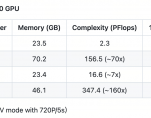
On the A800 GPU benchmark, Kairos 3.0-4B’s inference speed surpasses NVIDIA Cosmos 2.5 by 72 times, setting a new global performance record for embodied world models. This performance is delivered with a lightweight footprint of just 4B parameters and 23.5GB of VRAM — a fraction of Cosmos 2.5’s 70.2GB requirement — demonstrating that efficiency and capability need not be in tension and fundamentally challenging the assumption that larger parameters are a prerequisite for superior performance. The model has also achieved top rankings across three authoritative global benchmarks: PAI-Bench-robot, co-developed by Georgia Tech and CMU; WorldModelBench-robot TI2V, introduced at CVPR 2025; and NVIDIA GEAR Lab’s DreamGen Bench, outperforming all evaluated models on physical consistency and instruction-following metrics.
In A800 GPU benchmarks, Kairos 3.0-4B achieves order-of-magnitude breakthroughs in compute efficiency and inference speed
Supporting seamless cross-embodiment deployment across single-arm, dual-arm, and dexterous hand configurations with no additional per-embodiment training required, Kairos 3.0-4B is compatible with major hardware platforms including Agilex PIPER, Unitree G1, and Galaxy G1. Kairos 3.0-4B is now available on Github (https://github.com/kairos-agi/kairos-sensenova) and Hugging Face (https://huggingface.co/kairos-agi/kairos-sensenova-common).
The issuer is solely responsible for the content of this announcement.
About ACE ROBOTICS – Equipping robots with intelligent “brains” and engaging “souls”
ACE ROBOTICS is a pioneering robotics company dedicated to advancing the field of embodied intelligence. Founded by SenseTime co-founder Wang Xiaogang, the company has brought together a team of young, globally scarce AI scientists and industry experts to focus on embodied intelligence. Through breakthrough technological innovations and deep insights into embodied intelligence scenarios, we aim to empower robots with the ability to autonomously understand and explore the physical world, thereby accelerating their commercial implementation.
The company pioneered the ACE R&D paradigm and built a vision-based “environmental data engine, real-world cognition, embodied interaction generalization” technology chain. Using full spatiotemporal and multi-perspective environmental capture as its engine, along with Kairos 3.0 – China’s first open-source and commercially applicable world model – plus the Embodied Foundation Model as its technical backbone, ACE ROBOTICS addresses core industry challenges such as data scarcity, common sense gaps, poor generalization, and limited versatility. Simultaneously, the company unveiled its flagship A1 Embodied Super Brain Module, accelerating the large-scale commercial deployment of embodied intelligence across diverse scenarios.
ACE ROBOTICS is both a technology pioneer and an ecosystem builder. Through strategic cooperation with top hardware manufacturers, cloud service providers, and vertical scenario partners, we have broken through the “model-hardware-scenario” industrial deadlock, providing standardized and customized solutions that are driving the development of China’s embodied intelligence industry.
Artificial intelligence is set to reshape the software industry, yet the transformation is unlikely to lead to a sweeping decline in credit ratings across the sector, according to an assessment by S&P Global Ratings that seeks to temper investor concerns about widespread financial stress among software companies. Analysts at the credit ratings agency say the rapid development of AI technologies may alter competitive dynamics and business models […]
Global medical technology manufacturer Stryker has been hit by a major cyberattack claimed by an Iran-linked hacker collective, triggering widespread disruption to corporate systems and raising fresh concerns about cyber warfare spilling into commercial infrastructure. The group, calling itself Handala, said it carried out a destructive operation that wiped data across more than 200,000 company devices while extracting roughly 50 terabytes of information from internal networks. The […]




 https://aeonbank.com.my/
 https://www.linkedin.com/company/aeonbankmy
 https://www.instagram.com/aeonbankmy



 https://x.com/ace_robotics




