Open-source maintainers and software manufacturers are heading towards the European Union’s first Cyber Resilience Act enforcement milestone with deep gaps in awareness, preparedness and legal clarity, after new OpenSSF research found that about two-thirds of practitioners remain unready or unaware of the compliance timetable. The finding has sharpened concern across the software supply chain because the CRA’s vulnerability and incident reporting duties begin on 11 September 2026, […]
Software developers across close to 100 organisations have been targeted by a likely North Korea-linked hacking operation that used fake recruitment and code-review tasks to steal cryptocurrency, browser credentials and wallet data. The campaign, tracked by security researchers as UNK_DeadDrop, unfolded over April and May and reached targets in technology, finance, cryptocurrency, education, business services and other sectors. More than 250 phishing emails were sent during a […]
CPX Holding has unveiled a refreshed brand identity in Abu Dhabi, positioning the G42 company for its next phase of growth as demand rises for AI-led cybersecurity, sovereign digital capability and stronger protection of critical infrastructure across the UAE. The new identity, built around the promise “Secure what’s next”, marks a shift in CPX’s public positioning from conventional cyber defence towards enablement, resilience and intelligence-led security. The […]
Facebook’s creator payment system has become entangled in Alberta’s separatist politics after an investigation identified overseas-run accounts impersonating local activists and publishing content that promoted breaking away from Canada. The accounts presented themselves as voices from inside Alberta’s independence movement, using names, profile images and language designed to appear local. Several were linked to operators outside Canada who appeared to be using divisive political material to attract […]
Arabian Post Staff -Dubai Bahrain-based Investcorp has launched an Artificial Intelligence Investment Framework to guide its investment decisions across private equity, real assets and credit, positioning the technology as a central factor in deal screening, portfolio construction and value creation across its global alternatives platform. The framework, set out in a new report, formalises how the Manama-headquartered firm will assess AI-led opportunities and risks at a time […]
Built for caregivers, Vision One combines intelligent detection, plain-language alerts, and daily summaries to help families know when Mum or Dad needs attention, without constant checking
SINGAPORE / KUALA LUMPUR, MALAYSIA – Media OutReach Newswire – 8 June 2026 – Hello Ello, a Singapore-based AI caregiving technology company has launched ELLO’s Vision One care camera for families in Singapore and Malaysia to help families care for ageing parents at home without relying on constant calls, manual check-ins, or noisy security camera alerts.
Designed for adult children balancing work, family, and caregiving responsibilities, ELLO combines the Vision One 3K WiFi Camera with the ELLO App to detect critical events such as falls, fainting, wandering, smoke, and signs of distress, sending caregivers a clear, plain-language alert within 60 seconds when something needs attention. Its Daily Summary feature also gives families a simple overview of their loved one’s day, helping them stay connected while preserving a calmer, less intrusive approach to home care.
“Most families do not need another camera that creates more work for them. They need something that understands when something is wrong and tells them clearly, so they can act,” said Ivan Mun, Founder of Hello Ello. “With ELLO, we wanted to build care technology that works quietly in the background, respects the dignity of ageing parents, and gives families the reassurance that someone is always paying attention to what matters.”
Vision One is built around the realities of care at home. The camera offers 3K clarity, a 135-degree wide view, night vision, two-way talk, and context-aware alerts that distinguish between motion and meaning. Through the ELLO App, families can receive alerts for falls, fainting, wandering, smoke, and distress detection, as well as a short daily summary every evening to understand how their loved one’s day went.
For many families, this demographic shift is already being felt at home. Adult children are increasingly balancing work, parenting, and the responsibility of checking in on ageing parents, especially those who live alone, live with a helper, or require support due to memory loss, frailty, or changing routines. Hello Ello’s core users are not necessarily the elderly themselves, but the “sandwich generation” of caregivers, particularly those in their 40s to 60s who are caring for parents in their 80s and 90s while also managing their own families.
Unlike regular security cameras that record footage and require users to review what happened after the fact, ELLO is designed to watch for caregivers. It learns daily routines, identifies unusual activity, and alerts families only when something appears wrong. Through the app, caregivers can receive critical event notifications, check live streams, review key moments, and ask plain-language questions such as “Where’s Dad?” or “Has Mum been up today?” without having to scroll through hours of video footage.
The need for this is especially clear in homes where traditional monitoring tools fall short. Wearables require seniors to remember to charge or wear them, while emergency buttons only work if the person is able to press them. ELLO removes that burden by working quietly in the background, with no bracelet, button, or watch required.
Privacy and dignity are also central to the product. According to Hello Ello, only invited family members or caregivers can access alerts and daily summaries, and users can choose between cloud storage or local microSD storage. The company also states that it does not sell user data, share it with advertisers, or use what happens inside a parent’s home to train other AI models.
“Ageing at home should not mean families are left to worry in silence, and care should not feel like surveillance,” added Ivan. “The goal is not to watch parents all day. The goal is to help families know when to step in, while allowing Mum or Dad to continue living with independence and dignity.”
Vision One is priced at SGD$89 for the camera, with the ELLO Family plan at S$29.90 per month. The plan includes fall and faint detection, wandering alerts, smoke detection, distress detection, Daily Summary, family sharing, Ask ELLO conversational AI, 30-day cloud storage, one detection zone, and support for up to three cameras. The first month is free, with no contract or lock-in.
Hashtag: #HelloEllo
The issuer is solely responsible for the content of this announcement.
About Hello Ello
Hello Ello is a Singapore-based AI caregiving technology company founded by Ivan Mun. Its flagship care solution, ELLO, combines the Vision One 3K WiFi Camera with the ELLO App to help families look after ageing parents at home. Designed for caregivers, ELLO detects critical events such as falls, fainting, wandering, smoke, and signs of distress, while providing plain-language alerts, daily summaries, family sharing, and conversational AI support through the app. Hello Ello is built around a simple belief: care technology should provide clarity and reassurance without adding noise, anxiety, or unnecessary complexity to family life. For more information please visit: https://www.helloello.co/
Microsoft has warned that Anthropic’s Claude Code GitHub Action could expose CI/CD workflow secrets when AI agents process untrusted GitHub content, raising fresh concerns over how autonomous coding tools operate inside software delivery pipelines. The issue centres on the way Claude Code Action handled file-reading capabilities inside GitHub Actions runners. While subprocess paths such as Bash were subject to environment scrubbing and sandboxing controls, the agent’s Read […]
Britain is preparing to use public procurement to support domestic artificial intelligence chipmakers, offering to buy semiconductor equipment from UK-based technology companies as ministers seek to stop promising hardware firms from shifting capital, talent and production plans overseas. Technology Secretary Liz Kendall is expected to outline the plan at London Tech Week, where the government will position strategic purchases as part of a broader effort to give […]
Google’s AI texting assistant is moving ordinary phone messages closer to machine-assisted conversation, offering Android users suggested replies and tone changes while intensifying scrutiny over privacy, consent and whether digital communication is becoming less human. Magic Compose, built into Google Messages, uses Gemini technology to suggest replies, start conversations and rewrite drafts in styles ranging from formal to casual. On supported Android devices using AICore, the message-suggestion […]
Thousands of Central Board of Secondary Education Class 12 students have pressed for grace marks and a waiver of post-result fees after complaints of evaluation errors, portal glitches and delayed access to answer sheets placed their college admissions under fresh strain.
The demand has gathered pace across student networks, parent groups and coaching circles after candidates reported unusually low marks, unchecked answers, blurred scanned copies, payment failures and difficulty accessing the board’s post-result services. Many students say the burden of paying for verification and re-evaluation should not fall on candidates if the discrepancies arose within the evaluation system.
The dispute is centred on the board’s On-Screen Marking system, introduced for Class 12 answer books in the 2026 main examinations. CBSE has described the system as a technology-led reform intended to improve standardisation, accuracy, confidentiality and speed in evaluation. Students and parents, however, argue that the transition has exposed gaps in implementation at a time when even small changes in marks can affect eligibility, merit lists, counselling and scholarship decisions.
By June 5, CBSE had received more than 60,000 applications for verification and re-evaluation from Class 12 students across the country. The volume of requests has underlined the scale of unease after the declaration of results, particularly among students applying for engineering, medicine, commerce programmes and overseas universities, where documentation deadlines can be tight.
CBSE reduced the cost of post-result services after concerns were raised over access and affordability. The fee for obtaining a scanned copy of an evaluated answer book was cut from ₹700 to ₹100. The verification fee was lowered from ₹500 to ₹100, while the re-evaluation charge was reduced from ₹100 to ₹25 per question. The board has also said the fee will be refunded if marks increase after re-evaluation.
Students seeking redress must first obtain their scanned answer sheets before applying for verification or re-evaluation in the relevant subject. Applications are being handled through the official post-result portal, with Aadhaar-based verification added for security. CBSE has said answer sheets are available in candidate accounts and may also be sent to registered email addresses.
The fee reduction has not ended the dispute. Students argue that a refund after marks increase does not address the wider issue of upfront cost, uncertainty and loss of admission time. Families applying in multiple subjects may still have to pay for several stages of the process, while those waiting for revised marks risk missing cut-off dates at universities and professional institutions.
Technical concerns have widened the controversy beyond marks alone. CBSE acknowledged vulnerabilities linked to a portal used for scanned answer sheets after claims that answer booklets and examination papers had been exposed through an unsecured cloud storage route. The board said cybersecurity professionals from government agencies and IITs were being deployed to strengthen digital assets and move systems to a safer infrastructure.
The episode has also triggered questions about the service provider handling the digital evaluation process. Coempt Edutek Private Limited, a Hyderabad-based company associated with the On-Screen Marking framework, has come under scrutiny as students, parents and political figures call for greater transparency in the tendering, scanning, storage and review process. CBSE has maintained that the digital system includes quality checks and is meant to make evaluation more consistent.
Admission-related pressure has sharpened the demand for swift relief. Engineering aspirants are especially concerned because Class 12 marks remain relevant for eligibility in several routes. IIT Roorkee, which is handling JEE Advanced admissions, has allowed candidates below the 75 per cent Class 12 threshold to participate in the seat allocation process, provided they submit a revised qualifying scorecard by July 15 if their marks change after re-evaluation.
Parents’ associations have sought a one-time package covering grace marks for affected students, fee waiver for post-result services and flexibility in admission documentation deadlines. Teachers and education consultants have urged CBSE to publish clearer data on how many answer sheets are revised after verification and re-evaluation, arguing that transparency would help restore confidence in the system.
Attackers are increasingly abusing legitimate system utilities and widely used administrative tools to deliver malware, move through networks and avoid detection, forcing security teams to rethink defences built mainly around blocking suspicious files. The tactic, commonly described as “living off the land”, relies on trusted tools already present inside corporate environments. PowerShell, Windows Management Instrumentation, certutil, mshta, rundll32, regsvr32, scheduled tasks, remote monitoring software and JavaScript execution […]
Arabian Post Staff -Dubai KPMG and Anthropic have launched a global alliance that will embed Claude artificial intelligence tools into KPMG’s client delivery platforms, opening new capabilities for companies and public-sector organisations in Qatar as the Gulf state accelerates investment in AI infrastructure, digital government and data-led transformation. The partnership gives KPMG’s global workforce access to Anthropic’s Claude suite and integrates the technology into KPMG Digital Gateway, […]
Ubiquiti has patched a chain of critical UniFi OS Server vulnerabilities that could allow an unauthenticated attacker with network access to execute commands with root privileges on exposed systems, raising concerns for organisations that use UniFi consoles as central management points for networks, cameras, access controls and identity services. The flaws, disclosed on 21 May 2026 and updated a day later under Security Advisory Bulletin 064, are […]
Square Enix has confirmed Final Fantasy VII Revelation as the closing chapter of its remake trilogy, setting a spring 2027 launch across PlayStation 5, Nintendo Switch 2, Xbox Series X|S and PC on the same day. The announcement marks a major shift for one of the company’s most important franchises. Earlier entries in the remake project arrived first on PlayStation before expanding to PC and other consoles, […]
A serious flaw in Hugging Face’s Transformers library has widened concern over the security of model-sharing ecosystems after researchers showed that a poisoned model configuration could trigger remote code execution during a routine load operation. Tracked as CVE-2026-4372, the vulnerability affects Transformers versions before 5.3.0 and centres on the handling of the attnimplementationinternal field inside a model’s config. json file. Security researchers found that an attacker could […]
Bitcoin slipped below $60,000, extending a sharp retreat that has weakened confidence among bulls and underscored a broader shift in speculative capital towards artificial intelligence-linked equities, large technology listings and parts of the gold trade. The world’s largest cryptocurrency touched its weakest level since October 2024 after failing to hold support around $65,000, a level traders had treated as critical following last month’s attempted recovery. The latest […]
TAIPEI, TAIWAN – Media OutReach Newswire – 5 June 2026 – The global demand for AI computing power continues to experience a massive construction boom. At the highly anticipated exhibition COMPUTEX 2026 in Taipei, Karrie, a globally leading server mechanical engineering solutions provider, showcased its latest advancements in AI server chassis and rack-scale mechanical solutions. Observing the latest dynamics from the recently concluded NVIDIA GTC 2026 conference to this year’s COMPUTEX, it is evident that AI hardware infrastructure is rapidly evolving from the server level to rack-scale deployment, placing higher demands on high-density mechanical design, modular configuration, and liquid-cooling readiness. Driven by this evolution, Karrie has expanded its footprint from traditional server chassis manufacturing into the global AI hardware ecosystem, encompassing early engineering involvement, precision mechanical component development, and volume manufacturing execution.
Since its official inclusion in NVIDIA’s approved and recommended vendor lists for server chassis and rack components in September 2025, Karrie has continually advanced its collaborations based on the NVIDIA MGX architecture and DGX-related platforms. During COMPUTEX this year, Karrie’s relevant server products and mechanical solutions have been featured prominently across the booths of major technology giants, showcasing its milestone achievements spanning from front-end R&D and collaborative design to back-end precision manufacturing. As highlighted by Karrie’s official statement during the exhibition: “We are proud to support NVIDIA MGX™ and be part of the ecosystem shaping the next generation of AI factories.”
Mechanical Technology Upgrade: Transitioning from Traditional Chassis to Full-Scale AI Mechanical Integration to Accelerate Hardware Deployment
As the industry undergoes this generational technological shift, mechanical engineering has become a critical part of system readiness. Behind every advanced AI computing platform is a robust, precise, and production-ready mechanical foundation—from rack-level structures and server chassis to key brackets, frames, and other precision assemblies that support system integration, serviceability, and large-scale deployment.
Leveraging decades of experience in server chassis, precision metal and plastic components, tooling development, automation, and high-volume manufacturing, Karrie consistently turns complex AI server and rack-level requirements into practical, production-ready, and deployment-flexible mechanical solutions. These capabilities support customers in accelerating their infrastructure rollouts based on the NVIDIA MGX architecture and the next-generation NVIDIA Vera Rubin platform.
Deeply Aligned with the Core Supply Chain: Early Engineering Involvement Empowers Tech Leaders Toward Volume Deployment
At COMPUTEX 2026, in addition to NVIDIA, multiple system integrators and ODM partners also showcased Karrie’s 1U, 2U, and 6U series AI chassis and rack-related products developed based on the MGX architecture. This extensive display fully demonstrates Karrie’s executive capability in delivering comprehensive engineering solutions and rapid prototyping, solidifying its position as a highly engaged mechanical engineering partner in the global AI supply chain.
Strategic Positioning for the Future of Intelligent Computing: Serving as a Trusted Mechanical Partner to Build the Physical Foundation for Accelerated Computing
As AI factories continue to scale worldwide, Karrie is committed to serving as a trusted mechanical engineering strategic partner for global technology leaders. The Group will continue to deepen its collaboration with world-class chipmakers, server brands, and cloud service providers to build the ultimate physical foundation for the accelerated computing ecosystem.
Karrie — A Leading Mechanical Partner for Global AI Computing Infrastructure.
The issuer is solely responsible for the content of this announcement.
Karrie International Holdings Limited
Established in 1980 and listed on the Stock Exchange of Hong Kong in 1996, Karrie International Holdings Limited (1050.HK) is a leading global provider of server mechanical engineering solutions. The Group specializes in server chassis, rack-scale mechanical components, and related precision metal and plastic parts. It delivers fully integrated, one-stop solutions, encompassing engineering design, rapid prototyping, tooling manufacturing, automated production, assembly, quality validation, and global delivery, to world-leading technology brands, server customers, and cloud service providers.
As AI servers and data center infrastructure accelerate their development, server mechanical components are evolving toward higher precision, enhanced reliability, and more complex rack-scale systems. Leveraging over four decades of manufacturing expertise, strong vertical integration capabilities, and a dual-production footprint in China and Thailand, Karrie continuously participates in the development of next-generation AI server platforms and rack-level solutions, providing global customers with scalable, agile, high-quality, and supply-chain-resilient manufacturing support.
Synology used COMPUTEX 2026 in Taipei to set out a wider enterprise data strategy built around the next generation of DiskStation Manager, AI-assisted administration, expanded backup appliances and a larger surveillance and private cloud portfolio, positioning the company more directly in the market for secure, on-premises data intelligence. The showcase, held at Taipei Nangang Exhibition Centre from June 2 to 5, placed DSM at the centre of […]
Washington has moved to close a sensitive gap in its China technology controls after Trump administration officials concluded that overseas units of Chinese companies may have been able to buy Nvidia’s most advanced artificial intelligence chips without the export licences required for direct shipments to China. The Commerce Department’s Bureau of Industry and Security issued guidance on 31 May clarifying that licence requirements for advanced computing items […]
Microsoft Edge users have been urged to update their browsers after three security flaws tied to the Pwn2Own hacking contest were publicly detailed, including one vulnerability that could allow remote attackers to execute arbitrary code if a target opens a malicious page or file. The vulnerabilities, tracked as CVE-2026-45492, CVE-2026-45494 and CVE-2026-45495, affect Chromium-based Microsoft Edge and were credited to Orange Tsai of DEVCORE Research Team, one […]
Cybersecurity teams are warning that VECT 2.0, a ransomware strain promoted as a recovery-for-payment tool, can leave victims with files that even its operators may be unable to restore, widening concern over a campaign that behaves closer to a destructive wiper than conventional extortion malware. The latest technical findings show that VECT 2.0 suffers from multiple encryption and file-handling flaws, including a failure to preserve critical nonce […]
Asia and MENA’s video games market is on course to expand from $88.9 billion in 2025 to $103.6 billion by 2030, a 16.5% rise that underlines the region’s growing weight in the global games industry as publishers, platforms and investors look beyond slower mature markets for new growth. The latest market model points to revenue growth of 3.4% in 2026 to $91.8 billion, with the five-year compound […]
A China-linked cyber-espionage group tracked as VerdantBamboo has been tied to a BRICKSTORM malware operation targeting Linux-based virtual appliances, firewalls and enterprise infrastructure, sharpening concerns over the security of systems that often sit outside mainstream endpoint monitoring. The activity came to light after suspicious traffic was detected from a Linux-based virtual machine appliance during an incident response investigation. The inquiry found that attackers had used stolen administrative […]
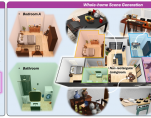
Kairos-HomeWorld is purpose built for embodied intelligence and represents the first unified framework capable of generating a complete, fully interactive home environment from a single text prompt. Extending indoor scene generation beyond individual rooms, it enables whole-home simulation in which every object is fully manipulable within an integrated simulation engine.
Kairos-HomeWorld employs a four-stage hierarchical architecture encompassing floorplan generation, 2D-to-3D lifting, recursive refinement, and manipulable object placement. This approach enables the production of globally coherent, physically accurate, and simulation-ready scenes. Each environment contains more than 15 manipulable objects and achieves a Footprint Object Density of 4.16, the highest among compared methods.
The accompanying open-source dataset is purpose-built for Chinese households, pairing 300,000 real residential floor plans with 5,000 fully furnished, simulation-ready homes and 50,000 physics-enabled interactive object assets. Already deployed in ACE ROBOTICS’ daily robot training, it significantly accelerates the simulation-to-reality transfer cycle.
SHANGHAI, CHINA – Media OutReach Newswire – 5 June 2026 – ACE ROBOTICS, in collaboration with the Multimedia Laboratory at The Chinese University of Hong Kong (CUHK) and Shenzhen Loop Area Institute, today announced the open-source release of Kairos-HomeWorld, the industry’s first unified World Model framework capable of generating full home-scale, object-level interactive 3D environments from a single text prompt. The solution addresses longstanding limitations in indoor scene generation, which has typically been restricted to single-room outputs with weak global consistency and limited interactivity. Kairos-HomeWorld overcomes these constraints by delivering structurally coherent, physically plausible, and functionally complete residential environments. These high-fidelity, large-scale simulations provide a robust foundation for advancing embodied intelligence applications and accelerating real-world robot training.
The long-term vision for embodied intelligence is the home environment. However, residential settings are inherently diverse and highly personalized, requiring robots to be trained across a broad range of realistic and differentiated scenarios before they can reliably operate in even a single household. High-fidelity simulation offers the most practical pathway to achieving this at scale, yet existing approaches typically involve a trade-off: synthetic environments lack realism, while scanned real-world scenes offer limited interactivity. Kairos-HomeWorld, together with its accompanying dataset, is designed to bridge this gap, delivering both realistic and interactive environments within a unified framework.
A four-stage architecture for whole-home, object-level generation Conventional approaches to indoor scene generation remain constrained to single-room outputs, often exhibiting weak global consistency, frequent physical inaccuracies, and limited or no interactivity. Kairos-HomeWorld takes a fundamentally different approach. It decomposes whole-home generation into a structured, four-stage process, redefining the underlying architectural paradigm from the ground up.
Stage 1 — Floor Plan Generation. A K-D tree-based approach translates real-world floor plans into a hierarchical text representation that can be efficiently processed by large language models (LLMs). This method mitigates common issues in conventional layout generation, including room overlaps and fragmented topologies, resulting in more coherent and structurally consistent spatial configurations.
Stage 2 — 2D-to-3D Lifting & Furniture Layout Generation. A “top-down global initialization combined with a first-person detail walkthrough” approach anchors the process to the 3D building shell generated in Stage 1. This methodology mitigates the geometric drift commonly associated with conventional 2D-to-3D lifting techniques, enabling more stable and spatially consistent scene generation.
Stage 3 — Recursive Refinement. A fine-tuned vision-language model performs iterative validation and correction, automatically identifying and resolving physical inconsistencies, such as obstructed doorways or object collisions. This recursive process materially reduces spatial errors, achieving among the lowest reported furniture-collision rates in the industry.
Stage 4 — Manipulable Object Placement. A surface-centric placement algorithm assigns each object detailed physical properties, including material composition, density, friction, and structural support relationships. Each generated scene incorporates an average of more than 15 manipulable objects and achieves a Footprint Object Density (FOD) of 4.16, a metric reflecting the concentration of items across furniture surfaces. All objects are natively compatible with simulation engines, enabling direct interaction for tasks such as grasping, movement, and stacking.
The resulting environments move beyond “viewable but not actionable” outputs. Their coherent spatial structure enables seamless, continuous navigation across multiple rooms, while objects embedded with realistic physical properties allow robots to simulate complex household tasks end-to-end. Taken together, this approach addresses key limitations in existing data pipelines, resolving the scarcity of high-quality 3D simulation data, the lack of realism in synthetic environments, and the limited interactivity of scanned scenes within a single unified framework.
The dataset: 300,000 real floor plans, 5,000 fully interactive homes, built for Chinese households ACE ROBOTICS and CUHK are open-sourcing a dataset of 300,000 structurally annotated residential floor plans, sourced from real-world listings and processed through a multi-stage automated pipeline. The pipeline vectorizes and labels key spatial elements, including door and window positions, room geometry, functional zoning, and connectivity. By comparison, widely used benchmarks such as RPLAN and ResPlan contain approximately 80,000 and 17,000 floor plans, respectively, underscoring the scale and comprehensiveness of the Kairos-HomeWorld dataset.
Building on this foundation, the dataset also includes 5,000 fully furnished residential environments, each featuring a complete furniture layout and an average of more than 15 physics-enabled, manipulable objects, powered by the PhysX-Omni model. All assets are sim-ready and can be directly imported into a simulation engine, enabling immediate use in interactive training scenarios.
Most existing open indoor-scene datasets are centered on North American and European residential formats, typically featuring open-plan kitchens, the absence of service balconies, and layouts and design elements that capture only a narrow segment of global housing. As a result, robots trained on these datasets often exhibit limited transferability when deployed in environments outside their scope. Kairos-HomeWorld ‘s dataset is purpose-built for Chinese households, with deliberate coverage of historically under-represented housing typologies. It spans a wide range of unit sizes, from approximately 30 m² (around 320 sq ft) studio apartments to residences exceeding 200 m² (approximately 2,150 sq ft). The dataset accurately reflects key architectural features common in these settings, including north-south cross-ventilated layouts, enclosed kitchens, dedicated service balconies, wet-and-dry-separated bathrooms, and entryway storage, as well as the irregular room configurations often found in older housing stock.
The dataset is being openly released to both academic and industry communities. Going forward, the team plans to expand its scope to include additional regions, interior styles, and interaction scenarios, further lowering barriers to real-world-ready training for embodied intelligence.
See it in action: one prompt to a fully interactive home Kairos-HomeWorld runs the full end-to-end pipeline, from initial text input to a fully interactive home environment, delivering global spatial consistency, physical realism, and seamless interactivity from a single prompt.
The system begins with a single-line prompt: “Generate a 90 m² (approximately 970 sq ft) two-bedroom apartment in neo-Chinese style.” Leveraging real floor plan data and its K-D tree representation, Kairos-HomeWorld first constructs an empty spatial layout aligned with real-world living patterns, incorporating cross-ventilation and well-defined functional zoning. Building on this foundation, a hierarchical “global layout plus first-person detail” approach furnishes the environment with stylistic coherence, while a PhysX-Omni rendering pass assigns full physical properties to all surfaces and objects, including articulated behavior, ensuring the scene is fully interactive and sim-ready.
A single natural-language instruction, “tidy the whole home”, is decomposed by the robot into a variety of discrete sub-tasks, executed sequentially along a complete navigation path spanning the living room, bedrooms, kitchen, bathroom, and dining area. The robot recognizes objects, plans efficient routes, and performs precise manipulation tasks, including articulated-object interactions for opening refrigerator and cabinet doors, fluid interactions for pouring laundry detergent, soft-body interactions for drawing curtains, irregular-object interactions for grasping apples, and gravity-based physical interactions for placing snacks.
Conventional simulation environments typically support navigation-focused training in isolation. By contrast, Kairos-HomeWorld integrates globally consistent spatial structures with objects that embody realistic physical properties. This enables robots to interact naturally with more than 15 object types, accurately modeling real-world dynamics such as collision, gravity, and friction, and to rehearse the full lifecycle of complex household tasks entirely within a virtual environment.
Across the industry, the same structural bottleneck, the scarcity of home-scale training data, is being addressed through multiple approaches. For example, Figure AI’s collaboration with Brookfield focuses on collecting human activity data across more than 100,000 residential units. Kairos-HomeWorld addresses this challenge through on-demand synthetic generation, delivering scalable training environments enhanced with object-level physical realism, capabilities that real-world data capture alone cannot fully provide.
In contrast, Kairos-HomeWorld delivers significantly lower costs and higher efficiency for household robot training. Powered by its world model, it can programmatically generate diverse Chinese home simulation scenes and physics-enabled interactive objects at scale.
Robots can complete a full range of household tasks training entirely within the virtual environment. New scene generation incurs near-zero marginal cost, eliminating substantial real-world testing expenses such as site operation and maintenance and furniture damage. Meanwhile, unconstrained by the limited stock of physical residential properties, it outperforms real-world data collection approaches in both training efficiency and scalable expansion.
Kairos-HomeWorld is already deployed in ACE ROBOTICS’ embodied intelligence training workflows, enabling full-pipeline simulation of long-horizon household tasks, including cross-room navigation and multi-room tidying. By allowing robots to rehearse complete task sequences in a virtual environment, the platform significantly shortens the simulation-to-reality transfer cycle. This approach lowers barriers to developing embodied intelligence systems and supports the accelerated, large-scale deployment of home robotics, particularly within the Chinese market. Kairos-HomeWorld is now available on GitHub.Hashtag: #ACEROBOTICS
The issuer is solely responsible for the content of this announcement.
About ACE ROBOTICS
Equipping robots with intelligent “brains” and engaging “souls”.
ACE ROBOTICS is a pioneering robotics company dedicated to advancing the field of embodied intelligence. Through breakthrough technological innovations and deep insights into embodied intelligence scenarios, we aim to empower robots with the ability to autonomously understand and explore the physical world, thereby accelerating their commercial implementation.
The company pioneered the ACE R&D paradigm and built a vision-based “environmental data engine, real-world cognition, embodied interaction generalization” technology chain. Using full spatiotemporal and multi-perspective environmental capture as its engine, along with Kairos 3.0 – China’s first open-source and commercially applicable world model – plus the Embodied Foundation Model as its technical backbone, ACE ROBOTICS addresses core industry challenges such as data scarcity, common sense gaps, poor generalization, and limited versatility. Simultaneously, the company unveiled its flagship A1 Embodied Super Brain Module, accelerating the large-scale commercial deployment of embodied intelligence across diverse scenarios.
ACE ROBOTICS is both a technology pioneer and an ecosystem builder. Through strategic cooperation with top hardware manufacturers, cloud service providers, and vertical scenario partners, we have broken through the “model-hardware-scenario” industrial deadlock, providing standardized and customized solutions that are driving the development of China’s embodied intelligence industry.




 https://www.helloello.co/


 https://www.linkedin.com/company/karrie-industrial-co–ltd-/
 https://www.youtube.com/@karrieinternational8734