Brookfield Asset Management is preparing to launch a cloud computing business called Radiant that will lease artificial intelligence chips directly to developers, underpinned by a newly formed $10 billion AI fund as part of its broader strategy to build an integrated AI infrastructure platform. Radiant’s model aims to control key inputs in the AI value chain from land and power to compute, offering an alternative to conventional cloud […]
Arabian Post Staff -Dubai Samsung Electronics has lifted the curtain on the Freestyle Plus, a new generation of its portable projector range that pushes further into artificial intelligence-driven home entertainment. Revealed ahead of the CES 2026 technology show in Las Vegas, the device signals Samsung’s intent to blend mobility with smarter software, at a time when consumer electronics firms are racing to embed AI across everyday products. […]
A compact, gaming-themed building set priced at $20 has become the latest expression of Lego’s strategy to blend nostalgia with accessibility, as the company rolls out a new Creator 3-in-1 Retro Gaming Console aimed at younger builders and adult collectors alike. The 268-piece kit, released at the start of January, reflects Lego’s effort to tap into enduring affection for early video-game hardware while keeping the price point […]
Arabian Post Staff -Dubai Google’s Pixel smartphone line is set for a marked transition in 2026 as its camera system moves beyond image capture to function as an always-on AI sensing hub, according to multiple industry briefings, developer disclosures and patent filings tied to the company’s mobile roadmap. The shift centres on deeper integration of Google Lens with on-device artificial intelligence, turning the camera into a primary […]
Careto, the elusive cyber espionage group also known as “The Mask”, has resurfaced after nearly a decade of silence, deploying a new generation of attack techniques that signal a marked evolution in its operational capability and strategic intent. The renewed activity, disclosed by cybersecurity researchers during an international security conference in October, marks the first confirmed evidence of Careto-linked operations since early 2014, when the group […]
Global equity funds attracted sizeable inflows in the final week of 2025, reflecting sustained investor confidence as artificial intelligence-driven gains and expectations of resilient corporate earnings buoyed risk appetite across major markets. Fund flow data compiled from multiple tracking agencies showed investors adding billions of dollars to equity-focused vehicles, extending a trend that had strengthened through the closing quarter of the year.
The late-year surge followed a period of steady gains in global stock indices, underpinned by enthusiasm around productivity improvements linked to AI adoption and comparatively stable macroeconomic conditions in several advanced economies. Technology-heavy markets led the inflows, with North America and parts of Asia drawing particular interest, while Europe also registered net additions after earlier bouts of volatility tied to growth concerns.
Market participants pointed to a recalibration of expectations around monetary policy as another driver. With major central banks signalling that the peak of the tightening cycle had passed, investors appeared more willing to increase exposure to equities, especially companies positioned to benefit from automation, data analytics and cloud computing. Portfolio managers noted that the narrative around AI had broadened beyond a narrow group of mega-cap technology firms, supporting inflows into diversified equity funds rather than only thematic products.
Corporate earnings guidance also played a role in shaping sentiment. As the reporting season unfolded, many large firms indicated that margins were holding up better than feared, aided by cost discipline and selective price increases. While earnings growth varied by sector, analysts highlighted that consensus forecasts for the coming quarters stabilised after repeated downgrades earlier in the year, giving investors greater confidence to deploy capital before year-end.
Flows into emerging market equity funds showed a more nuanced picture. Some regions benefited from improving external balances and easing inflation pressures, which encouraged selective inflows, while others continued to see outflows amid currency volatility and geopolitical uncertainty. Asset managers said global investors remained discriminating, favouring markets with credible policy frameworks and exposure to global technology supply chains.
Bond funds, by contrast, recorded more modest movements during the same period, with some investors reallocating from fixed income to equities as yields plateaued. Mixed flows into money market funds suggested that cash levels remained elevated, reflecting a degree of caution even as equity allocations rose. This balance underscored what strategists described as a “measured optimism” rather than an unqualified risk-on shift.
Industry data indicated that passive equity funds and exchange-traded funds accounted for a significant share of the inflows, highlighting the continued appeal of low-cost vehicles tracking broad indices. Active equity funds also saw net subscriptions, particularly those with mandates focused on innovation, healthcare and industrial automation, sectors viewed as long-term beneficiaries of technological change.
Regional allocation patterns revealed that United States-focused funds captured the largest share of new money, supported by strong performance in technology and communication services stocks. Asia-Pacific equity funds followed, aided by signs of recovery in key economies and policy measures aimed at supporting growth. European equity funds experienced steadier, though smaller, inflows as investors weighed valuation appeal against ongoing structural challenges.
Market analysts cautioned that the momentum seen at the end of the year did not eliminate underlying risks. Valuations in some AI-linked stocks were described as demanding, leaving markets vulnerable to corrections if earnings failed to meet elevated expectations. Geopolitical tensions, trade policy uncertainty and uneven global growth were also cited as factors that could test investor confidence in the months ahead.
European Space Agency officials are assessing the impact of another cyber intrusion after a criminal group claimed it is offering around 200 gigabytes of agency data for sale on underground forums, raising fresh questions about the resilience of public-sector space infrastructure to sustained digital threats. The alleged breach, disclosed by the attackers through dark-web postings and shared among cybersecurity monitoring firms, is described as involving internal […]
Abu Dhabi National Energy Company PJSC and Emirates Water and Electricity Company have completed a Dh3.6 billion financing and development agreement for the Al Dhafra Power Plant, marking a significant expansion of dispatchable power capacity aimed at supporting the emirate’s fast-growing data centre sector. The project underlines Abu Dhabi’s strategy of pairing digital infrastructure growth with firm, utility-scale energy assets as demand from artificial intelligence, cloud computing […]
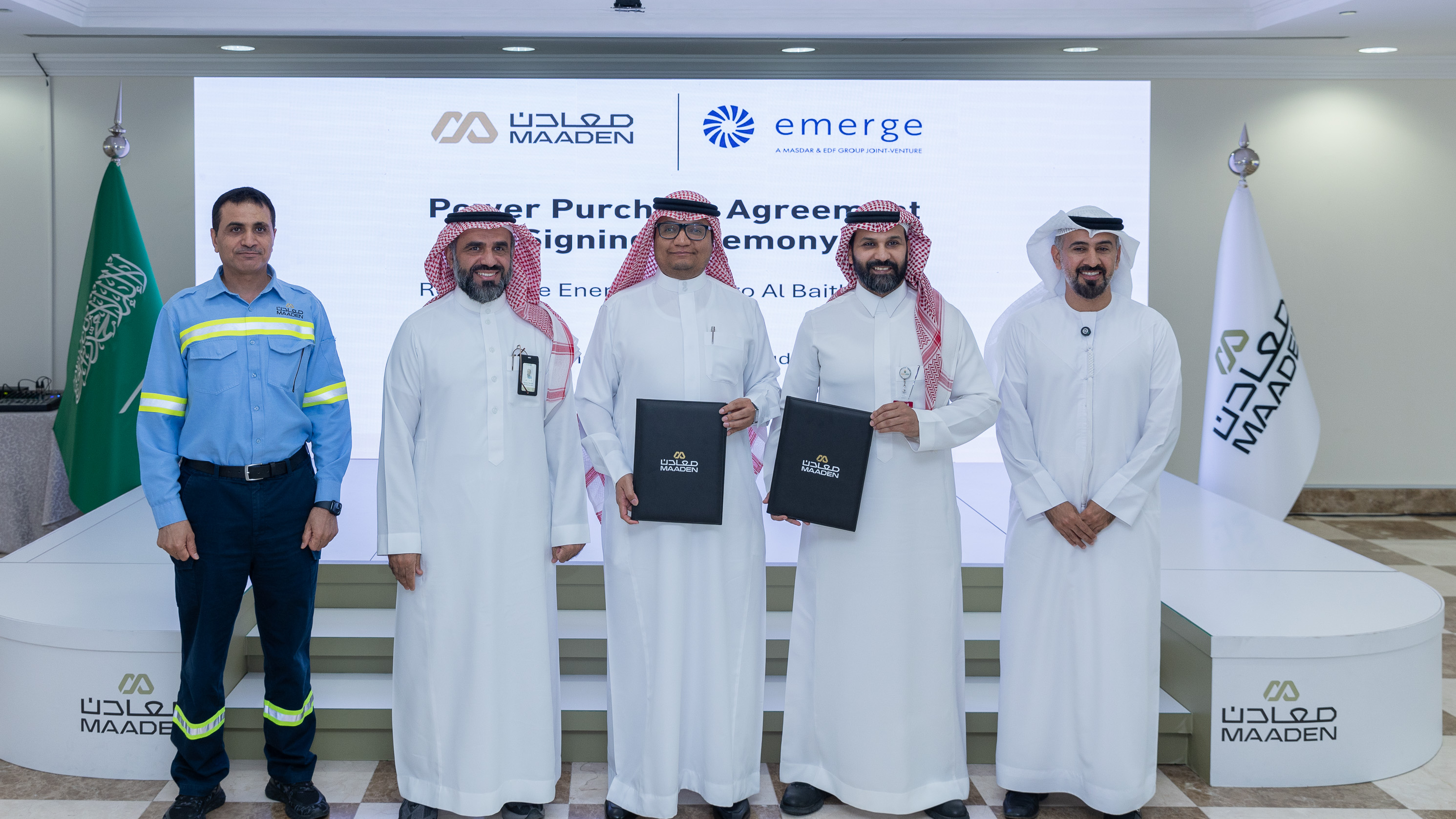
Saudi Arabian Mining Company, widely known as Saudi Arabian Mining Company, has outlined plans to establish a joint venture with Midana Exploration Pay Ltd to advance minerals exploration, development and mining across licensed areas of the kingdom, in a move that underscores the country’s push to expand its non-oil resource base.
Under the proposed structure, the joint venture will be capitalised initially at $5 million, with Maaden holding a controlling 50.1% stake and Hancock owning the remaining 49.9%. The vehicle is expected to focus on early-stage exploration as well as the development and eventual sale of mineral resources identified within approved concession blocks, subject to regulatory clearances.
The announcement comes as Saudi Arabia accelerates efforts to map and commercialise its estimated multi-trillion-dollar mineral endowment, a pillar of the Vision 2030 strategy aimed at diversifying fiscal revenues and building domestic industrial supply chains. Officials and industry executives have repeatedly highlighted underexplored deposits of gold, copper, zinc, phosphate, bauxite and rare earth elements as areas of strategic interest.
Maaden, majority owned by the Public Investment Fund, has over the past decade evolved from a single-commodity operator into a diversified mining champion spanning gold, aluminium, phosphate fertilisers and industrial minerals. The proposed partnership with Hancock signals a renewed emphasis on upstream exploration, an area that demands specialised geological expertise, patient capital and risk-sharing arrangements.
Hancock, through its local exploration arm, has built a portfolio of prospecting licences and geological data across several regions of the kingdom. Industry observers say its familiarity with Saudi Arabia’s licensing framework and field operations complements Maaden’s balance sheet strength, project development experience and access to downstream markets.
According to people familiar with the matter, the joint venture is designed to move swiftly from desktop studies to on-ground surveys, including geophysical mapping and targeted drilling. Any commercial discoveries would then be evaluated for standalone development or integration into Maaden’s existing asset base, depending on scale, mineral type and infrastructure considerations.
The modest initial capital reflects the early-stage nature of the venture, with provisions allowing for additional funding rounds as projects advance. Mining analysts note that exploration budgets often expand sharply once priority targets are identified, particularly for metals linked to energy transition technologies such as copper and battery minerals.
Saudi Arabia has spent heavily on geological surveying over the past few years, releasing high-resolution data to attract private and foreign investors. The Ministry of Industry and Mineral Resources has also reformed the mining law to streamline licensing, strengthen environmental oversight and provide longer concession terms, measures that have been welcomed by global miners.
Within this policy backdrop, Maaden’s majority stake ensures strategic alignment with national priorities while allowing its partner operational flexibility. The 50.1-49.9 split also gives Maaden consolidation rights over any successful projects, a factor likely to reassure lenders and potential offtake partners at later stages.
Market participants see the joint venture as part of a broader trend of collaborative exploration models in the kingdom, where state-backed entities pair with specialised firms to spread risk and accelerate discovery timelines. Similar structures have been adopted in other resource-rich jurisdictions seeking to build domestic mining ecosystems without shouldering all the geological risk alone.
Environmental and social governance considerations are expected to feature prominently as projects move forward. Saudi regulators have tightened requirements around land rehabilitation, water use and community engagement, and Maaden has publicly committed to aligning new developments with international sustainability benchmarks.
BANGKOK, THAILAND – Media OutReach Newswire – 30 December 2025 – An event themed “AI Empowers New-Gen Intelligent Substations” was successfully held in Bangkok where Huawei and Thailand’s Provincial Electricity Authority (PEA) jointly unveiled an innovative next-gen intelligent substation solution, marking a new milestone in the digital and intelligent transformation of Thailand’s power infrastructure.
William Zhang, President of Enterprise Business at Huawei Thailand, stated, “The new power system faces trends such as green energy integration and interactive power consumption. Digitalization and intelligence are key to addressing these challenges. As critical nodes in the grid, substations must be upgraded to enhance overall reliability. The solution we launched with PEA uses optical-visual linkage and AI-based predictive maintenance to enable intelligent inspections and efficient O&M, ensuring substations run safely, reliably, and efficiently.”
Pantong Thinsatit, Assistant Governor for Grid Network Operations at PEA, added, “Digital transformation is essential for high-quality development in the power industry. PEA is accelerating substation intelligence by harnessing innovation to reshape energy services. We’ve deployed intelligent unattended systems in 467 substations, using cutting-edge technology to ensure safe operations. Moving forward, we will push for full automation, eliminate data silos, and integrate smart poles, license plate recognition, battery monitoring, and emergency buttons for rapid, precise responses. This will make intelligent substations central to the energy ecosystem and provide a replicable model for industry-wide digital transformation.”
Traditional substations often struggle with three major issues: limited security monitoring, inefficient and error-prone manual inspections, and outdated cabling that causes high latency and poor stability, restricting multi-service processing and intelligent scheduling. Huawei’s solution tackles these challenges with three core capabilities:
Perimeter Protection—All-Weather Digital Security
Using fiber optic sensing and AI algorithms, the system automatically detects intrusions, links with video surveillance devices, and allows remote verification—shifting from reactive to proactive security with round-the-clock monitoring.
Intelligent Inspection—Innovative Maintenance
Multi-scenario AI inspection algorithms, computer vision models, and cloud-edge collaboration support automatic meter reading and transformer oil leakage warnings, enabling real-time remote management and minute-level fault responses.
Full Connectivity—Comprehensive Sensing Network
Intra-station passive optical networks (PONs) significantly reduce deployment time and costs, forming the power grid’s “nervous system” to deliver reliable, high-speed connectivity for intelligent O&M.
This joint achievement underscores Huawei and PEA’s progress in technological innovation and ecosystem cooperation. Looking ahead, Huawei will continue to work closely with Thai power companies and partners to accelerate the digital and intelligent transformation of the power sector. Hashtag: #Huawei
The issuer is solely responsible for the content of this announcement.
Arabian Post Staff -Dubai Riyadh’s property landscape is being re-engineered at pace as public investment, private capital and planning reforms converge, with a multi-year pipeline spanning transport, data infrastructure and construction altering how the city builds, works and lives. The shift is being underpinned by the acceleration of Vision 2030, which is redirecting demand across offices, homes, retail and hospitality while seeding new growth in AI infrastructure […]
The United Arab Emirates is on course to generate more than one million additional jobs by 2030, placing it among the world’s fastest-expanding labour markets as economic diversification, technology adoption and population growth intensify demand for skilled workers, according to a workforce outlook released by ServiceNow.
The projection underscores the scale of change under way in the UAE’s employment landscape, where public and private sector investment is being channelled into advanced industries, digital services, clean energy, logistics and financial technology. Policymakers have positioned job creation as a central pillar of national economic strategy, linking employment growth to productivity gains, innovation and long-term competitiveness.
ServiceNow’s analysis indicates that the strongest employment momentum is emerging in technology-led roles, particularly in cloud computing, artificial intelligence operations, cybersecurity, data analytics and enterprise software services. Demand is also rising for professionals who can combine technical skills with business process expertise, reflecting the increasing automation of workflows across government entities, banks, energy companies and logistics firms.
This expansion is unfolding alongside steady population growth driven by immigration, as professionals from Asia, Europe and Africa relocate to the UAE for work opportunities. Labour market specialists say the inflow of skilled workers has become an economic asset, helping employers fill gaps in high-value roles while supporting consumption and domestic demand.
Beyond technology, job creation is expected to be broad-based. Construction and real estate continue to absorb labour as infrastructure spending remains strong, while tourism, hospitality and aviation are benefitting from sustained visitor growth and expanding airline capacity. Healthcare and education are also projected to add sizeable numbers of jobs as authorities invest in social infrastructure to support a larger and more diverse population.
The digital transformation of government services has emerged as a significant employment driver. Federal and emirate-level entities are accelerating the shift towards paperless operations, data-driven decision-making and AI-enabled public services. This has increased demand for systems architects, digital policy specialists and programme managers who can oversee complex technology deployments while ensuring regulatory compliance and data security.
Employers are also rethinking workforce structures as automation changes how tasks are performed. Routine administrative roles are increasingly being replaced or augmented by software platforms, while new positions are emerging in system oversight, process design and user experience management. Analysts say this transition is not eliminating jobs at scale but reshaping them, with a premium placed on adaptability and continuous learning.
Education and training institutions are responding by expanding programmes focused on digital skills, coding, data science and cyber resilience. Partnerships between universities, vocational institutes and multinational firms are becoming more common, aimed at aligning curricula with labour market needs. Corporate upskilling initiatives are also gaining traction as employers seek to retrain existing staff rather than rely solely on external hiring.
Wage dynamics are expected to reflect these shifts. Salaries in high-demand technology and specialist roles have been rising faster than the broader market, while competition for experienced professionals has intensified. Human resources consultants note that non-salary benefits, including flexible working arrangements, career progression pathways and residency incentives, are increasingly important in attracting and retaining talent.
The ServiceNow report places the UAE’s projected job growth ahead of many mature economies, where ageing populations and slower productivity gains are constraining employment expansion. By contrast, the UAE’s relatively young workforce, openness to foreign talent and willingness to adopt new technologies are seen as structural advantages.
Challenges remain, particularly around ensuring that job creation keeps pace with population growth and that skills mismatches do not widen. Economists warn that without sustained investment in education and training, shortages could emerge in critical areas, potentially pushing up labour costs and slowing project delivery. There is also a need to integrate more nationals into private-sector roles, a long-standing policy objective supported by wage subsidies, training schemes and regulatory measures.
Security researchers have demonstrated how widely deployed service robots can be commandeered without physical contact, raising concerns about safety, surveillance and supply-chain exposure as robots spread across factories, warehouses and public spaces. The findings were showcased at a major hacking conference in Shanghai, where white-hat teams revealed that certain commercial robots could be hijacked through low-cost attacks using voice commands or short-range wireless links. At the event, […]
Weather conditions across the UAE are set to turn more unsettled on Sunday, with cloud build-up, spells of rain in some areas and dusty winds affecting visibility, according to official forecasts.
The National Centre of Meteorology has said the day is expected to be partly cloudy at times, becoming occasionally overcast as convective clouds develop over eastern and southern parts of the country. These cloud formations may bring rainfall, particularly over mountainous areas, while conditions elsewhere are likely to remain variable through the day.
Forecasters indicated that surface winds will play a key role in shaping conditions. Winds are expected to be light to moderate at times, freshening during the day and occasionally becoming strong, especially in open areas and over the sea. These winds could stir up dust and sand, reducing horizontal visibility and making driving conditions challenging on exposed roads.
Temperatures are forecast to show noticeable contrasts between inland, coastal and mountainous regions. Daytime highs are expected to remain warm across much of the country, though increased cloud cover may moderate peak temperatures in some areas. Cooler conditions are anticipated over higher ground, particularly during the night and early morning, as cloud cover and shifting winds influence local weather patterns.
Humidity levels are also expected to fluctuate, with higher readings forecast overnight and into the morning, especially along coastal and northern areas. Meteorologists have cautioned that this may lead to mist or fog formation in isolated locations, further affecting visibility during early travel hours.
Marine conditions are expected to be unsettled as well. Seas in the Arabian Gulf are forecast to range from moderate to rough at times, particularly as winds strengthen. Conditions in the Sea of Oman are expected to be slight to moderate, though boat operators have been advised to monitor updates as conditions can change quickly with shifting winds and cloud activity.
Aviation authorities and transport officials have urged travellers to stay informed about weather developments, particularly those planning road trips or marine activities. Reduced visibility due to dust and the possibility of rainfall in certain regions may disrupt travel schedules and outdoor plans.
Meteorologists say the developing weather pattern reflects seasonal transitions that often bring increased atmospheric instability. Convective cloud formation typically occurs when surface heating combines with moisture and upper-level disturbances, leading to vertical cloud growth and the possibility of showers. Such systems are often localised, meaning some areas may see rainfall while others remain dry.
Emergency services and municipal authorities have reiterated standard safety advice during periods of unsettled weather. Motorists are urged to slow down during dusty or rainy conditions, maintain safe distances and use headlights when visibility drops. Residents in areas prone to water accumulation are advised to remain cautious if showers develop.
Farmers and outdoor workers have also been advised to plan activities carefully, as sudden changes in wind strength or rainfall could affect working conditions. For coastal communities and fishing operators, sea conditions warrant close attention, particularly during periods when winds strengthen unexpectedly.
The National Centre of Meteorology continues to monitor conditions around the clock using satellite imagery, radar systems and ground-based observations. Officials have emphasised that forecasts are updated regularly as new data becomes available, and residents are encouraged to follow official channels for timely information.
Infleqtion has secured a $2 million contract from the United States Army to develop artificial intelligence systems that can navigate and make decisions in environments where communications are degraded, denied or entirely unavailable, underscoring the military’s accelerating interest in edge-based AI for future operations. The award focuses on advancing autonomous navigation and sensing technologies that can function without constant access to cloud computing or satellite links. For […]
IonQ has confirmed plans to deliver a next-generation 100-qubit quantum computing system to South Korea, reinforcing the company’s push into Asia’s accelerating quantum ecosystem and extending a strategic partnership with the Korea Institute of Science and Technology Information. The deployment is positioned as a milestone for the country’s national research infrastructure, giving scientists and industrial users local access to higher-capacity trapped-ion quantum hardware designed for advanced simulations and algorithm development.
The system is scheduled to be installed at facilities operated by Korea Institute of Science and Technology Information, which manages high-performance computing resources for universities, laboratories and government programmes. IonQ said the platform will integrate with existing supercomputing assets, enabling hybrid classical-quantum workflows that are increasingly seen as the most practical near-term use of quantum machines. Officials involved in the project describe the installation as part of a broader effort to ensure domestic capability in a field viewed as strategically significant for science, security and economic competitiveness.
For IonQ, the agreement deepens a relationship that began with earlier access to its systems through cloud services and collaborative research. The 100-qubit platform represents a step up from earlier machines made available to Asian partners, with IonQ highlighting gains in algorithmic performance driven by longer coherence times and high-fidelity gates inherent to its trapped-ion approach. The company argues that these characteristics allow useful problem sizes to be tackled with fewer physical qubits than some rival architectures.
The project comes as South Korea accelerates state-backed investment in quantum science. Government roadmaps call for expanded talent development, dedicated funding lines for hardware and software, and closer links between public laboratories and industry. KISTI’s role as a national computing hub makes it a focal point for these ambitions, with the new system expected to support work ranging from materials discovery and chemistry to optimisation and machine learning. Researchers anticipate that local access will shorten development cycles compared with reliance on overseas cloud resources.
IonQ executives frame the delivery as part of a long-term regional strategy rather than a one-off sale. Asia has become a key battleground for quantum providers as countries seek sovereign capabilities while remaining connected to global research networks. China, Japan and South Korea are all funding large-scale programmes, and regional universities are increasing output in quantum algorithms and error-mitigation techniques. By embedding hardware within national facilities, vendors aim to secure early loyalty among researchers who may later influence commercial adoption.
Competition in the sector is intensifying. Superconducting-qubit systems from established technology firms and photonic approaches backed by start-ups are all vying for attention, each claiming advantages in scalability or manufacturability. IonQ’s bet on trapped ions prioritises precision and stability, though critics note challenges in scaling to very large numbers of qubits. The company counters that its roadmap focuses on algorithmic qubits and error-corrected performance rather than raw counts, a metric increasingly favoured by parts of the research community.
The South Korean installation also reflects a broader trend toward hybrid computing. Rather than replacing classical supercomputers, quantum systems are being linked to them to tackle specific sub-problems where quantum effects offer potential speed-ups. KISTI engineers are working on software layers to manage job scheduling and data movement between systems, an area seen as critical to extracting value from early quantum machines.
Commercial implications are closely watched. South Korean conglomerates in electronics, chemicals and logistics have signalled interest in quantum applications, and access to domestic hardware could encourage pilot projects. Analysts caution that widespread industrial impact remains some distance away, but note that early experimentation helps firms build expertise ahead of future breakthroughs.
Labour demand across the United Arab Emirates is on course to rise by more than one million roles by the end of the decade, with technology positions accounting for a growing share of new hiring as digital transformation accelerates across government and the private sector. The outlook, drawn from labour market modelling and workforce data cited in a new ServiceNow study, points to sustained growth driven by artificial intelligence adoption, cloud migration, cybersecurity needs and large-scale public investment programmes.
The report estimates that the UAE currently supports about 8.5 million jobs across its economy, of which roughly 169,000 are technology-focused roles. While this represents only a small fraction of total employment, the pace of change is expected to intensify as organisations automate processes, modernise legacy systems and respond to new regulatory and security requirements. Analysts tracking the Gulf labour market say the country’s ambition to position itself as a global hub for digital services, advanced manufacturing and knowledge industries is translating into long-term workforce demand rather than short hiring cycles.
Economic planners have prioritised sectors that combine high productivity with export potential, including financial technology, health technology, clean energy systems, logistics platforms and smart infrastructure. Programmes aligned with national digital strategies are encouraging public bodies and state-linked firms to move services online, adopt AI-enabled decision tools and integrate data across departments. Each of these shifts creates secondary demand for software developers, data engineers, cloud architects and IT service managers, while also reshaping non-technical roles that require digital fluency.
ServiceNow’s analysis suggests that technology roles are expanding faster than overall employment growth, even as traditional sectors such as retail, hospitality and construction continue to add jobs. Employers surveyed for the study reported difficulty filling specialised digital roles, particularly in cybersecurity operations, enterprise platform management and AI workflow design. These shortages are contributing to wage premiums for experienced professionals and increased investment in training pipelines.
Education providers and corporate academies have responded by scaling certification programmes, apprenticeships and mid-career conversion schemes. Universities in the UAE have expanded computer science and engineering intakes, while partnerships with global technology firms aim to align curricula with enterprise needs. Industry observers note that demand is not limited to coders; roles in product management, digital compliance, IT service delivery and change management are growing as organisations seek to embed technology into core operations.
Demographics and migration policy also shape the employment outlook. The UAE’s ability to attract skilled expatriates remains a central factor in meeting talent requirements, particularly for niche technical expertise that takes years to develop. Long-term residency options and sector-specific visas have helped stabilise the workforce, reducing turnover in high-demand roles. At the same time, localisation initiatives encourage employers to invest in training citizens for private-sector technology careers, broadening the domestic talent base.
Beyond pure technology positions, the report highlights a rise in hybrid jobs that combine domain knowledge with digital skills. In banking, compliance specialists increasingly work alongside data analytics teams; in healthcare, clinicians are expected to engage with digital records and AI-assisted diagnostics; in energy and utilities, engineers manage sensor-driven systems and predictive maintenance platforms. This blending of skills expands the effective footprint of the tech workforce beyond headline job titles.
Regional competition for talent is intensifying as neighbouring economies pursue similar diversification strategies. Salaries, quality of life and career progression prospects are key differentiators, according to recruitment firms operating in the Gulf. The UAE’s mature infrastructure, regulatory clarity and concentration of multinational headquarters continue to attract professionals, though employers face pressure to offer flexible working arrangements and clear upskilling pathways.
KUALA LUMPUR, MALAYSIA – Media OutReach Newswire – 24 December 2025 – As Malaysians gear up for multiple financial commitments in the upcoming weeks and months, especially during the year-end holidays, back-to-school and double festive season, AEON Bank (M) Berhad, Malaysia’s first digital Islamic bank, strengthens its commitment to financial inclusion by offering accessible support through its Personal Financing-i (PF-i).
From December 2025 till March 2026, the bustling seasons present convergence of multiple spending needs for many households. Acknowledging that this might raise the need for flexible liquidity, AEON Bank provides a solution to address such budgetary constraints in the form of the PF-i; an inclusive, hassle-free financing facility, easily accessible via its digital banking app.
Optimising a Risk-Based Pricing (RBP) framework to determine a competitive and personalised profit rate, AEON Bank ensures that customers can seamlessly apply for PF-i online, as long as they are Malaysian citizens aged 18 to 55, with a minimum monthly gross income of RM2,500 – be it salaried employees or self-employed individuals, freelancers, as well as gig economy workers.
Aligned with Shariah banking principles, PF-i offers financing facility from RM1,000 up to RM100,000 with flexible tenure options ranging from 3 to 84 months, allowing for repayments tailored to individual budget needs. The Flat Profit Rate starting from 3.88% p.a. and a nominal Wakalah Fee of RM1 is applicable upon acceptance.
The entire process, from the application to fund disbursement are all managed online via the AEON Bank app. This simplifies the process and eliminates the need for physical paperwork or branch visits. To apply for PF-i, customers simply need to follow these steps :
Download the AEON Bank app and activate the Savings Account-i, prior to applying for PF-i.
Step 2 : Eligibility check and employment details
Applicants must be Malaysian citizens aged 18 and above, earning a minimum monthly gross income of RM2,500 – either as salaried employees, self-employed or gig workers.
Step 3 : Financing selection
Select the preferred financing amount ranging from RM1,000 up to RM100,000 and flexible repayment tenure, with options between 3 to 84 months.
Step 4 : Supporting document submission
Upload the latest EPF (KWSP) statement, reflecting the latest consecutive 6-months contributions (for salaried workers) or latest consecutive 6-month bank statement (for self-employed/gig workers).
Step 5 : Approval and fund disbursement
Applications will be processed immediately and upon approval, funds will be disbursed directly into the applicant’s AEON Bank Savings Account-i. Repayments will be automatically deducted via monthly auto-debit.
PF-i enables Malaysians to access a Shariah compliant financing facility to ease their needs; be it an emergency financial support, family budget constraint, small renovation, vehicle repair or a much needed financial aid to bridge the temporary cashflow gaps.
The issuer is solely responsible for the content of this announcement.
AEON Bank (M) Berhad
AEON Bank (M) Berhad is the first digital Islamic bank in Malaysia, licensed and regulated by Bank Negara Malaysia and the Ministry of Finance. Officially launched on 26 May 2024, we currently offer a suite of Shariah-compliant products and services under the Personal Banking and Business Banking (AEON Bank Biz).
Our Personal Banking offerings are 100% accessible via the AEON Bank app, namely the deposit Savings Account-i, AEON Bank x Visa Debit Card-i, Personal Financing-i, Term Deposit-i, Savings Pots, DuitNow QR, utility bill payments, personal financial management and budgeting tools with Neko Sensei, and a range of digital payment services with strategic partners and merchants, as well as Neko Missions, Malaysia’s first gamified digital banking interactive rewards programme.
On 8 August 2025, AEON Bank (M) Berhad officially launched AEON Bank Biz, anchored by the Current Business Account-i and integrated cash management capabilities, with the initial onboarding of vendors from AEON Credit Service (M) Berhad and suppliers within the broader AEON ecosystem. The targeted approach is designed to create an integrated value chain linking AEON’s retail and financial services networks, supporting strategic growth and greater inclusivity. AEON Bank Biz offers streamlined processes for account onboarding, credit assessments and financial services, utilising AI-driven fintech solutions to enable simplified procedures, faster approvals, and an enhanced digital banking experience for business owners and entrepreneurs. AEON Bank Biz’s products and services will soon be extended to more local businesses and entrepreneurs across Malaysia.
Being part of the AEON Group conglomerate, AEON Bank (M) Berhad is equally held by AEON Financial Service Co. Ltd. (AFS Japan) and AEON Credit Service (M) Berhad (ACSM). AFS Japan is responsible for the AEON Group’s financial services businesses, with strong roots in the retail sector which operates in Japan and 10 countries across Asia and it is. AEON Group is Japan’s largest retail group and it is a pure holding company that comprises eight core businesses.
AEON Group Malaysia consists of several entities, namely, AEON Co. (M) Bhd, AEON Credit Service (M) Berhad, AEON Bank (M) Berhad, AEON BiG (M) Sdn Bhd, AEON Fantasy (M) Sdn Bhd, AEON Delight (M) Sdn Bhd, AEON Global Supply Chain Sdn Bhd and Malaysian AEON Foundation (MAF). AEON Group has been a recognizable household brand with more than 200 years of history and evolution in Japan since the Edo era, along with 4 decades of growth in Malaysia, providing consumers with daily financial solutions and diversified retail convenience.
Our cloud native agility and AI optimisation, combined with the strength of our Shariah DNA, Malaysian roots and Japanese heritage are our distinguishing factors, while the integration with the AEON ecosystem gives us a competitive advantage of being the only bank in Malaysia with its own nationwide retail network. On top of that, AEON Points loyalty programme offers customers value-added benefits and meaningful rewards, as the AEON Points can be redeemed into cash value, deposited directly into customers’ AEON Bank Savings Account-i.
AEON Bank (M) Berhad is committed to provide accessible financial solutions for Malaysians and we aim to empower the community in pursuing their financial aspirations and achieve economic independence, hence fostering a more inclusive financial future for all. We will continue to contribute towards the Islamic banking development in the region and the nation’s digital economy.
Thailand is moving quickly to reshape the digital map of Southeast Asia, with a surge in data centre construction and artificial intelligence investment shifting the country from a long-standing data transit role to a regional convergence point. New facilities clustered around Bangkok, Chonburi and the Eastern Economic Corridor are altering traffic flows, shortening latency across borders and drawing cloud, AI and content providers seeking scale outside established hubs.
The expansion reflects a change in how data moves across the region. Historically, much east-west traffic between South Asia, Greater China and the Pacific routed through Singapore before fanning out. With hyperscale campuses multiplying in Thailand, workloads are increasingly being processed and stored closer to end users, easing congestion and improving resilience. Network operators say the shift is visible in peering arrangements and cross-border fibre utilisation, with Bangkok emerging as a preferred interconnection point.
Policy has been a key driver. Authorities have offered investment incentives, fast-tracked permits and clarified power and land-use rules to attract large campuses. Grid upgrades and new renewable capacity have been prioritised to address the energy intensity of AI-ready facilities. The strategy aligns with a broader push to anchor higher-value digital services domestically, from cloud platforms and analytics to language models and industry-specific AI tools.
Global technology firms are responding. Cloud providers including Google, Microsoft and Amazon Web Services have expanded or announced investments to serve regional customers from Thai infrastructure, while chipmakers and systems integrators are working with local partners to deploy accelerated computing suited to AI training and inference. Industry executives cite Thailand’s central geography, improving power availability and maturing regulatory environment as decisive factors.
Domestic players are also scaling up. Telecom operators and property developers have formed joint ventures to build carrier-neutral sites, while energy companies are pairing data centres with solar and gas assets to stabilise supply. Universities and research institutes are increasing AI programmes to address talent gaps, with a focus on data engineering, cybersecurity and model governance. The goal is to ensure that infrastructure growth translates into local capability rather than pass-through capacity.
Competition across the region remains intense. Singapore retains strengths in finance, regulation and dense interconnection, but land and power constraints have pushed expansion elsewhere. Malaysia and Indonesia are adding capacity to serve fast-growing domestic markets, while Vietnam is drawing manufacturing-linked digital workloads. Against that backdrop, Thailand is positioning itself as a neutral aggregation point serving multiple neighbours within ASEAN, balancing scale with proximity.
Connectivity improvements underpin the shift. New submarine cable routes landing on both coasts, alongside terrestrial links to neighbouring countries, are diversifying paths and reducing dependence on a single choke point. Operators say this redundancy matters as enterprises distribute AI workloads across regions for cost, performance and regulatory reasons. Financial services, e-commerce and media firms are increasingly adopting multi-cloud strategies that favour locations offering reliable interconnection.
AI demand is shaping design choices. Facilities are being built with higher power densities, advanced cooling and space for accelerated hardware to support model training, while edge nodes closer to population centres handle inference and latency-sensitive tasks. This layered approach is changing how content delivery, language services and real-time analytics are deployed across Southeast Asia.
Matein Khalid The Indian equity markets have experienced one of Asia’s most frenetic IPO bonanzas in 2024-25 even if no less than 50% of all new flotations are now trading below their offer price. Despite the decline of the Indian rupee’s new low against the dollar beyond 91 and Dalal Street’s underperformance relative to my fave emerging markets Argentina, Poland and Brazil in 2025, the macro omens […]
Steven McClurg, chief executive of Canary Capital, has told investors that XRP could reach its cycle high in 2026, diverging from the typical pattern that sees alternative tokens fall sharply when Bitcoin weakens. His remarks come as Bitcoin shows signs of having already topped out for the current cycle, raising questions about whether parts of the digital-asset market are entering a phase of decoupling. McClurg said Bitcoin’s […]
Docker has made its enterprise-grade hardened container images freely available to the global developer community, marking a significant shift in how secure software supply chains are built and maintained. The company confirmed that images once restricted to paid enterprise customers are now open source and released under the Apache License 2.0, allowing unrestricted use, modification and redistribution. The move centres on Docker Hardened Images, a curated set […]
SINGAPORE – Media OutReach Newswire – 21 December 2025 – Singapore’s job market is undergoing rapid transformation, driven by digitalisation, sustainability imperatives, and demographic shifts. The challenge for graduates and professionals lies in maintaining relevance within industries that are shaping tomorrow’s economy. The Singapore Institute of Management (SIM) plays a pivotal role in this development, equipping learners with critical skills and internationally recognised certifications sought by employers.
Growth Sectors Driving Singapore’s Economy
According to the Ministry of Manpower’s Labour Market Report (Q2 2025), resident employment continues to expand in Health & Social Services, while demand for roles in Information & Communications Technology (ICT) and sustainability-related fields remains robust despite global uncertainties. Job vacancies reached 76,900 in June 2025, surpassing the number of jobseekers, with a ratio of 1.35 vacancies per unemployed person—underscoring sustained demand for skilled talent.
Singapore’s Smart Nation and Green Plan strategies highlight key growth sectors including the digital economy (AI, data analytics, cybersecurity, cloud computing), finance and fintech (green finance, blockchain, digital banking), healthcare and life sciences (driven by aging demographics and biomedical innovation), and sustainability (ESG consulting and renewable energy)
SIM’s Industry-Aligned Programmes
SIM addresses the needs of Singapore’s fastest-growing sectors through two key business units: SIM Global Education (SIM GE) and SIM Academy (SIMA).
SIM GE collaborates with leading universities to deliver degree programmes in high-demand areas, such as:
Bachelor of Science (Honours) in Data Science and Business Analytics (University of London) – preparing graduates for careers in data analytics and machine learning
Bachelor in Computer Science (Big Data and Artificial Intelligence) (University of Wollongong) – developing expertise in cybersecurity and generative AI
Bachelor of Business, Majors in Economics, Finance etc (RMIT University) – enabling roles in finance
SIM Academy complements these academic pathways with professional development courses for upskilling and reskilling, including the Starting and Managing Corporate Sustainability, designed to empower professionals to lead ESG initiatives aligned with Singapore’s Green Plan 2030. These offerings combine academic rigor with practical certifications, internships, and industry-aligned projects, ensuring competitiveness in Singapore’s evolving job market.
Alumni Success Pathways
Graduates from SIM’s cybersecurity-related programmes come from a wide range of educational and professional backgrounds, reflecting the diversity of talent entering Singapore’s growing digital sector. Many begin their learning journeys with different motivations, whether to upskill for emerging roles, pivot from adjacent fields or pursue deeper specialisation in cybersecurity.
Some learners are inspired to pursue formal training after encountering real world risks, such as online fraud or data breaches. Others choose to build on existing technical foundations to take on more specialised responsibilities in national and enterprise cybersecurity functions. Through industry-aligned curricula, practical exposure and professional networks, SIM enables these learners to strengthen their competencies in areas such as threat intelligence, AI-enabled defence and cloud security.
These varied pathways highlight how SIM programmes support both early-career and mid-career professionals in progressing to roles within high-demand sectors, as well as further studies at reputable institutions. The outcomes reflect the value of accessible, skills focused education in developing the cybersecurity workforce needed to support Singapore’s transformation into a resilient and digitally driven economy.
Looking Ahead
Singapore’s economic future depends on a workforce that is agile, skilled, and prepared for change. SIM remains a catalyst in this transformation, offering programmes and professional courses aligned with national growth sectors and global trends. By combining academic excellence with practical industry exposure and showcasing alumni who have successfully transitioned into high-demand fields, SIM demonstrates how education drives employability and innovation.
The issuer is solely responsible for the content of this announcement.
About the Singapore Institute of Management
The Singapore Institute of Management (SIM) is an International Institute of Higher Learning (IIHL) that empowers, uplifts and strengthens employability, at all seasons of life and starting points. Seeded by the Singapore Economic Development Board in 1964, SIM nurtures leaders with industry focused skills, knowledge and values to create impact in Singapore and Asia through globally recognised education and learning pathways.
SIM harnesses new knowledge, skills, and technology to provide skills-based learning experiences that enable students, professionals, and enterprises to Learn for Life and Thrive for Life. Through SIM Global Education (SIM GE) and SIM Academy, SIM supports diverse learning needs—offering higher education pathways and tailored learning journeys for working professionals and enterprises to adapt and grow in an ever-changing world.
With a steadfast commitment to transforming lives, SIM continues to be a catalyst for change across communities, inspiring learners to contribute meaningfully to society, and fostering progress in society.
For more information on the Singapore Institute of Management, visit sim.edu.sg.
UK authorities are investigating a sophisticated cyber intrusion into the country’s diplomatic systems after attackers penetrated networks at the Foreign, Commonwealth and Development Office, accessed sensitive material and triggered a sweeping security review across government. The breach, discovered in October 2025 during routine monitoring, has been linked by officials to a state-aligned group assessed to have connections to China, sharpening concerns over espionage risks amid strained geopolitical […]









 https://www.aeonbank.com.my/
 https://www.linkedin.com/company/aeonbankmy/?viewAsMember=true
 https://x.com/aeonbankmy
 https://www.facebook.com/aeonbankmalaysia
 https://www.instagram.com/aeonbankmy