News related to
deeper

Cognizant has opened a new AI Lab and a Moment Studio in Bengaluru, signalling a deeper push into enterprise-focused artificial intelligence, multi-agent systems and immersive digital experiences as global clients accelerate adoption of advanced automation and data-driven platforms.

The facilities, located in the city’s technology corridor, are designed to function as integrated hubs where research, product engineering and client co-creation converge. Cognizant said the AI Lab will concentrate on applied research across generative AI, multi-agent architectures, responsible AI frameworks and industry-specific models, while the Moment Studio will focus on experience-led design, blending AI with data, cloud and interactive technologies to help enterprises modernise customer and employee journeys.

Bengaluru’s selection reflects its role as Cognizant’s largest delivery base worldwide and a centre for digital engineering talent. The company employs tens of thousands of professionals across the city, spanning cloud, analytics, cybersecurity and software engineering. Senior executives have described the new facilities as a strategic investment aimed at shortening the distance between innovation and deployment at a time when clients are moving from pilots to scaled AI implementation.

The AI Lab is expected to work on multi-agent systems that allow autonomous software agents to collaborate, negotiate tasks and adapt to changing business conditions. Such systems are increasingly viewed as a step beyond single-model generative AI, particularly for complex enterprise workflows such as supply chain optimisation, financial operations, software testing and IT service management. Cognizant engineers will also focus on building governance layers to address transparency, bias mitigation, data lineage and regulatory compliance, areas that have become central to enterprise adoption.

Alongside this, the Moment Studio will act as a client-facing environment where design teams, data scientists and engineers jointly prototype digital products. The studio model, which Cognizant has rolled out in several global locations, emphasises rapid experimentation, user-centric design and measurable business outcomes. In Bengaluru, the studio will place particular emphasis on AI-driven personalisation, intelligent interfaces, extended reality and data visualisation for sectors such as banking, healthcare, manufacturing and retail.

Company leadership has framed the expansion as part of a broader shift in client demand. Enterprises are no longer seeking isolated AI tools but integrated platforms that can be embedded into core operations with clear accountability. That shift has placed pressure on technology services firms to combine research capability with delivery scale and domain knowledge, areas where Bengaluru’s ecosystem offers advantages.

The move also aligns with Cognizant’s wider strategy to reposition itself as an AI-first services company. Over the past two years, the firm has increased investment in generative AI platforms, partnered with major cloud providers and integrated AI capabilities into its consulting and engineering offerings. The Bengaluru AI Lab is expected to collaborate closely with Cognizant’s global research teams and with academic institutions and startups in the region, although the company has not disclosed specific partnerships tied to the launch.

Industry analysts note that the emphasis on responsible AI is particularly significant. As enterprises deploy AI across regulated environments, scrutiny from boards, regulators and customers has intensified. Embedding governance, auditability and ethical safeguards at the design stage is increasingly seen as a differentiator rather than an optional feature. Cognizant’s decision to anchor this work in a dedicated lab suggests an attempt to institutionalise these practices across its delivery network.

The expansion also underscores the competitive dynamics among global technology services firms operating in Bengaluru. Peers have been scaling AI centres of excellence, experience studios and innovation labs in the city, seeking proximity to talent and clients while managing costs. For Cognizant, the dual-facility model aims to bridge the gap between conceptual innovation and real-world deployment, a gap that has slowed returns on AI investment for many organisations.

A coordinated cyber campaign using artificial intelligence to disguise malicious code is targeting researchers, developers and security professionals by exploiting trust in GitHub repositories, raising concerns about the resilience of open-source supply chains relied upon across academia and industry. Security analysts have identified a network of polished repositories seeded with a previously undocumented backdoor, dubbed PyStoreRAT, which is being distributed through reactivated GitHub accounts that had lain […]

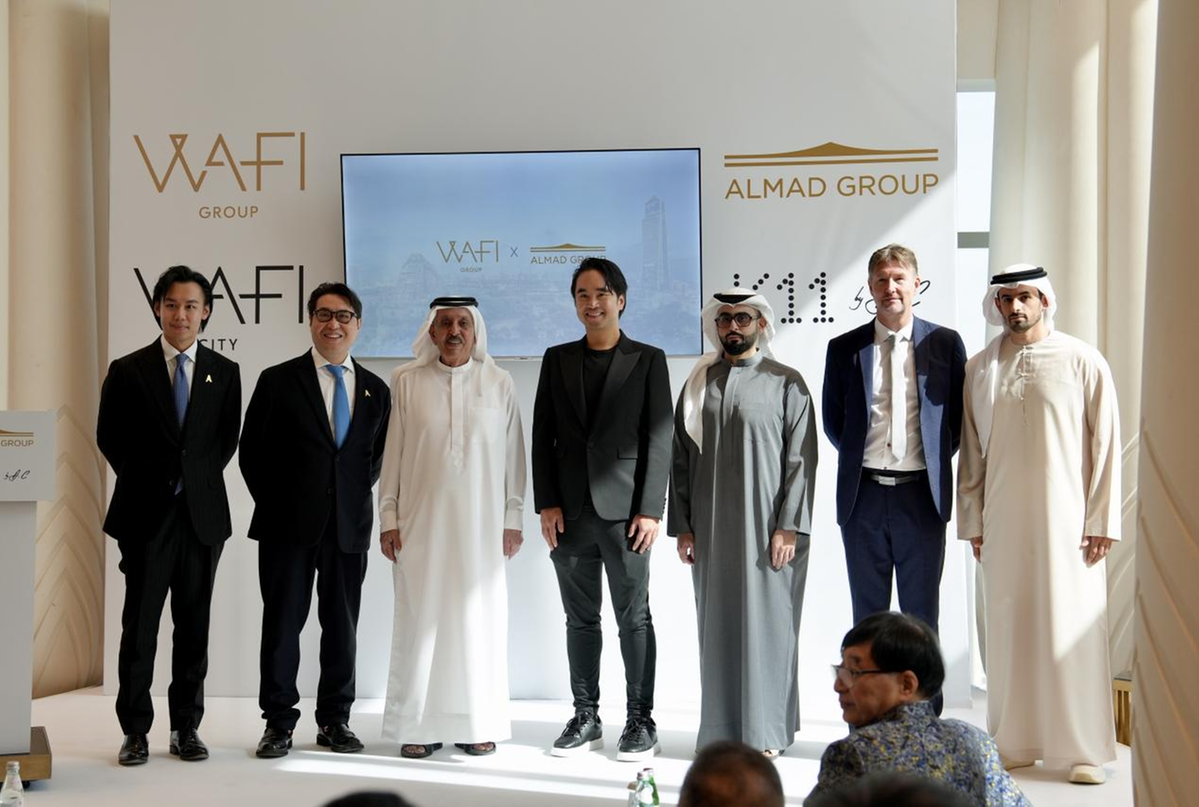
Hong Kong-based Almad Group and Dubai-based Wafi Group have formalised a strategic partnership aimed at tapping the fast-expanding animation, retail and cultural entertainment market in the Gulf, marking a notable deepening of commercial and cultural ties between East Asia and the Middle East.

The agreement, signed on December 11 in Dubai, brings together Almad Group’s lifestyle and cultural development arm, K11 by AC, and Wafi Group, one of the city’s established real estate and hospitality players. At the centre of the cooperation is the creation of a new joint venture entity, Wafi Anime 11, designed to anchor animation-led retail, immersive entertainment and intellectual-property-driven experiences in the UAE, with an eye on regional expansion.

Senior executives and representatives from both sides attended the signing, including Richard Cheung, group chief executive of K11 by AC; Dr Adrian Cheng, founder and executive chairman of K11 by AC of Almad Group; Sheikh Mana bin Khalifa Al Maktoum, founder and chairman of Wafi Group; and Sheikh Rashid bin Mana Al Maktoum, director of Wafi Group. The presence of Dubai Chambers’ executive vice-president for international relations, Salem Al Shamsi, underscored the broader trade and investment significance of the deal.

The partnership goes beyond a single retail concept. According to the framework outlined at the ceremony, Wafi Anime 11 will serve as a platform for developing themed cultural and entertainment projects, hosting IP-exclusive activities, and curating experiences aimed at both residents and international visitors. These initiatives are intended to align with Dubai’s wider strategy of positioning itself as a global hub for creative industries and experiential tourism.

A key commercial pillar of the agreement involves leasing and brand-entry cooperation for Hong Kong and the Chinese mainland labels seeking a foothold in the Middle East. The partners plan to introduce a portfolio of lifestyle, fashion and cultural brands that reflect contemporary Chinese creativity while adapting to local consumer tastes and regulatory environments. This approach reflects a growing trend among Asian brand owners to use Dubai as a gateway to the Gulf and wider Middle East and North Africa markets.

Tourism collaboration also features prominently. Almad Group and Wafi Group will roll out targeted incentive strategies aimed at visitors from Hong Kong and the Chinese mainland, encouraging longer stays and deeper engagement with Dubai’s retail and cultural offerings. Under the plan, travellers will be guided towards premium hospitality assets such as Sofitel Dubai The Obelisk and Raffles Dubai, both located within or adjacent to Wafi City, while being introduced to curated shopping, dining and entertainment itineraries.

Wafi City itself is expected to play a central role in the initiative. Long known as a mixed-use destination combining retail, hospitality and leisure, the complex will host several of the new animation-themed and IP-driven concepts. The partners believe this integrated environment provides a ready-made ecosystem for blending retail with storytelling, live events and digital engagement, a model increasingly favoured by younger consumers and families.

Another element of the cooperation involves the expansion of Gentry Club, a private members’ lifestyle concept, into the Middle East and North Africa. While details remain under development, the inclusion of Gentry Club signals an ambition to build community-based, experience-led offerings alongside mainstream retail, catering to affluent and culturally engaged audiences.

Richard Cheung said the agreement followed extensive groundwork and market analysis. “Our team has been studying the Middle East market since 2024 and is well aware of its immense development potential,” he noted. Cheung added that the first phase of cooperation would focus on brand introduction and ecosystem building, with several flagship labels representing Chinese cultural aesthetics expected to open by 2026.

Industry observers see the partnership as part of a broader shift in how cultural IP and retail are being deployed globally. Animation, gaming and character-driven franchises are no longer confined to screens or merchandise, but are increasingly used to anchor physical destinations, from themed malls to pop-up exhibitions and interactive spaces. The UAE, with its diversified economy, strong tourism flows and appetite for experiential formats, has emerged as a testing ground for such concepts.

Paramount Skydance’s decision to bring three Gulf sovereign wealth funds into its $108 billion hostile bid for Warner Bros Discovery has highlighted a rare convergence of interests among Saudi Arabia, Abu Dhabi and Qatar, as the states accelerate efforts to secure influence across the global entertainment industry. Paramount said the Saudi Public Investment Fund, Abu Dhabi’s L’imad Holding Company and the Qatar Investment Authority have agreed to […]

Arabian Post Staff -Dubai Abu Dhabi’s sovereign investor Mubadala Investment Company plans to almost double its exposure to Asia to around a quarter of its global portfolio over the next decade, signalling a long-term shift in capital allocation as the region’s digital economy, energy transition and infrastructure needs accelerate. Speaking at Abu Dhabi Finance Week, Mohamed Albadr, Mubadala’s Head of Asia, said Asia’s share of assets under […]

Activision has announced a strategic overhaul of how it releases titles in its flagship Call of Duty franchise, signalling an end to the practice of launching back-to-back entries in its Modern Warfare and Black Ops series. The change comes after Call of Duty: Black Ops 7, launched on 14 November, posted notably weaker engagement compared with its immediate predecessor and drew mixed responses from critics and players […]

A fresh layer of speculation has emerged around Helldivers 2 after Arrowhead Game Studios’ chief creative officer, Johan Pilestedt, disclosed that a prototype for a roguelite mode has been developed, signalling a potential shift in how players may engage with the fast-growing multiplayer title. The comment surfaced through a social media exchange, where Pilestedt noted that the experimental mode alters the structure of the game in a […]

Advertisements

Engineered for the AI era, MIMO delivers breakthrough metrics: 400 GB/s bandwidth, 54 million IOPS, and 40–90 μs latency—all within a form factor comparable to a large suitcase. MIMO serves as both a high-performance data hub for large-scale GPU clusters and a flexible edge deployment platform, extending seamlessly to desktop environments where it orchestrates workflows with various DGX Spark units based on NVIDIA’s GB10 Grace Blackwell superchip. […]

Google has unveiled its most affordable artificial intelligence subscription in India, aiming to challenge OpenAI’s popular ChatGPT Go service and expand the reach of its AI ecosystem. The new Google AI Plus plan is priced at ₹399 per month, with a special introductory offer of ₹199 for the first six months for new subscribers, a strategy clearly designed to attract price-sensitive users in one of the world’s fastest-growing digital markets.

The launch places Google directly in competition with OpenAI’s ChatGPT Go subscription, which has gained traction by offering enhanced features at a similar price point and, in some cases, bundled free access through promotions. Both plans now sit at roughly the same monthly cost, but key differences in features and ecosystem integration could shape consumer choice.

Google’s AI Plus plan gives subscribers expanded access to Gemini 3 Pro, the company’s most capable AI model yet, enabling advanced natural language understanding, coding assistance, creative tasks and complex research queries. It also includes Nano Banana Pro, Google’s latest image-generation and editing model, and enables video generation through tools such as Flow and Veo 3.1—features that aim to broaden appeal among creators and professionals alike.

Beyond generative capabilities, the plan bundles 200GB of cloud storage shared across Gmail, Google Drive and Photos, and allows users to share privileges with up to five family members, a benefit absent in many direct AI chatbot subscriptions. The integration of AI tools into everyday applications like Gmail and Docs is also a distinguishing factor for Google, tying advanced AI functionality directly into widely used productivity platforms.

Market analysts say the move reflects tech giants’ broader strategy to embed AI deeper into consumer ecosystems. By offering storage and productivity enhancements alongside generative AI, Google appears to be positioning AI as an everyday utility rather than a standalone service, contrasting with ChatGPT Go’s focus on conversational and research use cases.

OpenAI’s ChatGPT Go has been offered free for a year in various markets, including India under promotional deals, increasing its adoption among students, freelancers and casual users. Google’s decision to counter with a low-entry price signals recognition of the importance of competitive pricing in winning market share in regions where cost is a significant adoption factor.

Industry observers note that India has become a key battleground for generative AI services. The country’s large English-speaking population, burgeoning digital user base, and rapid uptake of smartphones have made it one of the most contested markets for AI subscriptions globally. This push comes amid substantial investment flows from global tech firms into the Indian AI and cloud sectors, including commitments from Microsoft and Amazon to expand infrastructure and services locally, underscoring broader confidence in the region’s long-term growth potential.

Despite aggressive pricing, some experts caution that affordability alone may not secure dominance. “Value for users increasingly depends on how AI integrates with everyday workflows,” said an independent technology analyst, pointing to the added utility of cloud storage and productivity enhancements in Google’s offer. “These extras could tip the balance for professionals and households in choosing one platform over another.” This assessment reflects growing sentiment that seamless application integration, rather than raw AI prowess alone, will be a key differentiator in consumer choices.

The launch also comes against a backdrop of regulatory and competitive developments in the AI landscape. Governments worldwide, including a policy proposal in India to impose royalties on AI firms that train on copyrighted local content, are scrutinising how large models are developed and monetised. Such regulatory pressure could shape how global AI companies price and deliver services in key markets.

Google’s broader AI strategy continues to evolve, with investments in advanced models and partnerships aimed at pushing generative AI beyond chat interfaces into practical, everyday tools. The company has also recently bolstered its AI collaborations, such as integrating advanced coding tools and developer platforms, and its executives have signalled an intensified focus on next-generation models and applications capable of supporting complex tasks.

The Tor Project has marked a significant milestone in its multi-year effort to reengineer its core software by advancing Arti, the Rust-based implementation of the anonymity network, with the launch of version 1.8.0. The update introduces enhanced circuit isolation to reduce fingerprinting risks and new tools designed to streamline the migration of critical onion service keys from the legacy C codebase — part of a broader shift […]

By Nitya Chakraborty For rich European nations, especially the troika Germany, France and Britain, the geopolitical situation that is unfolding in the year 2026 has enough elements of an existential crisis as a result of the announcement of the US policy on global security which marginalizes the role of European nations and NATO in the […]

The article Where Is Europe Placed In The Emerging Global Geopolitics? appeared first on Latest India news, analysis and reports on Newspack by India Press Agency).

Fatima Al Hammadi’s outline of Abu Dhabi’s financial innovation ambitions underscores a drive to build a deeper, more connected ecosystem designed to accelerate growth across fintech, insurance, digital assets and emerging financial technologies. Her comments highlight a strategy aimed at consolidating the emirate’s position among global financial centres while creating a broader platform for sector-wide collaboration. Abu Dhabi’s FinTech, Insurance, Digital and Alternative Assets cluster has been […]

Arabian Post Staff -Dubai Abu Dhabi’s move to establish an investment corridor with China gained further traction after the Abu Dhabi Investment Office confirmed a strategic partnership with China International Capital Corporation aimed at expanding two-way capital flows and creating a formal framework for long-term collaboration. The initiative positions the emirate to attract a new wave of Chinese companies while giving institutional investors in Abu Dhabi structured […]

Amazon has pledged to invest more than $35 billion in India by 2030, targeting a significant expansion of its technology, logistics, and export operations across the country. The announcement, delivered on 10 December at the Amazon Smbhav Summit in New Delhi, follows previous investments totalling about $40 billion since 2010 — including a $26 billion commitment in 2023.

The funding will be channelled along three strategic pillars identified by Amazon: AI-driven digitisation, export growth and job creation. The company intends to leverage artificial intelligence to reshape its marketplace operations and support small and medium-sized enterprises.

Amazon aims to boost cumulative exports from Indian sellers — which hit over $20 billion — to $80 billion by 2030. That step would represent a four-fold increase in volume while providing an impetus to local manufacturing, packaging, logistics and supply-chain networks.

As part of this push, the firm expects to generate at least 1 million new employment opportunities across direct, indirect and seasonal roles by the end of the decade. These would be distributed across technology, operations, logistics, fulfilment and customer support functions.

The announcement by Amazon aligns with similar large-scale commitments from other global tech players. A day earlier, Microsoft committed $17.5 billion for cloud and AI infrastructure in India, while Google has floated plans to inject about $15 billion over five years towards AI data-centre development in the country.

Amazon’s renewed commitment comes against a backdrop of intensifying competition in India’s e-commerce and delivery space. Firms such as Flipkart, along with app-based delivery services like Blinkit, Swiggy-led Instamart and Zepto, have rapidly expanded consumer-facing logistics, creating pressure on legacy players to scale up technological and operational capabilities.

According to a report by consultancy Keystone Strategy, Amazon’s past investments helped digitise over 12 million small businesses, enabled more than $20 billion in exports and supported around 2.8 million jobs as of 2024. The upcoming investment aims to deepen that impact by extending digital infrastructure, training, fulfilment and AI-powered tools to more businesses.

Man Group Plc has moved to secure a regulatory licence to establish an Abu Dhabi office next year, signalling a deeper shift among global asset managers toward the Gulf as the region accelerates its ambitions to become a leading centre for alternative investments. The London-listed hedge fund confirmed the application, underscoring its intention to broaden its footprint in a market that has drawn some of the world’s […]

Arabian Post Staff -Dubai Asia Pacific borrowers have significantly increased euro-denominated bond issuance this year, signalling a notable shift away from reliance on the US dollar as a financing standard. According to data compiled this year, euro-denominated issuance accounted for a record 23 per cent of all hard-currency bonds from Asia Pacific borrowers — up six percentage points compared with 2024. The total volume of euro-note sales […]

A dramatic shift in digital asset markets unfolded as one of the year’s fastest-rising crypto trades, which surged more than 2,600% at its peak, unravelled with an 86% wipeout, shaking confidence across a sector already grappling with volatility, liquidity strains, and shifting regulatory expectations. The abrupt reversal, mirrored in the steep fall of smaller token clusters linked to speculative momentum strategies, highlighted how rapidly sentiment can turn in an ecosystem vulnerable to leverage-driven cycles.

Market data from major exchanges showed that the trade, centred on a group of micro-capitalisation tokens propelled by algorithmic buying, began losing momentum after a wave of profit-taking by early entrants. Traders close to proprietary desks reported that liquidation cascades—triggered as automated systems unwound positions—accelerated the decline. The severe downturn echoed patterns seen during previous speculative surges, where liquidity gaps magnified losses within hours.

Analysts tracking blockchain activity noted that the rally’s ascent had attracted retail inflows, partly due to social-media-driven narratives framing the tokens as high-growth opportunities. As prices climbed, leverage amplified exposure, drawing in traders seeking outsized returns. Once selling pressure gained traction, that leverage turned into a critical vulnerability, forcing positions to unwind just as liquidity thinned. Several independent market researchers observed that the velocity of the downturn suggested a structural fragility, rather than a simple correction.

The collapse also revived discussion about the role of automated strategies in amplifying market instability. Many of the instruments involved were linked to quant-driven flows, where bots responded to volatility triggers rather than underlying fundamentals. As one portfolio strategist explained, these systems can cause price swings that move far beyond what traditional finance would consider tolerable, adding that crypto lacks the circuit-breaker mechanisms that help stabilise other asset classes. This dynamic, according to several fund managers, remains one of the most persistent challenges for institutions considering deeper exposure to decentralised markets.

Regulatory uncertainty added to the unease. Authorities in key jurisdictions have been scrutinising high-risk digital asset structures, and policymakers have signalled the possibility of tighter oversight for tokens driven by momentum rather than intrinsic value. Market observers said that while there is no direct link between regulatory commentary and the downturn, the broader environment has weighed on risk appetite. Investor caution intensified as questions resurfaced about transparency in the trading strategies behind the surge.

The downturn also exposed liquidity fragmentation across exchanges. Some platforms reported delays in order execution as volumes spiked, and spreads widened sharply during peak selling. Professional traders said this fragmentation remains a major impediment to maturing the sector, as it complicates price discovery and heightens vulnerability to abrupt swings. Several firms specialising in market-making suggested that the episode would likely prompt renewed calls for better liquidity management frameworks within decentralised ecosystems.

Amid the turmoil, major digital assets such as Bitcoin and Ether showed relative resilience, though both experienced elevated intraday volatility. Their ability to avoid the extreme swings seen in smaller tokens prompted commentary that the market may be entering a phase where speculative micro-caps detach from more established assets. Still, derivatives positions linked to broader sentiment recorded notable adjustments, indicating that traders remain sensitive to signs of systemic stress.

Industry insiders highlighted that the steep crash follows a pattern of momentum-driven phases that have punctuated crypto cycles since the first wave of retail adoption. A veteran analyst noted that while earlier episodes centred on initial coin offerings or meme-driven tokens, the current one underscores how algorithmic and social-media amplification have merged, producing sharper and faster boom-and-bust phases. The analyst added that such swings complicate long-term valuation models, as fundamental metrics often become secondary to speculative flows.

Venture-backed projects tied to the affected tokens faced heightened scrutiny as investors assessed whether the price collapse would impair broader ecosystem development. Some founders sought to reassure stakeholders by highlighting active user bases and ongoing technical upgrades, although several funds acknowledged that valuation resets were unavoidable. Market participants stressed that while token prices do not always reflect underlying project viability, extreme volatility can hinder funding conversations and stall adoption.

Netflix is set to take control of Warner Bros. Entertainment’s core studio and streaming assets through a landmark transaction valued at about $72 billion in equity, marking one of the largest media takeovers in decades and reshaping the balance of power across Hollywood. The agreement follows months of industry speculation over the future of Warner Bros. Discovery, which had been under pressure to stabilise debt while navigating […]

Abu Dhabi’s Mubadala Capital and Aldar have moved to establish a dedicated real estate investment platform that will pursue large-scale opportunities across the UAE and the wider GCC, marking a significant expansion of institutional-grade assets available to global investors. The new entity, Aldar Capital, is being positioned as a vehicle that will attract long-term institutional capital at a time when demand for diversified real asset exposure has […]

By T N Ashok NEW DELHI: Russian President Vladimir Putin arrived in India Thursday evening for a two-day state visit that has become a diplomatic flashpoint, testing New Delhi’s ability to maintain strategic independence amid mounting pressure from Washington and European capitals. The arrival marks Putin’s first trip to India since the Ukraine war began […]

The article Putin’s India Visit: A Stress Test Of Strategic Autonomy Amid Global Pressure appeared first on Latest India news, analysis and reports on Newspack by India Press Agency).

BEIJING, CHINA – Media OutReach Newswire – 5 December 2025 – Peng Liyuan, wife of Chinese President Xi Jinping, and Brigitte Macron, wife of French President Emmanuel Macron, visited the Beijing People’s Art Theatre on Thursday to learn about the theatre’s development and its cultural exchanges with the French theatre community. Following the visit, CGTN published an article highlighting the rich cultural and people-to-people exchanges in recent […]

SHENZHEN, CHINA – Media OutReach Newswire – 5 December 2025 – On November 16, 2025, the three-day 27th China Hi-Tech Fair (CHTF) successfully concluded at Hall 16 of the Shenzhen World Exhibition & Convention Center (Bao’an District). As a major industrial event aligned with national strategic goals, this year’s fair closely followed the guidance outlined in the 15th Five-Year Plan, which calls for “accelerating the development of […]

A newly documented exploitation method using scalable vector graphics has intensified scrutiny of browser-level security after a security researcher demonstrated how attackers can transform traditional clickjacking into a highly responsive, interactive deception technique. The approach, described as “SVG clickjacking,” shows how malicious actors can build dynamic and precise overlays that track user behaviour far more effectively than the static frames typically seen in older attacks. The method […]

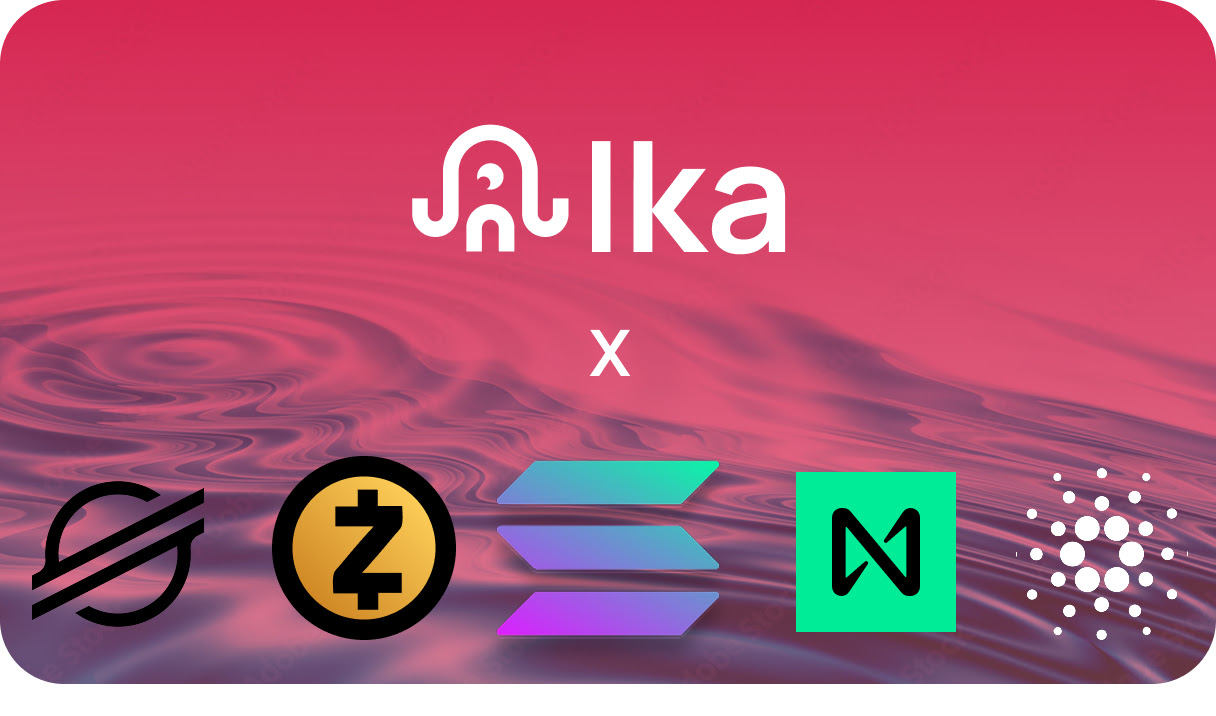
Ika’s latest mainnet upgrade has widened its native cross-chain capabilities to cover Solana, Zcash, Cardano, Stellar, Near and several other ecosystems that depend on EdDSA signatures, marking a significant step in efforts to streamline secure multi-chain interoperability. The network, which positions itself as a high-performance parallel MPC infrastructure, said the development enables decentralised wallets on its platform to generate EdDSA signatures directly, removing a key barrier for users aiming to execute transactions across diverse blockchain environments without intermediaries.

Executives described the rollout as a fulfilment of a core commitment to allow seamless control of digital assets across multiple chains through native authentication mechanisms. Analysts tracking the sector noted that Ika’s move arrives at a moment when blockchain networks are intensifying competition to offer deeper interoperability, improved security guarantees and lower latency for institutional and retail users transacting across a dispersed ecosystem. The company’s upgrade introduces direct support for chains with distinct cryptographic architectures, giving developers a more unified environment for building decentralised applications that interact across networks with minimal friction.

EdDSA, a signature scheme valued for speed and resistance to certain attack vectors, has become a standard across several major chains. By integrating native support for it, Ika has aligned itself with a widening group of protocols that rely on this cryptographic approach. Engineers familiar with cross-chain bridging mechanisms said the enhancement reduces the need for external validators or proprietary signing modules, both of which have historically created vulnerabilities that attackers have exploited. The company’s emphasis on decentralised key generation and distributed signing is aimed at addressing those concerns, with the upgrade designed to ensure that no single node gains access to full private key material during any point of the transaction process.

Developers working on multi-chain tools have highlighted that Solana and Zcash pose demanding requirements given their divergent architectures, throughput characteristics and privacy frameworks. Solana’s focus on parallel transaction processing and Zcash’s shielded transaction system require precise signature handling. Ika’s engineers said the upgrade underwent extensive compatibility tests to ensure that signature validity, network confirmation times and verification methods aligned with native standards on each chain. Market observers added that Cardano’s adoption of Ed25519, Stellar’s reliance on simple yet robust distributed consensus, and Near’s sharded architecture also required tailored integration approaches that maintain performance targets while preserving decentralisation.

The extended coverage is expected to attract developers seeking infrastructure capable of delivering verifiable computations and secure multi-party controls without depending on centralised custodial layers. Industry analysts have reported a growing appetite for MPC-based solutions as institutional participants demand cryptographic guarantees that reduce counterparty risk and strengthen operational security. Ika’s parallel design allows multiple signing operations and computations to run simultaneously, a feature the company argues positions it for high-volume environments such as decentralised exchanges, cross-chain liquidity networks and tokenisation platforms.

Executives said the upgrade also lays groundwork for supporting additional ecosystems that may adopt or transition to EdDSA-based cryptography. While the company has not disclosed timelines for further integrations, the MPC network’s architecture is designed to accommodate expanded signature schemes without major reconfiguration. That adaptability has become an important differentiator for infrastructure providers aiming to keep pace with evolving cryptographic standards and the emergence of new blockchain protocols built around enhanced privacy or throughput.

Blockchain security specialists noted that the industry continues to grapple with vulnerabilities in cross-chain bridges, some of which have seen major exploits over the past two years due to weaknesses in multi-signature setups and validator coordination. Ika’s MPC-driven approach seeks to mitigate these risks by distributing trust and eliminating single-point signing authority. By enabling native EdDSA signatures within its distributed wallet environment, the company aims to reduce exposure to the types of exploits linked to compromised custodial keys or flawed verification mechanisms.

VISHNU RAJA
RYO YAMADA
HITORI GOTOH
IKUYO KITA