News related to
deeper

Greenlogue/AP Construction on the expansive NEOM green hydrogen development has passed the eighty-percent mark at the outset of the first quarter of 2025, the NEOM Green Hydrogen Company has confirmed. This achievement spans the green hydrogen plant itself, the wind garden, the solar farm and the transmission network. Equipment delivery and installation are progressing apace, with wind turbines, hydrogen storage vessels, electrolysers, a cold box and pipe […]

Gold in Dubai opened trading on Tuesday with the 22K grade touching Dh408 per gram, setting a fresh all-time high and elevating investor and shopper concerns alike. The 24K variety climbed to Dh440.5, while 21K inched ever closer to the key Dh400 level, trading at Dh391.0 per gram.

Global and regional market dynamics are fueling this surge. The international spot price of gold has consistently pushed new heights, recently nearing $3,600 per ounce, with August seeing an approximate 31 per cent year-to-date gain. In part, this reflects growing expectations of US Federal Reserve rate cuts, which traditionally support gold’s safe-haven appeal.

Experts caution that the Dh408 per gram summit for 22K gold may not mark a plateau. Elevated global demand, festival-season jewellery purchases, and sustained investor appetite are converging. Yet there is also speculation about a pullback. Some analysts interpret current levels as ripe for partial profit-taking, while others expect continued momentum if support holds.

The 상승 in gold prices is reshaping shopper sentiment. With Dubai gold surges; 22K at Dh408 now firmly established, affordability becomes a pressing issue for consumers, particularly those buying for weddings, gifts, or as long-term stores of value. Jewellery retailers, in turn, are adapting by promoting lighter ornament designs and gold savings schemes to manage demand amid elevated prices.

Buyers may face a strategic dilemma: delay purchases in hopes of a correction, or lock in gold at historically high prices before potential further rises. The combination of geopolitical tensions, inflationary pressures, and currency fluctuations continues to bolster gold’s attractiveness.

As the UAE moves deeper into its peak gold-buying season, Dubai gold surges; 22K at Dh408 encapsulates the shifting dynamics at play: strong upward trajectory, global economic tension, and consumer caution all intersecting in a market where every dirham counts.

Markets are sending urgent signals. Gold has burst above $3,600 an ounce, a record that reflects both anticipation of rate cuts and a broader scramble for safety. Treasury yields have swung sharply, with shorter maturities pulled lower by expectations of central bank easing while long-dated bonds creep toward multi-year highs, and across equities, momentum has become fragmented, with volatility rising around political headlines and economic uncertainty. These […]

The United States and European Union are ramping up economic pressure, yet sceptics say even tougher measures may fail to push Vladimir Putin to the negotiating table. Treasury Secretary Scott Bessent has signalled that imposing secondary tariffs on countries continuing to purchase Russian oil—coupled with coordinated sanctions—could trigger a collapse in Russia’s economy and potentially compel the president to consider diplomacy. Sanctions fall short in forcing Putin […]

The Environment Agency – Abu Dhabi unveiled the EAD Avatar at the Abu Dhabi International Hunting and Equestrian Exhibition 2025, held at the Abu Dhabi National Exhibition Centre from 30 August to 7 September. This AI-powered initiative aims to revolutionise public interaction with environmental information, offering a lifelike digital interface that bridges cultural authenticity with technological innovation.

Developed in collaboration with Accord Business Group, the EAD Avatar introduces two digital personas, Souheil and Dana, designed to reflect Emirati heritage. Fluent in both Arabic and English, these avatars provide real-time, interactive communication, delivering accurate, AI-generated responses drawn from verified data sources. This approach ensures that users receive reliable information on environmental topics, enhancing public understanding and engagement.

Ahmed Baharoon, Executive Director of Environment Information, Science and Outreach Management at EAD, highlighted the significance of the launch, stating, “By merging cultural authenticity with cutting-edge AI, we are enhancing how the community interacts with EAD and transforming how they understand and connect with the environment.” The avatars’ natural voice modulation, facial expressions, and body language contribute to a more human-like interaction, fostering trust and encouraging deeper engagement.

European regulators have slapped Google with a €2.95 billion fine for leveraging its dominance in ad-tech to favour its own services, while President Trump has launched warnings of retaliatory trade measures—even as the €2.95 billion ad-tech sanction on Google marks the latest escalation in transatlantic friction. The European Commission’s investigation, which began in mid-2021, concluded that Google distorted competition across the 27-member bloc by prioritising its AdX […]

European leaders face mounting urgency to address critical deficiencies in their defence structures as uncertainty surrounds the reliability of U. S. backing. Many capitals hold onto hope that Donald Trump will honour his pledged security guarantees for Ukraine, even though concrete commitments remain vague. Europe’s Defence Gaps Expose Growing Reliance on U. S. Support captures the mounting tension between Europe’s persistent reliance and its growing intent to […]

Advertisements
Thunes has integrated Ripple’s infrastructure into its payments network, allowing Ripple–Thunes integration accelerates global payments with enhanced speed, transparency and cost-efficiency. Drawing on their existing 2020 alliance, the Singapore-based fintech firm and Ripple announced the deeper collaboration on 2 September 2025, aiming to transform cross-border transfers for businesses and financial institutions worldwide.

The integration embeds Ripple Payments into Thunes’s Direct Global Network, spanning 130 + countries and over 80 currencies. This union leverages Ripple’s global payout infrastructure—serving 90 + markets and covering more than 90 % of daily FX flows, with over US $70 billion processed—bringing real-time, cost-efficient, and transparent transactions to Thunes’s vast network.

Chloe Mayenobe, President and COO of Thunes, emphasised that the partnership bridges traditional finance and digital assets, enabling seamless, compliant cross-border payments at scale. She stressed the importance of real-time settlement and robust local integrations in scaling financial access globally. Fiona Murray, Managing Director for Asia-Pacific at Ripple, underscored how combining Thunes’s payment reach with Ripple’s digital asset infrastructure enhances speed, accessibility, and compliance.

This move extends Thunes’s capability to deliver payouts in local currencies in regions with limited banking access, particularly through its SmartX Treasury System. Ripple Payments is now integrated into SmartX, bolstering liquidity management and last-mile delivery in underbanked markets.

Analysis from BeInCrypto notes that this alignment enables faster settlement and improved compliance, especially where mobile wallets like GCash, M-Pesa, and WeChat Pay dominate. For enterprises, the collaboration promises efficient global transfers with lower friction. Crowdfund Insider adds that the partnership broadens payout reach while streamlining money movement across key markets.

Electronic Payments International confirms the integration into SmartX, reinforcing Thunes’s treasury capabilities and enhancing its services. CryptoBriefing highlights the joint effort to improve speed, transparency and compliance across Thunes’s global network by incorporating Ripple Payments.

This development reflects an industry shift: traditional payment networks increasingly adopt blockchain infrastructure to reduce costs and boost efficiency. Thunes, with its “Smart Superhighway” platform covering billions of mobile wallets, bank accounts, and cards, stands well-positioned to harness Ripple’s tools for expanding financial inclusion.

Thunes, founded in 2019 and headquartered in Singapore, already partners with PayPal, Uber, Grab, Paytm, and others, serving a global footprint that includes more than 3 billion accounts across 130 countries. The integration with Ripple strengthens its proposition to these and other clients seeking faster, more transparent cross-border transfers.

A high-level delegation from Dubai Electricity and Water Authority, led by MD & CEO HE Saeed Mohammed Al Tayer, is in the People’s Republic of China to boost collaboration with leading firms in solar and battery storage technology. The mission aims to support Dubai’s clean energy ambitions under its 2050 strategies by examining advanced practices in renewable energy systems. DEWA Seeks Deeper Energy Ties With Chinese Firms, as the delegation intends, marks a pivotal move in cross-border energy engagement.

Al Tayer and his team engaged with Huawei, BYD, Tesla’s battery energy storage plant, Sungrow, and the CRRC Zhuzhou Institute to survey cutting-edge developments in photovoltaic panels, energy storage solutions, artificial intelligence applications, smart infrastructure, and Fourth Industrial Revolution advancements. These interactions reinforce DEWA’s commitment to integrating global expertise into its operations.

The delegation includes prominent executives such as Waleed bin Salman, Executive Vice President of Business Development and Excellence; Hussain Lootah, Executive Vice President of Transmission Power; Marwan bin Haidar, Executive Vice President of Innovation and the Future; Dr Yousef Al Akraf, Executive Vice President of Business Support and Human Resources; Mohammed Jamea, Vice President of Clean Energy and Diversification; and Ghanim Al Qassim, Senior Manager of Solar Energy. Their breadth of expertise equips DEWA to absorb and apply technological insights strategically.

Central to the discussions is the seventh phase of the Mohammed bin Rashid Al Maktoum Solar Park, currently at the tendering stage. This phase will incorporate 2,000 MW of photovoltaic solar capacity alongside 1,400 MW of battery energy storage, delivering six hours of storage—establishing it among the largest solar-plus-storage projects globally under the independent power producer model. The delegation’s visit underscores this project’s importance in shaping Dubai’s sustainable energy future.

Astana International Exchange and Abu Dhabi Securities Exchange have activated a direct connection between their central securities depositories, enhancing post-trade infrastructure and extending investor access across markets. The move, under the October 2021 memorandum of understanding that brought AIX into the Tabadul digital hub, expands on the existing Tabadul network and enables fully operational CSD-to-CSD communication.

The newly established arrangement builds on Tabadul’s digital trading network, which launched in mid-2023 when AIX formally joined and began enabling bilateral trading with ADX. Tabadul, introduced in 2022, operates on a mutual market access model, facilitating cross-exchange trading across member markets.

Under the framework established in October 2021, AIX had integrated into Tabadul, paving the way for today’s deeper integration via its direct CSD link with ADX.

Assel Mukhanova, chief executive of AIX, welcomed the formalisation, noting that this will bring tangible benefits to participants through more efficient trading corridors and deeper cross-border investment flows. Abdulla Salem Alnuaimi, group chief executive of ADX, emphasised that the direct CSD connection supports capital markets accessibility, post-trade connectivity, and opens new avenues for both global and regional investors.

This development underscores a strategic commitment from both exchanges to deepen connectivity, bolster liquidity, and accelerate regional capital market integration. By complementing the stronger ties forged through Tabadul, the new ADX–AIX direct CSD link strengthens market access for issuers and investors alike.

DuckDuckGo has expanded its subscription offering to give users access to some of the most advanced AI models now available—without compromising on its core commitment to privacy. For US $9.99 per month, subscribers gain entry to the newly upgraded Duck. ai platform, unlocking the power of OpenAI’s GPT‑4o and GPT‑5, Anthropic’s Claude Sonnet 4, and Meta’s Llama Maverick—all integrated into one seamless, privacy‑oriented interface. This enhancement builds on DuckDuckGo’s identity-protecting ecosystem, […]

Nigeria has secured a production-sharing contract with TotalEnergies and South Atlantic Petroleum for two deepwater offshore blocks, under a novel legal structure designed to prioritise gas development alongside oil. The agreement spans units PPL 2000 and PPL 2001—a territory of some 2,000 square kilometres in the Niger Delta Basin—and marks Nigeria’s first PSC under its transformative Petroleum Industry Act of 2021. The PIA, enacted in 2021, acknowledges the differing […]

BruteForceAI accelerates credential testing by automating form discovery and attack workflows with human‑like finesse. Security teams and penetration testers now gain a powerful tool that merges AI‑driven analysis and ethical safeguards, promising deeper insights into authentication weaknesses across web applications. BruteForceAI enables swift parsing of HTML to pinpoint login fields with near‑precise CSS selector generation— reportedly accurate in approximately 95 per cent of real‑world scenarios. Once fields are mapped, […]

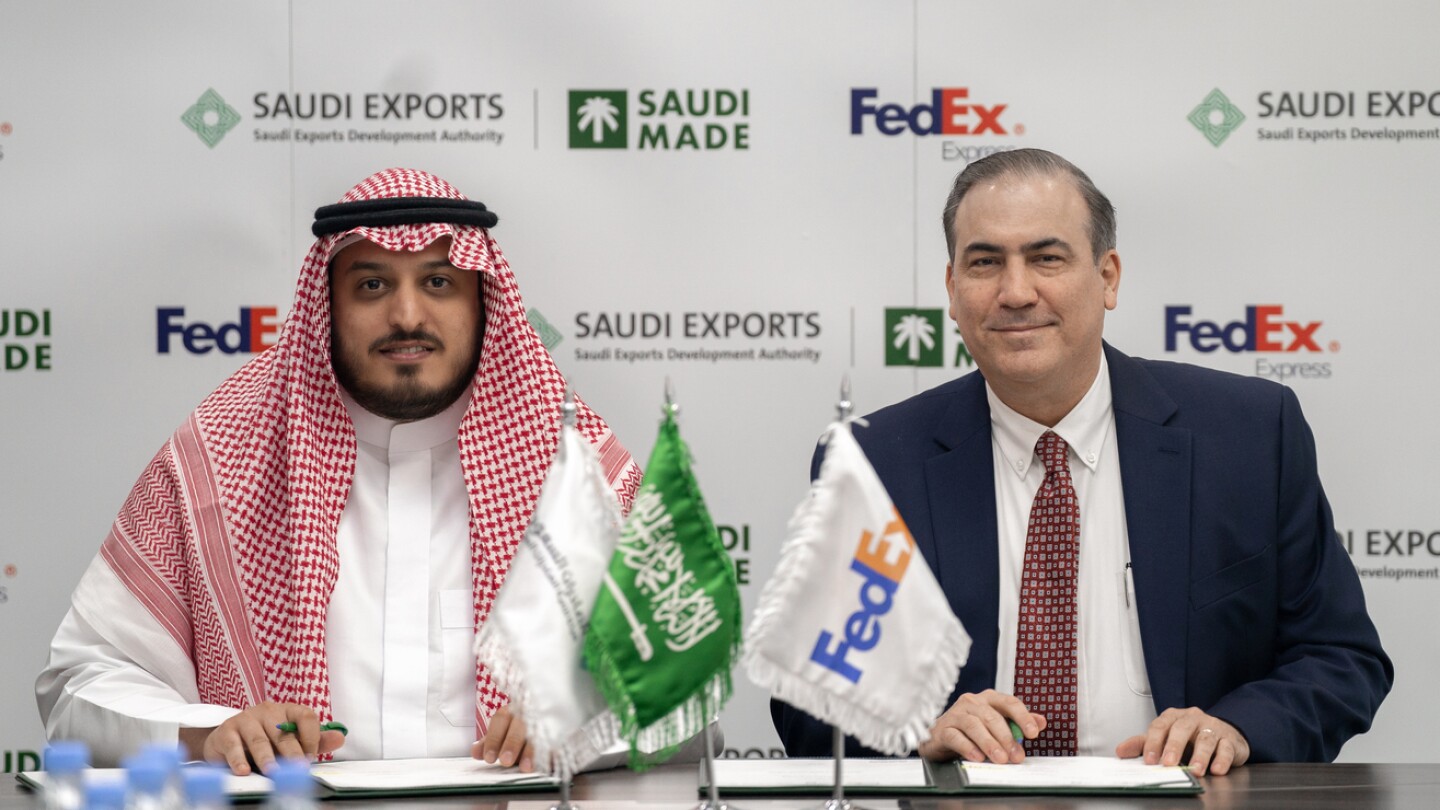
FedEx has gained an economic licence from Saudi Arabia’s General Authority of Civil Aviation to operate as a foreign air carrier, marking a significant expansion of its logistics footprint in the Kingdom. The move equips FedEx to conduct scheduled cargo services via King Khalid International Airport in Riyadh, with plans to operate 24 flights per month from early September 2025, establishing Riyadh as its regional hub linking continents.

The licence, granted on 2 September 2025, grants FedEx the ability to fly directly and to integrate air and ground operations across the Gulf Cooperation Council states. The announcement was made during a ceremony in Diriyah, attended by senior officials including Saleh Al‑Jasser, Minister of Transport and Logistics Services and Chairman of GACA; Abdulaziz Al‑Duailej, GACA President; and Dr Rumaih Al‑Rumaih, Acting President of the Transport General Authority, alongside FedEx executives.

FedEx introduced its first nonstop freighter service from the United States and Europe into Riyadh, operating six times a week with Boeing 777 aircraft. This route is the only express logistics connection offered by FedEx that bypasses other hubs, and continues onward to Guangzhou and Shanghai.

This direct link strengthens trade routes, particularly for high-priority sectors like energy, manufacturing, mining, healthcare and automotive, enabling temperature‑controlled, heavy, oversized or hazardous shipments. FedEx complements this airlift with its FedEx Logistics suite—air, road and sea freight forwarding, customs brokerage, and transit cargo support—aimed at enhancing supply chain resilience across the GCC, South Asia and Africa.

The company has developed end‑to‑end capabilities in the Kingdom, directly managing pickup, delivery and customs clearance through four gateways and four stations, supplemented by digital tools for shipping visibility and efficiency.

FedEx leadership emphasises Saudi Arabia’s role as a strategic logistics hub connecting Asia, Europe and the Americas. Richard Smith, Chief Operating Officer, International and CEO of the Airline at FedEx, cited the Kingdom’s infrastructure as a vital link in their global network. Kami Viswanathan, President of FedEx Middle East, Indian Subcontinent and Africa, underlined the integration of infrastructure, digital innovation and integrated solutions to aid Saudi businesses in competing globally.

These moves align closely with Saudi Vision 2030. The Aviation Programme aims to elevate Saudi Arabia’s aviation sector to the highest regional standards, targeting 330 million passengers, 4.5 million tonnes of air cargo, and air connectivity to 250 destinations by 2030. FedEx’s operations support these objectives by advancing industry capacity and reinforcing Riyadh’s prominence in logistics.

The expansion follows challenges earlier this year, when FedEx suspended economy parcel and freight services to the Kingdom from countries including India, Japan and the UK in March 2025. Service was halted temporarily, with FedEx noting it would resume “as soon as possible.”

Trade levels in Saudi Arabia have surged. The Kingdom posted a trade surplus of US$ 16.8 billion in Q1 2025, up 52 percent on the prior quarter, reflecting strong exports and demand for logistics infrastructure that FedEx is now well‑positioned to serve.

With strategic investments—including the creation of a global head office in Riyadh to oversee operations across Saudi Arabia, Bahrain, Kuwait and Qatar—FedEx reinforces its long‑term commitment to the region.

This expansion signals a departure from reliance on intermediaries or regional hubs outside the Kingdom; FedEx now controls its entire customs-to-delivery chain in Riyadh, laying the groundwork for faster transit, improved service reliability and deeper integration into global trade networks.

Emerging trends include rising demand for integrated logistics services, investment in digital tools for customs and tracking, and regional consolidation of supply chain operations. Key players alongside FedEx include Saudi authorities driving Vision 2030’s transport strategy, while GCC markets and commercial sectors increasingly rely on swift, dependable global connectivity.


Shiba Inu has bounced off a decisive demand zone, reclaiming support near $0.000012 and positioning itself for potential upward movement toward $0.000015, as technical charts and market dynamics align in favour of bulls.

The meme token recently rallied from a support cluster between $0.0000115 and $0.000012, forming a reassuring double‑bottom pattern that underscores emerging buying interest. Observers note that if this momentum holds, SHIB could head toward its key short‑term resistance around $0.000015. Analysts emphasise that sustaining pressure above this demand zone is critical to maintaining bullish prospects.

A chart pattern also suggests that SHIB is attempting to break above a descending channel, lying just below its 50‑day moving average. Crossing that threshold could trigger a sharper rally, with targets stretching to $0.000014, $0.0000175, and even beyond, provided higher timeframe breakouts materialise.

Adding fuel to the rally, token burns have surged significantly—over 48,000% in one documented instance—with tens of millions of SHIB permanently removed from circulation. This deflationary action tightens supply and, combined with heightened derivatives activity, bolsters bullish sentiment.

Yet, technical caution is advised. SHIB is currently compressed within a symmetrical triangle near $0.0000123, and the direction of the breakout—either above $0.000013 or below $0.00001—will likely determine whether bullish or bearish trajectories dominate. A clean advance above the upper trendline and rising volume would open the door toward $0.000015 and the 200‑day moving average; conversely, a breakdown could expose support near $0.0000095.

Beyond price mechanics, structural developments around the Shiba Inu ecosystem—such as Layer‑3 platform expansion, burn infrastructure, and community governance initiatives—offer a long‑term narrative that could support sustained demand, though analysts caution that burns and buzz alone may not suffice without wider utility adoption.

In essence, Shiba Inu now stands at an inflection point. A firm hold above the demand zone has reignited interest, and a break above the 50-day MA or the triangle’s upper boundary could spark a more pronounced rally. Conversely, failure to defend current levels risks deeper retracement. Technology upgrades, ecosystem growth, and on-chain developments remain key components shaping its trajectory.

AI’s growing sophistication is pushing operational costs skywards, as developers and startups grapple with soaring token usage, escalating compute demands, and shifting business models. At the heart of the challenge lies a paradox: while the per‑token price of AI continues to decline, the number of tokens consumed for meaningful tasks has surged dramatically, especially where reasoning-intensive workflows dominate. Tasks once considered lightweight now demand tens or even […]

Canada is advancing its Arctic security and defence strategy by expanding collaborations with NATO’s newest members—Finland and Sweden. As the geopolitical landscape shifts, Ottawa is actively moving beyond traditional reliance on the United States to forge deeper military, industrial and technological ties with Nordic allies, reinforcing its sovereignty and resilience in the High North. The Honourable Anita Anand, Minister of Foreign Affairs, has formalised a Canada–Finland strategic […]

Chinese President Xi Jinping delivered a bold address at the Shanghai Cooperation Organisation summit in Tianjin, asserting China’s leadership role in global affairs and unveiling a series of strategic initiatives—most notably a new AI cooperation centre and a development bank—that signal an assertive pivot towards a multipolar world order. With over 20 leaders present, including Russian President Vladimir Putin and Prime Minister Narendra Modi, the summit stood […]

As the first event held at the newly inaugurated Vietnam Exposition Center in Hanoi, the exhibition titled “80 Years of Independence – Freedom – Happiness” has become a symbol of a modern, ambitious, and globally engaged Vietnam. HANOI, VIETNAM – Media OutReach Newswire – 2 September 2025 – Anyone who finds themselves in Hanoi these days can sense that history is not just something written on faded […]

Greenlogue/AP Veolia has moved to acquire the remaining 30 per cent stake in its Water Technologies and Solutions subsidiary from CDPQ, in a deal valued at around US$1.75 billion, positioning the company for greater strategic agility and cost-efficiency. The transaction is expected to bring about €90 million in run‑rate cost synergies by 2027, simplification of the group’s structure, and added value through streamlined decision‑making and integration. The move forms […]

Kaspersky reports a dramatic escalation in cyber‑attacks across Sub‑Saharan Africa during the first half of 2025 as the company prepares to lead discussions in Lagos on strengthening regional defences. Data shows that web‑based threats soared to 42.4 million incidents, while on‑device attacks—including malware delivered via USB drives and hidden installers—reached 95.6 million, both representing sharp increases from a year earlier. Spyware attacks more than doubled, password‑stealer incidents rose by […]

By K Raveendran The oil market has by now mastered the skill to absorb shocks, even when they appear designed to disrupt trade flows and destabilise long-term patterns. Rather than creating turbulence, as many initially feared, the global oil market has taken the imposition of punitive tariffs by the United States on India’s Russian oil […]

SINGAPORE – Media OutReach Newswire – 27 August 2025 – Genius Mind, one of Singapore’s trusted names in home-based education matching, has announced the expansion of its offerings to include coding, financial literacy, and artificial intelligence (AI) skills. With this move, the agency aims to go beyond traditional academics, equipping children with future-ready skills that are both practical and essential in today’s digital-first world. Catering to this […]

The first half of 2025 marked a significant surge in greenfield foreign direct investment into Saudi Arabia, with the United States leading the charge. American investors drove 61 projects, injecting $2.7 billion into the Kingdom’s economy, accounting for nearly a third of both the project count and total investment. This surge highlights the growing confidence of international investors in Saudi Arabia’s Vision 2030 economic reforms and its appeal as a business hub in the region.

According to a report by Emirates NBD, greenfield investments in Saudi Arabia showed a notable increase, both in terms of project volume and capital inflow. In total, 203 greenfield projects were launched in Saudi Arabia during the first half of 2025, marking a 30.1% year-on-year rise. These projects, spanning across various sectors, reflect the country’s strong development trajectory and its efforts to diversify away from oil reliance.

Egypt emerged as the second largest contributor to Saudi Arabia’s greenfield FDI, securing $1.81 billion through 11 projects. Many of these ventures were centered around real estate developments, capitalising on the Kingdom’s expanding urbanisation and demand for residential and commercial properties. Egypt’s growing involvement reflects deeper ties between the two nations, particularly in sectors related to infrastructure and housing.

China, a global FDI powerhouse, played a significant role as well, investing $858.3 million through 11 projects in Saudi Arabia. China’s investments in the Kingdom primarily focused on manufacturing, technology, and energy, complementing the Saudi government’s drive to expand its industrial base and modernise key sectors. Chinese companies are also playing a pivotal role in the development of high-tech infrastructure, which aligns with Saudi Arabia’s push towards a more diversified, knowledge-based economy.

France also made its presence felt, contributing $771.7 million through six greenfield projects. The French investments were primarily focused on technology, retail, and luxury goods, with several high-end brands expanding their operations within the Kingdom. France’s engagement is part of a broader European interest in tapping into Saudi Arabia’s expanding consumer market, particularly in areas linked to fashion, entertainment, and sustainable energy.

The UAE’s regional influence continued to grow, with 25 projects worth $205.3 million being launched in Saudi Arabia. These ventures spanned various industries, with a focus on hospitality, logistics, and real estate. The UAE’s investments underscore the close business ties between the two countries, with the Kingdom remaining a key destination for Emirati capital looking to expand its footprint in the region.

Riyadh, Saudi Arabia’s capital, was the top destination for greenfield FDI, attracting 100 projects valued at $2.3 billion. As the political, economic, and cultural centre of the country, Riyadh continues to benefit from the majority of investments, particularly in the areas of technology, infrastructure, and urban development. Dammam, home to one of the Kingdom’s key industrial hubs, secured 21 projects worth $1.28 billion, while Jeddah followed closely with 13 projects totalling $1.22 billion. These cities represent strategic focal points in Saudi Arabia’s ambitious plans for diversification, driven by growth in manufacturing, logistics, and energy.

Saudi Arabia’s overall greenfield FDI rose by 1.7% to $9.34 billion during the first half of 2025, reflecting the Kingdom’s position as an attractive investment destination. The growth is seen as a direct result of efforts to enhance the ease of doing business in the country and to create a more transparent regulatory environment. Initiatives like the National Industrial Development and Logistics Program and the Saudi Green Initiative have been instrumental in drawing foreign investments into the Kingdom.

VISHNU RAJA
RYO YAMADA
HITORI GOTOH
IKUYO KITA