News related to
deeper

Arabian Post Staff -Dubai   Russian President Vladimir Putin and envoys of the United States wrapped up around four hours of negotiations in the Kremlin on Thursday night, with Moscow underscoring that any peace settlement to end the war in Ukraine hinges on agreement over territorial control. The talks, which included Steve Witkoff, Jared Kushner and White House adviser Josh Gruenbaum, were described by the Kremlin as […]

Apple is confronting a shareholder campaign seeking a comprehensive audit of the company’s exposure to China, sharpening a debate over supply-chain concentration, intellectual property protection and geopolitical risk as ties between Washington and Beijing remain strained. The proposal, scheduled for consideration at Apple’s annual meeting set for February 2026, has been filed by a coalition led by the National Legal and Policy Center, which argues that the […]

Walmart and Unity have rolled out a new immersive commerce software-development kit that allows game creators to embed real-world shopping experiences directly within Unity-built titles and apps, marking a shift in how physical retail intersects with interactive entertainment. The free SDK empowers developers to integrate Walmart’s commerce systems, catalogue and checkout functionality into gameplay without forcing players to exit the virtual environment, unlocking fresh monetisation routes for […]

Dogecoin extended losses on Tuesday as liquidation pressure rippled through the meme-coin segment, reinforcing a market tone defined by selling into rallies rather than chasing rebounds. The token fell about 2% on the day, underperforming parts of the broader crypto complex as traders trimmed exposure amid persistent resistance overhead and thinning liquidity during intraday bounces. Price action showed repeated failures near a well-watched resistance band between $0.126 […]

HONG KONG SAR – Media OutReach Newswire – 23 January 2026 – As stablecoins, AI, and automated systems increasingly enter real-world finance and payments, digital asset infrastructure is approaching a critical inflection point. Enterprise blockchain infrastructure provider Cregis has announced it will participate in Consensus Hong Kong 2026, taking place February 10–12, where it will engage with industry peers on the evolving role of stablecoins, enterprise asset management, and emerging technologies in financial systems.

Attendees can visit Booth 1808 at the Hong Kong Convention and Exhibition Centre to explore Cregis’ infrastructure offerings, including its crypto payment engine, self-custody MPC wallet infrastructure, and enterprise-grade self-custody solutions. According to the team, the event represents not just an industry appearance, but an opportunity to observe and contribute to a deeper question: how crypto assets can meaningfully integrate into real financial systems.

Digital Assets Enter Business Operations

Over the past few years, much of the industry conversation has centered on issuance and trading. But as institutional participation accelerates, the focus is shifting toward a more complex challenge: how digital assets are operated in secure, compliant, and efficient ways.

As financial institutions and payment companies begin using on-chain assets in real business workflows, asset management is no longer just about private key security. It becomes a system-level problem involving multi-party coordination, permission design, auditability, and risk governance.

Against this backdrop, Cregis plans to focus on:

  • The security and coordination requirements of enterprise asset management in stablecoin and payment use cases
  • How permissions, accountability, and auditability should function across multi-team, multi-system operations
  • How automation and intelligent systems are redefining the requirements for underlying asset infrastructure


Stablecoins Move to the Center of Financial Infrastructure

Consensus Hong Kong 2026’s agenda reflects a broader industry shift. Compared with previous years, stablecoin-related discussions have expanded significantly, with the focus moving from whether stablecoins are viable to how they scale.

Topics around cross-border payments, settlement efficiency, liquidity movement, and regulatory frameworks are increasingly seen as the connective layer between crypto-native systems and traditional finance. For many industry participants, this marks a transition: crypto assets are no longer viewed primarily as speculative instruments, but as emerging components of financial circulation infrastructure.

AI, Automation, and Crypto Enter the Execution Phase

Beyond stablecoins, the convergence of AI, robotics, and crypto has emerged as another defining theme at Consensus 2026. Rather than focusing on conceptual narratives, industry discussions are now centered on execution. Attention has shifted toward ensuring asset security as AI agents operate autonomously, clarifying responsibility and authority when automated systems participate in economic activity, and rethinking how financial infrastructure must evolve as enterprise systems themselves become economic actors.

Together, these discussions reflect a broader industry shift: technological convergence is moving decisively toward real-world deployment, marking a transition from storytelling to implementation.

The Debate Has Shifted

Disagreements around the future of crypto adoption remain. But the nature of the debate has changed. At Consensus Hong Kong 2026, the discussion is less about whether crypto will be adopted, and more about:

  • What form adoption will take
  • Whether infrastructure will become invisible to end users
  • Who bears systemic risk, and who defines operational rules

In this context, the maturity of infrastructure is emerging as a key determinant of where the industry goes next.

Observing and Participating in an Inflection Point

The industry is transitioning from “exploring possibilities” to “building durable systems.” The evolving themes at Consensus Hong Kong 2026 are a clear signal of that shift.

As stablecoins, digital assets, and intelligent systems move deeper into real financial and commercial environments, the resilience, controllability, and compliance-readiness of infrastructure will determine how far adoption can go. During the event, Cregis will engage with participants across payments, financial institutions, and Web3, while continuing to focus on the evolution of enterprise digital finance infrastructure.

Cregis aims to provide enterprises with end-to-end digital asset management and operational infrastructure. By building security-first, flexible, and compliance-oriented systems, the company seeks to abstract complex onchain operations into standardized solutions that enterprises can easily integrate and manage — helping institutional clients navigate this industry transition with confidence.
Hashtag: #consensus2026 #cregis #Stablecoins


The issuer is solely responsible for the content of this announcement.

About Cregis

is a global provider of enterprise-grade digital asset infrastructure, delivering secure, scalable, and compliant solutions for institutional clients.

Its core offerings—MPC-based self-custody wallets, Wallet-as-a-Service, and a robust Payment Engine—help exchanges, fintech platforms, and Web3 businesses manage digital assets with confidence.

With over 3,500 businesses served globally, Cregis empowers businesses to accelerate their Web3 transformation and unlock new digital asset opportunities.

By K Raveendran When the Supreme Court of India struck down the electoral bond scheme introduced under the government led by Narendra Modi, it did so on the realisation that the anonymity offered by the bonds, far from curing the malaise of black money, had institutionalised it. But the alternative of electoral trusts that the […]

The article Supreme Court Alternative To Electoral Bonds Turns Out To Be More Vicious appeared first on Latest India news, analysis and reports on Newspack by India Press Agency).

UAE and India have elevated their strategic partnership with a sweeping set of agreements signed during the visit of Sheikh Mohamed bin Zayed Al Nahyan, signalling a calibrated push to broaden cooperation across defence, energy, space, trade, investment and food safety. The pacts, endorsed alongside Narendra Modi, reflect a shared intent to anchor bilateral ties in long-term economic and security interests while navigating a volatile global environment.

The visit culminated in the exchange of multiple memoranda of understanding that collectively aim to translate political goodwill into operational outcomes. Officials from both sides framed the agreements as an expansion of the Comprehensive Strategic Partnership, emphasising implementation timelines and institutional coordination rather than aspirational language. At the centre of the package is a defence cooperation framework that strengthens military-to-military engagement, joint exercises, training exchanges and defence industrial collaboration, an area that has gathered momentum as both countries diversify security partnerships.

Energy cooperation featured prominently, with accords spanning hydrocarbons, clean energy and grid resilience. State-linked firms and private players outlined pathways to scale joint investments in upstream oil and gas while accelerating collaboration in renewables, green hydrogen and energy storage. The emphasis on clean energy dovetails with the UAE’s net-zero ambitions and India’s drive to expand non-fossil capacity, positioning both as partners in technology transfer and project financing across third markets.

Space cooperation agreements mark another pillar of the evolving relationship. Space agencies from Abu Dhabi and New Delhi committed to deeper collaboration in satellite development, earth observation, data sharing and human spaceflight training. The arrangements are designed to support applications ranging from climate monitoring and disaster management to urban planning and agriculture, underscoring the commercial and societal dividends of space-based assets.

Trade and investment pacts seek to build on the momentum generated by the Comprehensive Economic Partnership Agreement, which has reshaped tariff structures and supply chains between the two economies. New understandings focus on easing customs procedures, aligning standards and expanding market access for small and medium-sized enterprises. Investment promotion agencies agreed to coordinate sectoral roadmaps in manufacturing, logistics, digital services and infrastructure, with sovereign investors and development funds expected to play a catalytic role.

Food safety and agricultural cooperation agreements address a strategic priority for both governments. Protocols on standards, certification and inspection aim to streamline the movement of agri-food products while safeguarding consumer interests. Joint research initiatives are set to target crop resilience, post-harvest technologies and cold-chain logistics, reflecting lessons from climate stress and supply disruptions that have sharpened the focus on food security.

Diplomatic engagements during the visit also underscored people-to-people ties, education and skills. Universities and research institutions announced partnerships in advanced materials, artificial intelligence and health sciences, while vocational training programmes were aligned to labour market needs in construction, healthcare and digital services. These measures are intended to deepen the talent pipeline that underpins commercial ties.

Officials were careful to situate the agreements within a broader regional and global context. With shipping lanes under strain and commodity markets exposed to geopolitical shocks, both sides highlighted coordination on maritime security and supply chain resilience. The defence and logistics components of the package are expected to reinforce cooperation in the Indian Ocean region, where the UAE’s ports and India’s maritime capabilities intersect.

Economists note that the breadth of the accords reduces concentration risk by spreading cooperation across multiple sectors, while governance mechanisms embedded in the agreements could improve execution. Joint working groups, periodic reviews and dispute-resolution channels were outlined to ensure progress is measurable. Business leaders welcomed the clarity on standards and compliance, arguing that predictability lowers the cost of capital and accelerates project timelines.

Critics caution that delivery will depend on regulatory alignment and the pace of domestic approvals, particularly in capital-intensive sectors such as energy and defence manufacturing. Past initiatives have sometimes faced delays linked to procurement processes and technology transfer rules. Both governments acknowledged these constraints and signalled intent to address bottlenecks through empowered committees.

Advertisements

Simulation gaming is entering a decisive phase as developers line up ambitious releases for 2026, aiming to blur the boundary between play, creativity and complex systems modelling. Studio roadmaps, technology showcases and early access builds indicate a year shaped by expansive virtual environments, advanced artificial intelligence and a growing crossover between entertainment, education and professional training. Momentum has been building through 2025, with simulation titles benefiting from […]

AD Ports Group has agreed to acquire full ownership of Balenciaga Astilleros Shipyard, one of Spain’s long-established shipbuilding and repair facilities, for a total consideration of €11.2 million, extending the Abu Dhabi-based group’s industrial footprint across the Mediterranean and reinforcing its push into offshore wind support services. The transaction is being executed through SAFEEN Drydocks, a subsidiary within Noatum Maritime, marking a further step in AD Ports […]

The sharp fall in the dollar and the sudden sell-off in US equity futures this week are early signals of a deeper problem with President Donald Trump’s escalating confrontation over Greenland. What’s being framed by the White House as a strategic gambit risks becoming an economic and financial self-own, with consequences that undermine the very US interests the policy claims to defend. Markets react first not to […]

Vercel has unveiled a new product called Skills, positioning it as a shared marketplace of reusable capabilities for AI coding assistants and framing it internally as an “npm for AI agents”. The launch reflects growing pressure on developers and platform companies to bring consistency, security and best practices to the rapidly expanding use of autonomous and semi-autonomous coding tools across production environments. According to the company, Skills […]

Arabian Post Staff -Dubai Abu Dhabi is set to host the 30th Gulf Cooperation Council Swimming Championship from January 22 to 25, bringing together around 200 male and female swimmers from six Gulf countries in what organisers describe as the largest and most competitive edition to date. The four-day event will be staged at the Mohammed Bin Zayed Sports Center and will feature age categories ranging from […]

Poppy Playtime’s fifth chapter is set to launch in February, extending the indie horror series into its most claustrophobic and confrontational instalment yet as players are driven deeper into the ruins of the Playtime Co. factory. The new chapter escalates the narrative stakes by placing the player under constant threat from a puppetmaster figure who has lurked at the edges of the story, while expanding the game’s […]

China’s annual number of births has fallen to its lowest level since the founding of the People’s Republic in 1949, deepening demographic pressures on the world’s second-largest economy and intensifying debate over the limits of policy intervention to reverse long-term population decline. Official demographic data show that just over nine million babies were born nationwide during the last full calendar year reported, extending a downward trend that […]

Microsoft has released XAML Studio as open-source software, opening up a Windows app design tool that had remained proprietary since its launch eight years ago, in a move aimed at rebuilding trust and momentum among developers working on modern Windows interfaces. The company confirmed that the source code for XAML Studio has been published under a permissive licence, allowing developers to inspect, modify and contribute to the […]

Malaysia’s United Malays National Organization, long the central pillar of the country’s political establishment, has begun working with erstwhile rivals from the Malay-Muslim opposition, signalling a recalibration that underscores how far the nation’s politics has shifted since the party’s electoral dominance fractured.

The cooperation, confirmed through parallel statements and joint appearances by party leaders, reflects UMNO’s attempt to consolidate Malay political influence at a time when its authority has been diluted by years of electoral setbacks, internal splits and the rise of competing blocs. While the party remains a key component of the ruling coalition led by Prime Minister Anwar Ibrahim, its outreach to former adversaries has fuelled debate about whether Malaysia is entering a new phase of pragmatic alliances driven less by ideology and more by survival.

UMNO governed Malaysia almost uninterrupted for more than six decades after independence in 1957, anchoring the Barisan Nasional coalition and shaping state institutions. That grip was broken in 2018 when voters punished the party over corruption scandals and governance concerns, leading to a series of unstable administrations. Since then, UMNO has struggled to define its role in a crowded political field that includes Anwar’s reformist bloc and the Malay-Muslim opposition alliance led by Parti Islam Se-Malaysia and Parti Pribumi Bersatu Malaysia.

The current cooperation has emerged against that backdrop. Senior figures from UMNO have acknowledged coordination with opposition leaders on issues framed as safeguarding Malay-Muslim interests, including economic equity policies and the position of Islam in public life. Though party officials have stopped short of describing the engagement as a formal pact, they have not ruled out deeper collaboration if it serves what they describe as national stability and communal interests.

This posture has drawn mixed reactions within UMNO itself. Reform-minded members argue that aligning, even tactically, with parties that have attacked UMNO in past campaigns risks alienating centrist voters and undermining the party’s commitment to multiracial governance within the current administration. Others counter that the political landscape no longer allows rigid red lines, pointing to successive elections that showed Malay votes splintering among multiple parties.

Political analysts say the outreach reflects both opportunity and vulnerability. UMNO’s share of parliamentary seats has shrunk sharply compared with its peak years, reducing its leverage inside the ruling coalition. By engaging with rivals who command strong grassroots support in rural and conservative constituencies, the party may be seeking to reassert relevance and prevent further erosion of its base.

At the same time, the move complicates Prime Minister Anwar’s delicate balancing act. His coalition spans ideologically diverse partners, from UMNO’s traditionalists to reform-oriented parties and regional allies from East Malaysia. Any perception that UMNO is hedging its bets with the opposition could strain internal trust, even as Anwar has publicly emphasised unity and policy-driven governance.

The opposition, for its part, has responded cautiously. Leaders have framed the cooperation as issue-based rather than strategic, mindful that their core supporters view UMNO as emblematic of past excesses. Yet the willingness to engage suggests an acknowledgment that Malaysia’s fragmented politics makes absolute isolation costly.

Electoral arithmetic also looms large. Several state and parliamentary contests are approaching, and past results have shown that three-cornered fights often benefit Anwar’s coalition or regional parties, leaving Malay-based rivals divided. Limited coordination could alter outcomes in closely contested seats, though it also risks backlash from voters wary of perceived opportunism.

Beyond elections, the discussions point to broader questions about Malaysia’s political trajectory. The country’s multiracial framework has historically rested on bargaining among communal parties, with UMNO as the dominant broker. Its weakened position has opened space for ideological competition and policy debate, but also for sharper identity politics. Whether UMNO’s outreach tempers or intensifies those dynamics remains uncertain.

Business groups and civil society organisations have reacted with caution, urging political leaders to prioritise economic reform and institutional stability over tactical manoeuvring. Malaysia’s economy faces pressures from global volatility, fiscal constraints and the need to attract investment, issues that many argue require coherent policymaking rather than shifting alliances.

Goldman Sachs is examining whether to engage with the fast-growing prediction-markets sector, a move that could reshape how Wall Street views platforms long seen as niche or legally ambiguous. Chief executive David Solomon has confirmed that the bank has held discussions with executives from Polymarket and Kalshi, describing these venues as sophisticated markets that resemble derivatives trading more than online betting. The conversations underscore a strategic recalibration […]

A landmark judicial ruling on the taxation of foreign investments routed through Mauritius has sent ripples across global financial markets, unsettling investors who have long relied on the island nation as a preferred gateway into India. The decision, delivered by the Supreme Court of India, upholds the government’s right to tax certain capital gains arising from indirect transfers and treaty-based structures, reinforcing a tougher stance on what authorities describe as aggressive tax planning.

India’s decisive stand on Mauritius-linked investments has revived debate over the balance between sovereign tax powers and investor certainty. Government data underline the scale of what is at stake. Over the 23 years leading up to 2023, cumulative foreign direct investment routed from Mauritius amounted to about $171 billion, making it the single largest source of inflows. For decades, the India–Mauritius Double Taxation Avoidance Agreement enabled investors to claim capital gains tax exemptions, helping fuel equity investment, private equity deals and strategic acquisitions.

The court’s ruling addresses disputes that intensified after New Delhi amended tax laws and renegotiated treaties to curb what it saw as treaty abuse. While the revised tax treaty signed in 2016 had already limited exemptions for new investments, the judgment clarifies that authorities may scrutinise older structures if they lack commercial substance. Tax officials argue the decision closes loopholes without violating treaty commitments, while investors warn it introduces uncertainty for legacy holdings.

Officials from the finance ministry maintain that the ruling aligns with international norms promoted by the Organisation for Economic Co-operation and Development, particularly the Base Erosion and Profit Shifting framework. They stress that genuine investors with demonstrable economic substance in Mauritius have little to fear. However, fund managers say the practical test will lie in how tax authorities interpret “substance” and whether retrospective demands emerge through reassessments.

Market reaction has been cautious. Legal advisers report a spike in queries from foreign portfolio investors and multinational corporations reassessing exposure to India-linked assets held through Mauritius vehicles. Some funds have begun exploring alternative jurisdictions such as Singapore or the Netherlands, though treaty benefits in those routes have also narrowed over time. The broader concern is not a single treaty, but a pattern of assertive tax enforcement that could complicate exit planning.

Mauritius itself faces strategic implications. The island has worked to reposition its financial sector beyond treaty advantages, emphasising regulatory credibility, compliance standards and links to African markets. Authorities in Port Louis have reiterated that the country remains committed to transparency and cooperation, noting that the revised treaty framework already reflects shared objectives with New Delhi.

Economists note that India’s investment landscape has changed markedly since the era when Mauritius structures dominated. Domestic capital markets are deeper, startup funding has diversified, and manufacturing-linked incentives are attracting strategic investors less dependent on tax arbitrage. Even so, foreign capital remains critical for sectors such as infrastructure, renewable energy and technology, making predictability in tax policy a sensitive issue.

Corporate leaders caution that while sovereign governments have the right to protect revenues, abrupt shifts can affect perceptions of stability. Several high-profile disputes in the past decade, including cases involving telecom and energy companies, continue to shape investor memory. The latest ruling, they say, reinforces the need for clear administrative guidance to avoid prolonged litigation.

From the government’s perspective, the judgment strengthens its hand in ongoing tax assessments and signals continuity in policy direction. Officials argue that aligning domestic law with treaty intent ultimately supports fair competition and long-term growth. They also point to dispute resolution mechanisms and advance rulings as safeguards for investors seeking clarity.

By Ashok Nilakantan Ayers When India’s finance minister Ms Nirmala Sitharaman rises to present the 7th Union Budget on February 1, a record of sorts, the moment will carry an uncommon weight. This is no routine fiscal exercise, no mere balancing of columns and commas. Instead, the budget is being cast — by industry leaders, […]

The article 2026-27 Budget Offers Modi Govt A Great Opportunity To Reshape Strategy appeared first on Latest India news, analysis and reports on Newspack by India Press Agency).

SINGAPORE – Media OutReach Newswire – 15 January 2026 – Franchising & Licensing Asia (FLAsia), Asia’s leading franchising and licensing trade event, will return from 13–15 August 2026 at Sands Expo and Convention Centre, Singapore.

Organised by MP Singapore, and presented by the Franchising & Licensing Association (Singapore), FLAsia 2026 marks a new chapter for the long-running industry event as it enters its 21st edition under a new organiser partnership. The appointment of MP Singapore brings expanded regional reach, deeper industry engagement and a strengthened focus on business outcomes for exhibitors and visitors across Asia.

FLAsia 2026 is expected to welcome more than 7,000 trade visitors and over 250 exhibiting brands from franchising, licensing, character IP, retail concepts and emerging business models. The event will continue to serve as a central marketplace for brand owners, franchisors, licensors, investors and entrepreneurs to connect, explore partnerships and identify expansion opportunities across regional and international markets.

Building on the momentum from previous edition, the Brand Licensing Village will return in 2026. The dedicated zone will spotlight locally developed intellectual property that has already been successfully commercialised, offering visitors a focused platform to discover market-ready IP, connect with licensing experts and explore collaboration opportunities across categories. The Licensing Village reinforces FLAsia’s role in supporting IP growth and brand extension within the region’s licensing ecosystem.

On the franchising front, the Chinese Franchise Conference will make a return, reflecting continued interest from Chinese brands and investors seeking expansion opportunities across Southeast Asia and beyond. Curated in collaboration with key industry stakeholders, the conference will provide targeted insights, market perspectives and networking opportunities for Chinese franchise brands and regional partners.

FLAsia 2026 will also feature international pavilions and brand participation from key markets, with brands from Korea, Thailand and other regional economies expected to be present, further strengthening the show’s international profile. Alongside the exhibition showcase, the event will include curated business sessions, industry sharing, talent and career touchpoints, and dedicated zones highlighting innovation, IP development and brand growth, reinforcing FLAsia’s position as a leading gateway for franchising and licensing opportunities in Asia.

“Partnering with MP Singapore marks a dynamic leap forward for FLAsia. Together, we’re amplifying the event’s influence and reach, ensuring the franchising and licensing community thrives as the industry surges across Asia.” Mr Gan Shee Wen, President, Franchising & Licensing Association (Singapore).

“FLAsia is a well-established platform with strong industry trust, and we are pleased to be organising the event for the first time. By leveraging on MP’s global network, we will connect brands, partners and stakeholders in a way that will foster an environment that encourages collaboration, supports quality participation and drives tangible outcomes for both exhibitors and visitors. We are excited to grow FLAsia alongside the industry in the years ahead.” Jason Ng, Managing Director of MP Group.

Franchising & Licensing Asia has, over the years, established itself as a key business platform for brands seeking growth, market entry and partnership opportunities in Asia. With Singapore as its springboard, the event continues to attract regional and international participation, reinforcing its role as a gateway to Asian markets.

More information about FLAsia 2026 can be found at www.franchiselicenseasia.com.

Hashtag: #FLAsia2026 #Franchising #Licensing #BrandExpansion #TradeShowAsia #BusinessNetworking

The issuer is solely responsible for the content of this announcement.

About FLAsia

– 21st Edition – Asia’s leading marketplace for franchising and licensing, FLAsia brings together reputable brand owners, business leaders, investors, and entrepreneurs to create a dynamic platform for accelerating business growth, expanding professional networks, and increasing brand visibility across the vibrant Asian market.​ ​FLAsia provides the chance for exhibitors to showcase unique business concepts, engage in face-to-face meetings with high quality visitors and create meaningful business connections.​ ​Visitors get to connect directly with brand owners, franchisors, licensors, industry experts, and like-minded leaders, attend insightful conferences, and access high quality business opportunities.​

About Franchising and Licensing Association (Singapore)

, one of the founding members of the World Franchise Council, was established in 1993 with the mission to nurture and develop Singapore’s franchising industry. An essential component of Singapore’s knowledge-based economy, FLA Singapore promotes and facilitates the use of franchising, licensing and branding as a growth strategy for Singapore enterprises, thus contributing to turning Singapore into a regional franchise and license hub.

Through its partnership with Singapore government agencies and international franchise and license bodies, FLA Singapore also assists its members in their international development programmes. With an active growing membership of close to 150 companies, representing more than 250 strong brands, FLA (Singapore) is led and managed by a dedicated team of advisors, committee members and a full-time secretariat with the goal of supporting Singapore companies to expand internationally.

About MP Singapore

The is a global full-service agency that specialises in connecting and building eco-systems, industry engagement, events management and marketing. Established since 1987, MP embodies more than a quarter century of event building, marketing and management experience in both Eastern and Western cultures, practices, and business philosophies. We bring world-class talent, industry expertise, and incredible enthusiasm into the design and management of extraordinary online-to-offline experiences for your organisation.

MP is part of Pico Group, a global group of agencies specialising in engaging people, creating experiences and activating brands for businesses, institutions and governments. As part of the Pico group, MP has unlimited access to a wide network of industry contacts and resources. Pico Far East Holdings has been listed on the Hong Kong Stock Exchange since 1992.


Apple will pay an estimated $1 billion a year for access to Gemini’s large language models, instantly extending Google’s AI reach across one of the most powerful consumer ecosystems on the planet. I believe the Apple-Google AI alliance marks the moment artificial intelligence stops being a story about potential and starts becoming a story about profits. For more than a decade, investors rewarded ambition, vision and experimentation. […]

HARBIN, CHINA – Media OutReach Newswire – 12 January 2026 – On 10 January, the inaugural “HIT-Cambridge-Oxford Cup” Ice Dragon Boat International Friendship Race was held in Harbin, China’s “Ice City”. Fourteen teams participated, representing University of Oxford, University of Cambridge, Harbin Institute of Technology (HIT), other C9 League universities, as well as institutions from Hong Kong and Macao, competing in this exhilarating event.

The opening ceremony of "HIT-Cambridge-Oxford Cup" Ice Dragon Boat International Friendship Race
The opening ceremony of “HIT-Cambridge-Oxford Cup” Ice Dragon Boat International Friendship Race

“This is incredible!” said Edward Townsend, a Cambridge student, his cheeks rosy from the cold wind and his eyes gleaming with excitement after an intense ice dragon boat race. “In the UK, the lowest temperature is around -5°C, but here it’s over -20°C. At first, we had no idea about ice dragon boating, but it’s more than just physical; it’s a test of teamwork. We’ve rowed on the River Cam, but this is our first time racing dragon boats on ice in China.”

“The biggest challenge is the technique difference. Ice dragon boating tests your core and upper body, while water rowing is more about the legs,” said Daniel Foran from Oxford. “But this challenge brought us closer as a team, and the HIT coaches were incredibly supportive, showing us how to use our strength effectively.”

"HIT-Cambridge-Oxford Cup" Ice Dragon Boat International Friendship Race
“HIT-Cambridge-Oxford Cup” Ice Dragon Boat International Friendship Race

“Ice dragon boating has really shown me how sports can bring the world closer, making distance feel almost irrelevant,” said Na Boshi, a student at HIT who is competing in his third ice dragon boat race. “In the past, the event was mainly an opportunity to connect with students and faculty from other C9 universities in China. This year, however, it felt even more exciting, as we welcomed teams from Oxford, Cambridge, and universities in Hong Kong and Macao. HIT’s athletic programmes are becoming increasingly international, creating an incredible platform for cultural exchange and mutual learning.”

“In Chinese culture, the dragon boat symbolises unity, progress, and excellence, values that resonate with the British ideals of courage, courtesy, and responsibility,” said Chen Jie, HIT Party Secretary. “Although China and the UK are at opposite ends of the Eurasian continent, this event bridges Oxford and Cambridge’s century-old rowing tradition with HIT’s engineering legacy and fosters cultural understanding between our youth.”

Beyond the competition, the cultural exchange was equally vibrant. Participants had the chance to visit Harbin Ice-Snow World, feed Siberian tigers up close, taste traditional Northeast Chinese cuisine, and explore the century-old Chinese Baroque district. These immersive experiences gave the foreign students a new and deeper understanding of China.

As a leading engineering university in China, HIT’s hosting of the event was more than a sports competition; it was an effort to explore new pathways for opening up higher education in today’s complex international landscape.

Hashtag: #HIT

The issuer is solely responsible for the content of this announcement.

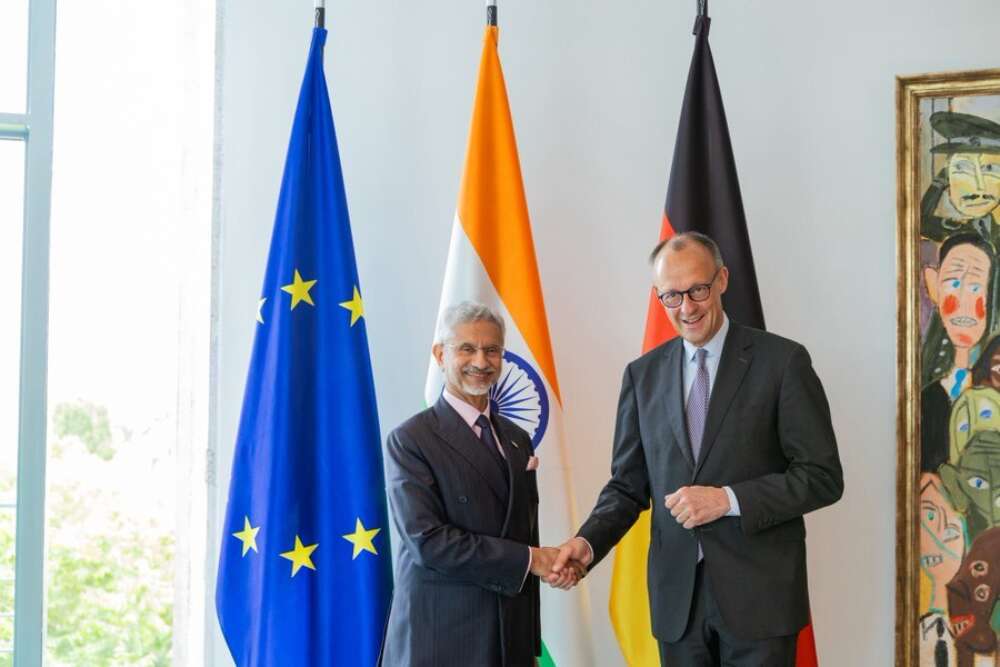
Germany’s opposition leader Friedrich Merz has suggested that a long-stalled trade agreement between the European Union and India could be clinched by the end of January, injecting momentum into negotiations that Brussels and New Delhi have struggled to close for more than a decade as global supply chains remain under strain from geopolitical frictions.

Speaking at a policy forum, Friedrich Merz said the bloc and India were “closer than many assume” to resolving key differences, adding that the economic case for a deal had sharpened after prolonged disruptions linked to strategic competition between major powers. His comments come as European manufacturers continue to grapple with uneven access to critical inputs following China’s tightening of export controls on minerals vital for electric vehicles, electronics and defence applications.

Negotiations for an EU–India free trade agreement were relaunched in 2022 after an eight-year hiatus, with both sides aiming to expand trade that exceeded €120 billion in goods and services last year. Officials involved in the talks say progress has been made on tariff reductions and rules governing digital trade, though sensitive areas such as agriculture, labour standards and intellectual property remain contentious. Merz’s remarks underscore a growing sense in Berlin and other capitals that the agreement has moved from a strategic aspiration to an economic necessity.

Germany, Europe’s largest economy, has been among the strongest advocates of diversifying trade ties beyond China, particularly after export controls imposed by Beijing on gallium, germanium and graphite created months of bottlenecks for automotive and renewable energy firms. Those controls, introduced amid the broader U. S.–China trade dispute, highlighted vulnerabilities in Europe’s dependence on a narrow set of suppliers for critical raw materials.

Executives in the auto sector say shortages of battery-grade materials last year forced production adjustments and delayed investment decisions. While some supply has since stabilised, industry groups argue that long-term resilience requires deeper partnerships with alternative producers and manufacturing hubs. India, with its expanding industrial base and policy push to attract foreign investment, has emerged as a central pillar of that strategy.

European officials note that the proposed agreement would not only cut tariffs—currently as high as 60 per cent on some vehicles entering India—but also establish clearer rules for public procurement and data flows. For India, the deal promises greater access to the European market for pharmaceuticals, textiles and IT services, while also encouraging technology transfer and skills development.

Trade analysts caution that closing the pact by late January would require political compromises on both sides. European negotiators have pressed for stronger environmental and labour commitments, while Indian counterparts have sought flexibility to protect small farmers and domestic manufacturers. Still, the geopolitical context is shifting calculations. The European Union has accelerated its “open strategic autonomy” agenda, seeking to balance openness with security of supply, and India has signalled willingness to align more closely with Western economies without abandoning its strategic independence.

Merz’s intervention also reflects domestic pressures within Germany, where exporters are seeking new growth markets as demand in China cools. German industry groups have repeatedly urged policymakers to prioritise agreements with fast-growing economies, arguing that delays risk ceding ground to competitors from East Asia and North America.

The broader backdrop includes intensifying scrutiny of China’s role in global supply chains. Beijing has defended its export controls as legitimate measures to safeguard national security and manage resources, but the ripple effects have reinforced calls in Europe for diversification. The European Commission has already launched initiatives to secure access to lithium, cobalt and rare earths through partnerships in Africa, Latin America and Asia, with India seen as both a market and a manufacturing partner.

Diplomats familiar with the EU–India talks say technical chapters are largely drafted, leaving political decisions to bridge remaining gaps. Any agreement would still need approval from member states and the European Parliament, a process that could extend beyond the negotiating deadline even if a political deal is struck.

Government authorities are moving to compel smartphone manufacturers to submit portions of their operating system source code for mandatory security audits, escalating a standoff with global technology companies that warn such a requirement could undermine intellectual property protections and user privacy. The proposal, under discussion within policy circles in New Delhi, reflects mounting concern about cyber intrusions, supply-chain vulnerabilities and the growing role of mobile devices in payments, governance and national security.

Officials familiar with the matter say the plan would require vendors selling smartphones in the country to make critical software components available for inspection by government-approved laboratories. The focus would be on core operating system layers, firmware and security modules rather than consumer-facing applications. Proponents argue that access to code is essential to verify whether hidden vulnerabilities, backdoors or insecure update mechanisms could be exploited by hostile actors.

The push has brought the government into direct tension with companies such as Apple and Samsung, whose devices dominate the premium and mass-market segments. Executives and industry representatives have privately conveyed resistance, arguing that exposing proprietary code, even to auditors bound by confidentiality, creates unacceptable risks of leaks and reverse engineering. They also contend that global platforms already undergo extensive third-party security testing and comply with international standards.

At the heart of the debate is whether national security imperatives justify a departure from prevailing global norms. Countries including China and Russia operate regimes that allow state scrutiny of technology products, though often under opaque processes that foreign firms say are difficult to reconcile with commercial safeguards. Western regulators have largely relied on certification frameworks, vulnerability disclosure programmes and cooperation with vendors rather than direct access to source code. India’s approach, if formalised, would place it closer to the former camp, potentially setting a precedent for other large emerging markets.

Government officials counter that smartphones have become gateways to sensitive data far beyond personal communications. Devices are routinely used for digital identity verification, financial transactions and access to public services. Any systemic weakness could have cascading effects. They also point to a rise in sophisticated cyber operations attributed by security researchers to state-linked groups, arguing that reliance on vendor assurances is no longer sufficient.

The proposal is understood to be steered by the Ministry of Electronics and Information Technology, which has expanded its remit in cybersecurity and digital governance. Policy discussions have examined models ranging from escrow-based code access, where source material is held by a trusted intermediary, to controlled on-site inspections without code being copied. Each option presents trade-offs between assurance and exposure.

Industry bodies warn that mandatory disclosure could chill investment and complicate product launches. Smartphone operating systems are developed on global codebases, updated frequently and protected by layers of licensing agreements with component suppliers. Altering that structure for a single market risks fragmenting development and delaying security patches. There are also concerns about reciprocity: once one jurisdiction demands code access, others may follow, multiplying compliance burdens.

Privacy advocates occupy an ambivalent position. Some support deeper scrutiny to ensure devices do not surreptitiously collect or transmit data. Others caution that state access to low-level software could itself become a vector for abuse if oversight is weak. They stress the need for transparent audit criteria, independent supervision and clear limits on how findings are used.

The commercial stakes are significant. India is one of the world’s largest smartphone markets by volume and a critical manufacturing hub under production-linked incentive schemes. Companies have invested heavily in assembly plants and local supply chains, betting on policy stability. A protracted dispute over code access could influence decisions on future capacity and research investment, even if an outright exit is unlikely.

VISHNU RAJA
RYO YAMADA
HITORI GOTOH
IKUYO KITA