News related to
federal

JPMorgan Chase has played down claims that stablecoins pose a systemic threat to the banking sector, diverging from warnings issued by banking trade groups that argue the growth of yield-bearing digital tokens could drain deposits and undermine credit creation across the United States. The debate intensified after the American Bankers Association sent a letter to the U. S. Senate cautioning that certain stablecoins, particularly those offering interest […]

Senate Republicans are accelerating plans to bring a sweeping cryptocurrency bill to a vote, betting that momentum and industry pressure can overcome lingering Democratic reservations even as bipartisan talks remain unsettled. The move was confirmed late on Friday by the chair of the Senate Banking Committee, who said the panel would press ahead with scheduling despite parallel efforts by the Senate Agriculture Committee to refine a cross-party […]

Federal regulators have approved a major expansion of SpaceX’s Starlink satellite network, clearing the company to deploy up to 7,500 additional second-generation spacecraft and lifting the authorised constellation to about 15,000 satellites, a decision that deepens the company’s lead in the fast-growing satellite broadband market while tightening safeguards around orbital congestion and interference. The Federal Communications Commission’s order allows SpaceX to activate the first tranche of its […]

President Donald Trump announced the cancellation of a planned second wave of military attacks on Venezuela, pointing to improved cooperation from the country’s interim leadership and gestures such as the release of political prisoners and discussions on oil infrastructure. The decision marks a shift in the U. S. approach after its forces ousted Venezuelan President Nicolás Maduro earlier this month, and underscores Washington’s focus on stabilising relations […]

Arabian Post Staff -Dubai UAE’s national railway operator Etihad Rail has outlined the rollout of the country’s first passenger railway network, marking a significant expansion of the federal transport system that will connect 11 cities and regions through a series of strategically located stations scheduled to become operational this year. The passenger rail service builds on the national freight network that has been running since 2023 and […]

Donald Trump has said he will not grant a presidential pardon to Sam Bankman-Fried, the former chief executive of the collapsed cryptocurrency exchange FTX, making clear that the disgraced entrepreneur will continue to serve his prison sentence if Trump returns to the White House. Speaking in an interview, Trump dismissed speculation that he might intervene on behalf of Bankman-Fried, who was sentenced to 25 years in federal […]

  President Donald Trump has unveiled a proposal to bar large institutional investors from purchasing single-family homes from 2026, framing the move as a bid to ease housing affordability pressures and tilt the market back towards owner-occupiers. The announcement, delivered during a campaign-style address, triggered immediate market reactions and reopened a contentious debate over the role of corporate capital in the US housing market. Under the plan […]

Advertisements

US Treasury Secretary Scott Bessent has intensified pressure on the Federal Reserve to expand interest rate reductions as policymakers and markets grapple with divergent views on the path of monetary policy. Bessent has framed his stance around concerns that ongoing high borrowing costs are weighing on key sectors of the economy and that more aggressive rate cuts are necessary to support growth and stability, a perspective that […]

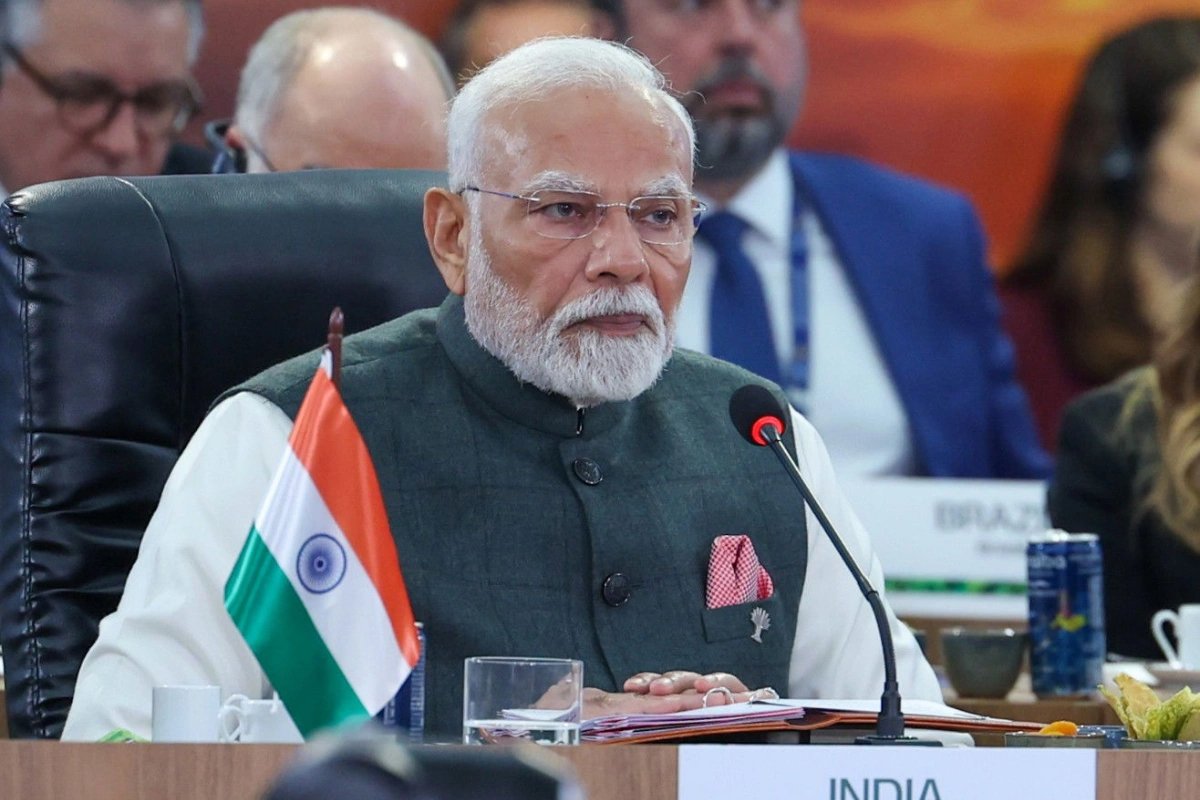
By Nitya Chakraborty India’s isolation from Global South on the issue of Trump’s invasion of Venezuela is now complete. Prime Minister Narendra Modi claims himself as the leader of Global South. Both at the SCO summit and BRICS meeting last year, Modi was active in articulating the aspirations and the programmes of the developing and […]

The article Narendra Modi Has Lost His Moral Right To Lead 2026 BRICS Presidency appeared first on Latest India news, analysis and reports on Newspack by India Press Agency).

World leaders have mounted robust diplomatic resistance against Washington’s unprecedented military operation that ousted Venezuelan President Nicolás Maduro and brought him to the United States to face federal charges. Amid escalating rhetoric from President Donald Trump’s administration about extending U. S. influence beyond Venezuela, governments in Latin America, Europe and Asia have criticised what they view as a breach of international norms and a threat to national […]

Canada’s airline sector is bracing for sharper competition after Ottawa moved to widen market access for carriers from the Middle East, a shift that industry executives and analysts say could force domestic airlines to improve pricing, punctuality and onboard service as more long-haul capacity enters the market. The policy change, announced through updated air transport arrangements, gives carriers based in the Gulf greater flexibility to add frequencies […]

United Arab Emirates will assume the presidency of the Middle East and North Africa Financial Action Task Force in 2026, placing the country at the centre of regional efforts to strengthen safeguards against money laundering, terrorist financing and the proliferation of illicit funds. The appointment comes at a time when the bloc is seeking tighter coordination among member states as cross-border financial flows grow in scale and complexity.

MENAFATF brings together 21 jurisdictions across the Middle East, North Africa and neighbouring regions, representing a combined gross domestic product estimated at more than $3 trillion. The organisation functions as the regional body aligned with the global Financial Action Task Force standards, conducting peer reviews, issuing guidance and supporting members as they implement international rules designed to protect financial systems from abuse.

The decision for the UAE to lead the organisation follows its expanding role in financial regulation and enforcement across the region. Federal authorities have invested heavily in strengthening supervision of banks, exchange houses, designated non-financial businesses and professions, while also expanding cooperation with international counterparts. Officials involved in the process describe the presidency as recognition of the country’s progress in aligning domestic frameworks with global benchmarks and its capacity to convene consensus among diverse economies.

During its term, the UAE is expected to steer MENAFATF’s strategic agenda, including the scheduling of mutual evaluations, thematic studies and capacity-building programmes. These initiatives are central to helping member states address gaps identified in national risk assessments and respond to emerging typologies such as the misuse of virtual assets, trade-based money laundering and complex ownership structures.

Regulatory specialists say the presidency carries influence beyond administrative oversight. The chair country plays a pivotal role in shaping discussions on policy priorities, coordinating technical assistance and representing the region in dialogue with global standard-setters. This places added scrutiny on how effectively the bloc can balance the varied economic structures and legal systems of its members while maintaining consistent application of standards.

The UAE has signalled that cooperation and practical implementation will be key themes of its tenure. Policymakers have spoken about deepening information-sharing among financial intelligence units, enhancing public-private partnerships and supporting jurisdictions that face capacity constraints. Such measures are viewed as essential for raising overall compliance levels and reducing vulnerabilities that can be exploited across borders.

MENAFATF members span hydrocarbon-rich Gulf economies, large consumer markets in North Africa and smaller states with developing financial sectors. This diversity has historically posed challenges in achieving uniform progress. Analysts note that leadership will need to balance ambition with pragmatism, ensuring that reforms are realistic and tailored to local contexts while still meeting international expectations.

The presidency also coincides with broader shifts in the region’s financial landscape. Digital payments, fintech platforms and virtual assets have expanded rapidly, creating new opportunities for inclusion but also new risks. Addressing these developments requires updating supervisory tools, training regulators and fostering dialogue with technology providers. Observers expect the UAE to push for clearer regional guidance in these areas, building on its own experience in regulating emerging financial services.

Another area likely to feature prominently is the effectiveness of enforcement. While many jurisdictions have strengthened legal frameworks, translating laws into successful investigations and prosecutions remains uneven. MENAFATF’s peer review process increasingly emphasises outcomes, not just technical compliance. Under UAE leadership, the organisation is expected to encourage members to demonstrate tangible results in asset recovery, sanctions and international cooperation.

Diplomats familiar with the process say the appointment also reflects confidence in the UAE’s ability to engage constructively with both regional partners and global institutions. The country has positioned itself as a bridge between markets, hosting multinational financial institutions and acting as a hub for trade and investment. That role brings responsibilities, particularly in ensuring that financial openness is matched by robust controls.

Swiss authorities have moved swiftly to block any financial assets within their jurisdiction linked to Venezuela’s deposed President Nicolás Maduro and associates, ordering freezes with immediate effect after his arrest by United States forces and transfer to the United States to face narco-terrorism charges. The decision by the Swiss Federal Council is set to remain in place for four years, aimed at preventing the outflow of potentially […]

Aviation in the United Arab Emirates has deepened its role as a strategic pillar of the national economy, with 2025 marking a year of consolidation that underscored the sector’s influence on trade, tourism, logistics and supply chains. Policymakers and industry leaders say the ecosystem’s direct and indirect contribution has reached as much as 18 per cent of gross domestic product, reflecting the scale of activity generated by airlines, airports, maintenance hubs, free zones and aviation-linked services.

Passenger and cargo volumes across the federation continued to trend higher, supported by steady growth in international travel demand and the country’s positioning as a crossroads between Asia, Europe and Africa. Major hubs operated by Dubai Airports and Abu Dhabi Airports handled sustained traffic flows as carriers expanded networks and frequencies. Capacity discipline and targeted route additions allowed operators to absorb higher volumes while maintaining service standards, reinforcing the UAE’s reputation for operational reliability.

Flag carriers remained central to the sector’s momentum. Emirates Airline pressed ahead with fleet renewal and network optimisation, focusing on long-haul markets that underpin connectivity for tourism and business travel. Etihad Airways pursued a parallel strategy centred on profitability and partnerships, aligning growth with demand and strengthening Abu Dhabi’s role as a transfer hub. Together, the airlines’ scale supported ancillary industries ranging from catering and ground handling to training and aviation finance.

Cargo performance remained a defining feature of the year. Dedicated freighter operations and belly-hold capacity benefited from the UAE’s role in high-value, time-sensitive shipments, including pharmaceuticals, perishables and e-commerce. Logistics providers highlighted improved customs processes and digital clearance systems as key enablers, allowing faster turnaround times and reinforcing confidence among multinational shippers. The integration of air cargo with ports and free zones helped sustain supply chains amid ongoing adjustments in global trade patterns.

Governance and regulation were cited by executives as competitive advantages. The General Civil Aviation Authority continued to align oversight with international standards while supporting innovation through performance-based regulation. Industry participants pointed to predictable policy frameworks and coordinated planning between federal and emirate-level authorities as factors that reduced friction for investors and operators.

Sustainability initiatives gathered pace across airlines and airports, reflecting both regulatory expectations and commercial imperatives. Carriers advanced fuel-efficiency programmes through newer aircraft types and operational measures, while airports invested in energy management, waste reduction and water stewardship. Trials involving sustainable aviation fuel expanded through partnerships with energy suppliers and research institutions, positioning the UAE as an early mover in the region’s decarbonisation efforts. While volumes of alternative fuels remain limited, industry leaders argued that early adoption builds expertise and supply-chain readiness.

Technology adoption also shaped the sector’s evolution. Biometric processing, predictive maintenance and data-driven air traffic management systems were rolled out to improve efficiency and resilience. Airports leveraged automation to manage peak flows without proportional increases in staffing, while airlines used analytics to refine scheduling and revenue management. These investments were framed as necessary to accommodate future growth while preserving service quality.

The aviation workforce expanded alongside operations, with training academies and partnerships focusing on pilots, engineers and air traffic specialists. Officials emphasised localisation and skills development as priorities, citing aviation’s role in high-value employment and knowledge transfer. At the same time, competition for specialised talent remained intense, prompting employers to enhance retention and career progression pathways.

Tourism authorities linked aviation capacity directly to visitor inflows, noting that air connectivity underpins hotel occupancy, events and retail activity. Route launches and increased frequencies supported diversification into new source markets, aligning with broader economic strategies aimed at reducing reliance on hydrocarbons. Business travel and exhibitions contributed to premium traffic, reinforcing the UAE’s positioning as a regional commercial hub.

Matein Khalid 2026 has started with a bullish bang for my Dr. Copper trade, even though a single trading session when half of Asia is still getting over its New Year’s Day hangover is hardly an optimal sample size. Yet as I see LME spot copper trade at $12500 a metric ton, I feel exhilarated as this is precisely the breakout I flagged for my friends and […]

Federal reforms regulating industrial hemp are reshaping the treatment landscape for sleep disorders, anxiety and epilepsy across the United Arab Emirates, as clinicians, researchers and regulators map how low-THC cannabis derivatives can be used safely within a tightly controlled system. The changes sit apart from the country’s framework on medical cannabis, which governs products with higher tetrahydrocannabinol content and remains subject to strict prescription and import rules.

The hemp law permits the cultivation, processing and use of cannabis varieties containing minimal THC, typically below 0.3 per cent, aligning the UAE with regulatory models adopted in several advanced economies. Officials say the objective is to unlock therapeutic and industrial value without opening pathways to recreational misuse. For patients, the most immediate implications are for cannabidiol-based preparations, which are non-intoxicating and increasingly studied for neurological and psychiatric conditions.

The policy shift creates new clinical options for people whose symptoms have proved resistant to conventional therapies. Insomnia and generalised anxiety disorder affect a growing share of the population, while epilepsy continues to pose treatment challenges for a subset of patients who do not respond adequately to standard anti-seizure medicines. Cannabidiol, or CBD, has drawn attention for its calming effects on the central nervous system and its role in reducing seizure frequency in certain epilepsy syndromes.

Specialists caution that hemp products are not a panacea. Evidence is strongest for specific childhood epilepsies, including Dravet and Lennox-Gastaut syndromes, where purified CBD has been shown to reduce seizure burden when added to existing regimens. Research into anxiety and sleep has produced more mixed findings, though small clinical trials and observational studies suggest benefits for sleep onset and stress modulation at carefully titrated doses.

Professor Barnes, a leading authority on cannabis medicine, notes that the global legal landscape has shifted rapidly. Medical cannabis containing higher THC levels is now legal in 71 countries under varying frameworks, reflecting broader acceptance of cannabinoid-based therapies when appropriately regulated. The UAE’s approach, by contrast, draws a bright line between hemp-derived products and medical cannabis, allowing limited therapeutic use while preserving the country’s zero-tolerance stance on recreational drugs.

Regulators emphasise that access will be medicalised rather than commercialised. Hemp-derived therapeutics are expected to move through pharmacy channels and clinical oversight, with product quality, labelling and traceability forming core pillars of compliance. Authorities have indicated that cultivation licences will be tightly issued, with genetics, THC thresholds and testing protocols specified to prevent diversion.

Healthcare providers see an opportunity to expand personalised care. Neurologists and psychiatrists report rising patient interest in non-sedating options that can be integrated with existing treatments. For epilepsy specialists, CBD’s favourable side-effect profile compared with some traditional anti-epileptic drugs is a significant draw, particularly for long-term management. Sleep physicians, meanwhile, are exploring whether hemp-derived formulations can reduce reliance on hypnotics that carry dependency risks.

Industry participants are preparing cautiously. Pharmaceutical distributors and research institutions are investing in clinical studies tailored to regional populations, recognising that dosage, formulation and delivery methods matter as much as legality. Oils, capsules and oral solutions are expected to dominate, given their dosing precision and lower risk profile compared with inhaled products.

Public health experts underline the need for clear guidance to avoid consumer confusion. Hemp products sold globally range from pharmaceutical-grade medicines to wellness supplements of uneven quality. The UAE framework seeks to close that gap by requiring evidence-based claims and physician involvement, reducing the risk of self-medication or exaggerated expectations.

The reforms also intersect with broader innovation goals. By enabling controlled research into cannabinoids, policymakers aim to position the country as a regional hub for life sciences, while maintaining strict ethical standards. Universities and hospitals are already collaborating on protocols to assess safety, efficacy and long-term outcomes in local cohorts.

UAE authorities have overhauled how excise tax is calculated on sweetened beverages from January 1, introducing a tiered, volumetric model that directly links the tax payable to the amount of sugar and other sweeteners contained in a drink. The change, announced by the Federal Tax Authority, marks a decisive move away from the previous flat-rate approach and places product formulation at the centre of tax outcomes for […]

Ilya Lichtenstein, the convict at the centre of one of the largest bitcoin thefts in history, has walked free from federal custody ahead of his full sentence, publicly attributing his early release to the First Step Act, a criminal justice reform law enacted in 2018 under President Donald Trump. Lichtenstein’s abrupt return to civilian life after serving about 14 months of a five-year term for laundering nearly […]

Dollar trading opened the new year on firmer ground on Friday, extending a modest rebound after a bruising twelve months that marked its weakest annual performance in eight years, as investors reassessed the outlook for United States interest rates and global growth.

The greenback edged higher against a basket of major peers in early European dealings, with the yen drifting back towards levels last seen in the spring and the euro slipping slightly after gains built up over the previous year. Market participants described the move as cautious rather than decisive, reflecting thin liquidity and lingering uncertainty over policy direction in Washington.

Currency strategists said the dollar’s fragile recovery followed heavy selling through much of last year, when expectations of rate cuts by the Federal Reserve and easing inflation undercut the yield advantage that had supported the currency in earlier cycles. At the same time, improving growth prospects outside the United States encouraged investors to rotate towards higher-yielding or undervalued alternatives.

Against the yen, the dollar climbed back towards the upper end of its trading range, hovering near a ten-month high. The Japanese currency has remained under pressure amid a persistent gap between domestic borrowing costs and those in the United States, even as Tokyo has signalled a gradual move away from ultra-loose policy. Traders noted that the yen’s slide was less abrupt than in past episodes, reflecting continued sensitivity to the risk of official intervention.

The euro eased after a strong performance last year, when slowing inflation and steady growth in parts of the euro zone boosted confidence in the region’s economic resilience. Analysts cautioned that the single currency’s trajectory would depend heavily on whether European policymakers deliver further easing or pause to assess wage pressures and fiscal spending plans.

Sterling traded in a narrow band, supported by signs of stabilising inflation but weighed by questions over the durability of domestic growth. Emerging market currencies showed mixed moves, with higher-yielding units holding up better as investors searched for carry opportunities, while those linked to commodities reacted to softer prices in energy and metals.

Market focus remains fixed on forthcoming United States data releases, including employment and inflation indicators that could shape expectations for policy adjustments later in the year. While inflation has moderated from its peak, officials have stressed that decisions will be driven by incoming data rather than preset timelines, a stance that has kept rate forecasts in flux.

Some investors argue that the dollar’s decline last year went too far, pointing to the size and liquidity of United States markets and the economy’s capacity to absorb tighter financial conditions. Others counter that structural forces, including a narrowing growth gap with other advanced economies and rising fiscal deficits, could cap any sustained rebound.

Central banks outside the United States are also recalibrating. In Japan, policymakers are weighing how quickly to normalise after years of stimulus without destabilising markets. In Europe, debates continue over balancing support for growth with the need to anchor inflation expectations. These cross-currents have injected volatility into foreign exchange markets, even as overall trading ranges remain narrower than during periods of crisis.

Commodity prices have added another layer of complexity. Oil has softened amid ample supply, trimming support for currencies of major exporters, while gold’s pullback has reduced its appeal as a hedge against currency weakness. Equity markets have started the year on a cautious note, reinforcing demand for safe and liquid assets.

Abu Dhabi has enacted two federal decree laws reshaping the legal architecture of the country’s capital markets, signalling a renewed push to strengthen regulatory independence, align oversight with global standards and reinforce investor confidence in one of the region’s most active financial hubs. The twin decree laws, covering the Capital Market Authority and the broader regulation of capital markets, form part of a wider programme aimed at […]

The United Arab Emirates is on course to generate more than one million additional jobs by 2030, placing it among the world’s fastest-expanding labour markets as economic diversification, technology adoption and population growth intensify demand for skilled workers, according to a workforce outlook released by ServiceNow.

The projection underscores the scale of change under way in the UAE’s employment landscape, where public and private sector investment is being channelled into advanced industries, digital services, clean energy, logistics and financial technology. Policymakers have positioned job creation as a central pillar of national economic strategy, linking employment growth to productivity gains, innovation and long-term competitiveness.

ServiceNow’s analysis indicates that the strongest employment momentum is emerging in technology-led roles, particularly in cloud computing, artificial intelligence operations, cybersecurity, data analytics and enterprise software services. Demand is also rising for professionals who can combine technical skills with business process expertise, reflecting the increasing automation of workflows across government entities, banks, energy companies and logistics firms.

This expansion is unfolding alongside steady population growth driven by immigration, as professionals from Asia, Europe and Africa relocate to the UAE for work opportunities. Labour market specialists say the inflow of skilled workers has become an economic asset, helping employers fill gaps in high-value roles while supporting consumption and domestic demand.

Beyond technology, job creation is expected to be broad-based. Construction and real estate continue to absorb labour as infrastructure spending remains strong, while tourism, hospitality and aviation are benefitting from sustained visitor growth and expanding airline capacity. Healthcare and education are also projected to add sizeable numbers of jobs as authorities invest in social infrastructure to support a larger and more diverse population.

The digital transformation of government services has emerged as a significant employment driver. Federal and emirate-level entities are accelerating the shift towards paperless operations, data-driven decision-making and AI-enabled public services. This has increased demand for systems architects, digital policy specialists and programme managers who can oversee complex technology deployments while ensuring regulatory compliance and data security.

Employers are also rethinking workforce structures as automation changes how tasks are performed. Routine administrative roles are increasingly being replaced or augmented by software platforms, while new positions are emerging in system oversight, process design and user experience management. Analysts say this transition is not eliminating jobs at scale but reshaping them, with a premium placed on adaptability and continuous learning.

Education and training institutions are responding by expanding programmes focused on digital skills, coding, data science and cyber resilience. Partnerships between universities, vocational institutes and multinational firms are becoming more common, aimed at aligning curricula with labour market needs. Corporate upskilling initiatives are also gaining traction as employers seek to retrain existing staff rather than rely solely on external hiring.

Wage dynamics are expected to reflect these shifts. Salaries in high-demand technology and specialist roles have been rising faster than the broader market, while competition for experienced professionals has intensified. Human resources consultants note that non-salary benefits, including flexible working arrangements, career progression pathways and residency incentives, are increasingly important in attracting and retaining talent.

The ServiceNow report places the UAE’s projected job growth ahead of many mature economies, where ageing populations and slower productivity gains are constraining employment expansion. By contrast, the UAE’s relatively young workforce, openness to foreign talent and willingness to adopt new technologies are seen as structural advantages.

Challenges remain, particularly around ensuring that job creation keeps pace with population growth and that skills mismatches do not widen. Economists warn that without sustained investment in education and training, shortages could emerge in critical areas, potentially pushing up labour costs and slowing project delivery. There is also a need to integrate more nationals into private-sector roles, a long-standing policy objective supported by wage subsidies, training schemes and regulatory measures.


Federal vehicle safety regulators have opened a probe into the emergency door release mechanism on the Tesla Model 3 following complaints that occupants may struggle to exit the vehicle during power failures or after crashes, raising concerns about passenger safety in critical moments. The National Highway Traffic Safety Administration said its Office of Defects Investigation has begun a preliminary evaluation after receiving reports that the manual door […]

By K Raveendran Gold’s surge has turned a long-running Indian household instinct into a global macro trade. With spot prices pressing above the $4,500 an ounce mark late in 2025 and year-to-date gains running above 70 percent, the metal is headed for its strongest annual performance since 1979. The question now animating dealing rooms as […]

The article Gold’s Race To Magic $5000 Most Keenly Watched Milestone For 2026 appeared first on Latest India news, analysis and reports on Newspack by India Press Agency).

A sweeping federal decree-law has set out a unified legal framework aimed at protecting minors from online harm across the UAE’s fast-expanding digital ecosystem, placing clear duties on internet service providers and digital platforms that operate within the country or target users based there. The legislation signals a tougher regulatory posture as children’s screen time rises and online services become more embedded in everyday life. The decree-law […]

VISHNU RAJA
RYO YAMADA
HITORI GOTOH
IKUYO KITA