News related to
federal

The GCC bond market has experienced a surge in activity this week, with borrowers from various sectors seizing the opportunity to tap into favourable financial conditions. The tightening of borrowing costs has created a window of opportunity for sovereigns, banks, and corporations, leading to a total of nine mandates being issued.

The rush for capital comes at a time when borrowing costs have reached historically low levels. For many issuers, this represents an ideal moment to lock in cheap debt ahead of any potential future rate hikes. Among the most notable developments in this surge are the issuances of subordinated US dollar-denominated instruments, which have become increasingly popular among borrowers.

Sovereign issuers have been particularly active, with a mix of established and emerging players entering the market to raise funds for various development projects. These sovereign bonds are typically seen as safe investments, attracting strong interest from global investors. The preference for subordinated debt, which is ranked lower than senior debt in the event of default, reflects the confidence investors have in the region’s economic stability despite global uncertainties.

Banks, too, have been prominent participants in this market rally. With liquidity abundant, financial institutions have been eager to raise funds through bonds in order to strengthen their balance sheets and support lending activities. Several major GCC banks have launched bond issues, with a focus on long-term debt offerings to manage their refinancing needs and capital adequacy requirements.

Corporate borrowers, meanwhile, have been drawn to the bond market as a means of financing expansion and strategic initiatives. In particular, companies with strong credit ratings have capitalised on the tight borrowing conditions to secure funding at competitive rates. The demand for subordinated instruments has allowed corporates to issue debt with slightly higher yields, while still benefiting from the current low-rate environment.

One of the key drivers behind this bond market activity is the broader economic stability in the GCC region. Despite global challenges such as oil price volatility and geopolitical tensions, the region’s sovereign wealth funds and strong fiscal management have provided investors with confidence. Additionally, the implementation of economic diversification strategies across the Gulf States has helped bolster investor sentiment.

Another contributing factor is the continued strength of the US dollar, which is pegged to most of the GCC currencies. With the Federal Reserve maintaining its policy stance and the dollar remaining strong, issuers are able to tap into deep liquidity pools from global investors who are looking to park funds in stable currencies. As a result, demand for US dollar-denominated bonds from the GCC remains robust, particularly in the context of tightening global financial conditions.

The trend towards subordinated debt issuance has also been partly driven by investor demand for higher-yielding instruments, as investors seek returns in an otherwise low-interest-rate environment. Subordinated debt typically offers a higher yield due to its increased risk profile, making it attractive for investors seeking greater returns, especially as other asset classes provide limited growth.

Looking ahead, it is expected that this trend will continue in the short term as issuers capitalise on the current favourable market conditions. Analysts predict that the next few weeks may see even more issuances, as sovereigns and corporates look to take advantage of tight borrowing costs before any potential shifts in the global financial landscape.


A landmark agreement has been signed by the UAE clean-energy firm Masdar and Austrian integrated energy company OMV to establish a joint venture for the financing, construction and operation of a 140 MW green-hydrogen electrolyser plant at Bruck an der Leitha, Austria. The plant is expected to commence operations in 2027, following the commencement of construction in September 2025. OMV will hold a 51 per cent majority […]

A Washington D. C. jury has cleared former Department of Justice paralegal Sean Charles Dunn of a federal misdemeanor assault charge after he hurled a submarine-style sandwich at a U. S. Customs and Border Protection agent on 10 August, a moment captured on video and processed through a high-profile federal court trial. The verdict follows a grand jury’s refusal to indict Dunn on felony assault charges, triggering […]

By Nitya Chakraborty The historic victory of the Democratic socialist candidate Zohran Mamdani in New York mayoral elections on November 4 night is acting as a big booster, not only to the left wingers in the Democratic Party belonging to the Bernie Sanders group, but also to the left parties in Europe and Latin America. […]


The article Zohran Mamdani’s Victory As New York Mayor Has Given A Big Boost To Global Left appeared first on Latest India news, analysis and reports on Newspack by India Press Agency).

By TN Ashok NEW  YORK:When the polls closed at 9 p.m. on Tuesday, November 4, 2025, it took less than 40 minutes for the Associated Press to call the race. Zohran Mamdani, a 34-year-old democratic socialist and state assemblyman from Queens, had accomplished what many considered impossible just a year earlier: he defeated Andrew Cuomo—twice—to […]

The article The Mamdani Moment: A Political Earthquake In America’s Largest City appeared first on Latest India news, analysis and reports on Newspack by India Press Agency).

Canada is set to introduce a comprehensive federal framework aimed at regulating fiat-backed stablecoins under its 2025 budget. The plan mandates issuers to maintain full asset reserves, enforce redemption policies, and deploy robust risk-management and data-security protocols.

The regulatory scheme will be overseen by the Bank of Canada under the existing Retail Payment Activities Act, with the BoC allocating CAD 10 million over two years beginning in the 2026-27 fiscal year for implementation. Administration thereafter is expected to cost around CAD 5 million annually, to be offset through regulated-issuer fees.

This approach aligns Canada with the global trend in digital-asset regulation. The United States passed its own stablecoin legislation in July, placing pressure on Canada to move with similar urgency. The international stablecoin market currently stands above USD 300 billion and is projected to reach USD 2 trillion by 2028.

Regulated issuers will face specific requirements: they must hold reserves sufficient to cover outstanding stablecoins, enable immediate redemption at par value, and adopt risk protocols covering operational, credit, and market exposures. Issuers also must protect consumers’ personal and financial data and support national-security safeguards. Entities already operating as payment-service providers may need to transition under the Retail Payment Activities Act if they issue “prescribed stablecoins”.

Industry reaction has been broadly positive. The Canada arm of Coinbase called the framework “a watershed moment” that will “change how Canadians interact with money and the internet”. Fintech firms such as Tetra Digital and Wealthsimple, which are developing Canadian-dollar stablecoin offerings, have welcomed clarity of regulation as unlocking innovation. Nonetheless, some market commentators caution that tighter regulation must avoid stifling fintech entrants or pushing innovation offshore.

Canada’s decision follows a growing regulatory impetus. The BoC had earlier urged federal and provincial authorities to coordinate efforts on stable-coin regulation and payment-system modernisation, highlighting that Canada’s payment infrastructure lagged that of other advanced economies.

The timing of the regulatory initiative is notable. While the budget itself does not specify the exact date when the legislation will be tabled, it signals a shift toward payment-ecosystem reform. The budget also signals expansion of the BoC’s oversight of payment-service firms and accelerated deployment of the Real-Time Rail payments system expected to launch in 2026.

Analysts see multiple drivers behind the move: protecting consumers from stable-coin issuer failure; preserving monetary sovereignty by keeping domestic transactions off unregulated foreign stablecoins; encouraging competition and innovation in the payments sector; and aligning with international regulatory frameworks as digital assets blur traditional banking boundaries.

Some key challenges lie ahead. Defining which tokens qualify as “stablecoins” under the framework, and carving the issuer view between payment-instrument regulation and securities regimes at the provincial level, remain open. Enforcement mechanisms, cross-border coordination, and transitional arrangements for existing issuers will also test regulators’ capacity.

Under the announced funding plan, the BoC will allocate CAD 10 million over the first two years to establish regulation of stablecoin issuance and oversight, beginning in the 2026-27 fiscal period. Ongoing annual oversight costs of CAD 5 million will be recouped via licensed-issuer fees. Regulators assert that the initiative will support faster, cheaper and safer payment flows for Canadians while reducing reliance on unregulated digital tokens.

Extends Agentic AI Safety from infrastructure to application with agentless EDR and integrated guardrails to secure next-generation AI factories HONG KONG SAR – Media OutReach Newswire – 5 November 2025 – Trend Micro Incorporated (TYO: 4704; TSE: 4704), a global cybersecurity leader, today announced a new integration with NVIDIA BlueField, which embeds protection directly into the data center layer for more secure and scalable AI factories. This […]

Advertisements

The governments of the northern United Arab Emirates have taken a bold step into natural-hydrogen exploration with the collaboration among the Sharjah National Oil Corporation, Siemens Energy and Decahydron to assess the use of naturally occurring hydrogen for power generation and other industrial applications. This marks a decisive departure from traditional fossil reliance and underscores Sharjah’s ambition to secure a foothold in the emerging hydrogen economy. The initiative rides on ongoing technical studies by Decahydron and SNOC at an existing exploration well in Sharjah, with initial findings reported as encouraging and further drilling scheduled for 2026 to gather detailed resource data and measure flow rates.

The emerging project will evaluate whether natural hydrogen — distinct from hydrogen produced by electrolysis or reforming — can feed power turbines or serve heavy industry without the extensive storage, transport and conversion infrastructure typically required for conventional “green” or “blue” hydrogen. Siemens Energy brings its global hydrogen and energy-system expertise into the alliance, while Decahydron focuses on mineralisation and subsurface hydrogen resources. SNOC, as the emirate-owned upstream and midstream energy company, provides the local infrastructure and regulatory engagement needed to steer the resource development. The companies frame the effort as a potential new low-carbon energy source that could serve data centres, manufacturing plants and other energy-intensive uses in the UAE.

Figures within the consortium underscore the significance of the move. SNOC’s chief executive, Khamis Al Mazrouei, said the feasibility study could mark “a new chapter in Sharjah’s energy landscape—providing an abundant, naturally occurring source of clean energy.” Siemens Energy’s UAE managing director, Khalid Bin Hadi, described hydrogen as central to decarbonising the power sector, adding that this collaboration sets a new course for natural-hydrogen in the Gulf region. Decahydron’s CEO, Arnaud Lager, said early findings suggest the potential for continuous supply directly from subsurface sources and that Sharjah and the northern Emirates hold “exceptional potential”.

Global context reinforces the ambition behind the project. The UAE aims to become one of the top ten hydrogen-producing countries and to capture a 25 per cent share of the low-carbon hydrogen key markets, according to statements from leading federal energy officials. Sharjah’s drive aligns with this broader national strategy. Previously SNOC announced its intent to explore green hydrogen and carbon capture within its portfolio as part of its pathway to net-zero emissions. Now the emphasis on naturally occurring hydrogen marks a notable shift in approach.

The technical front remains complex. Natural hydrogen projects remain nascent worldwide, with questions around resource size, continuity of flow, well economics, contaminants and commercial usability still to be resolved. The Sharjah initiative is built on preliminary well-site data, but the drilling slated for 2026 will be critical in determining resource scale and flow rate viability, which in turn will affect whether the hydrogen can be used directly for power generation or whether it will need conversion. Siemens Energy’s role will involve analytical and technical verification of commercial potential, while SNOC’s project governance will oversee permitting, regulatory interaction and integration with Emirate infrastructure.

Industrial demand in the Gulf region adds urgency to the project. With increasing energy consumption from data centres, hydrogen applications in manufacturing, and a drive to decarbonise hard-to-abate sectors, natural hydrogen presents a complementary path to electrolytic hydrogen and renewables. The potential upside includes bypassing some of the cost and complexity of hydrogen storage and pipeline transport by tapping subsurface reservoirs directly. If proven viable, the Sharjah project could serve as a model for other Middle East jurisdictions investigating hydrogen from unconventional sources.

Strategic risks remain. Project economics will depend on the continuity and purity of hydrogen flows, the cost of drilling and well development, regulatory frameworks, and the readiness of industrial hosts to adapt infrastructure. Market competition is intensifying: electrolytic green hydrogen is scaling rapidly and could outpace unconventional hydrogen if production and storage costs fall further. Moreover, hydrogen certification, transport logistics, and industrial offtake agreements remain evolving domains globally. For Sharjah and the GNOC-Siemens-Decahydron alliance, time to commercial decision-making will be an important metric.

Crypto markets experienced a sharp upheaval as the price of Bitcoin slid below the US $100,000 mark for the first time in approximately six months, while Ethereum plunged to levels near US $3,000. As a result, leveraged positions totalling around US $2 billion were liquidated within a 24-hour period.

The downturn began when Bitcoin fell to about US $99,000, triggering a cascade of forced unwinds in futures and perpetual contracts. According to data providers, more than 80 per cent of these losses stemmed from long bets, amounting to approximately US $1.6 billion. Ethereum’s drop—exceeding 20 per cent over two days—added nearly US $1 billion in liquidations in the same timeframe. The broader crypto market capitalisation slipped to roughly US $3.4 trillion, marking its lowest level in four months.

Analysts point to a confluence of factors driving the sell-off. The Federal Reserve’s cautious comments about future policy signalled the end of easy money for risk assets and prompted a rise in the US dollar index and treasury yields—both typically adverse for cryptocurrencies. Weakening institutional demand compounded the problem, as cumulative outflows from spot Bitcoin exchange-traded funds and related vehicles exceeded US $1.3 billion in the days leading to the crash. Algorithm-driven trades amplified the move: Bitcoin breached its 200-day exponential moving average near US $109,800 and touched technical support around US $100,000, triggering automated sell orders.

The liquidation event has wider implications for investor sentiment and the structure of the crypto market. The so-called Fear & Greed index plunged into the “extreme fear” zone, while open interest in perpetual futures contracts dropped as many leveraged players exited. On-chain metrics show historic wallets transferring tens of thousands of Bitcoin to exchanges, signalling profit taking by long-term holders. Yet some argue the correction could serve as a cleansing phase for the market: by flushing out excessive leverage, the environment may become healthier for the next leg of the cycle.

Despite the turbulence, there are signs that structural demand remains intact. Large-scale buyers such as MicroStrategy continue to accumulate Bitcoin—its holdings now exceed 641,000 BTC. Meanwhile, infrastructure-oriented developments in decentralised physical infrastructure networks and the convergence of blockchain with artificial intelligence are still attracting investor interest. Nevertheless, the immediate path forward is fraught. Analysts now identify a failure to hold US $100,000 for Bitcoin as potentially opening a decline toward the US $92,000–US $94,000 range. For Ethereum, a slide toward US $2,700–US $2,800 is on the radar if momentum fails to stabilise around current levels.

Video game publisher Nintendo has won a legal victory against a Colorado streamer identified as Jesse Keighin, following his broadcast of pirated, unreleased games for the Switch console. The court awarded Nintendo US$17,500 in damages after Keighin failed to respond to the lawsuit and default judgement was entered in March. The company’s filing indicates that Keighin, who used the handle “Every Game Guru”, streamed at least 10 […]

Apple’s Wallet app is set to embrace a new era of digital identity with the introduction of a “Digital Passport” capability that will allow holders of United States passports to store their credential securely on an iPhone or Apple Watch. The innovation is expected to ship with iOS 26 and brings transformative implications for travel and identity verification, although its roll-out and functionality remain subject to constraints. […]

California-based Archer Aviation has signalled accelerated ambition in the electric air taxi sector with its CEO, Adam Goldstein, stating the company anticipates its first commercial flights within the next year across major city corridors. The objective is underpinned by a surge in interest, key contracts and strategic partnerships that could shape the future of urban air mobility.

Goldstein outlined that Archer’s inaugural production-model aircraft — dubbed Midnight — is scheduled to operate “in and around several big urban cities” by June next year, a milestone he described as achievable given current progress. He emphasised the dual track of domestic and international strategy, with particular emphasis on collaboration in the Gulf region. The company confirmed it is working with the UAE government and other global partners as part of its launch ecosystem.

Financially, Archer has bolstered its resources to support certification, manufacturing and ecosystem rollout. In its latest funding round, the firm raised some $300 million backed by institutional investors including BlackRock, bringing total liquidity to roughly $1 billion. These funds are earmarked for critical capabilities such as composites and batteries, underscoring the high cost of advancing from prototype to commercial launch.

Partnerships have emerged as a central pillar of Archer’s strategy. Late last year Archer acquired the patent portfolio of another eVTOL developer, allying further with global manufacturing partner Stellantis and with operators such as Jetex in the Gulf region. Specifically, Archer and Jetex signed a memorandum focused on leveraging Jetex’s network of fixed-base operator terminals—launching in Abu Dhabi and potentially expanding across 30 countries.

At the 2025 Paris Air Show Goldstein reaffirmed Archer’s interest in the UK and Europe as early-adopter markets, noting that regulatory frameworks and infrastructure development would be key determinants of where deployment regulatory certification is achieved first. He also addressed scepticism over the speed of robotic aircraft progress, dismissing a critical short-seller report by saying that “we prove everything by action … we have started our flight campaign, which is going really well, so we will continue to prove by showing not talking.”

The regulatory environment is evolving. The US federal government has elevated advanced air mobility as an industry priority, paving pathways for certification and integration of eVTOL aircraft into air-traffic systems. Nested within this push is the recognition that infrastructure — vertiports, charging systems, air-traffic management — remains the linchpin for commercial viability. Archer’s operations already envisage a dual business model: direct-to-consumer urban air rides and the sale of aircraft to operators.

Despite the momentum, significant challenges persist. Certification of a new aircraft category remains uncharted territory for many stakeholders; technological hurdles persist around battery energy density, noise reduction and charging turnaround. Market pricing models are under scrutiny as well; as early as 2024 industry analysts highlighted that selling an eVTOL aircraft at around US$5 million may be inconsistent with the aim of widespread, affordable urban service. Goldstein and his team must also build out manufacturing capacity: Archer’s planned Georgia manufacturing site, intended to ultimately produce up to 650 aircraft per year, is still under construction.

The Middle East remains a focal region for Archer’s first service launch. High-temperature performance testing of the Midnight aircraft is already underway in Abu Dhabi, where the company is collaborating with local civil-aviation authorities. Simultaneously, the company has signed on for major transport-network projects — notably serving as the official air-taxi provider for the 2028 Los Angeles Olympics, in which flights of 10-20 minutes between key venues are planned.

Matein Khalid Jay Powell has put cold water on a December FOMC rate cut as inflation risk triggers dissent at the Fed. Yet Uncle Jay is now a lame duck and the world awaits his first MAGA Fed Chairman. My bet is on Kevin H as I doubt if even a supine Senate will confirm yes man – Stephen Miran. Why even bother to hold the FOMC […]

The rupee edged towards a sharp low as the central bank escalated its defence of the currency amid growing external headwinds. The domestic currency traded around 88.80 to the U. S. dollar, nearing its record low despite official efforts to stem the slide.

The Reserve Bank of India expanded its short-dollar forward positions by about US$6 billion in September, bringing the total to roughly US$59.4 billion, signalling increased dollar sales to defend the rupee.
The rupee had already recorded five straight months of decline before stabilising briefly in October, only to come under renewed pressure. Analysts point to surging gold imports, foreign-portfolio investor withdrawals and uncertainty around U. S. tariffs as key drivers of dollar outflows.

Market participants note that the rupee’s ability to hold above the 88.80 mark depends heavily on the central bank’s resolve. One currency strategist at the Australia and New Zealand Banking Group remarked that the central bank may not allow a significant breach of the 89-per-dollar level unless India’s economic fundamentals deteriorate further.

The rupee’s slide contrasts with other emerging-Asian peers, most of which posted gains of over 3 per cent this year while India’s currency was down about 3.6 per cent. Importer demand for dollars and robust non-deliverable-forward flows remain persistent drags. The central bank made small daily interventions via state-run banks, but these were smaller in scale than the large dollar sales seen in the prior month.

In one high-impact intervention, the Reserve Bank of India sold between US$3 billion to US$5 billion across spot and offshore markets, according to trade-desk estimates. That move pushed the rupee up by nearly 1 per cent on the day, its largest single-day gain in four months. The central bank has declined to comment publicly on the precise quantum of intervention.

The central bank is also placing a premium on managing volatility. Despite the dollar’s global strength and broader weakness in Asian currencies, the rupee has been constrained to a narrow trading band around the 88.80 level. Its ten-day realised volatility has fallen beneath 2 per cent and implied volatilities through one month are near their yearly lows. Some market participants caution that this subdued volatility could undermine hedging activity and leave firms vulnerable if a shock hits.

The rupee’s vulnerability arises in part because the U. S. dollar remains elevated, and the Federal Reserve has signalled that it does not expect to cut interest rates as soon as markets hoped, strengthening the greenback and reducing relief for the rupee. At the same time, India’s trade position remains under pressure as high gold-import volumes and elevated oil prices increase dollar demand.

Against this backdrop, India’s sovereign-bond market is showing signs of life. Foreign investors have ramped up purchases of long-dated government debt following the central bank’s display of defensive resolve. Some analysts suggest that migration back into Indian bonds reflects renewed confidence in rupee-denominated assets. Yet this hope is tempered by the possibility that tighter liquidity—stemming in part from currency-market interventions—could weigh on bond markets and corporate funding costs.

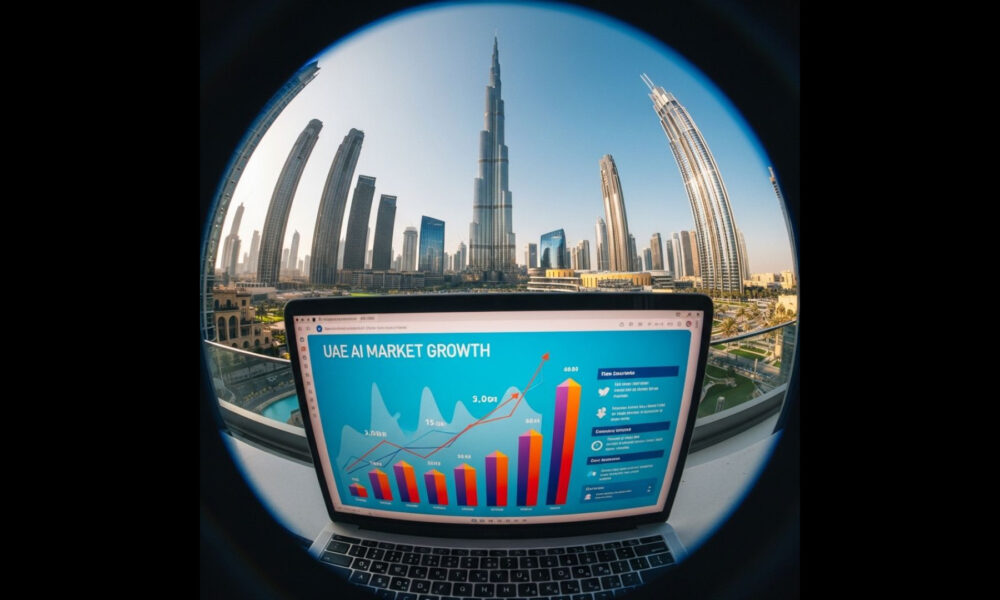
The United Arab Emirates is poised to become a major global hub for artificial intelligence, with its AI market projected to reach around Dh170 billion by 2030, according to a new study by market-research firm Grand View Research. The report indicates that the AI sector in the UAE is growing alongside the broader Middle East and North Africa region, where the AI market is forecast to expand to roughly US$166.3 billion by the end of the decade.

Key government initiatives are helping to drive this expansion. The UAE unveiled its first Arabic-language AI model earlier in the year and launched its “Strategic Plan 2031”, with the ambition of leveraging AI to improve federal-government efficiency and accelerate economic diversification. Grand View Research’s managing director, Swayam Dash, described the country and the wider region as “no longer just adopters of global AI technologies – they are shaping their own playbook,” pointing to sovereign-fund backing and proactive policy as major enablers.

The MENA region’s AI market, valued at about US$11.9 billion in 2023, is expected to grow at a compound annual growth rate of approximately 44.8 per cent between 2024 and 2030, reaching the projected US$166.3 billion figure. Within that broader region, the UAE’s market value is identified as roughly US$3.47 billion in 2023, with a projected CAGR of 43.9 per cent leading to the US$46.33 billion mark by 2030.

Analysts emphasise several drivers behind this growth. Public-sector adoption of AI for urban management, energy optimisation and security is mounting. Large language models and analytics tools are being integrated into government and enterprise workflows. Moreover, the UAE is building infrastructure to support AI ecosystems, including data centres, specialised talent programmes and partnerships with global technology firms.

However, growth is not without its challenges. The rapid adoption of AI raises concerns about data privacy, cybersecurity, ethical governance and workforce disruption. Some observers warn that regulatory frameworks may struggle to keep up with innovation rates. Others caution that scaling advanced AI beyond pilot projects into broad commercial deployment remains a complex and expensive endeavour.

Within the enterprise segment, cloud-based AI services are gaining traction, with the UAE’s cloud AI market estimated at approximately US$2.365 billion in 2024 and expected to reach US$11.08 billion by 2030. Meanwhile, the UAE healthcare-AI market is forecast to grow from US$17.2 million in 2023 to US$137.9 million by 2030, a CAGR of about 34.6 per cent.

Gold prices escalated early on Saturday, drawing fresh investor interest as the U. S. Federal Reserve’s quarter-point rate reduction to the 3.75 %-4.00 % range reinforced the appeal of non-yielding assets. Spot gold edged up 0.3 % to US$4,034 an ounce, and bullion is positioned to record a third consecutive monthly gain driven by both bargain buying and institutional demand. The backdrop includes a sharp rise in […]

The Washington-based media outlet Radio Free Asia announced that it will suspend all editorial content production from Friday, citing critical funding shortfalls triggered by the federal government shutdown and delays in appropriations. The decision marks the first full shutdown of its news services since the broadcaster’s founding in 1996.

Chief Executive Bay Fang explained that the organisation is “forced to suspend all remaining news content production … for the first time in its 29 years of existence” and that operations in several overseas bureaus across Asia will close while staff are formally laid off and severance paid. The organisation reported that many employees have been on unpaid leave since March owing to previous funding cuts.

Analysts say the board’s move underscores a precarious moment for U. S.-backed international broadcasting. Radio Free Asia, which has delivered news in Mandarin, Burmese, Khmer, Korean, Vietnamese and Uyghur since the mid-1990s, has come under mounting pressure from a combination of political directives and fiscal constraints. In March the United States Agency for Global Media terminated its grant under a presidential executive order, prompting legal challenges. Over the following months the service slashed language operations, placed staff on extended leave and shrank its footprint.

The trigger for the complete pause is the failure of Congress to pass a full-year funding resolution, resulting in the federal shutdown beginning October 1 and the impasse over the 2026 fiscal year budget. The shutdown left USAGM unable to disburse new funding, forcing Radio Free Asia to exhaust reserves. The suspension leaves fewer than 30 employees in place, according to internal documents.

Supporters of the broadcaster warn that the shutdown of its services will leave a significant information gap in parts of Asia where independent media are scarce and press freedom is under threat. The outlet has been credited with investigative reporting on China’s Uyghur population, coverage of North Korean defectors and analysis of the 2021 Myanmar coup. Its multilingual services have made it one of the few external voices operating inside closed societies.

Critics of U. S. international broadcasting say that the funding model, which ties outlets to federal grants, is inherently unstable when funding is politicised. They argue that the reliance on appropriations makes such organisations vulnerable to shifts in administration priorities and partisan standoffs. The halt in operations at Radio Free Asia has already been welcomed by governments it has criticised, including Cambodia and China, which view the move as a blow to U. S. soft-power broadcasting efforts.

Industry observers note that other USAGM-funded broadcasters are also under strain. The Radio Free Europe/Radio Liberty has retained legal protection via a court injunction but still faces cash-flow challenges. The broader trend suggests that U. S. international media assets may have thoroughly entered a phase of retreat just as global information competition—particularly from China and Russia—is intensifying.

The implications of the suspension extend beyond media-industry metrics. Some Asian governments that had viewed the broadcaster’s presence as adversarial are already reclaiming influence. Beijing had added state-run radio frequencies in regions formerly served by Radio Free Asia’s Mandarin service, and Phnom Penh’s leadership publicly thanked Washington in March for the cuts, calling them “a major contribution to eliminating fake news” in the region.

Most central banks in the Gulf Cooperation Council moved swiftly to lower key interest rates after the Federal Reserve trimmed its policy rate by 25 basis points, reinforcing the strong alignment between Gulf monetary policy and that of the United States. The decision saw the Central Bank of the UAE reduce its overnight deposit facility base rate to 3.90 per cent from 4.15 per cent, while the Saudi Central Bank trimmed its repo rate to 4.50 per cent and reverse-repo rate to 4.00 per cent.

This round of cuts marks the second such move by the Federal Reserve this year and comes amid a backdrop of moderating inflation globally and a focus on supporting non-oil growth across the region. Two Fed policymakers dissented in the decision, and Chair Jerome Powell cautioned that a December rate cut was not assured.

The Gulf region’s strong inclination to follow U. S. monetary policy stems from the fact that five of the six GCC currencies, including the Saudi riyal, UAE dirham and Qatari riyal, are pegged to the U. S. dollar. Only the Kuwaiti dinar is linked to a pegged basket of currencies of which the dollar is the dominant component, giving Kuwait greater policy flexibility.

Beyond the peg dynamics, the rate cuts serve a broader strategic goal: to reduce borrowing costs and stimulate investment in sectors aligned with the region’s diversification agenda, such as real-estate, manufacturing and tourism. According to analysis by CFI, inflation in the Gulf is projected to hover around 1.9 per cent in 2025, with GDP growth estimated at 4.0 per cent on average, meaning there is space to ease monetary policy without immediate inflation risk.

While the broad pattern across the region is one of alignment with Washington, there are subtle distinctions. Kuwait opted to hold its rates unchanged, signalling that local conditions rather than external alignment would guide its stance. Analysts say that Kuwait’s stronger inflation headwinds and different economic profile justify such a deviation.

Market watchers note that the rate cuts may deliver stimulus to credit growth, though some risks remain. Lower interest rates could dampen returns on traditional savings vehicles and simultaneously sharpen competition among banks. For governments and businesses in Gulf economies, cheaper financing may bolster infrastructure projects and non-oil activities. A weaker US dollar, another by-product of U. S. policy easing, could lend further support to oil prices—helping export-based economies—but it also carries the risk of higher import costs.

In the UAE, the central bank’s move to 3.90 per cent marks the lowest policy rate since 2022. This step is expected to make loans and mortgages more affordable, offering a boost to the non-oil sector and domestic demand. In Saudi Arabia, the rate adjustment is directly aligned with the broader reform agenda under its Vision 2030, which hinges on greater private-sector participation and attraction of foreign investment requiring cheaper capital.

Some central bankers caution that while rate cuts provide stimulus, they cannot fully offset structural headwinds such as global energy demand shifts, supply chain disruptions and geopolitical uncertainty. The Federal Reserve’s cautious tone — emphasising that further cuts are not guaranteed — adds an extra layer of uncertainty for regional banks that shadow U. S. policy.

In this context, Gulf monetary authorities appear to be striking a careful balance between maintaining currency stability, supporting growth and safeguarding financial stability. As their economies strive to scale non-hydrocarbon sectors, the timing and scale of rate cuts are being calibrated not only to external headwinds but also to domestic structural priorities.

President Donald Trump is advancing plans to nominate Ryan Baasch, a senior aide within the White House’s economic policy team, for a commissioner seat at the Federal Trade Commission. Sources familiar with the matter say the 37-year-old special assistant at the National Economic Council would step into the post vacated by Commissioner Melissa Holyoak, who is expected to be tapped for the role of U. S. Attorney […]

President Donald Trump has filed a formal appeal with New York’s Appellate Division, First Department, seeking to overturn his conviction for falsifying business records in the so-called hush-money case. In a 96-page brief submitted on Monday, his legal team argues that the trial in Manhattan was fatally compromised by judicial bias and improper admission of evidence. The conviction dates back to May 30, 2024, when a jury […]

The US stock market continues to surge, its strength underpinned by robust earnings and an easing policy stance from the Federal Reserve. AI remains the defining force, lifting productivity expectations and propelling capital spending. Wall Street is still the engine of global growth, but attention is beginning to turn elsewhere. A growing number of market participants see the next major wave forming in Asia, led by China […]

Gold regained momentum as the US dollar’s slide and expectations of a shift in Federal Reserve policy helped lift the metal above the psychologically important $4,000-per-ounce mark. Spot gold rose around 0.7 % to $4,009.39 per ounce, while US gold futures for December delivery edged up to $4,022.10. At the same time, broader factors have introduced both bullish and cautionary signals to the market.

Investor interest is rekindled by the weaker dollar, which makes gold relatively cheaper for buyers holding other currencies, and by widespread anticipation that the Fed will adopt a more dovish stance. The dollar index fell roughly 0.1 % as markets weighed the possibility of rate cuts. At the same time, certain easing in trade-tensions between the US and China has slightly reduced gold’s role as a safe-haven asset. The confluence of these opposing forces has begun to shape a more nuanced outlook for the metal.

Analysts say that the rebound above $4,000 should not be taken as a strong bullish assurance yet. While the technical bounce signals renewed buying interest, momentum must be supported by fundamentals. One market commentator observed that “buyers who were waiting on the sidelines for gold are now being tempted into taking positions at these price levels. Also, we are seeing a bit of softness from the dollar, which is giving gold a reprieve”.

The wider context shows that gold has already surged markedly this year, up more than 50 % in 2025, and reached a record high near $4,381.21 in mid-October. The rally has been fuelled by a combination of geopolitical anxiety, central-bank buying and expectations of monetary easing. But the pull-back seen earlier this week underscores that investor discipline and macro clarity are still required for any sustained rise.

Emerging trends in the market reveal more structural undercurrents. Research from noted finance academics suggests that gold’s role is evolving: it may increasingly function as a high-quality liquid asset, competing with traditional safe-havens and benefiting from de-dollarisation in global reserves. But at the same time, some firms argue the rally may be overstretched: one analysis warned that with gold already up so sharply this year, its next move could be a “mini-bust,” with projections that prices might fall toward $3,500 by 2026 if support from central-bank demand weakens.

Forecasts for 2026 have also shifted. A poll of analysts and traders indicates a median expectation that average gold prices will exceed $4,000 per ounce next year – a milestone in itself – although forecasts vary widely, reflecting both optimism and caution. On the upside, institutions such as Goldman Sachs remain bullish, pointing to potential further gains on the back of monetary accommodation and geopolitical risk. On the downside, if trade tensions ease and inflation moderates, some believe gold could correct.

The interplay between stimulus expectations and dollar dynamics remains crucial. A softer dollar supports gold, but if authorities signal confidence in economic recovery and maintain higher interest rates, gold’s appeal could diminish because it offers no yield. Additionally, the safe-haven narrative is under pressure as expectations of improved US-China relations gain traction, which may lower investors’ impetus to hold gold purely for risk hedging.

Strength in demand from global central banks has supported prices thus far, but market watchers caution that this may face constraints as gold holdings rise and incremental purchases become harder. For now, the up-move above $4,000 may signal a tentative buying opportunity for traders who believe a rate-cut cycle is on the horizon. For longer-term investors though, vigilance remains essential, as valuations are elevated and market dynamics could shift rapidly.

ORDOS, CHINA – Media OutReach Newswire – 27 October 2025 – On September 27, a batch of spirulina products from Otog Banner in Ordos City, Inner Mongolia, set sail from Tianjin Port to Los Angeles, USA. According to Qiao Yue, deputy general manager of Ordos Jiali Spirulina Co., Ltd., this shipment included 20 tons of organic spirulina powder and 10 tons of spirulina tablets. “Overseas orders are […]

India is positioning itself as a global food supplier using Dubai as the logistical gateway, according to statements made by Chief Minister N. Chandrababu Naidu of Andhra Pradesh during his visit to the UAE. He declared that India’s strengths in agriculture, horticulture, aquaculture and logistics will enable the country to serve “the global community” through Dubai’s market access.

Naidu spoke of the UAE city’s strategic connectivity and global reach as ideal for scaling Indian-food exports. He noted that the Andhra Pradesh government is aiming to reduce logistics costs by integrating inland waterways, railways, road and seaports, and by spending around 14 per cent of the state’s GDP on logistics infrastructure as part of the drive to increase efficiency. His role as chief minister of Andhra Pradesh places him at the centre of an ambitious push to offer the state as a manufacturing and supply-chain hub with Indian agriculture at its core.

The announcement comes amid a broader investment road-show in which Naidu met with senior policymakers and business leaders in the UAE to discuss partnerships across multiple sectors, including food processing, green energy, AI and infrastructure. During a dialogue in Dubai the chief minister stated that India will supply food to the global community through Dubai as a hub, adding that he met ministers, family-business leaders and airlines executives during the visit. He praised the Indian diaspora for their contributions and flagged the state’s goal of making the new capital Amaravati a “green and blue city” built around water, greenery and advanced infrastructure.

Andhra Pradesh’s food-processing ambitions are a central plank of the strategy. The state government has invited investment from UAE food-conglomerates to scale cocoa cultivation, chocolate manufacturing, aquaculture and related logistics. The Chinese food-industry trend of “value-added exports” is echoed by India’s attempt to move beyond raw agricultural exports towards packaged, processed and high-logistics-integrated supply chains.

From a trade perspective, positioning Dubai as a re-export hub can offer Indian producers quicker access to Middle East, African and European markets. Dubai’s status as a global logistics and trading hub gives India the opportunity to piggy-back on existing infrastructure and reach. It also offers investors assurances of regulatory, financial and physical connectivity.

However, a number of challenges stand in the way. India already faces structural issues in agriculture: fragmented landholdings, variable productivity, post-harvest losses, and high domestic logistics costs. While Naidu cites a logistics cost of about 14 per cent of GDP for Andhra Pradesh, the national average remains higher and such a figure implies major optimisation ahead. The use of Dubai as a hub also raises questions of tariff regimes, transit duties, warehousing handling cost and competition from other international producers using the Gulf as re-export platforms.

Critics also point to the risk of over-promising on export capacity. India’s agriculture export ratio remains modest relative to the size of its production, and moving up the value chain into globally competitive processed foods will require investment in cold-chain infrastructure, quality standards and market-specific certifications. The reliance on a single state’s announcement may also raise concerns about federal coordination and falling short of expectations if broader national agricultural reforms lag.

VISHNU RAJA
RYO YAMADA
HITORI GOTOH
IKUYO KITA