News related to
federal

U. S. equity markets eked out modest gains on Monday as investors absorbed mixed signals from policymakers and braced for a potentially disruptive funding impasse. The S&P 500 rose about 0.3 percent, while the Nasdaq added 0.5 percent.

Tech and semiconductor names powered much of the upside, with Nvidia climbing nearly 2 percent and Micron advancing over 4 percent. Meanwhile, energy lagged, weighing on the Dow Jones. Treasuries rallied: the 10-year yield fell to around 4.14 percent.

Markets have long eyed the congressional standoff over government funding, now escalating toward a possible shutdown as the funding deadline tightens. If Congress fails to agree on a stopgap measure by the start of October, crucial economic reports — including this week’s non-farm payrolls — may be delayed.

Within the Senate, tension has grown around healthcare and Medicaid funding demands, a key sticking point in negotiations. Democratic leaders have warned against accepting a funding plan that omits those measures, even as pressure mounts to avoid a closure.

Analysts warn that the shutdown risk magnifies uncertainty over Federal Reserve policy. Without fresh labour and inflation data, the central bank may have to lean more heavily on its own forecasts, complicating rate-cut expectations. Some strategists suggest the Fed could still manage two cuts in 2025, contingent on how deeply economic data is disrupted.

Historical precedent somewhat tempers alarm. In past shutdowns of limited duration, equities have tended to rebound quickly. On average, the S&P 500 returns roughly 0.1 percent during shutdowns, and over the following year the index has gained about 12.2 percent. Still, the threat this time includes a new wrinkle: proposals for mass federal layoffs rather than traditional furloughs, which could intensify economic and psychological fallout.

Sector watchers anticipate uneven effects. Government contractors and firms reliant on federal payments could see downside pressure. In contrast, defensive and AI-linked names may continue attracting flows.

Gold cracked past $3,800 per ounce as investors rotated into safe havens, and the dollar weakened amid risk aversion. Meanwhile, earnings announcements and deal activity remain under close scrutiny: Electronic Arts jumped nearly 4.5 percent after announcing a $55 billion going-private deal.

Markets have thus far held up despite the political drama. The headline indexes are still straddling their 50-day moving averages — Nasdaq has run more than 100 sessions without dipping below. But as the week progresses, volatility could spike if lawmakers stall or key data go missing.


Floodwaters unleashed by torrential rain swept through central Arizona, killing at least four people and forcing widespread evacuations and emergency declarations. Three victims were discovered in the historic mining town of Globe, where floodwaters rose rapidly and inundated downtown, while a fourth body was found near a submerged vehicle in Scottsdale. About 2.5 inches of rain fell within 24 hours in Globe, a city of roughly 7,250 […]

Abu Dhabi — The Federal Authority for Identity, Citizenship, Customs and Port Security has introduced sweeping changes to the UAE’s visa regime, adding four new visit-visa categories tailored to specialists in artificial intelligence, entertainment, events, and cruise or leisure-boat tourism, while also rolling out humanitarian and widow/divorcee residence permits.

Under the new framework, the AI Specialist Visit Visa allows single or multiple entries, provided applicants submit a sponsorship letter from a recognised technology or AI institution. The Entertainment Visit Visa is intended for individuals engaging in licensed entertainment or gaming activities, while the Event Visit Visa covers attendance at festivals, exhibitions, conferences, sports, or cultural events, sponsored by public or private hosts. The Cruise & Leisure-Boat Visit Visa offers multiple-entry permits for travellers arriving via marine routes, on condition of submitting a detailed itinerary and engaging a licensed host in the tourism industry.

Alongside these targeted visit visas, the ICP now issues a Humanitarian Residence Permit, valid for one year, with possible extension under certain conditions. This permit is designed to assist individuals from countries experiencing conflict, natural disasters, or severe unrest. Notably, it can be granted without a guarantor or host, though it may be cancelled or voided if the holder departs the UAE. In exceptional cases involving relatives or in-laws, the authority may waive requirements like financial solvency or degree of kinship.

The revisions also extend protections to foreign widows and divorcees. A one-year renewable residence permit is available to foreign women whose UAE-based husband died or divorced, provided applications are submitted within six months. If the husband was a non-UAE national, eligibility depends on whether the woman held residency at the time, whether she has custody of children, and whether she was previously sponsored. Provisions for adequate housing and financial stability apply, and custody disputes will be adjudicated by a designated committee.

Revised rules for sponsoring friends or relatives now incorporate income thresholds: sponsors must earn at least AED 4,000 per month to sponsor first-degree relatives, AED 8,000 for second- or third-degree relatives, and AED 15,000 to sponsor friends. The updated system also introduces a structured schedule defining visit-visa durations and extension rules.

Other key visa reforms include tightening the Business Exploration Visa criteria and easing Truck Driver Visas—allowing single or multiple entries provided drivers are sponsored by licensed freight or transport companies and meet health, fee, and financial guarantee conditions.

In a statement, Major General Suhail Saeed Al Khaili, Director General of ICP, said the reforms emerge from “careful studies and forward-looking assessments” that considered global residency trends, client feedback, and the UAE’s strategic demands. He described the changes as intended to “meet the needs of customers while considering humanitarian and economic circumstances” and to drive technology, tourism, and economic diversification.

The Central Bank of the UAE and Dubai Finance today formalised an agreement to deepen collaboration in the development of the country’s capital markets, enabling Dubai to draw on the central bank’s infrastructure to issue dirham-denominated government bonds.

Khaled Mohamed Balama, Governor of the CBUAE, and Abdulrahman Saleh Al Saleh, Director-General of Dubai’s Department of Finance, signed the Memorandum of Understanding in Abu Dhabi before senior officials and assistant governors.

Under the pact, Dubai Finance gains access to the central bank’s systems and platforms to support bond issuance, while both parties commit to joint efforts in fintech, payment systems, and digital currency development. The agreement further encompasses capacity building, knowledge exchange and coordination in regulatory and infrastructural domains.

Balama described the partnership as “an important step toward advancing the country’s financial markets, supporting their growth, and ensuring their readiness to adapt to future changes.” He affirmed that the nation’s leadership is focused on promoting innovation and digitisation in financial services to boost private-sector participation and investor confidence.

Al Saleh said the MoU would help diversify the UAE’s investment tools and align capital market expansion with the vision of the country’s leadership. He emphasised the importance of collaboration with regulatory bodies at both federal and local levels to elevate the nation’s reputation as an investment hub.

The MoU aligns with broader moves by the central bank in strengthening financial infrastructure and market regulation. The central bank has recently advanced its “Financial Infrastructure Transformation” programme, which includes the rollout of the domestic card scheme Jaywan and development of a Central Bank Digital Currency, known as the Digital Dirham. The institution also introduced regulations on Open Finance platforms and has conducted stress tests affirming resilience in the banking sector under diverse macroeconomic pressures.

The UAE’s push to build robust capital markets fits into a regional trend of using debt instruments to broaden funding sources beyond oil and real estate. In December 2024, the CBUAE signed an MoU with the Hong Kong Monetary Authority to enhance cross-border debt issuance and settlement between the UAE and Asia, aiming to foster deeper connectivity between debt markets.

Analysts see the newly inked agreement as a mechanism to centralise the infrastructure layer of government debt issuance under one roof, avoiding fragmentation across emirates. Doing so could lower costs, standardise procedures, and deepen liquidity in domestic markets. It may also foster greater issuance activity from state and municipal entities.

Law enforcement agencies are now deploying drones equipped with automated licence plate reader systems, enabling vehicles’ registration data to be captured from the air. The Electronic Frontier Foundation reports that firms such as Flock Safety are marketing drones with built-in ALPR capability to police forces seeking to scale up surveillance. These airborne ALPR units combine optical character recognition technology with the mobility of drones. In presentations to […]

UAE e-invoicing is becoming a cornerstone of digital transformation in the United Arab Emirates. With the Federal Tax Authority rolling out EmaraTax, businesses must adapt their invoicing processes to meet new compliance requirements. For many organizations relying on ERP systems, this poses a challenge — traditional ERPs are not built to handle complex, fast-changing tax regulations. Infinite GIP provides a smarter alternative, ensuring seamless UAE eInvoicing compliance, […]

Dubai police have announced an extensive set of security measures and entry restrictions for spectators attending the Asia Cup 2025 final between India and Pakistan at the Dubai International Cricket Stadium. Violations of the rules could trigger fines of up to Dh30,000 and imprisonment under federal law governing sports venues.

Every seat for Sunday’s showdown has been sold, with organisers confirming a full capacity of 28,000 spectators. With the historic match being the first final between these arch-rivals in Asia Cup history, expectations of heightened emotions have driven authorities to step up security preparations.

The police directive mandates that attendees arrive at least three hours before the start and that each ticket admits a single entry—re-entry will not be allowed. All spectators must enter through gates assigned by organisers, follow instructions from stewards and security staff, and park only in specified areas. Any departure from the stadium during the match will forfeit re-entry.

The list of prohibited items is comprehensive. Fireworks, flares, laser pointers, and any flammable or hazardous materials are banned outright. Sharp objects, weapons, toxic substances, remote-controlled devices, large umbrellas, camera rigs, tripods, selfie sticks, and unauthorised photographic equipment are also barred. Flags, banners, or placards without official approval, pets, bicycles, skateboards, scooters, glass items, and outside food or drink are disallowed. Smoking or carrying any item that could endanger public safety will attract penalties.

Under the Federal Law on the Security of Sports Facilities and Events, the penalties range from Dh5,000 to Dh30,000 for breaches such as entering the pitch, carrying banned items or misbehaving. More severe violations — including throwing objects, abusive or racist language — may lead to fines in the Dh10,000 to Dh30,000 range or imprisonment for up to three months.

Multiple specialised police units and surveillance teams will be deployed around the stadium. Authorities have urged full cooperation from fans to allow the match to proceed without incident. The Events Security Committee is jointly monitoring crowd movement, traffic, and stadium access.

On the transport front, traffic congestion is expected to peak along Al Khail Road, Sheikh Mohammed bin Zayed Road, Hessa Street, Umm Al Suqeim Street, and via routes through Al Barsha, Dubai Motor City and surrounding neighbourhoods. Alternate routes such as Umm Al Suqeim Street or Al Fay Road via Sheikh Mohammed bin Zayed Road are being recommended, especially for motorists approaching from the south.

Parking zones P1 to P4 at the stadium are allocated, and overflow areas in Dubai Motor City and Dubai Studio City will provide shuttle services. Some park-and-ride facilities near Mall of the Emirates and First Abu Dhabi Bank Metro stations will function, connecting visitors to the venue via feeder services and taxis.

Dubai police have also issued multilingual advisories to reach a broader cross-section of fans. Authorities emphasise that the cooperation of spectators will be crucial to preserving a safe environment and ensuring that the focus remains on the cricketing spectacle.

Advertisements

The Ministry of Energy and Infrastructure has set in motion a major infrastructure programme valued at AED 750 million to upgrade Emirates Road over two years, aimed at relieving traffic congestion and accelerating inter-emirate connectivity. Stretching some 25 km from the Al Badee Interchange to Umm Al Quwain, the project will expand the highway from three to five lanes in each direction and reinforce its capacity to […]

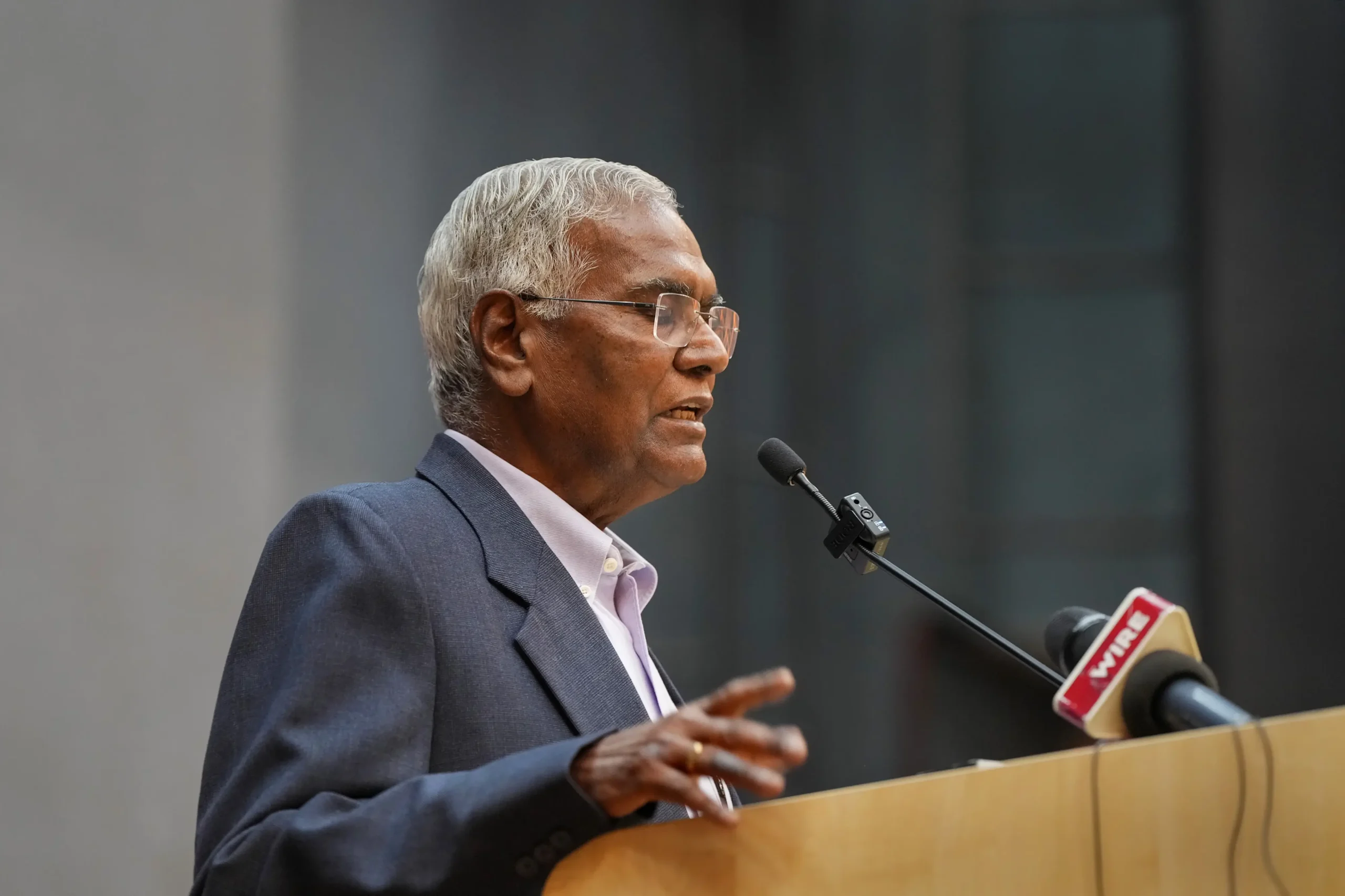
By Satyaki Chakraborty The Communist Party of India(CPI) concluded its five day Party Congress at Chandigarh on September 25 reelecting D. Raja as the general secretary of the CPI for another three year term. Raja is the first dalit leader to head the CPI in 2019 after the then party secretary S Sudhakar Reddy sought […]

The article CPI’s 25th Party Congress Elects D Raja As The General Secretary For The Third Time appeared first on Latest India news, analysis and reports on Newspack by India Press Agency).

OpenAI, Oracle and SoftBank have unveiled plans for five new artificial intelligence data centres across the United States under their Stargate infrastructure initiative, pushing the programme’s capacity to almost 7 gigawatts and investment to over US$400 billion over the next three years. Three of the new sites will be developed in partnership between OpenAI and Oracle, located in Shackelford County, Texas; Doña Ana County, New Mexico; and […]

Wynn Al Marjan Island, a joint venture between Wynn Resorts, Marjan, and RAK Hospitality Holding, is poised to open in March 2027 as the UAE’s first fully integrated gaming resort. The project has breached its 61st floor on the 70‐storey tower, and developers say construction is progressing “on plan.” The resort will feature over 1,542 hotel rooms, more than 22 restaurants and lounges, and a hotel tower […]

UAE has set an objective of growing its business base to more than two million companies by 2031, while also aiming to see ten unicorns—start-ups valued at over US$1 billion—emerge within that period, Abdullah bin Touq Al Marri, Minister of Economy and Tourism, has declared. He stated that at present about five unicorns have already originated in the country. The announcement came during a press briefing revealing […]

A federal judge dismissed Donald Trump’s $15 billion defamation lawsuit against The New York Times and Penguin Random House, ruling that the complaint was legally insufficient and procedurally improper. U. S. District Judge Steven Merryday criticised the 85-page document for lacking a “short and plain statement” required by the federal rules, and for including excessive laudatory language and irrelevant attacks rather than cogent legal allegations. Judge Merryday […]

U. S. regulators have launched legal action against Live Nation Entertainment and its Ticketmaster unit, accusing them of enabling deceptive resale practices that force fans to pay well above face value for live events. The Federal Trade Commission, joined by attorneys general from seven states, filed the lawsuit in California, alleging that Ticketmaster colluded with brokers to violate ticketing limits and mislead consumers about final costs. The […]

A federal judge has ordered a high-stakes remedies hearing to begin this week in the case United States v. Google LLC, where Google was found to hold an illegal monopoly in key segments of the digital advertising technology market. The court declared that Google unlawfully monopolised the open-web display publisher ad server and ad exchange markets, tying its publisher ad server to its ad exchange in ways […]

By D Raja The Twenty-Fifth Congress of the Communist Party of India will convene in Chandigarh from September 21, 2025, at Suravaram Sudhakar Reddy Nagar (Kisan Bhawan). We gather at a moment of extraordinary circumstances. Punjab is reeling under devastating floods. Fields are submerged, homes are damaged, and livelihoods are disrupted. Yet, our comrades in […]

The article Why The 25th Congress Of CPI On September 21-25 In Chandigarh Is Significant In Indian Politics? appeared first on Latest India news, analysis and reports on IPA Newspack.

Gulf Cooperation Council central banks have lowered key interest rates across the region after the United States Federal Reserve reduced its benchmark rate by 25 basis points. The move marks the Fed’s first rate cut this year, and Gulf economies have quickly aligned their monetary policy to maintain currency pegs, apart from Kuwait, which pegs its dinar to a basket of currencies rather than solely to the dollar.

Saudi Arabia cut its repo rate to 4.75% and its reverse repo rate to 4.25%. The UAE lowered its overnight deposit facility rate to 4.15%. Qatar reduced its deposit, lending, and repo rates each by 25 basis points. Bahrain, Oman, and Kuwait also followed suit with 25 basis point cuts to their key rates.

The rationale driving these moves lies in the Gulf states’ monetary frameworks. Most GCC currencies are pegged to the US dollar, meaning their central banks generally mirror US monetary policy to preserve exchange rate stability. Kuwait stands out as it links its currency to a basket of currencies, weakening the direct link to Fed actions.

Economic analysts note that easing borrowing costs could help stimulate sectors beyond oil, such as real estate, tourism and manufacturing—areas that have strong roles in GCC diversification plans. The UAE expects its non-oil economy to grow by 5.1% this year, while inflation remains modest, easing pressure on rate cuts.

In the United States, the Fed’s decision also signalled expectations of further cuts before the end of the year, setting a stage for global monetary easing. Chair Jerome Powell emphasised that although inflation remains above target, the labour market has weakened enough to justify the cut, but that future reductions will be measured.

/India Press Agency/

By Nitya Chakraborty Prime Minister Narendra Modi has stepped into his 75th year on Wednesday, September 17.His birthday is being celebrated by the BJP nationally. The significance is much more as PM’s 75th birthday celebrations have coincided with the centenary programmes on the founding of the RSS in 1925.On October 2 this year, Vijaya Dasami […]

The article Decoding Prime Minister Narendra Modi As A Political Leader On His 75th Birthday appeared first on Latest India news, analysis and reports on IPA Newspack.

Adamu Aliyu, a member of the Plateau State House of Assembly, handed himself over to the Independent Corrupt Practices and Other Related Offences Commission in Abuja, after a Federal High Court issued a declaration that he was wanted on charges arising from contract fraud allegations. Justice Emeka Nwite made the order on ICPC’s request after investigators said Aliyu failed to respond to repeated summonses. Court documents show […]

Government officials in New Delhi have unveiled a secure integrated circuit solution, fully developed within India, designed to underpin future digital identity systems including e-passports. All intellectual property is said to reside domestically, marking a significant milestone in the nation’s tech self-sufficiency drive.

The secure IC is embedded with a “smart OS”, enabling secure authentication, encryption, and identity verification. It is intended for deployment in identity credentials issued by federal authorities. Verification features include tamper resistance, cryptographic protection of stored data, and interoperability with global identity verification standards. The OS is modular, allowing updates and extension of features such as biometric modules, NFC, and remote authentication.

The development is part of the broader India Semiconductor Mission and Semicon India Programme, with an investment outlay of ₹76,000 crore supporting chip fabrication, assembly, display fabs, and design projects. The pilot line for this secure chip is being hosted in Gujarat at an OSAT facility.

Sources indicate that ten semiconductor manufacturing projects have been approved across six states—Gujarat, Assam, Uttar Pradesh, Punjab, Odisha, and Andhra Pradesh—with total investment commitments exceeding ₹1.60 lakh crore. These projects include multiple fabs, ATMP/OSAT facilities, and chip design initiatives.

Among recent achievements is the development of Vikram-3201, a 32-bit space-grade processor by the ISRO Semiconductor Laboratory, presented to the Prime Minister at Semicon India 2025. It has been validated in the PSLV-C60 mission and is said to be robust under extreme launch-vehicle conditions. It was fabricated using a 180 nm CMOS process.

The secure IC is expected to be somewhat different in specifications from Vikram-3201: targeted more towards identity and citizen services rather than space applications. Performance metrics are likely less extreme, but security requirements—such as resistance to physical tampering, side-channel attack mitigation, secure boot, and cryptographic module certification—are being prioritised. Implementation of secure OS standards is underway.

In tandem with hardware development, the government has accelerated IP and design ecosystem support. Under the Design Linked Incentive scheme, 23 design projects have been approved to foster startups, MSMEs, and academic participation. Skill development in VLSI design, packaging, EDA tools, and fab-operations is being emphasised.

Policy observers note that global supply-chain disruptions and geopolitical shifts have provided a backdrop that intensifies India’s push for technological sovereignty. External partnerships—for example in materials, equipment, packaging technologies—are being pursued to fill gaps in the domestic ecosystem.

Challenges remain. Process node maturity is one area—while the 180 nm node is proven and reliable for many applications including space, more advanced nodes dominate consumer electronics and high-performance identity solutions globally. Also, certifications for security standards, supply of trusted materials, secure hardware lifecycle management, and scaling production to volumes needed for national identity issuance will test capacity. Ensuring interoperability with international identity verification frameworks will also be essential.

Single-family housing starts in the United States dropped by 7.0 per cent in August to a seasonally adjusted annual rate of about 890,000 units, marking the lowest level since April 2023, according to Commerce Department data. Permits for future single-family construction fell 2.2 per cent to roughly 856,000 units, underscoring weakening builder confidence. Overall housing starts, including multifamily units, tumbled 8.5 per cent month-on-month to 1.307 million […]

The Federal Reserve sets the price of money for the world’s largest economy, but the battle now unfolding in Washington is about far more than the next rate decision. President Donald Trump and his economic advisors are pushing to narrow the central bank’s mission and pull it closer to the White House. For international investors, this is not a distant Beltway turf fight. It’s a direct threat […]

Gold surged past levels not seen in over four months after growing confidence that the Federal Reserve will cut interest rates this month boosted demand for bullion, while silver climbed above $40 per ounce for the first time in over a decade.

Spot gold rose around 0.9% to roughly US$3,486.86 per ounce, reaching highs last marked in late April. US gold futures for December delivery also advanced, riding momentum from dovish comments by San Francisco Fed President Mary Daly and a U. S. appeals court decision that struck down most of former President Trump’s tariffs, which weighed on the dollar. Silver jumped about 2.2%, to near US$40.56, its best since September 2011. Other precious metals followed: platinum added 1.5% and palladium rose around 0.8%.

Investors have been digesting a weakening US dollar, cautious labour market indicators, and signals from policymakers suggesting the Fed could lower rates by 25 basis points. Some traders contemplate a larger cut, although forecasts remain varied. Demand for gold as a hedge has been reinforced by geopolitical uncertainty and concerns around the independence of central banking.

Analysts at ANZ and UBS have revised their forecasts for gold upward. ANZ now expects gold to average about US$3,800 per ounce by year-end, with upside toward US$4,000 by mid-2026. UBS similarly raised its year-end target, citing robust central bank buying, persistent inflation pressures, and the likelihood of further policy easing.

Silver’s rally, driven by industrial demand and tight supply, outpaces gold in percentage gains. ETF inflows have also favoured silver, reflecting investor appetite for high-beta exposure in the precious metals space.

Memecoins have surged across cryptocurrency markets as traders shift bets toward a probable interest-rate cut by the Federal Reserve and the possibility of U. S. altcoin ETF approvals. Bitcoin’s market share has declined by about 3.5% over the past month, while indexes comparing altcoin performance versus Bitcoin have entered so-called “altseason” territory.

Expectations that the Federal Reserve may reduce rates by 25 basis points later this month are currently priced in at over 90% by market observers using tools such as Polymarket and the CME’s FedWatch. A rate cut is widely seen as a trigger boosting risk-assets by lowering the comparative appeal of fixed-income securities.

The CoinDesk Memecoin Index rose roughly 7.1% over 24 hours, led by tokens like SHIB and BONE. These gains came despite Shiba Inu’s layer-2 network, Shibarium, being hit by a flash-loan exploit, which did not dampen investor enthusiasm.

Analysts point out that falling Bitcoin dominance, which reflects a shrinking slice of total crypto market capitalisation for the biggest token, often heralds a shift into altcoins. Indexes from providers including CoinMarketCap and CoinGlass have signalled this rotation of capital away from Bitcoin toward altcoins.

Institutional momentum is also tightening around altcoin exchange-traded funds; proposals for ETFs covering DOGE and TRUMP tokens are reportedly under consideration for U. S. markets in the final quarter of the year. Approval of such funds could draw both retail and institutional capital into memecoin-adjacent assets.

VISHNU RAJA
RYO YAMADA
HITORI GOTOH
IKUYO KITA