News related to
federal

Previously unseen photographs from Jeffrey Epstein’s private island residence have been made public by lawmakers in Washington, offering a closer look at the property at the centre of one of the most scrutinised criminal networks in the United States. The images were disclosed by Democratic members of a congressional committee examining Epstein’s activities and the conduct of officials who interacted with him over several decades. The release […]

California’s effort to advance autonomous freight transport moved a step forward as the state’s Department of Motor Vehicles unveiled a proposal to lift the long-standing prohibition on testing heavy self-driving trucks on public highways. The move sets the stage for a significant shift in how freight could be moved across the state, opening a path for commercial deployment as early as 2027 if safety benchmarks are met […]

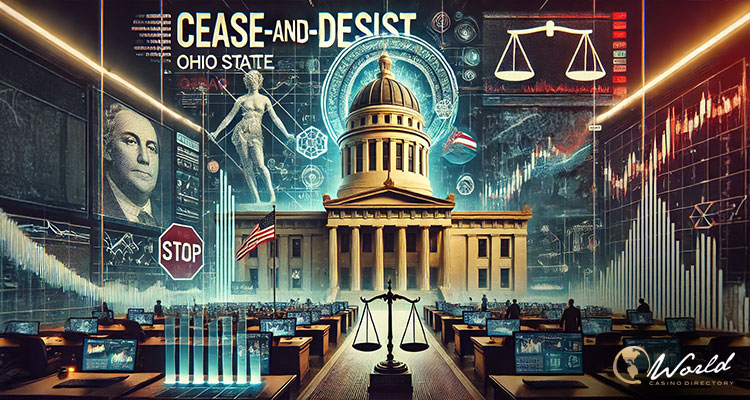
The Connecticut Department of Consumer Protection has ordered Kalshi, Robinhood and Crypto. com to stop offering sports-event contracts to state residents and to allow withdrawal of all funds held on their platforms. The move puts Connecticut among a growing number of states rejecting the argument that such contracts constitute federally regulated derivatives rather than gambling.

The cease-and-desist letters cite multiple violations: the trio lacked a Connecticut sports betting licence, were offering wagers to individuals under the state’s minimum age of 21, and were targeting individuals on the state’s self-exclusion list and college campuses. Regulators flagged these practices as unfair and potentially open to insider trading, given the platforms’ broader access to events with widely known outcomes. The state warned of civil or criminal action if platforms did not comply.

The action in Connecticut comes after a series of legal defeats for Kalshi in several states. In Nevada, a federal judge ruled that Kalshi is subject to state gaming laws, rejecting its claim that only the federal Commodity Futures Trading Commission has jurisdiction over its contracts. That decision freed state regulators to enforce gaming rules against the firm. Previously, regulators in Arizona, Maryland, Illinois, Montana, Ohio and New Jersey had also issued similar orders, some of which led to ongoing litigation.

In Nevada, following the judge’s ruling, Robinhood suspended new sports-event contracts effective December 1, with Crypto. com taking a similar step. Kalshi, however, opted to appeal rather than shut down — underscoring a broader conflict over whether state gambling laws or federal derivatives regulation should govern this space.

Millions of Americans are heading into 2026 facing sharply higher health-insurance costs. Employer-based insurance premiums are projected to rise by nearly 9 percent, marking the steepest increase in fifteen years. For families paying for their own coverage through public marketplaces created under the Affordable Care Act, the shock will likely be greater. Premiums on those plans are expected to jump by roughly 26 percent, and enhanced subsidies […]

Regulators at the Federal Reserve are moving to formalise rules for stablecoins, signalling a shift in how banks may soon treat these digital assets under supervision. The Vice Chair for Supervision at the Fed, Michelle Bowman, emphasised that banks should be able to engage with digital currencies — including stablecoins — under new regulatory guardrails. She argued that existing regulations, many crafted in the aftermath of the 2008 financial crisis, may no longer be appropriate given how much the economy and technology have evolved. Her remarks came against the backdrop of recent legislation that lays the groundwork for stablecoin regulation, prompting an overhaul of existing frameworks to encourage innovation while managing risk.

The regulatory momentum follows the passage of the Guiding and Establishing National Innovation for U. S. Stablecoins Act — known as the GENIUS Act — which establishes a comprehensive legal framework for payment stablecoins. Under the law, issuers of stablecoins must back tokens on a one-to-one basis with U. S. dollars or other low-risk assets, provide regular disclosure of reserves, and maintain transparent redemption processes. This marks a turning point: stablecoins officially enter the regulated financial system, opening the door for banks and other financial institutions to participate under defined standards.

Bowman has signalled that the Federal Reserve, alongside agencies such as the Office of the Comptroller of the Currency and the FDIC, intends to craft tailored supervisory guidelines rather than impose a one-size-fits-all regulatory model. She has called for regulators to abandon what she described as an “overly cautious mindset” that has slowed the banking sector’s ability to embrace digital innovation. According to her, banks seeking to engage in stablecoin activities must separate those assets from their traditional banking operations. This segregation, she said, is necessary to preserve the safety and soundness of the banking system even as banks expand into digital asset services.

The move has drawn cautious optimism from some quarters of the financial world, particularly among proponents of digital assets and stablecoin issuers, who view increased regulatory clarity as critical for broader adoption. They argue that a well-designed framework will enable mainstream financial institutions to offer digital asset services, increasing legitimacy and liquidity in the stablecoin market. Analysts point to academic research suggesting stablecoins have evolved from niche cryptocurrency experiments to integral components of payments infrastructure worldwide — with stablecoins’ market capitalisation estimated to exceed several hundred billion dollars. Some experts have proposed hybrid models that combine fiat-backed stablecoins with central-bank anchored systems to mitigate liquidity risks and improve stability, particularly in volatile market conditions.

At the same time, concerns remain about potential threats to financial stability. Regulators such as the Fed must weigh the risk of deposit outflows, competition between banks and non-bank issuers, and the challenge of preventing money-laundering or illicit finance through digital assets. Financial supervisors globally are wrestling with how to calibrate capital requirements and risk-weighting rules for banks engaging with stablecoins and digital tokens — taking into account factors like volatility, liquidity stress, and redemption risk.

By Ashok Nilakantan Ayers SILICON VALLEY / SAN FRANSISCO / CALIFORNIA: The numbers are staggering. Microsoft has spent over $20 billion building data centres stuffed with the most powerful computer chips ever made. Meta is burning through billions more, weaving artificial intelligence into Instagram, WhatsApp, and Facebook. Google and Amazon are locked in a cloud-computing […]

The article The Great AI Gold Rush By US Big Tech Companies Through Huge Investment appeared first on Latest India news, analysis and reports on Newspack by India Press Agency).

Stablecoins have moved from the fringe of digital finance to the centre of American geopolitical strategy with astonishing speed. A year ago, many analysts still dismissed them as an experiment, an irritant or a regulatory problem. Today they sit at the heart of a much bigger financial vision inside Washington. The Trump administration, I now believe, is using stablecoins as a new mechanism to strengthen the dollar’s […]

Advertisements

The prediction-market platform Polymarket has gained regulatory clearance to resume operations in the United States following approval from the Commodity Futures Trading Commission. The move positions Polymarket to re-enter a market it exited after a settlement with the regulator in 2022, signalling a major shift in how event-based trading may evolve in the US financial ecosystem.

Polymarket, founded by Shayne Coplan in 2020 and headquartered in New York City, agreed to pay a US$1.4 million penalty in 2022 for running an unregistered derivatives trading platform for US users and subsequently blocked American access. The company operated offshore in the interim. The pathway back into the domestic market opened when Polymarket acquired QCX LLC, a Florida-based derivatives exchange and clearinghouse that already held CFTC licences. That acquisition cost US$112 million, paving the way for regulatory compliance. Filings show QCX was designated as a “designated contract market” by the CFTC on 9 July 2025.

In September the CFTC issued a no-action letter to QCX and QC Clearing, exempting them from certain swap-data reporting and record-keeping requirements in relation to event contracts. This relief underpinned Polymarket’s return plans. According to sources the platform is now onboarding select US customers in a beta phase ahead of full rollout, with initial trading markets expected to focus on sports and pop-culture outcomes. Polymarket has stated it will operate through a fully regulated US-compliant structure and self-certify markets for US users.

Polymarket stands in a more competitive field than when it left. Peer Kalshi, likewise a US-licensed event-contract platform, secured major funding and a US regulatory victory in the preceding period. Kalshi’s US positioning has prompted other entrants—including FanDuel and DraftKings—to develop federally compliant “predictions” offerings. Polymarket’s re-entry means the event-trading sector is becoming a more mainstream component of financial and sentiment-based markets rather than a niche crypto experiment.

Industry watchers view the CFTC’s approval as indicative of a broader regulatory willingness to accommodate prediction markets, provided they operate under transparent, licenced frameworks. Acting CFTC Chair Caroline Pham has previously described event contracts as an “important new frontier.” Polymarket’s CEO Coplan declared on social media: “Polymarket has been given the green light to go live in the USA by the @CFTC. Credit to the Commission and staff for their impressive work. This process has been accomplished in record timing.”

Polymarket claims that global users placed about US$6 billion worth of predictions in the first half of 2025 alone on its platform, covering politics, entertainment and economy. Critics contend that even under regulated models, event markets carry risks of gambling-style behaviour and could present transparency and integrity challenges. Some US state regulators have expressed concern that such products may bypass traditional gaming laws under the guise of financial contracts.

Abu Dhabi: Financial executives from over 20 Arab countries gathered this week at the newly formed Sanadak unit to examine its dispute-resolution model designed for banks and insurance firms, marking a push by the UAE to raise consumer-protection standards across the region. Sanadak cited engagement with the 50 delegates as an opportunity to showcase how its independent mechanism can serve as a regional benchmark, while participants praised the UAE’s pro-consumer frameworks and stressed transparent regulation as vital for financial trust.

Sanadak operates under the oversight of the Central Bank of the UAE and was established to adjudicate complaints between consumers—or small to medium-sized enterprises—and licensed financial institutions or insurance companies. Its core functions include receiving complaints online or via app, verifying that 15 calendar days have passed from the institution’s response or a lack thereof, and moving the matter into resolution or referral to appeal-committees.

At the gathering, Sanadak emphasised that its role extends beyond the UAE, as the first financially-regulated specialised ombudsman unit in the Middle East and North Africa region. The unit highlighted how its jurisdiction, rules and structure could offer a template for cross-border alignment among Arab states seeking stronger consumer redress in banking and insurance. The discussion touched on the unit’s values of impartiality, accessibility, efficiency and integrity.

The session underscored several key trends: First, financial-services regulators globally are moving toward early-intervention powers, unified licensing for banks and insurers, and forward-looking oversight of fintech and digital-asset services. The UAE’s newly enacted Federal Decree-Law No. 6 of 2025 consolidates banking, finance and insurance regulation and confirms Sanadak’s independent mandate for complaints resolution.

Second, consumer-protection mechanisms are gaining regulatory prominence as market participants cope with rising complexity in product offerings, from digital banking to insurance-linked investment products. Sanadak’s model aims to provide a single portal of access and streamline resolution without resorting to litigation. Officials say this helps build consumer confidence, enhance financial inclusion and strengthen institutional integrity.

Third, regional cooperation and benchmarking among Arab states were highlighted as emerging priorities. Delegates at the meeting emphasised that harmonised complaint-handling standards will bolster cross-border financial activity and investor trust. One delegate observed that adopting a model such as Sanadak’s “sends a strong signal that consumer rights are integral to banking-sector stability”.

Sanadak’s leadership also outlined practical outcomes: the resolution of insurance-sector disputes via permanent committees including independent judges and experts was mandated by Administrative Resolution No. 10-A/1/2024, issued by the Central Bank. That rule establishes minimum timelines, virtual-hearing options and defined fee structures—from AED 100 for fixed-value disputes up to AED 30,000 for higher-value claims.

The initiative aligns with the UAE’s broader ambition — underpinned by its “digital-first” strategy — to present its financial sector as accessible, regulated and globally competitive. Sanadak states its mission to support trust in the financial system and foster financial-inclusion goals through education and accessible redress.

Nonetheless, challenges loom. Ensuring that external, regional institutions adopt the same discipline and that complaints-resolution outcomes are enforceable across jurisdictions remains uncertain. Some financial-services observers caution that consumer-protection frameworks must evolve as digital-asset services proliferate and as cross-border financial activity expands. One expert described the regulatory change as “about future-proofing the UAE’s financial system by ensuring it remains resilient, inclusive and responsive to emerging technologies”.

Gold futures and spot prices slipped as the US dollar held near six-month highs and investors reconsidered expectations for interest-rate cuts by the Federal Reserve. Spot gold was trading around $4,055.73 per ounce and US futures for December delivery fell to approximately $4,052.40 per ounce. The dollar index rose above 100, a level that poses headwinds for gold since a stronger dollar makes the non-yielding metal more […]

Bitcoin climbed to just below $88,000, with fresh momentum in the market fuelling optimism among traders and analysts. The broad crypto ecosystem responded in kind, bringing the total market capitalisation close to the $3 trillion mark — a figure emblematic of expanding institutional interest and regulatory shifts. A growing number of market participants now expect the flagship crypto-asset to press higher, although analysts caution that volatility remains elevated and support levels are becoming increasingly critical.

The asset’s ascent has been driven by multiple factors. Anticipation of potential interest-rate easing by the Federal Reserve, combined with favourable regulatory developments in the US, has bolstered investor confidence. Support from institutional flows appears meaningful: large asset-managers and first-time institutional entrants are moving into crypto-related products. Some technical analysts highlight that the jump above $86,000 marks a breakout from prior resistance, reinforcing bullish narratives.

Key support is identified in the $84,000–$86,000 zone. One analyst from block-chain data firm Glassnode warns that a slip below $88,000 could set up a descent back toward that lower band, which would challenge bullish momentum. The same company points out that trading volumes are lighter than during major rallies of the past, suggesting caution until stronger confirmation arrives.

Looking ahead, technical-chart readings suggest a potential push toward $90,000-plus levels, possibly reaching into the $92,000–$100,000 range if momentum holds and major resistance is overcome. Several analysts highlight the $92,000-$93,000 region as a key hurdle, with failure to clear it likely to trigger a thinned advance. Others remain more cautious, pointing to broader macro and regulatory risks.

From a structural standpoint, one scenario treats the move as part of a wave-four corrective bounce, implying that a wave-five surge could follow. Under that model the next leg upward might push toward $100,000+. On the flip side, critics note that weekend trading volumes typically shrink, making such breakouts less reliable and opening the possibility of false moves.

Altcoins are broadly echoing the trend. Ethereum and major tokens have posted gains, though their trajectories remain more muted compared with Bitcoin’s. The dominance of Bitcoin in the crypto-market cap has widened slightly, underlining that many investors remain focused on the primary asset while altcoin sentiment remains cautious.

Regulatory dynamics are playing a significant role. The US Congress and regulators have advanced legislation and guidance that facilitate crypto-asset integration into mainstream financial systems, including retirement-account access and clearer tax/data rules. Such changes are interpreted by institutional investors as de-risking signals that could unlock further flows.

By Nitya Chakraborty The meeting on Friday November 21 between the U.S. President Donald Trump and the New York Mayoral-elect Zohran Mamdani produced a win-win situation for both leaders. The maverick Republican President who earlier called Mamdani a lunatic communist and the 34 year old firebrand democratic socialist who calls even now Trump a fascist, […]

The article Trump-Mamdani Meet: It Was A Win-Win Situation For Both Leaders appeared first on Latest India news, analysis and reports on Newspack by India Press Agency).

Global markets are showing the strain after an extended period of exuberance, and the sudden shift in mood has unsettled investors who had come to expect uninterrupted gains across AI and tech, gold, cryptocurrencies, and equities. The turn has been swift. Gold has given back a meaningful portion of its late-October surge, bitcoin has slipped under $90,000, and equity markets worldwide have recorded several sessions of broad […]

David Richardson has announced his departure as the acting head of the Federal Emergency Management Agency after just six months in the role. His resignation marks a swift exit for the seasoned public servant, raising questions about the agency’s leadership during a period of heightened national challenges. Richardson, who took over the role in May 2025, following the resignation of the previous administrator, had been tasked with […]

Global stock markets continue to experience significant losses, with sharp declines across major indices in Asia and other regions. The ongoing sell-off in equities has been driven by a combination of factors, including rising fears surrounding the stability of the global economy and concerns over the sustainability of the recent surge in artificial intelligence investments. These developments have raised alarm among investors, who are now bracing for the potential consequences of an AI bubble burst. As shares in major companies tumble, analysts are warning that the broader market could face deeper turmoil if the situation continues to deteriorate.

The volatility began when shares in leading technology firms, particularly in the AI sector, showed signs of weakness. Companies such as Google, Microsoft, and NVIDIA, which have heavily invested in AI technologies, saw substantial declines in their stock prices. Google’s CEO, Sundar Pichai, joined the growing chorus of voices warning that no company, regardless of its size or industry, would be immune if the AI-driven bubble were to burst. His remarks have further heightened concerns about the potential risks associated with the rapid adoption of AI technologies in various sectors, from finance to healthcare and manufacturing.

The sell-off has not been limited to just tech stocks. Broader market indices have also suffered, with the MSCI Asia-Pacific Index recording steep losses. Investors are particularly focused on the outlook for interest rates, as central banks, especially the Federal Reserve, have indicated that they will continue their tightening policies to combat inflation. This uncertainty regarding monetary policy has contributed to the risk-off sentiment, leading many investors to retreat from stocks and other risk assets.

Compounding the situation, the price of bitcoin, a barometer for risk appetite, has fallen to a seven-month low, reflecting the broader pullback from riskier assets. The digital currency, which had seen impressive gains earlier in the year, has now become a symbol of the broader unease in global financial markets. Its drop has triggered additional concerns, with some market participants fearing that the crypto market’s downturn could further exacerbate the sell-off in traditional equities.

The economic uncertainty has been exacerbated by geopolitical tensions, including the ongoing trade disputes between major economies, rising energy prices, and concerns over global supply chains. These factors have combined to create a perfect storm for investors, who are now facing mounting pressure to reassess their portfolios and risk exposures.

Corporate earnings reports are also under scrutiny, with many firms expected to report weaker-than-expected results due to higher input costs and slowing demand. Companies that had previously benefited from the pandemic-driven digital transformation, such as e-commerce giants and cloud computing providers, are now seeing their growth rates slow down. This slowdown is further contributing to the negative sentiment surrounding the stock market.

As the stock market sell-off continues, experts are advising caution and suggesting that investors should prepare for continued volatility in the months ahead. Some are calling for a reassessment of the risk associated with high-growth sectors, particularly those heavily reliant on AI technologies, while others recommend diversification to protect against potential downturns.

Bitcoin, the world’s leading cryptocurrency, has seen a significant drop, dipping below the $91,000 mark, a level that had previously seemed unreachable for the digital asset. This latest decline marks a pivotal moment for the market, as Bitcoin continues to face heightened volatility amidst shifting investor sentiments and global economic factors.

The recent price adjustment follows a series of fluctuations that have seen the value of Bitcoin soar to new heights, only to experience sharp corrections in the last few weeks. The drop has left market analysts questioning whether this signals a broader trend of market uncertainty or whether it’s merely a temporary setback for Bitcoin’s long-term upward trajectory.

Several factors are believed to be contributing to the current dip. One of the most prominent drivers of market volatility is the ongoing regulatory concerns surrounding digital assets. Governments across the globe have ramped up efforts to introduce stricter regulations on cryptocurrencies, with particular focus on anti-money laundering and tax policies. These actions have raised doubts among investors, triggering a sell-off in major cryptocurrencies, including Bitcoin.

The tightening of monetary policies by central banks, particularly the U. S. Federal Reserve, is also playing a significant role in the digital asset market’s instability. With the Fed’s recent interest rate hikes and other inflation-control measures, traditional investment avenues like bonds and equities have become more attractive, pulling attention away from high-risk assets like cryptocurrencies.

Bitcoin’s price drop comes despite strong institutional support and increasing mainstream adoption of blockchain technology. Corporate giants and investment firms continue to pour billions into Bitcoin, seeing it as both a store of value and a hedge against inflation. However, the cryptocurrency market’s volatility has remained a key concern for investors, with many choosing to adopt a more cautious approach as the market grapples with uncertainty.

The recent success of Ethereum’s upgrade to Ethereum 2.0, which promises to lower energy consumption and improve transaction speeds, has sparked renewed interest in altcoins, drawing capital away from Bitcoin and diversifying the cryptocurrency market. This shift in focus has contributed to Bitcoin’s loss of market dominance, as investors explore alternatives that promise long-term growth and more sustainable blockchain solutions.

Despite the current downturn, experts remain divided on Bitcoin’s long-term potential. Some continue to see the asset as a digital gold, offering a hedge against traditional economic risks and inflationary pressures. Others argue that its speculative nature, coupled with its limited regulation, will make Bitcoin highly susceptible to sharp price swings in the future.

Technological advancements in the blockchain sector, including innovations in decentralized finance and non-fungible tokens, are also playing a crucial role in shaping the future of digital assets. These developments have the potential to further disrupt traditional financial systems, drawing more attention to the blockchain space and potentially providing new avenues for Bitcoin to recover.

The broader financial landscape is also influencing Bitcoin’s price trajectory. With traditional markets facing their own uncertainties, including geopolitical tensions and economic slowdowns in key regions like Europe and China, Bitcoin’s performance is closely tied to global economic trends. As investors continue to grapple with these uncertainties, Bitcoin’s volatility is expected to persist, with many viewing it as a barometer for the health of the cryptocurrency sector as a whole.


Federal agents have arrived in Charlotte, North Carolina, as part of President Donald Trump’s ongoing efforts to ramp up immigration enforcement across the country. The deployment marks a significant escalation in the administration’s crackdown on undocumented immigrants and highlights a growing focus on cities with higher immigrant populations. This move reflects the administration’s strategy of targeting so-called “sanctuary cities,” areas where local authorities limit cooperation with federal […]

Manish Rai The Patriotic Union of Kurdistan (PUK) has once again established itself as a significant player in the Iraqi political landscape. In the recently concluded Iraqi legislative elections, it became the sole Kurdish party to increase its seats and secure seats in nine provinces of Iraq. PUK has historically been a proponent of cordial relations between Kurdistan and Baghdad. However, the PUK chose to remain cautious […]

BELÉM, BRAZIL – Media OutReach Newswire – 14 November 2025 – On November 12, 2025, the 30th United Nations Climate Change Conference (COP30) officially convenes in Belém, Brazil. The COP30 Leaders’ Residence (Vila Líderes), located in the city’s strategic core area, has fully operationalized the high-efficiency, energy-saving air conditioning systems provided by Gree Electric. Specifically designed for attending global leaders and delegations, the residence is adjacent to […]

A transformative new quantum research centre is set to take root in College Park, Maryland, marking a significant step in the state’s push for leadership in the quantum technology sector. A strategic collaboration between Microsoft, the State of Maryland, and the University of Maryland Enterprise Corporation is driving the establishment of the centre, which promises to accelerate innovation in both quantum hardware and software development. The centre, […]

The U. S. Senate is making significant strides towards bringing an end to the longest government shutdown in the nation’s history, following a pivotal agreement by a bloc of moderate Democrats to advance a bill without securing an extension for crucial healthcare subsidies. This decision has sparked backlash within the party, particularly among progressive members, who view the move as a concession to Republican demands that could […]

Tether, the issuer of the popular USDT stablecoin, has announced a significant investment in its advertising strategy, allocating $100 million for a major campaign on Rumble, a fast-growing social media platform. The move comes as the company looks to strengthen its brand presence and expand its influence in the digital asset space.

Rumble, known for its focus on free speech and minimal content moderation, has quickly gained traction among users who seek an alternative to more mainstream platforms like YouTube. The platform’s appeal to both content creators and viewers has made it an attractive venue for advertisers, particularly those in the cryptocurrency and tech sectors. Tether’s decision to partner with Rumble reflects a broader trend of crypto companies leveraging social media platforms to engage with their communities and promote their products in innovative ways.

This strategic advertising push is also part of Tether’s ongoing efforts to solidify its position in the competitive landscape of stablecoins. As the largest stablecoin by market capitalization, USDT has faced scrutiny from regulators and competitors alike. Tether’s transparency and commitment to providing a stable alternative to traditional fiat currencies have been focal points of its marketing efforts in the past. Now, with the global cryptocurrency market continuing to mature, Tether aims to increase its visibility through targeted advertising campaigns that speak directly to its core audience.

The $100 million spend is one of the largest investments in advertising by a cryptocurrency company in recent memory. The move underscores the increasing importance of brand recognition and public perception in the crowded crypto market. As regulatory bodies around the world tighten their scrutiny of digital currencies, Tether’s bold marketing campaign could help the company maintain its dominant market position while building a stronger relationship with both retail and institutional investors.

Rumble, for its part, has benefitted from the partnership by attracting a high-profile advertiser like Tether. The platform’s growth has been explosive, particularly among users who feel that other social media giants are overly restrictive in their content policies. With Tether’s financial backing, Rumble is expected to enhance its advertising infrastructure, offering better tools and analytics for brands looking to reach their target audiences.

This partnership between Tether and Rumble also highlights a shift in the way cryptocurrency companies approach marketing. Traditional advertising channels such as television, radio, and print media have largely been sidelined in favour of digital-first platforms that offer targeted reach. By investing in Rumble, Tether is tapping into a niche but growing market of content creators, investors, and crypto enthusiasts who are active on the platform.

The partnership signals a broader trend of crypto companies moving towards platforms that are not only focused on content but also on fostering communities. As the industry continues to evolve, the need for crypto projects to build trust and credibility with their audiences has never been more critical. By aligning with a platform that shares its ethos of freedom and open discussion, Tether is positioning itself as a leader in both the financial and digital media sectors.

Tether’s decision to allocate such a substantial budget for advertising on Rumble may also be seen as a signal of confidence in the future of both the platform and the cryptocurrency market at large. Despite recent challenges faced by some crypto firms, including regulatory pressures and market volatility, Tether has maintained a relatively stable position within the digital asset ecosystem. This advertising strategy is seen as an attempt to capitalise on the growing interest in crypto and blockchain technology, as well as to engage with a broader audience that may not yet be familiar with Tether’s offerings.

The Trump administration has urged U. S. states to reverse the full payments of Supplemental Nutrition Assistance Program benefits, which were issued under court orders last week. This push comes after the U. S. Supreme Court intervened, issuing a stay on the judicial rulings that mandated the expanded benefits. The move has reignited a fierce legal and political battle surrounding the administration’s efforts to overhaul the nation’s […]

The ongoing government shutdown has forced airlines to cancel hundreds of flights, deepening travel chaos across the United States. Major airports in New York City, along with others nationwide, have been hit with severe delays and cancellations, as air traffic controllers and federal aviation staff are affected by the furloughs. The Federal Aviation Administration has significantly reduced staffing levels in several air traffic control centres, leading to […]

VISHNU RAJA
RYO YAMADA
HITORI GOTOH
IKUYO KITA