News related to
federal

ORDOS, CHINA – Media OutReach Newswire – 27 October 2025 – On September 27, a batch of spirulina products from Otog Banner in Ordos City, Inner Mongolia, set sail from Tianjin Port to Los Angeles, USA. According to Qiao Yue, deputy general manager of Ordos Jiali Spirulina Co., Ltd., this shipment included 20 tons of organic spirulina powder and 10 tons of spirulina tablets. “Overseas orders are […]

India is positioning itself as a global food supplier using Dubai as the logistical gateway, according to statements made by Chief Minister N. Chandrababu Naidu of Andhra Pradesh during his visit to the UAE. He declared that India’s strengths in agriculture, horticulture, aquaculture and logistics will enable the country to serve “the global community” through Dubai’s market access.

Naidu spoke of the UAE city’s strategic connectivity and global reach as ideal for scaling Indian-food exports. He noted that the Andhra Pradesh government is aiming to reduce logistics costs by integrating inland waterways, railways, road and seaports, and by spending around 14 per cent of the state’s GDP on logistics infrastructure as part of the drive to increase efficiency. His role as chief minister of Andhra Pradesh places him at the centre of an ambitious push to offer the state as a manufacturing and supply-chain hub with Indian agriculture at its core.

The announcement comes amid a broader investment road-show in which Naidu met with senior policymakers and business leaders in the UAE to discuss partnerships across multiple sectors, including food processing, green energy, AI and infrastructure. During a dialogue in Dubai the chief minister stated that India will supply food to the global community through Dubai as a hub, adding that he met ministers, family-business leaders and airlines executives during the visit. He praised the Indian diaspora for their contributions and flagged the state’s goal of making the new capital Amaravati a “green and blue city” built around water, greenery and advanced infrastructure.

Andhra Pradesh’s food-processing ambitions are a central plank of the strategy. The state government has invited investment from UAE food-conglomerates to scale cocoa cultivation, chocolate manufacturing, aquaculture and related logistics. The Chinese food-industry trend of “value-added exports” is echoed by India’s attempt to move beyond raw agricultural exports towards packaged, processed and high-logistics-integrated supply chains.

From a trade perspective, positioning Dubai as a re-export hub can offer Indian producers quicker access to Middle East, African and European markets. Dubai’s status as a global logistics and trading hub gives India the opportunity to piggy-back on existing infrastructure and reach. It also offers investors assurances of regulatory, financial and physical connectivity.

However, a number of challenges stand in the way. India already faces structural issues in agriculture: fragmented landholdings, variable productivity, post-harvest losses, and high domestic logistics costs. While Naidu cites a logistics cost of about 14 per cent of GDP for Andhra Pradesh, the national average remains higher and such a figure implies major optimisation ahead. The use of Dubai as a hub also raises questions of tariff regimes, transit duties, warehousing handling cost and competition from other international producers using the Gulf as re-export platforms.

Critics also point to the risk of over-promising on export capacity. India’s agriculture export ratio remains modest relative to the size of its production, and moving up the value chain into globally competitive processed foods will require investment in cold-chain infrastructure, quality standards and market-specific certifications. The reliance on a single state’s announcement may also raise concerns about federal coordination and falling short of expectations if broader national agricultural reforms lag.

The automaker Tesla, Inc. is recalling 63,619 units of its Cybertruck in the United States after regulatory scrutiny identified a software-driven fault that causes the front parking lights to exceed allowable brightness levels, potentially impairing the vision of on-coming drivers. The recall covers vehicles produced between November 13, 2023 and October 11, 2025 and running software versions earlier than 2025.38.3. Federal safety regulators including the National Highway […]

Eight Democratic senators, led by Adam Schiff of California, have formally asked Steve Witkoff—the U. S. Special Envoy to the Middle East—for detailed explanations regarding his continued involvement with crypto assets tied to World Liberty Financial, a venture he co-founded with the family of Donald Trump. The lawmakers’ letter highlights potential conflicts of interest stemming from Witkoff’s dual role as a diplomat and investor.

Their concerns centre on Witkoff’s asset disclosures, which indicate he still holds stakes in entities tied to World Liberty and other crypto businesses as of his 13 August 2025 financial report. The senators press him to clarify whether he has divested these holdings, whether he has obtained ethics waivers, and whether his official capacities have overlapped with personal financial interests.

World Liberty Financial launched the stable-coin USD1, and in May 2025 a firm linked to the Abu Dhabi sovereign investment arm reportedly committed around US$2 billion to the venture. The same Gulf-state entity is connected to high-level U. S. export approvals of advanced semiconductor chips, a situation that lawmakers see as raising grave ethical questions.

Witkoff, a New York real-estate magnate and longtime Trump associate, was appointed envoy in early 2025 despite limited experience in diplomacy. While his defenders say he has taken steps to divest and comply with regulation, critics say he remains financially tied to ventures that stand to benefit from his government role. The administration has signalled it is reviewing his disclosures and ethics compliance.

In their letter, the senators request responses to seven key questions by 31 October 2025. They ask how Witkoff could sell off a real-estate holding of about US$120 million while retaining crypto interests; whether he or his family hold additional digital assets beyond those disclosed; when he divested, if at all; whether he holds any interests in Trump-family business ventures; whether he has obtained ethics guidance from the U. S. Office of Government Ethics; and whether any waiver was granted allowing him to participate in matters in which he had a financial interest.

Separately, lawmakers highlight the chronology of events: after World Liberty received the Gulf-state investment commitment, the White House approved export of advanced U. S. chips to the United Arab Emirates—raising the appearance of intertwined public and private interests. Ethics experts say this conflation of diplomacy and private profit may run afoul of federal rules under 18 U. S. C. § 208 and the constitutional emoluments clause, which bars public officials from participating in matters in which they have a financial interest.

Gold surged past $4,300 per ounce this week, setting fresh records as investors turned decisively to safe-haven assets amid mounting geopolitical strain and expectations of forthcoming U. S. rate cuts. The run has intensified scrutiny over gold’s role in modern portfolios—and reopened questions about the value of what critics label a “sterile” asset. Spot gold climbed about 2.5 per cent to $4,316.99, while December futures peaked at […]

A sweeping storm unleashed by the extratropical remnants of Typhoon Halong has destroyed two remote Alaskan villages and displaced more than 1,500 residents, triggering one of the largest emergency airlifts in state history. Officials confirmed at least one fatality and two missing persons as rescue and recovery efforts intensify. Winds exceeding 100 mph combined with an extraordinary storm surge—measured at 6.6 feet in the hardest-hit hamlet of […]

By K Raveendran Oil prices fell to their lowest level in five months on Tuesday, continuing a slide that has gathered pace over the past several weeks. The benchmark Brent and West Texas Intermediate crude futures have both dipped significantly, erasing much of the year’s earlier gains. In stark contrast, gold has soared to an […]

The article Gold Feeds On Oil’s Misfortune; One Hits The Roof, The Other Down In The Dumps appeared first on Latest India news, analysis and reports on Newspack by India Press Agency).

Advertisements

Traders on the U. S. prediction market Kalshi are assigning a 55 percent chance that Bitcoin will exceed $130,000 by the end of 2025, with probabilities of 34 percent for surpassing $140,000 and 24 percent for topping $150,000. That places the market’s expected annual high at roughly $132,000.

Those figures reflect a steadily intensifying optimism about Bitcoin’s trajectory, drawing attention from institutional and retail participants alike. Kalshi’s “How high will Bitcoin get this year?” market is driving price discovery around extreme outcomes for the cryptocurrency.

That optimism today sits alongside growing institutional flows into related assets. Bitcoin spot ETF issuers have been attracting multi-billion dollar inflows across several jurisdictions; analysts view that as a cornerstone of structural demand, tightening supply in spot markets. At the same time, the derivatives market is registering sharply skewed positioning in favour of upside moves, especially in out-of-the-money call options.

Crypto research platforms note that exchange reserves of Bitcoin are at multi-year lows, meaning a smaller buffer for large sell orders to exert downward pressure. Some large holders are moving coins to cold storage or long-term custody, reducing the circulating float further. That dynamic can magnify even moderate inflows into a pronounced price rise.

Macroeconomic factors are reinforcing these tailwinds. Markets broadly expect the U. S. Federal Reserve to shift toward a less restrictive stance in the months ahead, which would lower the opportunity cost of holding a risk asset like Bitcoin. Inflation pressures, geopolitical uncertainty, and currency devaluation narratives have been pushing capital toward non-sovereign stores of value — a trend some asset allocators perceive as supportive for digital assets.

Kalshi itself has expanded rapidly. In October 2025, the company announced growth into over 140 countries following a $300 million funding round that values it at $5 billion. This capital boost is intended to improve infrastructure, broaden partnerships, and scale its product stack beyond simple yes/no event contracts. The valuation surge underscores confidence in prediction markets as a means of tapping collective foresight.

Kalshi is currently viewed as a leader in the prediction-market space, outpacing rivals like Polymarket. As of mid-October, Kalshi’s valuation exceeds that of Polymarket by a wide margin, though the latter retains star appeal in crypto circles.

OwlTing, a Taiwan-based fintech focussed on stablecoin infrastructure, is set to begin trading its Class A common shares on the Nasdaq via direct listing on 16 October under the ticker “OWLS”. The move marks what the company calls a milestone in its evolution from hospitality and e-commerce into a compliance–led blockchain payments firm.

In its public filings, OwlTing reported revenue of US 7.6 million in 2024 and a payment volume across its platforms of approximately US 218 million. Though still unprofitable, the listing underscores growing confidence in the fragmented stablecoin infrastructure space.

The listing comes at a moment when several high-profile developments are shaping the stablecoin and payments ecosystem. Stripe’s Bridge unit is reportedly preparing to apply for a federal banking charter, aiming to navigate evolving U. S. stablecoin regulation. Meanwhile, major financial and technology firms are said to be in advanced talks to acquire BVNK, a London-based stablecoin platform.

OwlTing’s pivot from hospitality and blockchain traceability to payments and stablecoin services has been underway for some years. Its OwlPay platform enables businesses to accept stablecoins or fiat and settle globally. The company has obtained money transmitter licences in multiple U. S. states and holds themselves out as a “compliance-first” operator in a space that often struggles with regulatory uncertainty.

By listing via direct listing rather than a traditional IPO, OwlTing seeks to avoid dilution of existing shares and allow market-based price discovery. The company will ring the Nasdaq opening bell on 16 October to commemorate the debut. Analysts view the listing as Asia’s first fintech with a pure direct listing on Nasdaq, positioning OwlTing as a regional trailblazer in blockchain payments.

In parallel, Stripe’s ambitions in stablecoin continue to intensify. Its Bridge arm, acquired earlier this year, is now seeking a national trust charter to get ahead of U. S. regulation on digital assets and stablecoins. The charter would permit holding deposits and issuing stablecoins more directly under U. S. oversight.

The Bank of North Dakota and payments firm Fiserv have unveiled plans for a dollar-backed digital token dubbed “Roughrider,” to be deployed among banks and credit unions in 2026 as a new instrument for interbank settlement. The token, restricted initially to participating financial institutions, aims to accelerate and modernise bank-to-bank transactions within the state.

Under the agreement, Roughrider will be built on Fiserv’s digital asset infrastructure, leveraging the platform’s framework to interoperate with other stablecoins. The Bank of North Dakota becomes the first U. S. state bank to issue a stablecoin on Fiserv’s platform. The initiative targets enhanced liquidity, streamlined payments, and potential expansion into merchant adoption.

Governor Kelly Armstrong cast the move as bold institutional innovation, positioning the state as a testing ground for blockchain-enabled finance. “We’re entering a new era,” he said, emphasising that North Dakota financial institutions must embrace evolving money-movement tools. Fiserv’s COO Takis Georgakopoulos described Roughrider as merging the stability of traditional banking with the agility of distributed ledger technology.

State officials say the Industrial Commission, which oversees the bank, must approve the pilot plan. Once greenlit, the rollout will begin with a small cohort of local institutions. BND President and CEO Don Morgan noted that any costs from development will rest on the bank’s balance sheet rather than state taxpayer funding. The legal team of Troutman Pepper Locke has advised the bank in structuring the deal.

The federal legislative environment played a crucial role: in July, Congress passed the GENIUS Act, providing stablecoin issuers with a national regulatory framework requiring full backing by high-quality assets, transparency rules, and audit requirements. North Dakota’s scheme is built to align with those standards.

While Wyoming’s Frontier Stable Token launched in August and is available for public use, North Dakota’s strategy is more conservative. Roughrider will begin as a wholesale instrument; public or consumer-facing use is not part of the first phase. Some stakeholders view it as a deliberate step to mitigate operational and financial risks before broader deployment.

Analysts say North Dakota offers a lower-complexity environment for experimentation. With BND being the only state-owned bank in the U. S., the state provides a more controlled setting to work through technical, legal, and compliance challenges. If successful, the model could be scaled beyond North Dakota’s borders or adopted by others.

Banks and credit unions participating in the pilot stand to benefit from faster settlement, reduced settlement costs, and simpler liquidity management. But industry voices warn of potential downsides: deposit flight is a concern if stablecoins siphon off customer balances, and state regulators may need more capacity to oversee digital assets.

Fiserv, which serves roughly 10,000 financial institutions and 6 million merchants globally, sees this as an opportunity to embed stablecoin rails within its ecosystem. It launched its own white-label stablecoin platform earlier this year, with FIUSD as its internal token, and views Roughrider as a use case within that infrastructure.

BERLIN, GERMANY – Newsaktuell – 14 October 2025 – Global leaders reaffirmed their commitment to health as a political priority and a cornerstone of peace and resilience on day 2 of the World Health Summit, the leading platform for global health. Against the backdrop of geopolitical crises, global leaders called for shared responsibility in shaping a healthier, more resilient world on the World Health Summit stage. World […]

German Pavilion “Wa! Germany” closes after 184 days with over three million visitors Koelnmesse, as the organisation responsible for operations, reports resounding success COLOGNE, GERMANY and OSAKA, JAPAN – Newsaktuell – 13 October 2025 – After 184 days, the German Pavilion “Wa! Germany” at Expo 2025 in the Japanese city of Osaka has closed its doors. More than three million people from around the world visited the […]

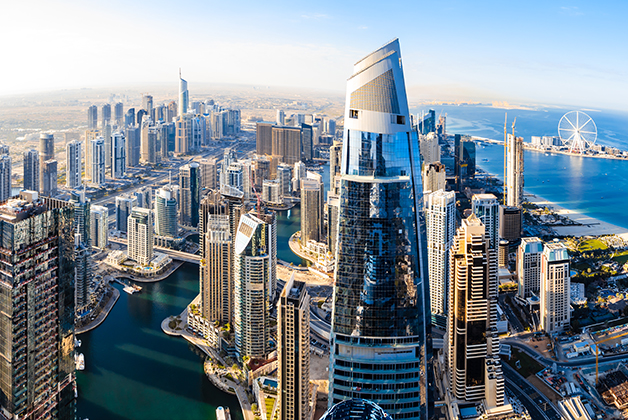
Dubai has launched a new permit scheme that enables free-zone companies to conduct business within its mainland, a move designed to dismantle long-standing regulatory barriers between jurisdictions and unlock new commercial opportunities.

Under Executive Council Decision No. 11 of 2025, the “Free Zone Mainland Operating Permit” allows companies already holding a Dubai Unified Licence to apply for mainland access digitally via the Invest in Dubai platform. The permit spans six months, priced at AED 5,000, and may be renewed under the same terms. The scheme applies initially to non-regulated sectors such as technology, consulting, design, professional services and trading. Companies granted the permit must maintain distinct financial records for mainland operations and will incur a 9 per cent corporate tax on revenues generated onshore.

Dubai Business Registration and Licensing Corporation, part of the Dubai Department of Economy and Tourism, has partnered with the Dubai Free Zone Council to administer the framework. Ahmad Khalifa Al Qaizi Al Falasi, CEO of DBLC, described the initiative as a step toward “regulatory modernisation” and a more seamless investor experience. Dr Juma Al Matrooshi, Assistant Secretary-General at the Free Zones Council, said the permit enhances Dubai’s competitiveness by combining the flexibility of free zones with access to domestic markets.

Authorities expect the permit to benefit over 10,000 existing free-zone firms, adding 15–20 per cent to cross-jurisdiction business activity in its first year. Businesses can now tap domestic trading avenues and contend for government tenders previously off-limits to entities without a mainland presence. Existing free-zone staff may serve mainland operations, eliminating the need for new hiring under those permits.

Though the permit removes many structural hurdles, certain limitations and compliance obligations remain. Firms dealing in regulated activities—such as banking, healthcare, education or financial services—must still secure approvals from relevant regulators. The new scheme prohibits its use for entities within the Dubai International Financial Centre, which remains under a distinct legal regime.

The resolution introduces three permitted pathways: establishing a branch physically in the mainland, setting up a branch that operates out of the free zone, or obtaining a temporary permit for limited operations. All applications require consent from both DET and the corresponding free-zone authority. The permit regime mirrors the requirements of Resolution No. 11, which mandates separate bookkeeping and compliance under federal and local laws.

Dubai’s regulatory architecture has evolved in recent years: free zones traditionally offered full foreign ownership and streamlined processes, but lacked direct access to local markets. To counter that gap, companies often had to replicate operations via separate mainland entities or dual licences—a burden that increased costs and administrative duplication.

The new permit scheme thus signals a strategic pivot toward harmonising the city’s jurisdictional divide. Corporate law specialists note that simpler structures reduce overhead, ease governance challenges and mitigate tax or substance-test scrutiny. As one regional legal adviser put it, “Businesses can now use a single platform to expand rather than duplicating corporate filings.”

The pricing and validity terms are notable. The six-month, AED 5,000 permit is significantly more affordable and flexible than establishing a full mainland company, lowering the threshold for smaller firms and startups to experiment with onshore operations. The 9 per cent tax rate aligns with federal rules that apply to mainland income, while free-zone revenues remain eligible for preferential regimes.


Massachusetts Institute of Technology has outright rejected a federal proposal from the Trump administration that would grant preferential funding to universities in exchange for adopting ideological and policy constraints. The university’s leadership argues the offer undermines academic freedom and institutional autonomy. MIT President Sally Kornbluth issued a letter addressed to Education Secretary Linda McMahon in which she affirmed the institution’s commitment to merit-based scientific funding and independent […]

Deloitte Australia will reimburse part of the A$440,000 it earned from the Department of Employment and Workplace Relations after a commissioned report was found to contain fabricated quotes from a federal court judgment and references to non-existent academic papers. The 237-page document, published in July, initially underwent limited public scrutiny. A revised version released in October removed misattributed quotations and corrected erroneous citations after Sydney University researcher […]

Metra will implement fare hikes ranging from 13 % to 15 % starting February 2026 to counter a projected $200 million funding shortfall — a move that aims to prevent service cuts in the immediate term. The commuter rail system’s proposed 2026 budget, set at about $1.1 billion, depends heavily on that increase to stem deficits, while maintaining its existing service levels. The Regional Transportation Authority has […]

Deloitte Australia has agreed to partially refund AU$440,000 to the federal government after a commissioned report attributed to it was found to include fabricated citations, invented legal quotations, and other inaccuracies. The firm disclosed that the report’s drafting had involved the use of a generative AI system, prompting sharp debate over how much control and transparency clients should demand when consultants deploy such tools in high-stakes settings. […]

Linh Tran The Dow Jones (US30) recorded its fourth consecutive decline, reflecting the growing caution across financial markets as the U.S. government remains partially shut down and a series of key economic data releases have been delayed. This disruption has made investors more defensive, as crucial reports such as Nonfarm Payrolls (NFP), CPI, and GDP have yet to be published. The absence of clear economic signals has […]

Rania Gule It seems that gold is going through a delicate phase, balancing between long-term bullish momentum and short-term profit-taking pressures, at a time when global markets are on edge ahead of upcoming U.S. sentiment data. As prices approach the $4,000 per ounce mark once again, the key question resurfaces: can gold still break its historical ceiling at $4,059, or will the current corrective wave extend temporarily […]

Analysts at JPMorgan are forecasting that U. S. spot Solana exchange-traded funds will attract only about $1.5 billion in net inflows during their first year, substantially lagging behind the inflows seen in Ethereum-linked ETFs. The expectation comes even as the U. S. Securities and Exchange Commission is widely seen as poised to approve multiple Solana ETF applications in the days ahead.

JPMorgan’s projection, led by Nikolaos Panigirtzoglou, rests on multiple concerns, chief among them the weakening on-chain activity of Solana and investor fatigue in the altcoin space. The firm estimates that the figure could fall below $1.5 billion if headwinds intensify, noting weak demand in CME Solana futures markets and stiff competition from diversified crypto index funds as key constraints.

Network metrics underscore that caution. Daily transaction volume on Solana has dropped to approximately 64 million, down nearly 50 percent from its July peak, a sign that user and developer usage may be waning. Some analysts suggest that capital is rotating toward rival chains such as BNB Chain and toward broader index products, rather than concentrated bets on Solana itself.

Bitwise Asset Management, one of the prominent ETF hopefuls, has updated its application to include “staking” in the fund’s name and set a sponsor fee of 0.20 percent—among the lowest for crypto ETFs. The amendment also promises a waiver for the first three months and for up to $1 billion in assets under management, a signal of aggressive positioning against peers.

Other applicants include VanEck, 21Shares, Franklin Templeton, Grayscale, and Fidelity, whose applications carry staggered decision deadlines ranging from October through April 2026. Following the SEC’s adoption of a generic listing standard for digital-asset ETFs, certain filings have been restructured to comply with the revised framework—though a handful were asked to withdraw or amend submissions.

The regulatory picture is complicated by the ongoing federal government shutdown, which has forced the SEC to operate with a skeletal staff and slowed processing of registrations and rule changes. Observers warn that even if the SEC signals approval, practical listing and launch may be delayed until staffing returns to normal levels.

Market sentiment, however, appears largely bullish on the regulatory outcome. Prediction markets and analysts now price the probability of Solana ETF approval at 90 to 99 percent, citing precedent from the Bitcoin and Ethereum cases and the existence of a CME futures contract as enablers.

Silver prices have surged to an all-time high of $49.57 per ounce as of October 8, 2025, marking a significant milestone in the precious metals market. This unprecedented surge is attributed to a confluence of factors, including escalating geopolitical tensions, economic uncertainties, and a robust demand for safe-haven assets.

The rally in silver prices mirrors a broader trend in the precious metals sector, with gold also reaching record levels above $4,000 per ounce. Investors are increasingly turning to these assets as a hedge against inflation and financial instability. The U. S. Federal Reserve’s anticipated interest rate cuts have further bolstered the appeal of non-yielding assets like silver and gold.

Analysts note that silver’s ascent is not solely driven by investor sentiment. The metal’s industrial applications, particularly in solar energy and electric vehicles, have seen a significant uptick. The International Energy Agency projects that silver demand from the solar sector will continue to rise, driven by the global push towards renewable energy sources.

Market dynamics also play a crucial role in silver’s price trajectory. The London Bullion Market Association reports a tightening in silver supply, with inventories reaching historic lows. This supply-demand imbalance has intensified competition among investors, pushing prices higher.

In India, silver prices have mirrored global trends, with rates reaching ₹1.57 lakh per kilogram in major markets. The surge has been fueled by increased demand during the festive season and a growing interest in silver as an investment vehicle. The Reserve Bank of India has noted a rise in silver-backed exchange-traded funds, reflecting a shift in investor preferences.

Despite the bullish outlook, experts caution about potential market corrections. The Commodity Futures Trading Commission has observed increased volatility in silver futures markets, indicating heightened speculative activity. Investors are advised to exercise caution and consider the long-term fundamentals of silver as an investment.

Apple has removed Eyes Up, an iPhone app that collected and archived videos of U. S. Immigration and Customs Enforcement arrests, marking the second platform the company has taken down after ICEBlock. The swift removal followed concerns from U. S. law enforcement that such apps pose risks to officers. Eyes Up’s functionality allowed users to upload videos, tag arrest locations, and view past incidents on an interactive […]

Arabian Post Staff -Dubai The Central Bank of the United Arab Emirates has boosted its gold reserves by about 32 percent in the first eight months of 2025, pushing the total value to AED 30.329 billion by end-August — a figure not seen before. The bank’s gold holdings stood at AED 22.981 billion at the close of December 2024. Between July and August alone, the value increased […]

Intercontinental Exchange, the parent company of the New York Stock Exchange, is committing up to $2 billion in cash to back Polymarket, giving the prediction-market platform a pre-investment valuation of $8 billion. ICE will also serve as the global distributor of Polymarket’s event-driven data and collaborate on tokenisation efforts.

The deal signals a bold shift by a major financial infrastructure firm into the realm of speculative markets tied to politics, culture, economics and sports. ICE’s announcement states the investment will not have a material impact on its 2025 financials.

Polymarket, launched in 2020 by Shayne Coplan, allows traders to take positions on the probability of real-world outcomes. The platform had earlier barred U. S. users after settling in 2022 with the CFTC over operating an unregistered exchange. But it has since acquired QCEX, a CFTC-licensed derivatives exchange and clearinghouse for $112 million, positioning itself for compliant U. S. operations.

In public statements, ICE’s Chair and CEO, Jeffrey C. Sprecher, described the move as connecting “trusted financial infrastructure” with a next-generation platform that leverages user behaviour and probability markets. Coplan said the partnership will help bridge “how individuals and institutions use probabilities to understand and price the future.”

Analysts view the crux of ICE’s interest lies in monetising Polymarket’s crowd-driven data. The platform’s users collectively assign probabilities to outcomes, producing sentiment indicators ICE can package and distribute to institutional clients. Michael Ashley Schulman, partner at Running Point Capital Advisors, noted that ICE sees more value in data distribution than in clearing event contracts.

Regulatory conditions have softened under the current federal regime. Polymarket had reported that investigations by the Department of Justice and the CFTC closed without new charges, eliminating a regulatory overhang. Legal experts note that its acquisition of QCEX gives it a structural path to U. S. markets that was unavailable earlier.

Despite that progress, legal risks remain. Some jurisdictions still view event-betting as gambling, not financial activity. In Belgium, for example, authorities recently banned the platform’s use within the country. Polymarket’s own disclosures show it had raised around $205 million in earlier rounds before ICE’s investment, but with limited access to established trading jurisdictions.

Institutional interest in prediction markets has surged since the 2024 U. S. election cycle, which fuelled growth in platforms wagering on election outcomes, geopolitical events and social trends. ICE’s investment may prompt legacy financial firms to explore similar tie-ups or launches of probabilistic trading models.

In markets, ICE’s shares nudged upward following the announcement. The platform’s next test will be demonstrating whether prediction markets, previously the domain of retail and niche crypto users, can scale under institutional frameworks while satisfying securities, derivatives and gambling regulators.

VISHNU RAJA
RYO YAMADA
HITORI GOTOH
IKUYO KITA