Just in:
Dubai details five-year visa benefits for returning visitors // Oil and chip shares retreat after Democratic victories // OpenAI identifies 948 Linux privilege escalation flaws using AI // APT29-linked campaign exploits outdated Apple and Android software // Dubai boat show confirms international shipyard line-up for November // The “1st Greater Bay Area Health and Longevity Summit & Awards Ceremony” concludes successfully in Macao // Kochi police detain two actors over bid to honey trap doctor // Private varsities bill all set to face the axe // Miss Universe Hong Kong Jen Zhou Departs for Puerto Rico to Compete in the 75th Miss Universe World Final // Geely’s i-HEV Intelligent Hybrid Technology Offers a New Direction for Gasoline-Powered Vehicles // Xi Jinping Preparing For A Trilateral Summit With Trump And Putin At APEC Summit On Nov 18-19 // e-Crime Bureau Signs Cybersecurity Partnership With Smart Africa, Reinforcing Its Global Expansion // Meraas showcases five residential zones at Dubai Design Week // CR Longdation Aethereal Cybersecurity × Global Cybersecurity Alliance (GCSA) Join Hands to Establish the “AI and Cybersecurity Research Centre” // Technology shares plunge as Nasdaq enters correction // Emaar approves Development buyout ahead of planned delisting // OpenAI introduces GPT-6 Cyber with restricted security access // Geely’s i-HEV Intelligent Hybrid Technology Offers a New Direction Vision for Gasoline-Powered Vehicles // Oil advances towards $100 as tanker attacks persist // After Reaching 7 Million Users in the Philippines, Skyro Launches Transparent Cash Loans in Malaysia //

News related to
federal

By P. Sudhir The 24th Congress of the CPI(M), which concluded at Madurai on April 6 with a massive rally, was notable in many respects. There were changes both in the agenda and content of the Congress discussions. First of all, a Political Review Report which reviewed the implementation of the political-tactical line adopted at […]

Grade A office rents remained under pressure in Q1, while a tourist inflow recovery is yet to boost retail market confidence Smaller-sized residential units have been more sought-after following the relaxation of the maximum property value chargeable at a HK$100 stamp duty level as announced in the latest government budget speech, supporting first-hand residential sales. The total residential unit transaction number for Q1 climbed 24% y-o-y to […]

Goldman Sachs has increased the probability of a United States recession in the next 12 months to 45%, aligning with a wave of revised risk assessments by major investment banks as escalating trade tensions and tighter financial conditions unsettle global markets. The adjustment from Goldman’s previous estimate of 35% reflects the firm’s assessment that a sharp tightening in financial conditions and heightened policy uncertainty will significantly hinder […]

Arabian Post Staff -Dubai The United States has imposed a series of tariffs on countries within the Middle East and North Africa region, aiming to address what the administration describes as long-standing unfair trade practices. While these measures are poised to affect various sectors, exemptions granted to oil exports are expected to mitigate the overall economic impact on the region’s leading exporters. Gulf Cooperation Council countries—including Saudi […]

California has achieved a significant milestone in its transition towards sustainable transportation. The state now boasts 178,549 public and shared private electric vehicle chargers, surpassing the approximately 120,000 gasoline nozzles by 48%. This development underscores California’s commitment to expanding its EV infrastructure, facilitating the adoption of zero-emission vehicles. Governor Gavin Newsom highlighted this achievement, emphasizing the state’s dedication to providing consumers with more charging options. He noted […]

The United States economy added 228,000 jobs in March 2025, surpassing analysts’ expectations and indicating a robust labour market. This growth was notably higher than the anticipated 130,000 positions, reflecting resilience despite looming trade uncertainties. The unemployment rate edged up to 4.2% from 4.1% in February, primarily due to an increased number of individuals entering the workforce. Significant employment gains were observed in the healthcare sector, which […]

The Nasdaq Composite Index entered bear market territory on Friday, April 4, 2025, closing over 20% below its December peak. This significant downturn was precipitated by President Donald Trump’s imposition of a 10% tariff on all imports to the United States, with additional substantial levies targeting technology-centric nations such as China, Taiwan, and Vietnam. China’s swift retaliation, announcing a 34% tariff on all U.S. imports, intensified fears of a global recession and inflationary pressures.

Major U.S. stock indices experienced sharp declines. The S&P 500 fell approximately 2.5%, while the Dow Jones Industrial Average dropped nearly 2.45%, shedding 994.46 points to close at 39,551.47. Technology stocks bore the brunt of the sell-off, with Apple Inc. shares declining over 4%, following a nearly 10% drop the previous day. Nvidia and Broadcom each lost more than 7%, and Tesla shares plummeted almost 10%.

The newly announced tariffs, dubbed “Liberation Day” tariffs by the administration, include a universal 10% tariff on all imports and higher targeted tariffs for numerous countries. Economists warn that these measures could disrupt global supply chains, particularly impacting the technology sector, which relies heavily on components from China and Taiwan. The Semiconductor Industry Association expressed concern that the tariffs could stymie growth and innovation within the industry.

International responses were swift. The European Union signaled readiness to implement countermeasures, while the International Monetary Fund cautioned that escalating trade tensions pose significant risks to global economic stability. In the U.S., political figures across the spectrum voiced apprehension. Senate Majority Leader Mitch McConnell and Senator Ted Cruz criticized the tariffs, warning of potential harm to American workers and farmers.

Despite a robust March jobs report indicating the addition of 228,000 new jobs and a slight uptick in unemployment to 4.2%, market sentiment remained negative. Investors are now looking to Federal Reserve Chair Jerome Powell’s upcoming speech for insights into potential monetary policy adjustments in response to the escalating trade conflict.

The CBOE Volatility Index, a measure of market anxiety, surged to levels not seen since August 2024, reflecting heightened investor concern. Oil prices also declined significantly due to fears of reduced global demand amid the escalating trade tensions.

President Trump defended the tariff strategy, asserting that the measures are necessary to address longstanding trade imbalances and would ultimately benefit the U.S. economy. He urged investors to view the market downturn as a wealth opportunity.

Advertisements

President Donald Trump’s declaration of “Liberation Day” introduced sweeping tariffs on imports, triggering significant upheaval in global energy markets. The administration announced a baseline tariff of 10% on all imported goods, with elevated rates for specific countries accused of nonreciprocal or discriminatory trading practices. These measures have prompted widespread market volatility and raised concerns about potential economic slowdowns. Oil prices experienced a sharp decline following the tariff […]

Ripple has integrated its US dollar-pegged stablecoin, RLUSD, into its cross-border payments platform, Ripple Payments. This integration aims to enhance the efficiency and scalability of international transactions. The move coincides with RLUSD’s listing on the cryptocurrency exchange Kraken, broadening its accessibility to both institutional and retail users.

Launched in December 2024, RLUSD has rapidly approached a market capitalization of $250 million, reflecting significant adoption within the digital asset ecosystem. The stablecoin is fully backed by U.S. dollar deposits, government bonds, and cash equivalents, ensuring its stability and reliability. Ripple has positioned RLUSD as an enterprise-grade asset designed to streamline cross-border payments by providing a stable and efficient medium of exchange.

The integration of RLUSD into Ripple Payments is part of a phased rollout. Select customers, including cross-border payment providers BKK Forex and iSend, are already utilizing RLUSD to enhance their treasury operations. This development underscores Ripple’s commitment to combining its expertise in payments with a robust payout network and a compliant stablecoin to deliver fast, low-cost, and scalable cross-border payment solutions.

In addition to its integration into Ripple Payments, RLUSD’s listing on Kraken marks a significant milestone in its adoption. Kraken joins a growing list of platforms supporting RLUSD, including LMAX Digital, Zero Hash, Bitstamp, and Bullish. This expansion increases RLUSD’s liquidity and provides users with more avenues to access and utilize the stablecoin.

Jack McDonald, Ripple’s Senior Vice President of Stablecoins, noted that RLUSD’s market capitalization has exceeded internal projections, with adoption spanning multiple financial sectors. He highlighted that RLUSD is being used as collateral in both crypto-native and traditional finance trading markets. Furthermore, Ripple is actively collaborating with non-governmental organizations to explore the potential of stablecoins in streamlining charitable giving.

The stablecoin market has been predominantly dominated by Tether and USD Coin , which together account for nearly 90% of the total market capitalization. Ripple’s entry into this space with RLUSD signifies a strategic move to challenge these incumbents by leveraging its established infrastructure and expertise in cross-border payments. The company’s recent legal victory against the Securities and Exchange Commission has further bolstered its position in the cryptocurrency industry, enabling it to pursue new ventures such as RLUSD with greater confidence.

Ripple’s approach to RLUSD emphasizes compliance and transparency. The stablecoin is 100% backed by U.S. dollar deposits, U.S. government bonds, and cash equivalents. To oversee RLUSD’s operations and ensure adherence to regulatory standards, Ripple has appointed an advisory board that includes notable figures such as Sheila Bair, former chair of the U.S. Federal Deposit Insurance Corporation.

The integration of RLUSD into Ripple Payments and its listing on Kraken are expected to drive further adoption of the stablecoin. By providing a stable and efficient medium for cross-border transactions, RLUSD aims to address the challenges associated with traditional international payments, such as high costs and lengthy processing times.

As the digital asset landscape continues to evolve, the role of stablecoins like RLUSD in facilitating seamless and efficient transactions is likely to expand. Ripple’s strategic initiatives with RLUSD position the company to play a pivotal role in the future of cross-border payments, offering both enterprises and individuals a reliable alternative to traditional payment methods.

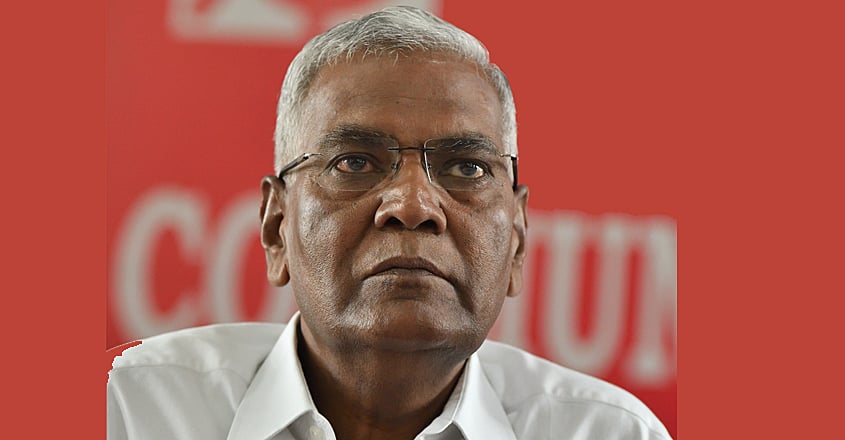
By Satyaki Chakraborty Communist Party of India (CPI) general secretary D. Raja gave a clarion call on Wednesday for the building of principled unity of all communists in India to act as the vanguard of the battle against the Narendra Modi government and the RSS-BJP led Sangh Parivar. Addressing the inaugural session of the 24th […]
By Nantoo Banerjee If in the United States, the world’s second largest federal democracy, the number of seats in the House of Representatives could remain capped at 435 since 1913, there is no reason to justify the latest delimitation exercise to freshly fix the number of seats and boundaries of territorial constituencies in each state […]

Emails falsely claiming to be from the cryptocurrency exchange Gemini are circulating, sparking concerns of a growing scam targeting its users. The fraudulent messages allege that the company has filed for bankruptcy and urge recipients to click on a link to confirm account details or withdraw their funds before an impending shutdown. Experts warn that this is part of an ongoing wave of phishing schemes aimed at […]

Thousands of demonstrators filled the streets of downtown Dallas on Sunday, voicing opposition to President Donald Trump’s immigration policies and calling for the release of detained students. The protest, known as the “Mega March 2025,” began at the Cathedral of Our Lady of Guadalupe and proceeded through key city thoroughfares, culminating at Dallas City Hall. Participants carried American flags, symbolizing unity and patriotism. The march was organized […]

Galaxy Digital, a prominent cryptocurrency investment firm led by Michael Novogratz, has agreed to a $200 million settlement with the New York Attorney General’s office. The settlement addresses allegations that the firm promoted the cryptocurrency LUNA without adequately disclosing its financial interests, while simultaneously selling substantial holdings of the token at a profit prior to its collapse.

The Terra ecosystem, which included the algorithmic stablecoin TerraUSD and its sister token LUNA, experienced a catastrophic collapse in May 2022. At its peak, LUNA boasted a market capitalization of approximately $40 billion, ranking among the top cryptocurrencies globally. The collapse of UST and LUNA resulted in significant financial losses for investors and raised concerns about the stability of algorithmic stablecoins.

According to the settlement details, Galaxy Digital actively promoted LUNA to investors while concurrently liquidating its own holdings without proper disclosure of these transactions. This dual action allegedly misled investors regarding the firm’s financial interests and the stability of the Terra ecosystem. The New York Attorney General’s office emphasized that such practices undermine market integrity and investor trust.

The $200 million settlement is structured to be paid over a three-year period. Notably, while Galaxy Digital has agreed to the financial terms, the firm has neither admitted nor denied the allegations put forth by the Attorney General’s office.

The collapse of Terra’s tokens had far-reaching implications beyond individual investor losses. The event triggered a broader market downturn, leading to increased scrutiny of the cryptocurrency industry by regulators worldwide. In the aftermath, several firms associated with Terra faced legal actions and financial penalties. For instance, Jump Trading Group agreed to a $123 million settlement with the U.S. Securities and Exchange Commission over allegations related to misleading investors about the stability of TerraUSD.

Terraform Labs, the company behind the Terra blockchain, filed for bankruptcy in January 2024. Subsequently, the firm reached a $4.47 billion settlement with the SEC to address allegations of fraud related to the collapse of TerraUSD and LUNA. The bankruptcy proceedings are ongoing, with efforts focused on winding down operations and compensating affected stakeholders.

Do Kwon, co-founder of Terraform Labs, has also faced legal challenges. After being detained in Montenegro in March 2023, Kwon was extradited to the United States to face federal fraud charges related to the collapse of TerraUSD and LUNA. The charges include wire fraud, commodities fraud, securities fraud, and conspiracy.

The Terra incident has prompted regulators to intensify their oversight of the cryptocurrency industry, particularly concerning the promotion and stability of digital assets. The SEC and other regulatory bodies have been actively investigating and, in some cases, penalizing firms that fail to provide transparent disclosures to investors or engage in misleading promotional activities.

Galaxy Digital’s settlement underscores the importance of transparency and ethical practices within the cryptocurrency sector. As digital assets continue to gain mainstream adoption, regulatory authorities are likely to maintain rigorous enforcement to protect investors and ensure market integrity. Firms operating in this space are increasingly expected to adhere to stringent disclosure requirements and ethical standards to foster trust and stability in the evolving financial landscape.

The repercussions of the Terra collapse serve as a cautionary tale for both investors and firms within the cryptocurrency industry. Investors are urged to conduct thorough due diligence and remain cautious of high-yield investment opportunities that lack transparency. Simultaneously, firms are reminded of the critical need to maintain ethical standards and comply with regulatory requirements to sustain the industry’s credibility and foster long-term growth.

As the cryptocurrency market continues to evolve, the balance between innovation and regulation remains a focal point. The outcomes of legal actions, such as the settlement involving Galaxy Digital, highlight the ongoing efforts by authorities to establish a regulatory framework that protects investors while accommodating the dynamic nature of digital assets.


Matein Khalid It took Trump 2.0 to finally dethrone King Dollar. The US Dollar Index has fallen from 110 to 104 as Planet Forex has finally concluded that aggressive tariffs on Canada, Mexico, China and the EU, coupled with stagflation risk in the US and Powell’s dovish take on a potential dual mandate pivot to easy money at a time when Germany ramps up defense spending by […]

Tesla has announced plans to commence sales in Saudi Arabia next month, marking a significant expansion into the Gulf region’s largest market. The electric vehicle manufacturer will host a launch event in Riyadh on April 10 to showcase its lineup of electric vehicles and solar-powered products.

This development indicates a mending of relations between Tesla’s CEO, Elon Musk, and Saudi Arabia, following tensions that arose in 2018. At that time, Musk’s statement about securing funding to take Tesla private, allegedly involving Saudi Arabia’s Public Investment Fund , led to a dispute when the deal did not materialize. Subsequent legal proceedings revealed strained communications between Musk and PIF Governor Yasir al-Rumayyan. The recent rapprochement is highlighted by Musk’s virtual participation in Riyadh’s Future Investment Initiative summit and his appearance alongside al-Rumayyan and U.S. President Donald Trump at a high-profile event in New York.

The upcoming event in Riyadh will not only feature Tesla’s electric vehicles but also introduce innovations such as the autonomous driving technology “Cybercab” and the humanoid robot “Optimus.” While these products will be on display, the company has yet to announce their availability in the Saudi market.

Saudi Arabia’s electric vehicle sector is still in its early stages, with electric cars accounting for just over 1% of total car sales in 2024. Despite this, the kingdom has demonstrated a commitment to diversifying its automotive market. The PIF has invested over $1 billion in Lucid Motors, a competitor in the EV space, and is supporting the development of Ceer, a domestic electric vehicle brand.

Tesla’s entry into Saudi Arabia comes at a time when the company is facing challenges in other markets. In Europe, Tesla has experienced a 42.6% decline in sales this year, even as overall demand for electric vehicles grows. In the United States, the brand has been the target of protests related to Musk’s political engagements and his role in federal budget cuts.

The Saudi market presents both opportunities and challenges for Tesla. The nation’s expansive road networks and limited charging infrastructure, coupled with a consumer preference for large, gasoline-powered vehicles due to low fuel prices, may pose hurdles to widespread EV adoption. However, the government’s initiatives to promote electric vehicles and renewable energy align with Tesla’s mission, potentially facilitating the company’s growth in the region.

Australian cryptocurrency investors are facing substantial financial threats due to an elaborate scam where fraudsters impersonate representatives from Binance, one of the world’s leading cryptocurrency exchanges. The Australian Federal Police , in collaboration with the National Anti-Scam Centre and Binance Australia, have initiated Operation Firestorm to combat these fraudulent activities. This operation has identified over 130 Australian victims targeted through sophisticated phishing techniques.

Scammers have been sending text messages that closely mimic legitimate communications from Binance. These messages often include false verification codes and direct recipients to counterfeit customer service hotlines. Once contact is made, victims are manipulated into transferring their cryptocurrency assets into so-called “trust wallets” controlled by the scammers. The fraudulent messages are particularly deceptive, appearing within existing Binance communication threads, exploiting vulnerabilities in telecommunications systems that allow sender IDs to be spoofed.

AFP Commander of Cybercrime Operations, Graeme Marshall, emphasized the challenges in recovering stolen funds, noting that once assets are transferred to accounts under the scammers’ control, they are swiftly moved through a network of wallets and money laundering channels, complicating seizure or recovery efforts. Marshall advised individuals who suspect they have been targeted to report the incident to their financial institution or cryptocurrency exchange and to file a report with law enforcement via ReportCyber.

Binance’s Chief Security Officer, Jimmy Su, highlighted the importance of user education and verification to combat such scams. He recommended that users verify communications through official channels and remain cautious of unsolicited messages, especially those prompting urgent actions. Su also mentioned that Binance is developing new security features aimed at helping users identify and avoid phishing scams.

The Australian Competition and Consumer Commission’s Deputy Chair, Catriona Lowe, echoed these sentiments, urging the public to authenticate any communications through official channels to avoid falling victim to impersonation scams. She stressed the importance of vigilance and thorough verification of investment opportunities to prevent financial losses.

Matein Khalid If ever any investor needed a real time lesson in emerging markets risk, the timebombs in Ankara, Jakarta and Bogotá to provided it. President Erdogan ordered the arrest of his top rival Istanbul Mayor Ekrem İmamoğlu and triggered a 10% plunge in the lira against the US dollar, an exodus of offshore money from the local T-bill market and a horrific meltdown in Istanbul bank […]

Airlines across the globe are tightening regulations concerning the use and carriage of power banks on flights, following a series of incidents involving lithium-ion batteries. These measures aim to enhance passenger safety by mitigating the risks associated with battery malfunctions.

In January, an Air Busan aircraft in South Korea was engulfed in flames while preparing for departure. Investigations suggest that a power bank was the likely cause of the fire. In response, Air Busan revised its policies, now requiring passengers to carry power banks on their person rather than storing them in overhead compartments. By March 1, South Korean authorities mandated all national airlines to enforce stricter regulations, including prohibiting the charging of devices onboard.

Singapore Airlines and its budget subsidiary, Scoot, announced that from April 1, passengers would be prohibited from charging portable power banks via onboard USB ports or using them to charge personal devices during flights. The airline emphasized that safety remains its top priority and that in-flight procedures are regularly reviewed to ensure passenger well-being.

Kazakhstan’s Air Astana implemented similar measures on March 13, banning the charging or use of power banks during flights. The airline specified that lithium batteries, external batteries, and e-cigarettes must be kept in hand luggage and placed in the overhead bins.

Taiwanese carriers EVA Air and China Airlines introduced prohibitions starting March 1, disallowing the charging and use of power banks and spare lithium batteries during flights. Both airlines advised passengers to utilize the USB power outlets available at most seats for charging other devices.

Thai Airways followed suit on March 15, banning the use and charging of power banks and portable batteries during flights. The airline’s decision aligns with a broader industry trend aimed at reducing in-flight fire hazards associated with lithium-ion batteries.

Hong Kong’s Civil Aviation Department expressed significant concern over safety incidents involving passengers using lithium power banks during flights. Consequently, from April 7, passengers on Hong Kong-based airlines will be prohibited from using or charging power banks during flights and from storing them in overhead compartments. Instead, power banks should be kept under the seat or in the seat pocket in front of passengers.

These regulatory changes are in response to a rising number of incidents involving lithium-ion batteries. In 2024, the U.S. Federal Aviation Administration recorded three incidents of overheating lithium batteries on planes every two weeks, up from just under one per week in 2018. Such statistics underscore the growing concern within the aviation industry regarding the safety of these devices.

President Donald J. Trump has initiated a significant overhaul of the United States Agency for International Development , rebranding it as the U.S. International Humanitarian Assistance and integrating blockchain technology into its operations. This restructuring places the agency under the direct authority of Secretary of State Marco Rubio, aiming to enhance transparency and efficiency in foreign aid distribution.

An internal memo circulating within the State Department outlines the administration’s plan to utilize blockchain technology to secure and trace aid disbursements. The objective is to improve the transparency, security, and efficiency of aid distribution by leveraging blockchain’s immutable ledger capabilities. However, the specifics of this integration—whether it involves the use of cryptocurrencies or solely blockchain ledgers—remain unclear. The administration emphasizes a shift towards outcomes-based funding, intending to ensure that aid programs deliver measurable results.

Despite these intentions, the proposed reorganization has encountered legal challenges. A federal judge recently ruled that the dismantling of USAID by the Department of Government Efficiency , led by Elon Musk, likely violates the Constitution. The court issued an indefinite injunction blocking further actions against USAID and mandated the reinstatement of email and computer access to affected employees. This ruling does not reverse all personnel changes or fully restore the agency but highlights concerns over the administration’s approach to restructuring.

Critics argue that while blockchain technology offers potential benefits, its application in humanitarian contexts may not be necessary or cost-effective. Some experts caution that such technological solutions could impose additional burdens on smaller non-governmental organizations and may not provide substantial advantages over existing systems. They suggest that the focus should remain on addressing the immediate needs of aid recipients rather than implementing complex technological frameworks.

The administration’s broader strategy includes reducing the size of the federal government and reallocating resources to align more closely with American geopolitical interests. This involves concentrating on areas such as global health, food security, and disaster response, while politically oriented programs may be redirected to other sections within the State Department. The restructuring plan also proposes the elimination of multiple regional bureaus, aiming to streamline operations and enhance efficiency.

Secretary of State Marco Rubio has indicated that the reorganization will proceed with input from Congress, underscoring the administration’s commitment to aligning foreign aid programs with the interests of U.S. taxpayers and strategic objectives. However, the legal setbacks and critiques from various stakeholders suggest that the path forward may be complex and contentious.

Matein Khalid Risk assets went ballistic this week as DonnyT did his tariff man war dance, hurled his Tomahawk at Canada, Mexico, China and EU as Liberation Day begins on April 2nd in Year Zero of the Ten Thousand Year MAGA Empire. Long years ago, America made a tryst with destiny and now comes the time, we must redeem our pledge to The Donald, the Don of […]

President Donald Trump has called on Congress to expedite the passage of stablecoin and cryptocurrency reserve legislation, emphasizing the need for regulatory clarity in the rapidly evolving digital asset sector. This appeal was made during his address at the Digital Asset Summit, marking the first time a sitting U.S. president has spoken at a cryptocurrency-focused conference.

In his speech, President Trump underscored the importance of integrating digital assets into the mainstream financial system, stating, “We must ensure that our regulatory framework fosters innovation while protecting consumers and maintaining financial stability.” He urged legislators to deliver comprehensive bills to his desk before the congressional recess in August, reflecting a sense of urgency in addressing the regulatory challenges posed by digital currencies.

This development follows the Senate Banking Committee’s recent advancement of the Generating Necessary Information for Unobstructed Selection Act, a bipartisan bill co-sponsored by Senators Bill Hagerty and Kirsten Gillibrand. The GENIUS Act aims to provide federal legitimacy to stablecoins, digital currencies pegged to traditional assets like the U.S. dollar, by establishing a dual regulatory framework. This framework would allow stablecoin issuers to register with either state or federal authorities, thereby promoting their adoption as mainstream payment options. However, critics, including Senator Elizabeth Warren, have raised concerns about potential risks such as insufficient consumer safeguards and financial instability, cautioning against a possible Big Tech takeover of the dollar.

In addition to legislative efforts, the Trump administration has taken proactive steps to position the United States as a leader in the digital asset space. Earlier this month, President Trump signed an executive order establishing a Strategic Bitcoin Reserve and a U.S. Digital Asset Stockpile. The Strategic Bitcoin Reserve is designed to treat bitcoin as a reserve asset, capitalized with bitcoin forfeited in criminal or civil asset forfeiture proceedings. This move aims to create a “digital Fort Knox,” signaling a significant shift in the U.S. government’s approach to digital assets. The U.S. Digital Asset Stockpile will consist of other digital assets obtained through similar forfeiture proceedings, with strategies for their responsible stewardship under consideration.

The administration’s actions have been met with both optimism and skepticism. Proponents argue that these measures will integrate cryptocurrencies more deeply into the financial system, transforming them into viable payment systems and investment vehicles. Kevin O’Leary, a prominent investor and “Shark Tank” star, remarked that under President Trump’s leadership, cryptocurrency is moving away from its “cowboy era,” referencing past market volatility and regulatory uncertainties. O’Leary noted that with the implementation of regulations, crypto is becoming more integrated with financial institutions, signaling a maturation of the industry.

Conversely, critics express concerns over the rapid institutionalization of digital assets without comprehensive regulatory oversight. They caution that an overly permissive stance could lead to financial instability and inadequate consumer protections. The debate highlights the delicate balance policymakers must strike between fostering innovation and ensuring the safety and soundness of the financial system.

The Digital Asset Summit also featured discussions on the global implications of the United States’ digital asset policies. Industry leaders emphasized the need for international collaboration to establish harmonized regulatory standards, citing the borderless nature of cryptocurrencies. They argued that coordinated efforts are essential to prevent regulatory arbitrage and to promote the healthy development of the global digital asset ecosystem.

As the legislative process unfolds, all eyes are on Congress to see how it will navigate the complex landscape of digital asset regulation. The outcome will have profound implications not only for the United States but also for the global financial system, as nations worldwide grapple with the challenges and opportunities presented by the rise of digital currencies.

The United States Federal Reserve’s monetary policy decisions have a direct impact on the United Arab Emirates’ financial landscape, owing to the dirham’s peg to the U.S. dollar. Consequently, changes in the Fed’s interest rates influence borrowing costs in the UAE, affecting sectors such as real estate and personal finance. However, experts suggest that only substantial rate cuts by the Fed would lead to noticeable reductions in […]

Bitcoin, Ether, and Solana are anticipated to experience price fluctuations between 3% and 5% as the Federal Reserve prepares to announce its latest monetary policy decisions.

As of Wednesday, Bitcoin has seen a modest uptick, trading at $83,290—a 1.2% increase, though it remains 31% below its January peak. Ethereum and Solana have also registered gains, with Ethereum rising by 1.5% and Solana by 1.6%.

The Federal Open Market Committee is set to release its rate review, along with growth and inflation projections. Market consensus suggests that the Fed will maintain current interest rates. However, investors are keenly awaiting Chair Jerome Powell’s press conference for indications of potential shifts toward more accommodative monetary policies, especially in light of concerns surrounding the labor market and consumer spending.

Volmex’s one-day implied volatility indices, which measure expected price fluctuations, suggest that Bitcoin could see a 24-hour price swing of approximately 3.31%. Similarly, Ethereum and Solana are projected to experience movements of 5.25% and 5.73%, respectively.

Historically, Bitcoin has exhibited notable volatility around FOMC meetings. For instance, on August 5, 2024, Bitcoin’s price declined by 7.2%, while Ethereum dropped by 10.1%, coinciding with macroeconomic announcements. These movements were accompanied by surges in the Bitcoin Volmex Implied Volatility Index, underscoring the sensitivity of cryptocurrency markets to such events.

Market participants are also reflecting on President Trump’s recent announcement of a U.S. “crypto reserve,” which includes assets like XRP, Cardano , and Solana . This initiative added over $200 billion to the cryptocurrency market’s value, with XRP’s market capitalization alone increasing by $44 billion. Bitcoin and Ethereum were subsequently added to the reserve, leading to a 9% surge in Bitcoin’s price to $93,000.

Despite these developments, Bitcoin’s price has faced challenges, hitting a four-month low of $76,867 before recovering slightly to $80,480. This decline is partly attributed to investor disappointment over the government’s stance on active cryptocurrency purchases.

Analysts caution that Bitcoin is at a critical juncture, with potential support levels around $73,000. Weakness at this technical level could signal further declines, drawing parallels to the 2021 crypto market downturn. Market dynamics, including the prevalence of speculative assets like meme coins, suggest a fragile foundation, with retail traders holding depreciating assets.

VISHNU RAJA
RYO YAMADA
HITORI GOTOH
IKUYO KITA