News related to
global

Matein Khalid The past eight weeks have seen a multi-trillion-dollar market cap meltdown. Wall Street developed a sudden aversion to software companies, viewing them as victims of the AI revolution. At the same time, the war in the Gulf has led to a sharp rise in the Volatility Index, the US dollar and US Treasury bond yields. These are macro headwinds for high-beta Nasdaq sectors, including software, and have […]

MACAU SAR – Media OutReach Newswire – 23 March 2026 – Melco Resorts & Entertainment has garnered six diamonds in the 2026 Black Pearl Restaurant Guide, further reaffirming the Company’s status as a global leader in fine dining and underlining its commitment to culinary excellence.

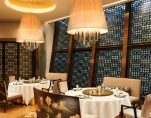
Jade Dragon at City of Dreams - Black Pearl Restaurant Guide Three-diamonds Restaurant
Jade Dragon at City of Dreams – Black Pearl Restaurant Guide Three-diamonds Restaurant

City of Dreams’ signature Cantonese fine dining restaurant Jade Dragon secured the Black Pearl Restaurant Guide‘s coveted Three Diamonds accolade for the seventh consecutive year, upholding its status as Macau’s one and only three diamond Chinese restaurant, and was honored the special “Annual Dish Award” for its signature “Steamed Garoupa Fillet on Egg White Custard with Aged Chinese Hua Diao Wine Sauce” course. Innovative Chinese restaurant Yí at City of Dreams received One Diamond, marking its seventh year of such achievement. Revering the great traditions and savoir-faire of French cuisine, Alain Ducasse at Morpheus maintains its One Diamond status for the third consecutive year, whilst City of Dreams’ tranquil Japanese restaurant Sushi Kinetsu upholds its One Diamond honor in the esteemed guide for the third consecutive year.

Mr. Lawrence Ho, Chairman & CEO of Melco, said, “It is a profound honor for Melco to be recognized once again by the Black Pearl Restaurant Guide in 2026. In addition to the recent achievements in the MICHELIN Guide Hong Kong & Macau 2026, these prestigious accolades are a testament to our unwavering dedication to culinary innovation and our commitment to strengthening Macau’s position as a UNESCO-designated Creative City of Gastronomy.

“This achievement would not be possible without the incredible passion and hard work of our Colleagues. I would like to extend my deepest gratitude to our world-class culinary and front-of-house teams; it is their relentless pursuit of service excellence that allows us to consistently deliver the most memorable and exquisite dining experiences to our guests from around the globe. We remain steadfast in our mission to push the boundaries of luxury hospitality and contribute to the vibrant diversification of Macau’s tourism landscape.”

At the award ceremony which took place today in Singapore, Melco properties’ restaurants received the following honors:

JADE DRAGON – Three Diamonds and Annual Dish Award for “Steamed Garoupa Fillet on Egg White Custard withAged Chinese Hua Diao Wine Sauce”
Being the only Cantonese restaurant in Greater China awarded with both Three Black Pearl Diamonds and Three MICHELIN Stars, Jade Dragon showcases exquisite culinary masterpieces created with the freshest seasonal ingredients and delectable delicacies. Jade Dragon sets the benchmark for fine dining in Macau with its spectacular designer décor and superlative personalized service. Recent honors and awards include:

  • Black Pearl Restaurant Guide Three Diamonds (2020-2026)
  • MICHELIN Guide Hong Kong & Macau Three Stars (2019-2026)
  • Forbes Travel Guide Five-Star rating (2014-2026)
  • Trip.com Gourmet’s Black Diamond award (2021-2023, 2026), Diamond award (2024-2025)
  • Harper’s BAZAAR HK’s Restaurant of the Year (2026), BAZAAR Taste Elite Macao (2024-2026)
  • Tatler Best Awards Asia Pacific’s Best 100 Restaurants (2024-2025)
  • Tatler Best Awards Hong Kong & Macau’s Restaurant of the Year Macau (2025), Best 20 Restaurants Macau (2025)
  • Tatler Dining Guide’s Top 20 Macau Restaurants List (2024)
  • South China Morning Post’s 100 Top Tables (2014-2025)
  • TARGET ELITE SELECT Awards’ Chinese Restaurant of the Year (2025), Cantonese Restaurant of the Year (2024)
  • TimeOut Beijing Food & Bar Awards’ Cantonese Restaurant of the Year (2025)
  • China Feast Restaurants Awards’ Annual Influential Restaurants (2025)
  • La Liste’s Top 1,000 World’s Best Restaurants (2025)
  • Wine Spectator’s Best of Award of Excellence (2014-2025)
  • World Culinary Awards’ Asia’s Best Hotel Restaurant (2025), Macao’s Best Hotel Restaurant (2022-2025)
  • Travel + Leisure Southeast Asia’s Macau Tastemakers List (2024-2025)
  • Three Stars in Golden Phoenix Tree China Restaurant Guide (2024-2025)

YÍ – One Diamond
One-diamond award winner Yí, located on the 21st floor Sky Bridge of Morpheus, offers the very heights of innovative fine dining and Chinese cuisine served in a modern seasonal tasting menu format. Its degustation menu is inspired by the 24 Solar Terms of the Traditional Chinese Calendar (Jie Qi), changes 12 times a year and highlights many of the restaurant’s signature dishes. Recent honors and awards include:

  • Black Pearl Restaurant Guide One Diamond (2020-2026)
  • Forbes Travel Guide Five-Star Awards (2020-2026)
  • Trip.com Gourmet’s Platinum award (2021-2026)
  • Harper’s BAZAAR HK’s BAZAAR Taste Elite Macao (2024-2025)
  • Tatler Best Hong Kong & Macau’s Best 20 Restaurants Macau (2025)
  • Tatler Dining Guide’s Top 20 Macau Restaurants List (2024)
  • South China Morning Post’s 100 Top Tables (2019-2025)
  • China Feast Restaurants Awards’ Best Innovative Restaurants (2025)
  • Food&Wine The Best Awards’ Hotel Restaurant of the Year (2025)
  • La Liste’s Top 1,000 World’s Best Restaurants (2025)
  • Wine Spectator’s Best of Award of Excellence (2022-2025)
  • Travel + Leisure Southeast Asia’s Macau Tastemakers List (2024-2025)

ALAIN DUCASSE AT MORPHEUS – One Diamond
Awarded One Diamond, Alain Ducasse at Morpheus redefines legendary French classics with a contemporary vision and sentimental approach to cooking. The restaurant located at City of Dreams sources produce from the best regions which is harvested at its optimal time, highlighting a deep appreciation for nature and an intimate understanding of the seasons. Sourcing from small-scale farms and line-caught fish, the restaurant ensures unparalleled quality and a distinctive tasting experience. Recent honors and awards include:

  • Black Pearl Restaurant Guide One Diamond (2024-2026)
  • MICHELIN Guide Hong Kong & Macau Two Stars (2019-2026)
  • Forbes Travel Guide Five-Star rating (2020-2026)
  • Trip.com Gourmet’s Diamond award (2022-2026)
  • Harper’s BAZAAR HK’s BAZAAR Taste Elite Macao (2026)
  • Tatler Best Awards Asia Pacific’s Best 100 Restaurants (2025)
  • Tatler Best Awards Hong Kong & Macau’s Best Service (2025), Best 20 Restaurants Macau (2025)
  • Tatler Dining Guide’s Top 20 Macau Restaurants List (2024)
  • South China Morning Post’s 100 Top Tables (2020-2025)
  • TimeOut Beijing Food & Bar Awards’ French Restaurant of the Year (2025)
  • La Liste’s Top 1,000 World’s Best Restaurants (2025)
  • Wine Spectator’s Best of Award of Excellence (2019-2025)
  • TARGET ELITE SELECT Awards’ French Restaurant of the Year (2024)
  • Travel + Leisure Southeast Asia’s Macau Tastemakers List (2024)

SUSHI KINETSU – One Diamond
Bestowed One Diamond, Sushi Kinetsu at City of Dreams offers authentic Edomae sushi across a beautiful, centuries old Hinoki wood sushi bar. The tranquil restaurant serves seasonal delicacies using only the finest ingredients, crafted by Japanese master chefs. Recent honors and awards include:

  • Black Pearl Restaurant Guide One Diamond (2024-2026)
  • MICHELIN Guide Hong Kong & Macau One Star (2024-2026)
  • Trip.com Gourmet’s Diamond award (2024-26), Platinum award (2023)
  • Harper’s BAZAAR HK’s BAZAAR Taste Spotlight Macao (2026)
  • Tatler Best Hong Kong & Macau’s restaurant list (2025)

Hashtag: #melco #blackpearl #cityofdreamsmacau #jadedragon #alainducasseatmorpheus #sushikinetsu #yi


Wechat: 新濠博亚娱乐

The issuer is solely responsible for the content of this announcement.

About Melco Resorts & Entertainment Limited

he Company, with its American depositary shares listed on the Nasdaq Global Select Market (Nasdaq: MLCO), is a developer, owner and operator of integrated resort facilities in Asia and Europe. The Company currently operates City of Dreams () and Altira Macau (), integrated resorts located in Cotai and Taipa, Macau, respectively. Its business also includes the Mocha Clubs (), the only non-casino based operation of electronic gaming machines in Macau. In addition, the Company operates Studio City (), a cinematically-themed integrated resort in Cotai, Macau. In the Philippines, the Company operates and manages City of Dreams Manila (), an integrated resort in the Entertainment City complex in Manila. In Europe, the Company operates City of Dreams Mediterranean, an integrated resort in Limassol, in the Republic of Cyprus () and licensed satellite casinos in other cities in Cyprus (the “Cyprus Casinos”). In South Asia, the Company operates the casino and manages the Nüwa hotel at City of Dreams Sri Lanka (), an integrated resort in Colombo, Sri Lanka. For more information about the Company, please visit.

The Company is majority owned by Melco International Development Limited, a company listed on the Main Board of The Stock Exchange of Hong Kong Limited, which is in turn majority owned and led by Mr. Lawrence Ho, who is the Chairman, Executive Director and Chief Executive Officer of the Company.

Global bond markets are sending a message to the White House, and it’s one that cannot be ignored. This comes even as President Donald Trump hails “productive” talks with Iran aimed at ending the conflict, signalling a potential diplomatic off-ramp. Yet despite this, markets remain unconvinced that tensions will ease quickly. As tensions escalate between the US and Iran, investors aren’t responding in the way many would […]

Arabian Post Staff -Dubai Currency markets shifted sharply on Monday as investors sought safety in the US dollar amid intensifying tensions in the Middle East, triggering a broad sell-off in equities and risk-sensitive assets. The greenback strengthened against major peers, reflecting a flight to liquidity as geopolitical uncertainty deepened and hopes for de-escalation appeared increasingly fragile. Trading in Asia and Europe saw the dollar index climb, reversing […]

Organisations faced a steep escalation in cyber threats targeting application programming interfaces, with average daily API attacks per enterprise climbing to 258 in 2025, marking a 113% increase from 121 the previous year, according to industry cybersecurity assessments tracking enterprise network activity. The data underscores a widening attack surface as businesses deepen reliance on APIs to connect cloud services, mobile applications and third-party platforms. Analysts say the […]

A network of coordinated social media accounts has been identified exploiting geopolitical tensions linked to the Iran conflict to manipulate cryptocurrency markets, funnelling unsuspecting users into pump-and-dump schemes that have generated substantial on-chain profits. Blockchain investigator ZachXBT detailed how at least 11 accounts on X, formerly Twitter, orchestrated a campaign designed to manufacture panic-driven narratives around developments involving Iran. These accounts, often appearing credible or posing as […]

Primark is set to enter the Gulf retail market with its first store in Dubai scheduled to open on March 26 at Dubai Mall, marking a significant step in the British-Irish fashion retailer’s expansion beyond its traditional European strongholds. The Dublin-founded company, known for its low-cost apparel and homeware, will simultaneously establish a presence across three major shopping centres in the UAE over a two-month period. Following […]

Advertisements

Bitcoin miners are facing a widening gap between production costs and market prices, yet data shows a marked slowdown in selling activity, raising questions about strategy and resilience across the sector. Bitcoin has been trading near $68,000, while estimates of the average cost to mine a single coin have climbed towards $85,000 or higher for many operators. The divergence has been driven largely by a sharp rise […]

Korean artificial intelligence startup Upstage is in discussions to acquire around 10,000 advanced AI accelerators from Advanced Micro Devices as it seeks to scale domestic computing capacity and reduce reliance on overseas infrastructure, signalling an intensifying race to secure high-performance hardware in Asia’s AI sector.

The proposed deal centres on AMD’s latest data centre-grade accelerators, designed to rival dominant offerings in the global AI chip market. Upstage, known for its large language model development and enterprise AI services, is positioning the potential purchase as a step towards building sovereign computing capabilities within Korea, where demand for generative AI infrastructure is rising sharply across finance, manufacturing and public-sector applications.

People familiar with the discussions indicate that the scale of the planned acquisition reflects both immediate computational needs and longer-term ambitions to establish a domestic AI ecosystem capable of training and deploying advanced models without depending heavily on foreign cloud providers. The move aligns with broader efforts in several countries to localise AI infrastructure amid geopolitical concerns and supply chain constraints.

AMD has been expanding its footprint in AI hardware as companies seek alternatives to entrenched suppliers. Its latest accelerators, part of the MI300 series, are designed to handle large-scale model training and inference workloads with improved memory bandwidth and energy efficiency. Industry analysts view Upstage’s interest as a sign that AMD’s strategy of targeting hyperscalers and emerging AI players is gaining traction beyond North America.

Upstage has grown steadily since its founding, focusing on document processing, natural language understanding and enterprise automation. Its proprietary models have been deployed across industries including banking and legal services, where demand for domain-specific AI solutions continues to expand. Executives at the company have previously emphasised the need for greater control over computing resources, citing cost volatility and limited access to high-performance GPUs as barriers to scaling.

Securing a large volume of accelerators could enable Upstage to train more advanced models locally while offering competitive AI services to regional clients. It also positions the company to compete with larger global players that benefit from extensive infrastructure investments. Market observers note that access to compute power has become a defining factor in the AI race, with startups increasingly seeking direct hardware procurement rather than relying solely on cloud-based capacity.

The discussions come amid tightening supply conditions for AI chips, driven by surging demand from technology firms, research institutions and governments. Export controls and trade restrictions have further complicated access to advanced semiconductors, prompting countries in Asia and Europe to accelerate domestic capacity-building initiatives. Korea, home to major semiconductor manufacturers, has been exploring strategies to strengthen its position across the AI value chain.

Government-backed initiatives have aimed to support AI development through funding, talent programmes and infrastructure investments. The potential deal between Upstage and AMD reflects private-sector momentum complementing these policy efforts, as companies seek to capitalise on the growing importance of AI across economic sectors.

Competition in the AI hardware market has intensified as AMD, Intel and other players attempt to challenge established leaders. While Nvidia maintains a dominant position, particularly in training large language models, customers are increasingly evaluating alternative suppliers to diversify risk and manage costs. AMD’s recent partnerships with cloud providers and enterprise customers highlight a shift towards a more competitive landscape.

Analysts caution that large-scale procurement of accelerators involves significant logistical and operational challenges, including data centre readiness, energy consumption and integration with existing software frameworks. Upstage would need to invest in infrastructure and engineering capabilities to fully utilise the hardware, particularly if it aims to build a self-sufficient AI platform within Korea.

At the same time, the strategic implications extend beyond a single company. A successful deployment of large-scale compute resources by Upstage could encourage other regional players to pursue similar investments, contributing to a broader decentralisation of AI development. This trend could reshape how AI capabilities are distributed globally, reducing the concentration of computing power in a handful of technology hubs.

Australia’s sweeping restriction on social media access for under-16s is reshaping online safety discussions, with early enforcement drawing both support and scrutiny as Canada and other countries weigh adopting similar measures. The law, passed in late 2024 and enforced in phases since early 2025, requires major platforms to prevent users under 16 from creating accounts without verified parental consent. The policy places the burden on companies to […]

Two Indian-flagged liquefied petroleum gas carriers are navigating the Strait of Hormuz along a route close to Iran’s coastline, according to ship-tracking data, underscoring a cautious approach by operators as geopolitical tensions continue to shape shipping decisions in one of the world’s most critical energy corridors.

The vessels, loaded with LPG cargoes, are following a path similar to that taken by earlier ships that received clearance to transit the narrow waterway. Industry observers say hugging the Iranian side of the strait may reflect efforts to minimise exposure to potential risks amid heightened scrutiny of maritime movements in the region. The Strait of Hormuz, through which a significant share of global oil and gas exports passes, has long been vulnerable to disruption during periods of political friction.

Shipping analysts note that the altered routing strategy has become more visible as operators weigh safety considerations against the need to maintain steady energy flows. The decision to steer closer to Iran’s coast does not necessarily indicate a change in official navigation guidelines but highlights the adaptability of commercial shipping in response to perceived threats. Maritime insurers and charterers have been closely monitoring developments, with premiums and risk assessments adjusting in line with evolving conditions.

India’s reliance on imported LPG has grown steadily over the past decade, driven by expanding domestic consumption and government-backed programmes aimed at increasing access to cleaner cooking fuels. As a result, uninterrupted maritime supply chains are critical for meeting demand. The movement of Indian-flagged vessels through Hormuz carries added significance given the country’s position as a major energy importer and its exposure to volatility in global shipping lanes.

The route taken by these vessels follows earlier transits that were understood to have been cleared through established maritime coordination channels. While no formal restrictions have been imposed on passage through the strait, heightened alert levels in surrounding waters have prompted shipowners to adopt precautionary measures. These include adjustments to sailing speeds, increased onboard vigilance, and coordination with naval authorities in the region.

Tensions in West Asia have periodically raised concerns about the security of shipping through Hormuz. Episodes involving vessel seizures, drone activity, and naval manoeuvres have reinforced the strategic sensitivity of the waterway. Although large-scale disruptions have been avoided, even limited incidents can have ripple effects across global energy markets, influencing freight rates, insurance costs, and delivery schedules.

Market participants indicate that LPG shipments have remained largely uninterrupted, but logistical complexities have increased. Charter rates for gas carriers have shown signs of volatility, reflecting both demand dynamics and risk premiums associated with transiting high-risk zones. Traders and refiners are factoring in longer voyage times and potential delays when planning cargo movements.

Officials and industry executives emphasise that international maritime law guarantees freedom of navigation through straits used for international transit, including Hormuz. However, the practical execution of that principle often depends on the prevailing security environment. Naval patrols by regional and international forces continue to play a role in deterring threats and ensuring safe passage for commercial vessels.

Energy analysts point out that India sources LPG from multiple suppliers, including producers in West Asia and beyond, making the Hormuz route indispensable. Any sustained disruption could have implications for domestic supply chains, pricing, and inventory management. At the same time, diversification strategies, including alternative sourcing and storage capacity expansion, are being explored to mitigate potential risks.

The movement of the two LPG carriers also reflects broader trends in global shipping behaviour, where operators increasingly rely on real-time intelligence and data analytics to inform routing decisions. Advances in vessel tracking and communication technologies have enhanced situational awareness, enabling more responsive navigation strategies in sensitive regions.

Shipping companies have also strengthened coordination with flag states and port authorities to ensure compliance with safety advisories and regulatory requirements. Crew training and contingency planning have gained prominence, with a focus on preparedness for a range of scenarios, from mechanical issues to security incidents.

Kenya has moved to grant amnesty to its citizens who were recruited to fight for Russia in the war against Ukraine, signalling a shift towards rehabilitation over prosecution as authorities confront a growing trend of foreign recruitment tied to economic vulnerability. The announcement followed high-level diplomatic engagements led by Foreign Affairs Cabinet Secretary Musalia Mudavadi, who confirmed that Kenyans identified as having travelled to join Russian military […]

Luxury hotels across Thailand are cutting prices and pivoting towards domestic travellers as geopolitical tensions and security concerns disrupt international tourism flows, weakening one of the country’s most dependable economic pillars.

High-end resorts along the Andaman coast and landmark properties in Bangkok have introduced significant discounts, extended stay packages and exclusive local offers to offset a slowdown in foreign arrivals. Industry executives describe a shift in booking patterns, with cancellations rising in key long-haul markets and advance reservations thinning compared with earlier projections.

Tourism has long been central to Thailand’s economic model, contributing a substantial share of gross domestic product and supporting millions of jobs. The luxury segment, in particular, relies heavily on affluent visitors from Europe, the Middle East, China and North America, many of whom plan trips months in advance. Heightened regional tensions and broader global uncertainties have altered those patterns, prompting travellers to reconsider long-haul leisure plans.

Hotel operators report that destinations such as Phuket, Krabi and Koh Samui—traditionally magnets for premium travellers—have experienced a noticeable drop in occupancy rates at the top end of the market. In Bangkok, riverside hotels and internationally branded properties are also seeing softer demand from overseas guests, especially in the high-spending segments that underpin profitability.

To cushion the impact, hotels have rolled out targeted campaigns aimed at residents and expatriates. Weekend staycation deals, dining credits, spa packages and family-oriented promotions have become more prominent. Some properties are offering discounts of 20 to 40 per cent compared with standard peak-season rates, while others are bundling experiences to maintain revenue per guest despite lower room prices.

Industry analysts say the strategy reflects both necessity and opportunity. While domestic travellers typically spend less than international tourists, their presence can help maintain occupancy levels, keep staff employed and sustain ancillary revenue streams such as food and beverage services. Hotels are also leveraging loyalty programmes and partnerships with local banks and airlines to attract repeat customers.

Executives within major hospitality groups indicate that flexibility has become essential. Pricing is being adjusted more frequently in response to shifting demand signals, and marketing efforts are increasingly focused on short-haul markets that may be less sensitive to geopolitical developments. Regional travellers from Southeast Asia and parts of South Asia are being courted alongside domestic guests.

The slowdown in foreign arrivals is not uniform across all markets. Some segments, including travellers from neighbouring countries, continue to show resilience, though not enough to fully offset declines from traditional long-haul sources. Chinese outbound tourism, a key driver before the pandemic, remains uneven, adding another layer of uncertainty for hotel operators.

Government agencies have sought to reassure visitors by emphasising safety measures and the country’s established tourism infrastructure. Promotional campaigns highlighting cultural attractions, wellness tourism and culinary experiences are being amplified to sustain Thailand’s global appeal. However, industry participants acknowledge that external factors—particularly geopolitical tensions—are largely beyond their control.

Airline capacity and flight connectivity also play a critical role. Any reduction in routes or frequency can quickly translate into fewer arrivals, affecting hotel bookings across the spectrum. Conversely, competitive airfares and improved connectivity could help stimulate demand once conditions stabilise.

Luxury hotel operators are also reassessing cost structures to preserve margins. Energy efficiency initiatives, staffing adjustments and renegotiation of supplier contracts are among the measures being implemented. At the same time, there is caution against excessive discounting that could dilute brand positioning in the long term.

Tourism experts note that Thailand has demonstrated resilience in past crises, including political unrest, natural disasters and global health emergencies. Recovery patterns have often been swift once external conditions improve, supported by strong brand recognition and diversified tourism offerings.

The current environment, however, underscores the vulnerability of high-end hospitality to global shocks. Dependence on international travellers exposes the sector to sudden demand fluctuations, prompting calls for a more balanced mix of domestic and regional tourism.

Hotel groups are increasingly investing in digital marketing and data analytics to better understand changing consumer behaviour. Personalised offers, dynamic pricing models and targeted advertising campaigns are being used to capture demand in a more competitive landscape.

Arabian Post Staff -Dubai Operations at a major natural gas processing facility in Abu Dhabi have resumed following a disruption that forced a temporary halt to supplies critical for domestic energy needs, while much of the country’s liquefied natural gas output remains curtailed. The plant, regarded as one of the largest gas processing hubs in the United Arab Emirates, plays a central role in supplying fuel for […]

Remote working has emerged as a key vulnerability in the UAE’s digital landscape, prompting authorities to warn of a sharp rise in cyber attacks targeting individuals operating outside traditional office networks. The UAE Cyber Security Council has called on employees working from home to act as the “first line of defence”, stressing that human error and weak personal security practices are increasingly being exploited by cybercriminals. Officials […]

SINGAPORE – Media OutReach Newswire – 11 March 2026 – Mitsubishi Logisnext Asia Pacific (MLAP) announced today it will be rebranded to Logisnext Asia Pacific in the future, aligning with the strategic direction set by Mitsubishi Logisnext Co. Ltd. (ML) for its group companies.

This global change will mark a significant step in ML’s ongoing transformation, guided by the “Logisnext Vision 2035“. As part of this process, ML has formed a partnership with Japan Industrial Partners (JIP) as the new strategic partner to support sustainable growth and long-term value creation. Consequently, all group companies will adopt the new company name from 30th of April.

Commitment to Customers
“While our name is changing, our commitment to customers and dealer partners remains unchanged,” said Yasumitsu Baba, Managing Director of Mitsubishi Logisnext Asia Pacific. “We will continue to provide reliable equipment, trusted services, and solutions that drive customer success, while further strengthening our global alignment.”

Global and Regional Strategy
Logisnext operates globally through four regional hubs: Japan, EAME (Europe, Africa, CIS, and Middle East), Americas, and APAC/C/SA (Asia Pacific, China and South Africa). This structure enables the group to reinforce its position as a leading solutions provider in the logistics industry answering to the local customers’ needs.

In line with the rebrand, the global Logisnext group will implement strategic changes to its brand portfolio in the coming years. These are tailored to the specific needs of each region, ensuring the best fit to serve regional markets. Starting with Japan, “Mitsubishi Forklift Trucks” product lines will rebrand to “Logisnext”.

APAC/C/SA Region Update
In the APAC/C/SA region, the “Mitsubishi Forklift Trucks” will transit to “Logisnext Forklifts” in the coming years as part of the rebranding initiative. During this period and beyond, we are committed to continue offering customers the same dependable engineering, innovative equipment and comprehensive solutions, delivered through our dealer partners. Mitsubishi Forklift Trucks is best known for its Reliability, Quality and Value for Money will continue to be with the “Logisnext Forklifts” brand, customers can expect same ownership experience and satisfaction.

Transition and Support
Throughout this transition, MLAP is prioritising stability and consistency for dealer partners and customers. All current support teams and service structures will remain in place, ensuring a seamless process for all stakeholders.

Hashtag: #MitsubishiLogisnextAsiaPacific #LogisnextAsiaPacific #MitsubishiForkliftTrucks #MitsubishiForklifts #LogisnextForklifts

The issuer is solely responsible for the content of this announcement.

About Mitsubishi Logisnext Asia Pacific

We are part of Mitsubishi Logisnext that operate globally, based in Kyoto, Japan with presence in Asia, EAME, the Americas, and the Pacific, the Group has a rich history of innovation and is now further strengthening its position as a leading provider of materials handling solutions.

Mitsubishi Logisnext Asia Pacific offers scalable solutions from material handling and extensive fleet support. Headquartered in Singapore, it offers a complete portfolio of advanced counterbalanced, warehouse and automation products and solutions. Other brands in the Mitsubishi Logisnext Asia Pacific portfolio include Cat® Lift Trucks, TCM, UniCarriers and Nichiyu. All products are backed by an extensive dealer network of 98 dealer locations offering industry-leading customer service and product support.

For more information, visit https://www.logisnext.com.sg

Vision Hospitality, operator of the McGettigan’s pub brand, has agreed to acquire the Dubai-based leisure venue Bla Bla Dubai as part of a strategy to deepen its footprint in the UAE’s competitive food and beverage and entertainment sector. The deal, whose financial terms were not disclosed, will see the sprawling beachfront destination at Jumeirah Beach Residence rebranded as Bla Bla by McGettigan’s. The acquisition brings under Vision […]

Arabian Post Staff -Dubai More than 20 countries, including the UAE, the UK, France and Japan, have issued a coordinated warning over mounting risks around the Strait of Hormuz, signalling growing concern that instability in one of the world’s most critical maritime corridors could disrupt energy flows and heighten geopolitical tensions. The joint statement, backed by a coalition spanning Europe, Asia and the Gulf, underscored the strategic […]

Arabian Post Staff -Dubai   Adnoc Gas said it is working closely with customers and partners on a case-by-case basis to honour contractual commitments, signalling a calibrated approach to managing supply obligations as market conditions remain volatile across global energy trade. The Abu Dhabi-listed company disclosed in a stock-exchange filing that it is “actively collaborating with customers and partners on a transaction-by-transaction basis” to fulfil commitments wherever […]

MACAU SAR – Media OutReach Newswire – 19 March 2026 – Galaxy Macau and StarWorld Hotel have once again reinforced their position as key drivers of Macau’s gastronomic excellence with a collective Five MICHELIN stars in the MICHELIN Guide Hong Kong and Macau 2026. In the 18th edition of the authoritative dining guide and the centenary of the star-rating system – Galaxy Macau and StarWorld Hotel crystalise Galaxy Macau’s leading position at the forefront of the city’s dining scene. The results affirm the Group’s long‑standing commitment to elevating the region’s culinary landscape and cultivating talent, innovation, and consistency across its dining portfolio.

Galaxy Macau and StarWorld Hotel Celebrate the Power of Culinary Mastery – Awarded by The MICHELIN Guide Hong Kong & Macau 2026

Now in its second year of operation, Sushi Kissho by Miyakawa retains its MICHELIN Star, while 8½ Otto e Mezzo BOMBANA and Lai Heen continue their one‑star standing. Over on the Macau Peninsula, Feng Wei Ju at StarWorld Hotel maintains its unrivalled Two‑Star recognition for the tenth consecutive year.

Culinary Excellence Led by Visionary Chefs

Sushi Kissho by Miyakawa, the first international outpost of three‑star sushi master Chef Masaaki Miyakawa, continues to distinguish itself through its meticulous Edomae craftsmanship. Seasonal ingredients sourced directly from Japan ensure the restaurant delivers an experience defined by purity, precision, and the chef’s well‑established and tightly-held relationships with artisanal producers.

Sushi Kissho by Miyakawa continues its stellar trajectory by earning One MICHELIN Star for the second year in a row. Master Chef Masaaki Miyakawa personally accepted the award on behalf of his elite team.

At 8½ Otto e Mezzo BOMBANA, Executive Chef Marino D’Antonio showcases Italian cuisine rooted in tradition yet shaped by contemporary technique. Highlighting an unyielding commitment to ingredient‑driven cooking and refined execution, he builds on the culinary legacy of the legendary Chef Umberto Bombana, whose pursuit of “tradition, quality, and consistency” has defined the restaurant’s ethos.

For 11 consecutive years, 8½ Otto e Mezzo BOMBANA at Galaxy Macau has held its One MICHELIN Star honour. Executive Chef Marino D'Antonio accepted the 2026 One-star accolade.
For 11 consecutive years, 8½ Otto e Mezzo BOMBANA at Galaxy Macau has held its One MICHELIN Star honour. Executive Chef Marino D’Antonio accepted the 2026 One-star accolade.

Scaling on the 51st floor of The Ritz‑Carlton, Macau, Lai Heen maintains its MICHELIN Star for the tenth year. Under Chinese Executive Chef Jackie Ho Hon Sing, the restaurant demonstrates mastery of Cantonese culinary arts through thoughtful sourcing and a disciplined, technique‑forward approach.

Lai Heen at The Ritz-Carlton, Macau has been awarded the prestigious One MICHELIN Star" for 10 consecutive years. Jackie Ho Hon-sing, Chinese Executive Chef of The Ritz-Carlton, Macau accepted the prestigious award.
Lai Heen at The Ritz-Carlton, Macau has been awarded the prestigious One MICHELIN Star” for 10 consecutive years. Jackie Ho Hon-sing, Chinese Executive Chef of The Ritz-Carlton, Macau accepted the prestigious award.

Feng Wei Ju, guided by Chef Chan Chek Keong, continues to define Hunan and Sichuan dining in Macau. Its tenth standout consecutive Two‑Star accolade reflects a menu that balances regional authenticity with elevated refinement—where bold, aromatic profiles are executed with exceptional skill.

Feng Wei Ju at StarWorld Hotel has boasted an impressive 10 consecutive years of two-Michelin-starred recognition. Chan Chek Keong, Assistance Vice President of Food & Beverage Culinary of StarWorld Hotel and Executive Chef of Feng Wei Ju accepted the award on behalf his team.

Special Menus Celebrating The 2026 MICHELIN Accolades

To commemorate the MICHELIN Guide distinctions, Galaxy Macau will present a curated series of limited‑time dining experiences:

  • Sushi Kissho by Miyakawa will host exclusive sake‑pairing dinners on March 20–21, featuring seasonal ingredients paired with Sake Hundred and guided by Sommelier Ivan Au Yang, one of only 604 Sakasho sake master sommeliers worldwide.
  • 8½ Otto e Mezzo BOMBANA introduces an “Award‑winning Indulgent Lunch” featuring classic Sardinian flavours, available from Thursday to Sunday.
  • Lai Heen launches the commemorative “Splendid Stars Menu,” presenting signature creations such as Crispy Foie Gras Mousse Fritter and Stir‑fried Lobster with Himematsutake and Caviar.
  • Feng Wei Ju unveils a celebratory Degustation Menu showcasing ingredients such as beef loin and sea cucumber, exemplified by its signature Stewed Minced Chicken and Egg White with Matsutake in Bouillon—a hallmark of its culinary craftsmanship.

Committed to Advancing Macau’s Gastronomy Landscape

In a year marked by renewed MICHELIN acclaim, Galaxy Macau and StarWorld Hotel once again demonstrate how heritage‑driven craft and forward‑looking creativity can coexist at the highest level.

In the 18th MICHELIN Guide Hong Kong Macau 2025, Galaxy Macau, the world-class luxury resort, has once again proven its commitment to pushing standards of excellence and shaping new dining experiences that keep Macau firmly on the global gastronomic map.

Both properties will continue to champion Macau’s status as a global dining destination by investing in talent development, ingredient excellence, and guest‑centric gastronomic experiences. Their culinary teams remain committed to elevating standards and shaping new dining experiences that keep Macau firmly on the global gastronomic map.

Hashtag: #GalaxyMacau

The issuer is solely responsible for the content of this announcement.

About Galaxy Macau Integrated Resort

Galaxy Macau, The World-class Luxury Integrated Resort delivers the “Most Spectacular Entertainment and Leisure Destination in the World”. Developed at an investment of HK$43 billion, the property covers 1.1 million-square-meter of unique entertainment and leisure attractions that are unlike anything else in Macau. Nine award-winning world-class luxury hotels provide close to 5,000 rooms, suites and villas. They include Banyan Tree Macau, Galaxy Hotel, Hotel Okura Macau, JW Marriott Hotel Macau, The Ritz-Carlton, Macau, Broadway Hotel, Raffles at Galaxy Macau, Andaz Macau, and Capella at Galaxy Macau. Unique to Galaxy Macau, the 75,000-square-meter Grand Resort Deck features the world’s longest Skytop Adventure Rapids at 575-meters, the largest Skytop Wave Pool with waves up to 1.5-meters high and 150-meters pristine white sand beach. Two five-star spas from Banyan Tree Spa Macau and The Ritz- Carlton Spa, Macau help guests relax and rejuvenate.

As the dining destination in Asia, Galaxy Macau offers a wide variety of gastronomic delights, exquisite experiences and ingredients of the finest quality with over 120 dining options from Michelin dining to authentic delicacies.

Embark on a delightful and rewarding journey at Galaxy Promenade, the one-stop shopping destination boasting some of the world’s most iconic luxury brands. Be the first to get the latest limited-edition items; explore fascinating pop-ups by coveted labels and revel in fabulous shopping rewards and privileges. Our VIPs are entitled to a highly-curated experience with dedicated personal shoppers at guests’ service, and be invited to exclusive luxury brand events. A different caliber of privileges and rewards also await. Discover the joys of fashion and stand at the forefront of style and sophistication—Galaxy Promenade has everything guests need to stay ahead of the style game.

Galaxy Cinemas takes immersive movie experiences to the next level with the latest audio-visual technology, ultra-luxurious facilities and bespoke services; CHINA ROUGE, one-of-a-kind cabaret lounge that evokes the glamor of Shanghai’s golden era with stylish entertainment and customizable surrounds; and Foot Hub, which presents the traditional art of reflexology for authentic relaxation and revitalization. For Authentic Macau Flavours and Vibrant Asian Experiences, Broadway Macau – just a 90-second walk via a bridge from Galaxy Macau, has over 35 Authentic Macau & Asian Flavours at Broadway Food Street. The 2,500-seat Broadway Theatre plays host to world-class entertainers and a diverse array of cultural events.

Meeting, incentive and banquet groups are also catered to with a portfolio of unique venues in Galaxy Macau and an expert service team. Galaxy International Convention Center (GICC) is the latest addition to the Group’s ever-expanding integrated resort precinct and will usher in a new era for the MICE industry in Macau. GICC is a world-class event venue featuring 40,000-square-meters of total flexible MICE, and the 16,000-seat Galaxy Arena – the largest indoor arena in Macau.

For more details, please visit www.galaxymacau.com, and

About StarWorld Hotel Macau
StarWorld Hotel, Galaxy Entertainment Group’s (GEG) first five-star flagship hotel, is located in the heart of Macau’s business and entertainment hub on the Macau Peninsula. The iconic 39-storey hotel is famed for its distinctly Asian characteristics of intelligence, experience and innovation and its star-rated quality in hospitality, entertainment, accommodation and dining.

Opened in 2006, StarWorld Hotel is the hub to see everything the city has to offer, and it appeals to tourists from all over the world. Renowned for its ultra-high levels of personal services to guests, StarWorld has won numerous prestigious awards including the 5-Star Diamond Award from the American Academy of Hospitality Sciences, the Top 100 Hotels of China designation from the China Hotel Industry Summit, the Top 10 Glamorous Hotels of China designation from the China Hotel Starlight Awards, the Supreme Award for the Most Glamorous Hotel of Asia from the Golden Horse Awards of China Hotels and the “Top Class Comfort Hotels” from Michelin Guide Hong Kong & Macau from 2014 to 2020.

For more information, please visit .

HO CHI MINH CITY, VIETNAM – Media OutReach Newswire – 23 March 2026 – On March 20, 2026, in Ho Chi Minh City, Vincom Retail hosted the event “The New Era – Partnering to Shape the Future”, welcoming more than 500 domestic and international partners. The large-scale forum served as a platform for stakeholders to exchange market perspectives, update on emerging trends, and explore collaboration opportunities as Vietnam’s retail sector enters a new growth cycle.

Vincom Retail unites hundreds of partners to pioneer the future of retail in Vietnam

The event brought together 500 key partners, including leading international retail brands such as UNIQLO, MUJI, Decathlon, Pandora, CGV, AEON Beta Cinema, SuperPark, KOHNAN, Central Retail, WinMart, Starbucks, Dookki, Guardian, and MEDICARE, alongside major domestic brands and chains including ACFC, Maison, Phoenix Group, Golden Gate, Aladdin Group, Takahiro, RuNam, Highlands Coffee, and The New Playground…

At the event, Vincom Retail’s leadership emphasized the rapid transformation of the retail industry, where shopping malls and commercial streets are evolving beyond traditional retail spaces to become lifestyle destinations. These destinations integrate immersive experiences, foster community connections, and lead modern consumption trends. This shift reflects changing consumer behavior, with a growing preference for experience, emotion, and interaction over mere purchasing and ownership.

Setting the direction for future growth, Vincom Retail unveiled its strategic vision toward 2030, focusing on developing world-class destinations. The company aims to position itself as a leading retail real estate developer and operator in Asia, setting benchmarks in trend leadership and customer experience, with a diverse and expansive asset portfolio and an extended international footprint supported by a global ecosystem. This unique platform enables pioneering brands and concepts to converge and co-create breakthrough experiences, many of which are being introduced in Vietnam for the first time, delivering fresh value to consumers while shaping the future of retail and establishing new regional standards.

In terms of product strategy, Vincom Retail is focusing on two core formats. Vincom Mega Mall is positioned as a “Mega Shoppertainment Destination”, a large-scale experiential hub that leads market trends. Meanwhile, Vincom Collection is developed as a “Retail-tainment Destination”, combining shopping and tourism, built around five key pillars: Play – Discover – Shop – Savor – Relax.

Vincom Retail is currently the largest retail real estate developer in Vietnam

A prime example is the “super destination” model integrating Retail – Tourism – Entertainment at Vinhomes Green Paradise Can Gio, featuring 15 next-generation retail complexes. Among them, Vincom Mega Mall Can Gio and Vincom Collection Cosmo Bay are the first projects to be unveiled, promising multi-layered experiences that harmonize with nature and prioritize sustainable operations.

Beyond strategic insights, the forum also featured real-world success stories and forward-looking perspectives from pioneering brands that have helped shape Vietnam’s evolving experiential retail landscape. Mr. Vu Ngoc Thuan, Founder of restaurant chains Longwang, Tianlong, Bo To Quan Moc, and GMaster, shared: “Partnering with platforms like Vincom provides a strong launchpad for brands to accelerate growth, expand further, and professionalize according to international standards.”

Mr. Shin Jae Hyuk, representative of Dookki, also highlighted growth strategies to capture market opportunities: “Together with our trusted partner Vincom, we will continue to create new milestones for Vietnam’s F&B market. Our goal is not only to sell tteokbokki, but to deliver the joyful culture of Korean cuisine to customers at an accessible price point.”

Vincom Retail plays a critical role as a developer, platform, and connector, bringing international brands to Vietnam while supporting Vietnamese brands in their journey to expand globally.

Additionally, SuperPark, a global indoor activity park brand, shared insights into the development of family-oriented active entertainment, one of the fastest-growing trends in next-generation shopping malls. These real-world examples highlight the strong opportunities for brands to collaborate with Vincom Retail to scale operations, develop innovative retail concepts, optimize performance, and enhance customer experience.

As the market enters a new phase of growth, the event not only facilitated strategic dialogue but also strengthened sustainable partnerships between Vincom Retail and its stakeholders. As a market pioneer, the company continues to support brands in scaling up, elevating business models, and capturing long-term growth opportunities. Notably, emerging super destinations such as Can Gio – envisioned as a future national tourism hub – are expected to serve as powerful growth drivers, contributing to the transformation of Vietnam’s retail landscape.

Vincom Retail is currently the largest retail real estate developer in Vietnam and ranks among the top three in Southeast Asia by scale. The company operates 90 shopping malls with a total gross leasable area of 1.9 million square meters, and manages 5,500 shophouses totaling 1.5 million square meters across 31 out of 34 provinces and cities nationwide, partnering with more than 1,000 brands.

Hashtag: #VincomRetail

The issuer is solely responsible for the content of this announcement.

SINGAPORE – Media OutReach Newswire – 23 March 2026 – As cyber threats intensify globally, the World Economic Forum (WEF) projects that the global economic impact of cyberattacks will surge from US$8.44 trillion in 2022 to US$23.84 trillion by 2027[1], exposing a widening gap between escalating risk and cyber readiness.

Small and medium-sized enterprises (SMEs), which form the backbone of most economies, are particularly vulnerable. The WEF’s 2024 Global Cybersecurity Outlook[2]highlights that limited access to cyber services, tools and skilled talent continues to hinder smaller organisations from achieving even baseline resilience, an increasingly urgent concern in today’s highly interconnected digital ecosystem. As a result, SMEs are often more exposed to common risks such as accidental data leaks and unpatched vulnerabilities in the software and open‑source components used to build modern digital applications.

To help address these challenges, three homegrown companies from Singapore, AgileMark, Scantist and StrongKeep are pioneering technologies that make cybersecurity more accessible and effective for businesses, including SMEs without dedicated security teams. Their solutions focus on strengthening data loss protection and mitigating risks from human behaviours like screen photography and unsafe network use, uncovering hidden vulnerabilities in software systems, and simplifying the adoption of essential security measures through easy-to-deploy platforms.

These companies are supported by the S$20 million CyberSG Talent, Innovation and Growth Collaboration Centre (TIG Centre), a joint initiative between the National University of Singapore (NUS) and the Cyber Security Agency of Singapore (CSA). The TIG Centre works closely with cybersecurity companies and start-ups to co-develop solutions that help organisations stay ahead of emerging threats while enabling the safe and confident adoption of new technologies.

“Many businesses today, especially SMEs, face escalating cyber risks but often lack the resources to protect themselves effectively. In Singapore, online scams and ransomware attacks continue to be key concerns. At the same time, advances in AI are transforming both cyber threats and cybersecurity and rapidly expanding the attack surface of enterprises. Through the CyberSG Talent, Innovation and Growth Collaboration Centre, we support innovators developing practical solutions to address these challenges, and bring Singapore’s most promising cybersecurity start-ups to the global stage at the RSAC 2026 Conference,” said Mr Willis Lim, Executive Director, TIG Centre.

AgileMark: Preventing data leaks caused by everyday human actions

Many data exposure incidents stem not from sophisticated cyberattacks, but from routine behaviours such as photographing screens, copying sensitive documents or working in unsecured environments.

AgileMark mitigates this risk by introducing visible, dynamic watermarks on corporate screens. These act as behavioural cues to deter unauthorised capture, reinforce employee awareness of data sensitivity, and enable traceability if leaks occur. Designed with a human-first approach, it addresses the reality many SMEs face: limited time, resources and expertise to manage complex tools. By focusing on user behaviour rather than adding new systems, it reduces risk without increasing operational burden. Today, AgileMark protects over 300,000 devices globally, reducing investigation time from weeks to hours and enabling faster response to potential data breaches.

Scantist: Finding security flaws in software before hackers do

As organisations accelerate software development, greater reliance on open-source components and third-party dependencies has increased exposure to supply chain risks and hard-to-detect vulnerabilities.

Scantist provides an AI-powered application security platform that helps organisations manage open-source, software supply chain and AI-related risks across the development lifecycle, from code to deployment. Complementing its defensive capabilities, Scantist also offers an autonomous, agentic penetration testing solution that simulates attacker behaviour, enabling more frequent testing and reducing assessment timelines from days to hours. For SMEs in particular, Scantist makes advanced security testing and risk management more accessible without requiring large in-house security teams, helping businesses strengthen resilience and keep pace with evolving threats in a cost-effective, scalable manner.

StrongKeep: Making cybersecurity simpler and more affordable for SMEs

Many SMEs face barriers to adopting cybersecurity tools due to cost, complexity and the need for specialised expertise.

StrongKeep addresses this challenge with an all-in-one cybersecurity platform tailored for SMEs. The platform integrates essential protections such as device security, website filtering, phishing awareness training and password management into a single, easy-to-use system. Organisations can deploy the platform and begin protecting their systems in under 60 minutes, even without dedicated cybersecurity staff. With subscriptions starting from S$39 per month, the solution enables SMEs to achieve comprehensive protection and compliance up to 10 times faster than traditional approaches.

Showcasing Singapore’s cybersecurity solutions at the RSAC Conference 2026

AgileMark, Scantist and StrongKeep are among eight TIG Centre-supported companies that will showcase their solutions at Singapore’s national pavilion at the RSAC 2026 Conference, held from 23 to 26 March 2026 at the Moscone Center in San Francisco, United States.

Organised by the TIG Centre and SGTech, the leading trade association for Singapore’s tech industry, the Singapore Pavilion underscores Singapore’s role as a cybersecurity innovation hub and a strategic gateway to Asia’s rapidly expanding digital economy.

Hashtag: #cybersecurity #singaporecybersme #CybersgTIG #nusenterprise #NUS


The issuer is solely responsible for the content of this announcement.

National University of Singapore (NUS)

The National University of Singapore (NUS) is Singapore’s flagship university, which offers a global approach to education, research and entrepreneurship, with a focus on Asian perspectives and expertise. We have 16 colleges, faculties and schools across three campuses in Singapore, with more than 40,000 students from 100 countries enriching our vibrant and diverse campus community. We have also established more than 20 NUS Overseas Colleges entrepreneurial hubs around the world.

Our multidisciplinary and real-world approach to education, research and entrepreneurship enables us to work closely with industry, governments and academia to address crucial and complex issues relevant to Asia and the world. Researchers in our faculties, research centres of excellence, corporate labs and more than 30 university-level research institutes focus on themes that include energy; environmental and urban sustainability; treatment and prevention of diseases; active ageing; advanced materials; risk management and resilience of financial systems; Asian studies; and Smart Nation capabilities such as artificial intelligence, data science, operations research and cybersecurity.

For more information on NUS, please visit .

NUS Enterprise

At NUS Enterprise, the entrepreneurial heart of the National University of Singapore (NUS), we advance the University as a global magnet for talent and an engine for impactful innovation. We seed ideas, spark innovation, and scale ventures through our distinctive 360° framework, integrating education, ecosystem support, and world-class venture building and investment.

This creates a self-reinforcing cycle powering both educational and entrepreneurial outcomes across industries and communities. Since 2001, NUS Enterprise has nurtured 10 unicorns, over 3,000 start-ups, and 4,300 students. Our ambition: to improve the lives of 1 billion people by 2035.

For more information on NUS Enterprise, please visit .

The CyberSG Talent, Innovation and Growth Collaboration Centre

The CyberSG Talent, Innovation and Growth Collaboration Centre, established by the Cyber Security Agency of Singapore (CSA) in partnership with the National University of Singapore (NUS), will play a key role in achieving a comprehensive approach to ecosystem development which consolidates and enhances CSA’s existing talent and innovation initiatives. The Centre will enable synergies between cybersecurity talent, innovation and growth industry, by serving as a national node to integrate and create relevant programmes for industry and talent development. It will help build a vibrant cybersecurity ecosystem by bring together industry, academia, individual and government stakeholders to leverage the opportunities posed by digitalisation.


Apple chief executive Tim Cook has publicly praised the company’s Chinese developers and manufacturing partners, signalling a measured response as regulatory scrutiny and geopolitical tensions weigh on one of its most critical markets.

Speaking during engagements in China, Cook highlighted the “extraordinary” role of local developers in Apple’s ecosystem and emphasised the company’s long-standing collaboration with suppliers and technology partners across the country. The remarks came at a time when Beijing has intensified oversight of foreign technology firms and promoted domestic alternatives, raising questions about the operating environment for global companies.

China remains central to Apple’s business, both as a manufacturing hub and as one of its largest consumer markets. A substantial share of the company’s iPhones, iPads and Mac computers are assembled through an intricate network of suppliers led by firms such as Foxconn and Pegatron. At the same time, the country contributes a significant portion of Apple’s revenue, with urban consumers forming a key segment for premium smartphone sales.

Cook’s comments appeared calibrated to reinforce Apple’s commitment to China while avoiding direct reference to the regulatory challenges. Officials in Beijing have tightened rules governing data security, app distribution and foreign technology usage within state-affiliated institutions. These measures have created uncertainty for international companies, particularly those reliant on digital services and hardware integration.

Apple has faced periodic restrictions affecting its ecosystem, including limitations on certain apps and services. Reports of curbs on iPhone use in government-linked workplaces have added to concerns about demand stability, although the company has not publicly confirmed the extent of such measures. Analysts note that even incremental policy shifts can have a disproportionate impact given Apple’s scale in the market.

Cook’s outreach to developers underscores another strategic priority. China hosts one of the largest communities of iOS app creators, contributing to the global App Store economy. By highlighting their role, Apple is reinforcing the narrative that its platform supports local innovation and entrepreneurship, a message aligned with Beijing’s broader push for technological self-reliance.

At the same time, Apple has been diversifying parts of its supply chain beyond China, expanding production in countries such as India and Vietnam. This shift reflects lessons drawn from pandemic-related disruptions and escalating trade tensions between Washington and Beijing. However, industry experts caution that replicating China’s manufacturing ecosystem elsewhere remains a complex and long-term undertaking, given its scale, skilled workforce and logistics infrastructure.

Market dynamics within China are also evolving rapidly. Domestic smartphone brands, including Huawei, Xiaomi and Oppo, have intensified competition, particularly in the high-end segment where Apple has traditionally maintained strong margins. Huawei’s resurgence, supported by advances in semiconductor capability despite earlier sanctions, has altered the competitive landscape and placed additional pressure on foreign players.

Cook’s remarks can be seen as part of a broader effort to sustain goodwill with Chinese authorities and stakeholders while navigating these shifts. Maintaining strong relationships with local partners is essential not only for production continuity but also for regulatory compliance and market access.

Investors are closely monitoring Apple’s positioning in China, viewing it as a bellwether for broader trends affecting multinational technology firms. Any prolonged slowdown in demand or disruption in supply chains could have implications for global revenue and earnings forecasts. At the same time, Apple’s brand strength and ecosystem integration continue to provide a degree of resilience, particularly among affluent consumers.

Government policy remains a critical variable. Beijing has signalled support for domestic technology champions while also seeking to attract foreign investment, creating a dual-track approach that can be difficult for companies to interpret. For Apple, balancing these competing dynamics requires careful messaging and operational flexibility.

Escalating investments in artificial intelligence infrastructure are driving a fundamental shift in how global technology companies design, build and operate data centres, as demand for computing power accelerates beyond traditional digital services. Major technology firms are committing tens of billions of dollars to expand AI-ready facilities, reflecting a race to secure capacity for training and deploying advanced machine learning models. This surge is not only redefining the […]

VISHNU RAJA
RYO YAMADA
HITORI GOTOH
IKUYO KITA