Arabian Post Staff -Dubai President Donald Trump said the United States and Iran could sign a peace agreement as early as this weekend to reopen the Strait of Hormuz, but Tehran pushed back against his claim, saying no final decision had been made on any settlement. The competing statements left diplomacy in a delicate phase on Friday, with Washington presenting the outline of a breakthrough while Iran […]
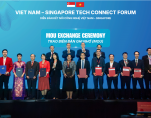
On the afternoon of May 29th, in Singapore, partnership signed at the Vietnam–Singapore Tech Connect Forum, witnessed by the highest-level government delegations from both nations, combining QuantumTX’s breakthrough MitoCharge technology with Kaopiz’s end-to-end software, AI, and IoT engineering capabilities
SINGAPORE – Media OutReach Newswire – 12 June 2026 – Kaopiz Holdings and QuantumTX announced a strategic Memorandum of Understanding (MOU) to co-develop next-generation preventive healthcare solutions powered by Artificial Intelligence, IoT engineering, and advanced health data platforms.
Kaopiz × QuantumTX sign MOU at Vietnam–Singapore Tech Connect Forum to co-develop next-generation healthcare solutions
The agreement was signed at the Vietnam–Singapore Tech Connect Forum held at Raffles City Convention Centre, Singapore, in the presence of Mr. To Lam, General Secretary and President of Vietnam, and Dr. Tan See Leng, Minister for Manpower and Minister-in-Charge of Energy and Science & Technology (MTI), Singapore – underscoring the partnership’s significance at the highest levels of Vietnam-Singapore bilateral cooperation.
Combining Hardware Innovation with Full-Stack Software & AI Engineering
QuantumTX contributes its proprietary MitoCharge technology – a clinically researched muscle-mitochondria activation system that delivers the physiological benefits of exercise without physical stress – purpose-built for the world’s rapidly aging population.
Kaopiz Holdings brings a 1,000-strong team of software engineers and IoT specialists with a proven delivery track record across healthcare, medical technology, and enterprise digital transformation. The combined capability spans:
End-to-end IoT device control software and embedded systems integration
AI-driven health data collection, processing, and analytics platforms
Cross-platform mobile applications for personalized health companion experiences
Cloud-based remote device management and real-time monitoring systems
Healthcare data security compliance aligned with applicable international standards
“Partnering with Kaopiz accelerates our next-generation product development while opening the door for MitoCharge technology to reach users across Vietnam and Southeast Asia.” – Mr. Ivan Goh, CEO, QuantumTX
Three Strategic Pillars of Collaboration
1. IoT Device & Software Development
Kaopiz will research, design, develop, and maintain software solutions deeply integrated with QuantumTX’s IoT medical devices, targeting the healthcare and rehabilitation sector.
2. Technical Support & Information Exchange
Kaopiz will embed advanced AI, Cloud Computing, and Data Analytics capabilities into QuantumTX’s medical device ecosystem, enabling predictive health insights, personalized rehabilitation guidance, and remote patient monitoring at scale.
3. Joint Market Development
Both companies will co-promote combined solutions to partners and customers across Vietnam, Singapore, and international markets, and will co-participate in healthcare technology projects, conferences, and exhibitions in the region.
“Population aging is a shared challenge that both Vietnam and Singapore must solve, and we believe technology is the key. Kaopiz is committed to leveraging our full expertise in software, AI, and IoT to co-develop next-generation healthcare solutions with QuantumTX, serving millions of people worldwide.” – Mr. Le Van Hoang, CEO, Kaopiz Holdings
A Milestone in Vietnam – Singapore Technology Cooperation
The MOU signing took place as part of the State Visit to the Republic of Singapore, at a forum co-organized by Vietnam’s Ministry of Foreign Affairs, Ministry of Science & Technology, Ministry of Finance, VSIP, and Enterprise Singapore. The forum brought together government leaders, research institutions, and enterprises from both nations to advance cooperation in science, technology, innovation, and sustainable development.
This partnership marks a tangible step in translating government-level bilateral commitment into commercial technology co-development, with a direct focus on healthcare innovation that addresses one of the most pressing demographic challenges shared by both Vietnam and Singapore.
The issuer is solely responsible for the content of this announcement.
About QuantumTX Pte. Ltd.
QuantumTX is a Singapore-based health technology company specializing in stress-free muscle activation devices backed by rigorous scientific R&D and clinical research. Its flagship MitoCharge technology activates muscle-mitochondria pathways to deliver physiological benefits equivalent to exercise, without physical exertion – designed specifically for aging populations, rehabilitation patients, and preventive health consumers. QuantumTX is committed to making healthy aging accessible and scalable across global markets.
About Kaopiz Holdings
Kaopiz is a global IT outsourcing and software development company with 12 years of experience and a core development center in Vietnam. With 1,000+ highly skilled engineers across software development, IoT solutions, AI integration, Cloud computing, Data engineering, and digital transformation, Kaopiz serves major enterprises in Japan, Singapore, and international markets across healthcare, finance, education, logistics, and manufacturing sectors, and more.
Kaopiz’s Singapore office is located at 1 Raffles Place, One Raffles Place Tower 2.
SINGAPORE – Media OutReach Newswire – 12 June 2026 – Enterprise AI spending is climbing rapidly, with boards racing to deploy the technology faster than they can measure whether it works. According to the latest IDC InfoBrief, commissioned by Expereo*, around 70% of organizations are investing in AI, motivated by its potential or by the fear of falling behind the competition, but they lag in disciplined ROI evaluation, and one in five (20%) admit they are investing aggressively in AI with little evaluation, driven by the fear of being left behind.
In Asia Pacific (APAC), that pressure is even more pronounced as 37% of organizations admit investing aggressively with little evaluation – nearly double the global average, and well ahead of the US (10%) and Europe (13%). The pressure is most acute in Australia (45%) and Vietnam (44%), while in Singapore, more than one in three organizations admit the same.
The IDC InfoBrief, based on a survey of 800 technology leaders across APAC, Europe, and the US, found that AI has become one of the most prioritized technology investments globally, with 51% of organizations planning to prioritize AI or machine learning investment over the next 12 months – rising to 61% across APAC. However, returns are failing to keep pace with the hype. Just 19% of global organizations surveyed say their AI implementations have exceeded expectations, and only 5% report they have significantly exceeded them1.
Across APAC, 40% say implementations have exceeded or significantly exceeded expectations – ahead of the global average but still leaving the majority falling short. Globally, the most-cited reasons for underperformance are inadequate or poor-quality training data (51%), higher-than-expected costs or ROI not achieved (47%), and AI not performing as well as expected (46%). For APAC specifically, the picture is broadly similar – though costs bite harder: 49% cite poor-quality training data, 54% cite cost overruns or ROI not achieved (rising to 80% in Malaysia), and 46% say AI has simply not performed as expected.
Where organizations have the right foundations in place, the results speak for themselves. Across APAC, 87% report productivity improvements in the business units most affected by AI, and 82% say quality of work has improved.
Underpinning many of these challenges is also a network and infrastructure readiness gap. Globally, 26% of organizations whose AI implementations have failed to meet expectations cite inadequate network or connectivity performance as a contributing factor. Looking ahead, 54% of organizations say they need more flexible and scalable networks to thrive in an AI-driven environment, and 51% need greater resilience and reliability to maximize uptime2. In APAC, the gap is acute as only 9% of organizations describe their network infrastructure as fully ready to support new AI, cloud, and digital initiatives, and 37% say it will need upgrading or replacing soon. The need is most acute in Thailand (74%) and Singapore (58%), both of which rank above the regional average on demand for flexible, scalable networks. In Indonesia, nearly half of all organizations (48%) say their infrastructure will need upgrading or replacing soon.
Ben Elms, CEO, Expereo, says: “Every enterprise we speak to is investing in AI, yet the data shows a clear gap opening up between AI ambition and AI outcomes. More often than not, that gap comes down to the network underneath. AI only delivers on its promise when the infrastructure carrying it is built to support it.
Without resilient, scalable, cloud-optimized networks, even the most well-funded AI programs will struggle to deliver ROI. Getting the network right is no longer an IT decision; it is one of the most important conversations happening in the boardroom today to help fulfill AI ambition.”
APAC is also leading on adoption, with 35% of organizations reporting extensive AI use across the business, against a global average of 25%3. Yet adoption alone is not enough without the right foundations beneath it.
Eric Wong, President, APAC, Expereo, says: “Asia Pacific is moving aggressively on AI adoption, but many organizations are discovering that scaling AI successfully requires more than just investment in applications and models. The underlying network, cloud connectivity, and operational readiness matter just as much. Across the region, we are seeing enterprises reassess whether their infrastructure is truly ready to support AI at scale, particularly around performance, resilience, governance, and visibility. Organizations that address those foundations early are generally seeing stronger outcomes and faster operational impact from their AI initiatives.”
Boardrooms are also waking up to the longer-term risks of unchecked AI investment. According to the survey, 54% of global tech leaders cite the creation of new security risks as a significant potential future threat for their organization’s use of AI, while 39% globally are concerned about losing track of AI-related costs and ROI once the technology is embedded across the business4. In APAC, that concern is sharper still as 41% of technology leaders in the region are worried about losing oversight of AI-related costs and ROI as adoption deepens – a figure that rises to 54% in Malaysia. Digital sovereignty is also moving up the strategic agenda, with 38% of APAC organizations rating it a high or top priority as they look to retain control over data and navigate an increasingly complex regulatory landscape.
For the full IDC InfoBrief, commissioned by Expereo, “Enterprise Horizons 2026: Where Innovation Meets Reality“ (doc #EUR154457526-IB, May 2026) please visit: [LINK]
The issuer is solely responsible for the content of this announcement.
Expereo
Expereo is a world-leading Managed Network as a Service provider that connects people, places, and things anywhere. Solutions include Global Internet, SD-WAN/SASE, and Enhanced Internet. With an extensive global reach, Expereo is the trusted partner of 60% of Fortune 500 companies. It powers enterprise and government sites in more than 190 countries, with the ability to connect to any location worldwide, working with over 2,300 partners to help customers improve productivity and empowering their networks and cloud services with the agility, flexibility, and value of the Internet, with optimal network performance.
Expereo was acquired in Feb 2021, by Vitruvian Partners which acquired a majority shareholding from Seven2.
Wall Street’s AI trade came under pressure as investors reassessed stretched technology valuations before SpaceX’s planned market debut, with Alphabet, Microsoft, Meta Platforms and Oracle losing more than $200 billion in combined market value during the session. The sell-off hit some of the largest companies tied to artificial intelligence spending, cloud infrastructure and data-centre expansion. Alphabet fell about 2.5 per cent, Microsoft lost nearly 2.7 per cent, […]
A UAE-focused tourism session in Moscow drew one of the largest audiences at the Let’s Travel International Tourism Forum, underscoring the expanding role of travel in the broader economic relationship between the Emirates and Russia. The panel, titled “UAE-Russia Tourism Dialogue: Successful Stories”, was organised by the Russia-UAE Business Council in cooperation with the Embassy of the United Arab Emirates in the Russian Federation. Held during the […]
Shin-Etsu Chemical plans to build a new rare-earth refining facility in Fukui Prefecture as Japan accelerates efforts to protect critical mineral supply chains from disruption caused by China’s export controls.
The project marks the company’s first new rare-earth refining facility since 2008 and comes as demand for high-performance magnets rises across electric vehicles, hard disk drives, robotics, wind power systems, defence equipment and advanced electronics. The investment is expected to exceed ¥35 billion, with ¥17.5 billion to be covered by government subsidy support, although the final cost and production schedule have not yet been fixed.
The new facility is intended to reinforce supplies for Shin-Etsu’s rare-earth magnet business and strengthen access to raw materials used in neodymium-based magnets. Heavy rare earths such as dysprosium, terbium and yttrium are particularly important because they improve magnet performance in high-temperature and high-stress applications, including vehicle motors and precision industrial systems.
Shin-Etsu already operates rare-earth refining facilities in Japan and has long been one of the country’s most important producers in the sector. Its rare-earth operations are centred in Fukui Prefecture, where it smelts materials and manufactures magnets at its plant in Echizen. The company says it works from raw materials through production to provide stable quality and supply, while also pursuing recycling and resource diversification.
The planned expansion reflects a broader shift in Japan’s industrial policy after months of tightening access to critical minerals. Chinese shipments of several heavy rare earths and gallium to Japan have been severely restricted since late 2025, heightening concerns among manufacturers that depend on these materials for magnets, semiconductors and other precision components. China continues to dominate mining, separation and refining capacity across the rare-earth value chain, giving Beijing considerable leverage over downstream industries.
Japan remains the largest rare-earth magnet producer outside China, but its manufacturers are still exposed to bottlenecks in the supply of heavy rare earths. The country has built stockpiles, backed overseas projects and encouraged recycling since the 2010 rare-earth shock, when diplomatic tensions with China exposed the risk of overdependence on one supplier. Those measures have improved resilience, but they have not removed the vulnerability.
The latest project is significant because it targets refining and processing rather than simply raw-material procurement. Mining deposits alone do not solve the supply challenge; rare earths require complex separation, purification and alloy processing before they can be turned into magnets. China’s advantage lies not only in reserves but also in decades of accumulated processing capacity, cost efficiency and industrial integration.
Shin-Etsu’s move also fits into a wider network of partnerships being pursued by Japan with Australia, France and the United States. Tokyo has backed alternative producers, supported offtake arrangements and encouraged private-sector investment in midstream processing. Australia-based Lynas has become a key non-China supplier, but output of heavy rare earths remains far below the volumes needed to replace Chinese supply in full.
The pressure is not limited to Japan. Manufacturers in the United States and Europe have faced similar supply uncertainty as export licensing delays affect rare earths used in aerospace, defence, clean energy and electronics. Companies exposed to the restrictions are searching for alternative suppliers, but industry executives warn that rebuilding a fully independent supply chain will take years.
For Shin-Etsu, the business case rests on both security and demand. Permanent magnets are central to electrification and digital infrastructure. Electric vehicles require compact, powerful motors; data centres and hard disk drives depend on precision magnetic components; wind turbines need high-strength magnets to improve efficiency. Demand growth has made the magnet supply chain a strategic concern for governments as well as manufacturers.
The company’s project is unlikely to eliminate Japan’s reliance on imported feedstock, especially for heavy rare earths where global non-China supply remains thin. It could, however, give domestic manufacturers greater control over processing, quality assurance and emergency production planning. That matters for customers in sectors where delivery delays can disrupt production lines and where material specifications are tightly controlled.
The government subsidy underscores how rare earths have moved from a specialist materials issue to a national industrial priority. Public support reduces the financial burden on companies undertaking technically demanding projects with long payback periods. It also signals that Tokyo is prepared to use industrial policy to keep strategic capabilities onshore.
By T N Ashok By the time Narendra Modi crossed Jawaharlal Nehru’s record as India’s longest-serving elected Prime Minister in continuous office, the country’s political landscape had already begun to resemble a battlefield after a great storm. The old certainties have vanished. Alliances that appeared permanent are fraying. Regional satraps are calculating survival. Political parties […]
Abu Dhabi’s L’IMAD Holding has deepened its grip on TAQA after its subsidiary Abu Dhabi Power Corporation bought a further 8.09 per cent stake in the listed power and water utility, lifting its holding to 98.12 per cent. The transaction, disclosed on Wednesday, involved the acquisition of 9.1 billion TAQA shares from Two Point Zero Group. Based on TAQA’s closing share price that day, the stake was […]
Arabian Post Staff -Dubai Industrial and Commercial Bank of China Limited’s Dubai branch is marketing dual-currency green bonds, offering investors a dollar floating-rate tranche and a renminbi fixed-rate tranche as sustainable debt issuance continues to gain traction across Gulf capital markets. The proposed three-year dollar notes carry initial price guidance at the Secured Overnight Financing Rate plus 90 basis points, while the three-year offshore renminbi tranche is […]
Partnership with Korea Green Foundation and FIRA will help restore seagrass meadows off Geoje Island, supporting marine biodiversity, blue carbon habitats and local communities
BUSAN, SOUTH KOREA – Media OutReach Newswire – 11 June 2026 – DP World has launched its first global seagrass restoration initiative on Geoje Island in South Korea, supporting efforts to restore 2.4 hectares of coastal marine habitat over the next four years and enhancing marine biodiversity.
DP WORLD Seagrass restoration South Korea
The initiative in South Korea was formalised through a Memorandum of Understanding (MOU) between DP World, Korea Green Foundation and the Korea Fisheries Resources Agency (FIRA). The MOU establishes a long-term collaboration focused on ongoing monitoring of seagrass meadows, the development of restoration approaches informed by scientific research, and continued cooperation between public, private and community stakeholders in the coastal waters of Dadae Village on Geoje Island.
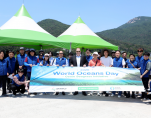
The partnership was launched on World Ocean Day, with representatives from DP World, Korea Green Foundation, FIRA and the local fishing community helping to transplant approximately 6,000 seagrass shoots along the Dadae coastline. The project aims to restore up to 2.4 hectares of seabed over the next four years and is expected to benefit local communities by supporting marine productivity and fish catch potential.
Glen Hilton, CEO & Managing Director, Asia Pacific, DP World, said: “Healthy oceans are essential to sustainable trade and thriving coastal communities. By restoring seagrass meadows in Geoje, we are helping protect one of nature’s most effective blue-carbon ecosystems while supporting marine biodiversity and local livelihoods. Together with the Korea Green Foundation and FIRA, we are supporting research, restoration and community engagement efforts that can deepen our understanding of these valuable marine ecosystems to strengthen the resilience of our coasts for future generations.”
Jung Tae-yong, Secretary General, Korea Green Foundation, said: “Seagrass meadows are an invaluable presence in supporting coastal ecosystems. They store carbon, help prevent coastal erosion and act as a breakwater for the ecosystem. This project goes beyond simple environmental protection, bringing together businesses, public institutions and local communities to expand practical marine-conservation models and public awareness of the importance of climate action.”
Seagrass meadows provide habitat for a wide range of marine species and contribute to the health of coastal ecosystems. They are recognised as an important blue carbon ecosystem because of their ability to absorb and store carbon naturally, making their protection and restoration an area of growing interest among researchers and conservation organisations.
The project will include ongoing monitoring and evaluation activities led by FIRA, alongside community engagement initiatives designed to support long-term stewardship of the restoration site. The partners also intend to build on the Geoje initiative through continued research, community engagement and public awareness activities that support understanding of marine ecosystems and coastal conservation.
This initiative builds on DP World’s broader sustainability efforts to support environmental stewardship and community resilience across Asia Pacific. From our flagship mangrove ecosystem restoration programme in Indonesia — aligned with DP World’s global commitment to restore and protect 280 hectares of mangroves by 2030 — to watershed rehabilitation initiatives in the Philippines and coral reef restoration in Australia, these efforts reflect a regional commitment to protecting the natural environments that are most critical to local communities.
Through partnerships with governments, non-governmental organisations and local communities, DP World continues to explore practical ways to contribute to the long-term sustainability of the environments in which it operates. Hashtag: #DPWORLD
The issuer is solely responsible for the content of this announcement.
DP World
DP World is reshaping the future of global trade to improve lives everywhere. Operating across six continents with a team of over 125,000 employees, we combine global infrastructure and local expertise to deliver seamless supply chain solutions. From Ports and Terminals to Marine Services, Logistics and Technology, we leverage innovation to create better ways to trade, minimising disruptions from the factory floor to the customer’s door.
In Asia Pacific, DP World employs over 11,000 people across 22 geographies. We operate 17 ports and terminals, complemented by a comprehensive suite of end-to-end supply chain solutions – to connect the region to the rest of the world.
TOKYO, JAPAN – Media OutReach Newswire – 11 June 2026 – Industry expert Jason Gerlis has been appointed as the Chief Revenue Officer at GoGlobal – the global expansion business – bolstering the leadership team’s strength and depth at a time of accelerated growth.
With more than 15 years’ experience in helping businesses to scale internationally, his role will be to drive revenue growth at GoGlobal, align this to delivery excellence and add long-term value to those companies looking to expand and operate overseas.
“I’m delighted to welcome Jason into the fold,” states Jeremy Wastall, CEO at GoGlobal. “His extensive industry knowledge and global corporate services background support our strategy to deliver best‑in‑class business expansion and operational solutions to clients looking to enter new markets compliantly, and at speed.”
His appointment is also in-line with the company’s aim to build a business where cultural fit and mindset are just as important as experience.
“Alongside his impressive experience, Jason’s approach to leadership aligns with our brand values. I have full confidence in his ability to create a world-class environment where his teams will grow and excel,” adds Jeremy.
The move follows a series of recent senior hires and strategic investments designed to enhance GoGlobal’s ambitious growth plans, which include greater geographic reach, deeper technology capabilities and the continued development of market-winning solutions for clients.
Independence and long‑term focus
Explaining what drew him to GoGlobal, Jason points to the company’s independence and investment strategy.
“GoGlobal’s independence is a real strength,” he states. “It gives the business the freedom to invest in what genuinely matters to clients and focus on building sustainable, future growth. That long‑term perspective leads to better client outcomes, stronger partnerships and a more engaged, motivated workforce.”
Jason also highlights the company’s culture which is deeply grounded in servicing clients’ needs as a reason to join the business. He notes: “Understanding, consistency, collaboration and responsiveness are at the foundation of GoGlobal’s approach to client service, all of which resonate with me.
“And it’s these values and business ethics that truly set GoGlobal apart,” he concludes.
Strengthening global networks
Based in Charlotte, USA, Jason will spend his first months in the role engaging closely with GoGlobal’s global clients and partner ecosystem, while helping shape the company’s long‑term commercial strategy.
“I’m excited to work with clients across the full spectrum — from fast‑growing start‑ups and venture / private equity‑backed businesses to large multinationals — as we continue to build GoGlobal’s future roadmap,” he states.
Prior to joining GoGlobal, Jason spent five years as Global Head of Corporate Services at Ocorian and held several senior leadership roles at TMF Group over seven years, including Global Head of Consulting and Regional Director for North America and the Caribbean.
The issuer is solely responsible for the content of this announcement.
GoGlobal
GoGlobal – the global expansion business – helps companies set up and manage global operations compliantly and confidently. By combining global expertise with local execution, GoGlobal supports market entry, M&A activity and vendor consolidation through a single point of accountability.
Founded eight years ago in 2018, GoGlobal has grown from a startup into a fully decentralized global organization, supporting thousands of clients with their own growth stories.
It now has over 450 internal employees, operating across 85+ countries, and has enabled more than 1,000 clients to establish and manage their global operations across 145 markets.
Services include entity setup, compliance and management; accounting and tax services; HR and payroll support; Employer of Record (EOR); and Independent Contractor Solutions (ICS).
GoGlobal is headquartered in Tokyo but the leadership and operational teams are worldwide, enabling seamless support across time zones.
SpaceX plans to begin testing artificial intelligence data centres in orbit by late 2027, accelerating Elon Musk’s push to turn the company’s satellite and launch network into a new layer of global computing infrastructure. The programme would move part of the AI computing race beyond land-based data centres, where power shortages, grid constraints, cooling costs and local opposition have become major obstacles for technology companies. The first […]
Researchers reviewing federally backed evidence on alcohol and health have recommended that adults consume no more than one alcoholic drink a day, after finding no net health benefit from even low levels of regular drinking. The findings sharpen a long-running public health debate over whether moderate drinking can be considered safe or beneficial. The work, commissioned to inform the 2025-2030 US dietary advice, found that one drink […]
Dubai’s push to turn long-term tenants into homeowners has crossed Dh5 billion in residential transactions, with more than 3,200 residents buying their first homes through the First-Time Home Buyer Programme since its launch in July 2025. The scheme, run by Dubai Land Department and the Dubai Department of Economy and Tourism, has drawn nearly 45,000 registrations in less than a year, underlining strong demand among residents seeking […]
A small change in central bank wording has given banks fresh room to mobilise foreign-currency deposits, potentially drawing as much as $50 billion into India at a time when the rupee and external balances are under pressure.
The Reserve Bank of India’s June package centres on Foreign Currency Non-Resident Bank deposits, or FCNR deposits, a long-used channel through which overseas citizens place foreign-currency funds with banks. The decisive shift lies in the way the central bank has structured the swap window and permitted banks to use incentives, including leverage, to make the deposits more attractive to wealthy overseas savers.
Under the scheme, banks can mobilise fresh three- to five-year FCNR deposits between 8 June and 30 September 2026 and swap the dollars with the RBI. The facility effectively removes the usual hedging burden that makes such deposits expensive for banks, as the central bank absorbs the foreign-exchange cost. The operational window will remain available until mid-October for eligible deposits raised during the mobilisation period.
The change has revived memories of 2013, when a similar facility helped banks raise about $34 billion during a period of sharp rupee weakness. This time, estimates from market participants range from about $20 billion to nearly $50 billion, depending on deposit pricing, rupee expectations, global interest rates and the ability of banks to market the product aggressively in the Gulf, North America, Britain and other diaspora-heavy markets.
Punjab National Bank chief executive Ashok Chandra has said banks could collectively raise $35 billion to $40 billion, with his own institution aiming for about $2.5 billion to $3 billion. Other lenders, including Canara Bank, Federal Bank and Indian Bank, are expected to compete for deposits by offering returns that can compare favourably with low-risk dollar assets, particularly once the swap benefit is factored into their pricing.
The subtle but consequential part of the circular is the permission for banks to offer leverage to depositors. That means eligible clients may be able to borrow abroad and place the proceeds into FCNR deposits, amplifying inflows beyond what would have arrived through ordinary savings alone. Market analysts see this as the feature that could lift the scheme from a modest stabilisation tool into a sizeable capital-flow channel.
The RBI has paired the deposit push with broader measures designed to deepen debt-market participation and ease pressure on the currency. These include expanding access to government securities, relaxing certain concentration limits, and improving the investment framework for foreign portfolio investors. The package comes after the rupee touched record lows, weighed down by elevated crude prices, portfolio outflows and a stronger dollar environment.
The immediate market reaction has been visible in government bonds. Short-end yields have fallen as banks and overseas investors reassessed the likely liquidity impact of dollar inflows converted into rupees. The two- to five-year segment has drawn stronger demand, while the curve has steepened as longer tenors remain more exposed to global rate movements and fiscal supply concerns.
For banks, the economics are straightforward. Without central bank support, hedging a multi-year dollar liability into rupees can wipe out much of the advantage of raising FCNR deposits. With the RBI taking that cost away, lenders can offer higher headline rates to overseas depositors while still obtaining rupee liquidity at competitive levels. The exemption from reserve requirements on eligible deposits further improves the economics by freeing banks from maintaining cash reserve ratio and statutory liquidity ratio buffers on those funds.
The policy also serves a macroeconomic purpose. Large dollar inflows can strengthen reserves, cushion the balance of payments and reduce the need for more aggressive currency-market intervention. They can also help offset pressure from oil import costs and equity-market withdrawals, both of which have weighed on external sentiment during the current financial year.
Yet the scheme carries risks. Leveraged deposits can be sensitive to interest-rate differentials and currency expectations. If global yields move sharply higher or confidence in the rupee weakens, flows may become less durable. The one-year lock-in reduces early withdrawal risk, but it does not fully eliminate rollover pressure once deposits mature. Banks also need to manage concentration risk, especially if a large share of funds comes from a narrow group of depositors or geographies.
Morpho has secured $175 million from a group of heavyweight financial and crypto investors, strengthening its bid to turn decentralised lending into core infrastructure for global credit markets. The funding round was co-led by Paradigm, a16z crypto and Ribbit Capital, with participation from Apollo Funds, Circle Ventures, VanEck, Ledger Cathay, Variant, Wintermute Ventures, Prelude, IOSG, HashKey, Mirana, NJJ Capital, SBI Group and Bpifrance. The raise ranks among […]
By K Raveendran Resolution of the US-Israel war with Iran now appears further away than at any point in the conflict, with the latest American strikes pushing global markets into a more unsettled phase. The US launch of retaliatory attacks on Iranian defence and radar systems after Washington accused Tehran of responsibility for the downing […]
“K-SUUL Pavilion” to Open for the First Time at the HKCEC on May 26-28
HONG KONG SAR – Media OutReach Newswire – 10 June 2026 – The National Tax Service of Korea (Commissioner: Lim Kwang-hyun), for the first time, opened the “K-SUUL Pavilion” at Vinexpo Asia[1], which was held for three days from May 26 to 28 at the Hong Kong Convention and Exhibition Centre (HKCEC).
[Photo] Korean Liquor (K-SUUL) Raises Its First Flag for Globalization on Asias Largest Stage
The opening of the “K-SUUL Pavilion” was served as a key milestone in raising the global profile of Korean alcoholic beverages and expanding overseas exports.
At the inaugural “K-SUUL AWARDS” held by National Tax Service of Korea last December, 175 small and medium-sized liquor producers from across Korea submitted a total of 366 products. Following document screening and blind testing, 12 products were selected.
The award-winning liquors, selected through a fair judging process with the participation of Korean citizens, was introduced to the global market through this exhibition, marking their first step toward overseas expansion.
The “K-SUUL Pavilion” was operated through cooperation between the National Tax Service of Korea and the liquor industry and association (the Korea Alcohol and Liquor Industry Association). It was designed as an integrated promotional platform to strengthen the export competitiveness of Korean alcoholic beverages and develop overseas sales channels.
The “K-SUUL Pavilion” was operated with a total of 16 booths (display and tasting booths), and 12 companies — including winners of the K-SUUL AWARDS — participated to hold consultations with overseas buyers.
Participating companies ranged from traditional liquor breweries to regional soju producers and major liquor companies, showcasing the diverse spectrum of Korea’s alcoholic beverage industry on a single stage.
In addition to the booths operated by the 12 participating companies, a dedicated booth was set up exclusively to showcase the award-winning liquors, further highlighting the significance of the K-SUUL AWARDS.
At the venue, promotional videos of the award-winning liquors were screened, while English-language brochures and souvenirs were distributed to attract local buyers and visitors to raise awareness of Korean alcoholic beverages.
In addition, meetings with the organizers of Vinexpo Asia, overseas buyers, and distribution industry officials were also held to identify rapidly changing global liquor market trends and assess the overseas expansion potential of Korean alcoholic beverages.
Han Yeong-seok Fermentation Research Institute expressed gratitude for being given the opportunity to participate in the exhibition, saying, “It was meaningful to showcase our award-winning liquor, ‘Dohan Cheongmyeongju,’ on the same stage as liquors from around the world through this exhibition. We did our best to promote Korea’s unique fermentation culture and the value of Korean liquor to the world.”
Going forward, the National Tax Service of Korea will continue to enhance the substance of the K-SUUL AWARDS, continuously discover outstanding liquors from promising small and medium-sized enterprises, and will actively support the globalization of Korean liquor (K-SUUL) by promoting it both domestically and internationally and helping these businesses expand their sales channels.
[1] Vinexpo Asia is Asia’s largest B2B wine and spirits exhibition, attracting approximately 9,000 industry professionals from 60 countries last year.
Hashtag: #K-SUUL
The issuer is solely responsible for the content of this announcement.
Somali football supporters have reacted with fury after World Cup referee Omar Abdulkadir Artan was denied entry to the United States despite holding a valid visa, turning what had been celebrated as a landmark moment for Somali sport into a wider dispute over immigration policy and football’s global reach. Artan, regarded as one of Africa’s leading match officials, had been due to take part in the 2026 […]
Chinese investors shut out of SpaceX’s planned blockbuster share sale are turning to indirect routes, fuelling speculative demand for offshore vehicles, supplier stocks and domestic space-sector names as Elon Musk’s rocket company prepares for one of the largest market debuts on record. Underwriters handling the offering have been told not to accept orders from investors in mainland China and Hong Kong, with the restriction linked to US […]
Arabian Post Staff -Dubai The OPEC Fund for International Development has mandated a no-grow €500 million five-year fixed-rate benchmark bond, returning to Europe’s public debt market as highly rated supranational borrowers continue to draw demand from investors seeking secure income. Initial price thoughts for the Regulation S senior unsecured issue have been set at mid-swaps plus 29 basis points. The expected issue rating is aligned with the […]
Japan’s three largest banking groups are moving to jointly issue stablecoins by the end of the fiscal year to March 2027, setting up a coordinated push that could place regulated bank-backed digital money at the centre of corporate payments and cross-border settlement. MUFG Bank, Sumitomo Mitsui Banking Corporation and Mizuho Bank will establish a council to examine operating rules, governance, issuance procedures and systems needed for the […]
Canadian University Dubai and FINTECH. TV have inaugurated a live broadcast studio at the university’s City Walk campus, creating a direct media and education link between Dubai and the New York Stock Exchange. The Global Markets Studio, opened on 1 June and announced publicly this week, is being positioned as a hands-on platform for students to produce financial news segments, podcasts, interviews and market-focused programming while engaging […]
Trad. Fi and W3 are preparing a $650 million private-credit programme aimed at moving equipment-financing loans for businesses onto public blockchain infrastructure, marking a fresh push to connect real-economy lending with automated capital workflows and tokenised settlement. The initiative targets a 48-month pipeline of lending assets tied to equipment purchases, with Trad. Fi originating credit and W3 providing artificial-intelligence agents to support risk assessment, due diligence and […]




 https://kaopiz.com/en/
 https://www.linkedin.com/company/kaopiz/
 https://x.com/KaopizGlobal
 https://www.facebook.com/com.kaopiz