News related to
global

Arabian Post Staff -Dubai Abu Dhabi Crown Prince Sheikh Khaled bin Mohamed bin Zayed Al Nahyan used meetings in Beijing with President Xi Jinping and Premier Li Qiang to push the UAE-China relationship deeper into energy, investment, technology and industrial cooperation, as both sides sought to align long-term economic goals with a more volatile regional backdrop. The visit, which ran from April 12 to April 14, also […]

Arabian Post Staff -Dubai MENA equity issuance fell sharply in the first quarter, with companies raising just $472.9 million from equity and equity-linked deals, a drop of 91% from a year earlier, as regional volatility, weak risk appetite and a thinner pipeline combined to stall activity across primary markets. The quarter produced only five transactions, according to LSEG’s MENA Investment Banking Review for the first three months […]

Trend Micro’s enterprise business accelerates its transformation as AI security category leader

HONG KONG SAR – Media OutReach Newswire – 17 April 2026 – TrendAI™, the enterprise AI security leader from Trend Micro Incorporated (TYO: 4704; TSE: 4704), today announced a strategic engagement with Anthropic, embedding Claude models across its platform to power agentic workflows, automation, AI-native security operations, and develop threat research to identify vulnerabilities in AI systems and infrastructure. TrendAI™ will use Claude to advance vulnerability discovery while ensuring coordinated action in real-world risk reduction.

Rachel Jin, Chief Platform and Business Officer, Head of TrendAI™: “We launched TrendAI™ to define the AI security category. This next phase is about scaling that vision globally, with leading partners like Anthropic. Our broad, strategic collaboration across research, defense, and innovation will define how AI is secured moving forward.”

TrendAI™’s use of Claude spans threat research, real-world risk reduction, platform innovation, and global go-to-market execution. This will operate across the full AI security lifecycle, from vulnerability discovery to automated defense and AI-native operations.

Ash Alhashim, Head of Cybersecurity GTM at Anthropic: “For 35 years, TrendAI™ has been at the forefront of cybersecurity. By using Claude to power TrendAI Vision One™ and initiatives like TrendAI™ Zero Day Initiative™ (ZDI) and Pwn2Own, TrendAI™ is advancing the next iteration of vulnerability discovery and reporting—and tilting the scales toward defenders.”

Focus areas include:

Advancing AI Threat Research: TrendAI™ is scaling its threat research to address the growing attack surface of AI, building on proven programs like Pwn2Own Berlin under TrendAI™ ZDI. This approach brings real-world vulnerability discoveries into AI systems, helping identify and address critical weaknesses before it reaches production environments.

Driving AI-Native Innovation: Anthropic’s Claude models will help power TrendAI™’s platform innovation, enhancing agentic workflows, automation, and AI-native security operations. This enables organizations to reduce noise, act faster, and scale security alongside AI adoption.

The announcement comes as TrendAI™ prepares to welcome over 600 cybersecurity leaders to its Spark Leadership Exchange in Phoenix, Arizona in May. Anthropic will join TrendAI™ on stage at the event alongside other industry leaders, reinforcing a shared commitment to shaping the future of AI security and engaging directly with global enterprise leaders.

To learn more about the Spark Leadership Exchange, visit: https://resources.trendmicro.com/spark-leadership-exchange.html

Hashtag: #trendmicro #trendai #trendaivisionone #trendvisionone #visionone #cybersecurity


The issuer is solely responsible for the content of this announcement.

About TrendAI™

TrendAI™, the global AI security leader and enterprise business unit of Trend Micro, empowers organizations with full AI visibility and consolidated security that inspires confidence, drives innovation, and eliminates risk. Trusted by the largest enterprises and governments across 185 countries, TrendAI™ secures the entire organization, from identities to infrastructure to data. Global Fortune 500 companies rely on TrendAI™ to cut risk and stop threats up to three months earlier, powered by world-leading threat and attack intelligence. Through deep ecosystem partnerships with market leaders like NVIDIA, Anthropic, AWS, Google, and Microsoft, TrendAI™ empowers your organization to securely drive forward at the speed of AI. AI Fearlessly. Learn more at trendaisecurity.com.

Alarm over the Strait of Hormuz is spilling far beyond the Gulf, sharpening attention on the Malacca Strait near Singapore as traders, shipowners and Asian governments weigh what a prolonged disruption in West Asian energy flows could mean for the region’s busiest maritime corridor. The immediate military confrontation is centred on Hormuz, where Iran has tightened restrictions and the United States has imposed a blockade on Iranian […]

UBS has lost senior wealth banker Lionel Yoong from its Singapore-based Indonesia coverage team, marking another departure from a franchise that has already seen several exits tied to the market since the start of last year. The move comes as the Swiss bank continues to reshape parts of its Asian private banking business following its takeover of Credit Suisse and while it pushes expansion in other wealth centres, including Hong Kong.

Yoong had been one of the named leaders on UBS Global Wealth Management’s Indonesia market structure unveiled after the Credit Suisse integration. In that 2023 reorganisation, Conrad Huber was appointed head of Global Wealth Management Indonesia and Japan International, with Lionel Yoong listed among the Indonesia market team leaders. That structure reflected how central the Indonesia book had become to UBS’s Southeast Asia wealth ambitions, particularly from Singapore, a long-established hub for serving affluent Indonesian clients offshore.

The latest exit follows earlier turnover in the same coverage area. Industry publication Hubbis reported in July 2025 that two Singapore-based bankers focused on Indonesia, Lionel Poh and Edy Panggabean, were set to leave UBS Global Wealth Management, describing the departures as part of ongoing restructuring within the Indonesian market team. That report said UBS declined to comment at the time and noted that both bankers specialised in the Indonesia market, underscoring how staff churn has persisted well after the initial merger phase.

Additional reporting circulating on Friday indicated that Yoong was the third market head for Indonesia to leave UBS since the beginning of last year. While Bloomberg’s full report was not accessible through the browsing tool, that detail appeared consistently in syndicated summaries of the story, aligning with the pattern already visible from prior trade reporting on the unit. The broad direction is clear even if some specifics around internal timing remain private: UBS is still contending with personnel changes in a business line that sits at the intersection of Southeast Asian entrepreneurial wealth and Singapore’s offshore private banking market.

That matters because Indonesia has long been one of the more attractive yet more delicate pools of wealth in the region. Reuters Breakingviews wrote in 2023 that Credit Suisse had been particularly strong in Indonesia and neighbouring countries before the rescue takeover by UBS. Reuters also reported that Southeast Asia was among the regions where UBS and Credit Suisse had some of their greatest overlaps in wealth management and investment banking after the emergency deal in March 2023. Those overlaps made departures and selective restructuring all but inevitable as UBS sought to fold rival teams, cut duplication and keep high-value client relationships intact.

UBS’s challenge is not simply to stop people leaving. It is to do so while preserving momentum in an Asian wealth market that remains strategically important to the group. Chief executive Sergio Ermotti said in March 2024 that UBS planned to increase assets sourced from clients in Asia by 20% over five to six years, highlighting wealth and asset management as a core pillar of growth. That ambition helps explain why departures from specialised country teams are watched closely by rivals and recruiters: in private banking, senior relationship managers often carry client loyalty, local networks and revenue visibility that are not easily replaced.

At the same time, UBS has signalled that it is willing to invest where it sees stronger near-term return. Bloomberg reported in February that the bank planned to hire about 50 bankers for its Hong Kong wealth business after record revenue in North Asia, with a greater focus on high-net-worth clients. That hiring drive suggests the group is not retreating from Asian wealth management as a whole. Rather, it appears to be recalibrating where resources are deployed, even as parts of Southeast Asia continue to absorb the after-effects of the Credit Suisse acquisition.

There is also a broader industry angle. Asian Private Banker wrote this month that the region’s private banking sector saw a spike in exits over the past month as hiring slowed in March, a reminder that movement among senior bankers is not confined to UBS. Still, turnover draws sharper scrutiny when it affects a market as valuable as Indonesia, where wealthy entrepreneurial families often require cross-border booking, succession planning and sophisticated capital-markets access. Singapore remains a key booking centre for that business, so departures there can reverberate beyond one desk or one reporting line.

HONG KONG SAR – Media OutReach Newswire – 17 April 2026 – Today, IX Asia Indexes announced the 2026 1st quarter review of the ixCrypto Index Series. The constituent changes will be implemented on the effective date of 24th April 2026 (Friday). The results of the constituent review and exchange review are as follows:

1. Constituent Review – ixCrypto Index Series

1. 1. ixCrypto Index (“IXCI”)
The number of constituents will remain at 19 with no additions and deletions.

Additions:
No addition

Deletions:
No deletion

The free float adjusted market capitalization coverage is 84.26%* (excluding stablecoins, which represents 10.90% of the total crypto universe), while the 90-day-average volume is 77.36%*. The recapping at 40% will take effect on the effective date.

Since the last review, there has been a decrease in the crypto total market capitalization from USD3.38T to USD2.62T (-22.53%)#, and a decrease in the daily volume from USD157.69B to USD108.17B (-31.40%)#. Bitcoin remains the largest crypto in the constituent list, with its price decreased by 24.58% since the last review.

1.2. ixCrypto Portfolio Indexes

1.2.1 ixCrypto 5 Equal Weight Index (“IXEW5”) and ixCrypto 5 Square Root Index (“IXSR5”)

Additions:
No addition

Deletions:
No deletion

1.2.2 ixCrypto 10 Equal Weight Index (“IXEW10”) and ixCrypto 10 Square Root Index (“IXSR10”).

Additions:
No addition

Deletions:
No deletion

1.2.3 ixCrypto Altcoin 10 EW Index (“IXAEW10”) and ixCrypto Altcoin 10 Square Root Index (“IXASR10”).

Additions: Monero

Deletions: Chainlink

1.3. ixCrypto BTC/ETH Indexes
As of the cut-off date on 31st March 2026, the ixCrypto BTC/ETH 50/50 Index (“IX5050”) maintains a 50%/50% weighting for the ixBitcoin Index “IXBI” and ixEthereum Index “IXEI”. The ixCrypto BTC/ETH Proportional Index (“IXPI”) has a weighting of 83.12% and 16.88% for IXBI and IXEI, respectively.

At the upcoming effective date, IX5050 weightings will remain unchanged at 50%/50%. IXPI weightings will be adjusted to 84.53% and 15.47% for IXBI and IXEI, respectively, reflecting the market capitalization proportions of Bitcoin and Ethereum at the cut-off date.

1.4. ixCrypto Stablecoin Index
The number of constituents will remain at 6 (Appendix 5). Stablecoin comprises 10.90% of the total crypto universe, and ixCrypto Stablecoin Index covers 98.26% of the 90-day average market capitalization in the stablecoin universe.

Additions
No addition

Deletions
No deletion

2. Exchange Review
To ensure the fairest price objective, all indexes are calculated based on average of multiple exchanges. As a result of exchange review, 10 exchanges passed the review process, which are as follows:

  1. Binance
  2. Pionex (ADDITION)
  3. BitMart (ADDITION)
  4. MEXC
  5. LBank
  6. Bybit
  7. Gate.io2
  8. Kucoin
  9. Crypto.com Exchange
  10. Coinbase Exchange

Deletion

  1. Huobi Global
  2. OKEx

The selected 10 exchanges will be used to generate each of the fair average prices for the IX indexes’ constituents. The exchange review covers volume rankings, exchange background checks, founders’ background checks, USD/USDT/USDC/BTC pair coverage, overconcentration rules, exchange API coverage checks, and stability, among other aspects, for an exchange.

For more details about our exchange selection criteria, please email info@ix-index.com. More information on the ixCrypto Indexes, including their constituents and constituents’ weights, is provided in the Appendices, or refer to the website https://ix-index.com/.

*Exclude stable coins and coins that trigger conflict of interest (based on conflict-of-interest rule methodology 3.9, effective on Oct 2, 2020)
#As of 31th March 2026, based on the past 90 days average
XXXX (ADDITION)Newly introduced exchanges as of 2026 Q1

Appendix 1

ixCrypto Index (“IXCI”)

Universe All crypto coins traded in at least two different exchanges around the world
Selection Criteria Cryptocurrencies ranking in the top 80% of cumulative full market capitalization (“MC”) coverage and within an acceptable range in accordance with the Volume Buffer Rule in terms of 90-day average trading volume
Number of Constituents 19 in Q1 2026
Launch Date 12th December 2018
Base Date 3rd December 2018
Base Value 1,000
Reconstitution Rule If the coverage is below 75% or any of constituents is not within an acceptable range in accordance with the Volume Buffer Rule in terms of 90-day average trading volume, IXCI will be reconstituted to bring MC coverage back and do liquidity screening.
Reconstitution and Rebalancing Frequency Quarterly and with a fast entry rule
Weighting Methodology Free float adjusted market capitalization weighted with a cap of 40%
Currency US Dollar / HK Dollar [EOD in 14 currencies]
Dissemination Every 5 seconds for 24×7

(On Bloomberg, Reuters and major information vendors)

Website https://ix-index.com/
Bloomberg Page IXCI <GO>

Appendix 2

Weightings of the Constituents of ixCrypto Index

Crypto 90-day-average- Market Cap 90-day-average-Volume Cut-off
Price
Cumulative Market Coverage Weighting (%) After 40% Cap#
1 Bitcoin $1,533,407,044,481 $43,779,443,111 $66,691.44 58.59% 40.00%
2 Ethereum $291,140,668,312 $23,907,396,435 $2,023.51 69.71% 25.84%
3 BNB $99,700,601,834 $2,038,341,597 $608.55 73.52% 8.78%
4 XRP $98,820,126,064 $3,218,693,555 $1.32 77.30% 8.59%
5 Solana $58,322,802,634 $4,336,158,111 $82.44 79.53% 5.00%
6 TRON $27,802,977,066 $657,701,996 $0.32 80.59% 3.20%
7 Dogecoin $18,028,347,533 $1,341,528,833 $0.09 81.28% 1.47%
8 Cardano $11,055,216,118 $608,106,281 $0.24 81.70% 0.93%
9 Bitcoin Cash $10,617,756,282 $424,111,900 $459.70 82.10% 0.97%
10 Hyperliquid $8,515,529,227 $338,272,606 $36.79 82.43% 1.00%
11 Monero $7,415,161,010 $124,095,526 $321.29 82.71% 0.63%
12 Chainlink $7,273,963,510 $623,444,392 $8.61 82.99% 0.65%
13 Stellar $5,965,923,096 $147,863,725 $0.17 83.22% 0.59%
14 Zcash $4,956,891,601 $450,471,925 $225.56 83.41% 0.40%
15 Litecoin $4,745,674,586 $397,678,356 $53.20 83.59% 0.43%
16 Avalanche $4,565,289,028 $327,621,719 $8.79 83.76% 0.40%
17 Sui $4,558,926,661 $688,122,173 $0.86 83.94% 0.36%
18 Hedera $4,371,988,560 $136,144,137 $0.09 84.11% 0.40%
19 Shiba Inu $3,987,578,330 $135,856,575 $0.00 84.26% 0.36%

As of 31 March 2026

# Weighting (%) after 40% Cap is adjusted according to the cut-off price, the arrangement of order may not the same as 90-day-average-Market Cap

Selection of index constituents is based on the past 90-day-average market capitalization and volume.
For the calculation methodology of the index, please refer to the “ixCrypto Index Methodology Paper” on our website

Appendix 3

Weightings of the Constituents of ixCrypto Portfolio Indexes

Index Constituent ixCrypto 5 EW Index ixCrypto 5 SR Index ixCrypto 10 EW Index ixCrypto 10 SR Index ixCrypto Altcoin 10 EW Index ixCrypto
Altcoin 10
SR Index
1 Bitcoin 20.00% 47.35% 10.00% 38.28% – –
2 Ethereum 20.00% 20.26% 10.00% 16.37% 10.00% 25.472%
3 BNB 20.00% 11.81% 10.00% 9.54% 10.00% 14.848%
4 XRP 20.00% 11.67% 10.00% 9.44% 10.00% 14.682%
5 Solana 20.00% 8.91% 10.00% 7.20% 10.00% 11.199%
6 TRON – – 10.00% 5.76% 10.00% 8.968%
7 Dogecoin – – 10.00% 3.91% 10.00% 6.085%
8 Cardano – – 10.00% 3.10% 10.00% 4.829%
9 Bitcoin Cash – – 10.00% 3.18% 10.00% 4.944%
10 Hyperliquid – – 10.00% 3.22% 10.00% 5.005%
11 Monero – – – – 10.00% 3.968%

As of 31 March 2026

Appendix 4

Weightings of the Constituents of ixCrypto BTC/ETH 50/50 Index and ixCrypto BTC/ETH Proportional Index

Crypto 90-day-average Crypto Market Cap 90-day-average Crypto Volume Index Level Weight in BTC/ETH 50/50 Weight in BTC/ETH Proportional
Bitcoin $1,533,407,044,481 $43,779,443,111 16119.86 50.00% 84.53%
Ethereum $291,140,668,312 $23,907,396,435 17402.12 50.00% 15.47%

As of 31 March 2026

Appendix 5

Weightings of the Constituents of ixCrypto Stablecoin Indexes

Crypto 90-day-average- Market Cap 90-day-average-
volume
Cut-off Price Cumulative
Market Coverage
Weighting (%) After 40% Cap
1 USDt $185,014,602,798 $90,009,449,564 $0.9991 7.07% 40.00%
2 USDC $75,247,269,332 $12,399,472,322 $0.9997 9.94% 40.00%
3 Ethena USDe $6,227,533,422 $125,083,188 $0.9991 10.18% 6.02%
4 Dai $5,364,237,297 $153,912,985 $0.9997 10.39% 5.50%
5 World Liberty Financial USD $4,432,479,244 $1,826,951,498 $0.9995 10.56% 4.48%
6 PayPal USD $3,897,616,348 $150,988,466 $0.9996 10.71% 4.00%

As of 31 March 2026

Appendix 6

ixCrypto Indexes Dissemination

Real time indexes are disseminated every 5-second interval for 24×7 since 23 June 2022. The real-time indexes are available for viewing on the IX Crypto Index official webpage and Bloomberg Page IXCI <GO>. For IXCI, IXBI and IXEI, the indexes are also available through Nasdaq Global Index Data Service (GIDS) with the tickers “IXCI”, “IXBI” and “IXEI”, with dissemination interval kept at 15-second unchanged.

The vendor tickers are shown below:

Index Name Bloomberg Ticker TradingView Ticker Reuters Ticker
Real-time Delayed
ixCrypto Index IXCI IXCI2 IXCI .IXCI
ixBitcoin Index IXCBI IXCBI2 IXBI .IXBI1
ixEthereum Index IXCEI IXCEI2 IXEI .IXEI1

For further information about ixCrypto Index and other available indexes including IX Crypto spot price index series and EOD indexes, please visit company official webpage https://ix-index.com or subscribe to LinkedIn: IX Asia Indexes

For data licensing and product, please contact us at licensing@ix-index.com.

For free API use on academic research or trial, please contact enquiry@ix-index.com


Hashtag: #ixCryptoIndex

The issuer is solely responsible for the content of this announcement.

About IX Asia Indexes and IX Asia Index Advisory Committee

IX Capital International Limited is an award-winning index and investment advisory company. The index business arm- IX Asia Indexes, providing real-time digital asset and innovative indexes, disseminated 24×7 globally and built on robust infrastructure. Since the launch of the first crypto benchmark index (“IXCI”) launched in Hong Kong in December 2018, the ixCrypto index series expand into over 40 indexes designed for exchange futures products, mark-to-market, and fund managers’ portfolio construction purposes. To ensure the professionality and impartiality of the index methodologies and operations, IX Asia Indexes has established its index advisory committee with representation from different industries, including fund management, exchanges, brokerage, financial blockchain experts, crypto service providers, etc. The committee will meet quarterly a year to discuss matters relating to the IX Asia Indexes, including to review and to comment the data sources, methodologies, and operations of IX Asia Indexes, to provide guidance to the future development of new IX Asia Indexes and to handle other issues and decisions on an as-needed basis.

IX Asia Indexes was awarded the Fintech Award (wealth investment and management) 2019 and 2021 organised by ETNet. It as well won an award for Startup of the Year and Basic Technology (Big Data) from Hong Kong Fintech Impetus Awards 2022 by Metro Broadcast and KPMG. It also won Asia Pacific Enterprise Achievement Award 2024 by Echolade. IX Asia Indexes completed its IOSCO compliance statement and obtained ISO/IEC 27001:2022 UKAS certification.

Website:

Advisory Committee:

About IX Crypto Indexes

The ixCrypto index (“IXCI”) is the first crypto index launched in Hong Kong. It was launched on 12 December 2018. It is denominated in USD with a base value of 1000 and a base date on 3 December 2018. Designed to be easy to understand while providing a good representation of the crypto market, ixCrypto index aims to cover the top 80% of the cumulative free-float adjusted market capitalization in the crypto universe and, at the same time, the crypto currencies should fall within the top liquid cryptos ranked by trading volume in the 90 days preceding the review date. The index is to be reviewed quarterly and with a fast entry rule. Real time indexes are disseminated every 5-second for 24×7 since 23 June 2022. Real time index data together with ixBitcoin Index and ixEthereum Index can be obtained from IX Asia Indexes Data Services and Bloomberg terminal on IXCI <GO>. For IXCI, IXBI and IXEI, the indexes are also available through Nasdaq Global Index Data Service (GIDS) with the tickers “IXCI”, “IXBI”, “IXEI”, with dissemination interval kept at 15-second unchanged. Wechat: 信昇亞洲指數.


Nissan’s vehicle sales across the Middle East fell sharply in March as the war centred on Iran hit consumer demand, disrupted travel and darkened business sentiment across one of the carmaker’s stronger overseas markets. A report published on April 15 said Nissan’s sales in the region dropped to about half of pre-war levels, while overall regional sales were down 40 per cent for the month, according to […]

Advertisements

Arabian Post Staff -Dubai Dubai has moved to protect its standing as a fast-rising hedge fund centre by giving financial firms more room to handle disruption linked to the Iran war, as market volatility, staffing strains and geopolitical risk test one of the emirate’s most carefully cultivated growth stories. The Dubai Financial Services Authority said on 9 April it would offer temporary, proportionate relief across licensing, governance, […]

United Arab Emirates has won a seat on the World Food Programme’s Executive Board for the 2026–2028 term, giving it a direct role in shaping policy at the UN’s main food assistance agency as conflict, supply disruption and funding pressure deepen the global hunger crisis. The appointment places the country inside the WFP’s top governing structure at a moment when aid agencies are being forced to balance […]

Arabian Post Staff -Dubai Object 1 has made its first formal move into Abu Dhabi with the launch of A1LA Residence on Al Reem Island, a 171-unit residential tower that signals the developer’s intention to build a longer-term presence in the capital rather than test the market with a one-off scheme. The project, announced on Thursday, is set on one of Abu Dhabi’s busiest apartment investment corridors […]

Greenlogue/AP The UAE Ministry of Investment has signed a memorandum of understanding with China’s Jereh Group to develop an integrated clean energy and industrial platform in the Emirates, in a move that aligns industrial expansion with lower-carbon power and deeper commercial ties between Abu Dhabi and Beijing. The agreement was signed by Mohammad Abdulrahman Alhawi, Undersecretary at the Ministry of Investment, and Li Weibin, Executive President of […]

South Korea is drawing a new wave of travellers who no longer see beauty as a shopping category alone but as a reason to travel. What began with online demand for Korean serums, masks and sunscreens has widened into a tourism stream built around dermatology appointments, skin clinics, make-up studios, scalp care, wellness packages and cosmetic procedures, with Seoul at its centre. Official data show the country’s tourism and medical visitor numbers have climbed sharply, giving stronger backing to the idea that beauty has become one of South Korea’s most marketable travel experiences.

The scale of that shift is visible in the medical figures. South Korea’s health authorities said 606,000 foreign patients visited in 2023, the highest number recorded since the country began tracking the sector in 2009. By 2024, the official Medical Korea platform put the figure at about 1.17 million foreign patients from 202 countries, while Seoul alone accounted for 999,642 of them, or about 85 per cent of the national total. The concentration in the capital is striking: Gangnam, Seocho, Mapo, Jung and Songpa handled the overwhelming bulk of these visits, confirming that beauty tourism is being shaped by a handful of highly specialised urban clusters rather than by the country as a whole.

Dermatology has emerged as the clearest entry point. Health ministry data for 2023 showed dermatology attracting the largest share of foreign patients, ahead of plastic surgery, and industry reporting through 2025 indicated skin treatments were outpacing more invasive procedures among international visitors. That matters because it widens the customer base. Travellers who might hesitate over surgery are more willing to book laser treatments, pigmentation care, lifting procedures, injectables or intensive facials during a short stay. The result is a form of tourism that overlaps with shopping and leisure rather than replacing them, making beauty visits easier to package into ordinary city breaks.

Government and tourism bodies have not treated this as a side trend. The Korea Tourism Organization has already built beauty directly into destination marketing through programmes such as the Korea Beauty Festival, which offers overseas visitors discounts and experiences across hair, make-up, fashion, medical treatment and wellbeing. Seoul authorities have also expanded the infrastructure around foreign patients, pointing to a jump in registered international medical centres and greater use of interpreter coordinators to help overseas visitors navigate consultations and aftercare. That kind of support helps explain why South Korea’s beauty appeal now rests not just on trendsetting products but on the ease of consuming beauty services inside a highly organised visitor ecosystem.

Another force behind the surge is the spread of Korean popular culture. K-pop, drama and celebrity social media have long influenced global beauty standards, but the commercial effect is now spilling into travel. Reuters reported on Thursday that South Korea logged an all-time monthly tourism high of 2.06 million foreign visitors in March, with first-quarter arrivals reaching 4.76 million. That growth was linked chiefly to cultural pull, including the return of BTS activity and wider interest in Korean entertainment. Beauty tourism benefits from the same soft-power halo: audiences who first encounter Korean looks through idols, actors or influencers are increasingly seeking the clinics, salons and skincare routines associated with them.

Commerce tells the same story. Reuters reported last year that South Korea overtook France as the largest cosmetics exporter to the United States in 2024, underlining how deeply Korean brands have penetrated daily routines abroad. Official trade ministry material later said cosmetics exports reached a record $10.2 billion in 2024 and were still climbing in 2025, while other official data cited in January put 2025 exports at an all-time high of $11.43 billion. Those sales matter because they function as marketing for the destination itself. Consumers who begin with Beauty of Joseon, Medicube, Biodance or similar brands often move from product loyalty to place loyalty, treating Seoul as the authentic site where innovation, testing and experience come together.

Yet the boom is not without friction. South Korea ended its VAT refund scheme for foreign cosmetic and dermatological procedures from January 2026 after allowing the incentive to run for about a decade. Industry groups warned that the move could dent price competitiveness and push more cost-sensitive travellers towards rivals such as Singapore or other regional markets. Some clinics, however, argued that the refund had become less decisive than reputation, safety and trust, especially for visitors worried about counterfeit products, opaque pricing or weaker specialist ecosystems elsewhere. That debate goes to the heart of South Korea’s position: whether it is winning mainly on affordability or on brand, quality and concentration of expertise.

King Abdullah University of Science and Technology has announced a new advance in stem cell-based embryo modelling that researchers say could improve how scientists study the earliest phase of human development, an area tied closely to infertility, miscarriage and some developmental disorders. The work, led by Associate Professor Mo Li and linked to KAUST’s Center of Excellence for Smart Health, centres on improving the formation and control […]

Singapore has rejected a pair of United States trade investigations that question its manufacturing profile and its enforcement against goods linked to forced labour, arguing that Washington’s claims do not fit the data and risk distorting a long-established commercial relationship between the two economies. The pushback, filed with the Office of the United States Trade Representative, has now been reinforced by Singapore’s business community, which says the city-state’s export performance is tied to demand, capital intensity and supply-chain positioning rather than state-backed excess capacity or weak labour controls.

The dispute sits inside a broader U. S. tariff reset. In March, the USTR opened Section 301 investigations into structural excess capacity in manufacturing across 16 economies, including Singapore, and launched another set of probes into whether about 60 economies have failed to prohibit or effectively enforce bans on imports made with forced labour. Reuters reported that the Trump administration moved down this route after a Supreme Court ruling in February struck at the legal basis of a large part of its earlier tariff framework, prompting Washington to search for narrower but still forceful trade instruments. USTR said comments were due by April 15, with hearings on forced labour beginning on April 28 and on overcapacity from May 5.

Singapore’s central argument is that the U. S. portrayal of the bilateral trade balance is flawed. In its submission, the Ministry of Trade and Industry said the United States has run a consistent overall trade surplus with Singapore for more than two decades. Data cited by Singapore from U. S. agencies show America posted a goods trade surplus of US$1.9 billion and a services trade surplus of US$25.1 billion with Singapore in 2024, with those surpluses rising in 2025 to US$3.6 billion and US$29.6 billion respectively. Singapore also said the U. S. recorded sectoral surpluses in semiconductors and electrical equipment as well as petrochemicals, undercutting the suggestion that exports from Singapore into the American market are being fuelled by a broad pattern of manufacturing distortion.

That matters because Washington’s overcapacity inquiry is built around the idea that some trading partners maintain large or persistent surpluses, idle production or both, allowing them to push artificially cheap goods into world markets. Singapore’s reply does not deny that the U. S. is entitled to examine trade imbalances, but it says its own industrial base does not fit that template. Officials pointed to manufacturing-space occupancy holding around 90 per cent over the past five years, which they said is consistent with advanced-economy norms and inconsistent with the claim of large underused capacity. Singapore further argued that, given land scarcity, it would run against policy and economic logic for industrial land to be left substantially idle.

On the labour side, Singapore’s response is equally direct. The government said it does not condone forced labour in supply chains and has legal and enforcement mechanisms to address such practices. Channel NewsAsia reported that Singapore told U. S. investigators it has a comprehensive domestic framework against forced labour and against the importation of goods produced through it. That is an important distinction, because the U. S. probe is not confined to labour abuses inside a country’s own factories; it is also examining whether governments adequately prevent tainted goods from entering their markets and then moving through global trade channels.

The business implications extend beyond Singapore. The U. S. investigations cover major manufacturing and export economies across Asia and Europe, and any eventual remedies could include new duties or other restrictions before temporary tariffs expire in July, according to Reuters and trade-law analyses tracking the dockets. For companies, that raises the prospect of higher compliance costs, closer supply-chain screening and a wider blending of trade policy with labour-rights enforcement. Singapore’s case is being watched because it is a high-value manufacturing and logistics hub with deep exposure to electronics, pharmaceuticals, petrochemicals and re-export trade, sectors where even modest tariff changes can alter sourcing decisions.

Politically, the row is awkward for both sides. Singapore is not only a long-standing U. S. economic partner; its free-trade agreement with Washington remains America’s only such pact with a South-east Asian trading partner. Singapore has said bilateral trade and investment support around 350,000 jobs in the United States, while its direct investment stock there reached US$71.7 billion in 2025. That does not shield it from a more aggressive U. S. trade climate, but it does give Singapore a stronger basis than many others to argue that the relationship is balanced, rules-based and mutually beneficial.

Global growth prospects have darkened after the International Monetary Fund cut its forecasts and warned that the war involving the United States, Israel and Iran has delivered a fresh energy shock just as many economies were regaining stability. The Fund’s latest assessment points to weaker output, firmer inflation and mounting fiscal pressure as oil flows through the Gulf remain disrupted and governments weigh how to shield households […]

China’s economy expanded faster than expected in the first quarter, giving Beijing a firmer platform as it confronts the fallout from the war involving Iran, but the details beneath the headline number pointed to a recovery still leaning heavily on industry and exports while households remain cautious. Official data released on Thursday showed gross domestic product grew 5.0% from a year earlier in January to March, above the 4.8% forecast in a Reuters poll and up from 4.5% in the final quarter of 2025. Quarterly growth came in at 1.3%, slightly ahead of the previous quarter.

The stronger reading suggested that the first shockwaves from the conflict in the Middle East have not yet knocked China off course. Markets took the figures as a sign of resilience. Mainland share indices rose after the release and the yuan held near its strongest levels in three years, reflecting confidence that the world’s second-largest economy has, for now, absorbed higher energy risks better than some had feared.

Yet the composition of growth was less reassuring. March industrial output rose 5.7% from a year earlier, beating expectations, but retail sales slowed to 1.7%, well below forecasts and down from 2.8% in the first two months of the year. Fixed-asset investment in the first quarter rose 1.7%, also missing expectations, while property investment fell 11.2%. Those figures reinforced a pattern that has defined China’s economy for months: factories, infrastructure and technology manufacturing are carrying more of the load than domestic consumption or housing.

That imbalance matters because Beijing has repeatedly signalled that stronger household demand is essential to putting growth on a steadier footing. Economists cited in the reporting on Thursday said the first-quarter strength was driven largely by momentum built in January and February, especially through exports and industrial activity, while March showed signs of softer conditions. The slowdown in shop spending is particularly sensitive because consumer confidence has remained fragile even as policymakers talk up support for incomes, jobs and services-led demand.

The war has complicated that task without yet derailing it. Since hostilities erupted on 28 February, China has faced a familiar vulnerability: it is the world’s largest energy importer and still relies on stable global shipping and manageable oil prices to protect factory margins and household purchasing power. Reuters reported that economists believe China has so far weathered the shock because of large oil reserves, a diversified energy mix and price controls, but they also warned that persistently higher oil costs are beginning to filter through supply chains and squeeze profits.

Evidence of that pressure is already visible. Reuters noted this week that factory-gate prices in March rose for the first time in more than three years, a signal that energy-driven cost increases are feeding into production. Export growth, which had been one of the brighter spots, also lost momentum in March after a very strong start to the year, raising the possibility that manufacturers will find it harder to sustain their pace if shipping costs stay elevated and overseas demand weakens.

Beijing’s response is likely to stay measured unless the conflict worsens. Policymakers have already set a budget deficit of about 4% of GDP for 2026 and planned heavy bond issuance to support activity. Analysts polled by Reuters expect the central bank to keep the one-year loan prime rate steady through the year, with only a modest cut to reserve requirements anticipated later on. A stronger first quarter gives officials more room to avoid large-scale stimulus at this month’s Politburo meeting, though that calculus could change if oil prices climb further or exports weaken more sharply.

The broader international backdrop is not especially forgiving. The IMF said in its April World Economic Outlook material that the Middle East conflict is lowering growth expectations for advanced economies in 2026, even if the aggregate effect is described as modest. For China, that matters less through direct battlefield exposure than through energy costs, shipping uncertainty and the health of major overseas markets. A prolonged conflict would test the durability of China’s export-led strength at the same time as its consumer recovery remains incomplete.

Bitcoin’s market backdrop has strengthened sharply, with a closely watched Bull Score Index climbing to its highest reading since October 2025 after several previously weak on-chain signals improved over roughly three days, according to market analytics platforms tracking network activity and investor behaviour. The shift has added momentum to a rebound that has pushed Bitcoin back towards the mid-$70,000 range, even as analysts warn that the move […]

Arabian Post Staff -Dubai Middle East conflict damage to energy infrastructure could leave the region facing as much as $58 billion in repair costs, according to a sharply revised estimate from Rystad Energy, with oil and gas facilities alone accounting for up to $50 billion and much of the burden falling on complex plants whose restoration may take years rather than months. The research firm said the […]

  Iran has floated a proposal that could allow ships to use the Omani side of the Strait of Hormuz without facing attack, according to a person briefed on Tehran’s negotiating position, offering a possible path to ease one of the biggest shocks to global energy trade in modern times if talks with the United States produce a wider settlement. The idea has emerged as the U. […]

Bain Capital has opened an office in Abu Dhabi Global Market, expanding its Middle East presence as the private investment firm seeks closer ties with regional investors, broader support for portfolio companies and a stronger position in sectors that match Abu Dhabi’s economic agenda. The firm said the new base will focus on aviation, healthcare, digital infrastructure and financial technology, and will serve as a regional hub […]

“SIAM PARAGON SUMMERBEATS MUSIC FEST 2026” Captivates Thai and International Tourists

A Resounding Success Merging Tradition, Fashion, Music, and Lifestyle in the Heart of Bangkok

BANGKOK, THAILAND – Media OutReach Newswire – 16 April 2026 – Siam Paragon reaffirms its status as a world-class global destination and a top-of-mind landmark for both Thai and international visitors, celebrating the remarkable success of the “SIAM PARAGON SUMMERBEATS MUSIC FEST 2026.” This grand Songkran festival, held from April 10–15, 2026 at Parc Paragon and throughout the shopping center, attracted an overwhelming number of attendees from around the world. The event’s success highlights Siam Paragon’s ability to deliver extraordinary experiences that seamlessly integrate fashion, music, arts, culture, and lifestyle into one vibrant destination—solidifying its reputation as a world-class experiential hub.

3009501

This achievement was made possible through a strong collaboration between Siam Paragon, Kasikornbank Public Company Limited, alongside esteemed partners from both the public and private sectors. Together, they created a vibrant and distinctive contemporary Songkran phenomenon. One of the festival’s standout highlights was the “SUMMERBEATS FASHION SHOW” at Paragon Department Store, showcasing curated looks from Spring/Summer 2026 collections by leading brands. The runway came alive with appearances from renowned celebrities and talents from The Face Men Thailand Season 4, setting the stage for six consecutive days of electrifying performances by top artists.

Beyond fashion, “SIAM PARAGON SUMMERBEATS MUSIC FEST 2026” also gained widespread recognition as a premier urban music festival, featuring over 150 artists including Masu–Tee, DJ Crossthy, DICE, JOEY BOY, Purpeech, Enjoy–June, Khana Bierbood, DJ Chin Chinawut, KT Kratae, LE7EL, Sweezdream, Paradise Bangkok, Tilly Birds, Billy–Babe, SONS, ALTERS, Tattoo Colour, Krit–Phop, 4MIX, Shine Boys, and Pijang Kritsana.

These artists ignited the summer energy throughout the festival, supported by world-class light, sound, and color production. The festive atmosphere became a major “magnet,” drawing people in to celebrate Songkran with unparalleled excitement and creating lasting impressions.

Throughout the festival, Siam Paragon transformed its spaces into a dynamic lifestyle landmark and one of Bangkok’s must-visit check-in destinations. The creative design blended Thai craftsmanship with contemporary aesthetics, offering a diverse range of activities, entertainment, and exclusive experiences tailored to shoppers, tourists, and the new generation alike, reflecting Siam Paragon’s role as a leadership in premium lifestyle experiences.

Another significant highlight was at NEXTOPIA on the 5th and 5A Floors, under the concept “NEXTOPIA: Culture of Tomorrow.” This area showcased a new dimension of Songkran by integrating Thai culture with innovation and sustainability. Through creative workshops and the landmark Crystal Pagoda, visitors actively engaged with the Circular Economy concept. This completed the Songkran vision, balancing entertainment and inspiration with genuine environmental responsibility.

The success of “SIAM PARAGON SUMMERBEATS MUSIC FEST 2026” not only reflects Siam Paragon’s strength in creating world-class magnet events that attract global audiences, but also reinforces its leadership as the premier destination. Siam Paragon remains dedicated to driving Bangkok’s vibrancy during every major festival, delivering extraordinary experiences that remain in the memories of Thai people and tourists from across the globe.

Hashtag: #SiamParagonSummerBeats2026 #SiamParagonSongkran2026 #SiamParagonSummer2026

The issuer is solely responsible for the content of this announcement.

Arabian Post Staff -Dubai   Qatar’s finance minister has warned that the world economy faces a far sharper hit from the Middle East conflict than markets have yet absorbed, saying the oil-price surge seen so far is only an early sign of wider damage that could spread through energy, food and industrial supply chains by May or June. Speaking at the IMF and World Bank spring meetings […]

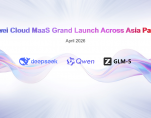
JAKARTA, INDONESIA – Media OutReach Newswire – 15 April 2026 – Huawei Cloud AI Boost Day, themed “Agentic AI Practice”, was successfully held in Jakarta. At the event, Huawei Cloud announced the official launch of its MaaS service in Asia Pacific.

Huawei Cloud MaaS grand launch across Asia Pacific

Following the rollout of AI Compute Service in Hong Kong (China), Thailand, Indonesia, and Singapore in 2025, Huawei Cloud MaaS (Model-as-a-Service) is now available, leveraging Huawei’s in-house acceleration engine to support mainstream models and provide customers with stable and high-quality token services.

Huawei Cloud continues to strengthen its collaboration with high-quality open-source models in the industry. Six models from three categories—GLM, DeepSeek, and Qwen—are the first to be supported by MaaS. These models are designed for two major application scenarios: intelligent Q&A and AI coding. They offer one-click access and out-of-the-box model hosting services, covering the entire lifecycle of model management from deployment to inference, fine-tuning, and evaluation. With elastic compute and pay-per-use billing, enterprises and developers can quickly integrate AI capabilities into their service systems without having to worry about the underlying infrastructure. This makes AI accessible to everyone.

Notably, this release includes support for the latest GLM-5 model. GLM-5 has attained state-of-the-art (SOTA) performance in coding and agent capabilities, making it an ideal general-purpose agent foundation for complex system engineering and long-text agent tasks in enterprise environments.

Huawei Cloud’s long-term strategic investment in AI has resulted in a comprehensive suite of AI solutions, including CloudMatrix AI Infra, MaaS, ModelArts (a model training and inference platform), CodeArts (a coding agent), AgentArts (an agent platform), and DataArts (a data agent).

CodeArts and AgentArts will be launched outside the Chinese mainland in the second half of 2026.

Huawei Cloud has established an optimized cloud infrastructure network in the Asia Pacific region. This network comprises five Regions and 18 availability zones (AZs) located in Singapore, Thailand, Hong Kong (China), Indonesia, and the Philippines, ensuring a 50 ms access latency. Additionally, in Malaysia, Huawei Cloud and partners have jointly built a local cloud.

Huawei Cloud AI Compute Service have helped many Asia Pacific customers elevate their cloud journey from simply migrating to the cloud to using AI well. They have benefited from improved productivity and better adaptation to changing environments.

iFLYTEK, a leading intelligent voice and AI company, selected Singapore as the first destination for its global expansion strategy in 2023, naturally extending its collaboration with Huawei Cloud from China to a global scale. Huawei Cloud AI Compute Service helped iFLYTEK quickly deploy their large language model training resources within two weeks. The training remained stable for 60 days without interruption, ensuring zero faults during the release of major versions.

In Vietnam, Green and Smart Mobility (GSM), an emerging green mobility platform, migrated its core operations platform to Huawei Cloud to reduce costs, enhance efficiency, and achieve multi-cloud flexibility. GSM has developed a comprehensive fleet management platform using AI and IoT. By utilizing Huawei Cloud IoTDA and ModelArts AI technologies, GSM analyzes violations and generates risk alerts to ensure driver and passenger safety, thereby fulfilling its mission of promoting green and safe transportation.

Huawei Cloud will continue to invest in AI innovation and provide a secure, stable, and intelligent cloud foundation to help enterprises in Asia Pacific achieve sustainable business growth in the AI era.


Hashtag: #HuaweiCloud #MaaS #AI #Token


Wechat: 亚太华为云

The issuer is solely responsible for the content of this announcement.

About Huawei

Founded in 1987, Huawei is a leading global provider of information and communications technology (ICT) infrastructure and smart devices. We have 207,000 employees and we operate in more than 170 countries and regions, serving more than three billion people around the world.

Our vision and mission is to bring digital to every person, home and organisation for a fully connected, intelligent world. To this end, we will work towards ubiquitous connectivity and inclusive network access, laying the foundation for an intelligent world; providing diversified computing power where you need it, when you need it, to bring cloud and intelligence to all four corners of the earth; build digital platforms to help all industries and organisations become more agile, efficient, and dynamic; and redefine user experience with AI, making it smarter and more personalised for people in all aspects of their life, whether they’re at home, on the go, in the office, having fun, or working out. For more information, please visit Huawei online at www.huawei.com

OpenAI has launched GPT-5.4-Cyber, a new version of its frontier model tailored for defensive cybersecurity work, moving quickly to answer growing concern that ever more capable AI systems could help both defenders and attackers in a widening digital arms race. The release came a week after Anthropic disclosed Claude Mythos Preview under its tightly controlled Project Glasswing programme, setting up a new contest over who can best […]

VISHNU RAJA
RYO YAMADA
HITORI GOTOH
IKUYO KITA