News related to
global

New Delhi has tightened import controls on key silver categories, making prior authorisation from the Directorate General of Foreign Trade mandatory for specified products under Chapter 71 of the ITC 2022 schedule.

The amended rules, issued through Notification No. 19/2026-27 dated 2 June 2026, apply with immediate effect to silver powder, silver grains, silver of 99.9% purity or more, and other unwrought silver. The change adds a fresh approval layer to a trade channel that was already limited to nominated agencies, banks and qualified jewellers using authorised routes.

The affected ITC codes include 71061000 for silver powder, 71069110 for silver grains, 71069120 for silver containing 99.9% or more by weight of silver, and 71069190 for other unwrought silver. These categories fall within the broader heading for silver, including silver plated with gold or platinum, in unwrought, semi-manufactured or powder form.

Until the amendment, eligible imports could be routed through banks notified by the Reserve Bank of India, agencies notified by the DGFT, and qualified jewellers notified by the International Financial Services Centres Authority for imports through the India International Bullion Exchange. The new framework keeps those channels in place but requires a valid DGFT Import Authorisation before shipments can proceed.

The order marks a sharper shift in bullion management after curbs were placed in May on silver bars of 99.9% purity and other semi-manufactured forms. Together, the steps move a large portion of silver inflows away from a relatively open framework towards a case-by-case approval regime. The policy direction points to closer official monitoring of volumes, end-use and trade routing at a time when precious-metal purchases have added pressure to the external account.

Silver imports have climbed sharply, with the country’s import bill for the metal touching a record $12 billion in the financial year ended March 2026, compared with $4.8 billion a year earlier. April shipments rose 157% year on year to $411 million, underlining the scale of demand before the latest controls took effect.

The bullion market is likely to feel the immediate impact through slower approvals, tighter availability and wider domestic premiums if import authorisations do not keep pace with demand. Dealers have already been adjusting to a compliance-heavy environment, including the April publication of the list of banks authorised to import gold and silver until March 2029 after delays had held up consignments at customs.

The policy also comes after duties on gold and silver were raised to 15% from 6%, a move aimed at discouraging discretionary imports of precious metals. Higher tariffs and tighter licensing conditions together indicate a broader attempt to contain import demand, protect foreign exchange reserves and reduce pressure on the rupee at a time when oil and other commodity bills remain sensitive to global price swings.

Industrial users will be watching the authorisation process closely because silver is not only a bullion and jewellery metal. It is used in electronics, solar cells, conductive pastes, precision engineering, industrial chemicals and electrical components. Silver powder and grains are important inputs for manufacturers as well as refiners and jewellers, making clarity on approval timelines essential for supply planning.

Investment demand has become a larger part of the market’s momentum. Silver bars, coins and exchange-traded products have attracted interest from investors looking for exposure to precious metals, particularly when global uncertainty and currency volatility lift demand for hard assets. That trend has complicated policy choices because the same metal feeds both household savings and industrial supply chains.

The India International Bullion Exchange remains central to the formalisation of bullion trade through GIFT City, especially for qualified jewellers using the exchange route. By requiring DGFT authorisation even for eligible jewellers importing through IIBX, the amendment signals that institutional routing alone will no longer be treated as sufficient compliance for specified silver categories.

Silver dore imports by refineries continue under the existing licence framework with actual-user conditions where applicable, leaving the refining route distinct from the broader authorisation requirement for covered products. This distinction matters for refiners that process raw material into marketable silver, though they too are operating in a tighter policy environment.

Major supply sources for the country include the UAE, Britain and China, making the rule change relevant for global bullion flows as well as domestic trade. Suppliers may face slower shipment planning, while banks and nominated agencies will need to factor DGFT approvals into import schedules.

The immediate test for the new system will be administrative efficiency. A transparent and predictable authorisation process could help the government track sensitive inflows without disrupting legitimate industrial consumption. Delays, however, could push up local premiums, affect manufacturers dependent on imported feedstock and encourage buyers to shift procurement strategies.

Dubai has launched a new phase of its Content Creators Programme to train emerging talent in cultural storytelling, digital production and responsible online communication, placing the initiative at the centre of the emirate’s push to expand its creative economy. The programme, led by Dubai Press Club in partnership with Dubai Culture and Arts Authority, focuses on helping creators produce cultural and creative content that reflects Dubai’s identity, […]

China’s aluminium exports accelerated in May as overseas buyers turned to the world’s biggest producer to offset supply disruption triggered by the Middle East war, while crude oil imports dropped to their lowest level in eight years in a sign of strain across the country’s commodity flows.

Customs figures showed a sharp rise in outbound shipments of unwrought aluminium and aluminium products, extending the strong performance seen in April, when exports reached 598,000 metric tonnes. The increase underlined China’s role as the main buffer for a global market unsettled by production cuts, shipping delays and higher insurance costs linked to the conflict around the Gulf and the Strait of Hormuz.

The aluminium surge came as China’s wider trade machine gathered pace. Total exports rose 19.4 per cent from a year earlier in May, beating forecasts and widening the trade surplus to more than $105 billion. Imports also grew 27.4 per cent, but the headline gain masked a sharp fall in crude purchases, with volumes down about 29 per cent as refiners leaned more heavily on inventories and cut some buying amid elevated freight and geopolitical risks.

Aluminium has become one of the clearest channels through which the Middle East war is reshaping industrial supply chains. Producers in Gulf states account for a meaningful share of non-Chinese primary aluminium supply, and disruption to power-intensive smelting, port activity and shipping routes has tightened availability for consumers in Europe, Asia and North America. Prices in London climbed to a four-year high this month as traders priced in the risk of prolonged supply constraints.

Chinese exporters have benefited from the opening. Producers and traders have increased shipments of semi-finished products and other aluminium categories where overseas premiums have risen faster than domestic prices. The price gap has improved margins for exporters, even as Beijing continues to manage capacity growth in a sector long associated with heavy energy use and emissions.

The market shift is particularly important for manufacturers in transport, construction, packaging, power infrastructure and renewable energy. Aluminium is widely used in electric vehicles, aircraft parts, solar frames, building systems and high-voltage transmission equipment. A sustained shortage outside China could raise input costs for industries already dealing with expensive financing, disrupted shipping schedules and volatile energy markets.

China’s advantage rests on scale. The country dominates global aluminium production and has built deep processing capacity across provinces such as Shandong, Henan, Guangxi and Yunnan. Its producers can move quickly when export margins improve, though output remains constrained by power costs, environmental controls and the national ceiling on smelting capacity.

The export rise also carries political sensitivity. Western governments have long argued that China’s industrial policies create excess capacity and depress global prices. A fresh wave of metal exports, even if driven by war-related shortages, could sharpen trade friction at a time when the United States, Europe and other economies are expanding scrutiny of Chinese goods in sectors ranging from steel and batteries to solar components and electric vehicles.

Crude oil tells a different story. China remains the world’s largest crude importer, but May’s decline showed how refiners are adjusting to uncertainty in Gulf shipping. The Middle East supplied a large share of China’s crude last year, with Saudi Arabia, Iraq, the United Arab Emirates, Oman, Kuwait and Qatar among key reported suppliers, while Iranian barrels have continued to reach Chinese buyers through opaque trading channels.

Refiners have drawn on commercial and strategic inventories built during earlier periods of lower prices and heavy discounted buying. Weak domestic fuel margins have also reduced the incentive to import aggressively. Independent refiners in Shandong and state-run plants have faced pressure from high crude costs, capped fuel prices and softer demand growth as electric vehicles erode petrol consumption.

The fall in crude imports may help ease immediate pressure on global oil markets, but it also reflects the vulnerability of China’s energy security to maritime disruption. The Strait of Hormuz remains central to crude and liquefied natural gas flows, and any prolonged interruption would force Beijing to rely more on stockpiles, pipeline supplies from Russia and Central Asia, and alternative seaborne routes.

For commodity markets, May’s trade data showed a split picture. Metals exports are expanding where China can monetise overseas shortages, while energy imports are being managed more cautiously to reduce exposure to war-driven price spikes. Copper imports slipped from April, suggesting that parts of the manufacturing supply chain remain uneven despite the strong headline export performance.

Arabian Post Staff -Dubai Riyadh Air has opened ticket sales for daily flights between Dubai and Riyadh from 18 June, adding a new premium operator to one of the Gulf’s busiest business and leisure corridors as Saudi Arabia accelerates plans to turn its capital into a global aviation hub. Flights will operate between Dubai International Airport and King Khalid International Airport using Boeing 787-9 Dreamliners, placing wide-body […]

The competition drew over 40 global submissions to decarbonise beef and dairy supply chains, with winning solution set to scale across one of Asia’s leading retail networks

HONG KONG SAR- Media OutReach Newswire – 9 June 2026 – DFI Retail Group (DFI or the Group), a leading Asian retailer, and The Mills Fabrica, a global collaborative hub propelling sustainability-focused innovations in the techstyle and agrifood sectors, named Number 8 Bio as the winner of the DFI Sustainability Innovation Challenge 2026. This announcement follows the Final Pitching event, which was held on 5 June, World Environment Day. The Australia-based innovator was recognised for BetterFeed™, a range of proprietary feed additives that cut enteric methane from grazing cattle and sheep while improving the productivity of every animal that uses it. The team takes home a HK$120,000 grant and the opportunity to partner with DFI to scale its solution across the Group’s regional beef and dairy supply chains.

Representatives of DFI Retail Group, The Mills Fabrica, and the judging panel jointly presented the award to Thomas Williams, CEO and Co-Founder of Number 8 Bio, who was named the winner of the Challenge.

Scott Price, Group Chief Executive, DFI Retail Group said: “Tackling Scope 3 emissions requires collaboration across the value chain, and we are pleased that the Challenge has created opportunities for innovators to test and scale practical solutions within real operating environments. We look forward to seeing how they support our progress towards more sustainable and resilient food systems.”

Meet the Winner: From Pitch to Pilot Across Asia’s Supply Chains

Number 8 Bio has built a feed additive that does two jobs at once. BetterFeed™, a family of proprietary organic small molecules, free of bromoform, reduces enteric methane from grazing cattle and sheep, which is responsible for both the majority of livestock emissions and a 12% loss of nutritional energy from every pasture. By stopping that methane from forming, BetterFeed™ redirects the recovered energy straight back into animal growth and production, a genuine win for farmers’ bottom lines as much as for the climate. Winning the DFI Sustainability Innovation Challenge opens a pilot pathway across DFI’s beef and dairy supply chains, including with Mengniu Dairy and Charoen Pokphand Foods Public Company Limited (CPF).

Thomas Williams, CEO and Co-Founder of Number 8 Bio said, “We are grateful for the exposure to such a high-calibre ecosystem, from fellow innovators addressing the same problem from different angles to the investors and industry players. The conversations alone have accelerated our thinking in ways that months of independent work could not.”

A Global Search Anchored in Asia: Addressing the Region’s Beef and Dairy Decarbonisation Challenge

Across Asia, rising incomes and urbanisation continue to drive demand for meat and dairy products. Supporting the transition to lower-emission production will be key to ensuring the long-term resilience of food systems while meeting evolving consumer expectations.

Launched in December 2025, the DFI Sustainability Innovation Challenge was designed to bridge innovation and implementation by connecting global innovators directly with DFI’s extensive supply-chain network.

Through The Mills Fabrica’s global scouting network across 30 countries, including university research institutions, venture capital and startup-incubator networks, the Challenge attracted over 40 submissions from five continents. These solutions ranged from novel feed, feed additives and biomanufacturing to AI and SaaS data platforms, processing innovations and energy management systems. Nearly half were at commercial-ready maturity, reflecting a strong pipeline of scalable solutions rather than early-stage concepts.

Cintia Nunes, General Manager, Head of Asia, The Mills Fabrica said, “The next phase of climate innovation is not just about discovering new technologies but helping them scale in ways that create tangible change. DFI is an industry leader willing to put real supply-chain access and pilot pathways behind climate-tech innovators. We are committed to deepening this partnership with DFI and to working with more forward-looking partners, so that the most promising innovators get the partnerships, capital and pilots they need to translate their work to commercial impact.”

The Finalists: A Global Cohort Tackling Beef and Dairy’s Hardest Climate Problems
The finalists represent leading approaches to reducing ruminant emissions, including novel feed additives, synthetic biology, AI-enabled monitoring, genetic optimisation, and waste-to-renewable resources:

  • Provectus Algae (Australia): Creator of Surf’N’Turf®, a scalable seaweed-based feed supplement designed to reduce ruminant livestock methane emissions. Powered by Provectus Algae’s proprietary Precision Photosynthesis® and AI-enabled biomanufacturing platform, Surf’N’Turf® has demonstrated enteric methane reductions of up to 98% while improving feed efficiency and supporting lower-emission livestock systems.
  • AbacusBio (New Zealand): A genetics consultancy working in over 30 countries. Its Methane Sire Selection Tool is an app that generates a selection index to help select breeding sires for genetic methane reduction, balancing total and intensity emissions cuts with on-farm profitability metrics.
  • eVerse.AI (India): Their dual-track platform is revolutionising dairy sustainability and productivity, leveraging cutting-edge innovation. GreenCow harnesses methane measurement tech and eco-friendly interventions to generate verified carbon credits, empowering farmers to monetise their sustainable practices. ConnectedCow, a SaaS platform, integrates biometric ID with AI-driven insights to optimise milk yield, fertility, and herd health, providing a unified dashboard for monitoring productivity, breeding, and methane.
  • Kinava (South Korea): G2E Company (Green Waste to Energy) applies Hybrid Hydrothermal Carbonization to convert organic waste — livestock manure, food waste, wood waste, and sewage sludge — into odorless biofertilizer, biocoal, biocokes, biochar, and biogas in under three hours, using 70% less energy than conventional drying. Kinava’s first commercial plant has processed 100T/d pig manure since 2024, with a cassava-to-biocoal pilot plant also installed in Thailand in 2025.
Finalists pitched to a panel of leading academics and industry experts in ruminant nutrition, environmental science, agri-food sustainability, and corporate decarbonisation strategy. The pitching day brought together the DFI Management Committee, leading regional beef and dairy suppliers, academic experts, and ecosystem partners, enabling direct engagement between solution innovators and industry stakeholders.
In addition to formal pitches, all finalists presented their solutions through a dedicated Product and Technology Showcase, facilitating deeper discussions on pilot and deployment opportunities.

Erica Chan, Group Chief Legal, Sustainability and Corporate Affairs Officer, DFI Retail Group added: “We are pleased that this partnership with The Mills Fabrica has identified technologies with real commercial potential. Their global network and deep expertise in sustainability innovation helped us connect with a very strong cohort of climate-tech innovators. What impressed us most was the commercial readiness of the solutions. These are practical technologies with the potential to reduce emissions, strengthen supply chain resilience, and support more sustainable food systems.”

DFI Retail Group and The Mills Fabrica will continue to provide ongoing mentorship, ecosystem connections, and access to its global network, both to the winner and to the wider finalist cohort.

Hashtag: #DFIretailGroup #TheMillsFabrica #Sustainability

The issuer is solely responsible for the content of this announcement.

DFI Retail Group

DFI Retail Group is a leading Asian retailer driven by its purpose to “Sustainably Serve Asia for Generations with Everyday Moments”. At 31 December 2025, the Group and Maxim’s operated 7,580 outlets and employed more than 79,000 people across 12 markets. The Group is committed to delivering quality, value and service to consumers across the region through trusted brands, strong local market positions, and a broad retail ecosystem supported by extensive store networks, digital capabilities and efficient supply chains. The Group operates a portfolio of well-known brands across five key divisions: health and beauty, convenience, food, home furnishings and restaurants under Maxim’s.

Europe’s largest airline groups have warned Brussels that extending carbon charges to long-haul international flights would lift fares, raise cargo costs and deepen a dispute over how aviation should pay for its climate impact. Chief executives from major carriers including Air France-KLM, IAG, Lufthansa, Ryanair, easyJet, TUI and AirBaltic have urged European Commission President Ursula von der Leyen not to widen the European Union’s Emissions Trading System […]

SANYA, CHINA – Media OutReach Newswire – 9 June 2026 – As the morning sun bathed Sanya Bay in golden light, a group of international tour operators began their exploration of the city. From June 4 to 5, delegates participating in the Overseas Tour Operators Hainan Tour 2026 visited Sanya for an in-depth familiarization tour of its luxury resort hotels, coastal cultural and tourism destinations, and duty-free shopping complexes.

1

From the spectacular underwater suites at Atlantis Sanya, to the colorful street-art alleys of Tianya Town, and the rooftop infinity pool at Sanya Conifer Resort, each stop gave the visitors a fresh impression of Hainan. Many visitors paused to capture the scenery, remarking with delight: “Sanya is full of surprises!”

Exploring Luxury Resorts and Applauding World-Class Service

At 10 a.m. on June 4, the tour operators arrived at Atlantis Sanya. Upon entering the lobby, they were immediately captivated by the resort’s massive aquarium, where sharks, rays, and other marine creatures glided gracefully through the water. The group was visibly amazed.

The group toured both the ocean-view suites and the resort’s signature underwater suites. In the latter, floor-to-ceiling windows offer direct views into the aquarium, allowing guests to lie in bed and watch marine life drift by as if they were beneath the sea.

“The underwater suite concept is truly unique. Very few hotels in the world can offer an experience like this,” said tour operator Vivian He from Hong Kong. “The dreamlike setting would make an outstanding feature for honeymoon packages and would appeal strongly to younger travelers. I’ve already taken plenty of photos and videos on my phone and plan to use them for promotion when I return.”

The group then traveled to Hyatt Regency Sanya Tianli Bay in Tianya District. Strolling through palm-lined gardens, they were greeted by breathtaking views where the infinity pool seemed to merge with the sea and sky beyond. Many guests stopped to take photos, fascinated by the striking visual effect, which made it look as though water flowed directly into the ocean.

“The design is incredibly clever. It gives you the urge to dive right in and swim toward the sea,” said Julia, a tour operator from Germany, while taking photos of the stunning view. Having worked in the European outbound travel market for many years, she was visiting Sanya for the first time. “In Europe, hotels with sea views like this often come with a very high price tag. Hainan offers excellent value for money. Combined with China’s visa-free policy for travelers from 86 countries, it has tremendous appeal for European visitors.”

The hotel’s representative introduced the group to the property’s all-ocean-view suites, children’s amusement facilities, and its distinctive pink-sand beach. Natthapat, a tour operator from Thailand, showed particular interest in these features. “The children’s facilities and the pink-sand beach are perfect for family travel products. When I return home, I’ll discuss with my team how we can incorporate this destination into our product offerings.”

The delegation then proceeded to Rosewood Sanya. The hotel’s sky lobby, located on the 14th floor, offers sweeping 270-degree ocean views. Equally impressive was the elevated infinity pool on the 13th floor. Suspended between sea and sky, the pool’s edge appears to merge with the horizon, creating a spectacular setting from every angle.

“This is one of the most visually stunning hotel pools I’ve ever seen,” said Amy, a tour operator from Australia, while admiring the view from the poolside. She noted that Australian travelers also have a strong preference for luxury resort experiences, and the design aesthetic and sense of privacy here align perfectly with the expectations of the high-end market.

Throughout the visit, many tour operators actively exchanged business cards with hotel sales representatives, inquiring about partnership opportunities, group rates, and capacity for group reception. A tour operator from Southeast Asia said that he hopes to bring a group of high-end family travelers to experience Sanya’s luxury resort offerings.

Tianya Town’s Artistic Transformation Resonates with Tour Operators

The delegation also visited Tianya Town, where they experienced the unique charm of this “seaside arts village.” From the colorful mural-covered walls at the entrance of Huanglong Street, to the pure-white architecture of Sanya Guanxia Seaview B&B, and the cave-inspired interiors of Malt Cave Seaview Café, every corner became a favorite photo stop.

“This is completely different from the fishing village I imagined,” said Eter, a tour operator from Georgia, pausing at the iconic “18° North Latitude” landmark to examine the coordinates displayed on the wall. She noted that the destination could be easily integrated with the coastal tourism resources of Sanya, Lingshui, and Wanning. “Visitors are drawn to places with distinct geographic markers, which give the destination a sense of occasion.”

A local guide accompanying the group explained that in recent years, Tianya Town has undergone a series of small-scale renovations and refined upgrades. While retaining the original layout and character of a traditional fishing village, it has incorporated contemporary artistic elements, evolving into a popular photo-friendly destination. Today, Tianya Town is home to dozens of seaview guesthouses, cafés, and cultural and creative shops, making it especially popular among younger travelers.

“These small but beautifully designed destinations are exactly what many European travelers are looking for,” said Zhang Jing, a tour operator from Ireland. “Many European visitors are keen to experience local culture and everyday life when they travel. Tianya Town combines fishing village stories, artistic ambiance, and seaside accommodations. It has tremendous appeal.”

Inside one of the town’s cultural and creative stores, the visitors showed great interest in souvenir products featuring traditional Li ethnic totems. France, a tour operator from the United States, even inquired on the spot about purchasing the products in bulk as gifts for clients.

Meanwhile, Korean tour operator Lee Jae-hyun was particularly impressed by the town’s photogenic appeal. “Every corner is picture-perfect. Young people in Korea love destinations that look great in photos. If Tianya Town were included in independent travel packages, I’m sure it would be very popular.”

Duty-Free Shopping Drives Strong Interest and New Cooperation Opportunities

On the afternoon of June 4, the tour operators continued their familiarization tour with visits to Sanya Conifer Resort and Pullman Oceanview Sanya Bay Resort & Spa.

At Pullman Oceanview Sanya Bay Resort & Spa, the group was introduced to the hotel’s comprehensive conference facilities and family-oriented amenities. Guests were particularly intrigued by the hotel’s exclusive underground passageway, which provides direct access to Sanya Bay Beach.

Sanya Conifer Resort, meanwhile, impressed visitors with its iconic 70-meter-high rooftop infinity pool. Offering panoramic views of the Sanya Bay coastline, the elevated waterscape has become one of the hotel’s signature attractions. Its distinctive architectural design also earned high praise from the international tour operators.

Later that day, the delegation arrived at the final highlight of their Sanya tour—a self-guided visit to the CDF Sanya International Duty Free City. As the world’s largest single-building duty-free shopping destination, the complex brings together more than 800 international brands.

Aziz, a tour operator from Malaysia, found himself spoiled for choice in the cosmetics and fragrance section. “Malaysian travelers love duty-free shopping. The selection of brands here is impressive, and the pricing is highly competitive. If duty-free shopping can be combined with resort stays as part of a travel package, I believe it would be extremely well received by the market.”

Julia, a tour operator from Germany, was equally impressed by the scale and variety of the shopping complex. “European travelers enjoy purchasing luxury goods and cosmetics, and Sanya’s duty-free advantages are very clear. I believe Sanya has the potential to become a new favorite destination among European visitors.”

After several days of exploration across Hainan, tour operators from around the world expressed strong interest in developing partnerships in sectors ranging from sports tourism and wellness travel to cultural and leisure tourism. Shirley, a tour operator from Australia, paid particular attention to Hainan’s sports tourism resources. “Hainan has outstanding assets for sports tourism, especially golf and coastal outdoor activities. These resources are ideal for developing sports-focused holiday products. Australian consumers are passionate about sports travel, and I plan to introduce Hainan’s sports tourism offerings to the Australian market.”

According to officials from the Sanya Municipal Bureau of Tourism, Culture, Radio, Television and Sports, the city has launched several new international air routes since the beginning of this year, contributing to steady growth in inbound visitor arrivals. Looking ahead, Sanya will continue to improve its inbound tourism services and strengthen international market outreach, encouraging more global tour operators to include the city in their product portfolios.

Sunny Hainan, heart’s desire. Although the two-and-a-half-day familiarization tour was brief, it provided tour operators from around the world with a firsthand look at Sanya’s diverse tourism offerings and strong hospitality capacity. More importantly, it allowed visiting industry professionals to identify tangible opportunities for future cooperation. With the continued expansion of international flight connections and the ongoing optimization of inbound travel policies, Sanya is embracing the world with an increasingly open and welcoming outlook, ready to receive more visitors from across the globe.

Hashtag: #SanyaTourismBoard

The issuer is solely responsible for the content of this announcement.

Advertisements

Oil markets lurched higher on Monday as renewed Israeli strikes on Iran and attacks on Lebanon revived fears that the Middle East conflict could threaten energy flows through one of the world’s most critical crude corridors. Brent crude rose by more than $4 a barrel at one stage, climbing above $98 before paring gains, while West Texas Intermediate also advanced sharply as traders priced in a higher […]

Arabian Post Staff -Dubai Dubai World Trade Centre generated a record AED25.03 billion in economic output in 2025, underscoring the growing weight of large-scale business events in Dubai’s wider growth strategy and its push to deepen links with global trade, investment and innovation networks. The 2025 performance, equal to about $6.82 billion, marked a 12 per cent year-on-year rise and was driven by 108 large-scale exhibitions, international […]

Investment by leading industry institute supports Tracr’s evolution to becoming an independent, industry-wide platform for natural diamond provenance

LAS VEGAS, US – Media OutReach Newswire – 9 June 2026 – De Beers Group and GIA (Gemological Institute of America) today announced the signing of a definitive agreement for GIA to acquire a 30 per cent shareholding in Tracr, the De Beers Group-backed company behind the development of the pioneering diamond provenance blockchain-driven platform.

The agreement marks a significant milestone in Tracr’s evolution towards independence and reflects GIA’s confidence in the platform’s role as an industry-wide infrastructure to advance natural diamond provenance and traceability at scale.

GIA’s investment – which builds on a 2023 initiative to include diamond provenance information registered on Tracr’s platform on eligible GIA diamond grading reports – represents a significant step in this transition, reinforcing Tracr’s long-term credibility across the diamond value chain.

Al Cook, CEO of De Beers Group, said: “Consumers deserve to know where their diamonds come from and they should feel more confident in their understanding of each diamond’s source. At De Beers we have been providing provenance data on diamonds through Tracr for several years and we believe that delivering provenance should become an industry standard. Following our promise to open Tracr up to broad ownership, we are proud to be partnering with GIA as Tracr evolves into an independent, industry-wide platform. We will work alongside GIA to advance provenance transparency for the entire diamond sector.”

Pritesh Patel, President and CEO of GIA, said: “At GIA, our mission has always been rooted in trust, integrity, and consumer confidence. Our collaboration with Tracr over the past several years reinforced our belief that combining source-based blockchain provenance with GIA’s independent grading and identification expertise can help unlock a new level of transparency for the diamond industry. As Tracr continues to scale globally, we see a tremendous opportunity to deliver meaningful, verifiable provenance information from the source to the consumer. We are proud to deepen our commitment through this investment and help shape the next evolution of transparency, traceability, and trust across our industry.”

Jillian Wolk, CEO of Tracr, said: “The start of Tracr’s evolution into an independent platform, as a result of GIA’s investment, creates a strong foundation for the future. I am excited to continue scaling the platform and bringing more producers on board, which will support Tracr in enabling the individual journey of every registered diamond to come to life. Each stone carries its own narrative, defined by its source and the craftsmanship that has shaped it, and as Tracr continues to grow we have a fantastic opportunity to help reveal those unique stories.”

De Beers has been developing Tracr since 2018 and it is now a leading distributed diamond blockchain platform that starts at the source, registering diamonds at the point of recovery. In 2023, De Beers opened the platform to the wider diamond industry, positioning Tracr as an industry-wide, scalable solution for rough-to-polish verification of natural diamond provenance, which starts at a stone’s source.

Today, more than five million rough diamonds have been registered on Tracr at source, representing around two-thirds of De Beers’rough diamond production by value. Since January 2025, single country of origin for De Beers diamonds has been available on Tracr, with all newly sourced De Beers rough diamonds of one carat and above being registered on the platform.

Hashtag: #NaturalDiamonds #Diamonds #DeBeersGroup #GIA #Tracr


The issuer is solely responsible for the content of this announcement.

About De Beers Group

Established in 1888, De Beers Group is the world’s leading diamond company with expertise in the exploration, mining, marketing and retailing of diamonds. Together with its joint venture partners, De Beers Group employs more than 20,000 people across the diamond pipeline and is the world’s largest diamond producer by value, with diamond mining operations in Botswana, Canada, Namibia and South Africa. Innovation sits at the heart of De Beers Group’s strategy as it develops a portfolio of offers that span the diamond value chain, including its jewellery houses, De Beers Jewellers and Forevermark, and other pioneering solutions such as diamond sourcing and traceability initiatives Tracr and GemFair. De Beers Group also provides leading services and technology to the diamond industry in the form of education and laboratory services via De Beers Institute of Diamonds and a wide range of diamond sorting, detection and classification technology systems via De Beers Group Ignite. De Beers Group is committed to ‘,’ a holistic and integrated approach for creating a better future – where safety, human rights and ethical integrity continue to be paramount; where communities thrive and the environment is protected; and where there are equal opportunities for all. De Beers Group is a member of the Anglo-American plc group. For further information, visit.

About GIA
An independent nonprofit organization, GIA (Gemological Institute of America), established in 1931, is recognized as the world’s foremost authority in gemology. GIA invented the famous 4Cs of Color, Clarity, Cut and Carat Weight and, in 1953, created the International Diamond Grading System™ which is recognized around the world as the standard for diamond quality.

Through research, education, gemological laboratory services and instrument development, the Institute is dedicated to ensuring the public trust in gems and jewelry by upholding the highest standards of integrity, academics, science and professionalism.

By Nantoo Banerjee It is good that the government has finally decided to introduce the Producer Price Index (PPI) as a more reliable inflation tracker than the Wholesale Price Index (WPI). However, it may not be desirable to dump WPI entirely after a period of the next five years. Wholesale price levels remain highly valuable […]

The article Producer Price Index Is Welcome Though WPI Need Not Be Dumped appeared first on Latest India news, analysis and reports on Newspack by India Press Agency).

Open-source maintainers and software manufacturers are heading towards the European Union’s first Cyber Resilience Act enforcement milestone with deep gaps in awareness, preparedness and legal clarity, after new OpenSSF research found that about two-thirds of practitioners remain unready or unaware of the compliance timetable. The finding has sharpened concern across the software supply chain because the CRA’s vulnerability and incident reporting duties begin on 11 September 2026, […]

Digital gold has arrived in the Gulf. It still answers to the gram. 1. Two buyers, one price Walk through the Dubai Gold Souq on a busy evening and you will see two buyers who think they are doing completely different things. One is turning a 22-karat bangle over in his hand, watching the shopkeeper punch the day’s rate into a calculator. The other is standing a […]

Arabian Post Staff -Dubai Qatar Airways has raised its Dubai schedule from two to five daily flights, restoring greater capacity on one of the Gulf’s busiest short-haul business and leisure corridors as regional carriers rebuild networks for the summer travel season. The expansion covers services between Hamad International Airport in Doha and Dubai International Airport, with the increase being introduced in stages from 5 June. The airline […]

Dubai’s premium fitness market has gained a new large-format health club with the opening of FITCODE Q-East in Al Quoz, bringing a performance-led training, recovery and wellness model to one of the city’s emerging lifestyle districts. The flagship mixed health club spans nearly 24,000 sq ft at Q-East, a luxury destination positioned around creative, retail, food, entertainment and wellness concepts. The opening marks FITCODE’s third Dubai location […]

By Asad Mirza Marking exactly 100 days since a catastrophic conflict reordered the Middle East, a fragile, US-brokered truce violently collapsed as Israeli jets struck deep inside Iranian territory. By directly defying President Donald Trump’s explicit warnings to exercise restraint, Israeli Prime Minister Benjamin Netanyahu has pushed the region into uncharted waters, leaving a heavily […]

The article Israel’s Defiance Of Trump Shatters The Truce In The US-Iran War appeared first on Latest India news, analysis and reports on Newspack by India Press Agency).

UAE residents are entering the FIFA World Cup 2026 cycle with access to the country’s first licensed online sports wagering and internet gaming platform, marking a significant shift in a market that has long treated gambling as tightly restricted activity. Play971, operated by Abu Dhabi-based Coin Technology Projects LLC, is listed by the General Commercial Gaming Regulatory Authority under both internet gaming and sports wagering categories. The […]

Spearheads Cross-border Tech Collaboration Leveraging Hong Kong’s Role as Superconnector

HONG KONG SAR – Media OutReach Newswire – 8 June 2026 – The Hong Kong Polytechnic University (PolyU) is set to make its debut at Paris-based Viva Technology 2026 (VivaTech), Europe’s flagship premier event dedicated to technological innovation and startup collaboration. PolyU’s first-ever participation at the prestigious tech summit which is composed of a startup exhibition and two insight-packed seminars, will be led by Prof. Christopher CHAO, PolyU’s Senior Vice President (Research and Innovation), and Prof. Zijian ZHENG, Vice President (Knowledge Transfer). This milestone underscores the University’s expanded global outreach and strengthened engagement with European markets.

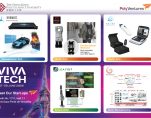
The Hong Kong Polytechnic University will showcase five promising PolyU startups at Paris-based VivaTech 2026. Visitors are welcome to interact with these innovative ventures and join its insight-packed seminars.

During this year’s event scheduled from 17 to 20 June 2026 at Paris Expo Porte de Versailles, PolyU will showcase its achievements at the Hong Kong Tech Pavilion organised by the Hong Kong Trade Development Council (HKTDC). Located at Booth 1C11, Hall 7.1, the University will present five outstanding PolyU-nurtured startups across high-growth tech domains, including AI and Robotics, Health Tech, Sustainable and Climate Tech, and FinTech. For more information about these innovative ventures, please check out the event’s online leaflet.

As Europe’s most influential innovation gathering, VivaTech brings together global visionaries, startup founders, industry leaders, investors and corporate innovators, providing as a pivotal platform for cross-border collaboration and technological knowledge exchange. PolyU’s participation at VivaTech further extends its global innovation footprint into Europe, and connects the University and its startups with international investment and market resources.
In addition to the exhibition, PolyU will host an exclusive thematic session on-site and engage in high-level industry dialogues to deepen collaboration between Europe and Hong Kong. On 18 June, PolyU will stage a dedicated seminar titled “Breaking Barriers with Autonomous Systems: Transforming Industries with AI Innovation”, where Prof. Chao will deliver the opening remarks, and Prof. Zheng will share his insight on how Hong Kong is scaling innovation as a leading AI hub, driving technological advancement and fostering global collaboration. Meanwhile, the five PolyU startups will share about their journeys in innovation and entrepreneurial endeavours.
On 19 June, Prof. Chao will participate as a distinguished speaker in the Executive Dialogue during the HKTDC-hosted Hong Kong Seminar-cum-Networking Reception. Centred on the theme “Talent & Infrastructure Powering the Hong Kong Tech Leadership and Global Collaboration”, the high-level seminar also features distinguished leaders representing the forefront of Hong Kong’s innovation and technology ecosystem. Prof. Chao will engage in in-depth topics such as how to attract and nurture global talent, and how academia-driven initiatives can drive technological synergies between Hong Kong and Europe.
For full details of PolyU’s participation at VivaTech 2026, please visit the webpage of PolyU’s Knowledge Transfer and Entrepreneurship Office.

Hashtag: #PolyU

The issuer is solely responsible for the content of this announcement.

Capital. com has enabled a Model Context Protocol server plugin that allows traders to connect their accounts directly with compatible AI assistant environments, marking a step towards more integrated use of artificial intelligence in retail trading and market research. The free, open-source tool links a trader’s Capital. com account to an AI assistant running on a desktop environment, giving users the ability to view market data, analyse […]

Reserve Bank of India has pushed its net short dollar position past $110 billion, taking a key currency-defence tool to a record high as pressure on the rupee forces heavier use of forward-market intervention.

The rise marks a sharp escalation in the central bank’s effort to cushion the currency after the rupee weakened to a record low near 97 to the dollar on 20 May. The position, built through forward and offshore derivative contracts, shows how the central bank has increasingly relied on future dollar sales rather than only spot-market intervention to manage disorderly moves in the exchange rate.

The rupee traded around 95.3 to the dollar on 8 June, giving back part of the gains made after the central bank announced measures on 5 June to attract foreign-currency inflows and ease pressure on the balance of payments. The currency had closed near 94.95 on 5 June, its strongest one-day performance in about two months, after the measures were unveiled.

Forward-market intervention allows the central bank to signal dollar availability without immediately drawing down spot reserves. By selling dollars for future delivery, the RBI can influence market expectations, compress forward premiums and reduce one-way speculative pressure against the rupee. The method, however, creates future obligations and can complicate liquidity management when contracts mature.

The central bank’s net short forward book had already reached about $104 billion by the end of March, rising sharply from around $77 billion a month earlier. The move beyond $110 billion indicates that intervention continued through May and early June as global and domestic pressures intensified.

Oil prices, portfolio outflows, a firm dollar and geopolitical tensions have weighed on the rupee through much of the year. India’s large crude import bill makes the currency sensitive to oil-market swings, while higher US yields reduce the appeal of emerging-market assets. Equity outflows have added to the pressure, leaving the central bank to balance currency stability with the need to preserve reserves and domestic liquidity.

The RBI’s latest package seeks to reduce that burden by bringing in dollar flows rather than relying only on intervention. Measures include concessional foreign-exchange swaps for public-sector companies raising external commercial borrowings, support for banks mobilising foreign-currency non-resident deposits, and expanded access for overseas investors to longer-tenor government securities under the fully accessible route. Concentration limits for such investments were also relaxed.

The government’s decision to exempt overseas investors from capital gains tax on certain government bond transactions has strengthened the policy push. Market expectations now centre on whether these steps can draw $30 billion to $50 billion in medium-term inflows, with a higher figure possible if global bond investors increase allocations.

The central bank has avoided using interest-rate increases as the primary defence for the rupee, preferring targeted foreign-exchange and inflow measures. That approach reflects the RBI’s effort to separate currency management from domestic monetary policy. Keeping policy rates focused on inflation and growth gives the central bank room to support activity while using reserves, swaps and forward positions to contain currency volatility.

Foreign-exchange reserves remain sizeable, though they have fallen from their February peak as the central bank intervened to smooth the rupee’s decline. The reserves provide an important buffer, but the growing forward position shows that the defence is no longer confined to visible reserve movements. Market participants are watching both the headline reserves number and the maturity profile of the forward book for signs of future stress.

A large net short dollar position is not unusual during periods of currency strain, but the scale now matters. When contracts mature, the central bank must either deliver dollars, roll positions forward, or offset the impact through liquidity operations. Each option carries trade-offs for money-market rates, banking-system liquidity and the credibility of currency management.

For importers, the intervention has helped reduce the risk of abrupt rupee depreciation, though hedging costs and uncertainty remain elevated. Exporters face a more complex picture, as a weaker rupee supports earnings in local-currency terms but volatility makes pricing and cash-flow planning harder. Banks, meanwhile, are adjusting positions as forward premiums move in response to central bank activity.

CPX Holding has unveiled a refreshed brand identity in Abu Dhabi, positioning the G42 company for its next phase of growth as demand rises for AI-led cybersecurity, sovereign digital capability and stronger protection of critical infrastructure across the UAE. The new identity, built around the promise “Secure what’s next”, marks a shift in CPX’s public positioning from conventional cyber defence towards enablement, resilience and intelligence-led security. The […]

Arabian Post Staff -Dubai Bahrain-based Investcorp has launched an Artificial Intelligence Investment Framework to guide its investment decisions across private equity, real assets and credit, positioning the technology as a central factor in deal screening, portfolio construction and value creation across its global alternatives platform. The framework, set out in a new report, formalises how the Manama-headquartered firm will assess AI-led opportunities and risks at a time […]

A powerful offshore earthquake struck the southern Philippines early Monday, killing at least 12 people, damaging buildings in General Santos City and sending coastal residents racing to higher ground after tsunami waves hit parts of Mindanao. The magnitude was placed at 7.8 by global monitors, while domestic bulletins initially listed the tremor at 7.4. The quake struck at 7.37am local time, with its centre at sea near […]

Arabian Post Staff -Dubai PIF and Talaat Moustafa Group Saudi for Real Estate Development have signed a memorandum of understanding to explore mixed-use real estate projects across Saudi Arabia, advancing the sovereign fund’s push to build liveable urban districts as part of its 2026-2030 strategy. The non-binding agreement covers potential co-operation at PIF-owned developments and projects across the kingdom, including residential, commercial, hospitality, retail and integrated urban […]

VISHNU RAJA
RYO YAMADA
HITORI GOTOH
IKUYO KITA
Just in:
Geely’s i-HEV Intelligent Hybrid Technology Offers a New Direction Vision for Gasoline-Powered Vehicles // UK air traffic outage inflicted £33m financial losses // Geely’s i-HEV Intelligent Hybrid Technology Offers a New Direction for Gasoline-Powered Vehicles // Trump’s Iran War Has A Share Of Contribution To His Midterm Debacle // OpenAI introduces GPT-6 Cyber with restricted security access // Beyond the exhibition floor: How robots, AI and networks are moving into the real world // Kochi police detain two actors over bid to honey trap doctor // Elephant calf on death line airlifted for treatment in Gujarat // CM disputes Vijayan’s claims // Microfinance case trouble for Vellappally // HKUST President Prof. Nancy IP Receives UNESCO–Equatorial Guinea International Prize for Research in Life Sciences // Emaar approves Development buyout ahead of planned delisting // Excise chief shunted out in bar licence dispute // The “1st Greater Bay Area Health and Longevity Summit & Awards Ceremony” concludes successfully in Macao // Technology shares plunge as Nasdaq enters correction // e-Crime Bureau Signs Cybersecurity Partnership With Smart Africa, Reinforcing Its Global Expansion // Dubai details five-year visa benefits for returning visitors // Miss Universe Hong Kong Jen Zhou Departs for Puerto Rico to Compete in the 75th Miss Universe World Final // Ningbo Consensus on Collaborative Development released at 2026 Global Mayors Dialogue · Ningbo // Battle Uttar Pradesh Will Be Tougher For Yogi Than Expected //