News related to
global

Arabian Post Staff -Dubai   Saudi Arabia Railways has launched five new logistics routes aimed at accelerating cargo movement between Gulf ports, inland industrial centres and cross-border markets, in a move designed to strengthen the Kingdom’s position in regional and international trade. The new network combines rail and road links, tying Arabian Gulf gateways to central and northern regions, with onward access to the Red Sea and […]

Dubai Aerospace Enterprise and Blackstone Credit & Insurance have launched a new aircraft investment platform, branded Equator, targeting about $1.6 billion in annual deployments into jets already on lease to commercial airlines, as institutional capital pushes deeper into aviation finance. The programme will focus on what the companies described as key markets, with DAE sourcing aircraft from third parties and managing them through its Aircraft Investor Services […]

Arabian Post Staff -Dubai   Capital, liquidity and asset quality at the UAE’s largest banks remain robust, according to Dubai-based Al Ramz Capital, which says a ceasefire between Washington and Tehran has removed an immediate geopolitical overhang that had weighed on sentiment, valuations and foreign risk appetite. The firm said direct exposure to sectors most sensitive to conflict, including real estate, hospitality, aviation, transport and trade finance, […]

India’s push to build an artificial intelligence ecosystem that is both strategically independent and culturally grounded is gathering pace, as policymakers, startups and large enterprises converge around a shared question: how to create AI systems that are secure enough for national priorities and rich enough to reflect the country’s languages, knowledge traditions and institutional memory.

That debate has sharpened after comments by Arun Subramaniyan, founder and chief executive of Articul8, who argued that India’s AI trajectory should not be framed as a choice between sovereign control and cultural depth, but as a need for both. His view comes at a time when the public and private sectors are moving from broad enthusiasm around generative AI to harder questions of ownership, trust, utility and scale.

The timing is notable. Under the IndiaAI Mission, the government has been expanding support for domestic compute, foundational models, datasets, skills and applications, while official messaging at the India AI Impact Summit in February cast sovereign AI as a strategic capability rather than a branding exercise. Government-backed efforts such as BharatGen have also been positioned as multilingual, multimodal systems designed around the country’s linguistic diversity and socio-cultural context. Together, those moves show that the argument for AI sovereignty in India is no longer limited to who owns the model or where the servers sit. It is increasingly about whether AI built for India can understand how people speak, work and make decisions across vastly different regions and sectors.

Subramaniyan’s intervention adds another layer to that discussion. He has suggested that sovereignty on its own can become too narrow if it is treated only as a matter of defence, infrastructure or control. In his framing, heritage matters because AI systems that ignore local language, history and context risk becoming technically impressive but socially shallow. That point has growing resonance as global concern rises over English-heavy training data, cultural blind spots and the danger that smaller languages may become underrepresented in the next generation of digital tools.

For India, the heritage argument carries practical as well as symbolic importance. A country with hundreds of languages, wide variations in literacy and deep differences in economic activity cannot rely on AI products optimised only for Western datasets or metropolitan users. Voice interfaces, translation layers, domain-specific copilots and public-service tools all perform better when they are trained on the speech patterns, terminology and workflows of the people expected to use them. This is why multilingual model development has moved from a niche research issue to a core policy concern.

At the same time, the enterprise case is becoming clearer. Many companies have discovered that generic large language models can help with drafting, summarising and coding, but struggle when deployed in regulated or mission-critical environments without access to internal knowledge. The more valuable opportunity lies in turning proprietary documents, engineering manuals, transaction records, legal archives and operational know-how into structured intelligence that can support decisions. That is the commercial logic behind domain-specific AI, and it helps explain why firms such as Articul8 are pitching secure, enterprise-grade systems built around private data rather than public internet corpora alone.

This shift also reflects a broader global pattern. Corporate surveys and advisory research have shown that many organisations remain stuck between pilot projects and real productivity gains, largely because governance, data quality and workflow integration have lagged behind excitement over model capabilities. In practice, companies tend to get stronger returns when AI is tied to specific functions and high-value use cases rather than treated as a general-purpose novelty. For banks, manufacturers, energy groups and healthcare providers, that often means models that can work inside tightly controlled environments and understand sector language with precision.

India’s opportunity may lie in combining these two strands. One is sovereign capability: domestic compute, public datasets, local model development and policy oversight. The other is heritage depth: linguistic coverage, cultural nuance and knowledge systems that reflect the country’s own realities. The third, emerging alongside them, is institutional depth inside enterprises, where AI can turn decades of accumulated expertise into a working asset instead of leaving it trapped in silos.

There are, however, risks in the current moment. A strong sovereign AI narrative can drift into protectionism or technological duplication if it becomes a race to mimic every frontier model at any cost. Heritage-focused rhetoric can also become vague if it is not matched by usable datasets, benchmark standards and transparent governance. Enterprises face a different danger: spending heavily on AI assistants that are poorly connected to business processes, weak on accuracy and difficult to audit.


RAVE has staged one of crypto’s sharpest April breakouts, vaulting from roughly $0.25 at the start of the month to above $2 at its peak within days, a move that pushed the token into the market’s top tier by capitalisation and drew a surge of speculative trading across spot and derivatives venues. The question now is less about how fast the token climbed than whether that ascent […]

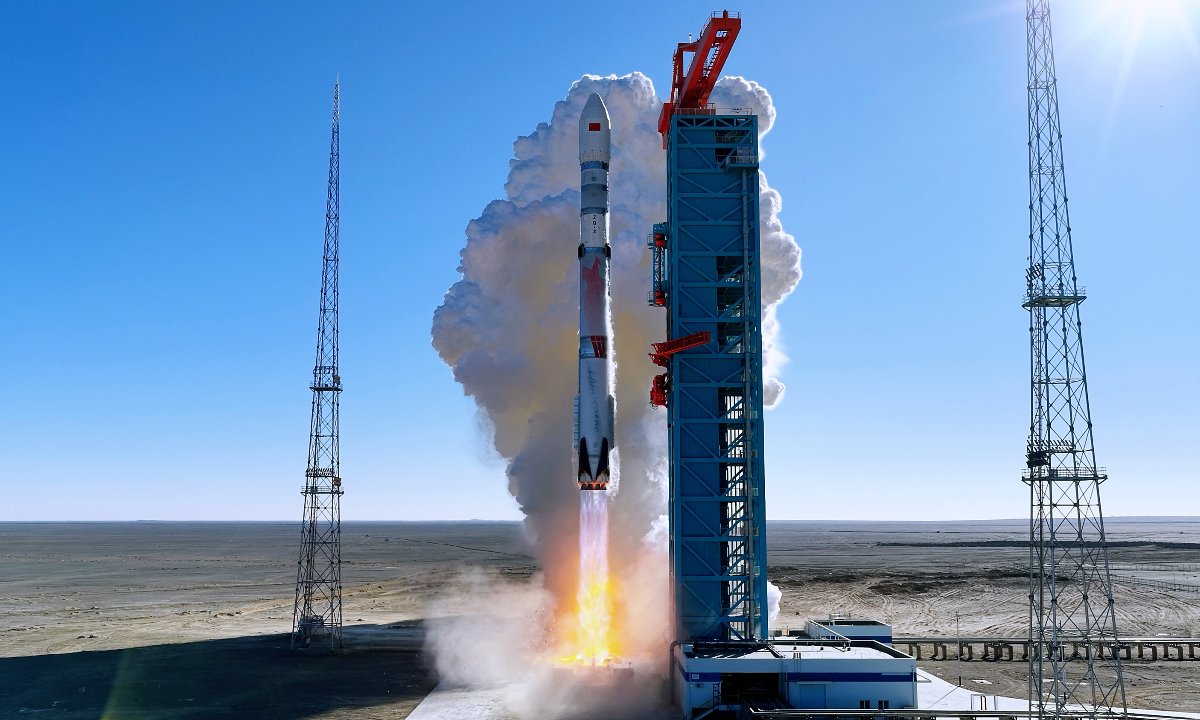
Beijing has pushed its reusable space programme a step further with the launch of an experimental spacecraft that state media described as a technology-verification mission, underlining how the country is trying to cut launch costs, raise flight tempo and broaden the range of missions it can carry out in orbit. The spacecraft was launched on 7 February aboard a Long March-2F rocket from the Jiuquan Satellite Launch Center in northwest China, in what was the fourth publicly disclosed mission of this type since 2020.

Chinese authorities released only a brief account of the flight, saying the spacecraft would verify reusable-spacecraft technologies and support the peaceful use of space. No official duration was given, and no details were provided on the systems being tested, the orbit reached or the vehicle’s configuration. That secrecy has become a hallmark of the programme and makes it difficult to judge exactly how far the technology has advanced, but the pattern of repeated flights suggests a sustained effort rather than a one-off demonstration.

Chronology matters here. China’s first disclosed flight in September 2020 lasted about two days. A second spacecraft launched in August 2022 stayed in orbit for 276 days before landing in May 2023. A third mission, launched in late 2023, returned in September 2024 after 268 days in orbit. Those longer flights point to growing confidence in long-duration autonomous operations, recovery procedures and mission endurance. Outside observers have often compared the craft with the United States’ X-37B-style approach to reusable uncrewed orbital vehicles, though Beijing has not publicly confirmed such comparisons.

This mission also fits into a much wider acceleration in Chinese space activity. On 7 April, China used a Long March-8 rocket from the Hainan commercial launch site to place 18 internet satellites into orbit for the Qianfan constellation. On 11 April, it carried out a sea launch using a Smart Dragon-3 rocket from waters off Guangdong, sending up a test satellite aimed at supporting satellite internet technology. Taken together, those launches show a programme expanding on several fronts at once: reusable vehicles, commercial launch infrastructure and large low-Earth-orbit communications networks.

Beyond low-Earth orbit, China is tying these advances to a broader national space agenda. Beijing is aiming for a crewed lunar landing by 2030 and is developing the Long March-10 rocket, the Mengzhou spacecraft and the Lanyue lunar lander for that effort. At the same time, the Chang’e-7 lunar probe is scheduled for launch in the second half of 2026. That means the reusable-spacecraft programme should be viewed less as an isolated experiment than as one part of an expanding architecture that spans launch systems, spacecraft design, lunar exploration and space-based connectivity.

Money and industrial policy are also shaping the picture. Reuters has reported that Beijing is funnelling more support towards private launch companies as it tries to build capacity for large satellite constellations and reduce reliance on state-owned providers alone. CAS Space has targeted fresh capital for reusable rocket research, while LandSpace and other firms are also turning to capital markets. Separate policy changes have given reusable-rocket developers a faster route to listing, provided they meet technical milestones, showing how closely commercial launch activity is now aligned with national strategic goals.

Yet the programme’s momentum should not be mistaken for mastery. China is advancing, but it is still chasing a lead established by SpaceX in frequent booster recovery and reflight. On 3 April, Space Pioneer said the maiden flight of its Tianlong-3 reusable rocket had failed, and Reuters reported that no Chinese firm had yet demonstrated the ability to recover and reuse a rocket’s main stage. LandSpace plans another recovery test for its Zhuque-3 rocket this year, while the Long March-12B reusable rocket completed a static firing test in January ahead of later flight missions. Progress is visible, but so are the engineering gaps.

More than 5,000 Rockwell Automation and Allen-Bradley programmable logic controllers are exposed to the public internet, sharpening concern across United States critical infrastructure as federal agencies warn that Iran-affiliated cyber actors are actively targeting such devices. Security researchers at Censys said they identified 5,219 internet-exposed hosts globally that responded as Rockwell or Allen-Bradley systems, with nearly three quarters of them located in the United States. The warning […]

Advertisements

Bitcoin and other major cryptocurrencies fell on Saturday after high-level talks between the United States and Iran in Islamabad ended without an agreement, puncturing a bout of market optimism that had followed a temporary ceasefire and hopes of a broader diplomatic settlement. U. S. Vice President J. D. Vance said the American delegation was leaving Pakistan after about 21 hours of negotiations without a breakthrough. Markets reacted […]

A prototype chip developed by engineers at the University of California San Diego has opened a possible new route to cutting energy waste inside data centres, by improving the way power is stepped down for graphics processors that handle artificial intelligence and other high-performance workloads. The team says the design converted 48 volts to 4.8 volts with peak efficiency of 96.2 per cent in laboratory tests, while […]

Sony Pictures has handed fresh momentum to its long-gestating Metal Gear Solid film, attaching directing duo Zach Lipovsky and Adam B. Stein to steer the adaptation of Konami’s espionage franchise, a move that signals the studio is trying again to bring one of gaming’s most cinematic properties to the big screen after years of stalled development. Trade reports say the project is set up at Columbia Pictures, […]

Google has removed Doki Doki Literature Club from the Play Store, setting off a dispute over how major app platforms police games that deal with suicide, depression and psychological distress. The takedown affects the Android version of the cult visual novel, which had only reached mobile devices in December, and comes despite the game carrying a mature rating on Google Play and longstanding content warnings in its […]

Earth is becoming brighter after dark overall, but the shift is proving far less uniform than older global averages suggested, with fast-growing parts of Asia and Africa lighting up while sections of Europe and some older urban zones are dimming through efficiency drives, new lamp technologies and policies aimed at cutting waste and light pollution. The clearest picture yet, drawn from daily satellite observations between 2014 and […]

Greenlogue/AP Climate litigation is exerting growing force over energy policy, with judges and international tribunals increasingly shaping how governments approve projects, regulate emissions and weigh the costs of climate harm. That legal shift is becoming especially significant for Africa, where policymakers and lawyers are pressing for a stronger voice in rulings that could affect development choices, energy access and the pace of transition across a continent that […]

Arabian Post Staff -Dubai Careem Pay has expanded its remittance service to Saudi Arabia and Türkiye, opening two new money-transfer corridors for UAE residents as digital finance platforms compete more aggressively for a larger share of cross-border payments in the Gulf. The company said transfers to bank accounts in both markets can be completed within five to 10 minutes, with transaction limits of up to AED150,000 for […]

Arabian Post Staff -Dubai FIFA has named a Saudi match-officials team for the 2026 World Cup, with referee Khalid Al-Turais, assistant referee Mohammed Al-Abakry and video match official Abdullah Al-Shehri selected for the tournament in the United States, Canada and Mexico from 11 June to 19 July. Their inclusion places Saudi Arabia among the 50 member associations represented in FIFA’s biggest-ever World Cup refereeing group, which will […]

S&P Global Ratings has lowered its growth expectations for both the UK and Egypt, saying the economic fallout from conflict-linked disruption across the Middle East is feeding through energy prices, trade routes and business confidence. For Egypt, S&P cut its forecast for real GDP growth in the 2025-2026 fiscal year to 4.7 per cent from 4.8 per cent, while also trimming the following year to 4.3 per […]

Samsung Electronics is weighing a semiconductor packaging and testing project in Vietnam that could be valued at about $4 billion, a move that would deepen the country’s role in the global chip supply chain and expand Samsung’s manufacturing base in one of its most important overseas hubs. Reporting over the past two days has shown that the company is discussing a semiconductor project with Vietnamese authorities, while […]

Arabian Post Staff -Dubai Saudi Arabia has moved to raise its profile in global data governance after the Saudi Data and Artificial Intelligence Authority, known as SDAIA, said it had joined the Global Privacy Assembly, a forum that links privacy and data protection authorities worldwide. The step puts the Kingdom’s privacy regime more visibly alongside international rule-setting efforts at a time when Riyadh is pushing digital government, […]

Metso has launched a new line of flip-flow screens aimed at one of the harder jobs in minerals processing and aggregates production: separating fine, dry and often moisture-laden material without pushing operators towards water-intensive screening. The Finland-based group said its new GFF Series is designed to improve classification accuracy, lower circulating loads and support more energy-efficient plant performance in both mining and sand manufacturing. The launch, announced […]

Qatar and India have moved to reinforce one of Asia’s most important energy relationships, with senior ministers in Doha pledging closer cooperation and calling for urgent protection of global supply chains as conflict-linked disruption continues to unsettle oil and gas markets. During talks on April 9 and 10, Qatar’s Minister of State for Energy Affairs and QatarEnergy chief executive Saad Sherida Al-Kaabi told India’s Minister of Petroleum and Natural Gas, Hardeep Singh Puri, that Doha would remain a reliable energy supplier, while both sides stressed the need for uninterrupted navigation and the free flow of commerce.

The meeting carried weight beyond bilateral symbolism. Qatar is India’s largest supplier of liquefied natural gas and a major source of liquefied petroleum gas, making the Gulf state central to India’s fuel security at a time when shipping risks and production interruptions have tightened markets. New Delhi’s outreach came as it sought assurances on supply after weeks of strain across West Asian energy routes and amid concern over the effect of regional instability on domestic fuel availability and industrial consumption.

Doha’s message was also framed by diplomacy. The official Indian statement said the ministers welcomed the two-week ceasefire agreed on April 8 and underlined the need for an early end to disruption in global energy supplies. It added that Puri conveyed greetings and a message of solidarity from Prime Minister Narendra Modi to Qatar’s leadership, reflecting how the energy relationship is now closely tied to broader strategic engagement covering trade, investment and regional stability.

For India, the stakes are immediate. The country depends on imports for about half of its natural gas needs, and the supply shock has already exposed vulnerabilities in infrastructure and procurement. GAIL’s finance director said this week that the Dabhol LNG terminal in Ratnagiri was operating at less than half its 5 million-tonnes-a-year capacity because of constrained global supplies. Hindustan Petroleum’s Chhara LNG terminal in Gujarat has also faced difficulties after missing two cargoes in March and April that were expected from Qatar via ADNOC Trading.

The background to the Doha talks is a sharp deterioration in regional energy logistics. Reuters reported on April 8 that QatarEnergy was preparing to restart LNG production after attacks in March forced stoppages at facilities in Ras Laffan and Mesaieed. Two of three trains at QELNG North 1 had been restarted, but a full return depended on vessels being able to pass safely through the Strait of Hormuz, one of the world’s most sensitive energy chokepoints. The same disruption has inflated spot prices and increased anxiety among large importers across Asia.

That makes Qatar’s long-term importance to India even clearer. In February 2024, QatarEnergy and Petronet LNG signed their largest single LNG supply agreement, under which Qatar will deliver 7.5 million metric tonnes a year from 2028 to 2048. Reuters reported at the time that Qatar planned to lift LNG liquefaction capacity to 126 million tonnes a year by 2027, up from 77 million, as it sought to strengthen its role in Asian and European markets. The scale of that agreement gives India a measure of stability, but it also underlines how deeply its gas strategy remains linked to a single Gulf supplier.

That dependence has advantages and risks. Qatar has earned a reputation for contractual reliability and remains among the lowest-cost LNG producers in the world, qualities prized by importers facing volatile spot markets. At the same time, the events of March and April have shown that even long-established energy corridors can be shaken by military escalation, damage to infrastructure and pressure on maritime routes. For policymakers in New Delhi, that is likely to sharpen interest in diversification through additional long-term contracts, more storage, broader sourcing and faster domestic gas infrastructure expansion.

India’s longer-term energy ambitions add another layer to the relationship. The government has repeatedly said it wants to raise the share of natural gas in the energy mix to 15 per cent by 2030, from just over 6 per cent at present. That target cannot be met without dependable imported LNG, even as the country pushes renewables, domestic gas output and cleaner urban fuels. Reliable Qatari supply therefore remains integral not only to short-term energy security, but also to India’s broader transition strategy and industrial planning.

Arabian Post Staff -Dubai RAK Ceramics has moved to reassure customers, contractors and distributors that its operations across the UAE and the wider region remain uninterrupted, saying access across its customer network is continuing without disruption across both retail and project channels. The statement comes at a time when businesses across the Gulf are paying closer attention to logistics resilience, input costs and delivery schedules amid wider […]

By Saifur Rahman The UAE will host the Annual Meetings of the International Monetary Fund (IMF) and World Bank Group in 2029 in Abu Dhabi, about 26 years after the country hosted the same in 2003 in Dubai. The news comes at a time when the UAE banking assets reached its highest value, to Dh5.4 trillion (US$1.47 trillion), and foreign reserves jumped 23.4 percent to Dh1.05 trillion […]

Jack Ma-backed Yunfeng Capital and Hillhouse Investment are among investors said to be planning to buy shares in Victory Giant Technology’s Hong Kong share sale, a deal that could raise about $2 billion and add fresh momentum to the city’s revival as a venue for large equity offerings. Bloomberg reported on Friday that the Guangdong-based company could begin taking investor orders as early as Monday, though the proposed allocations and timing were described as private and subject to change.

Victory Giant, formally known as Victory Giant Technology Co., Ltd., is already listed in Shenzhen and filed an application proof for a Hong Kong offering in February. The draft filing makes clear that the process was still incomplete at that stage and that no investment decision should be based on the draft document alone, a reminder that the final terms, investor line-up and valuation could still shift before launch. China’s securities regulator had already given the green light for the offering in early March, according to Bloomberg’s earlier reporting.

The company sits in a part of the technology supply chain that has drawn growing investor attention as spending on artificial intelligence infrastructure accelerates. Victory Giant makes printed circuit boards, including high-layer-count multilayer boards and high-build-up high-density interconnect boards used in AI accelerator cards, AI servers and high-speed networking equipment. In its Hong Kong filing, the company said such products are designed for high-frequency, high-speed and high-stability applications and are used in components including GPU accelerator modules, CPU motherboards and network interface cards for AI servers.

Its own figures point to a sharp improvement in financial performance as demand for those products strengthened. According to the application proof, revenue rose from RMB7.93 billion in 2023 to RMB10.73 billion in 2024. For the nine months to September 30, 2025, profit climbed to RMB3.24 billion from RMB764.6 million a year earlier, while the net profit margin rose to 23.0% from 9.9%. The filing attributes a large part of that jump to stronger demand for high-end HDI products used in AI-related applications, which command higher prices and fatter margins.

That performance helps explain why anchor demand matters. Cornerstone-style support from investors such as Yunfeng and Hillhouse would give the offering greater signalling power at a time when fund managers are trying to separate durable AI-linked manufacturers from companies benefiting only from short-lived enthusiasm. Neither investor had publicly confirmed participation at the time of Bloomberg’s report, so any description of their role remains conditional until final deal documents are published.

Victory Giant’s filing also underlines the industrial logic behind the listing. The company says it plans to use proceeds for capacity expansion, infrastructure enhancement and equipment purchases in Huizhou, Changsha and Yiyang, as well as investment in smart manufacturing. In Huizhou alone, it expects capacity additions for premium high-layer-count multilayer boards and high-build-up HDI products, reflecting management’s bet that demand tied to AI computing, data centres and advanced electronics will stay strong enough to justify further capital expenditure.

Industry data included in the filing suggest the company is positioning itself in one of the faster-growing corners of the electronics market. The application proof says the global PCB market grew to US$75.0 billion in 2024 and could reach US$93.7 billion by 2029. It estimates the PCB segment tied to AI and high-performance computing at US$6.0 billion in 2024, with that figure projected to rise to US$15.0 billion by 2029. The same filing says Victory Giant ranked first globally in the first half of 2025 for high-layer-count multilayer PCBs with 14 layers and above, and also first globally in high-build-up HDI PCB in that period. Those market-share claims are drawn from third-party industry research cited by the company and should be read in that context.

The backdrop in Hong Kong is supportive, though not uncomplicated. Reuters reported in late February that the city had its strongest start to a year since 2021, with IPOs and second listings raising about $5.5 billion in January. By March 18, LSEG data cited by Reuters showed Hong Kong’s IPO market had raised about $11.64 billion in the first quarter, up 385% from a year earlier. At the same time, Reuters also noted in March that worsening geopolitical tensions had begun to weigh on trading debuts, a sign that even a revived market remains vulnerable to shifts in sentiment.

Arabian Post Staff -Dubai MBME Pay has secured a Category 3 Payment Service Provider licence from the Central Bank of the UAE, giving the company regulatory approval to carry out merchant acquiring and payment aggregation activities and placing it in a narrower circle of fully licensed operators in one of the Gulf’s fastest-moving fintech markets. The approval marks a step up for the Abu Dhabi-listed MBME Group […]

VISHNU RAJA
RYO YAMADA
HITORI GOTOH
IKUYO KITA