News related to
world

Companies in the UAE are turning to an array of enticing benefits, including signing bonuses, golden visas, and comprehensive wellness packages, to attract and retain talent in a competitive labour market. The post-pandemic period has seen a marked shift in hiring strategies, with firms offering enhanced perks to maintain a workforce that can thrive in a rapidly changing global economy. This growing trend reflects the UAE’s broader […]

Arabian Post Staff Ras Al Khaimah, once a quiet corner of the UAE, is now experiencing a property boom that is reshaping its skyline and economic future. The emirate’s real estate sector has witnessed a significant surge in property sales and prices over the last three years, driven by a series of large-scale developments underpinned by strategic long-term planning. Sheikh Saud bin Saqr Al Qasimi, the Ruler […]

Dubai has taken a significant step toward boosting its business environment with the launch of the ‘One Freezone Passport,’ an innovative initiative designed to ease the process of business expansion within the city’s free zones. The move is expected to simplify operations for companies looking to scale, while also enhancing the emirate’s competitive edge in the global market.

The initiative allows businesses licensed in one of Dubai’s free zones to extend their operations into other zones without the need for additional licenses, thus lowering the financial and administrative burden of expansion. It is part of Dubai’s wider strategy to foster a more streamlined, investor-friendly ecosystem, which has seen numerous developments aimed at reducing bureaucracy and increasing operational efficiency.

The Dubai Free Zones Council, which spearheaded the initiative, expressed that the launch of the ‘One Freezone Passport’ marks a key achievement in Dubai’s economic diversification efforts. The programme is designed to remove regulatory bottlenecks, encouraging smoother transitions for businesses operating across multiple zones. This move comes as part of the city’s broader vision outlined in the Dubai Economic Agenda D33, which aims to double the size of the economy and strengthen its position as a leading global business hub by 2033.

The introduction of the ‘One Freezone Passport’ is aligned with the goals of easing market entry for foreign investors and facilitating greater cross-border trade. By eliminating the need for multiple permits, businesses can now streamline their processes, save costs, and significantly reduce time-to-market. The DFZC’s initiative represents a decisive shift towards creating a more cohesive and interconnected free zone network that could have widespread benefits for companies operating in Dubai.

One of the early adopters of this new system is global luxury brand Louis Vuitton, which has embraced the streamlined process. The company will now operate its warehouse in the Jebel Ali Free Zone, while establishing its corporate office at One Za’abeel, part of the Dubai World Trade Centre Free Zone. This move highlights the growing appeal of Dubai’s free zones for multinational companies, particularly in sectors such as luxury goods and technology.

The ‘One Freezone Passport’ also represents a step forward in Dubai’s ongoing efforts to attract multinational corporations and high-net-worth investors. Dubai’s free zones have long been a cornerstone of its economic strategy, offering companies a range of benefits such as tax exemptions, full ownership rights, and 100% repatriation of profits. With the introduction of the ‘One Freezone Passport,’ the emirate now aims to make it even easier for businesses to operate in multiple free zones simultaneously.

For companies such as Louis Vuitton, the new initiative offers an opportunity to leverage Dubai’s strategic location as a gateway to both regional and international markets. By simplifying the regulatory landscape, businesses can better focus on expanding their operations and exploring new market opportunities across the Middle East, Africa, and beyond.

The initiative’s potential extends well beyond large corporations. Start-ups and small-to-medium enterprises are also expected to benefit from a more accessible and flexible business environment. The ability to operate across multiple free zones without incurring additional licensing fees will likely encourage new ventures, thereby supporting Dubai’s entrepreneurial ecosystem.

The launch of the ‘One Freezone Passport’ is expected to drive a rise in investments within Dubai’s free zone economy. As businesses can now expand their footprint more easily, it opens the door for greater collaboration between sectors, fostering innovation and accelerating growth. Additionally, by streamlining regulatory processes, Dubai aims to position itself as a hub for both regional and international businesses seeking to establish a base in the Middle East.

The programme also underscores Dubai’s broader efforts to integrate digital solutions and technology into its regulatory systems. The ‘One Freezone Passport’ is supported by a digital platform that enables businesses to manage their operations across multiple zones efficiently. This platform allows for the centralisation of licenses, making it easier to handle logistics, administrative tasks, and compliance requirements.

As Dubai continues to enhance its infrastructure and regulatory landscape, the introduction of the ‘One Freezone Passport’ signals a broader trend of business-friendly reforms that cater to a dynamic and diverse economy. The ease of access to Dubai’s free zones, combined with the benefits offered by the initiative, has the potential to attract more companies to establish their operations in the emirate.

Dubai’s evolution from a luxury stopover for the rich to a permanent global wealth capital is accelerating. The emirate is set to attract nearly 10,000 millionaires in 2025, underscoring its growing prominence in the global wealth landscape. Betterhomes, in a report titled Dubai: No Longer a Pit Stop, But the Finish Line for Global Wealth, suggests that Dubai’s appeal to high-net-worth individuals is rising faster than ever.

As of December 2024, Dubai is home to 81,200 resident millionaires. This number represents a significant contribution to the UAE’s total of 130,500 dollar millionaires, marking a remarkable 98% increase over the past decade. The data suggests a global shift in wealth migration, with Dubai becoming one of the top destinations for individuals seeking a stable and prosperous environment.

This migration is not just about wealth management; it reflects a broader trend of shifting global economic power. As 142,000 millionaires are expected to relocate globally in 2025, even if only 5% choose Dubai, it could result in 7,100 new millionaires moving to the emirate. This influx will bring an estimated $7.1 billion in new investment, further cementing Dubai’s status as a global wealth hub.

Dubai’s rapid growth can be attributed to several factors. The emirate’s strategic positioning as a gateway between the East and West, combined with a pro-business environment, makes it an attractive destination for HNWIs. The city’s tax-friendly policies, high-quality infrastructure, and investment opportunities have created an ecosystem where wealth can thrive. Dubai’s real estate market, in particular, has become a focal point for international investors, with luxurious residential developments attracting the world’s wealthiest individuals.

The UAE government has also played a crucial role in fostering this growth. Policies designed to attract and retain foreign investment, such as long-term residence visas and tax incentives, have positioned Dubai as a welcoming city for the global elite. These policies align with the broader goals of diversifying the UAE economy and reducing its reliance on oil exports.

A significant driver of this transformation is Dubai’s appeal as a global business hub. The emirate’s financial markets, world-class logistics infrastructure, and connectivity have attracted numerous multinational corporations, making it a key centre for finance, technology, and innovation. With the UAE’s commitment to sustainability and innovation, Dubai is increasingly seen as a place where wealth can not only be preserved but also expanded.

As Dubai’s appeal grows, it is not just millionaires from neighbouring regions who are flocking to the city. The attraction extends to global citizens, with individuals from the Americas, Europe, and Asia seeking to benefit from Dubai’s cosmopolitan lifestyle and tax advantages. According to experts, this influx of global talent will continue to fuel Dubai’s economy, bringing with it new ideas, technologies, and business ventures.

While Dubai’s rise as a global wealth centre is undeniable, the city faces challenges as it balances its rapid growth with sustainability goals. The demand for housing, for instance, is placing pressure on the real estate market. While demand is robust, especially for luxury properties, experts warn that an oversupply of high-end homes could lead to a correction in the market. However, this is a concern that city planners are addressing with strategic zoning and development projects designed to keep the market stable.

As the number of millionaires in Dubai grows, so does the competition for limited resources. While the city offers world-class amenities, there are concerns about rising costs of living, which could make it less accessible to middle-class families. These dynamics could shape how the city evolves in the coming years, with a focus on ensuring that growth is inclusive and that Dubai remains a livable city for all its residents.

Greenlogue/AP The United States has solidified its position as the leading source of greenfield foreign direct investment in Saudi Arabia during the first half of 2025, with American companies backing 61 projects worth a total of $2.7 billion. This surge in American investments marks a significant shift in global investment trends, as US-based firms continue to bolster the Kingdom’s economic diversification efforts under its Vision 2030 initiative. […]

The third edition of the AlUla Desert Blaze concluded on Saturday night, with more than 500 runners from Saudi Arabia and across the globe competing in one of the most gruelling desert races in the region. Held at the UNESCO World Heritage site of Hegra, the event offered a choice of four race categories: 5 km, 10 km, 21.1 km, and 42.2 km. Starting early at 8:00 […]

HANOI, VIETNAM – Media OutReach Newswire – 19 August 2025 – Vingroup was awarded the First-Class Labor Order in recognition of its exceptional achievements in developing the National Exhibition Fair Center. This prestigious award acknowledges the Group’s breakthrough efforts and determination in completing the project 15 months ahead of schedule, celebrating the 80th National Day of the Socialist Republic of Vietnam and making a significant contribution to […]

Advertisements

Elon Musk has reportedly suspended his ambitious plans to create a new political party, instead shifting his attention back to his array of business ventures. According to the Wall Street Journal, sources close to the billionaire entrepreneur have confirmed that Musk now intends to focus on his companies, including Tesla, SpaceX, and Twitter, which recently rebranded as X. The idea of a new political movement was first […]

Backpack Exchange, a leading digital asset platform, has announced the launch of daily Proof of Reserves audits, marking a significant step in promoting transparency and security within the cryptocurrency exchange space. This move, verified by cybersecurity firm OtterSec, aims to provide users with real-time assurance that the exchange maintains more than enough reserves to cover all customer deposits.

The PoR initiative is part of a broader effort by cryptocurrency platforms to rebuild trust after a series of high-profile exchange collapses. These audits will detail the reserve ratio, with Backpack Exchange’s current reserve ratio standing at 100.42%. This indicates that for every unit of cryptocurrency held in customer accounts, the exchange holds an equivalent amount and more, ensuring liquidity and solvency.

The verification process, carried out by OtterSec, involves rigorous checks on Backpack Exchange’s crypto holdings and liabilities. This third-party validation is designed to increase investor confidence by ensuring that the platform does not engage in risky lending practices or operate with insufficient backing. The daily audits will be publicly accessible, allowing users to independently verify the platform’s financial stability.

This move comes as part of a growing trend in the cryptocurrency industry, where exchanges are being pressed to adopt higher standards of transparency in the wake of the collapse of firms like FTX and Celsius. These platforms were accused of operating with insufficient reserves and failing to disclose critical financial information to users and regulators. In response, many exchanges, including Backpack Exchange, are now taking proactive steps to restore credibility and accountability.

One of the major concerns that has plagued the crypto industry is the lack of clear regulation and oversight. While governments around the world have begun to implement new laws to protect investors, many exchanges have faced criticism for not providing enough information about their financial operations. Backpack Exchange’s decision to make PoR a daily practice is an attempt to address this concern directly, giving users the tools they need to assess the health of the platform without relying solely on regulatory bodies.

While the PoR audits provide an additional layer of transparency, experts caution that these measures should be viewed as part of a broader effort to ensure that exchanges operate within a secure and well-regulated framework. “Proof of reserves is important, but it does not guarantee the absence of other risks, such as fraud or mismanagement,” says Laura Tan, a blockchain security expert. “It is crucial that exchanges continue to improve their operational practices, beyond just audits, to protect users.”

The timing of Backpack Exchange’s announcement is also noteworthy, as it comes amid increasing scrutiny from both regulators and the public. In many jurisdictions, regulators are seeking to enforce stricter compliance requirements on cryptocurrency exchanges, including mandatory audits and greater financial disclosures. This trend is part of a larger push for comprehensive regulation in the crypto space, aimed at reducing market manipulation, fraud, and investor losses.

Despite the growing regulatory pressure, the cryptocurrency industry remains largely self-regulated, with few standardized practices for exchanges to follow. As a result, platforms like Backpack Exchange that adopt self-imposed transparency measures may set the bar for others to follow. Experts believe that this trend could encourage further innovation in the space, driving exchanges to develop new methods of ensuring financial integrity and user protection.

Another key benefit of daily PoR is its potential to deter malicious actors. By making the platform’s reserve status publicly available, Backpack Exchange creates an environment where any attempt to manipulate reserves would be immediately apparent. This level of visibility can help prevent fraud and instil confidence among users, knowing that they can rely on independent verification of the platform’s solvency at any given moment.

The decision to implement daily audits reflects a growing recognition that the cryptocurrency market must evolve to attract and retain mainstream investors. Institutional investors, in particular, have been cautious about entering the market due to concerns about security and transparency. With daily PoR audits, Backpack Exchange may be positioning itself as a more secure and trustworthy platform, appealing to both retail and institutional traders.

This transparency initiative also places significant pressure on other exchanges to adopt similar measures. As the market matures and regulatory bodies continue to apply pressure, exchanges that fail to provide adequate transparency or secure user funds may struggle to compete. Backpack Exchange’s early adoption of daily PoR audits could set a new standard for transparency in the crypto industry, raising the bar for exchanges across the board.


Dubai is poised to see a substantial rise in its millionaire population, with projections indicating that up to 10,000 affluent individuals could relocate to the emirate by the end of 2024. This influx is expected to further solidify Dubai’s position as a premier destination for global wealth, driven by a combination of favourable tax policies, a booming property market, and a growing reputation as a business hub.

As of December 2024, Dubai’s population of resident millionaires is forecast to grow to 81,200, significantly contributing to the UAE’s total of 130,500 millionaires. The surge is linked to Dubai’s ongoing efforts to attract wealthy individuals and investors through various initiatives, such as long-term residency programmes and tax advantages, which have made it an increasingly attractive place to live and do business.

The growth of millionaires in the UAE is not just a result of Dubai’s policies but also the broader trends in the global economy, with high-net-worth individuals seeking stability and investment opportunities in the face of geopolitical uncertainty. Wealth management firms, real estate brokers, and investment advisors have all noted the heightened interest from international clients in securing properties in the emirate.

Dubai’s luxury property market is one of the key factors driving this influx. The demand for high-end residential units has been on a steady rise, with prime real estate in sought-after locations such as Palm Jumeirah, Downtown Dubai, and Dubai Marina witnessing increasing sales. This growth has been further fuelled by the city’s transformation into a financial and cultural hub, alongside its status as a global tourism hotspot.

The emirate’s real estate sector has been particularly attractive to millionaires looking to invest in luxurious homes that offer not only aesthetic appeal but also potential for high returns. Dubai’s strategic position as a gateway between the East and West makes it an ideal location for international investors, offering tax incentives and the possibility of high rental yields in a stable economic environment.

The UAE’s relaxed residency laws, particularly the Golden Visa programme, have made it easier for wealthy individuals to relocate and establish themselves in Dubai. The programme grants long-term residency permits to investors, entrepreneurs, and skilled professionals, thus encouraging a more permanent presence of the ultra-wealthy in the city. It is these factors that have contributed to Dubai’s appeal as a sanctuary for wealth and a hub for international business activity.

With its pro-business environment, ease of living, and world-class infrastructure, Dubai continues to attract entrepreneurs and executives looking to make the city their new home. Additionally, the city’s vast infrastructure, which includes state-of-the-art airports, world-class medical facilities, and a thriving arts and culture scene, only adds to its desirability for those with significant financial means.

The role of real estate developers has been critical in meeting the needs of this burgeoning millionaire class. Developers are increasingly focused on delivering bespoke, high-end properties that cater specifically to the tastes of the global elite. These residences offer everything from private pools and exclusive beach access to cutting-edge smart home technology and private helipads. The push for luxury is evident across all sectors, from private villas to penthouses that offer unparalleled views of the city’s skyline.

The local government has also been proactive in ensuring that the infrastructure keeps pace with this growing demand. New residential and commercial developments are being planned across Dubai, especially in emerging areas like Dubai Creek Harbour and Dubai South, which offer a mix of luxury living and connectivity to key business districts and international airports.

For many of these new residents, Dubai is not just a place to live but also a base from which to manage their global business interests. The city’s financial services sector is thriving, with an increasing number of wealth management firms and family offices establishing a presence in the emirate. These firms provide a full range of services, including estate planning, investment management, and tax consulting, ensuring that wealthy individuals can efficiently manage their wealth while residing in the UAE.

Foxconn Technology Group has committed to investing $30 million in Robocore, a robotics firm specialising in medical and elderly care solutions. This move marks the company’s strategic push into the rapidly growing healthcare robotics sector, a field poised to revolutionise the care of ageing populations globally. Robocore, based in Taiwan, develops advanced robotic systems designed to assist elderly people with daily activities, enhancing their mobility, independence, and […]

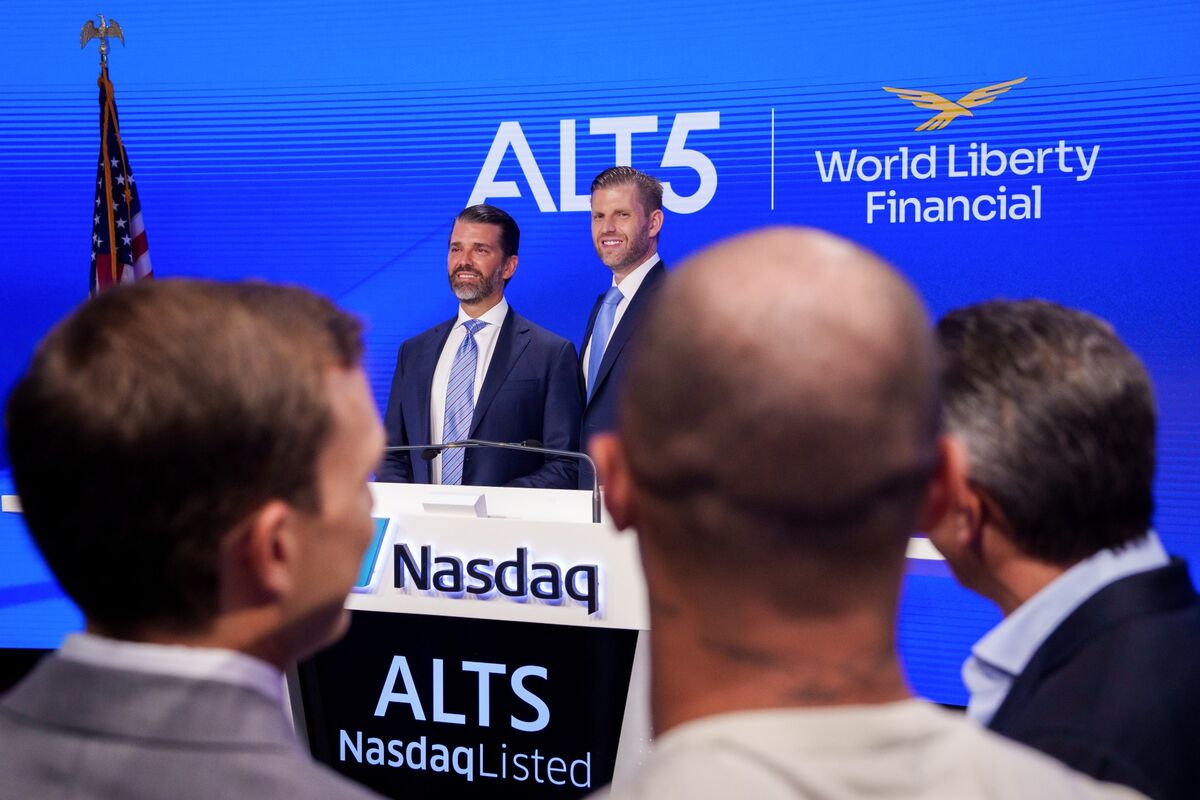
Eric Trump and Donald Trump Jr. marked a significant moment for the Trump family in the financial sector, ringing the Nasdaq opening bell as part of a high-profile $1.5 billion deal. The transaction involved the biotech-turned-crypto payments company Alt5 Sigma Corp. and the Trump-backed World Payment Network, a crypto firm under scrutiny due to its political affiliations. The deal has sparked interest among top financial firms, with Point72 Asset Management and ExodusPoint Capital Management both securing stakes in the venture.

Point72, a prominent hedge fund with a reputation for aggressive trading strategies, has previously invested in various tech-driven industries, but its entry into the crypto space marks a strategic pivot. The firm, led by billionaire Steve Cohen, has long been a major player in hedge funds, with a focus on alternative investments. ExodusPoint, a rising star in the hedge fund world, also moved to acquire a share, further solidifying its presence in the rapidly growing digital assets market.

Alt5 Sigma, originally founded as a biotech company, has undergone a dramatic transformation into a blockchain-powered payment network. With its backing from the Trump family’s business empire, the company has aimed to bridge the gap between cryptocurrency and traditional finance, particularly in the realm of payments processing. This shift has garnered attention from institutional investors and major financial players, eager to tap into the lucrative crypto market.

Both Point72 and ExodusPoint’s moves signal growing institutional interest in crypto-based financial products, which have garnered mixed reactions across the financial world. The cryptocurrency market, often volatile and speculative, remains a space that many traditional investors tread carefully within, though firms like Point72 and ExodusPoint see long-term growth potential.

The involvement of Trump-linked entities, particularly World Payment Network, has added a layer of political intrigue to the deal. World Payment Network, founded in connection with the Trump family’s business operations, has drawn attention for its ties to former President Donald Trump. Critics of the deal have raised concerns over potential conflicts of interest, pointing to the Trump family’s history of leveraging its brand for financial gain. Some worry that the high-profile nature of the Trump name could invite unwanted scrutiny from regulatory bodies, especially in a space already under heavy regulatory pressure.

Despite the controversy, the transaction illustrates the ongoing trend of high-profile figures and firms entering the crypto space, a market known for its innovation but also fraught with risks. In recent months, several hedge funds and institutional investors have increasingly allocated capital into digital assets as they look for high-return opportunities in the wake of traditional financial market fluctuations.

Point72’s foray into crypto comes as no surprise, as Cohen’s fund has long been known for diversifying into new and potentially high-reward areas. However, its involvement with a Trump-backed company adds an interesting layer of complexity, given the family’s polarizing influence on both the financial and political landscapes. ExodusPoint, on the other hand, is still a relatively new player in the hedge fund world, but its rapid growth and aggressive strategies have made it a name to watch. Its decision to back a Trump-linked crypto firm signals its willingness to embrace unconventional investment opportunities.

The crypto payments industry itself is growing rapidly, with companies such as Alt5 Sigma Corp. and World Payment Network at the forefront of bridging the gap between blockchain technology and traditional financial systems. The potential for global expansion and seamless cross-border payments has made blockchain an appealing solution for an industry looking for greater efficiency and security. However, the path forward remains uncertain. Regulatory challenges, particularly in the US, where authorities are seeking to increase oversight on crypto firms, could hamper the growth of companies like Alt5 Sigma.

At the same time, developments in blockchain technology continue to push the envelope for how financial transactions could be conducted in the future. If World Payment Network and its partners can navigate the regulatory hurdles and maintain a level of credibility amid political controversy, they may be well-positioned to capitalize on the growing demand for crypto-based financial services.

GENEVA, SWITZERLAND – Media OutReach Newswire – 20 August 2025 – Luxury skincare J. Bruhin Muller today announced the launch of new concentrated serums and sumptuous crème, formulated with Vitamin B3 NAD+ and skin reviving peptides. These new, supercharged serums and luxurious crème help rejuvenate on a cellular level. Luxury skincare J. Bruhin Muller introduces new B3 NAD+ Serum. J. Bruhin Muller’s new B3 NAD+ Collection uses […]

HANOI, VIETNAM – Media OutReach Newswire – 19 August 2025 – Vingroup was awarded the First-Class Labor Order in recognition of its exceptional achievements in developing the National Exhibition and Convention Center. This prestigious award acknowledges the Group’s breakthrough efforts and determination in completing the project 15 months ahead of schedule, celebrating the 80th National Day of the Socialist Republic of Vietnam and making a significant contribution […]

SINGAPORE – Media OutReach Newswire – 19 August 2025 – With the demand for accountancy and finance professionals growing amid Singapore’s transition to a digital and sustainable economy, the Institute of Singapore Chartered Accountants (ISCA) today launched a $2 million Career Support Programme to help jobseekers and mid-career individuals pivot confidently into the accountancy profession. Unveiled by Ms Indranee Rajah, Minister in the Prime Minister’s Office, Second […]

HANOI, VIETNAM – Media OutReach Newswire – 19 August 2025 – To mark the 80th anniversary of the National Day of the Socialist Republic of Vietnam, Vingroup inaugurated and broke ground on six major projects across the country. The highlight was the inauguration ceremony of the National Exhibition and Convention Center in Dong Anh, Hanoi, alongside five other landmark projects in the fields of socio-economic infrastructure, transportation, […]

China has lifted export restrictions on rare earth minerals and fertilisers to India, easing supply pressures across high-tech, agricultural, and infrastructure sectors. The curbs, linked to national security concerns amid lingering border tensions, were rescinded following high-level diplomacy. Indian supplies of essential rare earth magnets—vital for electronics, renewable energy, and defence manufacturing—along with fertilisers and tunnel-boring equipment, are now poised to increase.

Lines of communication between the two capitals have reopened. During the latest India-China border talks, Chinese officials pledged to address New Delhi’s urgent demands, including expedited access to these items. Rare earth exports to India were previously down by 58 per cent compared to January levels, signalling a serious disruption for industries dependent on these critical inputs.

Manufacturing sectors—spanning automobiles, electronics, renewable energy, and defence—stand to benefit directly. These industries were particularly vulnerable due to India’s heavy reliance on Chinese rare earths and fertilisers; the absence of domestic magnet production compounded the supply gap despite India holding the world’s fifth-largest rare earth reserves.

Officials confirmed that China has begun implementing the export changes, with shipments of fertilisers, rare earth magnets, and tunnel-boring machines already underway. The commitments were made by a visiting Chinese Foreign Minister during discussions with Indian counterparts, setting the stage for smoother deliveries ahead of an upcoming high-level summit.

This trade shift follows months of disruption. Earlier in the year, China imposed stringent licensing requirements and delays on rare earth exports—especially seven heavy rare earth elements—affecting global supply chains. That move had compounded export issues affecting not only India but also manufacturers in Europe and the United States, underlining the strategic importance of rare earth materials.

On the fertiliser front, China had halted exports of specialty fertilisers for several months, causing concern across India’s high-value agriculture sector. Indian agribusinesses endured supply constraints as processes such as inspections and inspections delays were used to restrict deliveries. India responded with a resilient mix of domestic ramp-ups, diversification of import sources, and building strategic stockpiles—mitigation that has now yielded tangible benefits.

Diplomatic analysts interpret China’s decision as a calibrated move toward stabilising bilateral trade, particularly ahead of expected discussions at an international summit. While the easing of restrictions is welcomed, longstanding geopolitical mistrust and unresolved border issues suggest that the normalization remains cautious. This trade reprieve signals a pragmatic shift, but not a full thaw in relations.

India, meanwhile, is accelerating its critical minerals strategy. Domestic initiatives—including exploration incentives, production-linked schemes, and global partnerships—are being fast-tracked to reduce strategic dependencies. The National Critical Mineral Mission, launched earlier this year, continues to mobilise efforts across the supply chain, while overseas resource acquisitions and collaborations are gaining momentum.

A growing crisis unfolds in Saint-Louis as families uprooted from the Langue de Barbarie peninsula remain in precarious limbo at the Khar Yalla site, more than nine years after coastal erosion rendered their homes uninhabitable. Despite the introduction of temporary shelters at Diougop under the SERRP programme, many displaced persons continue to confront chronic hardship, vulnerability and the erosion of hope. Dozens of families originally from Guet-Ndar, […]

Four technology firms from Australia, Nigeria, the UAE and the Netherlands have signed a Memorandum of Understanding to launch a joint venture named AfricAI, aimed at creating enterprise-grade artificial intelligence solutions specifically designed for Africa’s diverse markets. The pact marks a strategic push for digital sovereignty and localised innovation across the continent. Lakeba Group of Australia, Next Digital of Nigeria, AqlanX of the UAE and Agentic Dynamic […]

TAIPEI, TAIWAN – Media OutReach Newswire – 19 August 2025 – Solid State Storage Technology Corporation (SSSTC) proudly announces the launch of the SSSTC CA8 Series, the world’s first industrial M.2 SSD built with BiCS FLASH™ generation 8 3D flash memory technology and a PCIe® Gen5 x4 interface. Offered in the industry-standard M.2 2280 form factor, the SSSTC CA8 Series is available in 512 GB, 1 TB, […]

China’s reliance on fossil fuels has been steadily declining despite increasing energy demand, marking a significant shift in the nation’s energy landscape. Coal and gas consumption saw a dip in 2025, even during a scorching July, as the government continues to prioritise clean energy sources. This is a clear sign that China’s aggressive push towards renewable energy and energy efficiency is beginning to take effect, even as the country faces unprecedented challenges in meeting its growing power needs.

Data from the National Energy Administration revealed that, in the first half of 2025, coal usage in the energy mix fell by 5% compared to the same period last year, while natural gas consumption also showed signs of contraction. The most striking development came in the power sector, where a surge in renewable energy production, particularly from solar and wind sources, helped to reduce dependency on fossil fuels.

China’s power demand soared during the summer, driven by an intense heatwave that gripped much of the country. However, the country was able to meet this surge without resorting to its usual fossil fuel-heavy energy production methods. This is partly due to the rapid expansion of its renewable energy capacity, which reached new records in both wind and solar power generation in 2025. The NEA reported that China’s total renewable energy capacity crossed 1,200 gigawatts for the first time, a crucial milestone that reflects the country’s commitment to a cleaner and more sustainable energy future.

One key driver of this change is China’s substantial investment in renewable infrastructure. The government allocated over $60 billion to clean energy projects in 2025, focusing heavily on expanding solar farms and offshore wind installations along the coast. At the same time, China has been making significant strides in energy storage technologies, which are crucial for maintaining grid stability as renewable sources, particularly solar, are intermittent.

While China remains the world’s largest coal producer and consumer, the shift towards clean energy is undeniable. The country’s coal-fired power plants, once the backbone of its energy sector, are now being gradually phased out or repurposed for lower-carbon technologies. The transition has been especially evident in regions like Inner Mongolia, where coal consumption has sharply decreased as wind and solar energy projects have taken root.

Industry experts point to a combination of factors driving this shift. First, there is the national government’s ambitious target of reaching carbon neutrality by 2060. Second, the economic pressures on coal mining companies, many of which are facing increasing scrutiny over environmental and public health concerns, are playing a role in reducing coal’s dominance. Moreover, local governments have introduced incentives for businesses to adopt cleaner energy solutions, further encouraging the transition away from fossil fuels.

The reduction in coal and gas use has also been bolstered by the rise of electric vehicles, which now account for a significant portion of the energy demand in urban centres. China’s push to become a global leader in EV manufacturing has contributed to the decrease in fossil fuel consumption in the transportation sector, where electricity now plays an increasingly prominent role.

However, while the momentum towards renewable energy is clear, challenges remain. One pressing issue is the reliability of the grid, especially in remote areas where renewable generation can be less consistent. The government is addressing this concern with the expansion of transmission infrastructure designed to transport power from renewable-heavy regions like the north and west to energy-hungry areas like the east and south.

While the clean energy push is a notable success, fossil fuels still account for a large portion of China’s energy mix. This means that the country remains vulnerable to price fluctuations in global energy markets, as seen in 2024 when rising global gas prices temporarily hindered efforts to reduce fossil fuel reliance.

The United Arab Emirates has reached a significant milestone, securing the 16th position globally in the 2025 Government Support Index, as outlined in the IMD World Competitiveness Yearbook. This index evaluates how effectively governments foster the conditions needed for businesses to thrive, measuring factors such as infrastructure, regulatory environment, and public sector efficiency. With this advancement, the UAE solidifies its standing as a global leader in creating […]

Greenlogue/AP Suqia, the UAE’s national water charity, continues to solidify its global humanitarian efforts, reaching nearly one million people in Tanzania with clean drinking water. In partnership with the Emirates Red Crescent and backed by a grant from HH Sheikh Mohammed bin Rashid Al Maktoum, this initiative aims to address water scarcity, one of the most pressing issues facing communities in East Africa. The project, a part […]

Cocoa processing in Ivory Coast saw a significant decline in July, with the nation’s cocoa grind dropping by 31.2% compared to the same period last year. According to figures released by the Ivory Coast Exporters’ Association, the volume of cocoa ground during the month amounted to just 39,301 metric tons, marking a sharp fall from the 57,125 metric tons processed in July 2023. This downturn has raised […]

VISHNU RAJA
RYO YAMADA
HITORI GOTOH
IKUYO KITA