News related to
world

Arabian Post Staff -Dubai Saudi Arabia approved its 2026 state budget, confirming total government expenditure at 1.31 trillion riyals and setting revenues at approximately 1.15 trillion riyals, signalling a planned deficit of 165 billion riyals—equivalent to 3.3 percent of gross domestic product. The projected spending level is only marginally lower than the 2025 outlay, reflecting a continued commitment to funding national priorities and long-term economic diversification. Forecasts […]

Geopolitical and macroeconomic uncertainty, tariffs, and cyber risks pose liability challenges for the boards of corporations of all sizes. The increasing number of insolvencies around the globe is becoming a major issue for executives. Claims severity and settlement costs are increasing, especially in the US, while the commercial financial lines insurance market remains highly dynamic. SINGAPORE – Media OutReach Newswire – 3 December 2025 – Around the […]

Advances in large language models have delivered extraordinary gains, yet each new iteration introduces a structural tension that the wider software ecosystem is only beginning to confront. As foundation models evolve from version 4.X to 4.X+1, the coding assumptions, prompt-engineering conventions and guardrails that developers rely on can shift in subtle but consequential ways. This is emerging as a modern variant of the software world’s old problem […]

The Arab Investment & Export Credit Guarantee Corporation reported that the collective gross domestic product of Arab countries rose by 1.7 percent to about US$3.8 trillion in 2025, even as the region grappled with significant geopolitical tensions. The bulk of the growth remained concentrated in a handful of large economies — Saudi Arabia, United Arab Emirates, Egypt, Algeria and Iraq — which together account for nearly 73 […]

Amazon has begun shipping its most advanced phased-array terminal, dubbed Leo Ultra, to select enterprise customers as part of a preview programme for its satellite broadband service Amazon Leo — the rebranded successor to Project Kuiper. The company claims the terminal can deliver download speeds up to 1 gigabit per second and upload speeds reaching 400 megabits per second, representing a bold push to challenge incumbent players […]

At the third edition of the Saudi International Handicrafts Week, held at Princess Nourah bint Abdulrahman University in Riyadh, veteran craftsperson Wu Jianmei rose to the spotlight as exhibitors and visitors gathered to experience global artistry. Wu Jianmei took a seat in the bright red-themed China pavilion, her fingers deftly guiding a needle in a demonstration of Xiang embroidery — a traditional art form that has earned her acclaim over a career spanning more than four decades. Her calm poise and meticulous stitching drew a steady stream of visitors who paused to watch each slender thread breathe life into the fabric.

Organised by Heritage Commission, Banan has brought together over 400 artisans representing more than 40 countries for 2025. China holds the title of Guest of Honour, a symbolic showcase of its cultural heritage in a pavilion designed to present more than a thousand handmade pieces alongside live craft demonstrations. The pavilion features lacquerware, fan-making, batik techniques and complex embroidery — each presented by skilled heritage bearers chosen to represent China’s rich craft traditions.

China’s role this year coincides with the 35th anniversary of formal diplomatic relations with Saudi Arabia, as well as the designation of 2025 as the Year of Handicrafts in the Kingdom. Officials accompanying the Chinese delegation underscored the ambition to promote cross-cultural understanding and elevate artisanal craftsmanship within a broader creative economy. Among those present was the Chinese ambassador, who visited the China pavilion and praised the global scope of the event and the Kingdom’s support for heritage-driven cultural exchange.

Visitors to Banan were drawn not only to the China pavilion but to a wider tapestry of worldwide craftsmanship. Traditional techniques from Syria, the United Arab Emirates, Egypt, Oman, Bahrain and Jordan featured prominently, alongside booths from European, African, Asian, and Middle Eastern artisans. Demonstrations ranged across wood carving, clay pottery, metalwork, weaving and shadow-puppet craft.

A special interactive zone called “Banan Story” offered families and children an opportunity to engage hands-on with materials and tools under guided supervision, helping younger attendees connect playfully with global craft techniques. This initiative reflects a broader strategy by the Heritage Commission to foster intergenerational appreciation of handcrafts, encouraging younger audiences to explore cultural diversity through creativity.

For many, Wu Jianmei’s presence at Banan served as a powerful cultural bridge. Her Xiang embroidery pieces — delicate and intricate — symbolised a living history: patterns and stitches that carried stories of generations. Locals and expatriates alike watched in quiet admiration as the needle moved, building intricate motifs destined for display or sale. Her work has previously been exhibited in major institutions, a testament to her stature in the heritage-arts community.

The all-electric championship ABB FIA Formula E World Championship rolled into Jeddah’s Corniche Circuit for its first-ever double-header round, delivering a pair of night races under floodlights that combined high-speed action with a strategic twist. The event marked the debut of PIT BOOST, a mid-race 600 kW fast-charging stop that injects roughly 10 percent extra energy into the cars — a shift set to redefine Formula E’s competitive dynamics.

Drivers navigated the 3.001-kilometre layout of the Jeddah Corniche Circuit — adapted for Formula E with 19 turns and modified chicanes to test energy management and overtaking skill. In Round 3, pole-sitter Maximilian Günther of DS Penske held off rivals across a chaotic mid-race charge stop to secure victory, with Oliver Rowland and Taylor Barnard completing the podium. Gundther also posted the fastest lap during the race.

Round 4 turned tactics upside down when Rowland turned pole position into a commanding win, while Barnard and Jake Hughes clinched second and third. The contrasting race results underlined how PIT BOOST can influence race outcomes dramatically — positioning at the start matters less when energy strategies diverge mid-race.

PIT BOOST compelled all 22 drivers to make a mandatory stop for a 30-second battery recharge, adding roughly 3.85 kWh mid-race. Only one car per team may use the charging rig at a time, and no mechanical work is permitted during the stop. The concept, first mooted several seasons ago, had been delayed until technical and safety standards were satisfied.

Organisers believe this innovation will bring Formula E’s technological mission full-circle — showcasing fast-charging EV tech on the track that could accelerate adoption in road-going electric vehicles. Critics warn, however, that the 30-second pit stops risk breaking the flow of close racing, as cars may emerge at very different times and spread the field. Teams will need to master pressure-packed decisions on when exactly to pit as well as how to deploy the extra energy — a decision that could make or break a race.

Advertisements

Regulators at the Federal Reserve are moving to formalise rules for stablecoins, signalling a shift in how banks may soon treat these digital assets under supervision. The Vice Chair for Supervision at the Fed, Michelle Bowman, emphasised that banks should be able to engage with digital currencies — including stablecoins — under new regulatory guardrails. She argued that existing regulations, many crafted in the aftermath of the 2008 financial crisis, may no longer be appropriate given how much the economy and technology have evolved. Her remarks came against the backdrop of recent legislation that lays the groundwork for stablecoin regulation, prompting an overhaul of existing frameworks to encourage innovation while managing risk.

The regulatory momentum follows the passage of the Guiding and Establishing National Innovation for U. S. Stablecoins Act — known as the GENIUS Act — which establishes a comprehensive legal framework for payment stablecoins. Under the law, issuers of stablecoins must back tokens on a one-to-one basis with U. S. dollars or other low-risk assets, provide regular disclosure of reserves, and maintain transparent redemption processes. This marks a turning point: stablecoins officially enter the regulated financial system, opening the door for banks and other financial institutions to participate under defined standards.

Bowman has signalled that the Federal Reserve, alongside agencies such as the Office of the Comptroller of the Currency and the FDIC, intends to craft tailored supervisory guidelines rather than impose a one-size-fits-all regulatory model. She has called for regulators to abandon what she described as an “overly cautious mindset” that has slowed the banking sector’s ability to embrace digital innovation. According to her, banks seeking to engage in stablecoin activities must separate those assets from their traditional banking operations. This segregation, she said, is necessary to preserve the safety and soundness of the banking system even as banks expand into digital asset services.

The move has drawn cautious optimism from some quarters of the financial world, particularly among proponents of digital assets and stablecoin issuers, who view increased regulatory clarity as critical for broader adoption. They argue that a well-designed framework will enable mainstream financial institutions to offer digital asset services, increasing legitimacy and liquidity in the stablecoin market. Analysts point to academic research suggesting stablecoins have evolved from niche cryptocurrency experiments to integral components of payments infrastructure worldwide — with stablecoins’ market capitalisation estimated to exceed several hundred billion dollars. Some experts have proposed hybrid models that combine fiat-backed stablecoins with central-bank anchored systems to mitigate liquidity risks and improve stability, particularly in volatile market conditions.

At the same time, concerns remain about potential threats to financial stability. Regulators such as the Fed must weigh the risk of deposit outflows, competition between banks and non-bank issuers, and the challenge of preventing money-laundering or illicit finance through digital assets. Financial supervisors globally are wrestling with how to calibrate capital requirements and risk-weighting rules for banks engaging with stablecoins and digital tokens — taking into account factors like volatility, liquidity stress, and redemption risk.

PARIS, FRANCE – Media OutReach Newswire – 17 November 2025 – Huawei and Paris Photo mark their third year of collaboration with the announcement of the 2025 XMAGE Awards winners, selected from more than 743,000 submissions across 78 countries. Amid the bustle of Paris Photo, HUAWEI unveiled the 100 outstanding works chosen for the XMAGE Awards, with three receiving the prestigious XMAGE 100 Grand Prize. One of […]

Publisher Electronic Arts states that 98 per cent of games in Battlefield 6 were played without cheater interference during the week following its launch. According to the company’s report, only about 2 per cent of matches showed signs of cheating — a significant drop compared with many contemporary online shooters. The backbone of this shift is the kernel-level anti-cheat system EA Javelin, which the publisher credits with […]

Mounting evidence from across the technology sector shows that some of the world’s largest platforms continue to struggle with code quality, raising questions about long-term sustainability as companies balance rapid feature deployment with structural reliability. The growing reliance on AI-assisted development tools and accelerated shipping cycles is fuelling technical debt across major firms, prompting calls from engineers, analysts, and former executives for a recalibration of priorities. The […]

DALI, CHINA – Media OutReach Newswire – 1 December 2025 – At the 2025 Intangible Cultural Heritage(ICH) brand promotion week held from Sunday to Friday in Dali, which was organized by the Ministry of Culture and Tourism, over 120 heritage brands demonstrated how traditional craftsmanship can be integrated with contemporary design. Caption: A woman experiences the tie-dye technique of Bai ethnic groupin a dyehouse in Zhoucheng Village […]

By Nantoo Banerjee It is encouraging to note that the government has decided to invest large sums of money in support of rare earth magnet manufacturing and substantially improve the country’s rare earth-based metals production to escape China’s global chokehold in this strategic sector. Presently, there are a few small Indian companies engaged in manufacturing […]

The article India’s Push For Self-Reliance In Rare Earth Magnet Making Is Laudable appeared first on Latest India news, analysis and reports on Newspack by India Press Agency).

Japan’s 10-year government bond yield jumped to 1.84 percent, marking its highest level since 2008, sending ripples across global financial markets. Equities and risk assets came under pressure while investors reassessed portfolios built on cheap Japanese funding.

The surge reflects an abrupt shift away from decades of near-zero rates in Japan, transforming the dynamics of global capital flows. Long considered a foundation of stability, Japanese government bonds are now drawing fresh interest, prompting capital repatriation as investors seek higher yields at home. This shift threatens to unwind the entrenched “yen carry trade,” where investors borrowed yen cheaply to pour money into higher-yielding markets abroad — including equities and cryptocurrencies. With yen-denominated debt now offering compelling returns, such cross-border funding strategies are losing appeal.

As liquidity conditions tighten, markets for risk assets are being reshaped. Cryptocurrencies and tech stocks, once buoyed by easy global credit, have borne the brunt of investor risk aversion. Traders point out that this yield shock was partly triggered by a shift in market expectations around the Bank of Japan, which has signalled the possibility of further rate increases in its upcoming policy review. That, combined with concerns over Japan’s sizeable fiscal obligations and growing government borrowing, is pushing bond yields across the maturity curve higher — including 20-, 30- and 40-year maturities that recently recorded historic highs.

For global investors, the implications are stark. Funds and hedge-fund managers that relied on yen-funded carry trades now face rising funding costs and diminishing returns. Emerging markets and growth-oriented sectors that thrived on abundant liquidity may see capital outflows as investors retreat to safer, yield-bearing bonds. Currency markets have already reacted: the yen has strengthened sharply, adding pressure on exporters and raising the cost of dollar-denominated investments for Japan-based holders.

Analysts note that this yield shock does not necessarily spell widespread collapse — but signals a structural recalibration. Portfolios will need to adapt to a world where Japanese bonds are no longer a funding tool, but a competing asset class in their own right. For risk assets to recover, markets will need fresh capital inflows rather than the easy money of the past.

BALI, INDONESIA – Media OutReach Newswire – 1 December 2025 – In a year defined by rising environmental pressures and rapid shifts in global markets, the ACES Awards 2025 recognised a leader whose work continues to shape the future of responsible business across Asia. Dr. Jay receives her prestigious ESG Pioneer Award at the ACES Awards 2025, presented by the distinguished Deputy Minister of Tourism, Ni Luh […]

New facility is set to be South Korea’s most advanced automated hub for clinical logistics and sourcing, reinforcing the nation’s position as a leader in clinical research innovation GYEONGGI-DO, SOUTH KOREA – Media OutReach Newswire – 1 December 2025 – Zuellig Pharma, a leading healthcare solutions company in Asia, today announced the grand opening of its new state-of-the-art Clinical Trial Support (CTS) Innovation Center in South Korea. […]

Abu Dhabi is preparing to host what organisers describe as the world’s largest debut media and entertainment gathering, with the BRIDGE Summit 2025 scheduled to run from 8–10 December at the Abu Dhabi National Exhibition Centre. The summit is expected to draw more than 60,000 participants from around the globe and bring together over 400 speakers and 300 exhibitors under a single roof.

Organisers envisage BRIDGE as an immersive platform that merges content, technology, culture, and commerce, structured across seven thematic tracks: Media; Creator Economy; Music; Gaming; Tech & AI; Marketing; and Picture — the latter covering film, streaming, and visual storytelling. The schedule includes more than 300 activities: roughly 200 panels, 50 workshops and interactive showcases, masterclasses and matchmaking zones designed to connect creators, investors, policymakers and media platforms.

Participation confirmed by high-profile figures signals the summit’s global ambition. International actor, filmmaker and DJ Idris Elba will join the line-up, bringing his cross-sector experience in entertainment and advocacy to the Summit’s discussions. Alongside traditional media heavyweights and cultural leaders, the Summit aims to spotlight emerging voices in the digital creator economy. The Creator Economy track alone is slated to feature more than 80 global contributors across 50 sessions investigating how influence, ownership and monetisation are reshaping creative industries worldwide.

Central to the Summit’s narrative is the challenge facing modern media: trust, credibility and sustainability. As traditional broadcast gives way to streaming and social platforms, and as generative AI reshapes production, issues of editorial independence, content verification, audience dynamics and revenue stability are moving to the forefront. The Media track is expected to convene over 100 global editors, founders, policymakers and investors to discuss funding models, algorithmic distribution, content integrity and the very ethics of influence in media today. The Summit’s ambition is to provoke debate and propose frameworks that can guide media’s future in an era of rapid technological disruption.

Beyond content and discussion, BRIDGE is designed as a marketplace for partnerships — blending culture, commerce and policy. Conversations already under way include cross-sector collaborations between media companies, tech firms, venture capital, and energy and infrastructure players. For example, recent talks involving global tech leadership have highlighted an alignment of media innovation with digital infrastructure capacity and clean energy, reflecting how foundational resources are becoming integral to media’s next frontier.

For countries and organisations navigating the tension between creative independence, monetisation and regulatory frameworks, the Summit offers a testbed. Delegates include creators seeking sustainable revenue, investors eyeing cultural-sector returns, technology firms exploring policy-driven AI integration, and governments looking to harness media’s influence in soft power projection. That diversity suggests the Summit could influence not just entertainment and content markets, but regulatory norms, global standards, and potentially the geopolitics of information dissemination.

Attendance projections and speaker rosters aside, the Summit’s scale poses logistical and structural challenges. Managing 60,000 attendees across multiple tracks, workshops and networking zones demands rigorous coordination. Questions around equitable representation — of global South artists, independent creators and regional media voices versus established global brands — remain. Observers are watching whether BRIDGE can balance commercial ambition with inclusivity and whether media integrity and creative freedom will be genuine priorities.

If execution aligns with vision, BRIDGE Summit 2025 could mark a turning point for the media and entertainment industry — reimagining how content, community, technology and commerce converge in the coming decade.


Arabian Post Staff -Dubai Airlines worldwide mobilised to install a mandatory software update on jets in the Airbus A320 family after a software flaw linked to intense solar radiation threatened critical flight-control systems. The issue came to light after an aircraft operated by JetBlue experienced a sudden, uncommanded drop in altitude while cruising in October, prompting a global safety alert issued by the manufacturer Airbus SE and […]

BEIJING, CHINA – Media OutReach Newswire – 29 November 2025 – Heading into its milestone 10th season in 2025, the Classical Chinese Poetry Contest, a cultural phenomenon co-produced by China Media Group, the Ministry of Education of China, and the State Language Commission. This anniversary edition uses poetry as a medium and emotional resonance as a bridge to create a vital cultural link between cherished Chinese literary […]

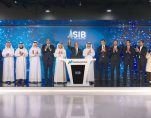
Arabian Post Staff -Dubai A US$500 million Sukuk issued by Sharjah Islamic Bank has begun trading on Nasdaq Dubai, strengthening the exchange’s position as a leading hub for Sharia-compliant debt instruments and marking another step in Sharjah’s broader capital-raising strategy. The exchange confirmed that the five-year issuance, structured under the lender’s US$3 billion Trust Certificate Issuance Programme, enhances the visibility of Gulf-based issuers seeking to tap international […]

HONG KONG SAR – Media OutReach Newswire – 28 November 2025 – HONMA Golf Limited (“HONMA”; together with its subsidiaries, the “Group”; HKEx stock code: 6858), one of the world’s most prestigious golf brands, announces its consolidated interim results for the six months ended 30 September 2025 (the “Period”). Financial Highlights In the face of a slowing global economy, heightened policy uncertainty and intensified competition across the […]

Greenlogue/AP A consortium comprising ACWA Power, Badeel and Saudi Aramco Power Company has completed the financial close on seven large-scale renewable energy projects totalling 15 gigawatts. The agreements signed with Saudi Power Procurement Company cover five solar photovoltaic plants and two wind power farms to be built across several provinces, representing one of the largest investments under the Kingdom’s National Renewable Energy Programme. The portfolio of projects […]

HONG KONG SAR – Media OutReach Newswire – 28 November 2025 – Trend Micro Incorporated (TYO: 4704; TSE: 4704), a global cybersecurity leader, today released its annual Security Predictions Report for 2026, warning that the coming year will mark the true industrialization of cybercrime. Artificial intelligence (AI) and automation are now enabling threat actors to run entire campaigns autonomously, from reconnaissance to extortion, creating unprecedented speed, scale, […]

US President Donald Trump announced that his administration will “permanently pause” migration from all so-called Third-World countries, declaring that current immigration flows have eroded national progress and vowing to revert admissions approved under his predecessor. The declaration came in a post on his social-media platform following a fatal shooting near the White House involving an Afghan national.

The measures outlined by Trump include revoking benefits for non-citizens, denaturalising certain migrants, and deporting those viewed as security risks or a burden to the state. He described the move as necessary to allow the US immigration system to “fully recover.” The policy lacks clarity on which countries fall under the Third-World classification and how the pause will be implemented.

This move marks the most sweeping immigration restriction since the start of his second term, which has already seen a broad tightening of refugee resettlement, expanded travel bans, and stricter visa controls. Since January, the administration has expanded vetting procedures and raised the administrative burden on legal immigration processes, affecting international students, skilled workers, and asylum seekers.

The freeze on migration follows a comprehensive review ordered by immigration authorities of all green cards issued to people from 19 countries flagged as “of concern.” That evaluation was initiated after the Washington shooting, with authorities signaling possible revocations. Government officials have described the overhaul as central to restoring order and safeguarding national security.

Critics warn the sweeping restrictions will hamper the United States’ ability to attract global talent and undercut its economic competitiveness. International students, skilled professionals, and refugees — all contributors to innovation and workforce growth — may now face steep hurdles, or clearance may be indefinitely delayed. Humanitarian organisations have expressed alarm over the impact on vulnerable populations seeking refuge and legal residency.

VISHNU RAJA
RYO YAMADA
HITORI GOTOH
IKUYO KITA