News related to
world

Fintech firm Ripple has announced the acquisition of wallet-and-custody specialist Palisade, aiming to accelerate its institutional digital-asset services by seamlessly combining bank-grade custodial infrastructure with wallet-as-a-service capabilities.

The deal positions Ripple to serve not just banks but fintech players, crypto-native firms and large corporates that require both long-term vaulting and high-speed transaction flows. Palisade brings features such as Multi-Party Computation key-management, zero-trust architecture, fast wallet provisioning, multi-chain support and decentralised-finance integration. According to Ripple President Monica Long the acquisition creates an “end-to-end provider for every institutional need, from long-term storage to real-time global payments and treasury management.”

Ripple’s custody solution already supports major institutions including Absa Bank, BBVA, DBS and Société Générale – FORGE, enabling a secure vault model that offers tamper-proof audit trails and cryptographic controls. Palisade will extend reach into wallets and payment rails, enabling use-cases such as on- and off-ramps, subscription billing, sweeping funds across accounts and real-time treasury operations.

Industry analysts note the move reflects a broader trend: as large companies move from observing digital-asset infrastructure toward building internal treasury and payments capabilities, they require turnkey, compliant solutions rather than in-house key-management or bespoke setups. The acquisition addresses that demand by marrying payments infrastructure and custody under one roof.

However, the deal comes amid a tougher market environment. While Ripple expands its institutional stack, its native token, XRP, continues to face downward pressure — trading below key moving averages and amid broader crypto-asset market liquidity stress. That contrast raises questions about whether infrastructure gains will translate into near-term revenue growth. Furthermore, regulatory and licensing complexity remains a challenge. Palisade is European-licensed, which helps fill a gap in Ripple’s footprint, but regulatory regimes in real-world-asset tokenisation and stablecoin flows remain evolving and unpredictable.

The acquisition forms part of a flurry of moves by Ripple this year: following its purchase of prime broker Hidden Road, stablecoin payments firm Rail and treasury-software provider GTreasury, the company has pledged more than US$4 billion in strategic investments and acquisitions. Integration of Palisade’s wallet-as-a-service platform into Ripple Payments will allow for new offerings such as instant wallet creation at scale, multi-chain asset support, and alignment of corporate treasury with digital-asset flows.

HANOI/ ABU DHABI, VIETNAM – Media OutReach Newswire – 4 November 2025 – The Vietnam Exposition Center (VEC) and dmg events have announced a strategic partnership and launch their first collaborative initiative – a global energy congress and exhibition. Operated under an exclusive brand model, this global event is expected to become a new international platform connecting the renewable energy, power, hydrocarbons, energy storage, hydrogen, low-carbon technology, […]

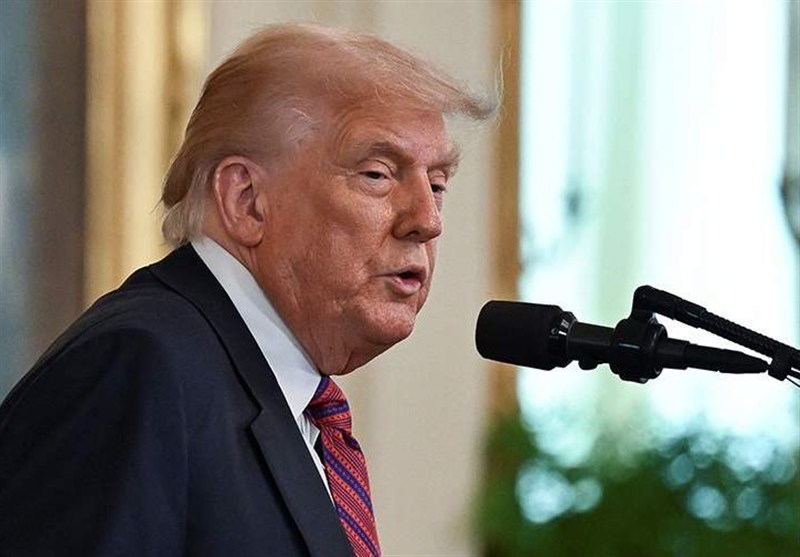
By Dr. Arun Mitra On October 29, U.S. President Donald Trump announced that ‘Because of other countries testing programs, I have instructed the Department of War [the Pentagon] to start testing our nuclear weapons on an equal basis. That process will begin immediately. This statement is not only disturbing but also extremely dangerous’. The last […]

The article US Cannot Be Allowed To Push The World To The Nuclear Precipice appeared first on Latest India news, analysis and reports on Newspack by India Press Agency).

HAI PHONG, VIETNAM – Media OuReach Newswire – 4 November 2025 – Indochina Kajima, the joint venture between Indochina Capital and Kajima Corporation, and ITOCHU Corporation held a ground-breaking ceremony for Core5 Vietnam’s second industrial project in Hải Phòng at Deep C 2 Hai Phong Industrial Zone. The project will deliver approximately 80,000sq.m of world-class ready-built factory space for lease, with a handover expected in Q1/2027. Photo […]

Sky enthusiasts worldwide are preparing for what scientists describe as the largest and brightest full moon of the year. On 5 November 2025, the moon will reach its full phase while positioned at perigee—its closest point to Earth—amounting to a lunar distance of approximately 356,980 km. This alignment marks the second in a series of three consecutive supermoons and the most extreme of the year. Called the […]

South Korean industry and government have secured a major hardware boost as Nvidia will deliver more than 260,000 of its flagship “Blackwell” AI chips to the Republic of Korea in a partnership spanning the public sector and major corporations. The deal, announced during the Asia‑Pacific Economic Cooperation Summit in Gyeongju on 31 October, positions South Korea as a rising artificial-intelligence hub and reflects Nvidia’s pivot amid shifting global semiconductor geopolitics.

The agreement covers deployments across multiple sectors: the government will obtain roughly 50,000 of Nvidia’s GPUs for its National AI Computing Centre; top chip-maker Samsung Electronics and conglomerate SK Group are each set to install about 50,000 units; automaker Hyundai Motor Group another 50,000; and internet-giant Naver Corporation around 60,000.

Nvidia’s chief executive, Jensen Huang, described the arrangement as an opportunity to “produce intelligence as a new export” for South Korea—drawing on its track record in electronics, ships and cars. He met President Lee Jae Myung and leading industrial executives during APEC’s leader-week, underpinning the deal’s strategic importance.

For South Korea the timing is critical. The country’s ambition to become one of the world’s top three AI powerhouses is tied to this surge in computing capacity. Officials estimate that the new GPU stock will raise South Korea’s installed AI-chip inventory from roughly 65,000 to over 300,000 units—more than a four-fold increase.

The motive spans multiple strands. Domestically, the government has signalled its intent through a budget push to triple AI-related spending to 10.1 trillion won in the 2026 fiscal year, with AI infrastructure now a key focus alongside semiconductors, autos and ship-building. Meanwhile, on the global stage, the transaction reflects Nvidia’s response to US export restrictions targeting China: by deepening partnerships with allied economies, Nvidia hedges market access and secures demand beyond geopolitical risk zones.

Industry commentators note the strategic value for South Korea’s private sector. Samsung’s aim to build an AI-factory on the back of these chips and Hyundai’s plan to apply them in autonomous driving and smart factories indicate a broad industrial integration of AI hardware. SK Group’s creation of an industrial-AI cloud, together with Naver’s scaling of its model-training infrastructure, further illustrate the ecosystem approach.

However, risks remain. The logistics of deploying such volumes of high-performance chips across multiple sectors present challenges in cooling, power supply and skilled workforce capabilities. Moreover, the influx of foreign hardware raises questions about long-term sovereignty of critical AI infrastructure—South Korea may become reliant on external chip providers even as it strives to build home-grown strength. Some analysts caution that building capacity alone does not always translate into global leadership in AI.

Another layer of uncertainty stems from the export environment. US policy is tightening its grip on shipments of Nvidia’s most advanced chips to China and other countries. While the South Korean deal has been approved, shifts in global regulation or export licences could affect timelines or chip-variants supplied.

For the key players in South Korea the stakes are substantial. Samsung and SK are leveraging this infusion to advance semiconductor development and edge-computing systems. Hyundai is tackling next-generation vehicle autonomy. Naver and Kakao increasingly rely on large-scale model training—now anchored to the new hardware. At a national level, the government aims to unlock innovation, jobs and exports through “sovereign AI” infrastructure under domestic control.

In global context, South Korea’s move places it firmly within the push by middle powers to stake out a significant role in the AI value chain, not merely as chip supplier but as a platform developer and services export economy. For Nvidia it reinforces its global reach and market dominance at a time when alternatives seek to challenge its position. The magnitude of the chip deployment and its industrial-strategic alignment make this one of the most consequential AI-hardware partnerships of the year.

The XRP Ledger delivered a marked performance in the third quarter of 2025, with significant growth across transaction volume, wallet activity and real-world asset tokenisation. A latest report from Messari shows average daily transactions rose from 1.6 million to 1.8 million — an 8.9 per cent uptick. Meanwhile, the number of active sender addresses grew 15.4 per cent, climbing from 21,900 to 25,300, and new wallet addresses surged 46.3 per cent to 447,200. Overall address count reached 6.9 million, up 6.1 per cent.

Growing interest from institutional players is manifest in XRPL’s RWA market capitalisation, which moved from around $115.5 million to $364.2 million, representing a 215 per cent increase during the quarter. Such tokenisation efforts featured funds of tokenised U. S. Treasuries, tokenised short-term debt instruments and real-estate assets being issued via XRPL.

NFT-related activity on XRPL also accelerated. Average daily NFT transactions increased 51.1 per cent — from 50,400 to 76,100 — while NFT minting alone rose 70.8 per cent, climbing from 37,800 to 64,600. The report noted that for the fifth quarter running, the number of active receiver addresses exceeded active sender addresses — a pattern often associated with airdrop and distribution events, as many wallets receive assets from a smaller cohort of senders.

Analysts say this trajectory suggests XRPL is maturing into an ecosystem that is bridging traditional finance and tokenisation, beyond its earlier reputation as primarily a payments-focused ledger. The built-in decentralised exchange, token-issuance features and escrow mechanisms support a broad set of use-cases.

However, the evolving narrative carries risks. One reservation is the heightened concentration of receiver addresses which may indicate that a disproportionate volume of activity stems from token-drops rather than organic usage. The sharp rise in new addresses and sender addresses does not necessarily translate into consistent value transfers unless sustained engagement follows. The decline of average daily receiver addresses by 30.1 per cent in the quarter further underscores the skew towards distribution-type events.

From a market perspective, the native token XRP closed the quarter at $2.85 — up 27.2 per cent — with a circulating market capitalisation of $170.3 billion, outperforming combined gains of the top competitors. That said, macro-factors remain relevant: broader risk sentiment turned negative in October as central-bank rate policy tightened, and XRP slipped to around $2.50 amid heavier selling pressure.

Institutional engagement is underlined by reported allocations of digital-asset treasury exposure: companies such as Trident Digital Tech Holdings, Webus International and others are said to hold sizeable XRP-based exposures in their portfolios. Meanwhile, seven spot XRP ETF applications to the U. S. Securities and Exchange Commission are pending, with expectations mounting around possible approvals and increased institutional inflows.

While enthusiasm builds, critics caution that XRPL’s broader utility remains under scrutiny. Analysts such as Scott Melker have questioned whether XRP’s role in payments can compete against entrenched networks such as SWIFT and other cross-border settlement platforms. The ledger’s capability to sustain and scale tokenisation beyond initial bursts — and to convert new wallet creation into ongoing transaction activity — will be key to its next stage of evolution.

From a technical vantage, XRPL’s architecture offers advantages: fast settlement times, comparatively low fees and in-built token issuance capabilities. The ledger’s use of enforced compliance tools and identity frameworks adds appeal to enterprise and institutional actors exploring tokenised real-world assets. Early adoption signals from tokenised treasuries and short-term debt suggest some firms are viewing XRPL as a settlement infrastructure alternative.

Advertisements

Greenlogue/AP Coastal communities and seafood industries face mounting pressure as a body of research shows that pathogenic bacteria of the genus Vibrio—long confined largely to warmer waters—are advancing into higher-latitude regions, creating new public-health risks associated with shellfish consumption and marine recreation. A 2023 study found that Vibrio vulnificus infections in the eastern United States increased eightfold between 1988 and 2018 and that the northern edge of […]

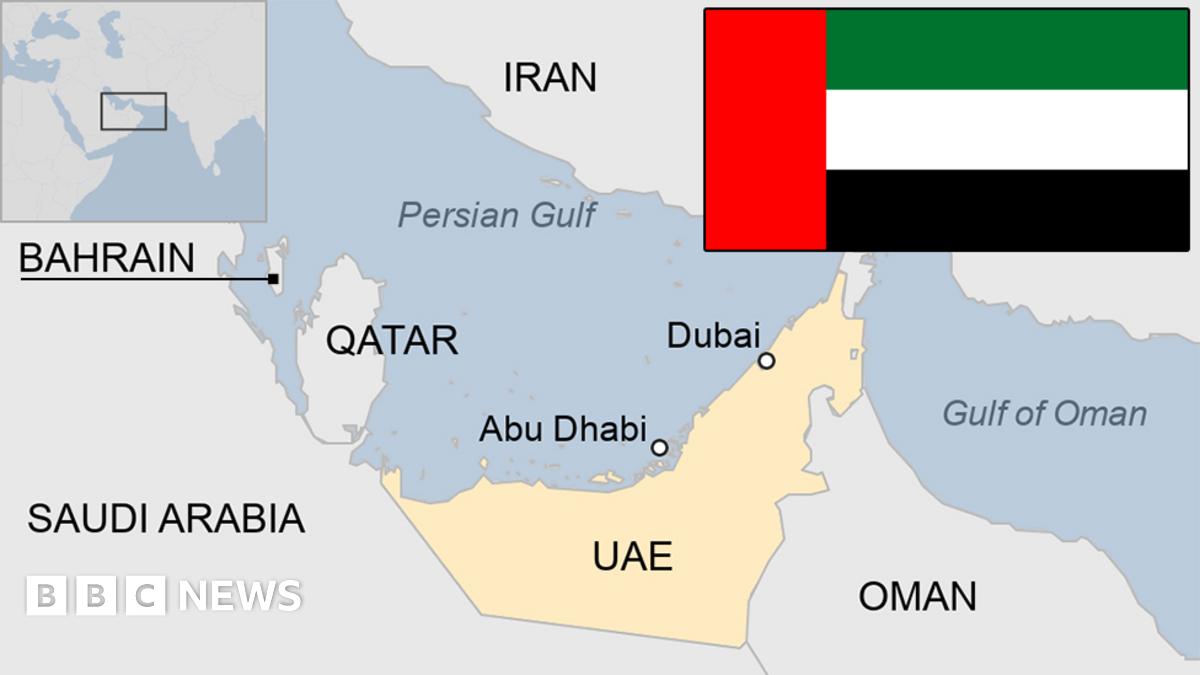
Microsoft has announced a commitment to invest approximately $15.2 billion in the United Arab Emirates by the end of 2029, while securing U. S. export licences to ship advanced AI chips to the Gulf state. The investment is centred on building and expanding cloud infrastructure, artificial-intelligence data centres and talent development in partnership with local entities.

The majority of this sum will flow into the construction and operation of AI-enabled data-centre campuses, with Microsoft Vice-Chair and President Brad Smith describing the growth of those facilities as “by far” the largest element of the investment. The U. S. export licences permit shipment of tens of thousands of the latest-generation Nvidia GB300 Grace Blackwell GPUs to the UAE, enabling Microsoft to deploy higher-end compute capacity in its regional centres.

The investment timeline outlines that Microsoft had invested just over $7.3 billion between 2023 and the end of the present year and plans to spend more than $7.9 billion from 2026 to 2029. Of the latter, over $5.5 billion is earmarked for capital expenditure on data-centres and cloud systems, with the remainder directed at local operating expenses and workforce development. The export licence approvals follow a strategic arrangement between Washington and Abu Dhabi, reflecting shifting U. S. policy on high-end chip exports and technology partnerships with Gulf states.

By leveraging the licences, Microsoft gains the ability to scale AI infrastructure in the UAE under its own operation and in concert with regional firms. The firm emphasizes talent and ecosystem-building alongside infrastructure, noting its launch of a Global Engineering Development Centre in Abu Dhabi, and targeting wide-scale skilling of AI talent across the region. Local partner G42-based in Abu Dhabi plays a key role, with Microsoft having invested $1.5 billion for a minority stake and a board seat for Smith. G42’s board participation and Microsoft’s alignment reinforce the strategy of blending global tech capability with regional execution.

Beyond the financials, the deeper strategic purpose illuminates broader geopolitical dynamics. The U. S. decision to grant chip-export licences to the UAE signals a recalibration of export controls in favour of trusted partners, even as Washington manoeuvres to counter Chinese influence in the global AI supply-chain. The UAE’s ambition to become a global AI hub, and to host one of the world’s largest data-centre complexes in Abu Dhabi, aligns with Microsoft’s drive to diffuse AI at scale. The chip-export approvals are bound by stringent cyber-security and physical-security conditions; Smith emphasised that Microsoft became “the first company” under this administration to obtain such licences for the Gulf region.

Concerns remain, however. Some U. S. lawmakers have flagged that the UAE’s past technology ties with China raise questions about enforcement of export-control safeguards and potential technology diversion. The export licences carry conditional compliance obligations; any lapses may provoke regulatory scrutiny. For Microsoft and the UAE, execution risk spans multiple fronts: timely deployment of infrastructure, talent acquisition and retention, regulatory alignment, and ensuring that capital investment yields operational returns in a cloud and AI market set to intensify.

For the UAE, the benefits are manifold: access to cutting-edge AI hardware, alignment with global technology leaders, and bolstered credentials as a regional innovation hub. For Microsoft, the Gulf expansion offers a new growth frontier outside its traditional markets, delivering cloud-services scale and AI-model hosting in a region keen to adopt generative-AI applications at high per-capita levels. According to Microsoft’s own AI diffusion data, the UAE leads global per-capita use of generative AI, with 59.4 per cent of its population reported to be active users, ahead of second-placed Singapore at 58.6 per cent.

Matein Khalid Jay Powell has put cold water on a December FOMC rate cut as inflation risk triggers dissent at the Fed. Yet Uncle Jay is now a lame duck and the world awaits his first MAGA Fed Chairman. My bet is on Kevin H as I doubt if even a supine Senate will confirm yes man – Stephen Miran. Why even bother to hold the FOMC […]

The United Arab Emirates has established itself as a leading hub for innovation and the deployment of advanced technology in the energy sector, according to George Bou Mitri, President of Honeywell for the Middle East, Türkiye and Central Asia. Speaking at the sidelines of the Abu Dhabi International Petroleum Exhibition & Conference 2025, he highlighted how the country’s digital transformation initiatives are serving as a global model for sustainable, technology-driven energy systems.

Bou Mitri said the UAE presents a distinctive example of openness, collaboration and synergy between public and private sectors in driving innovations that are making a tangible global impact in the energy industry. “The solutions created here in the UAE extend their influence far beyond its borders,” he commented. He noted that the country is actively integrating advanced technologies across its energy ecosystem, including expanding the use of LNG, hydrogen, solar and developing sustainable aviation fuel and bio-fuel as part of its emissions-reduction drive.

Honeywell is playing a significant role in this transformation. Bou Mitri pointed to the company’s participation in a landmark project with Abu Dhabi National Oil Company for the Ruwais LNG facility, expected to produce about 9.6 million tonnes annually. He also revealed that Honeywell is developing the region’s first fully autonomous control room powered by agent-based artificial intelligence in partnership with Borouge, aimed at managing petrochemical operations without direct human intervention.

Bou Mitri stressed that digital transformation forms the backbone of the sector’s future. He noted that global energy demand is projected to increase by 32 percent by 2050, while electricity demand is expected to grow by more than 75 percent in the same period, necessitating comprehensive tech solutions to balance growth with emission reduction and operational efficiency. He added that the UAE is clearly adopting that approach, emphasising that the country’s facilities are becoming important development grounds for technologies related to emissions management, artificial intelligence applications and workforce productivity improvements through digitalisation.

The autonomous control-room initiative with Borouge stands out as a practical demonstration of this strategy. According to Borouge, the project will deliver the petrochemical industry’s first AI-driven control room at its UAE plant operations and forms part of its “AIDT” programme with a targeted value generation of US$575 million. The collaboration is intended to optimise production, reduce energy use and enhance safety while lowering costs at what is set to be the world’s largest petrochemical site.

The UAE’s positioning as an innovation frontier for energy technologies comes at a time when the industry is under growing pressure to adapt. Emerging themes include the convergence of artificial intelligence, digital twins, autonomous operations, and clean-energy integration. The broader Middle East region is witnessing major energy investment momentum, with expectations of exceeding US$130 billion this year in oil and gas alone, and simultaneous major expansion in clean-energy investments including hydrogen, LNG and carbon capture projects.

For Honeywell, the UAE’s energy ecosystem is a fertile environment for deploying its digital and automation technologies, but challenges remain. Among these are workforce skills deficits — Bou Mitri pointed out that more than 50 percent of the global energy workforce is aged over 45 — and the need to transfer accumulated expertise to a younger generation. In a sector where downtime, operational safety and emissions control have high stakes, the technology must deliver in real-world conditions, not just in controlled test environments.

Critics might point to the scale of investment required, potential cybersecurity and data governance risks as operations become more connected and autonomous, and the difficulty of scaling pilot programmes into full-scale operations across multiple sites. Nonetheless, the UAE’s strategic posture — combining government backing, private-sector capability and a willingness to test and deploy cutting-edge systems — presents a compelling case study for the global energy community.

New collaborations with Citibank, Abu-Ghazaleh Global, RAK Properties, and others strengthen SIU’s commitment to connecting academic learning with global career opportunities. Swiss International University (SIU) has already informed about the new corporate partnerships that will start in October 2025 and that they will provide students with better access to internships, training programs, and job opportunities in various fields. The new partnerships are aligned with SIU’s goal to […]

The dominance of the Magnificent 7 now defines the shape of global markets. Apple, Microsoft, Alphabet, Amazon, Meta, Nvidia, and Tesla account for more than a third of the S&P 500’s total value, up from about 12% a decade ago. Their performance has lifted the index even as most of the remaining companies have moved sideways. The question for investors is whether these firms are overvalued or […]

A new stablecoin backed by the Argentine peso has been launched by the Latin American crypto exchange Ripio, signalling a significant step in the region’s digital finance landscape. The token, named wARS, is available on the Ethereum, Base and World Chain networks and is intended to provide users with 24/7 access to local-currency funds without relying on the US dollar or traditional bank systems.

Ripple effects are already evident across the fintech sector as Ripio seeks to leverage its more than 25 million users throughout Latin America to build cross-border payment rails denominated in local currencies. Ripio’s management says the introduction of wARS is part of a broader strategy to bring real-world assets such as fiat currencies and tokenised debt onto blockchain platforms. The move follows the company’s earlier launch of a tokenised sovereign bond in Argentina.

The economic context makes the launch especially noteworthy. Argentina’s inflation rate fell to around 31.8 % this year, down from close to 292 % in April 2024 under President Javier Milei’s government. The peso remains subject to strict controls and capital restrictions, creating demand for crypto alternatives and dollar-linked stablecoins. A peso-pegged token could serve as an on-chain alternative for Argentines seeking to transact in their local currency while bypassing conventional banking and remittance infrastructure.

Market analysts point to three immediate implications. First, wARS offers a familiar reference point for domestic users who know the peso, rather than US-dollar-backed tokens. Second, by operating on multiple blockchains, it allows integration with decentralised finance applications across ecosystems. Third, the design could appeal to freelancers, exporters and cross-border businesses connecting Argentina with Brazil, Chile and other Latin American economies that currently settle in US dollars or face fragile local-currency rails.

Still, several challenges lie ahead. Liquidity and market acceptance remain uncertain outside major cryptocurrencies, and the value of a peso-pegged token will likely be sensitive to broader macroeconomic policy changes and FX-control shifts. Regulatory clarity is another concern: while stablecoins tied to major currencies have faced scrutiny in major jurisdictions, less attention has been paid to local-currency tokens in emerging markets. One analyst cautions that “regulators worldwide have not fully caught up with stablecoins that reflect non-dollar fiat currencies, so scalability and risk need careful governance.”

From November 4-30, guests can scoop exclusive giveaways to celebrate Galaxy Macau’s hosting of the table tennis events for the 15th National Games of China. MACAU SAR – Media OutReach Newswire – 3 November 2025 – Galaxy Macau™ Integrated Resort (hereinafter “Galaxy Macau”) today announced its ‘Gold, Glory and Galaxy’ lucky draw, through which guests can win a sparkling selection of unique prizes when they visit during […]

By Nantoo Banerjee   The majority government-owned Life Insurance Corporation of India’s detailed rebuttal to The Washington Post report claiming that the government directed LIC to invest $3.9 billion in the Adani group seems to lack the punch. A comparison of the lately sprouted Adani Group with some of India’s age-old business conglomerates such as […]

The article Adani Group’s Striking Rise Since 2014 Sparks Global Speculation appeared first on Latest India news, analysis and reports on Newspack by India Press Agency).

Where beauty met the forbidden, and the night remembered every name. The Night That Redefined Halloween MACAU SAR – Media OutReach Newswire – 3 November 2025 – Halloween in Asia had never looked this extraordinary. On October 30, 2025, BXG (Beauty Express Group), the creative powerhouse behind leading beauty brands including Telosin, A80 Paris, The Mineral Boutique, Apeiro, and 24 Auro, unveiled “Beautiful Nightmare”, an electrifying Halloween […]

Abu Dhabi-based energy major Abu Dhabi National Oil Company has sealed three new agreements with US-based robotics specialist Gecko Robotics aimed at embedding artificial intelligence and robotics into its operations while accelerating the development of local skills for nationals. The accords were signed at the ENACT Majlis forum in Abu Dhabi and span a multi-year deployment for ADNOC Gas, a collaboration with the group’s training arm ADNOC […]

Beijing’s decision to eliminate a longstanding value-added tax offset for gold retailers marks a significant shift in policy, poised to raise domestic prices and influence global supply dynamics. From November 1 the Ministry of Finance announced that firms selling gold acquired from the Shanghai Gold Exchange or processed from it may no longer deduct VAT when disposing of the metal, whether in raw bars, coins or jewellery. […]

CAN GIO, VIETNAM – Media OutReach Newswire – 3 November 2025 – The Can Gio Urban Area Project – Vinhomes Green Paradise – has officially applied to become a Participant in the global “7 Wonders of Future Cities” campaign, launched by the world-renowned New7Wonders organization. By firmly embracing this global initiative, Vinhomes reaffirms its forward-looking vision, positioning Vinhomes Green Paradise not merely as a real estate development […]

HONG KONG SAR – Media OutReach Newswire – 31 October 2025 – The Hong Kong Science and Technology Parks Corporation (HKSTP) joins hands with the Consulate-General of Japan in Hong Kong, DEFTA Partners, and the Alliance Forum Foundation in Special Consultative Status with the United Nations ECOSOC to co-host today’s Japan-Hong Kong Innovation and Technology Forum. The event successfully concluded as it convened distinguished leaders from government, […]

Chinese authorities have agreed to suspend implementation of a new wave of export controls on rare-earth metals and to cease investigations into U. S. semiconductor companies, signalling a de-escalation in trade tensions between the world’s two largest economies. According to a White House fact sheet, the measures to be paused were those announced by People’s Republic of China in October and would have expanded export licences and […]

Dubai telecom operator du has launched a new cloud-mining subscription service named “Cloud Miner” offering residents in the UAE access to cryptocurrency mining without the need to purchase or operate hardware. The offering was introduced at a launch event held at the Burj Khalifa and will be managed under du’s B2B sub-brand du Tech. Customers will be able to lease 250 terahashes per second of mining capacity […]

Greenlogue/AP The decision by the administration of Donald Trump not to send senior representatives to the COP30 climate summit in Belém, Brazil has triggered alarm among international climate officials and reshaped the contours of global environmental diplomacy. The move signals a sharp pivot by the United States away from multilateral climate forums, raising questions about future global cohesion on climate change mitigation. The White House confirmed that […]

VISHNU RAJA
RYO YAMADA
HITORI GOTOH
IKUYO KITA