

Arabian Post Staff -Dubai
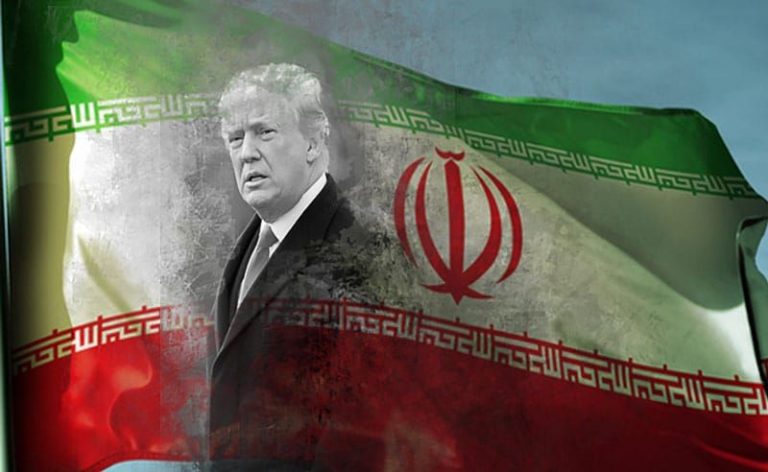
President Donald Trump said Iran had agreed to suspend its nuclear programme without a fixed end date, lifting market hopes that a broader settlement could be close after Tehran declared the Strait of Hormuz open again to commercial shipping during the ceasefire period. Trump said in a phone interview on Friday that the halt would be “unlimited”, while also projecting confidence that negotiations could move forward quickly.
The claim marked Trump’s most expansive public description yet of what Washington believes could emerge from the talks. He has been pressing for an arrangement that would shut down Tehran’s path to a nuclear weapon, remove or secure enriched uranium stockpiles and fold the military crisis into a wider political agreement. Yet by late Friday and into Saturday, key parts of that picture remained unconfirmed by Tehran, and Iranian officials were still signalling that major differences had not been bridged.
Iran’s more immediate move was on shipping. Foreign Minister Abbas Araqchi said passage for all commercial vessels through the Strait of Hormuz was “completely open” for the remaining period of the ceasefire, with transit to follow routes coordinated by Iran’s Ports and Maritime Organisation. That announcement mattered well beyond the Gulf. The waterway carries about a fifth of global oil and liquefied natural gas flows, and hundreds of vessels and thousands of seafarers had been left waiting for a safe route through one of the world’s most sensitive energy choke points.
Even so, the reopening did not amount to a full return to normality. A senior Iranian official told Reuters that ships would still need coordination with the Islamic Revolutionary Guard Corps and that only lanes judged safe by Iran would be used. The U. S. Navy warned that the mine threat in parts of the waterway was not fully understood, while shipping association BIMCO said Trump’s description of the strait as fully open was inaccurate because the security picture in the main traffic lanes remained unclear. The International Maritime Organization also said it was still verifying whether the situation met the standard for secure passage.
That caution was reflected in vessel movements. Reuters reported that some ships attempted the crossing on Friday only to turn back, while a convoy of tankers was later seen leaving the Gulf and moving through the strait on Saturday. The hesitation showed how sensitive global trade remains to mixed military and political signals. It also underlined that even a formal opening of the waterway cannot by itself restore confidence after weeks of threats, mines, blockades and attacks linked to the war.
Diplomatically, the picture remains fluid. Reuters reported that at last weekend’s talks the U. S. proposed a 20-year suspension of all Iranian nuclear activity, while Iran suggested a halt of three to five years. Trump’s new description of an unlimited suspension therefore goes well beyond what had previously emerged from reporting on the negotiating positions. Two Iranian sources cited by Reuters said there were signs of compromise, particularly around uranium stockpiles, but also said gaps remained before any preliminary agreement could be reached.
Another point of dispute is money. One Iranian official said the release of roughly $30 billion in frozen funds formed part of the understanding tied to the reopening of Hormuz. Trump later pushed back publicly, saying no money would change hands. That contradiction matters because sanctions relief, access to frozen assets and compensation for war damage are central to Tehran’s calculations, just as uranium removal and a durable curb on nuclear work sit at the heart of Washington’s demands.
The broader political setting is equally fragile. Trump has said more talks could take place in Islamabad, though some diplomats told Reuters that logistics made an immediate meeting uncertain. A Pakistani source involved in mediation said a first-stage memorandum of understanding could come before a fuller peace agreement within 60 days. Against that optimism, Iran’s political establishment has kept up a tougher tone. Parliamentary Speaker Mohammad Baqer Qalibaf warned that the strait would not remain open if the U. S. blockade continued, and cleric Ahmad Khatami said Iran would not negotiate while being humiliated.
Markets have responded to the prospect of de-escalation faster than negotiators have produced text. Reuters reported that oil prices fell sharply and global equities rose on the assumption that marine traffic would resume and that a diplomatic off-ramp might be forming. But the underlying issues remain unresolved: whether Iran would accept a permanent or even long-term nuclear freeze, what happens to enriched uranium, whether sanctions are eased, and how shipping security is guaranteed while a U. S. blockade and Iranian conditions remain in place.
Also published on Medium.
Follow Arabian Post
Select Arabian Post as your preferred source on Google and MSN News for trusted business news and Arab politics and updates.




